Harshavardhana Dynasty (500-647 CE), Rulers, Administration, Art

Harshavardhana Dynasty

The Harshavardhana Dynasty emerged in North India after the decline of the Gupta Empire in the 6th century CE, a period marked by political fragmentation and the rise of regional powers. Former Gupta subordinates such as the Maukharis, Later Guptas, Gaudas, Maitrakas and Pushyabhutis asserted independence. Continuous warfare, weak central authority and the growing power of samantas defined this era. Amid this instability, the Pushyabhuti family of Thanesar gradually rose, laying the foundation for the Harshavardhana Dynasty that later unified much of northern India under a strong ruler.

Harshavardhana Dynasty

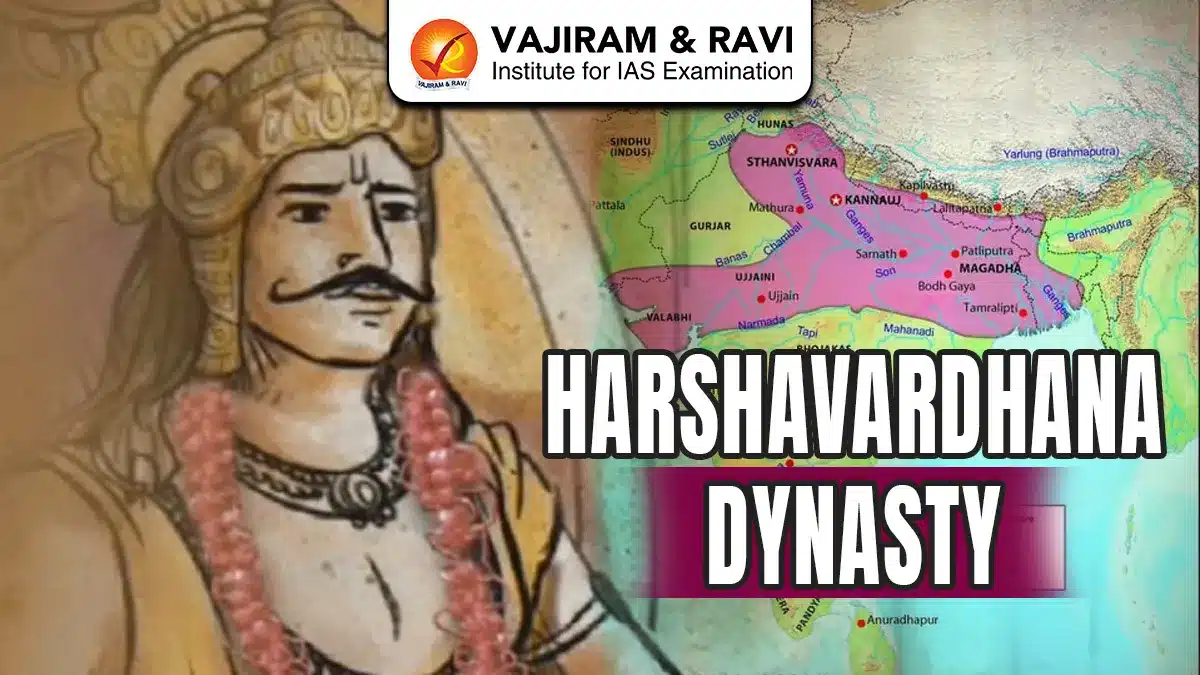
The Harshavardhana Dynasty is also known as the Pushyabhuti Dynasty or Vardhana Dynasty. It ruled northern India from the period around 500 to 647 CE, with its capital initially at Thanesar and later at Kannauj. The dynasty reached its greatest extent under Emperor Harshavardhana, whose empire stretched from Punjab to Bengal and from the Himalayas to the Narmada River. The dynasty is known for its political consolidation, religious tolerance and cultural patronage which played a crucial role in shaping early medieval Indian history.

Harshavardhana Dynasty Timeline

The historical period of the Harshavardhana Dynasty during the 6th - 7th centuries CE with origin, expansion and decline of empire is listed here:

  • c. 500 CE Foundation: Pushyabhuti established control over Thanesar, likely as a former Gupta subordinate asserting independence after imperial decline.
  • 500-580 CE Early Rulers: Naravardhana, Rajyavardhana I and Adityavardhana ruled as Maharajas, probably feudatories under Guptas, Hunas, or Maukharis.
  • 580-605 CE Prabhakaravardhana: Assumed title Maharajadhiraja, expanded territory, resisted Hunas and raised the dynasty to sovereign status.
  • 605-606 CE Rajyavardhana II: Avenged Maukhari alliance by defeating Malwa ruler but was treacherously killed by Gauda king Shashanka.
  • 606-647 CE Harshavardhana: Crowned emperor, unified northern India, ruled for 41 years from Kannauj, marking dynastic zenith.
  • 647 CE Decline: Harsha died without an heir, leading to fragmentation and the end of Pushyabhuti rule.

Harshavardhana Dynasty Sources

The sources of information for the Harshavardhana Dynasty include the following Literature, Inscriptions, etc. mentioned here:

  • Harshacharita: Sanskrit biography written by Banabhatta, Harshavardhana’s court poet, providing detailed information on his life, administration and military campaigns.
  • Si-Yu-Ki (Great Tang Records): Travel account of Chinese pilgrim Xuanzang describing political conditions, society, religion and economy during Harsha’s reign.
  • Aihole Inscription: Composed by Pulakesin II’s court poet Ravikirti, it mentions Harsha’s defeat on the Narmada, confirming historical events.
  • Banskhera Inscription: Land grant issued by Harshavardhana containing his genealogy, administrative titles and governance practices.
  • Madhuban Copper Plate Inscription: Provides details about land grants, officials and revenue system under Harsha’s rule.
  • Nalanda Seal: Archaeological source mentioning Harsha’s support to Nalanda University and Buddhist institutions.
  • Coins: Gold coins of Harshavardhana supply limited but useful information about economy and royal symbolism.
  • Literary Works by Harsha: Plays like Ratnavali, Nagananda and Priyadarshika reflect contemporary culture and religious ideas.
  • Other Contemporary Texts: References in Buddhist and Brahmanical literature help corroborate political and religious history.

Harshavardhana Dynasty Rulers

The Harshavardhana Dynasty included several rulers, but its true greatness emerged under Harshavardhana. The various Kings of Vardhana Dynasty are:

  • Pushyabhuti: He was the founder of the dynasty as mentioned in Harshacharita, credited with establishing the dynasty at Thanesar and initiating regional authority. The dynasty is often named after him as Pushyabhuti Dynasty.
  • Naravardhana: Early ruler who likely governed as a feudatory, maintaining dynastic continuity during post Gupta political uncertainty.
  • Rajyavardhana I: Continued consolidation of Thanesar region while remaining subordinate to stronger contemporaneous powers.
  • Adityavardhana: Strengthened alliances, married into Later Gupta family and expanded influence in north western regions.
  • Prabhakaravardhana: First independent monarch, defeated Hunas, allied with Maukharis and assumed imperial title Maharajadhiraja.
  • Rajyavardhana II: Defeated Malwa ruler Devagupta but was assassinated by Gauda king Shashanka through deceit.
  • Harshavardhana: United Thanesar and Kannauj, expanded empire, patronised Buddhism, literature and ruled as Sakalottarapathanatha. The Dynasty is often named after him as Harshavardhana Dynasty.

Harshavardhana Dynasty Administration

The administration under Harshavardhana Dynasty followed Gupta traditions but showed increasing feudal and decentralised features as highlighted below:

  • Central Authority: King held supreme legislative, executive and judicial powers, supported by Mantri Parishad of ministers and advisors.
  • Provincial Structure: Empire divided into Bhuktis, Visayas, Pathakas and Gramas, ensuring governance from provincial to village levels.
  • Officials: Kumaramatyas, Uparikas, Visayapatis and Gramikas handled civil administration at different levels.
  • Feudal Elements: Mahasamantas and Maharajas were hereditary local chiefs, indicating growing decentralisation.
  • Land Grants: Land granted to Brahmins and officials, reducing coin circulation and strengthening feudal relationships.
  • Law and Order: Weak enforcement noted by Hiuen Tsang; crimes punished harshly, though Buddhist influence softened penalties.

Harshavardhana Dynasty Economy

The economy under Harshavardhana Dynasty showed clear decline compared to the Gupta period:

  • Agriculture: Villages became self sufficient as reduced trade lowered market demand for surplus agricultural produce.
  • Trade and Commerce: Decline evident from fewer coins, weakening merchant guilds and shrinking trade centres.
  • Taxation System: Revenue derived from Bhaga land tax equal to one-sixth produce, Bali, Hiranya, customs and ferry taxes.
  • Coinage: Limited minting reflected land based revenue and grants replacing cash payments.
  • Revenue Division: Income divided into royal expenses, scholars, officials and religious endowments.
  • Craft Decline: Reduced trade weakened handicrafts, metalwork and urban manufacturing.
  • Charity System: Harsha donated wealth every five years, reinforcing the religious economy.
  • Agrarian Focus: Economy relied primarily on land revenue rather than commercial taxation.

Harshavardhana Dynasty Military

The military strength under Harshavardhana Dynasty supported territorial expansion but faced southern resistance. The key features of Military and Army during Vardhana are:

  • Army Composition: Included infantry, cavalry, elephants and camels, each with separate commanders.
  • Command Structure: Cavalry led by Brihadasvavaru; king personally supervised campaigns.
  • Northern Campaigns: Defeated Malwa ruler, subdued Gauda hostility and established dominance across North India.
  • Southern Limitation: Defeated by Chalukya ruler Pulakesin II at Narmada, fixing southern boundary permanently.
  • Diplomacy: Alliances with Bhaskaravarman of Kamarupa and Maitrakas of Valabhi strengthened imperial control.

Harshavardhana Dynasty Art and Culture

The art and culture of the Harshavardhana Dynasty continued the zenith of Gupta Empire. The major features of art are discussed here:

  • Architecture: No distinct style; followed Gupta patterns with religious stupas, monasteries and temples.
  • Sultanganj Buddha: Largest known copper Buddha statue, cast using lost wax technique, dating 500-700 CE.
  • Art Centres: Kannauj, Varanasi, Ujjain emerged as major cultural hubs.
  • Literature by Harsha: Authored Priyadarshika, Ratnavali and Nagananda, showcasing Sanskrit drama excellence.
  • Court Scholars: Banabhatta wrote Harshacharita and Kadambari; Mayurabhatta composed Suryashataka.
  • Education: Nalanda flourished under royal patronage, attracting scholars like Hiuen Tsang.

Harshavardhana Dynasty Society

The society under the rule of Harshavardhana Dynasty reflected rigid caste hierarchy with religious tolerance. The major characteristics of the society is highlighted here:

  • Varna System: Brahmins privileged through land grants; Kshatriyas ruled; Vaishyas traded; Shudras practiced agriculture.
  • Sub Castes: Numerous jatis existed, indicating social stratification intensifying during this period.
  • Women’s Status: Education existed among elites, but sati, dowry and ban on widow remarriage prevailed.
  • Untouchability: Practiced against executioners and scavengers, who lived outside villages.
  • Religion: Harsha followed tolerant policy, patronised Shaivism, Buddhism, Surya worship equally.
  • Buddhist Assemblies: Kannauj and Prayag assemblies promoted Mahayana Buddhism and royal charity.
  • Foreign Travellers: Xuanzang (Hiuen Tsang), a Chinese Buddhist monk who visited India during Harshavardhana’s reign and spent several years at his court. He came to study Buddhism, collect sacred texts and visit important Buddhist pilgrimage centres across India. His travel account Si-Yu-Ki (Great Tang Records on the Western Regions) is a major source for Harshavardhana’s period.

Harshavardhana Dynasty Decline

After the death of Harshavardhan, the Vardhana Dynasty declined rapidly. The major reason behind the fall of dynasty are considered as following:

  • No Heir: Harsha died in 647 CE without a successor, creating power vacuum.
  • Fragmentation: Feudatories like Bhaskaravarman annexed territories.
  • Kannauj’s Fate: Remained politically important, later ruled by Yashovarman.
  • End of Vardhana Rule: Ministerial takeover failed to maintain empire, ending Pushyabhuti dominance in 647 CE.

Harshavardhana Dynasty FAQs

Q1: Who founded the Harshavardhana Dynasty?

Ans: The Vardhana Dynasty was founded by Pushyabhuti in 500 CE as mentioned in the Harshacharita.

Q2: Who was the most powerful ruler of the Harshavardhana Dynasty?

Ans: Harshavardhana was the most powerful ruler who expanded the empire across northern India.

Q3: What was the capital of the Harshavardhana Dynasty?

Ans: Initially Thanesar was the Capital and later Kannauj served as the capital of the Pushyabhuti Dynasty.

Q4: Which sources provide information about the Harshavardhana Dynasty?

Ans: Harshacharita, Xuanzang’s Si-Yu-Ki, inscriptions, seals and coins are main sources.

Q5: What was the religion of Harshavardhana?

Ans: Harshavardhana followed Shaivism initially but later supported Mahayana Buddhism.
Operation Gibraltar, Reasons, Strategy, Failure, Outcome

Operation Gibraltar

Operation Gibraltar was a covert military operation launched by Pakistan in 1965 to incite a mass rebellion among Kashmiri Muslims and weaken India’s control over the region.

The operation was named Operation Gibraltar to motivate its soldiers, by symbolising it with the Muslim conquest of Spain in 711 AD, when a small Muslim force crossed Gibraltar and successfully took control of large parts of Spain

Reasons for Operation Gibraltar 

  • Operation Gibraltar was based on Pakistan’s belief that India was militarily and politically weakened after the 1962 Sino-Indian War and would be unable to respond effectively to a limited infiltration.
  • Pakistan assumed that discontent among the Kashmiri population would translate into mass support for infiltrators, leading to a spontaneous rebellion against Indian administration.
  • A limited covert operation could internationalise the Kashmir issue without triggering a full-scale war.

Operation Gibraltar Strategy 

Under Operation Gibraltar, Pakistani soldiers infiltrated into Kashmir disguised as locals. The infiltrators were organised into groups with code names such as Salahuddin, Ghaznavi, Tariq, Babur and Khalid, each assigned to operate in specific regions of Kashmir. Their tasks included sabotage of bridges and communication networks, attacks on Indian military installations, spreading propaganda, and provoking unrest among the local population.

Operation Gibraltar Outcome 

  • Operation Gibraltar failed as local Kashmiris did not revolt and instead informed the Army and the police about the presence of Pakistani infiltrators.
  • Indian security forces detected the infiltration at an early stage, captured or eliminated a large number of infiltrators, and quickly regained control over affected areas. In response to the infiltration, India launched military counter-operations across the Line of Control, expanding the conflict beyond Kashmir.
  • Pakistan escalated the situation by launching Operation Grand Slam in the Akhnoor sector, which further intensified hostilities.
  • These developments resulted in the outbreak of the full-scale Indo-Pak War of 1965, involving large-scale conventional military engagement on both eastern and western fronts.

The war ended with a ceasefire mediated by the Soviet Union and formalised through the Tashkent Agreement in January 1966, restoring the pre-war territorial status quo.

Operation Gibraltar FAQs

Q1: What was Operation Gibraltar?

Ans: Operation Gibraltar was a secret military operation launched by Pakistan in 1965 to destabilise Indian control over Jammu and Kashmir by encouraging an internal revolt.

Q2: What was the main objective of the operation?

Ans: The primary objective was to infiltrate armed personnel into Kashmir, provoke popular unrest, and internationalise the Kashmir issue without triggering a full-scale war.

Q3: Why was it named Operation Gibraltar?

Ans: It was named after the 711 AD Muslim conquest of Gibraltar to symbolise the belief that a small, covert force could trigger a large-scale political and military change in Kashmir.

Q4: What was the outcome of Operation Gibraltar?

Ans: The operation failed as no mass uprising occurred, infiltrators were detected by Indian forces, and the situation escalated into the Indo-Pak War of 1965.

Q5: What is the Tashkent Agreement?

Ans: The Tashkent Agreement (1966) was a peace agreement signed by India and Pakistan after the 1965 war, under Soviet mediation, in which both sides agreed to withdraw troops and restore pre-war positions.

Durgadi Fort, About, History, Key Facts, Features, Disputes

Durgadi Fort

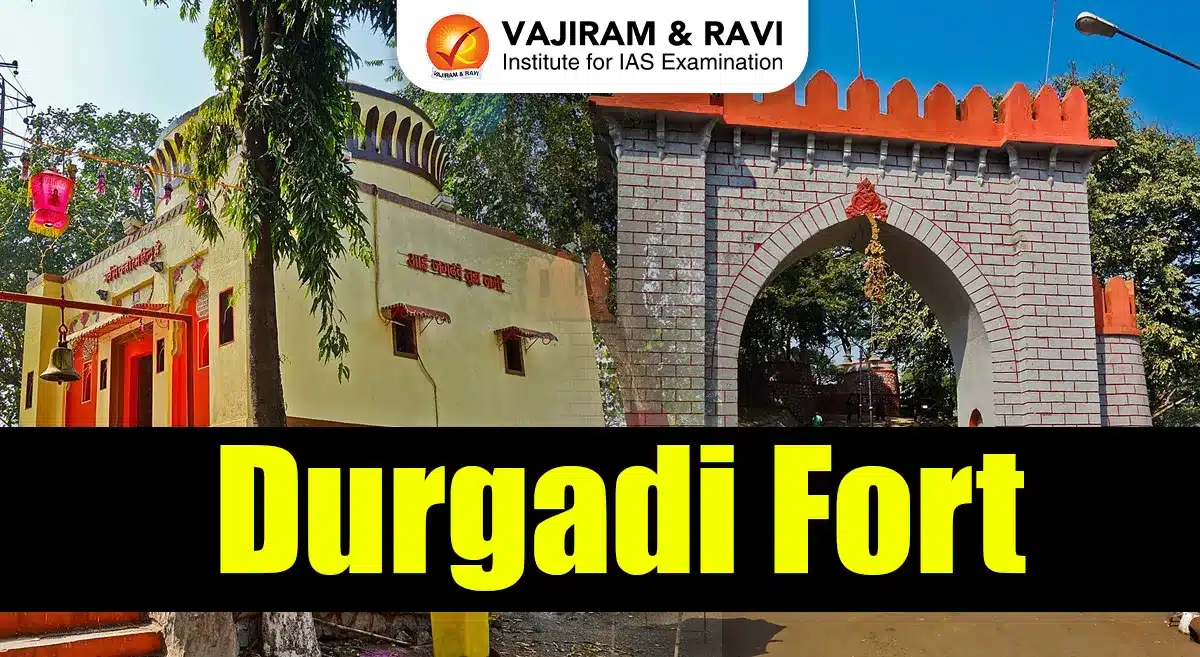
Durgadi Fort is a significant historic fort located in Kalyan region of Maharashtra, on the banks of the Ulhas River. It was built during the 16th century, under Adil Shah and later it was controlled by Chhatrapati Shivaji Maharaj. The fort played a crucial role in Medieval India trade and economic activities due to its strategic coastal location.

Durgadi Fort Facts

  • Durgadi Fort is located in the Kalyan region, Maharashtra on the bank of Ulhas river.
  • It was constructed in the 16th century by Adil Shah (Sultanate of Bijapur) and was later modified by Marathas.
  • The fort is spread over an area of 70 acres.
  • It was a mosque for the Eid Prayer for the Muslim community.
  • When the Marathas captured Kalyan they renamed the fort as Durgadi Killa (fort) and built a wooden temple dedicated to Durgadevi, near the already existing mosque.
  • In 1818 when the Britishers took control, the fort became less significant as a place of worship and by 1876 the idol of the goddess was also stolen.

Durgadi Fort Historical Background

  • Under Adil Shah Period
    • Durgadi Fort was constructed in the 16th century under Adil Shah, Sultanate of Bijapur.
    • The position of the fort was strategic as it was acting as trading point thus protecting Kalyan commercial and economic interests and was also used to protect Kalyan from the rivals.
    • The fort contributed to Adil Shah’s economy as it was used to collect revenues from the river-borne trade.
    • Its location made it a key defensive and administrative post in the northern Konkan region.
  • Under Maratha Period
    • Kalyan was captured by Maratha ruler Chhatrapati Shivaji Maharaj in 1760 as part of his expedition to capture Konkan region and its trading points.
    • They constructed a wooden temple, dedicated to Durgadevi (goddess Durga).
    • Under the Marathas, the fort became an important military outpost to keep an eye on the enemy's movement.
    • It supported their naval and commercial networks.
    • The fort also witnessed the conflict between the Marathas and the Britishers.
    • In 1818, after the third Anglo-Maratha war, the control of the fort was passed to the British after which it lost its significance.
  • Under British Rule
    • The fort lost its strategic and military significance under British rule.
    • The temple which was constructed during the marathas, lost its prominence and later  ceased to function.
    • In 1876, the idol of goddess Durgadevi was stolen, marking the decline of cultural and religious significance.
    • The Britishers paid more attention to the development of Bombay, thus reducing Kalyan’s strategic value.
    • Over time the fort became a historical monument.

Read about: Daulatabad Fort

Durgadi Fort Features

  • Durgadi Fort was built on an elevated ground on the bank of the Ulhas river and covering an area of 70 acres.
  • It includes a stone Idgah (prayer wall), mosque, and round stone-cut well.
  • Marathas build a wooden temple within the fort.
  • Surrounded by strong defensive walls suitable for land and river protection.
  • Simple and functional layout, focused on military needs rather than decoration.

Durgadi Fort Significance

  • Medieval Indian History: The fort gives a glimpse about the military strategies of the Medieval rulers, the fort's role in the regional defences and its impact on the military landscape.
  • Geographical Significance: It has served as a strategic trade port in the medieval period, as it was located on the bank of Ulhas River, contributing to economic growth and is essential to understand the military geography of medieval India.
  • Cultural Significance: The fort reflects the architectural contributions by Adil Shah and the temple reflects the cultural contributions by the Marathas. Thus, the fort has both a mosque and was later modified to include a temple. Its been a site of communal tensions, reflecting a complex balance between historical heritage and religious identity.

Durgadevi Fort Disputes

  • Communal Tensions (1960s):
    The dispute began in the mid-1960s, when some local Kokni Muslims declared the use of the long-standing fort for Eid prayers and claimed possession of the land. Hindu groups did not accept their claims and demanded equal worship rights.
  • State Intervention and Ownership Claim (1966):
    The Maharashtra government after realizing the communal seriousness, declared itself as the legal owner of the fort land and suggested transferring some part of it to the Kalyan Municipal Council for public use. Following protests, the order was withdrawn, and a status-quo arrangement was introduced.
  • Regulated Religious Use:
    The government refused to recognise both Hindu nor Muslim ownership claims. Muslims were allowed to offer Eid prayers twice a year at the eidgah walls and adjoining open ground, under the administrative supervision.
  • Escalation of Religious Claims (Late 1960s):
    In 1968, tensions intensified when some Hindu groups claimed that the structure was a Durga temple and began Navratri celebrations within the fort. This period marked a shift from administrative dispute to religious controversy.
  • Legal Battle (1970s Onwards):
    In 1974, the Maharashtra government again transferred the land to the Kalyan Municipal Corporation. This order was legally challenged by the Muslim trust in 1976, initiating a prolonged court dispute.
  • Politicisation of the Issue:
    Over the decades, the fort became a focal point for local political mobilisation, with religious rituals and symbolic acts used to assert their claims.
  • Judicial Verdict:
    After nearly five decades, a Kalyan Civil Court ruled in favor of the Maharashtra government’s ownership of the land, rejecting the Muslim trust’s claim on the grounds of limitation under the Limitation Act.

Current Status:
While the verdict confirmed state ownership, the Muslim side has decided to appeal, keeping the dispute legally and politically relevant.

Durgadi Fort FAQs

Q1: Where is Durgadi Fort located?

Ans: Durgadi Fort is located in Kalyan region of Maharashtra, on the bank of Ulhas river.

Q2: Who built the Durgadi Fort?

Ans: The Durgadi Fort was built by Adil Shah, the Sultanate of Bijapur in the 16th century.

Q3: When did Marathas capture Durgadi Fort?

Ans: The Marathas captured the Kalyan in 1760 , then the fort was also seized and a wooden temple was constructed.

Q4: What happened to the fort under British rule?

Ans: The fort was captured by British in 1818 after the third Anglo-Maratha war and the fort lost its significance.

Q5: Why was Durgadi Fort strategically significant?

Ans: The Durgadi Fort is located on the bank of Ulhas river, thus serving as a strategic focal point for trade, revenue collection and defense.

Enquire Now