
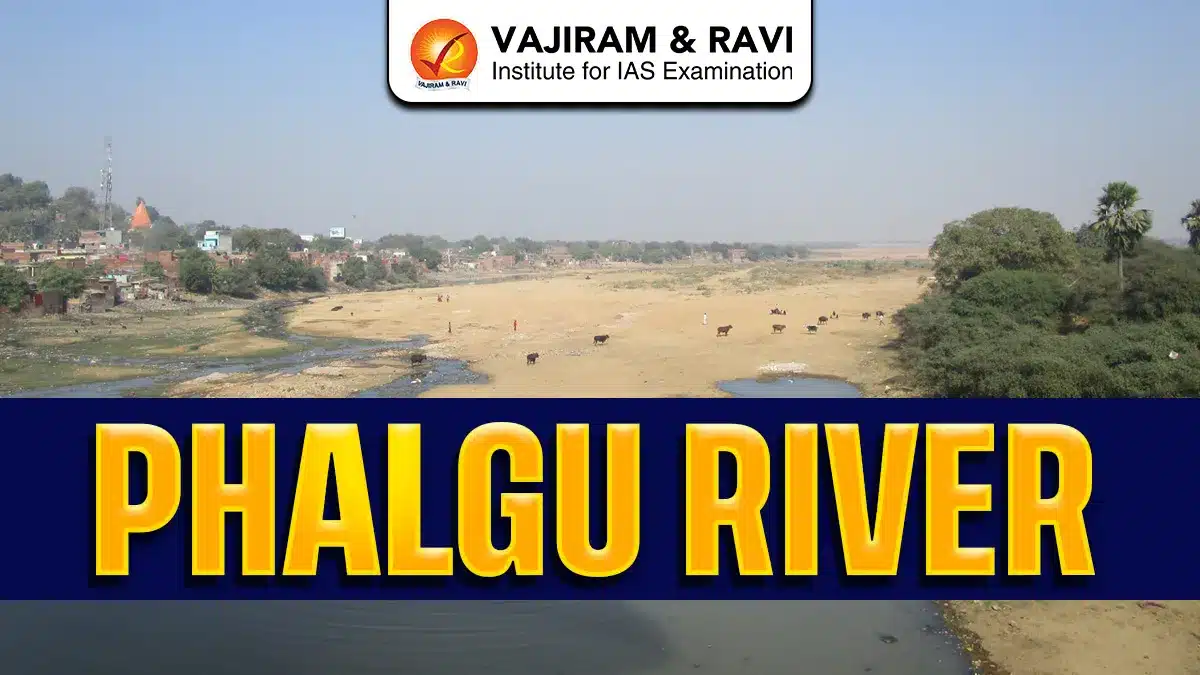
The Phalgu River, also called Falgu, is an important river in Bihar. It is a sacred river for Hindus, Buddhists, and Jains.
About Phalgu River
- Phalgu river is formed by the confluence of the Lilajan and Mohana rivers near Gaya and eventually joins the Punpun River which is a tributary of the Ganga.
- Phalgu river is often referred to as the 'hidden Ganga' (Gupta Ganga) because it flows below a wide, sandy bed, appearing dry on the surface for most of the year.
- It is historically known as the Niranjana river where Buddha attained enlightenment.
- Sujata stupa lies across the Phalgu river. The stupa is dedicated to Sujata, a milkmaid, who offered milk and rice to Gautama Buddha after he had spent many years in deep meditation and severe ascetic practices. This meal helped him regain strength before he attained enlightenment.
- It is also a major site for Hindu pilgrimage, especially for Pind Daan (ancestral rituals), performed on the banks of the river near the Vishnupad Temple at Gaya. In this ritual, people visit the river to remember their ancestors. They offer prayers, flowers, and food, and pray for the peace and salvation of their forefathers.
- According to legend, a demon named Gayasur received a boon that anyone who saw him would attain salvation. As even sinful people began getting moksha, the natural order was disturbed. To restore balance, Lord Vishnu pushed Gayasur into the netherworld by placing his foot on his head, leaving his footprint on a rock at Gaya. Before leaving, Gayasur asked for food, and Vishnu blessed him that anyone who offered food to him would gain salvation. This belief led to the tradition of performing Pind Daan at Gaya.
Phalgu River FAQs
Q1: Where is the Phalgu river located?
Ans: Phalgu River flows in Bihar, mainly around the city of Gaya.
Q2: How is the Phalgu River formed?
Ans: It is formed by the confluence of the Lilajan and Mohana rivers near Gaya and later joins the Punpun River, a tributary of the Ganga.
Q3: Why is the Phalgu River called the “Hidden Ganga”?
Ans: Because it flows beneath a wide sandy bed and appears dry on the surface for most of the year.
Q4: What is the religious significance of the Phalgu River?
Ans: It is sacred to Hindus, Buddhists, and Jains and is associated with Pind Daan rituals and Buddha’s enlightenment.
Q5: What is the historical importance of the Phalgu River?
Ans: It is known as the ancient Niranjana River, where Gautama Buddha attained enlightenment.
