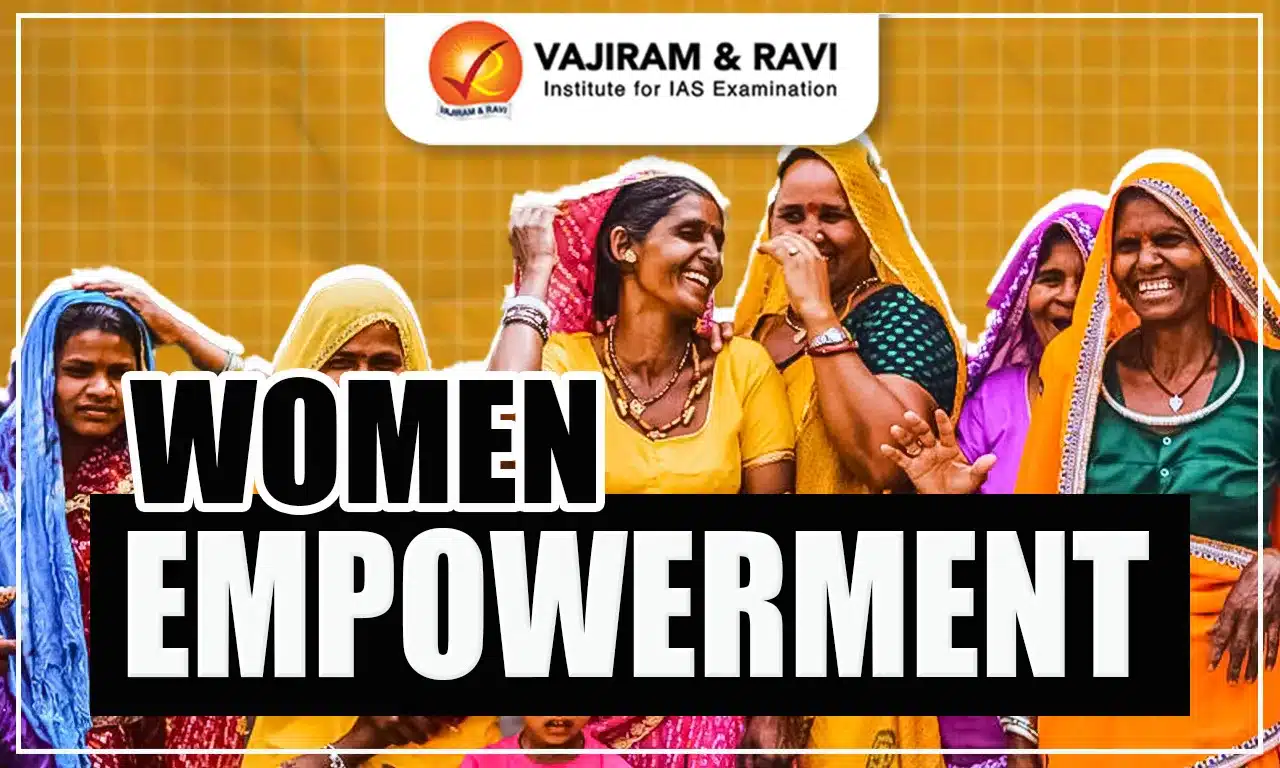
Women Empowerment is the process of reducing and eliminating Social Issues, Economic Challenges and Political Inequalities between men and women. The concept gained prominence in the 19th century, where empowerment meant enabling individuals with rights and authority. Historically, women have been regarded as the weaker gender worldwide and, even after India’s independence, they remained deprived of equal socio-economic status. To address this imbalance, the Government of India and various non-governmental organizations initiated multiple women development programmes. At the global level, the United Nations declared 1975-1985 as the "Decade for Women", and 2001 as the "International Year for Women’s Empowerment", a resolution adopted by India.
Women Empowerment in India
In India, Women constitute nearly 48% of the population which makes the Woman Empowerment central to inclusive national development. Over the past decade, improvements in female literacy, workforce participation, entrepreneurship, political representation and health indicators show steady progress. At the same time, persistent challenges such as patriarchy, violence, informal employment and moral policing continue to restrict women’s autonomy.
Women Empowerment Need
Women Empowerment is essential for equality, economic growth, democratic strength, social justice and sustainable development in a diverse and populous society.
- Reduction of Violence Against Women: Empowerment strengthens legal awareness, economic independence and social support, enabling women to resist domestic violence, sexual abuse and exploitation while improving reporting and justice delivery.
- Addressing Feminization of Poverty: Women form a disproportionate share of the poor due to low wages, informal work and unpaid care responsibilities; empowerment expands income access and financial security.
- Economic Productivity: Greater female workforce participation increases national productivity, household incomes and economic resilience, directly supporting inclusive growth.
- Social Justice: Empowerment corrects historical discrimination by ensuring equal rights, opportunities and dignity across social, economic and political spheres.
- Democratic Strengthening: Women’s participation in governance improves policy inclusiveness, accountability and responsiveness, reflecting grassroots realities and social diversity.
Women Empowerment Legal Frameworks
In India, Women Empowerment is backed by Constitutional Provisions, Government Schemes and Initiatives and other Legal Aspects as highlighted below:
1. Constitutional Provisions
Article 14 guarantees equality before law, while Article 15 prohibits discrimination and allows special provisions for women. Article 16 ensures equal opportunity in public employment, forming the legal foundation for gender justice. Article 39(d) mandates equal pay for equal work and Article 42 directs the state to ensure humane working conditions and maternity relief.
2. Government Initiatives
Various Government Schemes and Initiatives help in the eradication of discrimination against woman at various levels of society and administrations. The major initiatives include:
- The Protection of Women from Domestic Violence Act 2005: provides legal remedies against abuse, the Nirbhaya Scheme improved legal deterrence, though enforcement gaps remain a concern.
- Maternity Benefit (Amendment) Act 2017: extended paid maternity leave to 26 weeks and mandated crèche facilities, supporting women’s workforce continuity and child care responsibilities.
- Beti Bachao Beti Padhao Scheme: addresses declining child sex ratios and promotes girls’ education, contributing to rising female literacy and increased school enrollment across states.
- Pradhan Mantri Mudra Yojana: expanded credit access, with 68% of loans in 2024 issued to women. Stand-Up India and Mahila E-Haat further support women-led enterprises and market access.
- Mission Shakti: integrates safety, security and empowerment schemes, including One Stop Centres. Over 725 centres offer legal aid, medical support and counselling to women facing violence.
- The Nari Shakti Vandan Adhiniyam 2023: mandates 33% reservation for women in Parliament and state assemblies, marking a historic step toward balanced political representation after delimitation.
- Digital and Technology Initiatives: Programs like Drone Didis promote technology adoption and digital entrepreneurship among rural women, expanding income opportunities beyond traditional sectors.
- Other Scheme: The Government of India has brought various other schemes for the upliftment and protection of the Females, such as: Swadhar Greh, Nari Shakti Puruskar, POSH Act, Ujjawala Scheme, POCSO Act, Sakhi Niwas, Vishaka Guidelines, Sukanya Samriddhi Yojana, Mahtari Vandana Yojana etc.
Women Empowerment Challenges
Women empowerment in India faces structural, social, economic and cultural barriers that limit women’s freedom, safety and participation despite visible progress in education and employment. Some of the major Women Empowerment Difficulties are:
- Labour Force Exclusion: About 90% of working women remain in informal employment without social security, maternity benefits, or job stability. Although female labour force participation rose to 41.7% in 2023-24, it remains far below male participation and the global average of 48.7%, reinforcing economic vulnerability.
- Feminisation of Agriculture: Women constitute over 42% of India’s agricultural workforce in 2025, marking a 135% rise in a decade. However, most lack land ownership, access to credit and decision making power, resulting in unpaid or underpaid labour despite increased responsibility in food production.
- Political Underrepresentation: Women hold only about 13.6% of seats in the 18th Lok Sabha, with limited representation in state legislatures. Practices like the “sarpanch-pati” system undermine elected women leaders, while delays in implementing the 33% reservation law weaken meaningful political empowerment.
- Health Inequality: NFHS-5 reports that 57% of women aged 15-49 are anaemic, affecting productivity and maternal health. Despite maternal mortality declining to 97 per 100,000 live births, malnutrition and inadequate preventive care continue to undermine women’s physical well-being.
- Educational and Skill Gaps: Higher education enrollment stands at about 28.5%, with women underrepresented in STEM fields. Early marriage, care burdens and limited career guidance restrict skill development, preventing education from translating into quality employment opportunities.
- Digital and Infrastructure Exclusion: Around 51.6% of rural women do not own a mobile phone, limiting access to digital education, banking and e-governance. This digital divide reduces participation in the modern economy and increases dependence on intermediaries for essential services.
- Cyber Abuse and Online Harassment: Growing digital access has introduced cyberstalking, bullying, AI manipulation of Photos and Videos and doxing, discouraging women from using online platforms for education and work as seen in the recent Grok AI Case. Fear of online violence creates a chilling effect, reinforcing digital exclusion rather than empowerment.
- Gender-Based Violence: More than 4,45,000 crimes against women were reported in 2022, including domestic violence and sexual assault. Weak enforcement and social stigma reduce reporting, affecting women’s mobility, confidence and participation in public life.
Women Empowerment International Measures
Global conventions and development goals provide normative guidance and accountability mechanisms supporting women’s rights and gender equality across nations.
- CEDAW: India ratified the Convention on the Elimination of All Forms of Discrimination against Women, committing to eliminate legal and social discrimination and ensure equal political, economic and social rights.
- Beijing Platform for Action: The 1995 declaration emphasised women’s economic participation, education, health and freedom from violence, shaping national gender policies and monitoring frameworks worldwide.
- Sustainable Development Goal 5: SDG 5 aims to achieve gender equality by 2030, linking women empowerment with education, health, decent work, leadership and access to resources, influencing national planning priorities.
- International Labour Standards: ILO conventions on equal remuneration, maternity protection and workplace safety inform labour reforms and gender-sensitive employment policies in developing economies.
- Global Advocacy and Reporting: UN Women and global indices on gender inequality highlight gaps and best practices, encouraging evidence based policymaking and cross-country learning for women empowerment.
Women Empowerment Achievements
India’s progress in women empowerment is reflected in measurable gains across education, economy, health, leadership and social visibility over the past decade.
- Rising Female Literacy: Female literacy reached about 70.3% in 2025, while youth literacy stands at 96%. States like Kerala and Mizoram approach universal literacy, showing the impact of sustained educational investments.
- Workforce Participation Growth: Female labour force participation rose to 41.7% in 2023-24, with increased presence in IT, healthcare, education and the gig economy, signalling gradual economic integration.
- Entrepreneurship Expansion: Women-led MSMEs nearly doubled to 1.92 crore enterprises in 2023-24. Women-owned proprietary establishments increased from 17.4% to 26.2%, reflecting growing economic independence.
- Self-Employment Rise: Self-employment among women increased from 51.9% in 2017 to 67.4% in 2024, supported by microcredit, SHGs and digital marketplaces.
- Local Governance Leadership: Women constitute nearly 46% of representatives in Panchayati Raj Institutions, supported by state-level reservations up to 50%, strengthening grassroots democracy.
- Health Outcome Improvements: Maternal mortality declined and institutional deliveries exceeded 88%, reflecting expanded healthcare access and maternal support schemes.
- Political Visibility: Women leaders like Nirmala Sitharaman and Mamata Banerjee influence national and state governance, while the reservation law signals future gains in legislative representation.
- Cultural and Sports Achievements: Athletes like Smriti Mandhana and Harmanpreet Kaur led historic cricket victories in 2025, while Olympic performances by women enhanced national pride and challenged gender stereotypes.
Women Empowerment FAQs
Q1: What is Women Empowerment?
Ans: Women Empowerment means enabling women to participate equally in decision-making, education, employment and social life with dignity and rights.
Q2: What is the need of Women Empowerment?
Ans: It reduces gender inequality, boosts economic growth, improves family health and strengthens democratic participation.
Q3: How does the Government support Women Empowerment in India?
Ans: The Government supports Women Empowerment through constitutional guarantees, education and skill schemes, economic support programs, safety laws, and integrated initiatives like Mission Shakti.
Q4: What are the Challenges to the Empowerment of Womens?
Ans: Patriarchy, gender-based violence, wage gap, limited access to education and underrepresentation in politics and leadership roles.
Q5: How does Women Empowerment help reduce Poverty?
Ans: When women earn and control income, family spending on food, health, and education increases, which directly reduces poverty and improves living standards.

