
Idukki Hydroelectric Project

Idukki Hydroelectric Project

Idukki Hydroelectric Project Latest News

As the Idukki hydroelectric project, Kerala’s largest hydel power project, marks a historic 50-year milestone, the Moolamattom power plant has recorded a total generation of 115,852.672 million units (MU) over the past five decades.

About Idukki Hydroelectric Project

  • It is built across the Periyar River in the Idukki district of Kerala.
  • It is the largest hydroelectric project in Kerala.
  • The installed capacity of this project is 780 MW.
  • The powerhouse at Moolamattom is the longest underground power station in India, and the pressure shaft is the largest in the country. 
  • The powerhouse has six generators of 130 MW capacity each. 
  • The project was completed with aid from the Government of Canada, and the technical consultancy was M/s Surveyor, Nenniger and Chenevert. 
  • The project was dedicated to the nation on 12th February 1976.
  • There are three dams associated with this project. They are: Idukki Arch Dam, Cheruthoni Dam & Kulamavu Dam.
    • The Idukki dam is one of the highest ten arch dams in the world and the third highest in India after the Tehri Dam (Uttarakhand) and Bhakra Nangal Dam (Himachal Pradesh). 
    • It is the first dam in Asia that is constructed in a double-curvature arch dam type and the second in the world. 
    • The dam stands between the two mountains, Kuravanmala (839 m), and Kurathimala (925 m).

Source: TH

Idukki Hydroelectric Project FAQs

Q1: Where is the Idukki Hydroelectric Project located?

Ans: It is located in the Idukki district of Kerala.

Q2: What is the installed capacity of the Idukki Hydroelectric Project?

Ans: The installed capacity is 780 MW.

Q3: Where is the powerhouse of the Idukki project located?

Ans: The powerhouse is located at Moolamattom.

Q4: What is unique about the Moolamattom powerhouse?

Ans: It is the longest underground power station in India.

Q5: Which are the three dams associated with the Idukki project?

Ans: Idukki Arch Dam, Cheruthoni Dam, and Kulamavu Dam.
Kapilash Wildlife Sanctuary

Kapilash Wildlife Sanctuary

Kapilash Wildlife Sanctuary Latest News

The standing committee of the National Board for Wildlife (NBWL) recently gave its nod for the use of 4.68 hectares of forest land from the Kapilash wildlife sanctuary for the much-awaited 111 km six-lane capital region ring road (CRRR) project to pass.

About Kapilash Wildlife Sanctuary

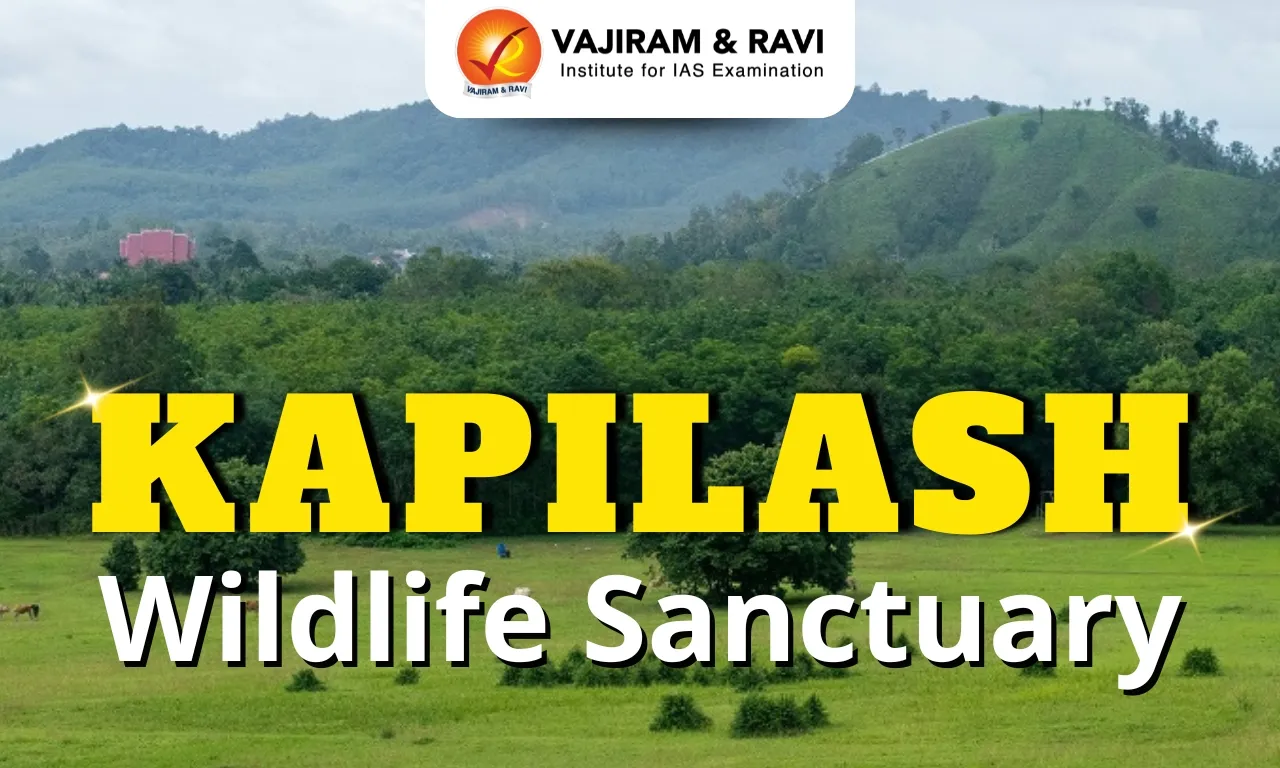
  • It is located in the Dhenkanal district of Odisha.
  • It covers an area of about 125.5 sq.km. and lies in the Chota Nagpur Plateau region. 
  • It has a picturesque landscape with hills, forests, and caves and includes the Kapilasa Temple atop a hill.
    • The temple is believed to have been constructed by King Kapilendra Deb, who ruled over Odisha from 1435 to 1467 AD. 
  • Vegetation: It is classified as an Eastern Highlands moist deciduous forest ecoregion.
  • Flora: It is dominated by sal trees and a rich variety of flora like amla, teak, and kadamba.
  • Fauna
    • It is home to diverse wildlife, including elephants, jungle cats, sloth bears, spotted deer, jackals, and various species of birds such as peacocks, junglefowl, and kingfishers. 
    • It also supports several reptiles and unique species like pangolins and porcupines.

Source: MSN

Kapilash Wildlife Sanctuary FAQs

Q1: Where is Kapilash Wildlife Sanctuary located?

Ans: It is located in the Dhenkanal district of Odisha.

Q2: In which physiographic region does Kapilash Wildlife Sanctuary lie?

Ans: It lies in the Chota Nagpur Plateau region.

Q3: Which famous temple is located within Kapilash Wildlife Sanctuary?

Ans: The Kapilasa Temple is located atop a hill within the sanctuary.

Q4: Under which forest ecoregion is Kapilash Wildlife Sanctuary classified?

Ans: It is classified as an Eastern Highlands moist deciduous forest ecoregion.

Rashtriya Karmayogi Large Scale Jan Seva Programme

Rashtriya Karmayogi Large Scale Jan Seva Programme

Rashtriya Karmayogi Large Scale Jan Seva Programme Latest News

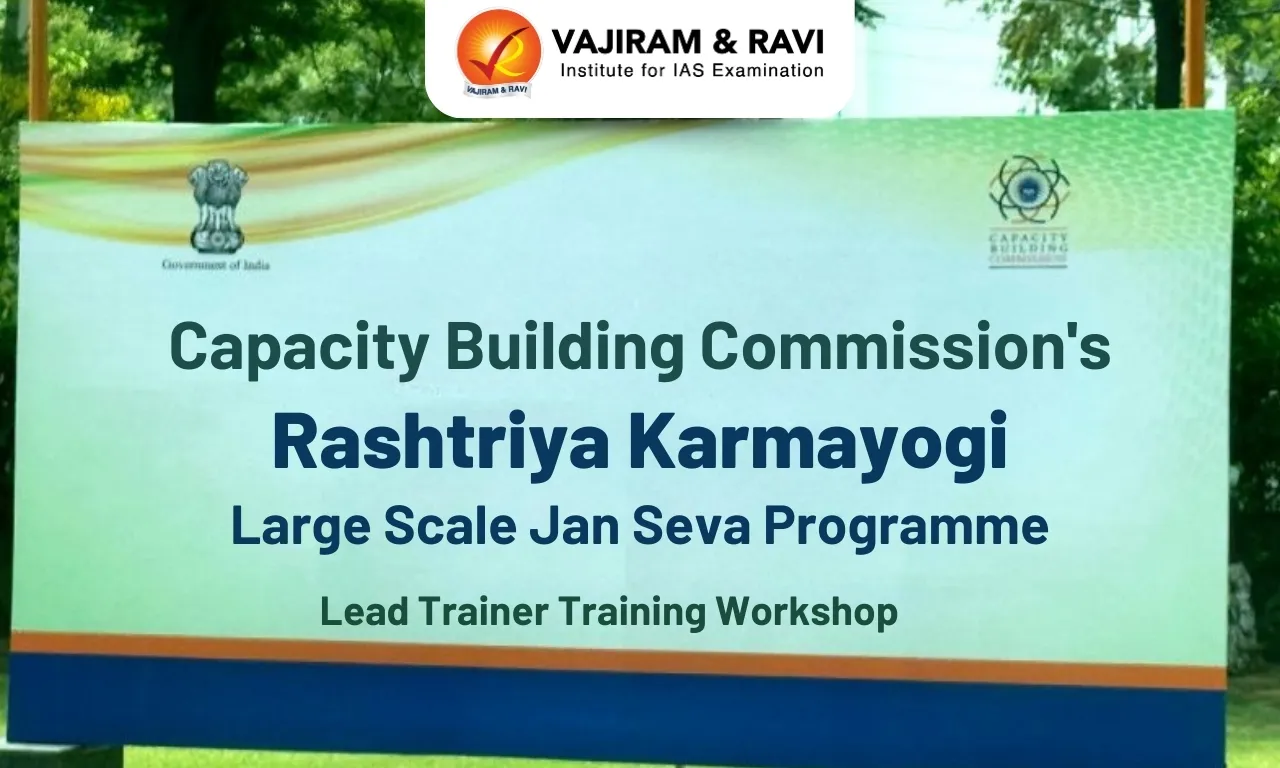
The Ministry of Personnel, Public Grievances and Pensions said that 10.5 lakh govt servants trained under Rashtriya Karmayogi Large Scale Jan Seva Programme.

About Rashtriya Karmayogi Large Scale Jan Seva Programme

  • It is a national behavioural transformation initiative for civil servants.
  • It is launched by the Capacity Building Commission (CBC). 
  • It was designed to emphasize upon the deeper sense of Seva Bhav (spirit of service) and Svadharma (duty aligned with personal purpose) among Government servants, with the objective of strengthening citizen-centric governance.
  • The initiative focused on improving quality of service delivery, enhancing responsiveness and collaboration across governance structures, and fostering greater engagement and satisfaction among officers.

What is Capacity Building Commission?

  • It is the executive body of the Mission Karmayogi framework, to drive civil service reforms through capacity building and competency-based learning.
  • It works to strengthen the human resource foundations of the government by focusing on developing individual and institutional capacities, promoting citizen-centric governance, future readiness.
  • It fosters a culture of lifelong learning across all levels of public administration.
  • The Commission designs frameworks, sets standards, and encourages collaboration to make governance more transparent, accountable, citizen-centric, and future-ready.

Source: News On Air

Rashtriya Karmayogi Large Scale Jan Seva Programme FAQs

Q1: What is the primary aim of the Rashtriya Karmayogi Jan Seva Programme?

Ans: To build a more accountable, compassionate, and citizen-centric workforce.

Q2: Who is the target audience for the Rashtriya Karmayogi Jan Seva Programme?

Ans: Government officials

Valley of the Kings

Valley of the Kings

Valley of the Kings Latest News

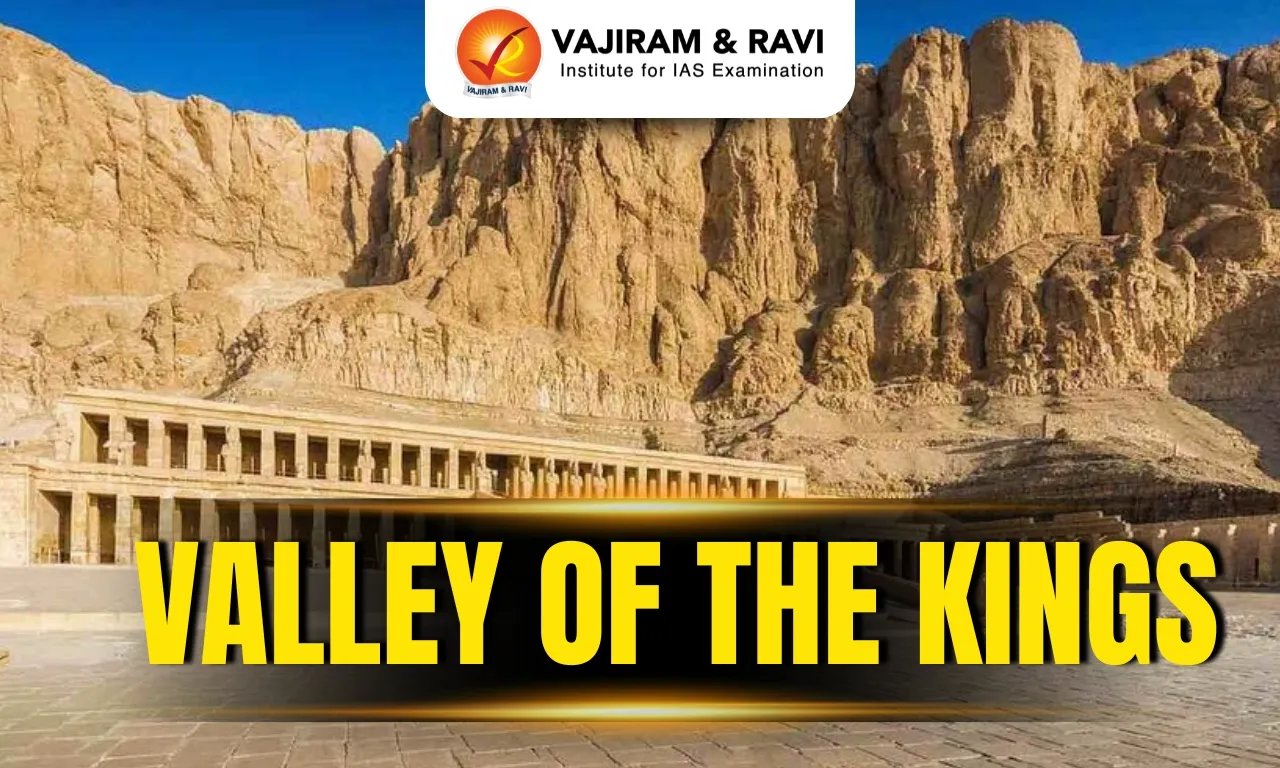
Two researchers recently identified close to 30 inscriptions in Tamil Brahmi, Prakrit and Sanskrit at tombs in the Valley of the Kings in Egypt.

About Valley of the Kings

  • It was the burial site of dozens of pharaohs, or kings, of ancient Egypt. 
  • The valley lies in the southern half of Egypt, just west of the Nile River. 
  • It was part of the ancient city of Thebes.
  • Most of the pharaohs of the 18th, 19th, and 20th dynasties were buried in the Valley of the Kings. 
  • These pharaohs ruled from 1539 to 1077 BC, during the period of Egyptian history known as the New Kingdom. 
  • By that time the pharaohs had stopped building pyramids to serve as their tombs. 
  • Not only pharaohs were buried in the Valley of the Kings. Several queens, a few high-ranking officials, and some royal children were also laid to rest there. 
  • The tomb built for the many sons of Ramses II is the largest and most complex in the valley.
  • The tombs in the Valley of the Kings were carved into rocky hillsides with only a doorway marking their location. 
  • The interior varied from tomb to tomb, but most consisted of a series of descending corridors with multiple openings leading to chambers, or rooms. 
  • Deep underground, one corridor ended at the burial chamber. It held a sarcophagus, or stone coffin, in which the pharaoh’s mummy was laid. 
  • The burial chamber also included furniture, clothing, jewelry, and other items that it was believed the pharaoh would need in the afterlife.
  • Virtually all the tombs in the valley were cleared out in antiquity. 
  • Some had been partially robbed during the New Kingdom, but all were systematically denuded of their contents in the 21st dynasty, in an effort to protect the royal mummies and to recycle the rich funerary goods back into the royal treasury. 
  • The only tomb to remain mostly intact was that of Tutankhamun (reigned 1333–24 BC).
  • In 1979 UNESCO made the Valley of the Kings part of the World Heritage site of ancient Thebes.

Source: TH

Valley of the Kings FAQs

Q1: What was the Valley of the Kings primarily used for?

Ans: It was the burial site of dozens of pharaohs (kings) of ancient Egypt.

Q2: Where is the Valley of the Kings located?

Ans: It lies in the southern half of Egypt, just west of the Nile River.

Q3: The Valley of the Kings was part of which ancient city?

Ans: It was part of the ancient city of Thebes.

Q4: Which dynasties’ pharaohs were mainly buried in the Valley of the Kings?

Ans: Most of the pharaohs of the 18th, 19th, and 20th dynasties were buried there.

Q5: How were the tombs in the Valley of the Kings constructed?

Ans: They were carved into rocky hillsides with only a doorway marking their location.

Mud Volcano

Mud Volcano

Mud Volcano Latest News

A mud volcano suddenly erupted in Diglipur, Andaman Islands, recently.

About Mud Volcano

  • It is a mound of mud heaved up through overlying sediments. 
  • The craters are usually shallow and may intermittently erupt mud. 
  • These eruptions continuously rebuild the cones, which are eroded relatively easily.
  • Some mud volcanoes are created by hot-spring activity where large amounts of gas and small amounts of water react chemically with the surrounding rocks and form a boiling mud. 
    • Variations are the porridge pot (a basin of boiling mud that erodes chunks of the surrounding rock) and the paint pot (a basin of boiling mud that is tinted yellow, green, or blue by minerals from the surrounding rocks).
  • Other mud volcanoes, entirely of a nonigneous origin, occur only in oil-field regions that are relatively young and have soft, unconsolidated formations. 
    • Under compactional stress, methane and related hydrocarbon gases mixed with mud force their way upward and burst through to the surface, spewing mud into a conelike shape. 
    • Because of the compactional stress and the depth from which the mixture comes, the mud is often hot and may have an accompanying steam cloud.
  • Mud volcanoes, also known as “sedimentary volcanoes” or “gas-oil volcanoes,” are close cousins to magmatic volcanoes. 
    • Like magmatic volcanoes, they can erupt powerfully and hurl flames to great heights, sometimes even several hundred meters. 
    • Instead of hot lava, it spits out mud, water, and gases from deep inside the Earth. 
  • Mud volcanoes also exist on the floor of the sea and can form islands and banks that alter the topography and shape of the coastline.
  • Approximately 1,000 mud volcanoes have been identified on land and in shallow water.
  • In India, the only mud volcano lies in Baratang Island, a part of the Andaman chain of islands.

Source: MC

Mud Volcano FAQs

Q1: What is a mud volcano?

Ans: It is a mound of mud heaved up through overlying sediments.

Q2: What is a “porridge pot” in the context of mud volcanoes?

Ans: It is a basin of boiling mud that erodes chunks of surrounding rock.

Q3: Can mud volcanoes occur under the sea?

Ans: Yes, they exist on the sea floor and can form islands and banks.

Q4: Where is the only mud volcano located in India?

Ans: It is located on Baratang Island in the Andaman chain of islands.

Continental Mantle Earthquakes

Continental Mantle Earthquakes

Continental Mantle Earthquakes Latest News

Recently the Stanford researchers have produced the first global map of a rare type of earthquake i. e Continental mantle earthquakes.

About Continental Mantle Earthquakes

  • These are seismic events which originate in the mantle beneath continents.
  • Origin: Unlike most earthquakes, which originate in the Earth’s cold, brittle crust at depths of around 10 to 29 kilometres, mantle earthquakes often occur more than 80 km below the Mohorovičić discontinuity (boundary between the crust and the mantle).
  • Impact: They are too deep to cause much shaking or danger at Earth's surface.
  • Occurrence: They occur worldwide but are regionally clustered, particularly beneath the Himalayas in southern Asia and the Bering Strait between Asia and North America. 
  • Significance: The new map will help scientists learn more about the mechanics of mantle earthquakes.

What is Mohorovičić Discontinuity?

  • It is the boundary lying between the crust and the mantle of the earth across which seismic waves change velocities.
  • It is located approximately 24 miles below the earth’s surface and 6 miles below the oceanic floor, a distance which varies from place to place.
  • The discontinuity was named after Croatian seismologist and geophysicist Andrija Mohorovicic who pioneered its discovery in 1909.

Source: DTE

Continental Mantle Earthquakes FAQs

Q1: How do scientists identify mantle quakes?

Ans: Analyzing seismic waveforms (Sn and Lg waves)

Q2: hat can trigger rupture in the continental mantle?

Ans: Tectonic stress transfer

Corruption Perceptions Index

Corruption Perception Index (CPI) 2024

Corruption Perceptions Index Latest News

India climbed five places to the 91st position out of 182 countries and territories on the Corruption Perceptions Index (CPI) 2025.

About Corruption Perceptions Index

  • It is the most widely used global corruption ranking in the world.
  • The index has been published annually by the non-governmental organisation Transparency International since 1995.
  • Methodology Used
    • It is an index which ranks countries “by their perceived levels of public sector corruption, as determined by expert assessments and opinion surveys.”
    • It uses a scale of zero to 100, where “zero” is highly corrupt and “100” is very clean.
    • It measures how corrupt each country’s public sector is perceived to be, according to experts and business people.
    • The score for each country is derived from a minimum of three data sources, selected from 13 distinct corruption surveys and assessments.
    • These sources are gathered by a range of reputed organisations, such as the World Bank and the World Economic Forum.

Key Highlights of Corruption Perceptions Index (CPI) 2025

  • Least Corrupt nations: Denmark, Finland and Singapore.
  • Most Corrupt nations: South Sudan, Somalia and Venezuela.
  • Performance of India: Its rank improved from 96 (2024) to 91 (2025).

Source: ET

Corruption Perceptions Index FAQs

Q1: What is India's rank in the Corruption Perceptions Index 2025?

Ans: 91st

Q2: Which country tops the Corruption Perceptions Index 2025?

Ans: Denmark

Lion-Tailed Macaque

Lion-Tailed Macaque

Lion‑Tailed Macaques Latest News

Researchers cautioned that the increase of lion‑tailed macaques in human-dominated landscapes is driven largely by easy access to food associated with human presence.

About Lion‑Tailed Macaques

  • It is an Old World monkey.
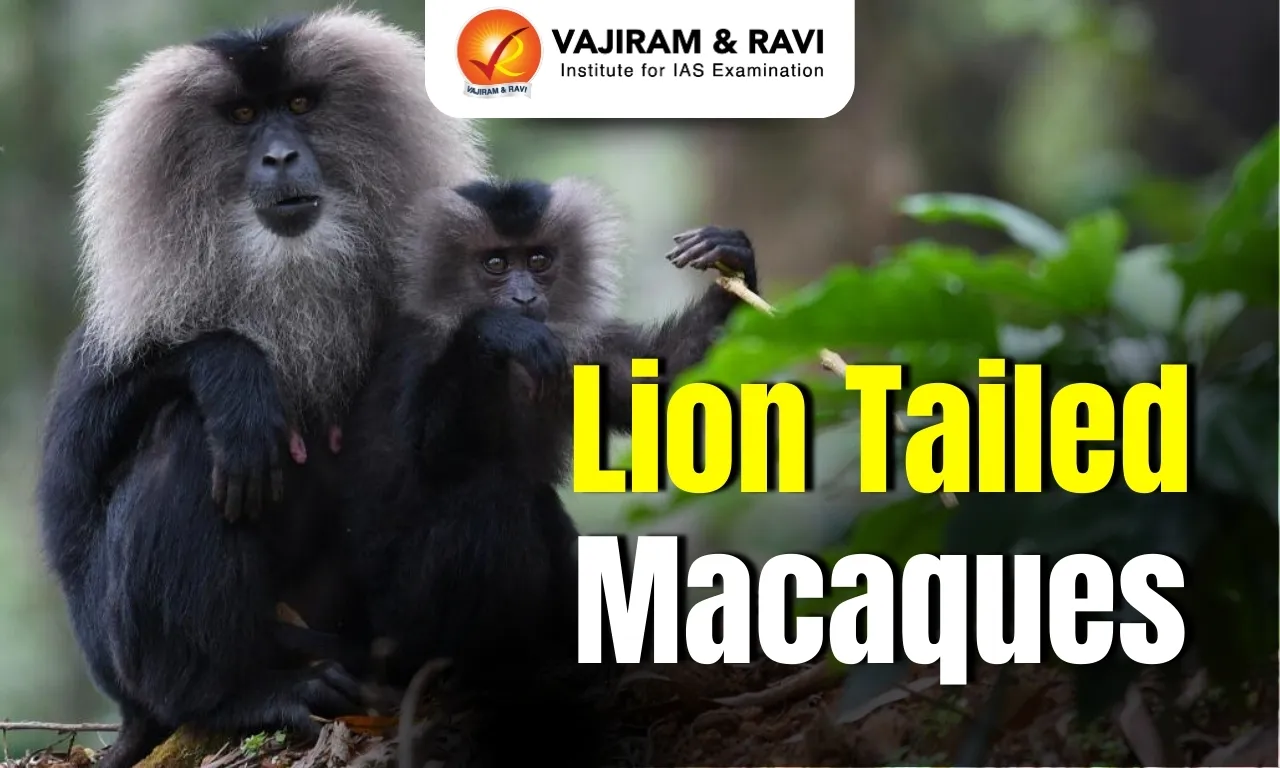
  • It is also known as the ‘beard ape’ because of its mane. 
  • Appearance
    • The magnificent Lion-tailed macaque is named due to its lion-like, long, thin, and tufted tail. Also they are characterised by the grey mane around their face.
    • It is one of the smallest macaque species in the world.
  • Distribution: It is endemic to evergreen rainforests of the southern part in Western Ghats, with its range passing through the three states of Karnataka, Kerala and Tamil Nadu.

Characteristics of Lion‑Tailed Macaques

  • It is an arboreal and diurnal creature, they sleep at night in trees (typically, high in the canopy of rainforest).
  • These macaques are territorial and very communicative animals. One of the distinguishing features of this species is that males define the boundaries of their home ranges by calls.
  • Overall, their communication system contains as many as 17 vocalisations.
  • Diet: It is omnivorous and feeds upon a wide variety of food, although fruits form the major part of their diet.

Conservation Status of Lion‑Tailed Macaques

  • IUCN: Endangered
  • CITES: Appendix I
  • The Wildlife (Protection) Act, 1972: Schedule I

Source: TH

Lion‑Tailed Macaques FAQs

Q1: Where are Lion-Tailed Macaques primarily found?

Ans: Western Ghats, India

Q2: What is the conservation status of Lion-Tailed Macaques?

Ans: Endangered

Ladakh Telescope Expansion: A New Era for Indian Astronomy

Ladakh Telescope Expansion

Ladakh Telescope Expansion Latest News

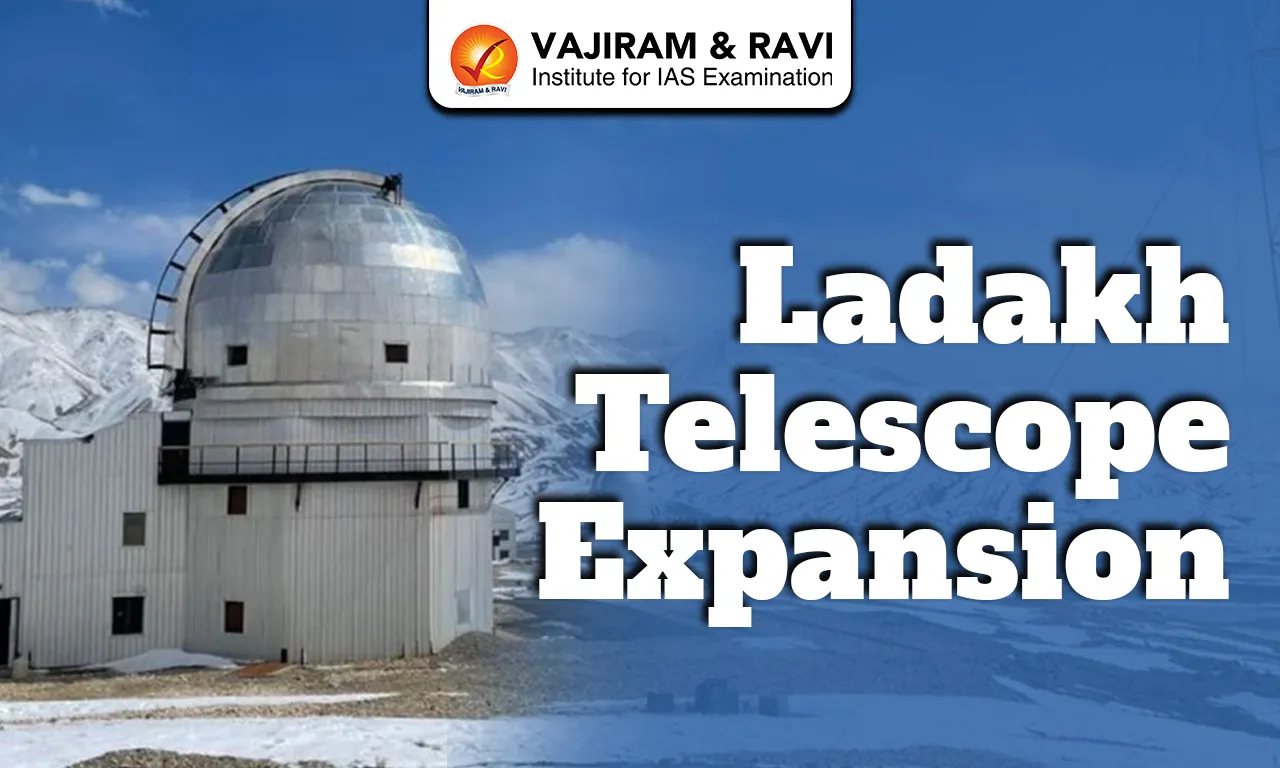
  • The Union Budget has approved the establishment of two new telescopes in Ladakh—one to study the Sun and another to explore the origins of the universe—alongside the upgradation of an existing telescope. 
  • Ladakh, already a key astronomy hub, hosts multiple observatories and includes Hanle, India’s first Dark Sky Reserve, designated to preserve optimal night-sky conditions.
  • The move is expected to significantly strengthen India’s observational astronomy capabilities, positioning the country—and the Global South—more prominently in cutting-edge space research and deep-sky exploration.

National Large Solar Telescope (NLST): India’s Next Solar Observatory

  • The NLST is a 2-metre aperture solar telescope planned in the Merak region near Pangong Tso in Ladakh. 
  • It will operate in the visible and near-infrared wavelengths, allowing detailed observation of solar activity from the ground.
  • Since different parts of the electromagnetic spectrum behave differently and not all radiation penetrates Earth’s atmosphere, telescopes must be carefully designed based on their observational goals.

Scientific Objectives

  • The NLST will enable scientists to study:
    • Solar dynamics and magnetism
    • Energetic solar events such as flares and eruptions
    • Space weather processes affecting Earth
  • These studies are crucial for protecting satellites, communication systems, and space missions, as solar disturbances can disrupt national space assets.

Strengthening India’s Solar Research Network

  • Once operational—expected within 5–6 years—NLST will become India’s third ground-based solar observatory, joining:
    • Kodaikanal Solar Observatory (Tamil Nadu, established 1899)
    • Udaipur Solar Observatory (Rajasthan, established 1975)
  • It will complement Indian Space Research Organisation (ISRO)’s space-based solar mission, Aditya-L1, launched in 2023.
  • Together with Aditya-L1, the NLST will enhance India’s capabilities in heliophysics, reinforcing its position as a significant contributor to global solar research and space-weather forecasting.

National Large Optical–Near Infrared Telescope (NLOT): India’s Giant Eye on the Cosmos

  • The NLOT will be a 13.7-metre aperture segmented-mirror telescope built in Hanle, Ladakh. 
  • Its primary mirror will consist of 90 hexagonal segments, functioning together as a single, large mirror to collect faint cosmic light with high precision.
  • Projected to be completed within the next decade, NLOT will rank among the world’s largest optical–infrared telescopes.

Why Ladakh Is Ideal

  • Ladakh’s high altitude, cold and dry climate, and clear skies provide near-ideal observing conditions. 
  • These reduce atmospheric distortion and diffraction, allowing sharper, more accurate astronomical observations compared to many global sites.

Scientific Objectives

  • NLOT will enable frontier research in:
    • Exoplanet detection
    • Stellar and galactic evolution
    • Supernovae studies
    • Investigating the origins of the universe
  • Its optical–infrared capability allows it to observe distant and faint cosmic objects, crucial for deep-space research.

Leveraging Experience from TMT

  • India’s participation in the Thirty Meter Telescope (TMT) project strengthens its technical capability. TMT’s 30-metre mirror uses 494 hexagonal segments, and India plays a key role by:
    • Designing the Segment Support Assembly
    • Supplying 80 hexagonal mirror segments
  • This expertise in precision engineering and mirror alignment will ease the construction of NLOT’s complex components.

Upgraded Himalayan Chandra Telescope: Strengthening India’s Transient Astronomy

  • Legacy of the Himalayan Chandra Telescope (HCT) - The 2-metre Himalayan Chandra Telescope (HCT) was among the first major observatories established in Ladakh. Over 25 years, it has contributed valuable data, particularly in transient astronomy, studying short-lived cosmic events such as supernovae.
  • Major Upgrade: Enhanced Capabilities - The approved upgrade will transform HCT into a 3.7-metre segmented-mirror telescope, operating in the optical–infrared wavelengths. This enhancement will significantly improve its sensitivity and observational power.

Complementing Global Scientific Facilities

  • The upgraded HCT will work in synergy with major international projects such as:
    • LIGO-India, an Indo-US gravitational-wave observatory coming up in Hingoli, Maharashtra
    • Square Kilometre Array, the world’s largest radio telescope project, based in Australia and South Africa
  • By coordinating with these facilities, HCT will help identify and study cosmic events detected through gravitational waves and radio signals.

Why the New Telescopes Are Game-Changers for Indian Astronomy

  • Unique Geographic Advantage - Both the NLST and the NLOT will be unique in their respective wavelengths at this longitude and region. Their location in Ladakh offers observational windows not fully covered by existing global facilities.
  • Unprecedented Scientific Data - The telescopes are expected to generate new, high-quality data that was previously unavailable, strengthening India’s contribution to solar physics, deep-space studies, and cosmology.
  • Greater Access to Observation Time - Unlike many international telescopes where observation time is limited and prioritised for partner countries, these facilities will provide Indian scientists with assured and preferential access, boosting domestic research output.
  • Global Impact - Together, NLST and NLOT are poised to be transformational projects, enhancing India’s standing in global astronomy while contributing critical insights to the international scientific community.

Source: IE | IE | NDTV

Ladakh Telescope Expansion FAQs

Q1: Why is Ladakh Telescope Expansion in the news?

Ans: Ladakh Telescope Expansion is in the news after the Union Budget approved two new telescopes and an upgrade to the Himalayan Chandra Telescope in Ladakh.

Q2: What projects are part of Ladakh Telescope Expansion?

Ans: Ladakh Telescope Expansion includes the National Large Solar Telescope (NLST), National Large Optical–Near Infrared Telescope (NLOT), and the upgraded Himalayan Chandra Telescope (HCT).

Q3: How does Ladakh Telescope Expansion strengthen solar research?

Ans: Ladakh Telescope Expansion enhances heliophysics through NLST, complementing Aditya-L1 and improving India’s ability to study solar magnetism, flares, and space-weather impacts.

Q4: Why is Hanle crucial for Ladakh Telescope Expansion?

Ans: Ladakh Telescope Expansion benefits from Hanle’s Dark Sky Reserve status, high altitude, dry climate, and minimal atmospheric distortion for precision optical and infrared observations.

Q5: What is the global significance of Ladakh Telescope Expansion?

Ans: Ladakh Telescope Expansion positions India as a major player in solar, exoplanet, and cosmological research, offering unique longitudinal coverage and assured observation access.

US Dilutes Trade Deal Language: What It Means for India

US Dilutes Trade Deal Language

US Dilutes Trade Deal Language Latest News

  • The United States has revised its factsheet on the India–US trade deal, softening language on India’s commitments and removing references to digital services taxes and tariff cuts on pulses. 
  • It also modified the joint statement to reflect non-binding intent.

Softening of Language

  • The earlier factsheet stated that India had “committed to” purchasing over $500 billion worth of US energy, ICT, coal, and other products.
  • The updated version replaces this with “intends”, aligning it with the joint statement and clarifying the non-binding nature of the provision.

Dropping Digital Services Tax Clause

  • The original factsheet claimed that India would:
    • Remove its digital services taxes
    • Negotiate bilateral digital trade rules
    • Prohibit customs duties on electronic transmissions
  • This section, which was not part of the joint statement, has now been removed entirely.

Changes on Agricultural Tariffs

  • The earlier factsheet mentioned tariff reductions on “certain pulses”, a politically sensitive issue in India.
  • The updated version drops pulses and instead lists products such as:
    • Dried distillers’ grains (DDGs)
    • Red sorghum
    • Tree nuts
    • Fresh and processed fruit
    • Soybean oil
    • Wine and spirits
  • The earlier language had triggered criticism from Opposition parties and farmers, who viewed the claims as excessive concessions. 

Farmers’ Concerns Over Agricultural Market Access in Trade Deal

  • The US revised its trade factsheet by dropping the reference to “certain pulses” among products India had allegedly committed to import. 
  • Although pulses were not mentioned in the joint statement, Commerce Ministry sources indicate that market access for pulses may still be part of the agreement, though details remain unclear.

India’s Pulses Import Landscape

  • India imports nearly 20% of its annual pulses consumption to meet domestic demand.
  • Key suppliers include:
    • Canada, Russia, Brazil, Myanmar
    • African nations such as Mozambique and Malawi
  • In 2024–25, India’s total pulses imports rose 46% to $5.48 billion, though the US accounted for only $90 million, making it a minor supplier.

Push for Self-Reliance in Pulses

  • The revision comes as the government promotes self-reliance in pulses production. 
  • The Agriculture Minister recently termed pulses imports a “matter of shame”, emphasising increased acreage, productivity, and profitability to transform India into an exporter.
  • Market access in agriculture has historically been contentious in trade negotiations. 
  • Indian farmers argue that heavy subsidies in Western countries create unfair competition, and have demanded agriculture remain protected in bilateral and multilateral agreements.

Farmers’ Protests and Fears

  • Farmer groups announced a nationwide strike, alleging lack of transparency in negotiations. Concerns include:
    • Possible backdoor entry of GM products via dried distillers’ grains (DDGs)
    • Fear of US dominance in India’s animal feed market

$500 Billion Purchase Target: What It Means for India

  • Trade Snapshot: India–US Commerce - In FY 2024–25, India imported $45.62 billion worth of American goods and exported $86.51 billion to the United States. The US remains one of India’s largest trading partners.
  • From ‘Committed’ to ‘Intends’ - The original US factsheet claimed India had “committed” to purchasing $500 billion worth of American goods over five years (about $100 billion annually). The revised version softens the wording to “intends”, reflecting the non-binding nature of the provision.
  • Farmers’ Concerns Over Import Surge - The $500-billion figure raised concerns among farmers about a sharp increase in agricultural imports, potentially affecting domestic prices and market stability. Fears centre on increased competition and pressure on farm incomes.
  • Government Clarification: Not Legally Binding - Indian officials have clarified that the target is not a sovereign commitment, as purchases would be made by private companies, not governments. 
    • Similar phrasing has appeared in past trade agreements, such as the India–EFTA deal, where investment targets were indicative rather than mandatory.

Pushback on Digital Services Taxes in Trade Talks

  • The revised US factsheet dropped a section suggesting India would remove digital services taxes and refrain from reintroducing equalisation levy–style measures. 
    • The equalisation levy, often dubbed the “Google tax,” was designed to ensure tax parity between domestic and foreign e-commerce companies. 
    • India had already scrapped this levy in the previous Budget, but debates remain over whether it should permanently forgo such tools.
  • This change follows concerns that India may have limited its future taxation powers over American tech firms.

Concerns Over Policy Sovereignty

  • Legal advisers reportedly cautioned against accepting US proposals that would prevent India from reintroducing digital taxes. 
  • Experts argue that binding commitments in trade deals could constrain India’s regulatory flexibility.

Data Localisation and Digital Sovereignty

  • The broader concern extends to data localisation, which requires storing and processing data within national borders. 
  • Critics warn that trade conditions may restrict India’s ability to enforce localisation policies or safeguard digital sovereignty.
  • A 2018 UN Trade and Development report highlighted that data localisation can:
    • Promote domestic digital infrastructure investment
    • Strengthen enforcement of national laws
    • Protect privacy and cyber sovereignty
  • With its vast user base and growing digital economy, India holds significant leverage. Experts believe retaining regulatory space could enable India to build globally competitive digital platforms.

Source: IE | LM

US Dilutes Trade Deal Language FAQs

Q1: Why did US Dilutes Trade Deal Language become significant?

Ans: US Dilutes Trade Deal Language after replacing “committed” with “intends” and removing references to pulses tariffs and digital services taxes in the revised factsheet.

Q2: How does US Dilutes Trade Deal Language affect agriculture?

Ans: US Dilutes Trade Deal Language eases immediate concerns over pulses imports, but farmers remain wary about agricultural market access and potential impact on domestic prices.

Q3: What is the $500 billion purchase issue in US Dilutes Trade Deal Language?

Ans: US Dilutes Trade Deal Language clarifies that the $500 billion target is indicative, not legally binding, and largely depends on private-sector purchases.

Q4: Why is digital tax removal debated in US Dilutes Trade Deal Language?

Ans: US Dilutes Trade Deal Language initially suggested removal of digital services taxes, raising concerns about India’s equalisation levy and long-term digital policy autonomy.

Q5: What sovereignty concerns arise from US Dilutes Trade Deal Language?

Ans: US Dilutes Trade Deal Language highlights tensions between trade commitments and India’s regulatory flexibility over agriculture, digital taxation, and data localisation policies.

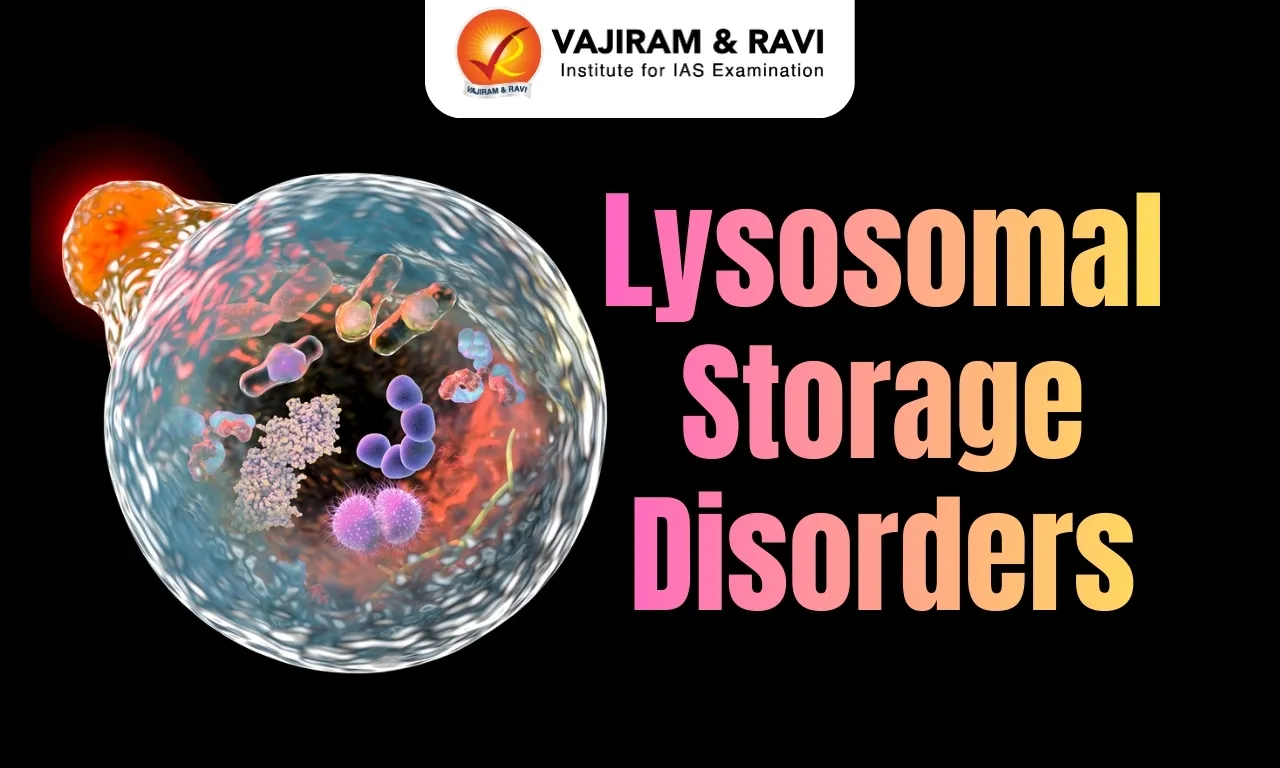
Lysosomal Storage Disorders

Lysosomal Storage Disorders

Lysosomal Storage Disorders Latest News

Researchers from medical and research institutions across six states and two union territories have compiled the first government-supported national biobank of a sub-section of rare diseases called Lysosomal Storage Disorders (LSDs).

About Lysosomal Storage Disorders

  • Lysosomal storage diseases or disorders (LSDs) are rare genetic conditions that cause a buildup of toxic materials in your body’s cells.
  • Examples: Gaucher, Pompe, Fabry, MPS I, MPS II, mucopolysaccharidoses, mucolipidoses, oligosaccharidoses, etc.
  • LSDs cause a buildup of toxic materials in the body’s cells.
  • The majority of the LSDs are caused by mutations in the genes encoding a lysosomal enzyme.
    • A lysosome is a membrane-bound cell organelle that contains digestive enzymes. 
    • Lysosomes are involved with various cell processes. They break down excess or worn-out cell parts.
    • People with LSDs lack certain enzymesor a substance that helps the enzyme work (enzyme activator or modifier). Enzymes assist your cells’ lysosomes with metabolism. 
    • Without functioning enzymes, your body can’t break down fats, sugars and other substances. 
    • If those build up in your body, they can be harmful. They cause dysfunction of those organs where they accumulate and contribute to great morbidity and mortality.
  • All LSDs except Hunter syndrome (MPS II) and Fabry disease are autosomal recessive disorders. This means both parents must carry the abnormal gene that prevents the body from making an enzyme with normal activity.
  • LSDs usually appear during pregnancy or soon after birth and rarely, adults may develop LSDs. 

Treatment for Lysosomal Storage Disorders

  • There are no cures for lysosomal storage diseases
  • But treatments can help you to manage your symptoms and lessen damage to organs and tissues.

Source: IE

Lysosomal Storage Disorders FAQs

Q1: What are Lysosomal Storage Disorders (LSDs)?

Ans: Genetic disorders affecting lysosomal enzyme production

Q2: Which process is disrupted in LSDs?

Ans: Lysosomal degradation of biomolecules

16th Finance Commission and Centre-State Fiscal Relations

Finance Commission

Finance Commission Latest News

  • The 16th Finance Commission has submitted its report for 2026-31, and the Union government has accepted its recommendations on tax devolution to States. 

Constitutional Framework of Fiscal Federalism

  • India’s fiscal federal structure is anchored in Article 270 and Article 280 of the Constitution. 
    • Article 270 provides for the distribution of net tax proceeds between the Centre and the States. 
    • Article 280 mandates the constitution of a Finance Commission every five years to recommend how this distribution should take place.
  • The taxes shared between the Centre and States include:
    • Corporation Tax
    • Personal Income Tax
    • Central Goods and Services Tax (CGST)
    • Centre’s share of Integrated GST (IGST)
  • However, cess and surcharge levied by the Centre are excluded from the divisible pool. 
  • The divisible pool forms about 81% of the Centre’s gross tax revenue for 2025-26 after excluding cess and surcharge. 
  • This distinction has been central to debates on fiscal equity and resource adequacy for States.

Evolution of Vertical Devolution

  • Vertical devolution refers to the share of States in the divisible pool of central taxes.
    • Till the 13th Finance Commission (2010-15): States received 32% of the divisible pool, along with conditional transfers under Centrally Sponsored Schemes (CSS).
    • 14th Finance Commission (2015-20): Vertical devolution was significantly increased to 42%, and many tied CSS transfers were rationalised.
    • 15th Finance Commission (2020-26): The share was reduced to 41% after the reorganisation of Jammu and Kashmir into two Union Territories. 
  • This marked a structural shift toward greater untied fiscal autonomy for States.

Horizontal Devolution Criteria

  • Horizontal devolution refers to how the States’ share is distributed among individual States.
  • Since the 13th Finance Commission, the criteria have broadly emphasised:
    • Equity (Income Distance)
    • Population and Area (Needs-based factors)
    • Efficiency factors such as forest cover, demographic performance, and tax effort
  • This has led to persistent debates between economically advanced and less-developed States.

States’ Key Demands Before the 16th Finance Commission

  • Demands on Vertical Devolution - Many States sought an increase in vertical devolution:
    • 18 States demanded raising the share from 41% to 50%.
    • Some others sought 45-48%.
  • Several States demanded inclusion of cess and surcharge in the divisible pool and a cap on their imposition. 
  • Demands on Horizontal Devolution:
    • Many States wanted equity parameters to retain dominance.
    • Some recommend reducing the weight of “income distance”.
  • Industrialised States such as Maharashtra, Gujarat, Tamil Nadu, Karnataka, and Telangana demanded inclusion of States’ contribution to GDP as a criterion. 
  • These demands reflected the tension between redistribution and reward for performance.

Recommendations of the 16th Finance Commission

  • On Vertical Devolution
    • The Commission rejected the proposal to cap or include cess and surcharge in the divisible pool, stating that under the present constitutional scheme, it is neither permissible nor desirable. These instruments may be required for exigencies. 
    • It retained the States’ share at 41%, citing three reasons:
      • States already receive a substantial share of total tax revenues.
      • Much of Union spending under CSS is routed to the States.
      • The Union requires higher resources for defence and infrastructure. 
    • Thus, there is no major change in vertical devolution.
  • On Horizontal Devolution
    • The Commission adopted two guiding principles:
      • Changes in States’ shares should be gradual.
      • Efficiency and growth contributions should receive due recognition.
      • Accordingly, a new criterion of States’ contribution to GDP has been introduced. The weight assigned ensures a directional shift without drastic redistribution. 
    • As a result:
      • Southern and western States have seen a marginal increase in their share.
      • Large northern and central States have seen a marginal decrease. 
    • Overall, the outcome represents a calibrated shift toward efficiency while maintaining redistributive balance.

Broader Fiscal Observations

  • The Commission made several important observations:
    • The Centre should progressively reduce reliance on cess and surcharge.
    • States should make subsidies more efficient and targeted.
    • Power sector reforms must be actively pursued.
    • States need to control fiscal deficits and debt levels.
    • Both the Centre and States should undertake public sector enterprise reforms. 
  • These recommendations reflect concerns over fiscal sustainability and cooperative federalism.

Source: TH

Finance Commission FAQs

Q1: What is vertical devolution?

Ans: Vertical devolution refers to the share of central taxes allocated to all States collectively.

Q2: What share has the 16th Finance Commission recommended for States?

Ans: It has retained the States’ share at 41% of the divisible pool.

Q3: Are cess and surcharge part of the divisible pool?

Ans: No, they are excluded from the divisible pool under the current constitutional framework.

Q4: What new criterion has been added for horizontal devolution?

Ans: The 16th Finance Commission has added States’ contribution to GDP as a criterion.

Q5: Which States gained marginally under the new formula?

Ans: Southern and western States have seen a marginal increase in their share.

Science Based Targets Initiative (SBTi)

Science Based Targets Initiative

Science Based Targets Initiative (SBTi) Latest News

India has the scale and momentum to influence how global business responds to climate risk, top executives of the Science Based Targets initiative (SBTI) said recently.

About Science Based Targets Initiative (SBTi)

  • It is a corporate climate action organization that enables companies and financial institutions worldwide to play their part in combating the climate crisis.
  • Mission: To drive science-based climate action in the corporate sector consistent with limiting warming to 1.5°C.
  • SBTi develops standards, tools, and guidance which allow companies to set GHG emissions reduction targets.
  • The SBTi validates companies' targets and assists other industry leaders in creating the best practice for their organisations with targets in line with the Paris Agreement.
  • The SBTi was formed as a collaboration between the World Resources Institute, CDP, the United Nations Global Compact, and the World Wide Fund for Nature (WWF). 
  • In 2023, it was incorporated as a charity in the United Kingdom.
  • The SBTi also helps companies and financial institutions worldwide to improve their risk management, attract investors, gain a competitive advantage, and become leaders in sustainability.
  • As of April 2025, the SBTi has reported over 10,000 companies worldwide committed to or set science-based emissions reduction targets.

Source: TH

Science Based Targets Initiative (SBTi) FAQs

Q1: What is the Science Based Targets initiative (SBTi)?

Ans: It is a corporate climate action organization that enables companies and financial institutions worldwide to combat the climate crisis.

Q2: What is the mission of the Science Based Targets initiative (SBTi)?

Ans: Its mission is to drive science-based climate action in the corporate sector consistent with limiting global warming to 1.5°C.

Q3: What does the Science Based Targets initiative (SBTi) develop to help companies reduce emissions?

Ans: It develops standards, tools, and guidance to help companies set greenhouse gas (GHG) emissions reduction targets.

Q4: Which organizations collaborated to form the Science Based Targets initiative (SBTi)?

Ans: It was formed by the World Resources Institute (WRI), CDP, the United Nations Global Compact, and the World Wide Fund for Nature (WWF).

Enquire Now