
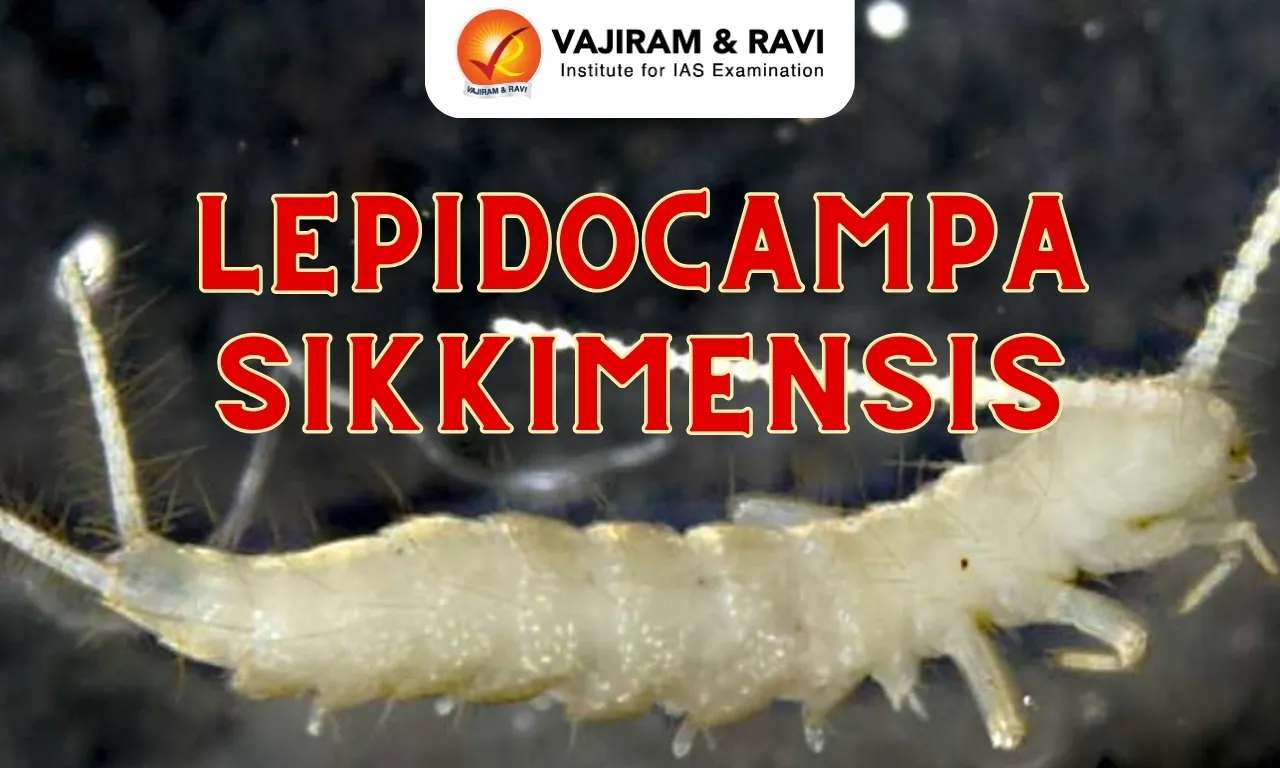
Lepidocampa Sikkimensis Latest News
Scientists from the Zoological Survey of India (ZSI) recently discovered a new species of Diplura named Lepidocampa sikkimensis in the eastern Himalayas.
About Lepidocampa Sikkimensis
- It is a new species of Diplura discovered in Ravangla, Sikkim.
- Diplura are small, wingless, soil-dwelling arthropods.
- It represents the first time a species within this primitive hexapod group has been described by an Indian research team.
- While 17 species had been previously documented within the country, all were historically described by foreign researchers.
- Morphological Distinctiveness: The species is distinguished by its unique arrangement of body scales, specific chaetotaxy (bristle patterns), and specialized appendage structures.
- Ecological Role: As primitive, blind hexapods, Diplurans (two-pronged bristletails) are fundamental to soil health, playing a critical role in nutrient cycling and the maintenance of soil structure.
- Beyond the description of a new species, the study provides a comprehensive update to Indian soil fauna records:
- Rediscovery: The team successfully relocated a rare Indian Diplura subspecies, Lepidocampa juradii bengalensis, which had not been recorded in nearly 50 years.
- Molecular Breakthrough: The study provides the first-ever DNA barcode data globally for an Indian Lepidocampa species, bridging a significant gap between traditional morphology and modern molecular phylogenetics.
Source: TS
Lepidocampa sikkimensis FAQs
Q1: What is Lepidocampa sikkimensis?
Ans: It is a new species of Diplura.
Q2: Where was Lepidocampa sikkimensis discovered?
Ans: It was discovered in Ravangla, Sikkim.
Q3: What are Diplura?
Ans: Diplura are small, wingless, soil-dwelling arthropods.
Q4: What morphological features distinguish Lepidocampa sikkimensis?
Ans: It is distinguished by its unique arrangement of body scales, specific chaetotaxy (bristle patterns), and specialized appendage structures.

