Cement Industries in India, Location, Importance, Challenges

Cement Industries in India

Cement is a basic construction material used in buildings, roads, bridges, dams, and urban infrastructure. India is the world’s second-largest cement producer, accounting for roughly 8% of global cement capacity with an installed capacity of over 700 million tonnes. 

Cement production is also an important component of the Index of Eight Core Industries (ICI), where it carries a weight of about 5.37%. Recent data highlights the strong performance of the sector. Cement production registered 13.5% year-on-year growth in December 2025, while cumulative growth from April to December 2025-26 stood at 8.8%, indicating sustained demand driven largely by infrastructure expansion and construction activity.

About Cement Production

Cement is manufactured through a high-temperature chemical and mechanical process using natural minerals. In India, cement production mainly relies on limestone deposits and modern kiln technology.

Limestone contains calcium carbonate, which is heated inside large rotary kilns at temperatures reaching around 1400-1500 degrees Celsius. During this process, calcium carbonate decomposes into calcium oxide and carbon dioxide. The resulting product is called clinker. Clinker is then mixed with gypsum and ground finely to produce cement.

Location of Cement Industries in India

The distribution of cement industries in India is uneven and largely follows mineral resource belts. 

  • The major cement producing regions include Rajasthan, Madhya Pradesh, Andhra Pradesh, Telangana, Gujarat, Maharashtra, and parts of Tamil Nadu.
  • The western and southern parts of India have emerged as dominant production zones.
  • The state of Rajasthan is particularly important because of abundant limestone reserves. 
  • Similarly, Andhra Pradesh and Telangana form one of the largest cement production clusters in the country.
  • Another emerging region is eastern India, especially Odisha and West Bengal, where industrial expansion and infrastructure development are driving cement demand.

The location pattern of the cement industry clearly reflects the classical economic geography principle that industries tend to develop where raw materials and market accessibility are balanced.

Factors Determining Location of Cement Industries

Several factors influence the establishment of cement plants.

  • Raw Material Availability: Limestone is the most important factor. Since transportation of limestone is costly, industries prefer locations near mining sites.
  • Transport Connectivity: Cement is a low-value but high-weight product. Efficient rail and road networks reduce distribution cost. Ports are also important for export-oriented production.
  • Energy Supply: The industry requires continuous power supply. Therefore, regions with reliable electricity availability are preferred.
  • Market Demand: Rapid urbanisation and infrastructure development create large demand for cement. Growing cities and construction corridors attract new plants.
  • Water Availability: Water is required for cooling and processing operations.
  • Government Policy and Environmental Regulation: Mining permissions, environmental clearance, and industrial incentives also influence location decisions.

Environmental Impact of Cement Industry

  • The cement industry is considered environmentally sensitive because of its carbon footprint. One of the major environmental concerns is carbon dioxide emission during limestone calcination. 
  • Mining activities also lead to landscape degradation and dust pollution.

The industry is gradually adopting sustainable practices such as using fly ash from thermal power plants and slag from steel industries. Waste heat recovery systems are also becoming popular.

These measures are important because global climate change concerns are pushing industries toward low-carbon production.

Challenges Facing the Cement Industry

Despite its importance, the cement industry faces several problems.

  • Transportation cost remains a major challenge because cement is bulky and low in value per unit weight.
  • Energy cost is another important factor since production is highly power intensive.
  • Environmental regulations increase compliance cost but are necessary for sustainable development.
  • Regional imbalance in production and demand sometimes leads to excess capacity in certain areas.
  • Price competition among large companies also affects profitability.

Importance of Cement Industry in India’s Development

Cement production is often used as an indicator of economic activity. When infrastructure projects increase, cement consumption also rises.

Government housing schemes and infrastructure corridors have significantly boosted domestic demand. The sector also generates employment opportunities in mining, transportation, and manufacturing.

Cement Industries in India FAQs

Q1: Why is the cement industry important for India’s economy?

Ans: The cement industry is important because it supports infrastructure development such as housing, roads, bridges, and industrial construction. Cement production also acts as an indicator of economic and construction activity.

Q2: Why are cement industries mainly located near limestone reserves?

Ans: Limestone is the primary raw material in cement manufacturing and is bulky and expensive to transport. Therefore, locating plants near mining areas reduces transportation cost and improves efficiency.

Q3: What are the major environmental problems associated with cement production?

Ans: Major environmental impacts include carbon dioxide emissions during limestone calcination, dust pollution, and land degradation due to mining activities.

Q4: Which states are major cement producers in India?

Ans: Major cement-producing states include Rajasthan, Andhra Pradesh, Telangana, Madhya Pradesh, Gujarat, Maharashtra, and Tamil Nadu.

Q5: What is the future of the cement industry in India?

Ans: The future of the cement industry depends on infrastructure investment, urbanisation, adoption of low-carbon technologies, and sustainable production methods.
96th Constitutional Amendment Act 2011, Background, Significance

96th Constitutional Amendment Act

The 96th Amendment Act, 2011 was passed to recognize and protect India’s languages and culture. It officially updated the name of the Oriya language to Odia in the Constitution to reflect its proper identity.

96th Constitutional Amendment Act, 2011

The 96th Constitutional Amendment Act, 2011 officially changed the name of the Oriya language to Odia in the Eighth Schedule of the Indian Constitution. This ensured that the language’s official spelling matches its correct pronunciation and cultural identity.

96th Amendment Act 2011 Background

The Odisha Legislative Assembly passed a resolution in 2008 requesting the change of the language’s name from Oriya to Odia. This move aimed to preserve the linguistic and cultural heritage of Odisha and ensure that the official spelling reflected the language’s correct pronunciation and local usage. Historically, the language had been referred to as Oriya in English documents, which often caused confusion in official, educational and international contexts. The change also aligned the language’s name with the state’s cultural identity, strengthening pride in its rich literary tradition, which includes classical works, folk literature and modern writings in Odia.

96th Amendment Act 2011 Related Legislation 

The Orissa (Alteration of Name) Act 2011 was passed at the same time as the 96th Constitutional Amendment. This Act officially changed the state’s name from Orissa to Odisha, bringing it in line with the local pronunciation and usage. The legislation ensured that the state and its official language Odia have matching names in all government records, official documents, and communications. This change helped reduce confusion in legal, educational, and administrative contexts and reinforced the cultural and linguistic identity of the region, reflecting the historical and literary significance of Odisha and its language.

96th Amendment Act 2011 Purpose and Significance

  • Standardizes Language Name: Officially changed “Oriya” to “Odia” in the Constitution, ensuring correct spelling, pronunciation, and identity.
  • Preserves Cultural Heritage: Protects Odisha’s linguistic, literary, and cultural traditions.
  • Promotes Linguistic Pride: Strengthens pride among Odia-speaking communities.
  • Ensures Uniformity: Applies the correct name across government documents, communications, and educational materials.
  • Administrative & Constitutional Clarity: Aligns the state’s name with its official language, reducing confusion in records and legal matters.
  • Supports Representation: Gives Odia better recognition in education, governance, and official use.
  • Highlights Linguistic Diversity: Shows the Constitution’s flexibility to recognize and protect regional languages within India’s multilingual framework.

96th Constitutional Amendment Act FAQs

Q1: What is the 96th Constitutional Amendment Act, 2011?

Ans: It is an amendment that officially changed the name of the Oriya language to Odia in the Eighth Schedule of the Constitution, giving it official recognition.

Q2: Why was the 96th Amendment introduced?

Ans: To ensure uniformity in the spelling and recognition of Odia, preserve Odisha’s linguistic and cultural heritage, and align the language with local usage and pronunciation.

Q3: When and why did the Odisha Legislative Assembly request this change?

Ans: In 2008, the Assembly passed a resolution to rename Oriya as Odia to reflect the language’s correct pronunciation, reduce confusion in official records, and preserve cultural identity.

Q4: What related legislation accompanied the 96th Amendment?

Ans: The Orissa (Alteration of Name) Act, 2011, which officially changed the state’s name from Orissa to Odisha, ensuring consistency between the state and its official language.

Q5: What is the main purpose of the 96th Amendment?

Ans: To standardize the official spelling of Odia in government documents, education, and communications, while respecting the language’s cultural and literary heritage.

Objective Resolution, Background, Constituents, Reasons

Objective Resolution

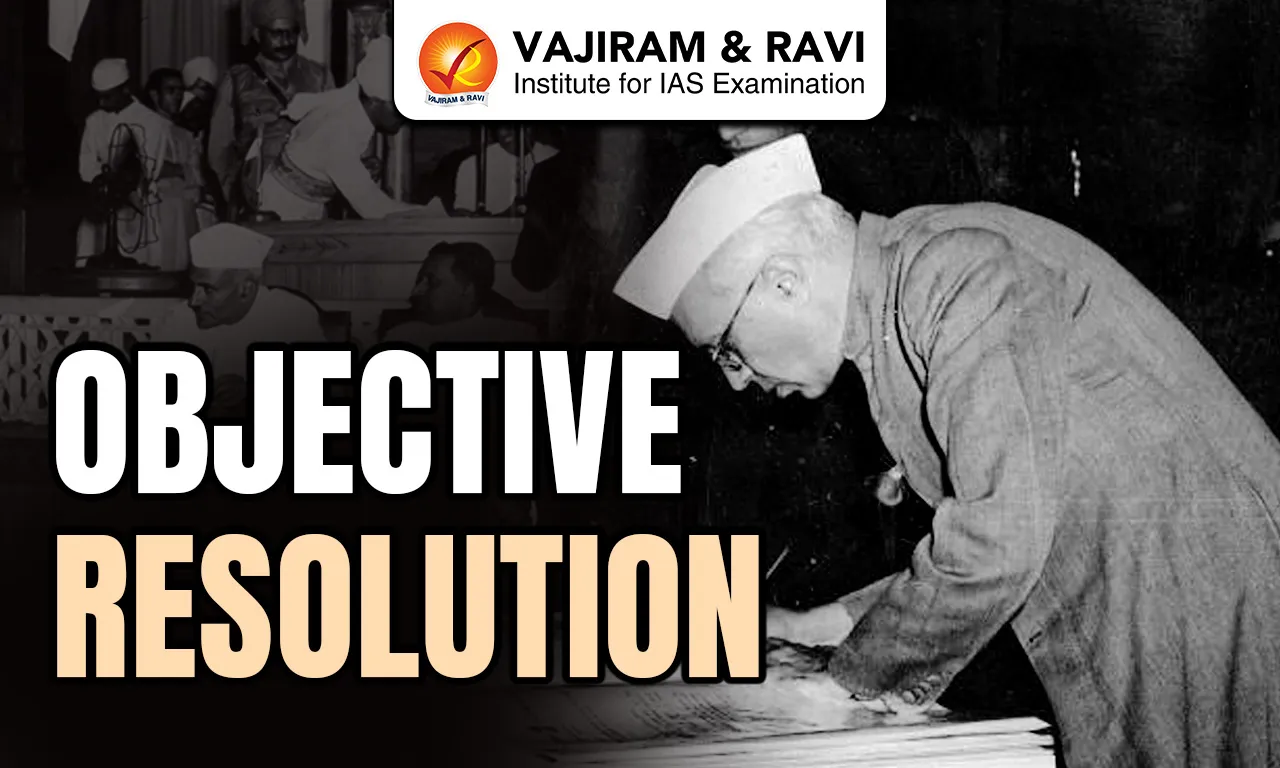
The Objective Resolution was a statement of goals and guiding principles for the making of the Indian Constitution. It explained what kind of country India wanted to become after independence. It expressed the idea of India as a sovereign republic and promised justice, equality and freedom to all people. The Resolution later became the foundation of the Preamble of the Indian Constitution.

Objective Resolution Historical Background

  • In 1946, before the Constitution was written, Jawaharlal Nehru introduced the Objective Resolution in the Constituent Assembly. This Resolution explained the main aims and guiding principles for making the Constitution of India.
  • It declared that India would become an Independent and Sovereign Republic. It also promised important values like justice, equality, liberty and democracy for all citizens. The Resolution ensured that the rights of minorities, backward classes and weaker sections would be protected.
  • The Constituent Assembly accepted this Resolution on 22 January 1947. Later, its ideas were included in the Preamble of the Indian Constitution, which reflects the philosophy and basic spirit of the Constitution.

Objective Resolution Constituents

The Objective Resolution ideas reflect the basic values on which modern India is built. It clearly stated the vision for independent India. Its main points were:

  • Sovereign Republic: India would be an independent and sovereign republic.
  • Union of States: India would be a Union made up of former British Indian provinces, princely states and other areas willing to join.
  • Autonomy of Units: The states would have powers in their own areas, except those given to the Union (central government).
  • Power from the People: All authority of the government and the Constitution would come from the people of India.
  • Justice and Equality: Every citizen would get social, economic and political justice, equality before law and equal opportunities.
  • Fundamental Freedoms: People would enjoy freedoms like speech, belief, faith, worship, association and occupation, within the limits of law and morality.
  • Protection of Weaker Sections: Minorities, backward classes, tribal groups and disadvantaged sections would be given proper safeguards.
  • Unity and Integrity: India’s territorial integrity and sovereign rights over land, sea and air would be protected.
  • World Peace: India would work for international peace and the welfare of humanity.

Reasons Behind the Adoption of the Objectives Resolution

Jawaharlal Nehru, while introducing the Objectives Resolution in the Constituent Assembly, shared the main reasons for adopting it:

  • Unity in Diversity: India is a diverse country. The resolution was meant to show people the vision of the new Constitution and encourage them to take part in shaping the nation.
  • Guiding Force: It was intended to guide the Constitution-makers on the principles and values India should follow.
  • Explaining the Spirit: Since legal language can be technical, the resolution explained the spirit and purpose behind the Constitution in simple terms. Nehru said, “Laws are made of words, but this Resolution is something higher than the law.”
  • Inclusive Vision: The resolution reflected the hope of creating a Constitution that included and protected all sections of Indian society.
  • Moral Appeal: It was not legally binding but appealed to the conscience of the framers to uphold core values of justice, equality, and freedom.
  • Message to the World: It was a way to communicate India’s vision as an independent, modern, and responsible nation to both its citizens and the world.

Objectives Resolution Significance

The Objective Resolution is significant because it laid the foundation of India’s Constitution and defined the vision of India as a sovereign, democratic, and republic nation. It guaranteed social, economic, and political justice, ensured fundamental freedoms like speech, belief, worship, and association, and provided protection to minorities, backward classes and tribal communities. It also emphasized India’s unity and territorial integrity while serving as a guiding moral force for the Constitution-makers, reflecting the aspirations of an independent and modern India to its citizens and the world.

Objective Resolution FAQs

Q1: What is the Objective Resolution?

Ans: It was a statement of goals and guiding principles for drafting the Indian Constitution, laying down India’s vision as a sovereign republic ensuring justice, equality, and freedom.

Q2: Who introduced the Objectives Resolution and when?

Ans: Jawaharlal Nehru introduced it in the Constituent Assembly in 1946.

Q3: When was the Objectives Resolution adopted?

Ans: It was adopted by the Constituent Assembly on 22 January 1947.

Q4: How is the Objective Resolution related to the Preamble?

Ans: The Resolution formed the foundation of the Preamble, reflecting the Constitution’s philosophy and core values.

Q5: Was the Objectives Resolution legally binding?

Ans: It was not legally binding but served as a moral and guiding framework for the Constitution.

Revolutionary Activities Abroad, Background, Important Activities

Revolutionary Activities Abroad

Revolutionary Activities Abroad formed a crucial dimension of India’s freedom struggle, especially during the early 20th century and World War I. When political repression intensified within India, several revolutionaries shifted their base to foreign countries such as England, Germany, France, the United States, Canada, Japan, Afghanistan, and Southeast Asia. From there, they organized networks, published nationalist literature, sought foreign assistance, and attempted armed revolts against British rule.

Revolutionary Activities Abroad Background

During World War I (1914-1918), Indian revolutionaries in exile saw an opportunity to weaken British power. Since Britain was engaged in a global war, its enemies especially Germany and Turkey, were seen as potential allies.

  • Indian revolutionaries sought assistance from the German government to overthrow British rule in India.
  • Efforts were made to mobilize support from Muslims in Iran, Iraq, and Afghanistan.
  • Sardar Ajit Singh and Sufi Amba Prasad traveled to the Middle East to mobilize Indian soldiers captured during the war.
  • Raja Mahendra Pratap led an Indo-German mission to Afghanistan and established a Provisional Government of India in Kabul (1915), seeking Afghan and German support against the British.
  • The Komagata Maru incident intensified revolutionary feelings, particularly in Punjab.
  • Revolutionary activities continued until 1945, when Subhas Chandra Bose died under mysterious circumstances.

Indian Home Rule Society (1905) and India House

The Indian Home Rule Society and its headquarters, India House, marked the beginning of organized revolutionary activities abroad. Founded in London, they became centers for spreading militant nationalism among Indian students and political exiles.

  • Founder: Established in 1905 by Shyamji Krishna Varma to promote self-rule (Home Rule) for India.
  • Objective: To create political awareness among Indian students in Britain and prepare them for revolutionary action.
  • Publication: Varma published The Indian Sociologist, which criticized British rule and promoted nationalist ideology.
  • Key Members: Included Vinayak Damodar Savarkar, Lala Har Dayal, and Madan Lal Dhingra.
  • Major Incident: In 1909, Dhingra assassinated Curzon Wyllie, leading to a crackdown by British authorities.
  • Decline: After Savarkar’s arrest (1910) and increasing surveillance, many members shifted to Paris, Geneva, and Berlin.

Revolutionary Centers in Europe

After repression in London, Indian revolutionaries established bases in continental Europe to continue their anti-British campaigns. Paris, Geneva, and Berlin emerged as prominent centers.

  • Paris Base: Led by Bhikaji Cama, who published Bande Mataram and advocated independence internationally.
  • Stuttgart Conference (1907): Madam Cama unfurled an early version of the Indian national flag at the Socialist Conference.
  • Berlin Committee: Formed during World War I under Virendranath Chattopadhyaya to seek German support.
  • Propaganda Work: Revolutionaries used European press freedom to publish anti-British literature.
  • International Alliances: Attempted collaboration with Germany and Turkey against Britain.
  • Strategic Shift: Europe became the hub for planning armed uprisings and coordinating with revolutionaries in India.

Ghadar Party (1913)

The Ghadar Party was formed in 1913 in the United States by Indian immigrants, mainly Sikhs, to organize armed revolt against British rule. It became one of the most influential overseas revolutionary organizations.

  • Foundation: Established in San Francisco; early leadership included Sohan Singh Bhakna and Kartar Singh Sarabha.
  • Ideology: Advocated complete independence through armed struggle.
  • Publication: Published the Ghadar newspaper in multiple languages to inspire revolt.
  • World War I Plan: Attempted to incite mutiny among Indian soldiers in 1915.
  • British Suppression: Plans were foiled due to intelligence leaks; many leaders were arrested or executed.
  • Impact: Inspired nationalist sentiments among overseas Indians and influenced later revolutionary movements.

Komagata Maru Incident (1914)

The Komagata Maru incident exposed racial discrimination in British colonies and intensified revolutionary activities, especially in Punjab.

  • Chartered By: Gurdit Singh to challenge Canada’s discriminatory immigration laws.
  • Passengers: 376 Indians (mostly Sikhs) sailed to Vancouver, Canada.
  • Denial of Entry: Only 24 were allowed to land; others were forced to return.
  • Return to India: Upon arrival in Calcutta, British police opened fire on protesting passengers.
  • Casualties: Around 20 Sikhs were killed in the Budge Budge clash.
  • Impact: Fueled revolutionary terrorism in Punjab and strengthened the Ghadar Movement.

Singapore Mutiny (1915)

The Singapore Mutiny was one of the most notable armed revolts by Indian soldiers abroad during World War I.

  • Participants: Mainly soldiers of the 5th Light Infantry and 36th Sikh Battalion.
  • Cause: Influenced by Ghadar propaganda and dissatisfaction among Muslim sepoys.
  • Date: February 15, 1915.
  • Leadership: Led by Jamadar Chisti Khan, Jamadar Abdul Gani, and Subedar Daud Khan.
  • Suppression: Brutally crushed by British forces after intense fighting.
  • Aftermath: 37 soldiers executed, 41 transported for life, demonstrating harsh colonial repression.

Indo-German Mission and Kabul Government

During World War I, Indian revolutionaries collaborated with Germany to weaken British rule and establish an alternative Indian government in exile.

  • Leader: Raja Mahendra Pratap led the Indo-German mission.
  • Establishment: Provisional Government of India formed in Kabul in 1915.
  • Support: Received backing from Germany and Turkey.
  • Objective: Secure Afghan support and declare war against Britain.
  • Diplomatic Efforts: Attempted to gain international recognition.
  • Outcome: Failed to achieve military success but symbolized India’s sovereignty abroad.

Continuation of Revolutionary Activities - INA Phase

Revolutionary activities abroad continued into World War II under the leadership of Subhas Chandra Bose, who revitalized the militant struggle through the Indian National Army (INA).

  • Reorganization: Bose reorganized the INA in 1943 in Southeast Asia.
  • Azad Hind Government: Established the Provisional Government of Free India.
  • Military Campaign: Launched the “Delhi Chalo” movement against British forces.
  • Women’s Regiment: Formed the Rani of Jhansi Regiment.
  • INA Trials (1945-46): Sparked nationwide protests in India.
  • Impact: Weakened British control and strengthened the final push toward independence in 1947.

Revolutionary Activities Abroad FAQs

Q1: What are Revolutionary Activities Abroad?

Ans: Revolutionary Activities Abroad refer to anti-British movements organized by Indian nationalists outside India during the freedom struggle. These activities aimed to secure foreign support, spread nationalist ideas, and plan armed revolts against British rule.

Q2: Why did Indian revolutionaries move abroad?

Ans: Indian revolutionaries moved abroad to escape British repression, publish uncensored literature, seek financial and military support, and organize resistance more freely. Countries like England, Germany, France, the USA, Japan, and Afghanistan became major centers.

Q3: What was the role of the Indian Home Rule Society?

Ans: The Indian Home Rule Society was founded in 1905 by Shyamji Krishna Varma in London. It promoted self-rule for India and operated through India House, which became a hub of revolutionary activities.

Q4: What was the Ghadar Party?

Ans: The Ghadar Party was founded in 1913 in the United States by Indian immigrants, mainly Sikhs. It aimed to organize an armed revolt in India and published the revolutionary newspaper Ghadar to inspire rebellion.

Q5: What was the Komagata Maru Incident?

Ans: The Komagata Maru incident (1914) involved a Japanese ship carrying Indian passengers to Canada who were denied entry due to racial laws. When the ship returned to India, British forces fired on protesting passengers, fueling revolutionary anger in Punjab.

Animal Husbandry in India, Dairy, Poultry, Livestock

Animal Husbandry

Animal Husbandry in India is one of the most important pillars of the agricultural economy. It includes the scientific breeding, feeding, healthcare, and management of livestock such as cattle, buffaloes, goats, sheep, pigs, and poultry. The sector provides milk, meat, eggs, wool, hides, manure, and draft power, supporting rural livelihoods and national food security.

Animal husbandry is a crucial pillar of the Indian economy, contributing nearly 5.5% to the country’s total Gross Value Added (GVA) and accounting for more than 30% of the GVA within the agriculture and allied sectors during 2022-23.

Dairy Sector In India

The dairy sector is one of the most important components of Animal Husbandry in India. India is the largest milk-producing country in the world, with steady growth in production over the last decade. The Dairy Sector In India provides daily income to millions of rural households and plays a key role in nutritional security and women empowerment.

  • Contribution to Economy: The dairy sector contributes a significant share to agricultural GVA and supports more than 80 million rural households directly or indirectly.
  • Per Capita Availability: Per capita milk availability in India has increased to around 470-500 grams per day, improving protein intake and nutritional standards.
  • White Revolution: The success of the dairy sector is largely credited to Operation Flood, implemented by the National Dairy Development Board, which expanded cooperative dairy networks across the country.
  • Major Milk Producing States: Uttar Pradesh, Rajasthan, Madhya Pradesh, Gujarat, and Maharashtra are among the top milk-producing states in India.
  • Role of Cooperatives: Dairy cooperatives collect milk from farmers, ensure fair pricing, and provide veterinary and feed support services. Example Amul.
  • Employment Generation: Dairy farming creates year-round employment, especially for women and small farmers.
  • Value-Added Dairy Products: Growth in processing industries has increased production of cheese, butter, paneer, yogurt, and other dairy products.
  • Government Support: Schemes like Dairy Processing and Infrastructure Development Fund help modernize dairy infrastructure and increase milk processing capacity.

Poultry Sector in India

The Poultry Sector in India is one of the fastest-growing segments of animal husbandry and plays a crucial role in meeting the country’s protein demand. It includes both egg production (layer farming) and meat production (broiler farming).

  • Rapid Growth Rate: The poultry sector has been growing at an average annual rate of around 8-10%, making it one of the most dynamic livestock industries in India.
  • Egg Production: India produces more than 140 billion eggs annually, ranking among the top egg-producing countries in the world. Per capita egg availability has crossed 100 eggs per person per year.
  • Meat Production: Poultry contributes the largest share to India’s total meat production, which is around 9–10 million tonnes annually. Broiler farming has expanded significantly due to rising demand for affordable protein.
  • Poultry Population: As per livestock census data, India has over 850 million poultry birds, including both backyard and commercial farms.
  • Major Poultry Producing States: Andhra Pradesh, Tamil Nadu, Telangana, West Bengal, and Maharashtra are among the leading egg and poultry meat producing states.
  • Employment Generation: The poultry industry provides direct and indirect employment to millions of farmers, traders, feed manufacturers, and transport workers.
  • Low Investment, Quick Returns: Poultry farming requires relatively lower initial investment compared to dairy and offers faster returns due to a short production cycle.
  • Technological Advancements: Modern poultry farms use automated feeding systems, climate-controlled sheds, vaccination schedules, and scientific breeding techniques to improve productivity.
  • Government Support: The government promotes poultry farming under schemes like the National Livestock Mission, which supports entrepreneurship and infrastructure development in the livestock sector.

Also Read: Pink Revolution

Livestock in India

Livestock in India refers to domesticated animals raised for economic purposes such as milk, meat, eggs, wool, hides, and draft power. India has one of the largest livestock populations in the world, making it a global leader in dairy and a major contributor to meat and poultry production. Livestock forms the backbone of rural livelihoods and supports millions of small and marginal farmers across the country.

1. Total Livestock Population

  • India has over 535 million livestock as per the latest livestock census.
  • It has the largest cattle population in the world.
  • Poultry population exceeds 850 million birds.
  • Livestock numbers have steadily increased over the years.

2. Major Types of Livestock

  • Cattle – Primarily used for milk production and agricultural draft power.
  • Buffaloes – Major contributors to India’s total milk production and buffalo meat exports.
  • Goats – Known as the “poor man’s cow” and widely reared for meat and milk.
  • Sheep – Raised for wool and mutton, especially in Rajasthan and Telangana.
  • Pigs – Important in northeastern states for meat consumption.
  • Poultry – Includes layers (egg production) and broilers (meat production).

3. Economic Importance

  • Livestock contributes more than 30% of agricultural Gross Value Added (GVA).
  • It provides employment to over 80 million rural households.
  • Offers regular income unlike seasonal crop farming.

4. Nutritional Contribution

  • Supplies protein-rich foods such as milk, eggs, and meat.
  • Improves food security and dietary diversity in rural and urban areas.

5. Regional Distribution

  • Cattle and buffaloes are widely distributed across northern and western India.
  • Sheep are concentrated in Rajasthan, Jammu & Kashmir, and Telangana.
  • Goats are common in Uttar Pradesh, Bihar, and West Bengal.
  • Poultry farming is highly developed in Andhra Pradesh, Tamil Nadu, and Telangana.

6. Indigenous Breeds

India is home to several famous indigenous breeds such as:

  • Gir cattle
  • Sahiwal cattle
  • Murrah buffalo

Major Government Schemes for Animal Husbandry

The Government of India has launched several schemes and programs to promote livestock development, improve breed quality, increase productivity, and enhance farmers’ income. These schemes are mainly implemented by the Department of Animal Husbandry and Dairying under the Ministry of Fisheries, Animal Husbandry and Dairying.

1. Rashtriya Gokul Mission

  • Launched to conserve and develop indigenous cattle and buffalo breeds.
  • Promotes artificial insemination and genetic improvement.
  • Establishment of Gokul Grams for scientific breeding.
  • Aims to enhance milk productivity and preserve native breeds like Gir and Sahiwal.

2. National Livestock Mission

  • Focuses on overall development of livestock sector excluding dairy.
  • Encourages entrepreneurship in sheep, goat, pig, and poultry farming.
  • Supports feed and fodder development programs.
  • Provides financial assistance for setting up livestock units.

3. Dairy Processing and Infrastructure Development Fund

  • Aims to modernize dairy processing plants.
  • Expands milk chilling and storage capacity.
  • Strengthens dairy cooperatives and producer companies.
  • Enhances value addition in dairy products.

Also Read: India’s Dairy Model

4. Livestock Health and Disease Control Programme

  • Focuses on vaccination against major animal diseases like Foot and Mouth Disease (FMD) and Brucellosis.
  • Improves veterinary infrastructure and diagnostic labs.
  • Reduces livestock mortality and economic losses.

5. Animal Husbandry Infrastructure Development Fund

  • Encourages private sector investment in dairy and meat processing.
  • Supports cold chain and value-added product units.
  • Provides interest subvention and credit guarantee support.

6. National Animal Disease Control Programme

  • Aims to control and eradicate Foot and Mouth Disease (FMD) and Brucellosis.
  • Conducts mass vaccination drives across the country.
  • Strengthens disease surveillance and monitoring systems.

7. Kisan Credit Card

  • Provides affordable credit to livestock farmers.
  • Covers dairy, poultry, and fisheries farmers.
  • Ensures easy access to working capital.

Role of Women in Animal Husbandry

Women make up nearly 70% of the workforce in India’s animal husbandry sector and are central to its growth and sustainability. They handle essential daily activities such as feeding animals, collecting fodder, providing water, cleaning sheds, and milking, thereby strengthening food security and the rural economy. Women are also actively involved in rearing small livestock like goats and poultry and in processing dairy products at the household level.

Animal Husbandry in India Challenges

  • Genetic Improvement of Breeds: Promote artificial insemination, embryo transfer technology, and conservation of high-yielding indigenous breeds to increase productivity per animal.
  • Strengthening Fodder Security: Expand fodder cultivation, promote silage making, and encourage use of balanced cattle feed to address feed shortages.
  • Improved Veterinary Infrastructure: Establish more veterinary hospitals, mobile clinics, and diagnostic labs in rural areas for timely disease control.
  • Mass Vaccination and Disease Surveillance: Strengthen nationwide vaccination drives and digital disease monitoring systems to reduce livestock mortality.
  • Promotion of Modern Technology: Encourage use of automated milking machines, climate-controlled poultry sheds, and digital livestock tracking systems.
  • Enhancing Credit and Insurance Coverage: Provide easy access to institutional credit, expand livestock insurance schemes, and simplify loan procedures for small farmers.

Way Forward

  • Boost Breed Productivity: Expand artificial insemination coverage, strengthen indigenous breed improvement, and promote scientific selection to raise milk and meat yields.
  • Ensure Fodder & Feed Security: Increase fodder cultivation, support silage and hay-making, and promote balanced feed and mineral supplementation.
  • Upgrade Veterinary Services: Add rural veterinary clinics, mobile units, tele-veterinary services, and modern diagnostic labs for timely disease control.
  • Scale Up Vaccination & Surveillance: Intensify mass vaccination against FMD and Brucellosis and use digital disease tracking to prevent outbreaks.
  • Invest in Infrastructure: Build milk chilling centers, cold chains, meat processing units, and quality testing labs to reduce post-harvest losses.
  • Improve Access to Credit & Insurance: Expand affordable loans, interest subvention, and livestock insurance coverage for small and marginal farmers.
  • Promote Technology Adoption: Encourage automated milking, climate-controlled poultry sheds, RFID tagging, and data-driven farm management.
  • Strengthen Market Linkages: Develop farmer producer organizations (FPOs), e-market platforms, and direct procurement models to improve price realization.

Animal Husbandry FAQs

Q1: What is Animal Husbandry?

Ans: Animal husbandry is the branch of agriculture that deals with the breeding, feeding, care, and management of livestock such as cattle, buffaloes, goats, sheep, pigs, and poultry for products like milk, meat, eggs, and wool.

Q2: Why is Animal Husbandry important in India?

Ans: It supports rural livelihoods, provides regular income to farmers, contributes over 30% to agricultural GVA, and ensures nutritional security through milk, eggs, and meat production.

Q3: Which ministry looks after Animal Husbandry in India?

Ans: The sector is managed by the Department of Animal Husbandry and Dairying under the Ministry of Fisheries, Animal Husbandry and Dairying.

Q4: What is the contribution of Animal Husbandry to India’s economy?

Ans: Animal husbandry contributes around 5-6% to India’s total Gross Value Added (GVA) and plays a major role in the agriculture and allied sectors.

Q5: Which country is the largest milk producer in the world?

Ans: India is the largest milk-producing country globally.

100th Constitutional Amendment Act 2015, Background, Provisions

100th Constitutional Amendment Act

The 100th Constitutional Amendment Act, 2015 was passed to implement the India-Bangladesh Land Boundary Agreement. This amendment allowed India to exchange certain territories with Bangladesh and to finally settle long-pending border disputes between the two countries.

100th Constitutional Amendment Act Background and Need

When India was partitioned in 1947, the boundary between India and East Pakistan (now Bangladesh) was decided by the Radcliffe Award. However, the boundary was not clearly drawn in some areas. As a result, a complex territorial arrangement developed along the border. Certain small pockets of Indian territory were located within Bangladesh, and similarly, some Bangladeshi territories were situated within India. These pockets were known as enclaves. Over time, three major problems existed:

  • 111 Indian enclaves were located inside Bangladesh.
  • 51 Bangladeshi enclaves were located inside India.
  • Some areas were under “adverse possession”, meaning one country controlled land that legally belonged to the other.
  • Around 6.1 km of the border was not clearly marked.

The people living in these enclaves suffered the most. They did not have proper citizenship documents, police protection, schools, hospitals or access to government schemes. It was difficult for either country to provide services because the land was surrounded by another country. Therefore, there was a strong humanitarian and administrative need to solve this issue permanently.

India-Bangladesh Land Boundary Agreement, 1974

To settle the issue, India and Bangladesh signed the Land Boundary Agreement on 16 May 1974. The agreement proposed:

  • Exchange of enclaves
  • Settlement of areas under adverse possession
  • Complete demarcation of the boundary

However, the agreement involved transfer of territory. In the Berubari case (1960), the Supreme Court had clearly stated that transfer of Indian territory requires a Constitutional Amendment under Article 368. Therefore, the 1974 agreement could not be implemented without amending the Constitution.

2011 Protocol

In 2011, both countries signed a Protocol to finalise the exact areas to be exchanged and to settle the remaining boundary disputes. The concerned states - Assam, West Bengal, Meghalaya and Tripura agreed to the settlement. This created the necessary political and legal consensus for bringing a constitutional amendment.

100th Constitutional Amendment Act Provisions

The provisions of the 100th Amendment are:

  • Gave constitutional approval to the 1974 Agreement and 2011 Protocol.
  • Transferred 111 Indian enclaves to Bangladesh.
  • Received 51 Bangladeshi enclaves from Bangladesh.
  • Settled areas under adverse possession.
  • Completed demarcation of the remaining 6.1 km border.
  • Amended the First Schedule of Indian Constitution to change the territories of Assam, West Bengal, Meghalaya and Tripura.
  • Gave residents of enclaves the option to choose their citizenship.

Conclusion

The 100th Constitutional Amendment Act, 2015 finally resolved a long-standing border problem that had existed since Partition. It improved the lives of thousands of people living in enclaves and strengthened friendly relations between India and Bangladesh. It also showed that any transfer of territory must follow proper constitutional procedure.

100th Constitutional Amendment Act FAQs

Q1: What is the 100th Constitutional Amendment Act, 2015?

Ans: The 100th Constitutional Amendment Act, 2015 is a constitutional amendment that gave effect to the India-Bangladesh Land Boundary Agreement (1974) and the 2011 Protocol by enabling exchange of territories and settlement of boundary disputes.

Q2: Why was the 100th Constitutional Amendment Act passed?

Ans: The 100th Constitutional Amendment Act was passed because transfer and acquisition of territory require a Constitutional Amendment under Article 368, as clarified by the Supreme Court in the Berubari case (1960).

Q3: What territorial changes were made under the 100th Constitutional Amendment Act?

Ans: Under the 100th Constitutional Amendment Act, India transferred 111 enclaves to Bangladesh and received 51 enclaves from Bangladesh, settled areas under adverse possession, and completed demarcation of 6.1 km of undemarcated boundary.

Q4: How did the 100th Constitutional Amendment Act affect Indian states?

Ans: The 100th Constitutional Amendment Act amended the First Schedule of the Constitution to alter the territories of Assam, West Bengal, Meghalaya and Tripura.

Q5: What is the significance of the 100th Constitutional Amendment Act?

Ans: The 100th Constitutional Amendment Act resolved a long-standing border issue since Partition, improved the lives of enclave residents, strengthened India–Bangladesh relations, and upheld constitutional procedure for territorial transfer.

74th Constitutional Amendment Act 1992, Objectives, Features

74th Constitutional Amendment Act

74th Constitutional Amendment Act 1992 provided constitutional status to Urban Local Bodies (ULBs) in India. It added a new Part IX-A to the Constitution of India. This part is entitled as ‘The Municipalities’ and consists of provisions from Articles 243-P to 243-ZG. In addition, the act has also added a new Twelfth Schedule to the Constitution. This schedule contains eighteen functional items of municipalities. This amendment, also known as the Municipalities Act, came into force on 1st June 1993.

74th Constitutional Amendment Act Objectives

Objectives of 74th Constitutional Amendment Act 1992 are: 

  • To strengthen urban local governance by providing constitutional recognition to municipalities.
  • To promote democratic decentralisation by transferring authority to urban local bodies.
  • To encourage people’s participation in decision-making processes at the city and town level.
  • To improve urban planning, development management, and public service delivery in urban areas.

It has brought Municipalities under the purview of justiciable part of the Constitution. State governments are under constitutional obligation to adopt the new system of municipalities in accordance with the

provisions of the act.

74th Constitutional Amendment Act, 1992 Features

The 74th Constitutional Amendment Act, 1992 has the following salient features:

Constitution of Municipalities (243Q) 

74th Constitutional Amendment Act provides for the constitution of the following three types of municipalities in every state.

  1. Nagar Panchayat for an area in transition from rural to urban area
  2. Municipal Council for a smaller urban area.
  3. Municipal Corporation for a larger urban area.

Since demographic, economic, and geographic conditions vary significantly across states, the Constitution has left it to the State Legislatures to decide the specific category of municipality suitable for a particular urban area. However, there is an exception. If municipal services in an urban area are already being provided by an industrial establishment, the Governor may declare such an area as an industrial township, and in such cases, a municipality may not be constituted.

Composition of Municipalities (Article 243R) 

  • All the members of a municipality shall be elected directly by the people of the municipal area. For this purpose, each municipal area shall be divided into territorial constituencies to be known as wards.
  • The state legislature may provide the manner of election of the chairperson of a municipality. It may also provide for the representation of the following persons in a municipality.
    • Persons having special knowledge or experience in municipal administration without the right to vote in the meetings of municipality.
    • The members of the Lok Sabha and the state legislative assembly representing constituencies that comprise wholly or partly the municipal area.
    • The members of the Rajya Sabha and the state legislative council registered as electors within the municipal area.
    • The chairpersons of committees (other than wards committees).

Wards Committees (Article 243S) 

  • There shall be constituted a wards committee, consisting of one or more wards, within the territorial area of a municipality having population of three lakh or more. 
  • The state legislature may make provision with respect to the composition and the territorial area of a wards committee and the manner in which the seats in a wards committee shall be filled.
  • In addition to the ward committees, the state legislature is also allowed to make any provision for the constitution of other committees. The chairpersons of such committees may be made members of the municipality.

Reservation of Seats ( Article 243T) 

  • Seats are reserved for Scheduled Castes (SCs) and Scheduled Tribes (STs) in proportion to their population in the municipal area.
  • At least one-third of the total seats are reserved for women, including SC and ST women.
  • State legislatures may make rules regarding reservation of chairperson offices for SCs, STs, and women.
  • Reservation for Other Backward Classes (OBCs) in municipalities may be provided by state law.
  • Reservation for SCs and STs in municipalities will cease after the period mentioned in Article 334 of the Constitution.

Duration of Municipalities (Article 243U) 

  • Every municipality has a fixed term of five years.
  • A municipality can be dissolved before the completion of its term.
  • In case of dissolution, fresh elections must be held within six months.
  • If the remaining term is less than six months, conducting elections is not compulsory.
  • A municipality reconstituted after dissolution will serve only the remaining period of the original term.
  • Before dissolving a municipality, it must be given a reasonable opportunity to present its case.

Disqualifications (Article 243V)  

  • A person is disqualified if he is disqualified under the election laws for the State Legislature or under any state law.
  • The minimum age to contest municipal elections is 21 years.
  • All questions related to disqualification are decided by the authority specified by the State Legislature.

Powers and Functions (Article 243W)  

The state legislature may endow the municipalities with such powers and authority as may be necessary to enable them to function as institutions of self-government.

  • Municipalities may be given responsibilities for : 
    • Preparation of plans for economic development and social justice.
    • Implementation of development schemes, including functions listed in the 12th Schedule.

Finances (243X) 

The state legislature may authorise a municipality to 

  • Levy, collect and appropriate taxes, duties, tolls and fees;
  • Assign to a municipality taxes, duties, tolls and fees levied and collected by state government;
  • Provide for making grants-in-aid to the municipalities from the consolidated fund of the state; 
  • Provide for constitution of funds for crediting all moneys of the municipalities.

Finance Commission (Article 243Y) 

  • A State Finance Commission is constituted every five years to review the financial position of municipalities. It recommends:
    • The distribution between the state and the municipalities of the net proceeds of the taxes, duties, tolls and fees levied by the state and allocation of shares amongst the municipalities at all levels.
    • The determination of the taxes, duties, tolls and fees that may be assigned to the municipalities.
    • The grants-in-aid to the municipalities from the consolidated fund of the state.
    • The measures needed to improve the financial position of the municipalities
    • Any other matter referred to it by the governor in the interests of sound finance of municipalities.
  • The Governor places these recommendations and action reports before the State Legislature.
  • The Central Finance Commission may also suggest ways to strengthen municipal resources.

Audit of Accounts ( Article 243Z) 

The state legislature may make provisions with respect to the maintenance of accounts by municipalities and the auditing of such accounts.

State Election Commission (243ZA) 

  • The State Election Commission is responsible for preparing electoral rolls and conducting elections to municipalities.
  • The state legislature may make provision with respect to all matters relating to elections to the municipalities.

Application to Union Territories (Article 243ZB) 

  • The provisions of this part are applicable to the Union territories. 
  • But, the President may direct that they would apply to a Union territory subject to such exceptions and modifications as he may specify.

Exempted Areas (Article 243ZC)

  • The act does not apply to the scheduled areas and tribal areas in the states
  • It shall also not affect the functions and powers of the Darjeeling Gorkha Hill Council of the West Bengal.
  • However, the Parliament may extend the provisions of this part to the scheduled areas and tribal areas subject to such exceptions and modifications as it may specify.

District Planning Committee (Article 243ZD) 

  • Every state must constitute a District Planning Committee (DPC) at the district level.
  • The main purpose of the DPC is to consolidate development plans prepared by Panchayats and Municipalities and prepare a district-wide development plan.
  • The state legislature may make provisions with respect to the following:
    • The composition of such committees
    • The manner of election of members of such committees;
    • The functions of such committees in relation to district planning
    • The manner of the election of the chairpersons of such committees.
  • The act lays down that four-fifths of the members of a district planning committee should be elected by the elected members of district panchayat and municipalities in the district from amongstthemselves.
  • The representation of these members in the committee should be in proportion to the ratio between the rural and urban populations in the district.
  • The chairperson of such committee shall forward the development plan to the state government.
  • In preparing the draft development plan, a district planning committee shall have regard to
    • Matters of common interest between the Panchayats and Municipalities including spatial planning, sharing of water other physical and natural resources, the integrated development of infrastructure and environmental conservation
    • Extent and type of available resources whether financial or otherwise;
    • Consult such institutions and organisations as the Governor may specify.

Metropolitan Planning Committe (Article 243ZE) 

  • Every metropolitan area (population of 10 lakh or more) shall have a metropolitan planning committee to prepare a draft development plan.
  • The state legislature may make provisions with respect to the following:
    • The composition of such committees;
    • The manner of election of members of such committees
    • The representation in such committes of the Central government, state government and other organisations;
    • The functions of such committees in relation to planning and coordination for the metropolitan area; and 
    • The manner of election of chairpersons of such committees.
  • The act lays down that two-thirds of the members of a metropolitan planning committee should be elected by the elected members of the municipalities and chairpersons of the panchayats in the metropolitan area from amongst themselves. 
  • The representation of these members in the committee should be in proportion to the ratio between the population of the municipalities and the panchayats in that metropolitan area.
  • The chairpersons of such committees shall forward the development plan to the state government.
  • In preparing the draft development plan, a metropolitan planning committee shall have regard to -  
    • Plan prepared by the Municipalities and the Panchayats in the metropolitan area
    • Matter of common interest between the Municipalities and Panchayats including coordinated spatial plans of the area
    • Sharing of water and other physical and natural resources
    • Integrated development of infrastructure and environmental conservation
    • Overall objectives and priorities set by the Government of India and the State Government
    • Extent and nature of investments likely to be made in the metropolitan area by agencies of the Government
    • Other available resources, financial and otherwise
    • Consult such institutions and organisations as the Governor may specify.

Continuance of Existing Laws and Municipalities (Article 243ZF) 

  • All state laws related to municipalities remained in force for one year after the commencement of this Act.
  • States were required to adopt the new municipal governance system within one year from 1 June 1993, when the Act came into effect.
  • Municipalities existing before the commencement of the Act continued till the completion of their original term, unless dissolved earlier by the State Legislature

Bar to Interference by Courts in Electoral Matters (Article 243ZG)

  • The act bars the interference by courts in the electoral matters of municipalities. 
  • It declares that the validity of any law relating to the delimitation of constituencies or the allotment of seats to such constituencies cannot be questioned in any court. 
  • It further lays down that no election to any municipality is to be questioned except by an election petition presented to such authority and in such manner as provided by the state legislature.

Twelfth Schedule of Indian Constitution

Twelfth Schedule of Indian Constitution contains the following 18 functional items placed within the purview of municipalities: 

  1. Urban planning (including town planning)
  2. Regulation of land use and buildings
  3. Economic and social development planning
  4. Roads and bridges
  5. Water supply
  6. Public health, sanitation, solid waste management
  7. Fire services
  8. Urban forestry and environmental protection
  9. Welfare of weaker sections, including disabled
  10. Slum improvement
  11. Urban poverty alleviation
  12. Parks, gardens, playgrounds
  13. Promotion of cultural, educational, and aesthetic aspects
  14. Burials, cremations
  15. Cattle pounds, prevention of cruelty to animals
  16. Vital statistics (births & deaths)
  17. Public amenities (street lighting, parking, bus stops)
  18. Regulation of slaughterhouses and tanneries

74th Constitutional Amendment Act FAQs

Q1: What is the 74th Constitutional Amendment Act, 1992?

Ans: The 74th Constitutional Amendment Act provides constitutional recognition to Urban Local Bodies (municipalities) and strengthens urban local governance through democratic decentralisation.

Q2: When did the 74th Constitutional Amendment Act come into force?

Ans: It came into force on 1 June 1993.

Q3: Which constitutional provision was added by this amendment?

Ans: It inserted Part IX-A (Articles 243P-243ZG) in the Constitution of India, dealing with municipalities.

Q4: What are the types of municipalities under this Act?

Ans: Nagar Panchayat for transition area, Municipal Council for smaller urban area, Municipal Corporation for larger urban area.

Q5: What is the significance of the 74th Amendment?

Ans: It promotes democratic urban governance, regular municipal elections, reservation for weaker sections, and better urban planning and service delivery.

Article 43 of Indian Constitution, Case Laws, Significance

Article 43 of Indian Constitution

Article 43 of the Constitution of India forms part of the Directive Principles of State Policy under Part IV and reflects the vision of economic democracy envisioned by the framers. It was adopted in 1950 after detailed debate in the Constituent Assembly on 23 November 1948 as Draft Article 34. It directs the State to secure a living wage, decent working conditions, leisure, and social and cultural opportunities for workers. It also specifically mandates the promotion of cottage industries in rural areas on an individual or cooperative basis.

Article 43 of Indian Constitution

Article 43 of Indian Constitution states that the State shall endeavour, through legislation, economic organisation, or other measures, to secure for all workers, whether agricultural, industrial, or otherwise, employment, a living wage, decent working conditions, and full enjoyment of leisure and social and cultural opportunities, while promoting cottage industries in rural regions. The final text expanded Draft Article 34 of 1948 by explicitly including agricultural workers and adding emphasis on rural cottage industries. This modification reflected concerns about rural distress, migration to cities, and imbalance between urban growth and village economies.

Article 43 of Indian Constitution Case Laws

Article 43 of Indian Constitution has guided judicial interpretation linking wages, dignity, and livelihood with constitutional values.

  • Bijay Cotton Mills vs. State of Ajmer: The Court upheld the Minimum Wages Act, 1948, affirming that securing fair wages aligns with Article 43’s directive of ensuring living wages for workers.
  • Sanjit Roy vs. State of Rajasthan: The Supreme Court ruled that payment below minimum wage in relief work violates dignity, reinforcing Article 43’s goal of decent living standards.
  • People’s Union for Democratic Rights v. Union of India: The Court held that non-payment of statutory minimum wages breaches constitutional principles protecting workers’ humane conditions.
  • Olga Tellis v. Bombay Municipal Corporation: Recognised livelihood as part of the right to life, strengthening Article 43’s employment and wage protection objectives.
  • M. C. Mehta v. State of Tamil Nadu: Emphasised humane working conditions and protection of vulnerable labourers, echoing Article 43’s concern for dignity and welfare.

Article 43 of Indian Constitution Significance

Article 43 of Indian Constitution shapes India’s labour welfare vision by integrating economic justice with social dignity.

  • Living Wage Principle: It distinguishes living wage from bare subsistence, ensuring workers can afford health, education, comfort, and future security beyond minimum survival needs.
  • Coverage of All Workers: By including agricultural, industrial, and other workers, it expands protection across rural and urban sectors, covering formal and informal employment categories.
  • Leisure and Culture: It uniquely recognises recreation and cultural participation as part of human dignity, linking economic welfare with overall quality of life.
  • Rural Economic Balance: The explicit reference to cottage industries addresses rural-urban disparity and discourages distress migration by strengthening village economies.
  • Cooperative Approach: Constituent Assembly debates favoured cooperative societies over capitalist dominance in rural industries, promoting collective ownership and equitable distribution.
  • Economic Democracy Vision: Members argued that political democracy cannot survive without economic security, stating that patriotism and political awareness grow when citizens are economically content.
  • Directive Nature: Though non-justiciable, it is fundamental in governance, guiding legislative and policy frameworks for labour welfare and rural development.

Initiatives related to Article 43 of Indian Constitution

Various laws, commissions, and programmes operationalise objectives of Article 43 of Indian Constitution in practice as highlighted below:

  • Minimum Wages Act, 1948: Establishes statutory wage floors across scheduled employments, directly reflecting the constitutional aim of securing living wages for workers.
  • Payment of Wages Act, 1936: Ensures timely disbursement of wages, protecting labourers from arbitrary deductions and delayed payments.
  • Industrial Disputes Act, 1947: Regulates employer employee relations, providing mechanisms for dispute resolution and industrial peace consistent with decent work conditions.
  • Factories Act, 1948: Mandates health, safety, and welfare standards in factories, strengthening humane working conditions envisioned in Article 43.
  • Employees’ State Insurance Act, 1948: Introduces social security through medical benefits and insurance coverage, supporting a decent standard of life for workers.
  • Code on Wages, 2019: Consolidates wage related laws and extends coverage to the unorganised sector, broadening protection beyond traditional industries.
  • National Commission on Labour, 1969: Recommended reforms to secure fair wages and improve service conditions, reinforcing the constitutional directive.
  • Second National Commission on Labour, 2002: Proposed rationalisation of labour laws to enhance economic security and simplify compliance frameworks.
  • Report on Conditions of Work and Promotion of Livelihoods in the Unorganised Sector, 2007: Highlighted vulnerabilities in informal employment and recommended comprehensive wage and welfare measures.
  • Mahatma Gandhi National Rural Employment Guarantee Act, 2005: Provides guaranteed rural employment and wage security, strengthening livelihood assurance in villages.
  • Khadi and Village Industries Commission initiatives: Promote rural cottage industries, preserving traditional crafts and generating employment at the village level.
  • Scheme of Fund for Regeneration of Traditional Industries (SFURTI): Supports cluster based development of traditional industries to improve productivity and income in rural areas.
  • Deendayal Antyodaya Yojana National Rural Livelihoods Mission: Encourages self help groups and cooperative enterprises, aligning with the cooperative model highlighted during constitutional debates.

Article 43 of Indian Constitution FAQs

Q1: What does Article 43 of the Indian Constitution provide?

Ans: Article 43 directs the State to secure employment, a living wage, decent working conditions, leisure, and social and cultural opportunities for all workers, including agricultural and industrial labourers, and to promote cottage industries in rural areas.

Q2: Is Article 43 of Indian Constitution legally enforceable in courts?

Ans: No, Article 43 is part of the Directive Principles of State Policy under Part IV. It is non-justiciable, meaning courts cannot directly enforce it, but it guides government policies and laws.

Q3: What is meant by a living wage under Article 43 of Indian Constitution?

Ans: A living wage goes beyond minimum survival needs. It aims to provide workers and their families with a decent standard of life, including health, education, comfort, and social participation.

Q4: Why does Article 43 of Indian Constitution emphasise cottage industries?

Ans: It promotes cottage industries in rural areas to generate local employment, reduce migration to cities, support traditional skills, and encourage cooperative economic development.

Q5: How has Article 43 of Indian Constitution influenced labour laws in India?

Ans: It has inspired laws such as the Minimum Wages Act, 1948, the Factories Act, 1948, and the Code on Wages, 2019, which aim to ensure fair wages and humane working conditions for workers.

Article 48 of Indian Constitution, Meaning, Provisions, Case Laws

Article 48 of Indian Constitution

Article 48 of Indian Constitution is a part of the Directive Principles of State Policy. It directs the government to take steps to organize agriculture and animal husbandry in a modern way. It also emphasizes prohibiting the slaughter of cows, calves and other milch and draught cattle, to promote animal welfare and protect important cattle for agriculture.

Article 48 of Indian Constitution

Article 48: Organisation of agriculture and animal husbandry

The State shall endeavour to organise agriculture and animal husbandry on modern and scientific lines and shall, in particular, take steps for preserving and improving the breeds and prohibiting the slaughter of cows and calves and other milch and draught cattle.

Constitutional Provisions on Animal Welfare and Rights

The Directive Principles of State Policy in Part IV of the Indian Constitution guide the government on what it should do to create a better society. Two important articles focus on animals: Article 48 and Article 48A.

  • Article 48 asks the government to protect animals and prevent cruelty. It also encourages improving agriculture and caring for the environment.
  • Article 48A focuses on factory farming. It says animals should not be used for slaughter or experiments in large-scale farms where over 1,000 animals are kept (added by 42nd Amendment Act 1976).

Article 48 of Indian Constitution Incorporation

  • After India’s independence in 1947, there were public discussions about protecting cows from slaughter, as they were considered important for the country’s economy and culture. Many groups and state assemblies supported anti-cow slaughter measures. The issue became controversial and was taken up in the Constituent Assembly.
  • The Drafting Committee, headed by B.R. Ambedkar, studied the matter. He explained that fundamental rights apply only to humans, so it would not be right to include animal protection as a fundamental right that people must follow.
  • To solve this, Article 48 was placed under the Directive Principles of State Policy (Part IV of the Constitution). This means the state is encouraged to protect animals and promote scientific farming, but it is not a legally enforceable right for citizens.

Article 48 of Indian Constitution Case Laws

Several important court cases have clarified how Article 48 works in India.

  • Abdul Hakim Qureshi v. State of Bihar (1961): The petitioner argued that banning cow slaughter in states like Bihar, Uttar Pradesh, and Madhya Pradesh violated Article 25, which guarantees religious freedom for non-Hindus. During Bakr-id, Muslims traditionally sacrifice cows. The Supreme Court said that sacrificing a cow is not compulsory in Islam. Muslims can also sacrifice goats or camels. Therefore, the total ban on cow slaughter does not violate religious freedom.
  • State of Gujarat v. Mirzapur Moti Kureshi Kassab (2005): The Supreme Court emphasized that Article 48 specifically protects cows. It also noted that animals that have served humans for generations should be treated with care, even if they are no longer useful. The Court highlighted that animals should be treated kindly and compassionately, reflecting the spirit of Articles 48 and 51A, and recognizing that animals have certain rights deserving protection.

Article 48 of Indian Constitution FAQs

Q1: What is Article 48 of the Indian Constitution?

Ans: Article 48 is part of the Directive Principles of State Policy. It directs the government to organize agriculture and animal husbandry scientifically and protect important animals like cows and calves from slaughter.

Q2: What is the main purpose of Article 48?

Ans: Its purpose is to promote animal welfare, improve farming practices, support farmers, and strengthen the rural economy while respecting India’s cultural values.

Q3: Where is Article 48 mentioned in the Constitution?

Ans: It is part of Part IV - Directive Principles of State Policy, which provides guidelines for the government but is not legally enforceable in court.

Q4: What does Article 48A focus on?

Ans: Article 48A deals with factory farming, prohibiting the use of animals for slaughter or experiments in large-scale farms with over 1,000 animals.

Q5: Why was Article 48 not included as a fundamental right?

Ans: B.R. Ambedkar explained that fundamental rights apply only to humans, so animal protection cannot be legally enforced on citizens. Hence, it was included under Directive Principles.

Part 1 of Indian Constitution, Article 1 to 4, Amendments, Case Laws

Part 1 of Indian Constitution

The Constitution of India is the supreme law of the country. It lays down the structure of government, division of powers, rights and duties. It is divided into 25 Parts and each Part deals with a specific subject. Part 1 of the Constitution of India deals with the provisions related to the Union and Territories (i.e. States). This Part forms the foundation of India’s federal structure and territorial identity.

Part 1 of Indian Constitution- “The Union and its Territory”

Part 1 of the Indian Constitution is titled as “The Union and its Territory.” It includes Articles 1 to 4 under which it declares India as a “Union of States” and explains the meaning of the territory of India. It also gives Parliament the authority to admit new States, establish new ones and alter the boundaries, areas or names of existing States. This Part reflects that India is federal in structure but indestructible in unity. It clarifies that States do not have the right to separate from the Union and that the country remains one integrated whole.

Article 1 of Part 1 of Indian Constitution

Article 1 of the Part 1 of Indian Constitution defines India’s name and territorial structure clearly and establishes its identity as a Union of States.

    • Article 1 (1): It declares that “India, that is Bharat, shall be a Union of States.” 
      • The use of both names, India and Bharat, was adopted after debate in the Constituent Assembly. 
      • The term “Union of States” was preferred instead of “Federation” to show that the Indian Union is not formed by agreement among States. 
      • The States do not have the right to secede. 
      • The Union is indestructible, though States can be reorganized. 
      • This reflects a strong Centre with a flexible federal structure while maintaining national unity.
    • Article 1 (2): The First Schedule lists the names and territorial extent of States and Union territories. At present, India has 28 States and 8 Union territories. The expression “Territory of India” is wider than “Union of India” because it includes States, Union territories and acquired territories.
  • Article 1 (3): It further explains that the territory of India includes three categories: 
    • Article 1 (3) (a): The territories of the States
    • Article 1 (3) (b): The Union territories specified in the First Schedule 
    • Article 1 (3) (c): Any other territories that may be acquired.

Article 2 of Part 1 of Indian Constitution

Article 2 of the Part 1 of Indian Constitution empowers Parliament to admit or establish new States into the Union on suitable terms.

  • Article 2 gives Parliament the authority to admit into the Union or establish new States on such terms and conditions as it thinks fit. Parliament may admit an already existing State into the Union or create a completely new State. 
  • Article 2A (Repealed): It was introduced by the 35th Constitutional Amendment Act, 1974, making Sikkim an associate State. However, this arrangement did not continue. Through the 36th Constitutional Amendment Act, 1975, Sikkim was made a full fledged State of the Indian Union. Later, Article 2A was repealed. This example shows how Parliament used its power to integrate new regions into the Union framework.

Article 3 of Part 1 of Indian Constitution

Article 3 of the Part 1 of Indian Constitution authorizes Parliament to form new States and alter areas, boundaries or names of existing States.

  • Article 3 (a): Allows Parliament to form a new State by separating Territory from any State or by uniting two or more States or parts of States or by uniting any territory to a part of any State.
    • Article 3 (b): It also permits Parliament to increase or decrease the area of a State.
  • Article 3 (c): Permits the Parliament to diminish the area of any State.
  • Article 3 (d): The Parliament can also change the boundaries and borders of the State.
  • Article 3 (e): Through this, the parliament is empowered to change the name of any State.
  • In clauses (a) to (e), the word “State” also includes Union territories. However, in the proviso regarding consultation, “State” does not include Union territories. 
  • This Article has been used for renaming States and creating new ones such as Uttarakhand, Jharkhand, Chhattisgarh and Telangana.
  • A Bill under Article 3 can be introduced in Parliament only on the recommendation of the President. 
  • If the proposal affects the area, boundary or name of a State, the President must refer the Bill to the concerned State Legislature for its views within a specified period. The President may extend this period. 
  • However, Parliament is not bound by the State Legislature’s opinion and may accept or reject it. 

Article 4 of Part 1 of Indian Constitution

Article 4 of the Part 1 of Indian Constitution deals with laws made under Articles 2 and 3 and their constitutional effect.

  • Article 4 (1): It states that any law made under Article 2 or Article 3 must include necessary changes in the First Schedule and the Fourth Schedule. 
    • The First Schedule contains the names and territorial extent of States and Union territories, while the Fourth Schedule deals with representation of States in the Council of States, that is Rajya Sabha
    • It also permits supplemental, incidental and consequential provisions, including changes in parliamentary and State legislative representation.
  • Article 4 (2): It clearly provides that laws made under Articles 2 and 3 shall not be considered constitutional amendments under Article 368. 
    • Therefore, such laws can be passed by a simple majority through the ordinary legislative process. 
    • This makes the process of reorganization more flexible and practical. 
    • It allows Parliament to respond to political and administrative needs without following the special amendment procedure under Article 368.

Amendments of the Part 1 of Indian Constitution 

Several constitutional amendments have influenced the operation and structure of Part I provisions. The major amendments include:

  • Seventh Constitutional Amendment Act 1956: 
    • This amendment, along with the States Reorganisation Act 1956, abolished the earlier classification of States into Part A, Part B, Part C and Part D. 
    • These categories were originally based on historical backgrounds such as Governor’s Provinces, princely States, Chief Commissioners’ Provinces and territories under a Lieutenant Governor. 
    • Through this amendment, India was reorganized into 14 States and 6 Union territories by reshaping the territorial structure under Part I.
  • Constitution (Application to Jammu and Kashmir) Order 2019 and Reorganisation Act 2019: 
    • On 5 August 2019, the President issued the order, which revoked the special status earlier given under Article 370. 
    • It superseded the 1954 Order that had added Article 35A. 
    • The Jammu and Kashmir Reorganisation Act 2019 bifurcated the State into two Union territories: Jammu and Kashmir with a legislature and Ladakh without a legislature. This action was carried out under the powers provided in Part I.

Case Laws of the Part 1 of Indian Constitution

Important judicial decisions have clarified the scope and limits of Articles 1 to 4 under the Part 1 of the Constitution of India.

  • Berubari Union Case (1960): 
    • In the Berubari Union Case, 1960, the Supreme Court held that Parliament’s power under Article 3 to diminish the area of a State does not include the power to cede Indian territory to a foreign country. 
    • Such cession requires a constitutional amendment under Article 368. 
    • This judgment clearly distinguished between internal reorganization and transfer of territory to another country, thereby limiting the scope of Article 3.
  • In Re: Article 370 of the Constitution (2023): 
    • In the 2023 decision relating to Article 370, the Supreme Court upheld the abrogation of Article 370 and Article 35A
    • The Court held that Parliament has the power to reorganize a State and carve out a Union territory from it. 
    • This judgment reinforced the authority of Parliament under Part I to alter the territorial and administrative structure of the country in accordance with constitutional provisions.
Part of Indian Constitution
Part 1 of Indian Constitution Part 12 of Indian Constitution
Part 2 of Indian Constitution Part 13 of Indian Constitution
Part 3 of Indian Constitution Part 14 of Indian Constitution
Part 4 of Indian Constitution Part 14A of Indian Constitution
Part 5 of Indian Constitution Part 4A of Indian Constitution
Part 6 of Indian Constitution Part 15 of Indian Constitution
Part 7 of Indian Constitution Part 16 of Indian Constitution
Part 8 of Indian Constitution Part 17 of Indian Constitution
Part 9 of Indian Constitution Part 18 of Indian Constitution
Part 10 of Indian Constitution Part 19 of Indian Constitution
Part 11 of Indian Constitution
Part 20 of Indian Constitution
Part 21 of Indian Constitution
Part 22 of Indian Constitution

Part 1 of Indian Constitution FAQs

Q1: What does Part 1 of Indian Constitution deal with?

Ans: Part 1 of the Indian Constitution contains Articles 1 to 4. It defines India as a Union of States and explains territorial structure and reorganization powers.

Q2: What is the significance of Article 1 of the Indian Constitution?

Ans: Article 1 declares India (Bharat) as a Union of States. It defines the territory of India and lists States and Union territories in the First Schedule.

Q3: What powers are granted to Parliament under Articles 2 and 3?

Ans: Article 2 allows Parliament to admit or establish new States. Article 3 empowers it to form new States and alter areas, boundaries or names of existing States.

Q4: Why are laws under Article 4 not considered constitutional amendments?

Ans: Article 4 states that laws made under Articles 2 and 3 are not amendments under Article 368. They can be passed by simple majority through ordinary legislative procedure.

Q5: What are the Case Laws related to the Part 1 of Indian Constitution?

Ans: The Berubari Union Case 1960 limited Parliament’s power to cede territory. In Re: Article 370 2023 upheld Parliament’s authority to reorganize States into Union territories.

AI in Judiciary, Need, Role, Benefits, Challenges

AI in Judiciary

The Indian judiciary is facing serious challenges such as huge case pendency, delays in trials, procedural inefficiencies and limited access to justice. While reforms have traditionally focused on increasing judge strength and improving procedures, technology is now emerging as an important solution.

In this context, the role of AI in judiciary is becoming increasingly significant. Artificial Intelligence (AI) is gradually being introduced in Indian courts to improve efficiency, transparency and access to justice. It is being integrated mainly through initiatives like the e-Courts Project, under the guidance of the Supreme Court of India.

AI in Judiciary Need

India has more than 5 crore pending cases across different courts. A large part of delay is caused not by complex legal reasoning but by administrative problems such as:

  • Manual recording of court proceedings
  • Handwritten witness depositions
  • Filing defects and missing documents
  • Difficulty in quickly finding relevant precedents
  • Language barriers in understanding judgments
  • AI mainly addresses these administrative bottlenecks.

AI in Judiciary Role

Artificial Intelligence (AI) is driving a transformative shift in India's judiciary and law enforcement, enhancing efficiency, accessibility, and decision-making. By integrating AI into judicial processes, case management, legal research, and law enforcement, India is streamlining operations, reducing delays, and making justice more accessible to all. AI-powered technologies including Machine Learning (ML), Natural Language Processing (NLP), Optical Character Recognition (OCR), and Predictive Analytics are now being leveraged to automate administrative tasks, improve case tracking, and enhance crime prevention.

Real-Time Transcription

  • The Supreme Court of India uses a system called TERES during Constitution Bench hearings. It converts oral arguments into text in real time. The system works in two stages: AI generates the transcript and human reviewers check it immediately.
  • This improves accuracy, transparency and public access to court proceedings. It also creates proper digital records of important hearings.

Case Management and Filing Scrutiny

  • Some High Courts, including the Kerala High Court, use AI-based tools to examine case documents at the filing stage. These systems automatically flag missing annexures or technical defects.
  • This reduces delays caused by incomplete filings and saves judicial time. 
  • AI is also used for voice-to-text conversion of witness statements, which speeds up trial proceedings.

Translation of Judgments

  • The Supreme Court has developed a translation platform called SUVAS to translate judgments into regional languages. 
  • Thousands of judgments are now available in multiple Indian languages.

This improves access to justice in a multilingual country and helps citizens understand court decisions without language barriers.

Legal Research Assistance

  • AI tools are being used to scan large volumes of past judgments and identify relevant precedents. This reduces the time judges spend searching through case law and helps in better case preparation.

AI for Predictive Analysis in Case Outcomes

  • AI models analyze historical judgments and case data to offer predictive insights into potential case outcomes and risk assessments. This capability helps judicial officers to formulate more informed decisions and develop effective case strategies, contributing to a proactive judicial framework.

The role of AI in judiciary is mainly supportive. It helps in case management, legal research, digitisation of records and providing information to litigants. AI does not replace judges. Final decisions are still taken by human judges, ensuring that justice remains fair and based on constitutional values.

AI in Judiciary Benefits

  • Reduction in Pendency: AI reduces case backlog through smart scheduling and better prioritisation of pending matters.
  • Administrative Efficiency: AI improves administrative efficiency by automating routine tasks like case tracking and listing.
  • Transparency and Accountability: Digitised transcripts and structured data enhance openness of proceedings and strengthen public confidence in the judiciary.
  • Democratisation of Justice: Through platforms like SUVAS, translation of judgments into regional languages expands accessibility and deepens inclusivity in a linguistically diverse society.
  • Better Legal Research Support: Tools such as SUPACE and LegRAA scan large volumes of judgments to extract facts and identify precedents, assisting judges in handling complex case law efficiently.
  • Increased Institutional Transparency: Live display of transcripts and publication of arguments on the Court’s website enhance openness and public confidence in judicial proceedings.

AI in Judiciary Challenges

  • Risk of Transcription Errors: Even a single wrongly captured word during real-time transcription can have serious legal consequences.
  • Data Sensitivity and Security: Court proceedings and case records contain highly sensitive personal and commercial information, making data protection and sovereign deployment essential.
  • Infrastructure Constraints: Unreliable internet connectivity and power cuts in many courts pose challenges for smooth AI integration, particularly at lower court levels.
  • Over-Reliance Concerns: While AI assists in drafting, research and case management, excessive dependence may reduce human scrutiny if not properly monitored.
  • Need for Human Verification: AI-generated outputs still require real-time review and correction.
  • Algorithmic Bias: AI trained on biased datasets may reinforce systemic inequalities.
  • Cost and Accessibility Barriers: Specialised legal AI tools remain expensive, limiting their widespread adoption and forcing many lawyers to rely on general-purpose platforms.
  • Trust Deficit in Adoption: Initial scepticism among lawyers and judges, especially regarding document review and large data handling, reflects hesitation in fully trusting AI systems.

Role of AI in Law Enforcement 

  • AI is being used for predictive policing by analysing crime patterns, identifying high-risk areas and studying criminal behaviour so that police can take preventive action in advance.
  • AI supports surveillance and investigation through automated drones that monitor crime scenes and help track suspects.
  • Facial recognition systems linked with national criminal databases assist in identifying suspects more quickly and accurately.
  • AI-powered forensic tools help examine evidence and analyse digital crime trails during investigations.
  • AI-driven speech-to-text technology enables real-time FIR filing and faster case documentation.
  • AI is improving the analysis of witness testimony and evaluation of courtroom evidence.
  • AI strengthens the Crime and Criminal Tracking Network Systems (CCTNS) by enabling better data-driven crime tracking.
  • AI integration with e-Prisons and e-Forensics databases improves coordination within the criminal justice system.

Way Forward

  • AI must clearly remain an assistive tool while final decision-making authority continues to rest with human judges.
  • Clear ethical standards, transparency norms and accountability mechanisms must be established for AI use in courts.
  • Continuous training of judges and court staff is essential to ensure responsible and informed use of technology.
  • Strong cybersecurity and data protection safeguards must be prioritised before expanding AI deployment.
  • AI applications should focus primarily on improving efficiency, transparency and accessibility rather than predicting or influencing final judicial outcomes.

AI in Judiciary FAQs

Q1: What is the role of AI in judiciary?

Ans: The role of AI in judiciary is to assist courts in case management, legal research, documentation and improving access to justice, while final decisions are taken by judges.

Q2: Why is the role of AI in judiciary important in India?

Ans: The role of AI in judiciary is important because Indian courts face huge pendency, delays and administrative inefficiencies that technology can help reduce.

Q3: How is the role of AI in judiciary being implemented?

Ans: The role of AI in judiciary is being implemented through real-time transcription, AI-based filing scrutiny, translation of judgments, legal research tools and predictive analysis systems.

Q4: Does the role of AI in judiciary mean replacing judges?

Ans: No, the role of AI in judiciary is only supportive and assistive, and it does not replace human judgment or judicial discretion.

Q5: What are the challenges in the role of AI in judiciary?

Ans: The main challenges in the role of AI in judiciary include data security concerns, risk of bias, infrastructure limitations and the need for proper human verification.

93rd Constitutional Amendment Act, Objectives, Provisions

93rd Constitutional Amendment

93rd Constitutional Amendment Act, 2005 was an important step taken by the Indian Parliament to promote social justice in education. The amendment empowered the State to make special provisions for socially and educationally backward classes, Scheduled Castes, and Scheduled Tribes in matters of admission to educational institutions, including private institutions.

93rd Constitutional Amendment Act Background

The education sector in India underwent major changes after the 1990s. Economic liberalization encouraged private investment in higher education. As a result, the number of private professional colleges increased significantly. However, this growth also created concerns about unequal access to quality education. Admission to many private institutions was primarily based on competitive merit, which indirectly disadvantaged students from socially and educationally backward communities.

Students from weaker sections often faced challenges such as lack of access to quality schooling, coaching facilities, and educational resources. Consequently, their representation in professional courses remained relatively low. To address these concerns and promote inclusive access to higher education, the 93rd Constitutional Amendment Act, 2005 was introduced.

93rd Constitutional Amendment Act Objectives 

The main objective of the 93rd Constitutional Amendment Act was: 

  • To promote inclusive education and ensure greater social equality.
  • To expand the scope of reservation policy in higher education.
  • To address the impact of privatization in education. 

The amendment was also aligned with the Directive Principles of State Policy, especially Article 46, which directs the State to promote the educational and economic interests of weaker sections of society.

93rd Constitutional Amendment Act Provisions 

The most important provision introduced by the 93rd Constitutional Amendment Act was the addition of clause (5) in Article 15 of the Constitution. 

Article 15(5) gives the State the power to make special laws for the advancement of socially and educationally backward classes, Scheduled Castes, and Scheduled Tribes. This provision mainly deals with admission to educational institutions.

The important features of 93rd Constitutional Amendment Act are:

  • It applies to a wide range of educational institutions including private universities, professional colleges, technical institutes, and other higher education institutions.
  • Both government-aided and private unaided institutions are covered.
  • Educational institutions established by religious and linguistic minorities under Article 30 are exempted from reservation requirements. This was done to protect the constitutional rights of minorities to preserve and administer their educational institutions.
  • Reservation or special provisions must be made through proper legislation. This means that the State cannot implement such policies arbitrarily through executive orders and must follow the law-making process.
  • This provision also limits Article 19(1)(g), which guarantees the right to carry on any profession or business, to the extent necessary for implementing reservation policy.
  • The amendment mainly focuses on admission processes in educational institutions. It does not give unlimited control to the government over the internal administration of private institutions but allows reasonable intervention to promote social justice.

93rd Constitutional Amendment Act Judicial Validity

The constitutional validity of the 93rd Constitutional Amendment Act was challenged before the Supreme Court. In the case of Ashoka Kumar Thakur v. Union of India, the Supreme Court upheld the validity of the amendment and held that it does not violate the basic structure of the Constitution.

The Court observed that the amendment promotes the constitutional value of equality by enabling affirmative action for socially and educationally backward classes, Scheduled Castes, and Scheduled Tribes. It further stated that reservation policies are justified in the Indian context because many communities have historically faced social and educational discrimination.

The judgment also highlighted the concept of substantive equality, explaining that equality does not simply mean treating everyone in the same manner. Instead, true equality sometimes requires providing additional support and opportunities to historically disadvantaged groups to reduce existing social inequalities and create a more level playing field.

93rd Constitutional Amendment Act FAQs

Q1: What is the 93rd Constitutional Amendment Act, 2005?

Ans: 93rd Constitutional Amendment Act, 2005 allows the State to make reservation provisions for socially and educationally backward classes, SCs, and STs in educational institutions, including private institutions.

Q2: Why was the 93rd Constitutional Amendment Act introduced?

Ans: 93rd Constitutional Amendment Act was introduced to improve access to higher education and promote social justice after the growth of private educational institutions in India.

Q3: Which article was added by the 93rd Constitutional Amendment Act?

Ans: 93rd Constitutional Amendment Act added Article 15(5) to the Constitution.

Q4: Does the 93rd Constitutional Amendment Act apply to minority institutions?

Ans: No, minority educational institutions under Article 30 are excluded.

Q5: Was the 93rd Constitutional Amendment Act declared valid by the Supreme Court?

Ans: Yes, in the Ashoka Kumar Thakur case, the Supreme Court upheld its constitutional validity of 93rd Constitutional Amendment Act.

Article 38 of Indian Constitution, Provisions, Amendment, Case Laws

Article 43 of Indian Constitution

The Constitution of India places strong emphasis on building a just and equal society. Among the Directive Principles of State Policy in Part IV, Article 38 occupies a central position. It directs the State to create a social system where justice shapes every public institution. The provision reflects the vision discussed in the Constituent Assembly on 19 November 1948 under Draft Article 30. It later became Article 38 in 1950. This Article provides the foundation for promoting welfare and reducing inequalities in independent India.

Article 38 of Indian Constitution

Article 38 of Indian Constitution is titled “State to secure a social order for the promotion of welfare of the people.” It requires the government to actively work towards establishing justice in social, economic, and political fields. Clause (1) focuses on promoting welfare through a just social order. Clause (2), inserted later, strengthens this aim by directing the State to reduce inequalities in income, status, facilities, and opportunities. The Article does not prescribe a specific economic ideology but encourages the creation of economic democracy along with political democracy.

Article 38 of Indian Constitution Provisions

Article 38 of Indian Constitution defines the State’s constitutional duty to establish justice-based governance and reduce disparities across society.

Article 38 (1)

  • The State must strive to promote public welfare by securing a social order where justice guides all institutions of national life in social, economic, and political matters.
  • Social Justice Mandate: Social justice under this Article means fair treatment of all sections, ensuring dignity and equal respect in public institutions and governance structures.
  • Economic Justice Requirement: The Article directs the State to shape policies that prevent concentration of wealth and promote equitable economic arrangements across society.
  • Political Justice Framework: Political justice implies meaningful participation of citizens in democratic processes without discrimination based on status or background.

Article 38 (2)

  • The State must work to minimise income gaps between individuals to prevent extreme economic differences within society.
  • Equality of Status: The Article instructs elimination of inequalities in social standing among citizens, promoting equal respect in public and institutional life.
  • Facilities Distribution: It requires reducing disparities in access to public facilities so that essential services benefit all sections equally.
  • Opportunity Equality: The State must remove barriers that prevent fair access to opportunities in different fields of life.
  • Group-Based Inequalities: The provision extends beyond individuals to groups residing in different regions or engaged in varied occupations.
  • Area-Based Disparities: The Article recognises regional imbalances and directs corrective action to balance development across geographical areas.
  • Vocational Differences: It also addresses inequalities among people involved in different professions, ensuring no occupation group is structurally disadvantaged.
  • Welfare Orientation: Overall, Article 38 transforms governance into a welfare-focused model aimed at justice-driven national development.

Article 38 of Indian Constitution Amendments

Article 38 of Indian Constitution was strengthened through the Forty Fourth Constitutional Amendment Act 1978 to deepen its focus on equality and welfare.

  • Through this amendment clause (2) was inserted to specifically direct the State to minimise inequalities in income and eliminate disparities in status, facilities, and opportunities among individuals and groups. 
  • The amendment broadened Article 38 by explicitly covering regional and occupational inequalities, strengthening its social justice orientation.

Article 38 of Indian Constitution Case Laws

Judicial decisions have consistently treated Article 38 of Indian Constitution as a constitutional guide for welfare and substantive equality.

  • Minerva Mills Ltd. v. Union of India 1980: The Supreme Court emphasised harmony between Fundamental Rights and Directive Principles, identifying Article 38 as central to achieving a just social framework.
  • State of Kerala v. N. M. Thomas 1976: The Court interpreted equality as substantive rather than formal, aligning constitutional equality with Article 38’s aim of reducing real social and economic disparities.
  • Vishaka v. State of Rajasthan 1997: The Court relied on Directive Principles to frame workplace safety guidelines for women, reflecting Article 38’s commitment to institutional justice and gender equality.
  • People’s Union for Civil Liberties v. Union of India 2001: The right to food was linked with the right to life under Article 21, reinforcing welfare principles consistent with Article 38’s mandate.
  • Air India Statutory Corporation v. United Labour Union 1997: The Supreme Court described social justice as essential for human development and connected it directly to the constitutional vision expressed in Article 38.

Article 38 of Indian Constitution FAQs

Q1: What is the main objective of Article 38 of the Indian Constitution?

Ans: Article 38 directs the State to promote the welfare of the people by establishing a social order based on social, economic, and political justice across all national institutions.

Q2: What change was made to Article 38 of Indian Constitution by the 44th Constitutional Amendment Act, 1978?

Ans: The 44th Amendment inserted Clause (2), directing the State to minimise income inequalities and remove disparities in status, facilities, and opportunities.

Q3: Does Article 38 of Indian Constitution promote a specific economic system like socialism?

Ans: No, the Constitution does not prescribe socialism or communism. It aims for economic democracy but leaves the method to future governments.

Q4: How has the Supreme Court interpreted Article 38 of Indian Constitution?

Ans: The Supreme Court has treated Article 38 as a guiding principle for promoting substantive equality and social justice in cases related to welfare and rights.

Q5: Is Article 38 legally enforceable in a court of law?

Ans: No, Article 38 is part of the Directive Principles of State Policy, which are not directly enforceable by courts but are fundamental in guiding State policies and governance.

Article 3 of Indian Constitution, Provisions, Amendment, Case Laws

article 3 of indian constitution

Article 3 of the Indian Constitution forms the constitutional basis for changing India’s internal political map. It empowers Parliament to create new States and modify existing ones according to administrative needs and regional demands. The provision reflects a flexible federal design where unity is preserved while boundaries remain adjustable. Since Independence, this Article has been repeatedly invoked to reorganize territories, upgrade Union Territories into States, and rename or reshape regions. It ensures that constitutional procedure, not political convenience, governs every territorial alteration within the Union of India.

Article 3 of Indian Constitution

Article 3 authorizes Parliament to enact laws for forming new States or altering the area, boundaries, or names of existing States.

  • Article 3 (a): Formation of a New State: Parliament can create a new State by separating territory from an existing State, merging two or more States or their parts, or attaching any territory to a part of a State, through a law duly enacted.
  • Article 3 (b): Increase in Area of a State: Parliament has authority to enlarge the territorial extent of any State by adding land from another State or territory, ensuring administrative adjustment through a formal legislative process under constitutional provisions.
  • Article 3 (c): Diminution of Area of a State: Parliament may reduce the geographical size of a State by separating a portion of its territory for the purpose of reorganization, merger, or creation of a new State or Union Territory.
  • Article 3 (d): Alteration of Boundaries: Parliament can legally redraw or modify the inter-State boundaries, changing demarcation lines between States to improve governance, resolve disputes, or implement territorial reorganization as required.
  • Article 3 (e): Alteration of Name of a State: Parliament is empowered to change the official name of any State by law, enabling recognition of historical, linguistic, cultural, or political developments within the constitutional framework.
  • Proviso: Presidential Recommendation and State Consultation: A Bill under Article 3 cannot be introduced in either House without the President’s recommendation. If it affects a State’s area, boundary, or name, it must be referred to that State Legislature for its views within a specified period.
  • Explanation I: Meaning of “State”: In clauses (a) to (e), the term “State” includes a Union Territory, expanding Parliament’s reorganization power. However, in the proviso requiring consultation, “State” does not include a Union Territory.
  • Explanation II: Power to Unite Territories: The authority under clause (a) also permits Parliament to form a new State or Union Territory by uniting part of any State or Union Territory with another State or Union Territory.

Article 3 of Indian Constitution Provisions

The Article 3 of Indian Constitution lays down the following provisions:

  • Parliament can create a new State by separating territory from an existing State or by uniting two or more States or their parts into one political unit.
  • It can enlarge the territory of any State by legally adding land from another State or by integrating additional territory through parliamentary legislation.
  • Parliament may reduce the geographical size of a State by carving out part of its territory for reorganization or merger purposes.
  • The Article permits modification of inter-State boundaries, enabling redrawing of demarcation lines to meet administrative or regional requirements.
  • Parliament has authority to officially rename any State through legislation, reflecting cultural, linguistic, or political developments.
  • No Bill under Article 3 can be introduced in either House without prior recommendation of the President of India.
  • If a proposal affects a State’s area, boundary, or name, the President must refer the Bill to that State Legislature for expressing its views.
  • The President specifies the period within which the State Legislature must respond, and may extend this time if necessary.
  • The opinion expressed by the State Legislature is advisory only; Parliament may proceed even if the State disagrees.

Article 3 of Indian Constitution Amendments

Article 3 of Indian Constitution has been modified to refine procedural requirements for territorial changes. The Fifth Constitutional Amendment Act 1955 has prevailed:

  • This amendment clarified that a Bill under Article 3 requires the President’s recommendation before introduction in Parliament.
  • It mandated that if a proposal affects States listed in Part A or Part B of the First Schedule, the President must refer it to the concerned Legislature.
  • The amendment authorized the President to specify the time within which the State Legislature must express its views on the proposal.
  • It empowered the President to grant additional time beyond the original period for the State Legislature to submit its opinion.
  • The amendment institutionalized consultation while preserving Parliament’s final authority in matters of reorganization.

Article 3 of Indian Constitution Case Laws

Judicial interpretation has clarified the scope and limits of Parliament’s power under Article 3 of Indian Constitution.

  • Babulal Parate v. State of Bombay 1960: The Supreme Court upheld the validity of the Bombay Reorganisation leading to creation of Maharashtra and Gujarat, holding that Parliament is not bound by State Legislature’s views. The Court ruled that the President may fix and extend the time for States to express their views, and absence of response does not invalidate the law.
  • Berubari Union Case 1960: The Court clarified that Article 3 does not authorize cession of Indian territory to a foreign country; such transfer requires a constitutional amendment. Following the Berubari opinion, Parliament enacted the Ninth Amendment Act, 1960 to enable transfer of territory, showing limits of Article 3 power.
  • Haji Abdul Gani Khan v. Union of India: The Court affirmed that Article 3 applies to both States and Union Territories, validating Parliament’s authority over territorial restructuring. The judgment confirmed that Parliament can form new States or Union Territories and alter their boundaries under Article 3 framework.

Article 3 of Indian Constitution Implementation

Article 3 of Indian Constitution has shaped India’s territorial evolution, including creation of-

  • 14 States in 1956
  • Gujarat and Maharashtra in 1960
  • Nagaland in 1962
  • Punjab and Haryana in 1966
  • Meghalaya in 1969
  • Himachal Pradesh in 1970
  • Tripura and Manipur in 1972
  • Sikkim in 1975
  • Mizoram and Arunachal Pradesh in 1986
  • Goa in 1987
  • Chhattisgarh, Uttaranchal and Jharkhand in 2000
  • Telangana in 2014

Article 3 of Indian Constitution FAQs

Q1: What does Article 3 of the Indian Constitution deal with?

Ans: Article 3 deals with the formation of new States and alteration of areas, boundaries, or names of existing States by Parliament through a law passed under constitutional procedure.

Q2: Can a State Legislature stop Parliament from reorganizing its territory?

Ans: No, the State Legislature can only express its views. Parliament is not legally bound to accept those views while passing a law under Article 3.

Q3: Is Presidential approval required under Article 3 of Indian Constitution?

Ans: Yes, a Bill under Article 3 can be introduced in Parliament only on the recommendation of the President before it is taken up for discussion.

Q4: Does Article 3 of Indian Constitution apply to Union Territories?

Ans: Yes, “State” in clauses (a) to (e) includes Union Territories, allowing Parliament to reorganize or merge them as well.

Q5: Which amendment modified the procedure under Article 3 of Indian Constitution?

Ans: The Fifth Constitutional Amendment Act, 1955 clarified the requirement of Presidential recommendation and consultation with the concerned State Legislature.

UPSC Daily Quiz 27 February 2026

[WpProQuiz 103]

UPSC Daily Quiz FAQs

Q1: What is the Daily UPSC Quiz?

Ans: The Daily UPSC Quiz is a set of practice questions based on current affairs, static subjects, and PYQs that help aspirants enhance retention and test conceptual clarity regularly.

Q2: How is the Daily Quiz useful for UPSC preparation?

Ans: Daily quizzes support learning, help in revision, improve time management, and boost accuracy for both UPSC Prelims and Mains through consistent practice.

Q3: Are the quiz questions based on the UPSC syllabus?

Ans: Yes, all questions are aligned with the UPSC Syllabus 2025, covering key areas like Polity, Economy, Environment, History, Geography, and Current Affairs.

Q4: Are solutions and explanations provided with the quiz?

Ans: Yes, each quiz includes detailed explanations and source references to enhance conceptual understanding and enable self-assessment.

Q5: Is the Daily UPSC Quiz suitable for both Prelims and Mains?

Ans: Primarily focused on Prelims (MCQ format), but it also indirectly helps in Mains by strengthening subject knowledge and factual clarity.

Quasi-Judicial Bodies, Features, Powers, Advantages, Challenges

Quasi-Judicial Bodies

Quasi-Judicial Bodies are government authorities that can make decisions like a court on specific matters. They hold hearings, examine evidence, and pass orders, but they are not regular courts. Their role is to provide specialized and speedy justice in areas such as elections, taxation, or administrative disputes. Examples include the Election Commission, Income Tax Appellate Tribunal, and Central Administrative Tribunal.

About Quasi-Judicial Bodies

  • Quasi-judicial bodies are non-judicial organizations that act like courts. They have the power to resolve disputes, enforce laws, and even give punishments within their area of authority. Unlike regular courts, these bodies are often led by experts or specialists, not judges.
  • They follow the principles of natural justice, which means they give a fair chance to everyone before making a decision. These bodies can interpret laws and make decisions in specific matters. Examples include tribunals, arbitration panels, and administrative agencies.
  • Their main role is to provide quick and specialized justice without burdening regular courts, making the legal process faster and more efficient.

Quasi-Judicial Bodies Features

  • Resolving Disputes
    • Quasi-judicial bodies help people settle disputes without going to regular courts. They can hear cases, examine evidence, and give judgments or punishments within their area of work. This makes getting justice faster and easier for people.
  • Limited Powers
    • These bodies usually handle specific areas, such as financial markets, employment, consumer issues, land, or company matters. For example, the Company Law Appellate Tribunal deals only with corporate governance and company disputes.
  • Following Rules
    • Decisions of quasi-judicial bodies are mostly based on existing laws and predetermined rules, so their judgments are fair and predictable.
  • Punishment Authority
    • They can punish those who break the law in their area. For instance, Consumer Courts in India can penalize companies that cheat or harm consumers.
  • Led by Experts
    • Unlike courts, these bodies are usually headed by experts in fields like law, finance, or administration, not judges. This ensures that decisions are specialized and well-informed.
  • Areas of Work

Quasi-judicial bodies may handle issues like:

  • Breach of discipline
  • Financial matters or trust violations
  • Employment disputes
  • Land use and zoning
  • Public standards or regulations
  • Legal Authority
    • Decisions of these bodies are legally binding in their domain, but they are limited to specific areas compared to regular courts. Some are created by law, while others may be appointed by a court if needed.

Quasi-Judicial Bodies Powers

Quasi-judicial bodies have powers similar to civil courts, but their authority is limited to specific areas given by law. Their main powers are explained below:

  • Conducting Hearings
    • They can hold hearings to listen to both sides of a dispute. They can call witnesses and collect evidence before giving a decision.
  • Summoning and Examining Witnesses
    • They have the power to summon people, make them appear before the authorities, take evidence on oath, and ask for important documents or public records.
  • Determining Facts
    • After examining the evidence, they decide the facts of the case. This helps them understand what actually happened.
  • Applying the Law
    • They apply the relevant law to the facts of the case and decide the legal rights and duties of the parties involved.
  • Issuing Orders
    • They can pass legally binding orders. For example, they may direct a person to pay compensation, stop illegal activities, or follow certain conditions.
  • Imposing Penalties
    • If someone does not follow their orders, they can impose fines or other penalties within their jurisdiction.
  • Following Natural Justice

Quasi-judicial bodies follow the principles of natural justice. This means:

  • Both sides are given a fair chance to present their case.
  • Decisions are made without bias.
  • Proper reasoning is given for judgments.
  • Judicial Review

Quasi-Judicial Bodies Advantages

  • Cost-Effective: Quasi-judicial bodies are usually less expensive than regular courts. The procedures are simpler and require fewer formalities, so common people can seek justice without spending too much money.
  • Hassle-Free and Simple Procedure: These bodies do not follow very strict or technical court procedures. The process is more flexible and easier to understand. Cases are handled by experts, which makes the system more user-friendly.
  • Reduces Burden on Courts: Regular courts in India have a large number of pending cases. When tribunals and other quasi-judicial bodies handle specialized matters, it reduces the workload of the judiciary. For example, environmental disputes are handled by the National Green Tribunal, which allows regular courts to focus on other cases.
  • Speedy Justice: Since these bodies deal with specific types of cases only, they can decide matters faster. Their limited jurisdiction and simplified procedures help in delivering quicker judgments.
  • Expert Decision-Making: Quasi-judicial bodies are often led by experts in fields like finance, environment, administration, or law. This ensures better understanding of technical issues and more practical decisions.
  • Improved Access to Justice: By making dispute resolution easier, faster, and less costly, these bodies help improve access to justice for ordinary citizens.

Quasi-Judicial Bodies Challenges

  • Lack of Independence: Some quasi-judicial bodies work under government departments. This may affect their independence and create doubts about fairness in decision-making.
  • Limited Jurisdiction: Their powers are restricted to specific areas only. They cannot deal with all types of disputes like regular courts, which sometimes limits their effectiveness.
  • Appointment and Service Issues: The appointment process of members is sometimes criticized for lack of transparency. Short tenure and executive control may affect the efficiency and impartiality of these bodies.
  • Overlapping Jurisdiction: In some cases, the powers of different tribunals overlap. This can create confusion and delay in deciding which body should hear a case.
  • Delay in Justice: Although they are meant to provide speedy justice, many tribunals also face delays due to vacancies, lack of staff, or increasing number of cases.
  • Infrastructure and Resource Problems: Some quasi-judicial bodies suffer from poor infrastructure, shortage of technical experts, and inadequate funding.
  • Judicial Interference and Appeals: Their decisions are often challenged in higher courts. Frequent appeals sometimes reduce their effectiveness and increase delays.

Some Important Quasi-Judicial Bodies in India

  • Election Commission of India (ECI): The Election Commission of India has quasi-judicial powers in matters related to elections. It settles disputes between different groups of recognized political parties. It can also disqualify candidates who fail to submit their election expense reports within the time prescribed by law. This ensures free and fair elections in the country.
  • National Green Tribunal (NGT): The National Green Tribunal deals with cases related to environmental protection and pollution control. It provides speedy justice in matters concerning forests, wildlife, and environmental damage. It can impose fines and order compensation for environmental harm.
  • Central Administrative Tribunal (CAT): The Central Administrative Tribunal handles disputes related to recruitment and service conditions of central government employees. It reduces the burden on High Courts in service matters and ensures quicker resolution of administrative disputes.
  • National Human Rights Commission (NHRC): The National Human Rights Commission protects and promotes human rights in India. It inquires into complaints of human rights violations and can recommend action against authorities responsible for such violations.
  • Income Tax Appellate Tribunal (ITAT): The Income Tax Appellate Tribunal hears appeals against the orders passed by income tax authorities. Both taxpayers and the Income Tax Department can file appeals before ITAT. It helps in resolving tax disputes in a fair and specialized manner.
  • Central Information Commission (CIC): The Central Information Commission is the highest appellate authority under the Right to Information Act, 2005. It hears complaints and appeals against public authorities that fail to provide information. It promotes transparency and accountability in governance. Its decisions are subject to judicial review.

Difference Between Judicial and Quasi-Judicial Bodies

While judicial bodies are regular constitutional courts with wide powers, quasi-judicial bodies are specialized authorities created to handle specific matters. They differ in terms of their authority, independence, jurisdiction, and procedure. The Difference Between Judicial and Quasi-Judicial Bodies are discussed in detail below:

Difference Between Judicial and Quasi-Judicial Bodies

Basis

Judicial Bodies

Quasi-Judicial Bodies

Meaning

Judicial bodies are regular courts established under the Constitution to administer justice in the country.

Quasi-judicial bodies are authorities or tribunals that act like courts in certain matters but are not full courts.

Authority

They have complete authority to interpret laws, hear civil and criminal cases and enforce their judgments.

They can decide disputes and enforce decisions only within the specific powers given to them by law.

Independence

They are independent from the executive and legislature to ensure fairness and rule of law.

They are not fully independent and often function under government departments or statutory control.

Jurisdiction

They have wide jurisdiction and can hear almost all types of legal matters.

Their jurisdiction is limited to particular subjects such as taxation, environment, service matters, corporate law, or consumer disputes.

Decision-Making Power

They can interpret the Constitution and laws and also create legal precedents for future cases.

They mainly apply existing laws to specific cases and usually do not create new legal precedents.

Composition

Headed by judges or judicial magistrates appointed as per constitutional provisions.

Headed by experts in fields like finance, administration, environment, or law, sometimes along with judicial members.

Procedure

Follow strict, formal and detailed legal procedures and rules of evidence.

Follow simpler and more flexible procedures, though they still follow principles of natural justice.

Nature of Decisions

Their decisions are binding and final, subject to appeal in higher courts.

Their decisions are legally binding but can be challenged in High Courts or the Supreme Court through judicial review.

Objective

To ensure justice, protect rights, and uphold the Constitution.

To provide speedy, specialized, and cost-effective resolution of disputes in specific areas.

Examples

Supreme Court, High Courts, District Courts.

National Green Tribunal, Central Administrative Tribunal, Competition Commission of India.

UPSC CSE Previous Year Question (PYQ)

Q.“National Human Rights Commission (NHRC) in India can be most effective when its tasks are adequately supported by other mechanisms that ensure the accountability of a government. In light of the above observation assessthe role ofNHRC as an effective complement to the judiciary and other institutions, in promoting and protecting human rights standards. (2014) (200 words, 12.5 marks)

Q.“What is a quasi judicial body? Explain with the help of concrete examples.(2016) (200 words, 12.5 marks)

Q.“The Central Administrative Tribunal which was established for redressal of grievances and complaints by or against central government employees, nowadays is exercising its powers as an independent judicial authority.” Explain (2019) (150 words, 10 marks)

Q. Though the Human Rights Commissions have contributed immensely to the protection of human rights in India, yet they have failed to assert themselves against the mighty and powerful. Analysing their structural and practical limitations, suggest remedial measures. (2021) (250 words, 15 marks)

Quasi-Judicial Bodies FAQs

Q1: What are Quasi-Judicial Bodies?

Ans: Quasi-judicial bodies are authorities that act like courts in specific matters. They can hear disputes, examine evidence, and pass legally binding orders, but they are not regular constitutional courts.

Q2: Why are Quasi-Judicial Bodies created?

Ans: They are created to provide specialized and speedy justice and reduce the burden on regular courts.

Q3: What powers do Quasi-Judicial Bodies have?

Ans: They can hold hearings, examine evidence, summon witnesses, and issue legally binding orders within their jurisdiction.

Q4: How are Quasi-Judicial Bodies different from Judicial Bodies?

Ans: Judicial bodies are full courts with wide constitutional powers, while quasi-judicial bodies have limited jurisdiction in specific areas. Their decisions are subject to judicial review by higher courts.

Q5: What are the advantages of Quasi-Judicial Bodies?

Ans: They are cost-effective, less formal, faster in decision-making, expert-led, and help in reducing the workload of the judiciary.

Qutub Minar, Features, History, Complex, Protection, Controversy

Qutub Minar

Qutub Minar is the tallest brick minaret in the world. It is a victory tower located in Mehrauli, South Delhi. It was constructed mainly between 1199 and 1220 during the Delhi Sultanate after the defeat of Prithviraj Chauhan. It symbolised the establishment of new political authority in northern India. The tower forms the core of the UNESCO World Heritage listed Qutb Complex, recognised in 1993. With 379 internal steps and massive tapering walls, it remains one of Delhi’s most visited heritage monuments.

Qutub Minar Features

The monument displays distinct structural, artistic, and engineering characteristics unique in early Indo-Islamic architecture.

  • Height and Shape: The tower rises 72.5 metres, tapering from about 14.3 metres diameter at the base to nearly 2.7 metres at the top, creating a strong vertical visual impact.
  • Storeys: It consists of five clearly defined levels, each marked by projecting balconies supported on elaborately carved muqarnas brackets.
  • Building Material: The first three storeys use red sandstone, while the upper levels combine marble and sandstone, showing variation in construction phases.
  • Staircase System: A spiral staircase of 379 internal steps connects the levels, though public access is now restricted.
  • Design: The shaft carries continuous horizontal bands of Quranic inscriptions and Arabic calligraphy in naskh script. Alternating semicircular and angular flutings create rhythmic surface patterns across the lower storeys.
  • Structural Tilt: The tower leans slightly, about 65 centimetres from the vertical axis, but remains within safe structural limits.
  • Fusion Design: Scholars describe it as an early synthesis of Indic temple craftsmanship and Islamic structural planning.
  • UNESCO Recognition: The entire Qutub Minar Comlex was inscribed as a World Heritage Site in 1993 for its Outstanding Universal Value.

Qutub Minar History

Qutub Minar construction evolved over decades under multiple rulers of the Delhi Sultanate.

  • Qutb-ud-din Aibak began construction in 1199 after establishing rule in Delhi but completed only the first storey.
  • Shams-ud-din Iltutmish added three additional storeys, significantly increasing its height and architectural detailing.
  • In 1368, Firuz Shah Tughlaq repaired lightning damage, rebuilt upper sections, and added a cupola.
  • Damage from earthquakes in 1505 and 1803 led to restoration by Sikandar Lodi and later British officers.
  • Major Robert Smith added a sixth cupola in 1828, later removed in 1848 under orders of Viscount Hardinge; it now stands separately as “Smith’s Folly.”
  • The project was financed by the Ghurids, a Tajik clan from Ghur in Afghanistan, who expanded into Multan, Sindh, and Delhi during the late 12th century.
  • The tower commemorated victory over Rajput rulers and marked the consolidation of Ghurid authority in North India.
  • While named after Qutb-ud-din Aibak, some traditions link it to the 13th-century Sufi saint Khwaja Qutbuddin Bakhtiar Kaki.
  • The overall building activity spanned roughly 75 years across successive reigns.
  • The monument appears in Letitia Elizabeth Landon’s 1833 poem and in the 1960 comic “Tintin in Tibet,” where its height is noted as 238 feet.

Qutub Minar Complex

The Qutub Minar Complex is a monumental ensemble built around the minaret, representing early Sultanate architecture and later expansions. The major architecture and features under Qutub Complex include:

  • Quwwat-ul-Islam Mosque: Built in 1193, it is the earliest extant mosque of the Delhi Sultans, constructed using carved elements from 27 Jain and Hindu temples.
  • Arched Screen: Iltutmish and Alauddin Khalji enlarged the mosque and added a high arched façade of red sandstone.
  • Iron Pillar: A 7-metre iron pillar from the 4th century, inscribed in Sanskrit Brahmi script, stands in the mosque courtyard.
  • Alai Darwaza: Built in 1311 by Alauddin Khalji, this southern gateway is considered a masterpiece of Indo-Muslim art with true arches and marble inlay.
  • Alai Minar: An unfinished tower intended to be twice the height of Qutub Minar; only the first 25 metres were completed.
  • Tomb of Iltutmish: Constructed around 1235, this early mausoleum displays intricate geometric and calligraphic carvings.
  • Madrasa of Alauddin Khalji: Educational structure linked to the mosque complex, representing expansion under Khalji rule.
  • Smith’s Folly: The removed British cupola placed at ground level east of the tower, illustrating colonial restoration history.
  • Mehrauli Archaeological Park: Surrounding green area that supports visitor movement and preserves additional historical remains.

Qutub Minar Protection

The Qutub Minar is safeguarded under comprehensive legal and administrative frameworks.

  • Ownership: The Government of India owns the complex and manages it through the Archaeological Survey of India.
  • Legal Framework: Protection is ensured under the Ancient Monuments and Archaeological Sites and Remains Act, 1958 and its 2010 Amendment.
  • Additional Laws: Delhi Municipal Corporation Act 1957 and Environmental Pollution Control Act 1986 also apply.
  • Funding: Annual central government funds support conservation, monitoring, and visitor facilities.
  • Conservation Policy: Repairs respect original materials and remain reversible to maintain authenticity.
  • Accessibility Measures: Recent additions include ramps and improved stairways to assist elderly and disabled visitors.

Qutub Minar Controversy

Several historical, religious, and legal debates surround the Qutub Minar in recent times.

The monument has been part of legal and historical debates related to its origin, religious character, and conservation status.

  • Temple-Mosque Material Debate: Historical inscriptions mention that materials from 27 earlier temples were used in constructing parts of the Quwwat-ul-Islam Mosque. Different groups interpret this reference in different ways. The Archaeological Survey of India has stated in court records that temple elements were procured at a recorded cost of 2,00,000 Deliwals each, and available documents do not clearly state whether temples were demolished for this purpose.
  • Place of Worship Status: Authorities have clarified that when the site was officially protected in 1914, it was not recorded as an active place of worship, and its character is considered fixed from that date. Court discussions have referred to provisions of the Places of Worship (Special Provisions) Act, 1991, and the Ancient Monuments and Archaeological Sites and Remains Act, 1958, which regulate changes in religious character of protected monuments.

Qutub Minar FAQs

Q1: What is the height of Qutub Minar?

Ans: Qutub Minar is 72.5 metres high, making it the tallest brick minaret in the world. It tapers from about 14.3 metres at the base to 2.7 metres at the top and contains 379 internal steps.

Q2: Who built Qutub Minar?

Ans: Construction was started by Qutb-ud-din Aibak in 1199. His successor Iltutmish added three storeys, and Firuz Shah Tughlaq later repaired and modified the upper portion in 1368 after lightning damage.

Q3: Why was Qutub Minar built?

Ans: It was built as a victory tower after the defeat of Prithviraj Chauhan and symbolised the establishment of new rule in Delhi. It also functioned as a minaret for the nearby Quwwat-ul-Islam Mosque.

Q4: What is the Qutub Minar Complex?

Ans: The complex includes the Quwwat-ul-Islam Mosque, Iron Pillar, Alai Darwaza, Alai Minar, and Tomb of Iltutmish. It was declared a UNESCO World Heritage Site in 1993.

Q5: Is Qutub Minar a UNESCO World Heritage Site?

Ans: Yes, Qutub Minar and its surrounding monuments were declared a UNESCO World Heritage Site in 1993 because of their historical importance and early Indo-Islamic architectural features.

Avoidant/Restrictive Food Intake Disorder (ARFID)

Avoidant/Restrictive Food Intake Disorder (ARFID)

Avoidant/Restrictive Food Intake Disorder (ARFID) Latest News

ARFID is a genuine health issue—not stubbornness, attention-seeking or a passing problem—and with proper support, individuals can recover, live healthy and confident lives, and maintain a good relationship with food.

About Avoidant/Restrictive Food Intake Disorder (ARFID)

  • It is a mental health condition that causes you to limit the amount and type of food you eat. 
  • It isn’t the result of a distorted self-image or an attempt to lose body weight, which is common among other eating disorders.
  • The eating problems seen in ARFID stem from other factors, such as:
    • Aversions to certain food groups or textures of foods
    • Lack of appetite
    • Preferences for specific colors of foods
    • Fears of vomiting or choking after eating
  • Although ARFID can occur at any age, it most commonly develops during infancy or early childhood and may persist into adulthood. In children, ARFID occurs more frequently in males than females. 
  • People with ARFID often have anxiety disorders, neurodevelopmental disorders such as autism spectrum disorder and attention-deficit/hyperactivity disorder (ADHD), and developmental and/or intellectual disabilities
  • Additionally, there is likely a genetic component, as ARFID commonly runs in families.
  • As well as being selective about food, someone with ARFID might not eat (consume) enough calories to grow and develop. 
  • In children, this may cause stalled weight gain, weight loss, or even stalled vertical growth (growing taller).  
  • It may lead to life-threatening complications if left untreated.
  • The main treatment is cognitive behavioral therapy.

Source: TH

Avoidant/Restrictive Food Intake Disorder (ARFID) FAQs

Q1: What is Avoidant/Restrictive Food Intake Disorder (ARFID)?

Ans: A mental health condition in which a person limits the amount or types of food they eat.

Q2: Is ARFID caused by concerns about body weight or body image?

Ans: No, it is not related to distorted body image or attempts to lose weight.

Q3: What is a common reason for food avoidance in ARFID?

Ans: Aversion to certain food textures, tastes, or food groups.

Q4: At what stage of life does ARFID most commonly develop?

Ans: Infancy or early childhood.

Q5: What growth-related problem can ARFID cause in children?

Ans: Stalled weight gain, weight loss, or slowed height growth.

Moist Heatwave

Moist Heatwave

Moist Heatwave Latest News

Research showed that timings and locations of the moist heatwaves are controlled by the active and break periods of the southwest monsoon (SWM) season and can be predicted weeks in advance.

About Moist Heatwave

  • Moist heatwaves are triggered by a combined impact of high temperatures and elevated humidity levels in the atmosphere.
  • The best way to measure the combined effect of humidity and temperature is ‘wet bulb temperature’. 
    • Wet bulb temperature is the lowest temperature to which air can be cooled by the evaporation of water into the air at constant pressure.
    • This is a process happening on human skin when people sweat.
    • The globally accepted level for wet bulb temperature that forms the limit of human survivability is 35°C.

Impact of Moist Heatwaves on Human

  • When air is already humid, sweat cannot evaporate from skin, leaving the body unable to cool itself. This can lead to heat exhaustion and fatal heatstroke within hours
  • It is because high humidity impairs evaporation, limiting the human body’s ability to dissipate metabolic heat and regulate core temperature.
  • In such circumstances, the physiological strain on the human body intensifies, exacerbating the risks of cardiovascular and respiratory illnesses.
  • A thermoregulatory failure can lead to hyperthermia, heat exhaustion, and fatal heatstroke in extreme cases.

Source: DTE

Moist Heatwave FAQs

Q1: What makes moist heatwaves particularly hazardous?

Ans: High humidity making it hard for sweat to evaporate

Q2: What is a moist heatwave?

Ans: A prolonged period of high temperature with high humidity

Key Facts about Sweden

Key Facts about Sweden

Sweden Latest News

Recently, India and Sweden deepened AI partnership through Sweden–India Technology and Artificial Intelligence Corridor (SITAC) Framework.

About Sweden

  • Location: It is a Northern European country located on the Scandinavian Peninsula.
  • Bordering Countries: It is bordered with Finland (east), Norway (north and west).
  • Water boundaries: It is bounded by the Gulf of Bothnia and the Baltic Sea in the east and south; and by the Skagerrak and Kattegat straits in the southwest.
  • Capital city: Stockholm
  • It is a member country of EU and NATO.

Geographical Features of Sweden:

  • Terrain: Sweden is rugged with snow-covered mountains and thick forests.
  • Climate: It can experience quite temperate weather.
  • Rivers: Angerman, Eman, Indal, Lagan etc
  • Natural Resources: It includes uranium, copper, lead, and zinc.

Source: PIB

Sweden FAQs

Q1: What is the capital of Sweden?

Ans: Stockholm

Q2: What is Sweden's currency ?

Ans: Swedish Krona

e- Railway Claims Tribunal System

e- Railway Claims Tribunal system

e- Railway Claims Tribunal system Latest News

Recently, the Union Minister for Railways launched the e- Railway Claims Tribunal system as reform number four under Indian Railways’ flagship “52 Reforms in 52 Weeks” initiative.

About e- Railway Claims Tribunal system

  • It will enable end-to-end computerisation and digitisation of the Railway Claims Tribunal.
  • Objective: It will transform the filing, processing and adjudication of claims by making the process faster, more transparent and accessible from anywhere in the country.
    • Under the new system, aggrieved passengers will be able to file claims electronically, irrespective of their location, even while travelling or upon reaching their destination. 
    • The entire process, from e-filing to case information systems will be digitised and AI-enabled.
  • The platform comprises three core components
    • E-Filing: It helps in 24x7 online filing of claims and legal documents from any location and uploading of petitions, affidavits, annexures and supporting records.
    • Case Information System (CIS): It is a centralized database of all cases for auto-allocation, case registration and real-time tracking from filing to final to final disposal.
    • Document Management System (DMS): It is the digital storage of pleadings, notices, summons, orders and judgements along with digitally signed records

Key Facts about Railway Claims Tribunal

  • It was constituted under the Railway Claims Tribunal Act, 1987.
  • Functions: It adjudicates claims against railway Administration relating to compensation for death or injury in railway accidents and untoward incidents, loss or non-delivery of goods, and refund of fares and freight.
  • At present, RCT functions through 23 Benches located in 21 cities across India with principal bench at Delhi
  • Composition: Each bench comprising a Judicial Member and a Technical Member.

Source: PIB

e- Railway Claims Tribunal system FAQs

Q1: What is the primary benefit of the e-Railway Claims Tribunal system?

Ans: Faster adjudication of claims

Q2: What is the purpose of the Document Management System (DMS)?

Ans: Digital storage and easy retrieval of case files and orders

International Climate Initiative

International Climate Initiative

International Climate Initiative Latest News

Recently, India and Germany launched a new Large Grant project for India, which has a funding volume of up to EUR 20 million under the International Climate Initiative.

About International Climate Initiative

  • It is an important part of the German government's international climate finance commitment. 
  • It was established in 2008.
  • It operates within the framework of the United Nations Framework Convention on Climate Change (UNFCCC) and the Convention on Biological Diversity (CBD).
  • It finances climate change mitigation and biodiversity conservation in developing, emerging and transition countries to implement and ambitiously develop the Nationally Determined Contributions (NDCs) anchored in the Paris Agreement
  • Priority Countries: The IKI priority countries include Brazil, China, Colombia, Costa Rica, India, Indonesia, Mexico, Peru, the Philippines, South Africa, Thailand, Türkiye, Ukraine and Viet Nam. 
  • The funding programme combines the following four funding areas:
    • Mitigating greenhouse gas emissions: Setting the course for global climate neutrality by 2050;
    • Adaptation to the impacts of climate change: Strengthening resilience, making use of interconnections with mitigation and biodiversity approaches;
    • Preserving and restoring carbon sinks: Combating the causes of global warming and the destruction of natural ecosystems;
    • Conserving biological diversity: Implementing the Global Biodiversity Framework

Source: NIE

International Climate Initiative FAQs

Q1: What is the International Climate Initiative (IKI)?

Ans: A German government programme supporting climate and biodiversity projects

Q2: IKI supports projects in?

Ans: Developing and emerging economies

State Innovation Mission

State Innovation Mission

State Innovation Mission Latest News

Recently, the Atal Innovation Mission (AIM) under NITI Aayog launched the country's first State Innovation Mission (SIM) in Tripura.

About State Innovation Mission

  • It is part of the approved Atal Innovation Mission (AIM 2.0) programme, under the aegis of NITI Aayog’s State Support Mission (SSM).
  • It is designed as a long-term institutional mechanism to support States and Union Territories in building robust, inclusive, and context-specific innovation ecosystems aligned with national priorities and local strengths.
  • Under SIM, AIM will work closely with the Government of Tripura to:
    • Design and implement a long-term innovation strategy
    • Strengthen policy frameworks and regulatory support
    • Enable partnerships between government, academia, industry, and civil society
    • Facilitate peer learning and national-level collaboration
    • Support startups with infrastructure, mentorship, and access to funding
  • The Mission emphasises inclusion, regional balance, and capacity building across the entire innovation lifecycle — from school education to advanced entrepreneurship.

What is Atal Innovation Mission?

  • It is a flagship initiative set up by the NITI Aayog in 2016.
  • Objective: To create and encourage an environment of innovation and entrepreneurship across schools, educational organisations, research institutes, and industries, including MSMEs.
  • AIM has two functions
    • Promote entrepreneurship by encouraging innovators to become entrepreneurs through financial support as well as mentorship.
    • Promote innovation by creating a platform where ideas are generated through like-minded individuals.
  • AIM has created four programs to support these functions:
    • Atal Tinkering Labs
    • Atal Incubation Centres
    • Atal New India Challenges and Atal Grand Challenges.

Source: PIB

State Innovation Mission FAQs

Q1: What is the main aim of the Atal Innovation Mission?

Ans: To foster curiosity, creativity, and imagination in young minds; and inculcate skills such as design mindset, computational thinking, etc.

Q2: State Innovation Mission is part of which programme?

Ans: Atal Innovation Mission (AIM 2.0) programme

Indravati River

Indravati River

Indravati River Latest News

Two Maoists were recently killed in an encounter with security forces in Chhattisgarh’s Bijapur district during an anti-Naxal operation along the Indravati river belt.

About Indravati River

  • It is a tributary of the Godavari River.
  • Course:  
    • It rises in the Kalahandi district of Odisha on the western slopes of the Eastern Ghats. 
    • It flows westwards to join the Godavari, thus forming the boundary between Maharashtra and Chhattisgarh states at some places. 
    • Most of the River Course of Indravati is through dense forests of Bastar District, Chhattisgarh. 
  • It is sometimes known as the "lifeline" of the Bastar District, which is known as one of the greenest districts in India. 
  • Total Length: 535 km
  • The famous `Chitrakoot` falls (known as the “Niagara of India”) form on the Indravati River, some 40 km from Jagdalpur in Chhattisgarh. 
  • There is a famous wildlife sanctuary named Indravati National Park on its bank.
  • Tributaries: Bhaskel River, Narangi River, Nimbra River, Kotri River, Bandia River, and Nandiraj River.

Source: TOI

Indravati River FAQs

Q1: Which major river is the Indravati a tributary of?

Ans: Godavari River.

Q2: Where does the Indravati River originate?

Ans: In the Kalahandi district of Odisha on the western slopes of the Eastern Ghats.

Q3: What is the total length of the Indravati River?

Ans: Approximately 535 km.

Q4: Which famous waterfall, known as the “Niagara of India,” is formed on the Indravati River?

Ans: Chitrakote Falls.

Sky Sting Missile

Sky Sting Missile

Sky Sting Missile Latest News

As Prime Minister pays his second state visit to Israel, India is keen to take forward the talks on acquiring the Israeli-origin ‘Sky Sting’ beyond-visual-range air-to-air missile (BVRAAM) for the Indian Air Force (IAF).

About Sky Sting Missile

  • It is a 6th-generation beyond-visual-range air-to-air missile (BVRAAM).
  • It is being developed by Rafael Advanced Defense Systems Ltd., an Israeli defense technology company. 
  • Weighing between 180-200 kg, the missile is light enough to be carried by aircraft such as the Tejas Mk1A, while also being compatible with Su-30MKI fighters. 
  • It boasts a range of 250 km, with a three-pulse solid-fuel rocket motor enabling end-game speeds exceeding Mach 5.
  • Its radio-frequency seeker, supported by AI-driven target discrimination and jam-resistant technology, allows precise early lock-on and robust electronic counter-countermeasures. 
  • A two-way data link ensures real-time communication between the pilot and the missile during engagements.
  • Designed to provide air forces with a significant tactical edge by allowing pilots to neutralise threats from a safe distance, Sky Sting addresses modern challenges like stealth targets and electronic warfare.

Source: ZEE

Sky Sting Missile FAQs

Q1: What type of missile is the Sky Sting?

Ans: A 6th-generation beyond-visual-range air-to-air missile (BVRAAM).

Q2: Which company is developing the Sky Sting missile?

Ans: It is being developed by Rafael Advanced Defense Systems Ltd., an Israeli defense technology company.

Q3: What is the maximum range of the Sky Sting missile?

Ans: Approximately 250 km.

Q4: What type of seeker does the Sky Sting use for target tracking?

Ans: A radio-frequency seeker with AI-driven target discrimination.

Vikko Sat-1

Vikko Sat-1

Vikko Sat-1 Latest News

In an impressive display of scientific skill, 13 students from the Class XI batch of Ariyakudi Government Higher Secondary School in Tamil Nadu’s Sivagangai district have successfully launched a 600 gram mini satellite named Vikko Sat-1.

About Vikko Sat-1

  • It is a 600-gram mini satellite.
  • It was developed by a group of students from the Class XI batch of Ariyakudi Government Higher Secondary School in Tamil Nadu’s Sivagangai district.
  • It was specifically designed to detect fungal spores in the stratosphere using five specialised sensors.
    • These biological particles play a crucial role in agricultural health and environmental cycles, and their presence in the upper atmosphere can impact crops if they descend.
  • By sending a compact device into the stratosphere via a helium balloon, the students aimed to collect real-time data that is often difficult to obtain through ground-based observations.
  • The students developed the mini satellite themselves over a period of six months, equipping it with specialised adhesive surfaces to capture the samples.
  • The mini satellite ascended to a height of 22 km, entering the stratosphere, which is the second layer of the atmosphere.
  • At this altitude, the onboard sensors worked to identify how fungal spores behave in thinner air and lower temperatures.
  • The payload was recovered intact after its descent, ensuring the air samples remained safe for analysis in the school's control room.

Source: IT

Vikko Sat-1 FAQs

Q1: What is Vikko Sat-1?

Ans: A 600-gram mini satellite designed to study fungal spores in the stratosphere.

Q2: Who developed Vikko Sat-1?

Ans: Class XI students of Ariyakudi Government Higher Secondary School in Tamil Nadu’s Sivagangai district..

Q3: What was the main objective of Vikko Sat-1?

Ans: To detect and study fungal spores in the stratosphere.

Q4: How was Vikko Sat-1 sent into the stratosphere?

Ans: Using a helium balloon.

Wayanad Wildlife Sanctuary

Wayanad Wildlife Sanctuary

Wayanad Wildlife Sanctuary Latest News

Although breeding has declined, experts say there is no immediate cause for concern as the vulture population in Wayanad Wildlife Sanctuary remains stable, with around 80 vultures recorded.

About Wayanad Wildlife Sanctuary

  • It is located in Wayanad, Kerala, in the southern trenches of the Western Ghats.
  • It is also known as Muthanga Wildlife Sanctuary.
  • Established in 1973, the sanctuary covers an expansive 344 sq.km. and forms an integral part of the Nilgiri Biosphere Reserve, a UNESCO World Heritage Site.
  • It is bordered by the protected areas of Nagarhole and Bandipur in Karnataka on the northeastern side and Mudumalai in Tamil Nadu on the southeastern side.
  • Rivers like the Kabini, Cherupuzha, and Bavali flow through the sanctuary.
  • Tribes living in these forests include some scheduled adivasis, such as Paniyas, Kattunaikkans, Kurumas, Ooralis, Adiyans, and Kurichiyas.
  • Flora:
    • It is a mosaic of the Western Ghats’ significant vegetation types, ranging from moist deciduous to dry deciduous and semi-evergreen patches.
    • About one-third of the sanctuary is covered by plantations of teak, rosewood, eucalyptus, and silver oak.
  • Fauna:
    • It boasts one of the largest populations of Asian elephants and tigers, which are considered its flagship species. 
    • Other mammals include leopards, gaur (Indian bison), sambar deer, wild boars, sloth bears, and jungle cats. 
    • About 216 species of birds, like peacock, owl, babbler, black woodpecker, golden backed three- toed wood pecker, cuckoo and jungle fowl, are found in the area.

Source: TH

Wayanad Wildlife Sanctuary FAQs

Q1: Where is the Wayanad Wildlife Sanctuary located?

Ans: It is located in Wayanad, Kerala, in the southern trenches of the Western Ghats.

Q2: By what other name is Wayanad Wildlife Sanctuary known?

Ans: Muthanga Wildlife Sanctuary.

Q3: Wayanad Wildlife Sanctuary is a part of which biosphere reserve?

Ans: Nilgiri Biosphere Reserve.

Q4: Which tribal communities live in and around the sanctuary?

Ans: Paniyas, Kattunaikkans, Kurumas, Ooralis, Adiyans, and Kurichiyas.

Q5: What types of vegetation are found in the sanctuary?

Ans: Moist deciduous, dry deciduous, and semi-evergreen forests.

India’s New GDP Series – Towards a More Accurate Measure of Economic Growth

India’s New GDP Series

India’s New GDP Series Latest News

  • The Ministry of Statistics and Programme Implementation (MoSPI) is releasing a new series of National Accounts Statistics (NAS) with 2022–23 as the base year, replacing the 2011–12 base year. 
  • The revised series aims to provide a more accurate and granular measurement of Gross Domestic Product (GDP) and Gross Value Added (GVA).

Why the New GDP Series Matters

  • Updating the economic structure: Since the last revision in 2015, India’s economy has undergone major transformations. For example,
    • Expansion of digital economy and e-commerce
    • Increased formalisation due to GST
    • Changes in consumption and employment patterns
    • Growth of financial and services sectors
  • Updating the base year ensures: Better measurement of real economic growth, improved sectoral representation, and reliable policy formulation.

Key Structural Changes

  • Base year revision: The base year updated from 2011–12 to 2022–23, reflecting current economic structure, and improving comparability across time.
  • Improved sector-wise measurement:
    • Private corporate sector: Old method: Entire company’s GVA allocated to the dominant sector. New method: Activity-wise revenue share approach. Captures sectoral contributions more accurately.
    • General government sector: New inclusions are housing services provided to government employees. Better coverage of autonomous bodies, local governments. This improves measurement of government output.

Better Measurement of Household Sector

  • The household sector, a major contributor to India’s economy, will now be estimated more accurately.
  • Improved data sources: Annual use of Annual Survey of Unincorporated Sector Enterprises (ASUSE), and Periodic Labour Force Survey (PLFS). Earlier, data was extrapolated, but direct annual estimation now.

Improved Consumption Estimates

  • Private Final Consumption Expenditure (PFCE) will be estimated using -
    • Household Consumer Expenditure Surveys
    • Production data
    • Administrative datasets
  • This improves measurement of domestic demand, and consumption-driven growth.

Integration of New Data Sources

  • GST data: Expanded use of Goods and Services Tax (GST) data, which will be applied for -
    • Regional output estimation
    • Corporate value addition measurement
    • Identification of active companies
  • Impact: Better measurement of formal economy, and reduced estimation errors.

Financial Sector Improvements

  • Banking sector: The new series will use the Statistical Table Related to Banks in India (STRBI) published by the Reserve Bank of India (RBI) to estimate the activity of both public sector banks as well as private sector banks.
  • NBFC sector: 
    • The earlier proxy-based approach to estimate the activity of private Non-Banking Financial Companies (NBFCs) is being replaced by the use of actual financial data of NBFCs from the Ministry of Corporate Affairs.
    • Result will be improved financial sector GVA estimates.

Informal Sector and Agriculture

  • Better coverage of informal sector:
    • Enhanced use of ASUSE data captures insurance agents’ activity, informal enterprises, and Gross Fixed Capital Formation (GFCF) in the unincorporated sector.
    • Significance: Better representation of India’s informal economy.
  • Agriculture sector improvements:
    • Updated methodologies and datasets based on studies by - 
      • Inland Grassland and Fodder Research Institute
      • Central Marine Fisheries Research Institute
      • Central Inland Fisheries Research Institute
      • Agricultural Development and Rural Transformation Centre
    • Impact: Improved estimation of livestock, fisheries, and fodder production.

Measure Methodological Upgrade - Double Deflation

  • Old system - Single deflator method:
    • Same inflation rate applied to inputs, and outputs, resulting in overestimation when input prices fall slower than output prices, and underestimation when input prices rise faster.
    • Example: Real GDP growth in 2025 possibly overstated due to this method.
  • New system - Double deflator method:
    • Separate inflation adjustment for inputs, and outputs, resulting in more accurate real GVA and GDP, sector-specific deflators, and reduced growth distortions.
    • Significance: Major statistical reform in GDP estimation.
  • Integration with Supply and Use Tables (SUT):
    • SUT will be integrated into national accounts. They show production sources, imports, intermediate consumption, final consumption, and exports.
    • Benefits: Reduced statistical discrepancy, and improved consistency between production approach, and expenditure approach.
  • Data improvements from States: Enhanced reporting by States includes local bodies, and autonomous institutions, resulting in increased direct estimation, and reduced imputation.
  • Release timeline: 
    • The new series of national accounts data to be released on February 27, 2026.
    • However, it will take almost a year to get a ‘back series’ that shows GDP data for years before 2022-23 as per the new GDP series.

Possible Impact

  • On growth estimates:
    • GDP revisions may raise growth estimates in some years, lower estimates in others.
    • Previous revision (2015): 2013–14 growth revised from 4.7% from ~6.4–6.9%
    • New revision: May change recent growth estimates significantly.
  • International statistical standards:
    • The 2008 System of National Accounts (SNA 2008) – the international statistical standard for national accounts data – is currently being used by India and other countries to compile GDP. 
    • Last year, the United Nations Statistical Commission adopted an updated version of these norms, called SNA 2025.
    • India plans to shift to SNA 2025 in its next base year revision.

Challenges and Way Forward

  • Statistical challenges: Complexity of double deflation, large data integration requirements, and back-series reconstruction difficulties.
    • Statistical reforms: Regular base-year revisions (every 5 years), faster release of back-series data, and improved administrative data integration.
  • Institutional challenges: State-level data quality variations, informal sector measurement gaps, and data lag from surveys.
    • Institutional measures: Strengthen State statistical systems, improve survey frequency, and enhance digital data collection.
  • Credibility issues: Past GDP revisions triggered debates, and there is the need for transparency in methodology.
    • Global alignment: Timely adoption of SNA 2025, and improved international comparability.

Conclusion

  • The 2022–23 GDP base-year revision marks one of the most significant statistical upgrades in India’s national accounts in over a decade. 
  • If implemented transparently and updated regularly, the revised GDP framework will strengthen evidence-based policymaking and international confidence in India’s economic statistics.

Source: TH | IE

India’s New GDP Series FAQs

Q1: Why is the revision of the GDP base year important for accurate economic measurement?

Ans: Base year revision reflects structural changes in the economy and improves the accuracy and comparability of GDP estimates.

Q2: How will the adoption of the double-deflator method improve India's GDP estimation?

Ans: It separately adjusts input and output prices, ensuring more accurate measurement of real GDP and GVA.

Q3: What is the role of administrative data such as GST in improving national income estimation in India?

Ans: GST data enhances sectoral and regional estimation of value added and improves identification of active enterprises.

Q4: Why is improved measurement of the household and informal sectors significant for India’s national accounts?

Ans: Better use of ASUSE and PLFS enables direct annual estimation of informal and household sector activities.

Q5: How does integration of Supply and Use Tables (SUT) reduce discrepancies in GDP estimation?

Ans: SUT improves consistency between production and expenditure approaches, reducing statistical discrepancies in GDP estimates.

Bulldozer Justice: Why Due Process Is Under Threat

Bulldozer Justice

Bulldozer Justice Latest News

  • Recent observations by the Allahabad High Court have brought renewed scrutiny to the practice of “bulldozer justice” in Uttar Pradesh, where properties of individuals accused of crimes are demolished soon after allegations arise.
  • Critics argue that such punitive demolitions bypass the constitutional sequence of allegation, investigation, adjudication, and sanction, effectively turning executive discretion into punishment without due process.
  • Although the Supreme Court in 2024 issued clear directions against unlawful demolitions, their continued occurrence highlights an ongoing tension between executive action and constitutional safeguards in a democratic system.

The Present Episode Before the Allahabad High Court

  • A family from Hamirpur district approached the Allahabad High Court after authorities threatened demolition of their home and commercial property following an FIR against a relative. 
  • Although the petitioners were not accused, municipal notices were issued and properties sealed soon after the case was registered.

Court’s Observations

  • Punishment Is a Judicial Function - The Division Bench noted that such demolition sequences were becoming routine and reaffirmed that punishment lies solely within the judiciary’s domain, not with administrative authorities.
  • Constitutional Questions Raised - The court framed five key questions, including whether such demolitions violate Supreme Court directives and infringe constitutional guarantees under Articles 14 (equality) and 21 (right to life and liberty).

Legal Framework Governing Demolitions

  • Under laws such as the Uttar Pradesh Municipal Corporation Act, 1959, and the Uttar Pradesh Urban Planning and Development Act, 1973, authorities can remove unauthorised constructions. 
  • However, demolition must follow due process:
    • Identification of violation
    • Written notice with grounds
    • Opportunity to respond
    • Consideration of objections
    • Reasoned order
  • Appeals and regularisation options are also available.

Limits of Executive Power

  • Municipal laws are regulatory in nature and do not determine criminal guilt. 
  • The mere registration of an FIR does not render a property illegal or justify expedited demolition. 
  • Demolition is intended as a last-resort regulatory measure, not a substitute for judicial punishment.

The Court’s Guidance on Demolitions

  • In Re: Directions in the Matter of Demolition of Structures (2024), the Supreme Court held that property cannot be demolished merely because its owner is accused of a crime. 
  • Criminal guilt must be established through proper judicial adjudication.

Limits on Municipal Powers

  • Regulatory, Not Punitive - While municipal laws permit demolition of unauthorised constructions, these powers cannot be used as parallel instruments of punishment. Doing so would undermine the presumption of innocence and the rule of law.
  • Substance Over Form - Courts examine not just the legal authority invoked but the intent and timing of action. Demolitions issued immediately after FIRs and targeting those linked to the accused may indicate punitive intent.

Colourable Exercise of Power

  • Using lawful municipal powers to achieve an impermissible objective — such as punishing without trial — constitutes a “colourable exercise of power.” 
  • Such actions blur the separation of powers and allow the executive to impose consequences reserved for the judiciary.
  • Depriving individuals of homes or livelihoods based solely on allegations violates core constitutional principles, including due process, presumption of innocence, and separation of powers.

Larger Constitutional Implications

  • The Allahabad High Court’s intervention raises critical questions about whether even the threat of demolition can violate fundamental rights, what standards should govern preventive judicial relief, and how accountability can be ensured when municipal powers are misused.
  • These concerns are far from theoretical. Demolitions can cause immediate and irreversible harm to families who may later be found innocent, while also weakening public trust in fair and impartial governance.

A Necessary Balance Between Regulation and Rights

  • Enforcing Law Within Constitutional Limits - Urban authorities must enforce building regulations to maintain order. However, such powers must operate strictly within constitutional boundaries and administrative neutrality.
  • Due Process as a Constitutional Safeguard - The Constitution protects individuals from deprivation of property without lawful procedure — including notice, hearing, a reasoned decision, and judicial oversight. Demolition before adjudication reverses this process and undermines due process.
  • Distinguishing Regulation from Punishment - Bulldozers serve a legitimate purpose in urban governance, not as tools to determine guilt. When regulatory powers are used punitively, they become legally unsustainable and threaten the rule of law.

Source: TH

Bulldozer Justice FAQs

Q1: What is Bulldozer Justice?

Ans: Bulldozer Justice refers to the practice of demolishing properties linked to accused individuals without judicial adjudication, raising serious concerns about due process and constitutional safeguards.

Q2: Why is Bulldozer Justice controversial?

Ans: Bulldozer Justice bypasses allegation, investigation, and trial, effectively turning executive action into punishment without court determination of guilt.

Q3: What did the Supreme Court say about Bulldozer Justice?

Ans: The Supreme Court ruled that property cannot be demolished merely because someone is accused, reinforcing that Bulldozer Justice violates presumption of innocence and rule of law.

Q4: How does Bulldozer Justice affect fundamental rights?

Ans: Bulldozer Justice may infringe Articles 14 and 21 by depriving individuals of equality, livelihood, and shelter without lawful procedure.

Q5: What is the constitutional issue with Bulldozer Justice?

Ans: Bulldozer Justice risks becoming a colourable exercise of power, blurring separation of powers and undermining judicial authority in a constitutional democracy.

Daily Editorial Analysis 27 February 2026

Daily-Editorial-Analysis

Analysing India’s Cycle of Deprivation and Affluence

Context

  • It was the best of times; it was the worst of times,” wrote Charles Dickens in A Tale of Two Cities.
  • The phrase captures India’s economic trajectory between 2014 and 2025, a period marked by visible prosperity alongside deepening distress.
  • While narratives of growth and declining inequality dominate public discourse, patterns of income mobility, vulnerability, and distributional change reveal a more complex reality.
  • The dominant trend over the decade points toward rising downward mobility, uneven upward mobility, and persistent structural inequality shaped by caste, religion, and geography.

Understanding Income Mobility: Concept and Method

  • Defining Mobility
    • Households are grouped into three categories based on 2014 per capita income: top 10 percent, next 40 percent, and bottom 50 percent.
    • Mobility is measured relative to this benchmark: movement upward, downward, or remaining unchanged. This framework captures shifts in economic position rather than isolated income levels.
  • Data and Periodisation
    • The analysis relies on real per capita income data from the Consumer Pyramids Household Survey (2014–2025), structured as a balanced panel.
    • The decade is divided into two phases, 2014–19 and 2019–24, to assess shifts around the 2019 general election.
    • This approach enables assessment of longitudinal trends, election cycles, and structural shifts.

National Trends: A Tilt Toward Decline

  • Downward mobility nearly doubled from 14 percent in 2015 to 26.8 percent in 2025. Meanwhile, the proportion of households remaining in the same income group fell from over 70 percent to below half.
  • Although upward mobility rose from 14.1 percent to 23.5 percent, it consistently lagged behind decline. By 2025, more than one in four households were worse off relative to 2014.
  • The balance of movement increasingly favoured descent rather than ascent, reflecting growing economic insecurity, fragile household resilience, and widening income dispersion.
  • The pattern suggests that aggregate growth has not translated into broad-based progress.

Rural–Urban Divide: Uneven Gains

  • Rural India: Persistent Vulnerability
    • Rural areas experienced sharper deterioration. By 2025, nearly 29 percent of rural households had slipped below their 2014 income rank.
    • The steepest fall occurred during 2014–19, with continued instability thereafter. Limited diversification, dependence on agriculture, and stress in the informal sector intensified rural fragility.
  • Urban India: Relative Advantage, Limited Assurance
    • Urban households fared relatively better, with stronger upward mobility and slower increases in decline.
    • Yet downward mobility rose steadily even in cities. Gains were concentrated in specific sectors and regions, reinforcing regional disparities.
    • Urban advantage did not eliminate volatility; it merely moderated it.

Caste as a Structural Determinant of Mobility

  • Downward mobility increased across all caste groups, with sharper rises among OBC and SC households.
  • By 2025, roughly a quarter or more of these households were worse off than in 2014.
  • Upward mobility improved for Unreserved groups and OBCs but remained limited for SC households, reflecting constrained social mobility and reduced access to asset ownership and quality education.
  • Scheduled Tribes displayed comparatively lower downward mobility and occasional stronger upward gains, possibly linked to targeted interventions.

Religious Inequalities in Mobility

  • Downward mobility rose among all major religious groups, with pronounced increases among Hindu and Muslim households.
  • Upward mobility grew more steadily for Sikh and Christian households in earlier years, though momentum weakened later.
  • Muslim households exhibited weaker upward mobility relative to Hindus, indicating barriers to economic ascent.
  • The pattern reflects constraints rooted in discrimination, limited opportunity expansion, and uneven access to employment networks.

Political and Economic Turning Points and The Broader Implications

  • Political and Economic Turning Points
    • The 2019 general election consolidated power for the Bharatiya Janata Party, marking a decisive political moment. Soon after, the COVID-19 crisis generated widespread humanitarian and economic disruption.
    • Prolonged stress in agriculture and informal employment weakened recovery, exposing limited policy responsiveness and gaps in social protection.
    • The absence of a coherent strategy to revive employment-intensive sectors slowed upward income shifts.
  • The Broader Implications: Mobility and Social Stability
    • An economy where downward mobility outpaces upward movement risks eroding social stability. When inequality solidifies into reduced mobility, aspiration yields to frustration.
    • Visible affluence among a minority contrasts sharply with expanding precarity among vulnerable groups.
    • Static poverty metrics fail to capture this churn; mobility analysis reveals lived volatility and growing distributional stress.

Conclusion

  • Between 2014 and 2025, India’s economic landscape combined expansion with regression. Downward mobility rose more sharply than upward mobility, particularly in rural areas and among historically marginalised communities.
  • Caste, religion, geography, and local inequality continue to shape economic life chances.
  • Sustainable progress requires strengthening public health, expanding employment-intensive growth, investing in education, and reinforcing social protection.
  • Addressing discrimination is integral to restoring mobility and renewing faith in economic progress.
  • Without reversing entrenched inequality, the promise of upward mobility will remain uneven, fragile, and uncertain.

Analysing India’s Cycle of Deprivation and Affluence FAQs

Q1. What was the main economic trend observed between 2014 and 2025?
Ans. The main trend was a significant rise in downward mobility, with more households slipping down the income ladder than moving upward.

Q2. How did rural and urban mobility patterns differ?
Ans. Rural households experienced sharper economic decline and greater vulnerability, while urban households showed relatively better but still uneven mobility outcomes.

Q3. How did caste influence income mobility during this period?
Ans. Caste remained a structural determinant of mobility, with Scheduled Castes and Other Backward Classes facing higher downward mobility and weaker upward movement.

Q4. What role did inequality at the district level play in mobility?
Ans. Higher district-level inequality increased the likelihood of households experiencing downward mobility rather than upward progress.

Q5. Why is income mobility analysis important for understanding inequality?
Ans. Income mobility analysis is important because it captures dynamic shifts in economic position that static poverty or inequality measures cannot fully reveal.

Source: The Hindu


The Shift of Critical Minerals to India’s Strategic Centre

Context

  • Three years ago, at the start of India’s G20 presidency, critical minerals were not central to strategic policy.
  • Minerals such as lithium remained classified as atomic minerals, restricting private participation.
  • Recent policy reforms and the Union Budget mark a decisive transformation: critical minerals are now integral to India’s industrial strategy, energy transition, and geopolitical positioning.
  • The national focus has shifted from policy formulation to large-scale execution, emphasising speed, depth, and technological capability.

The Policy Shift: From Peripheral Concern to Strategic Priority

  • Emergence of a Comprehensive Framework
    • India has established a structured framework to strengthen mineral security.
    • A list of 30 critical minerals has been identified, royalty rates rationalised, and private exploration liberalised.
    • In January 2025, the government launched the National Critical Mineral Mission (NCMM) with a ₹16,300 crore outlay, signalling long-term commitment.
    • This framework places India among countries pursuing resource resilience through coordinated planning and investment.
  • The Execution Challenge
    • Despite policy clarity, execution remains complex. Mineral discovery and development require sustained capital and long gestation periods.
    • More critically, global processing capacity is highly concentrated, with China controlling up to 90% for several key minerals.
    • This dominance creates vulnerabilities in global supply chains.
    • Therefore, India’s strategy must extend beyond mining to strengthening domestic refining, value addition, and downstream integration.

India’s Existing Capabilities and Industrial Potential

  • According to the Council on Energy, Environment and Water, domestic industries already produce high-purity copper, graphite, rare earth oxides, tin, and titanium, often exceeding 99.9% purity.
  • These capabilities demonstrate technical competence in high-purity processing.
  • However, production volumes remain limited and largely oriented toward conventional industries.
  • Meeting the demands of clean technologies, defence manufacturing, and advanced electronics requires technological upgrading, capacity expansion, and deeper refining.
  • Established strengths in chemicals, pharmaceuticals, and textiles provide transferable skills for scaling complex mineral processing.

Priority Areas for Effective Implementation

  • Creating Domestic Demand for Processed Minerals
    • Budget 2026 advances implementation by removing import duties on capital goods used in mineral processing, easing the burden of high capex
    • Yet investor confidence depends primarily on assured domestic demand.
    • Government initiatives promoting electric vehicles, batteries, solar modules, and wind turbines create an opportunity for backward integration, but delays increase uncertainty for midstream processors.
    • Expanding the deployment of domestically manufactured clean technologies would stimulate demand for processed minerals, strengthen upstream mining, and deepen industrial ecosystems.
  • Adopting an AI-First Approach to Exploration
    • The NCMM targets 1,200 exploration projects by FY2031, supported by tax deductions for exploration expenditure on nine critical minerals, including previously restricted elements such as beryllium, tantalum, lithium, and niobium.
    • Exploration, however, remains inherently risky and capital-intensive.
    • An AI-first approach can significantly enhance prospectivity analysis and reduce uncertainty.
    • Aligning the IndiaAI Mission, the National Geospatial Policy, and Mission Anveshan can strengthen the use of geospatial analytics and seismic AI tools.
  • Leveraging Geopolitical Disruption for Technological Sovereignty
    • The weaponisation of rare earth magnets and battery supply chains in 2025 exposed systemic fragility in global industrial networks.
    • India’s initiatives, including rare earth corridors and reduced import duties on monazite sands, reflect efforts to build technological sovereignty.
    • To succeed, states must utilise existing infrastructure and skilled manpower to serve global markets, generate employment, and strengthen regional economies.

The Importance of International Partnerships

  • Domestic reforms must be complemented by strategic global engagement.
  • India should deepen partnerships with technologically advanced countries such as Australia, Japan, the United Kingdom, the United States, and European nations.
  • These countries possess advanced mineral processing and component manufacturing expertise.
  • Encouraging firms from these regions to establish operations in India will require regulatory certainty, strong legal safeguards, research collaboration, and predictable market access.
  • Institutional mechanisms such as the India-European Union Free Trade Agreement provide a framework for structured cooperation.
  • Financial incentives, including the ₹7,280 crore scheme for rare earth permanent magnets, must be supported by long-term stability and transparent governance to foster durable international collaboration.

Conclusion

  • India’s repositioning of critical minerals marks a structural shift in its development strategy.
  • By prioritising mineral security, expanding domestic processing, encouraging demand creation, adopting AI-driven exploration, and strengthening global partnerships, India aims to build a resilient and integrated ecosystem.
  • Sustained inter-ministerial coordination, proactive state leadership, and technological advancement will determine success.
  • In a volatile global environment, leadership in critical minerals will depend not only on resource availability but on coherent execution, innovation, and strategic foresight.

The Shift of Critical Minerals to India’s Strategic Centre FAQs

Q1. Why have critical minerals become strategically important for India?
Ans. Critical minerals have become strategically important because they are essential for India’s industrial growth, clean energy transition, and geopolitical security.

Q2. What is the objective of the National Critical Mineral Mission?
Ans. The objective of the National Critical Mineral Mission is to strengthen mineral exploration, processing capacity, and long-term mineral security in India.

Q3. Why is mineral processing a major challenge globally?
Ans. Mineral processing is a major challenge because China controls a dominant share of global processing capacity for several critical minerals.

Q4. How can Artificial Intelligence improve mineral exploration?
Ans. Artificial Intelligence can improve mineral exploration by enhancing data analysis, increasing prospectivity accuracy, and reducing financial risks.

Q5. Why are international partnerships important for India’s critical minerals strategy?
Ans. International partnerships are important because they provide access to advanced technology, strengthen supply chains, and promote global collaboration.

Source: The Hindu

Daily Editorial Analysis 27 February 2026 FAQs

Q1: What is editorial analysis?

Ans: Editorial analysis is the critical examination and interpretation of newspaper editorials to extract key insights, arguments, and perspectives relevant to UPSC preparation.

Q2: What is an editorial analyst?

Ans: An editorial analyst is someone who studies and breaks down editorials to highlight their relevance, structure, and usefulness for competitive exams like the UPSC.

Q3: What is an editorial for UPSC?

Ans: For UPSC, an editorial refers to opinion-based articles in reputed newspapers that provide analysis on current affairs, governance, policy, and socio-economic issues.

Q4: What are the sources of UPSC Editorial Analysis?

Ans: Key sources include editorials from The Hindu and Indian Express.

Q5: Can Editorial Analysis help in Mains Answer Writing?

Ans: Yes, editorial analysis enhances content quality, analytical depth, and structure in Mains answer writing.

India-Israel Special Strategic Partnership – Explained

India-Israel

India-Israel Latest News

  • India and Israel elevated their ties to a “Special Strategic Partnership” and signed 17 pacts during Prime Minister Narendra Modi’s 2026 visit to Israel. 

India-Israel Bilateral Relationship

  • India and Israel established full diplomatic relations in 1992. For several decades prior to that, engagement was limited due to India’s support for the Palestinian cause and the geopolitical realities of the Cold War era. 
  • However, after the end of the Cold War and the launch of India’s economic liberalisation, ties expanded steadily.
  • A major turning point came in 2017, when Prime Minister Narendra Modi became the first Indian Prime Minister to undertake a standalone bilateral visit to Israel. During that visit, the relationship was elevated to a “Strategic Partnership.” 

Defence and Security Cooperation

  • Defence cooperation forms the backbone of India-Israel relations. Israel is one of India’s top defence suppliers, particularly in advanced technologies such as missile systems, UAVs, radar systems and border surveillance equipment.
  • The two countries share strong intelligence cooperation and have consistently expressed a common position against terrorism. 
  • Counter-terrorism collaboration has intensified over the years, reflecting shared security concerns.

Agriculture and Water Management

  • Agricultural cooperation has emerged as a model of practical partnership. 
  • Israel has supported the establishment of multiple Centres of Excellence in Indian states, focusing on horticulture, micro-irrigation, and precision farming. These initiatives have helped Indian farmers improve productivity and water-use efficiency.
  • Water conservation, drip irrigation, and desert farming technologies are key areas where Israel’s expertise has benefited India.

Trade, Innovation and Technology

  • Bilateral trade has diversified beyond defence to include diamonds, chemicals, pharmaceuticals, electronics, and high-technology sectors.
  • From US$ 200 million in 1992 (comprising primarily of diamonds), merchandise trade has diversified and reached a peak of US$ 10.77 billion (excluding defence) in FY 2022-23. 
  • In FY 2023-24 and FY 2024-25, the bilateral trade (excluding defence) was US$ 6.53 billion and US$3.75 billion, respectively, witnessing a decline due to the regional security situation and trade route disruption.
  • Innovation and start-ups have become a major area of cooperation. Israel’s reputation as a “Start-Up Nation” complements India’s large digital ecosystem. Joint research initiatives, academic exchanges, and innovation funds have strengthened knowledge partnerships.

Convergence in West Asia

  • India and Israel share increasing strategic convergence in West Asia. While India continues to maintain balanced relations with Arab countries and Iran, its engagement with Israel has become more open and multidimensional.
  • India’s large diaspora presence and energy security interests in the Gulf region make regional stability a key concern. Both countries view peace and stability as essential for long-term development.

Key Outcomes of PM Modi’s 2026 Visit

  • Prime Minister Modi’s 2026 visit marked a new phase in bilateral ties. The two countries elevated their relationship to a “Special Strategic Partnership for Peace, Innovation and Prosperity.” 
  • Overall, 27 outcomes were announced, including 17 pacts across multiple sectors. 

Technology and Emerging Domains

  • Technology was central to the visit. A Critical and Emerging Technologies Partnership was launched, covering artificial intelligence, quantum technologies, cybersecurity, and critical minerals. 
  • An Indo-Israel Cyber Centre of Excellence will be established in India. 
  • The Joint Commission on Science and Technology was elevated to the ministerial level. 
  • An MoU on geophysical exploration was signed to enhance cooperation in mineral exploration using advanced geophysical and AI technologies, with a focus on sustainable development. 

Defence and Counter-Terrorism

  • Both sides acknowledged the significant expansion of defence cooperation and laid out a roadmap for joint development, joint production and transfer of technology. 
  • The joint statement strongly condemned terrorism in all its forms and manifestations, including cross-border terrorism. 

Trade and Economic Cooperation

  • The leaders noted progress in negotiations for a Free Trade Agreement and directed officials to work towards its early conclusion. 
  • An agreement was reached for the use of India’s Unified Payments Interface (UPI) in Israel, expanding digital public infrastructure cooperation. 
  • Cooperation was also expanded in digital health, civil nuclear energy, space, and financial dialogue mechanisms. 

Agriculture and Rural Development

  • India set a target of expanding Centres of Excellence to 100 and moving towards creating “Villages of Excellence” to bring Israeli agricultural technology directly to Indian villages. 
  • An India-Israel Innovation Centre for Agriculture will support research and future-ready farming solutions. 

Connectivity and Regional Cooperation

  • The two sides agreed to work closely on the India-Middle East–Europe Economic Corridor (IMEC) and the I2U2 initiative
  • Regional tensions, including developments involving Iran and the United States, were discussed. PM Modi reiterated India’s belief in dialogue and peaceful resolution of conflicts, noting that India’s security interests are directly linked to peace and stability in West Asia.

Source : TH

[youtube url="https://www.youtube.com/watch?v=ZYrDu8v4pYA" width="560" height="315"]

India-Israel FAQs

Q1: When did India and Israel establish full diplomatic relations?

Ans: India and Israel established full diplomatic relations in 1992.

Q2: What was the major outcome of PM Modi’s 2026 visit?

Ans: The relationship was elevated to a Special Strategic Partnership and 17 pacts were signed.

Q3: Which emerging technologies are part of the new partnership?

Ans: Artificial intelligence, quantum technologies, cyber security and critical minerals.

Q4: What is IMEC in the context of India-Israel cooperation?

Ans: IMEC is the India-Middle East-Europe Economic Corridor aimed at strengthening regional connectivity.

Q5: Why is counter-terrorism central to India-Israel ties?

Ans: Both countries face security threats and have consistently condemned terrorism in all its forms.

PRAHAAR Strategy: Inside India’s National Counter-Terror Framework

PRAHAAR Strategy

PRAHAAR Strategy Latest News

  • The Ministry of Home Affairs has released PRAHAAR, India’s first publicly articulated national counter-terror strategy document. 
  • The eight-page framework outlines India’s overall approach to tackling terrorism, detailing past measures, existing mechanisms, and future plans.

What PRAHAAR Outlines

  • PRAHAAR frames India’s terrorism challenge as multi-dimensional, shaped by decades of cross-border violence, global jihadist networks like Al-Qaeda and ISIS, and the growing misuse of advanced technologies such as drones, encrypted platforms, dark web tools, crypto-financing, cyberattacks, and potential access to CBRNED materials. 
  • It avoids limiting the threat to any single region or group.

The Seven-Pillar Response Framework

  • Intelligence-Led Prevention - Focus on proactive disruption of propaganda networks, sleeper cells, funding channels, and arms supply chains through real-time inter-agency coordination.
  • Swift and Proportionate Response - Local police-led action backed by specialised counter-terror forces to ensure rapid and calibrated operational response.
  • Capacity Aggregation - Modernisation of police forces, standardised training, and enhanced coordination across agencies to strengthen preparedness.
  • Rule of Law and Human Rights - Firm commitment to legal safeguards, due process, and protection of civil liberties while combating terrorism.
  • De-radicalisation and Community Engagement - Graded interventions targeting vulnerable groups, especially youth and women, alongside community outreach and rehabilitation efforts.
  • International Alignment - Strengthened global cooperation through intelligence sharing, legal assistance, extradition treaties, and multilateral designations.
  • Recovery and Resilience - A whole-of-society approach involving civil administration, professionals, NGOs, and communities to rebuild and enhance societal resilience.

Guiding Principle 

  • PRAHAAR is anchored in a political stance of zero tolerance for terrorism, while explicitly avoiding the association of terrorism with any religion or identity.

What Is New About PRAHAAR

  • Not New Tools, But a Unified Framework
    • Most mechanisms cited in PRAHAAR — such as MAC, NSG, NIA, UAPA, CAPFs, and community outreach programmes — are already operational. 
    • The document does not create new agencies or confer new powers.
    • Its novelty lies in consolidating these elements into a single, publicly articulated national counter-terror strategy.
  • Bringing Coherence to India’s CT Architecture
    • Previously, India’s counter-terror (CT) framework was dispersed across laws, standard operating procedures, Cabinet decisions, and state-level arrangements. 
    • PRAHAAR unifies these scattered components under one national policy statement.
  • Elevating Previously Implicit Elements
    • Human Rights and Rule of Law - PRAHAAR formally recognises human rights and legal safeguards as a named pillar of counter-terror policy.
    • Linking Security and Development - The strategy explicitly connects counter-terror efforts to poverty alleviation, education, housing, employment, scholarships, and women’s empowerment in vulnerable communities.
    • Clear Political Messaging - It affirms that India does not associate terrorism with any religion or community — a position that carries diplomatic significance in international forums.
    • More than introducing new powers, PRAHAAR serves as an articulation of intent, signalling to citizens and adversaries alike that India’s counter-terror approach is coordinated, comprehensive, and resolute.

How Does PRAHAAR Compare with Western Counter-Terror Strategies

  • PRAHAAR is a concise eight-page framework outlining guiding principles. 
  • In contrast, the US National Strategy for Counterterrorism (34 pages) and the UK’s CONTEST strategy (78 pages) provide far more detailed and operational blueprints.

Level of Detail and Operational Clarity

  • PRAHAAR emphasises intelligence-led policing, inter-agency coordination (MAC, JTFI), roles of police and specialised forces, training, and socio-economic interventions. 
  • However, it does not publicly specify agency-wise responsibilities, sub-programmes, or measurable objectives.
  • The US strategy translates broad goals into specific “lines of effort” and concrete commitments — such as tightening border screening, disrupting terror financing through anti-money laundering standards, and strengthening global CT partnerships.
  • The UK’s CONTEST framework provides detailed implementation structures, including a Counter-Terrorism Operations Centre (CTOC) and clearly defined roles for local authorities, schools, and councils under the Prevent/Protect/Prepare architecture.

Oversight and Accountability

  • PRAHAAR stresses adherence to the rule of law but does not commit to public reporting or independent review mechanisms.
  • By contrast:
    • The US framework includes annual assessments to Congress and measurable targets.
    • The UK system operates through formal reporting lines and structured oversight across departments and local CT bodies.

Ideological Scope

  • PRAHAAR primarily focuses on cross-border and jihadi terrorism. 
  • Western strategies explicitly address a wider ideological spectrum, including extreme right-wing and hybrid forms of extremism.

Strengths and Weaknesses of PRAHAAR

  • Strengths
    • Explicit rejection of religious profiling.
    • Formal recognition of human rights and rule of law as core pillars.
    • Integration of security and development approaches.
  • Weaknesses
    • Limited operational detail in the public document.
    • Absence of clear oversight and measurable benchmarks.
    • Challenge of converting aspirational goals into routine practices at district and police station levels.

Conclusion

  • PRAHAAR’s impact will ultimately depend on effective implementation, clear division of responsibilities, capacity-building at the grassroots, and robust coordination across agencies and states.

Source: IE | IE

[youtube url="https://www.youtube.com/watch?v=IiwlzRN6wyw" width="560" height="315"]

PRAHAAR Strategy FAQs

Q1: What is the PRAHAAR Strategy?

Ans: PRAHAAR Strategy is India’s first publicly articulated national counter-terror framework consolidating existing laws, agencies, and principles into a unified doctrine.

Q2: What are the pillars of the PRAHAAR Strategy?

Ans: The PRAHAAR Strategy rests on intelligence-led prevention, swift response, capacity building, rule of law, de-radicalisation, international alignment, and recovery resilience.

Q3: Is the PRAHAAR Strategy creating new powers?

Ans: The PRAHAAR Strategy does not introduce new agencies or powers but consolidates existing mechanisms like NIA, NSG, MAC, and UAPA under one policy framework.

Q4: How does the PRAHAAR Strategy differ from US or UK models?

Ans: Unlike detailed US and UK strategies, the PRAHAAR Strategy outlines broad principles without granular public objectives, metrics, or agency-specific task allocations.

Q5: What are the strengths of the PRAHAAR Strategy?

Ans: The PRAHAAR Strategy strengthens zero tolerance messaging, rejects religious profiling, integrates development with security, and formally embeds human rights within counter-terror doctrine.

Enquire Now