Kalai-II Hydroelectric Project

Kalai-II Hydroelectric Project

Kalai-II Hydroelectric Project Latest News

The Cabinet Committee on Economic Affairs recently approved an investment of ₹14,105.83 crore for the construction of the Kalai-II Hydro Electric Project on the Lohit River in Anjaw District.

About Kalai-II Hydroelectric Project

  • It is a hydropower project planned on the Lohit River (a tributary of the Brahmaputra River) in the Anjaw District of Arunachal Pradesh.
  • It is a run-of-river with pondage project. 
  • The project involves construction of a concrete gravity dam, upstream & downstream coffer dam, diversion tunnel, intake tunnel, pressure Shafts, underground Powerhouse complex, surge chamber, and Tail Race Tunnel, etc. 
  • The project has an installed capacity of 1,200 megawatt (MW) comprising six units of 190 MW and one unit of 60 MW.
  • It is projected to generate 4,852.95 million units annually..
  • The project will be implemented through a joint venture company between THDC India Limited (formerly Tehri Hydro Development Corporation Limited) and the government of Arunachal Pradesh. 
  • The Government of India will provide Rs 5.99 billion as budgetary support for roads, bridges and associated transmission infrastructure, along with central financial assistance of Rs 7.5 billion towards the state’s equity share.

Source: NE

Kalai-II Hydroelectric Project FAQs

Q1: Where is the Kalai-II Hydroelectric Project located?

Ans: It is planned on the Lohit River (a tributary of the Brahmaputra River) in the Anjaw District of Arunachal Pradesh.

Q2: What type of hydropower project is Kalai-II?

Ans: It is a run-of-river project with pondage.

Q3: What is the installed capacity of the Kalai-II Hydroelectric Project ?

Ans: The installed capacity is 1,200 MW.

Q4: Which organization is implementing the Kalai-II Hydroelectric Project ?

Ans: It will be implemented by a joint venture involving THDC India Limited and the Government of Arunachal Pradesh.

Punatsangchhu-I Hydroelectric Project

Punatsangchhu-I Hydroelectric Project

Punatsangchhu-I Hydroelectric Project Latest News

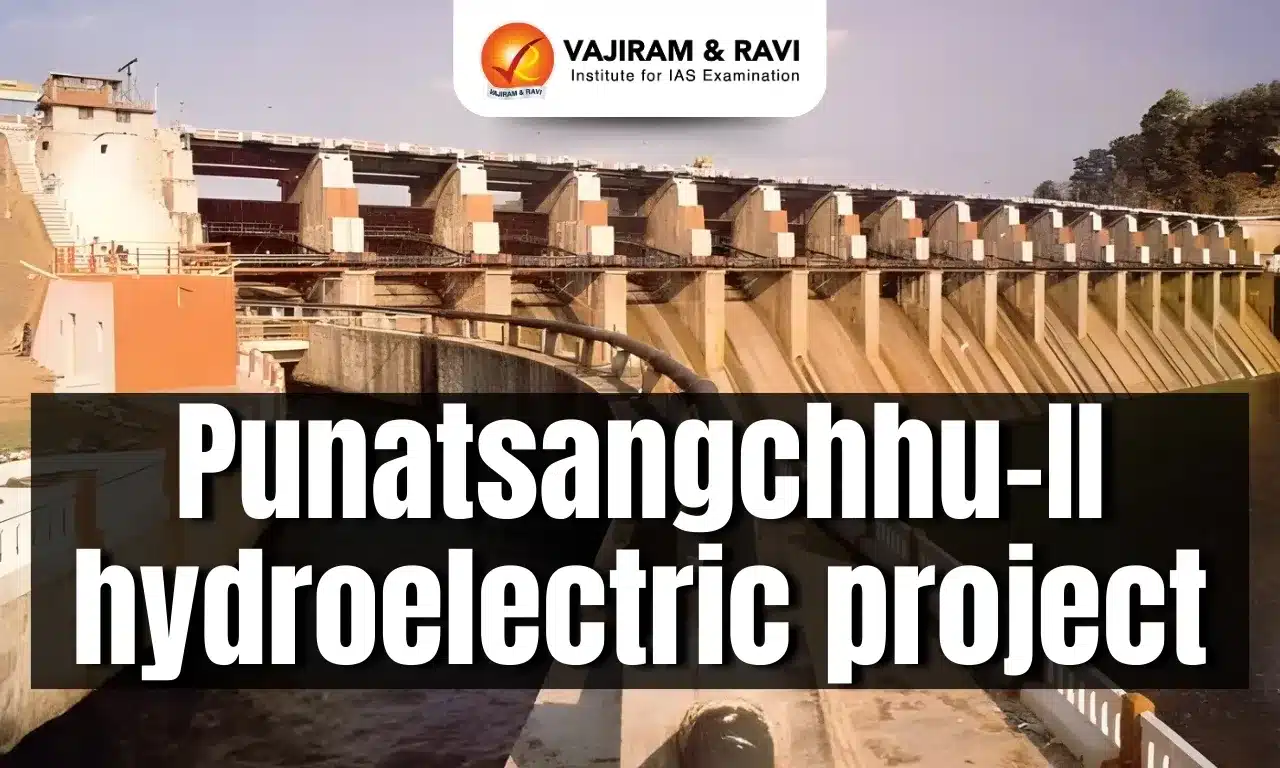
Work on Bhutan's 1,200 MW Punatsangchhu-I hydropower project has resumed recently after a seven-year suspension, with India's Power Minister attending a key concrete pouring ceremony marking the restart of dam construction.

About Punatsangchhu-I Hydroelectric Project

  • It is a 1200 MW run-of-the-river scheme located on the left bank of the Punatsangchhu River in the Southern Himalayas, about 80 km east of Bhutan’s capital Thimphu.
  • The project’s concrete dam is 130 m in height by 239 m in length. 
  • The facility includes an underground powerhouse that will generate 1200 MW power via six 200 MW turbines.
  • It is presently the largest hydropower project under construction in Bhutan.
  • The project is being implemented by the Punatsangchhu-I Hydroelectric Project Authority (PHPA), an autonomous body of the Royal Government of Bhutan and the Government of India. 
  • It is funded by the Government of India (GoI): 40% Grant and 60% Loan at 10% annual interest, repayable in 12 equated annual installments commencing one year after the mean date of operation.
  • All the surplus power from the project will be exported to India.

Source: NDTV

Punatsangchhu-I Hydroelectric Project FAQs

Q1: Where is the Punatsangchhu-I Hydroelectric Project located?

Ans: It is located on the left bank of the Punatsangchhu River in Bhutan.

Q2: What is the installed capacity of the Punatsangchhu-I Hydroelectric Project?

Ans: The installed capacity is 1200 MW.

Q3: How is the Punatsangchhu-I Hydroelectric Project funded?

Ans: It is funded by the Government of India with 40% grant and 60% loan.

Hib Disease

What is Hib Disease

Hib Disease Latest News

Hib, a once-controlled but deadly bacterial infection, is resurging in the US as childhood vaccination rates decline.

About Hib Disease

  • It is a serious illness caused by the bacteria Haemophilus influenzae type b. 
  • Babies and children younger than 5 years old are most at risk for Hib disease, but it can also affect adults with certain medical conditions.
  • Hib bacteria can cause mild illness, such as ear infections or bronchitis, or severe illness, such as infections of the bloodstream, joints, and the linings of the brain and spinal cord. 
  • Contrary to what the name Haemophilus influenzae suggests, the bacterium does not cause influenza.

Hib Disease Transmission

Hib is spread through respiratory droplets, mostly coughing and sneezing, and through lengthy contact with an infected person. 

Hib Disease Symptoms

  • H. influenzae can cause many different types of infections. 
  • Symptoms depend on the part of the body that's infected. 
  • Serious infections can result in long-term health problems and death.

Hib Disease Prevention and Treatment

  • Treatment usually includes the use of antibiotics to fight the infection. However, H. influenzae can be resistant to antibiotics. 
  • Depending on the severity of your condition, you may need additional treatment in the hospital. 
  • Effective vaccine against Haemophilus influenzae type b is available.

Source: TN

Hib Disease FAQs

Q1: What is Hib disease?

Ans: Hib disease is a serious illness caused by the bacterium Haemophilus influenzae type b.

Q2: Which age group is most at risk of Hib disease?

Ans: Babies and children below 5 years are most at risk.

Q3: How is Hib disease transmitted?

Ans: It spreads through respiratory droplets like coughing and sneezing, and through prolonged close contact with an infected person.

Q4: What is the primary treatment for Hib disease?

Ans: Treatment mainly involves antibiotics.

Q5: Is there a vaccine available for Hib disease?

Ans: Yes, an effective vaccine against Haemophilus influenzae type b is available.

Windfall Tax

What is the Windfall Tax?

Windfall Tax Latest News

The government recently hiked export duty, or windfall tax, on diesel to Rs 55.5 per litre and on aviation fuel ATF to Rs 42 a litre.

About Windfall Tax

  • A windfall tax is a higher tax levied by the government on specific industries when the industry experiences unexpected and above-average profits due to various global and geopolitical events outside the control of the industry.
  • As the name suggests, “windfall” refers to a dramatic and unanticipated increase in profits. On the other hand, “tax” implies an imposition levied on this dramatic income growth. 
  • The government imposes this tax when it notices a sudden rise in an industry’s revenue.
  • The increase in profits is not attributed to any expansion or investment strategy of a business but to a favourable external factor for which the business is not responsible.
  • It is levied on industries or businesses that make disproportionate profits during unexpected situations like commodity shortages, wars, pandemics, changes in government policy, etc. 
  • The most common industries that fall target to windfall gains tax include oil, gas, and mining.
  • Some individual taxes—such as inheritance tax or taxes on lottery or game-show winnings—can also be construed as a windfall tax.
  • Objective:
    • The primary objective of windfall taxes is to appropriate a portion of these extraordinary profits, which are perceived to exceed normal returns, for the public good. 
    • Governments assert that these profits are not solely due to the taxed entity’s efforts but also due to external factors, justifying the redistribution of such gains to benefit society as a whole.
    • It is also used as a supplementary revenue stream for the government.

Source: DH

Windfall Tax FAQs

Q1: What is a windfall tax?

Ans: A windfall tax is a higher tax levied on industries that earn unexpected and above-average profits.

Q2: When does the government impose a windfall tax?

Ans: It is imposed when there is a sudden rise in an industry’s revenue due to external factors.

Q3: What kind of events can lead to windfall profits?

Ans: Events like wars, pandemics, commodity shortages, and policy changes can lead to such profits.

Q4: On which sectors is windfall tax commonly imposed?

Ans: It is commonly imposed on oil, gas, and mining industries.

Q5: What is the primary objective of a windfall tax?

Ans: To redistribute extraordinary profits for the public good.

Chagos Islands

Chagos Islands

Chagos Islands Latest News

Recently, Britain’s government said that it had put on hold its deal ​to cede sovereignty of the Chagos Islands.

About Chagos Islands

  • Location: It is an island group located in the central Indian Ocean.
  • It is about 1,000 miles (1,600 km) south of the southern tip of the Indian subcontinent.
  • It is an overseas territory of the United Kingdom that was established on November 8, 1965.
    • The principal islands in the archipelago include the Diego Garcia atoll, Danger Island, Egmont Islands, Eagle Islands, Nelsons Island, Peros Banhos atoll, Three Brothers Islands, and the Solomon Islands. 
    • Diego Garcia  is the largest and the most southerly island of the Chagos Archipelago.
  • Terrain: The islands feature flat and low terrain, and most areas of the islands do not exceed more than 2 m in elevation. 
  • There are no rivers and lakes on the islands. 
  • Climate:  It experiences a tropical marine climate with high temperatures and elevated humidity levels. 
  • The island’s climate is heavily moderated by the trade winds which blow over the islands.

Source: TH

Chagos Islands FAQs

Q1: What is the largest island in the Chagos Archipelago?

Ans: Diego Garcia

Q2: What is a major issue related to the Chagos Islands?

Ans: Sovereignty dispute

Sulphur

Sulphur

Sulphur Latest News

The West Asia conflict disrupts supply chains, deeper shocks emerge and Sulphur may not grab headlines like oil, but it quietly powers industry and agriculture.

About Sulphur

  • Sulphur (identified by the letter S) is a non-metallic chemical element.
  • It can be found as a pure element or as sulphate or sulphide minerals. 
  • It occurs naturally in the environment and is believed to be the thirteenth most abundant element in the earth’s crust.
  • Properties
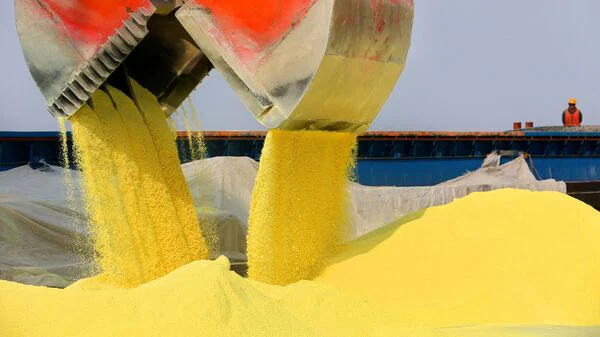
    • In its pure form, sulfur is a tasteless, odorless, brittle solid with a pale yellow color.
    • It’s a poor conductor of electricity that doesn't dissolve in water.
    • It combines directly with almost all the elements with the exception of gold, platinum and the noble gases.
  • In India it is mainly found in Puga Valley (Jammu & Kashmir), Barren Island of Bay of Bengal, Andhra Pradesh Kerala and Himachal Pradesh

Uses of Sulphur

  • Sulphur is an essential raw material for many chemical industries and is essentially used for the production of sulphuric acid.
    • Sulphuric acid is a strong mineral acid which is used in ore processing, fertilizer manufacturing, oil refining, waste water processing and chemical synthesis. 
  • The powdered form of sulphur produced by sublimation process is generally used in rubber vulcanisation, agricultural dusts, pharmaceutical products and stock feeds.
  • Sulphur is used as a light-generating medium in the rare lighting fixtures known as “sulphur lamps”.
  • Sulphur compounds are also used in detergents, fungicides, dyestuffs and agrichemicals.

Source: IE

Sulphur FAQs

Q1: What is the color of pure Sulphur?

Ans: Yellow

Q2: What is the atomic number of Sulphur?

Ans: 16

Indus River Dolphin

Indus River Dolphin

Indus River Dolphin Latest News

Recently, it was observed that conservation reserves, citizen science, and habitat protection gives the Indus River dolphin a fighting chance in India.

About Indus River Dolphin

  • The Indus River dolphin (Platanista minor) is one of the rarest mammals.
  • Appearance
    • It has the long, pointed nose characteristic of all river dolphins.
    • The teeth are visible in both the upper and lower jaws even when the mouth is closed. 
  • Distribution: It presently only occurs in the Indus River system, along with a remnant population in the Beas River.
  • Features of Indus River Dolphin
    • It is functionally blind. It has extremely reduced eyes without lenses.
    • Instead of vision, it relies entirely on echolocation to navigate, hunt and avoid obstacles in the highly turbid waters.
    • It has a remarkable trait of swimming predominantly on its side.
    • This allows it to use its long, sensitive snout to probe the riverbed for prey. Side-swimming is extremely rare among cetaceans and is a signature feature of this species.
    • It lives largely solitary or in very small groups (typically mother-calf pairs).
    • Diet: These are carnivores (piscivores). They feed on a variety of fish and crustaceans, including prawns, carp, catfish, and gobies.
  • Threats: Water pollution, poaching, fragmentation of habitat due to barrages
  • Conservation Status
    • IUCN Red List: Endangered
    • Wildlife Protection Act 1972: Schedule I

Source: DTE

Indus River Dolphin FAQs

Q1: What is the conservation status of the Indus River Dolphin?

Ans: Endangered

Q2: What is the scientific name of the Indus River Dolphin?

Ans: Platanista minor

Export Inspection Council

Export Inspection Council

Export Inspection Council Latest News

Recently, India said that the requirement for a certificate of inspection from Export Inspection Council (EIC) for rice exports is limited to the EU, UK, Iceland, Liechtenstein, Norway and Switzerland.

About Export Inspection Council

  • It was set up by the Government of India under Section 3 of the Export (Quality Control and Inspection) Act, 1963.
  • It ensures sound development of export trade of India through quality control and inspection and matters connected therewith.
  • It is the official export –certification body of India which ensures quality and safety of products exported from India.
  • It is headed by a Chairman. The Executive Head of the Council is the Director of Inspection & Quality Control who is responsible for day to day functioning of the Council.
  • Functions
    • It ensures that products notified under the Export (Quality Control and Inspection) Act 1963 are meeting the requirements of the importing countries in respect of their quality and safety.
    • It provides mandatory certification for various Food items namely fish & fishery products, dairy product, honey, egg products, meat and meat products, poultry meat products, animal casing, Gelatine, Ossein and crushed bones and feed additive and pre-mixtures while other food and non-food products are certified on voluntary basis.
  • The Export Inspection Agencies (EIAs) located at Mumbai, Kolkata, Kochi, Delhi and Chennai with a network of 30 sub offices backed by the state of art, NABL accredited laboratories at various places.
  • Headquarter: Delhi
  • Nodal Ministry: Ministry of Commerce and Industry.

Source: ET

Export Inspection Council FAQs

Q1: Where is the headquarters of EIC located?

Ans: Delhi

Q2: What is one of the main objectives of EIC?

Ans: To promote exports by ensuring quality

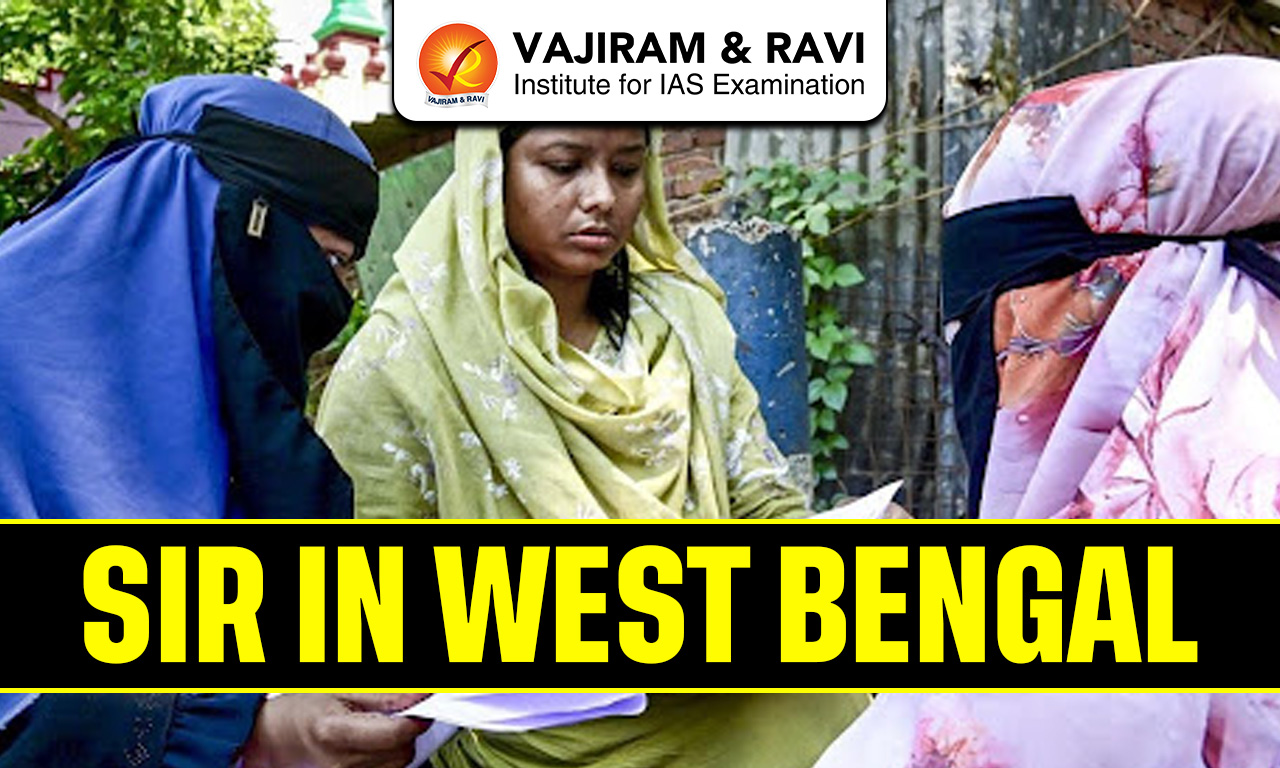
Special Intensive Revision (SIR) in West Bengal – Electoral Cleansing or Democratic Disruption?

SIR in West Bengal

SIR in West Bengal Latest News

  • The Special Intensive Revision (SIR) undertaken by the Election Commission of India (ECI) across multiple States aimed to clean electoral rolls by removing duplicate, migrated, and deceased voters, while also identifying “illegal immigrants”. 
  • However, its implementation in West Bengal has triggered a major political, legal, and institutional controversy, raising concerns about electoral integrity and democratic inclusion.

Objectives and Scope of SIR

  • Purification of electoral rolls (removal of ASDD - Absent, Shifted, Dead, Duplicate voters).
  • Identification of ineligible or illegal voters.
  • Use of technology (AI-based verification) for large-scale scrutiny.
  • Conducted in 13 States/UTs, but most contentious in West Bengal.

Scale and Impact in West Bengal

  • Mass deletions and data concerns:
    • Initial voters: 7.66 crore in November 2025.
    • Draft rolls: Voters in West Bengal reduced to about 7 crore in December 2025.
    • Total deletions (so far) of about 90.8 lakh, reducing the final eligible voters to 6.77 crore.
  • Categories of concern:
    • 30 lakh “unmapped voters”, with no linkage with 2002 revision.
    • 1.2 crore “logical discrepancy” cases, identified (through the AI-based scrutiny) anomalies such as -
      • Spelling mismatches in names (2002 vs 2025)
      • More than six voters linked to one ancestor
      • Implausible parent-child age gaps (outside 15–45 years)
      • Grandparent-voter age gap less than 40 years
      • Gender-name inconsistencies
    • 60 lakh voters are placed under “adjudication” and excluded from voting temporarily.
  • Outcome: About 1.5 crore cases flagged, 60 lakh remained disputed after hearings, resulting in mass exclusion pending verification.

Judicial Intervention - An Extraordinary Step

  • Role of the SC: The Supreme Court of India termed the situation a “trust deficit” between the ECI and the State government, and ordered judicial supervision of the adjudication process.
  • Implementation: The Bench led by the CJI Surya Kant, deployed about 700 judicial officers from WB, Odisha, Jharkhand, and took over quasi-judicial roles of EROs/AEROs (Electoral Registration Officers/Assistant Electoral Registration Officers).
  • Results: 27 lakh names struck down, while remaining cases referred to 19 special tribunals. Many affected voters are unlikely to vote due to a roll freeze before elections.

Political Fallout

  • State vs Centre narrative:
    • The ruling political party in West Bengal allegedly targeted disenfranchisement, and criticised the timing and scale of SIR.
    • However, the Central government supported the process as necessary electoral cleansing.
  • Electoral implications: SIR has become a central campaign issue, raises questions about free and fair elections.
  • Concerns raised by Civil Society:
    • Allegations of bias: Disproportionate deletion of Muslim voters, for example, in Nandigram (95% deletions allegedly Muslims). High deletions in Muslim-majority districts like Murshidabad, Malda, and Uttar Dinajpur.
    • Gender dimension: Women voters, especially in Matua communities, reportedly affected.
    • Democratic critique: Termed as “rewriting” rather than revision of electoral rolls.

Key Challenges

  • Trust deficit: Breakdown of confidence between constitutional body (ECI) and elected government.
  • Algorithmic transparency: Lack of clarity on AI-based decision-making raises accountability concerns.
  • Disenfranchisement risks: Large-scale exclusions threaten universal adult suffrage.
  • Institutional overreach: Judiciary stepping into executive functions raises separation of powers issues.
  • Electoral integrity vs inclusion: Balancing clean rolls with inclusive democracy.

Way Forward

  • Transparent methodology: Public disclosure of AI criteria and audit mechanisms.
  • Strengthening due process: Adequate time, documentation support, and grievance redressal for voters.
  • Independent oversight: Third-party or parliamentary scrutiny to ensure neutrality.
  • Safeguards against bias: Periodic social audits to prevent targeted exclusion (religion/gender).
  • Institutional coordination: Better cooperation between ECI, State governments, and judiciary.

Conclusion

  • The West Bengal SIR episode underscores a deeper tension between electoral integrity and democratic inclusiveness. 
  • While cleaning electoral rolls is essential for credible elections, the scale, methodology, and timing of such exercises must inspire public trust. 
  • The controversy reveals that procedural fairness, transparency, and institutional credibility are as vital as the objective of electoral purification itself.

Source: TH

SIR in West Bengal FAQs

Q1: What are the objectives and significance of the Special Intensive Revision (SIR)?

Ans: SIR aims to enhance electoral integrity by removing duplicate, migrated, and ineligible voters.

Q2: What are the concerns associated with the use of AI-based “logical discrepancy” criteria in electoral roll revision?

Ans: It risks opacity, exclusion errors, and lack of accountability, potentially undermining democratic inclusiveness.

Q3: What are the implications of large-scale voter deletions during SIR in West Bengal?

Ans: Massive deletions raise concerns of disenfranchisement, electoral bias, and erosion of public trust in democratic processes.

Q4: What is the significance of judicial intervention by the SC in the SIR process?

Ans: It highlights institutional mistrust and ensures procedural fairness, but raises concerns about separation of powers.

Q5: What are the challenges in balancing electoral integrity with democratic inclusiveness?

Ans: Ensuring clean rolls while safeguarding universal adult suffrage requires transparency, due process, and protection against arbitrary exclusions.

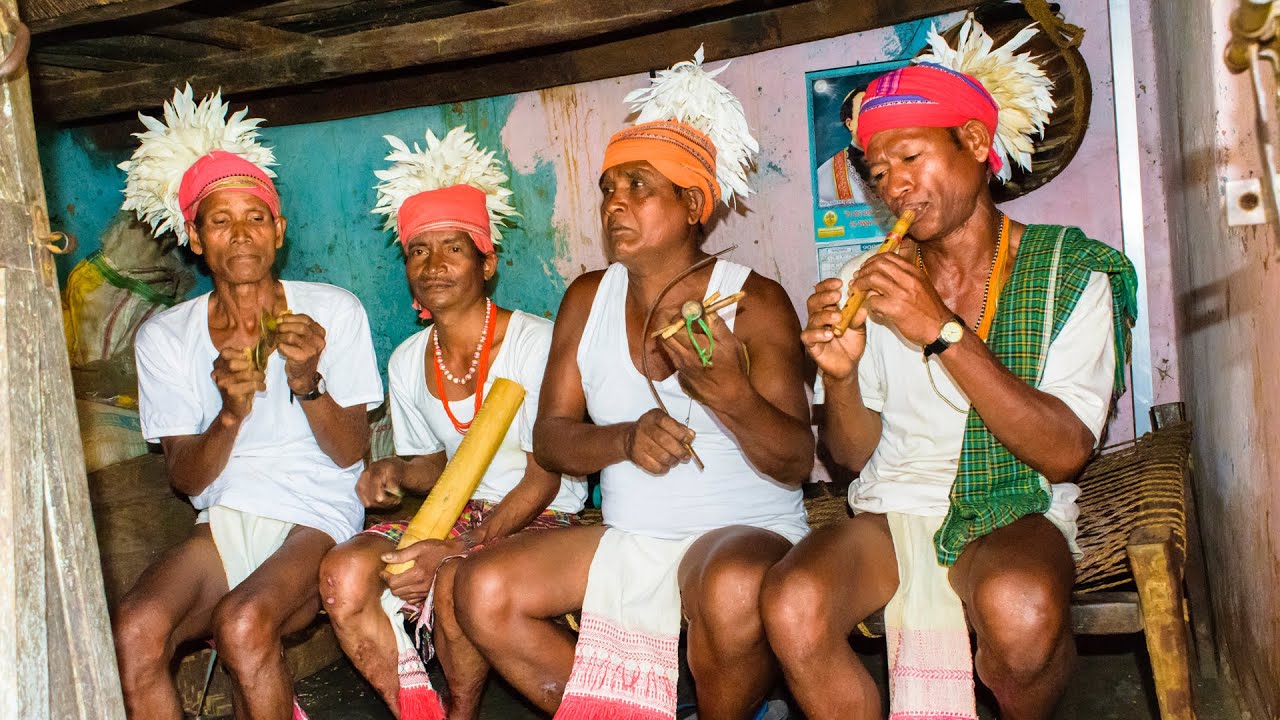
Lanjia Saora Tribe

Lanjia Saora Tribe

Lanjia Saora Tribe Latest News

It is observed that among the younger members of the Lanjia Saora Tribe community, tradition is being reinterpreted and negotiating modernity on its own terms.

About Lanjia Saora Tribe

  • Saora is one of the ancient tribes of Odisha and categorized as a particularly vulnerable tribal group.
  • Other names: Savaras, Sabaras, Saura, Sora, etc.
  • A small number of people are also found in the states of Andhra Pradesh, Jharkhand, Madhya Pradesh, and Assam.
  • Language: They have their own native language called Sora, which is a Munda language, and they are one of the very few tribes of India that have a script for the language, Sorang Sompeng.
  • They show their racial affinity to the Proto Australoid physical characters.
  • Settlement: They are living in mud-and-thatch homes scattered across undulating terrain,
  • Economy: The community sustains itself through shifting cultivation, foraging, and small-scale farming.
  • Belief System
    • Religion: Saoras follow an ingrained and intricate religion, having faith in and worshipping a number of gods and spirits, who they believe are the supreme controllers of their regular lives.
    • They have unique art practices, religious customs, as well as a dying tattooing tradition called ‘Tantangbo’.
    • Their belief system is closely tied to nature, with rituals, music, and dance forming an integral part of everyday life.
    • Among the most distinctive visual traditions are their large metal earrings — thick, circular ornaments that are not merely worn but fixed into stretched earlobes, often over years.
    • Village guardian deities like Kitungsum are installed at the entrance of the settlement.

Source: TH

Lanjia Saora Tribe FAQs

Q1: What is the language spoken by the Lanjia Saora Tribe?

Ans: Sora

Q2: What is unique about the Lanjia Saora Tribe's art?

Ans: They create intricate wall paintings called 'Idital'

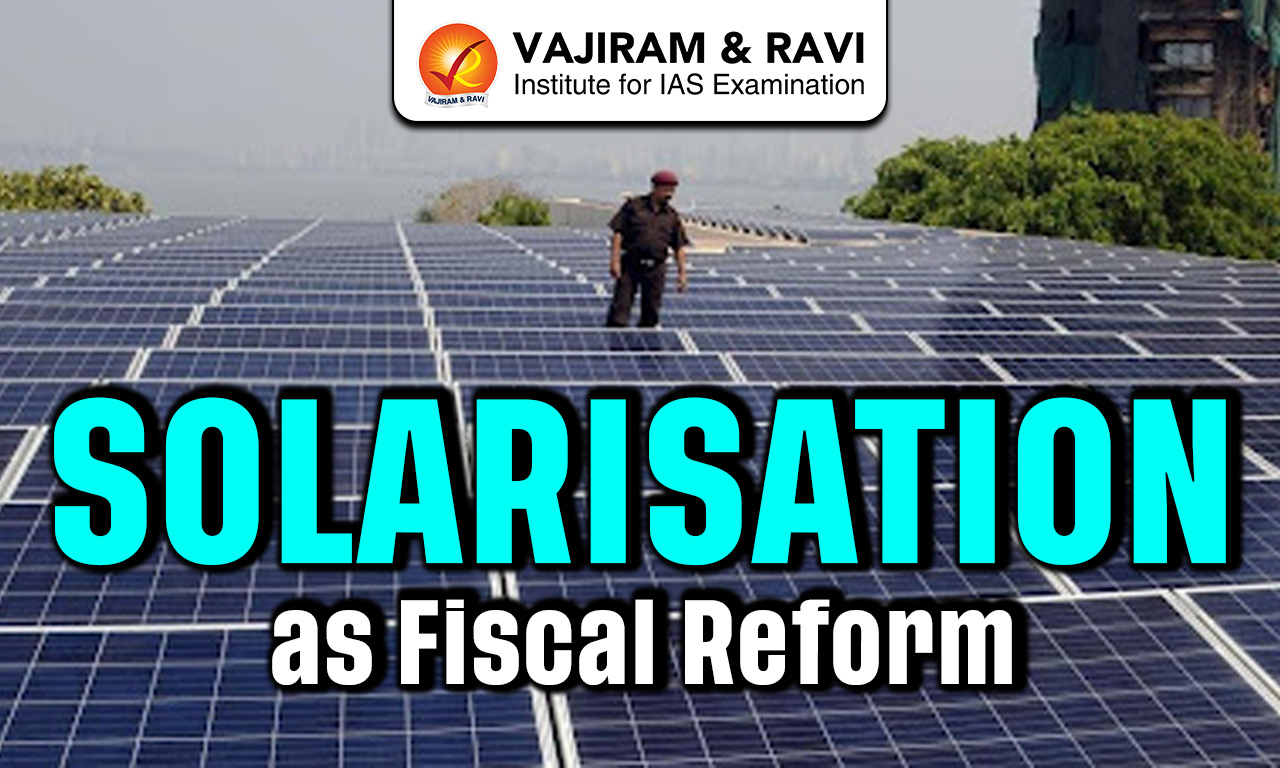
Solarisation as Fiscal Reform – Recasting India’s Power Subsidy Regime

Solarisation as Fiscal Reform

Solarisation as Fiscal Reform Latest News

  • India’s States collectively spend nearly ₹2.4 lakh crore annually on electricity subsidies, primarily for agriculture and domestic consumers. 
  • The Union government is increasingly repositioning its flagship solar schemes not merely as clean energy initiatives, but as fiscal reform tools aimed at gradually eliminating this subsidy burden.
  • With India’s installed power capacity reaching 535 GW (March 2026)—including about 150 GW solar and 54% from non-fossil sources—solarisation is emerging as a key instrument in both energy transition and public finance restructuring.

Reframing Solar Policy - From Climate to Fiscal Strategy

  • Programmes like PM-KUSUM (for agriculture) and PM Surya Ghar (for households) are now being framed as mechanisms to -
    • Replace subsidised grid electricity with low-cost solar power
    • Reduce States’ recurring subsidy outgo
  • Over time, solarisation could eliminate cross-subsidy burdens, especially those borne by industrial and commercial users.

Key Schemes Driving the Transition

  • PM-KUSUM (Agricultural solarisation):
    • Focus: Solarisation of agricultural feeders and installation of standalone solar pumps.
    • Impact: Reduces dependence on expensive grid power and diesel pumps. Enables decentralised solar generation near substations.
  • Case study (Maharashtra model):
    • Mukhyamantri Saur Krishi Vahini Yojana (MSKVY): Launched in 2017 for installing decentralised solar plants of 2-10 MW capacity within a 5 km radius of agriculture-dominated substations.
    • Outcomes: Reduction in cross-subsidy charges, ability to lower tariffs for consumers, and replacement of diesel pumps with solar pumps.
    • MSKVY 2.0 target: 16 GW. Far exceeds Central Financial Assistance (CFA) under PM-KUSUM (~4.5 GW).
  • PM Surya Ghar (Rooftop solar for households):
    • Conventional model: Demand-driven, with about 35 lakh households covered. However, poor households with free/subsidised electricity lack incentive to adopt solar.
    • Utility-Led Aggregation (ULA) model:
      • Utility installs rooftop solar: Either through own capital or RESCO (renewable energy service company) model.
      • Benefits: Zero upfront cost for consumers. States save on domestic subsidy expenditure.
      • Coverage: Approved in States like Assam, Odisha, Bihar, Chhattisgarh, Andhra Pradesh.
      • Target: 30 lakh installations through ULA and another 35 lakh through the normal mode, bringing the total to approximately 1 crore by March 2027 — the Surya Ghar scheme’s headline target.

Institutional and Policy Challenges

  • Fragmented governance: The Union Ministry of New and Renewable Energy (MNRE) lacks administrative authority (Under the Electricity Act, 2003, and the Energy Conservation Act, 2001) over India’s renewable energy sector.
  • Domestic manufacturing vs cost efficiency:
    • The ALMM (Approved List of Models and Manufacturers) mandates use of domestic solar equipment in government-backed projects to promote Atmanirbhar Bharat in solar manufacturing.
    • However, domestic equipment is costlier and in limited supply, and States may prefer cheaper imports (e.g., Chinese solar cells) potentially undermining domestic industry.
  • Behavioural and structural constraints: Poor households lack economic incentive to shift to solar, vendors face supply constraints and cost pressures, and States vary in fiscal capacity and political willingness.

Way Forward

  • Policy and institutional reforms:
    • The MNRE should be recognised as the “Central Government” in all matters pertaining to renewables under the Electricity Act, 2003.
    • Strengthen coordination between the MNRE, Ministry of Power, and the State DISCOMs.
  • Scaling innovative models: Expand ULA for inclusive solar adoption. Replicate Maharashtra’s decentralised solar feeder model across States.
  • Balancing domestic manufacturing and affordability: Rationalise ALMM norms to ensure availability and affordability of domestic equipment. Provide incentives for domestic manufacturing scale-up, and technology upgrades.
  • Fiscal incentivisation for States: Link central assistance to reduction in subsidy burden, adoption of solarisation models.

Conclusion

  • India’s solar push is undergoing a strategic shift—from a climate-centric narrative to a fiscal sustainability framework. 
  • By leveraging schemes like PM-KUSUM and PM Surya Ghar, the Centre aims to transform recurring subsidy liabilities into capital investments in clean energy. 
  • However, success hinges on resolving institutional fragmentation, manufacturing constraints, and behavioural barriers. 
  • If effectively scaled, solarisation could become a cornerstone of both India’s energy transition and fiscal federalism reform.

Source: TH

Solarisation as Fiscal Reform FAQs

Q1: How is solarisation being repositioned as a fiscal reform tool in India’s power sector?

Ans: It replaces subsidised electricity with low-cost renewable power, thereby reducing States’ recurring subsidy burden.

Q2: What is the significance of feeder-level solarisation under PM-KUSUM?

Ans: It lowers power procurement costs for agriculture, reducing cross-subsidy pressures and improving DISCOM finances.

Q3: What is the Utility-Led Aggregation (ULA) model under PM Surya Ghar?

Ans: ULA enables rooftop solar installation without upfront cost to poor households, helping States cut domestic electricity subsidies.

Q4: What is the policy dilemma between promoting domestic solar manufacturing and ensuring cost-effective solar deployment?

Ans: ALMM norms support domestic industry but increase costs and supply constraints, creating tension with affordability goals.

Q5: What are the institutional challenges in renewable energy governance in India?

Ans: The absence of statutory authority for MNRE and fragmented control under multiple laws weakens policy coordination and implementation.

Claude Mythos: How Claude Mythos Transforms Cybersecurity with AI

Claude Mythos

Claude Mythos Latest News

  • Anthropic has introduced Claude Mythos, its most advanced AI model, designed to detect hidden bugs in legacy software that human reviewers have missed. 
  • Instead of a public release, the model will be limited to a consortium of over 40 companies, focusing on scanning decades-old code to identify previously undetected vulnerabilities.

Claude by Anthropic: A Leading AI Model in the LLM Ecosystem

  • Anthropic’s Claude is a Large Language Model (LLM), comparable to models like ChatGPT and Gemini, designed for tasks such as coding, reasoning, and productivity.
  • Claude has gained recognition for its strong performance in coding and reasoning tasks, making it particularly valued among developers and professionals for generating reliable and structured outputs.
  • Anthropic offers multiple versions of Claude—Haiku, Sonnet, and Opus—in increasing order of sophistication, each known for enhanced reasoning and task execution abilities.
  • Despite high pricing, Anthropic—like many AI companies—remains unprofitable, investing heavily in development to compete in the rapidly evolving AI race.

Claude Mythos vs Other Models: A Cybersecurity-Focused Evolution

  • From Coding Strength to Security Capability - Anthropic’s earlier models like Opus demonstrated strong coding abilities, unintentionally enabling them to identify bugs and vulnerabilities in widely used open-source software.
  • Discovery of Hidden Vulnerabilities - Opus was able to detect bugs missed by human reviewers, raising both opportunities for improved security and concerns about potential misuse by malicious actors.
  • Mythos: Purpose-Built for Cybersecurity - Claude Mythos takes this capability further by actively identifying severe security vulnerabilities at scale, reportedly uncovering hundreds of critical flaws in legacy systems.
  • Risk of Dual-Use Technology - The ability to detect vulnerabilities also raises the risk that such tools could be exploited by hackers, prompting caution in deployment and restricted access.
  • Project Glasswing and Industry Collaboration - To address these concerns, Anthropic launched Project Glasswing, a defensive cybersecurity initiative in collaboration with major tech companies like Microsoft, Apple, and Cisco.
  • Strategic Shift in AI Application - Mythos represents a shift from general-purpose AI to specialised, high-impact applications, particularly in strengthening cybersecurity infrastructure.

Claude Mythos: Capability, Access, and Cybersecurity Risks

  • Uncertain but Proven Capability - While Mythos’ full capabilities are not publicly known, Anthropic has demonstrated its effectiveness by identifying real vulnerabilities and helping develop patches in widely used open-source software.
  • High Value as a Cybersecurity Tool - Its ability to uncover previously undetected security flaws makes Mythos highly valuable for major IT and software companies seeking to strengthen system security.
  • Risks of Widespread Access - Making Mythos widely available poses a transitional risk, as such powerful tools could be misused by attackers to exploit vulnerabilities before they are fixed.
  • Inevitable Technological Diffusion - Even if restricted now, similar capabilities are likely to emerge in other AI models over time, making advanced vulnerability detection tools more widespread.
  • Strategic Logic Behind Limited Access - Through Project Glasswing, Anthropic aims to give early access to key companies, allowing them to identify and fix vulnerabilities first, before such tools become accessible to malicious actors.

Implications of Claude Mythos for India’s Cybersecurity Landscape

  • Dependence on Global Software Ecosystems - India’s IT industry relies heavily on foreign platforms and software, along with domestically developed solutions, making it both a beneficiary and a potential target of advanced vulnerability detection tools.
  • Opportunity for Improved Cybersecurity - If initiatives like Project Glasswing identify vulnerabilities early, Indian companies can patch systems proactively, strengthening their cybersecurity before such tools become widely available.
  • Risk to Domestic Software Systems - Indian-developed software may remain exposed to sophisticated cyberattacks, especially since no Indian firm is currently part of the Project Glasswing consortium.
  • Limited Direct Participation - The absence of Indian companies in early access initiatives could place them at a relative disadvantage in addressing emerging cybersecurity threats.

Government and Industry Response

  • The Data Security Council of India (DSCI) under Nasscom is actively discussing Mythos.
  • The IT Ministry and Indian Computer Emergency Response Team (CERT-In) are studying its implications to prepare policy and response strategies.
  • India must strengthen its cybersecurity ecosystem, institutional readiness, and industry participation to effectively respond to the emerging risks and opportunities posed by advanced AI models like Mythos.

Source: TH | IE

Claude Mythos FAQs

Q1: What is Claude Mythos?

Ans: Claude Mythos is an advanced AI model by Anthropic designed to detect hidden vulnerabilities in legacy software that human reviewers often fail to identify.

Q2: How is Claude Mythos different from other models?

Ans: Claude Mythos focuses specifically on cybersecurity, identifying severe software vulnerabilities at scale, unlike general-purpose AI models designed for coding or productivity tasks.

Q3: Why is Claude Mythos access restricted?

Ans: Claude Mythos access is limited to prevent misuse, as its ability to find vulnerabilities could be exploited by hackers before security patches are implemented.

Q4: What is Project Glasswing?

Ans: Project Glasswing is a cybersecurity initiative by Anthropic that provides early access to Claude Mythos for companies to detect and fix vulnerabilities proactively.

Q5: What are the implications of Claude Mythos for India?

Ans: Claude Mythos can improve cybersecurity for Indian firms but also exposes domestic systems to risks, requiring stronger preparedness and government monitoring through CERT-In and industry bodies.

BSF Reptile Plan: How BSF Reptile Proposal Impacts Border Security

BSF Reptile

BSF Reptile Latest News

  • The Border Security Force has directed field units to explore the feasibility of deploying reptiles like snakes and crocodiles in riverine border areas to curb infiltration and criminal activities.
  • The directive, issued after a meeting in Delhi, aligns with inputs linked to Union Minister of Home Affairs. Field units have been asked to examine operational feasibility, not implement the idea immediately.

India – Bangladesh Border

  • The India-Bangladesh border covers a total length of approximately 4,096.7 kilometers. It is the longest land border India shares with any neighbor.
  • It passes through five Indian states — West Bengal (2,217 km), Tripura (856 km), Meghalaya (443 km), Mizoram (318 km) and Assam (262 km). 
  • The border is characterised by a complex mix of riverine stretches, forests, haor (wetland) regions, and densely populated areas on both sides, making it one of the most difficult borders to manage in the world.

Institutional and Legal Framework

  • The Border Security Force (BSF) is the primary agency responsible for guarding this border on the Indian side.
  • The Land Boundary Agreement (LBA), 2015 was a landmark agreement that resolved the long-standing enclaves dispute — 111 Indian enclaves in Bangladesh and 51 Bangladeshi enclaves in India were exchanged, settling a decades-old humanitarian and territorial anomaly.
  • The Comprehensive Integrated Border Management System (CIBMS) is being deployed along this border to leverage technology for surveillance.

Key Challenges

  • Illegal Immigration - The porous nature of the border, shared language and ethnicity in many regions, and economic push factors from Bangladesh have historically driven large-scale undocumented migration into states like West Bengal and Assam.
  • Fencing and Physical Barriers - India has undertaken the Border Fencing Project along the India-Bangladesh border. However, a significant portion of the border — particularly riverine and wetland stretches — remains unfenced or poorly fenced.
    • Riverine boundaries are especially difficult to demarcate and fence, as rivers shift course over time.
  • Smuggling and Trafficking - The border witnesses active smuggling of cattle, narcotics, gold, fake Indian currency notes (FICN), and consumer goods. Human trafficking — particularly of women and children — is another grave challenge along this border.
  • Infiltration and Insurgency Linkages - There are longstanding concerns about infiltration of insurgent elements from across the border, particularly in the northeastern states.

Technological Interventions

  • CIBMS (Comprehensive Integrated Border Management System) — integrates sensors, cameras, radars, and communication systems for real-time surveillance.
  • Smart Fencing (BOLD-QIT) — Border Electronically Dominated QRT Interception Technique — deployed in Assam and other northeastern states to monitor unfenced riverine stretches using laser sensors and infrared cameras.
  • Unmanned Aerial Vehicles (UAVs/Drones) are increasingly being used for aerial surveillance of difficult terrain.
  • Floodlights and CCTV networks along vulnerable stretches.

BSF's Reptile Proposal for Bangladesh Border

  • The Border Security Force (BSF) has proposed an unconventional idea to curb infiltration along the India-Bangladesh border — releasing reptiles such as snakes and crocodiles into riverine stretches vulnerable to illegal crossings. 
  • The proposal comes in the context of India's border with Bangladesh, parts of which pass through difficult riverine terrain where barbed wire fences have reportedly become obsolete.
    • Of the total 4,096.7 km border with Bangladesh, the government had approved the fencing of 3,326.14 km.
    • Of this distance, 2,954.56 km has been fenced so far. Around 371 km of the total sanctioned border length is yet to be fenced.

Operational Challenges and Concerns

  • The presence of reptiles in riverine border gaps could act as a natural deterrent against infiltration and criminal activities, serving as an alternative to physical fencing in areas where conventional infrastructure is difficult to deploy.
  • However, there are various practical issues including procurement, handling, and deployment of reptiles.

Conflict with Local Communities

  • Conservationists warn that introduced reptiles will not remain confined to designated border stretches. 
  • They are bound to disperse across both sides of the border, posing a serious threat to local and often marginalised communities living in the region. This could trigger significant human-wildlife conflict.

Ecological Imbalance

  • Scientists pointed out that the targeted riverine regions — such as the Sundarbans — already host saltwater crocodiles, cobras, Russell's vipers, and kraits. 
  • Introducing additional species or artificially inflating the population of existing ones risks disrupting the existing ecological balance. 
  • In the long run, this could prove counterproductive.

Ineffectiveness as a Deterrent

  • Experts note that people who regularly cross the border are already aware of the presence of reptiles and take precautions accordingly. 
  • The proposal may therefore offer little practical deterrence against determined infiltrators or criminal elements. 
  • Ironically, criminals could even exploit translocated animals as an extra source of protein.

Risks to the Animals Themselves

  • Translocating wild animals is described as a "tricky proposition". 
  • Crocodiles, being territorial by nature, face reduced survival odds when moved to unfamiliar territory.

Conclusion

  • While the BSF's reptile proposal reflects the operational frustration of managing a vast and geographically complex border, experts are near-unanimous in cautioning against it. 
  • The idea raises serious concerns on grounds of ecological integrity, community safety, animal welfare, and practical effectiveness. 
  • A more sustainable approach would lie in accelerating smart fencing, technological surveillance, and bilateral cooperation with Bangladesh rather than experimenting with ecologically and ethically questionable measures.

Source: TH | TW

BSF Reptile FAQs

Q1: What is the BSF reptile proposal?

Ans: BSF reptile proposal suggests deploying snakes and crocodiles in riverine border areas to deter infiltration where physical fencing is difficult along the India-Bangladesh border.

Q2: Why is BSF reptile plan controversial?

Ans: BSF reptile plan raises concerns about ecological imbalance, human-wildlife conflict, and safety risks for local communities living near riverine border regions.

Q3: What challenges does BSF reptile deployment face?

Ans: BSF reptile deployment faces issues like procurement, control, survival of animals, and inability to restrict reptiles within designated border areas.

Q4: Will BSF reptile plan effectively stop infiltration?

Ans: Experts argue BSF reptile plan may not deter infiltrators, as they are already aware of reptiles and can take precautions while crossing.

Q5: What are better alternatives to BSF reptile plan?

Ans: Alternatives include smart fencing, drones, surveillance systems, and technological solutions like CIBMS for effective and sustainable border management.

Enquire Now