Pradhan Mantri Gram Sadak Yojana

Pradhan Mantri Gram Sadak Yojana

Pradhan Mantri Gram Sadak Yojana Latest News

Recently, the Union Cabinet has given its approval for the continuation of Pradhan Mantri Gram Sadak Yojana-III (PMGSY-III) beyond March 2025 upto March 2028. 

About Pradhan Mantri Gram Sadak Yojana

  • It is a flagship rural development programme of the Government of India, launched on 25th December, 2000.
  • Objectives: Providing all-weather road connectivity to unconnected habitations in rural areas by way of a single all-weather road, to the eligible unconnected habitations of designated population size
  • Eligibility Criteria of PMGSY Scheme
    • The eligibility criteria under the PMGSY scheme were primarily based on population size and connectivity status.
    • In plain areas, habitations with a population of 500 or more were eligible, provided they were unconnected.
    • For regions in North-Eastern states, Himalayan states, and Himalayan Union Territories, the threshold was reduced to a population of 250 or more, as per the 2001 Census.
  • The Pradhan Mantri Gram Sadak Yojana is implemented by the following agencies 
    • State Governments / UT Administrations will designate Executing Agencies to implement the programme.
    • At the District level, the programme will be planned, coordinated, and implemented through Programme Implementation Units (PIUs).
    • PIUs will be manned by competent technical personnel.
    • State Governments will establish suitable linkages with District Rural Development Agencies (DRDAs).
    • Funds will be released to DRDAs
  • Nodal Ministry: Ministry of Rural Development

Source: PIB

Pradhan Mantri Gram Sadak Yojana FAQs

Q1: What is the main objective of PMGSY?

Ans: Provide all-weather road connectivity to unconnected rural habitations

Q2: PMGSY is a scheme of which ministry?

Ans: Ministry of Rural Development

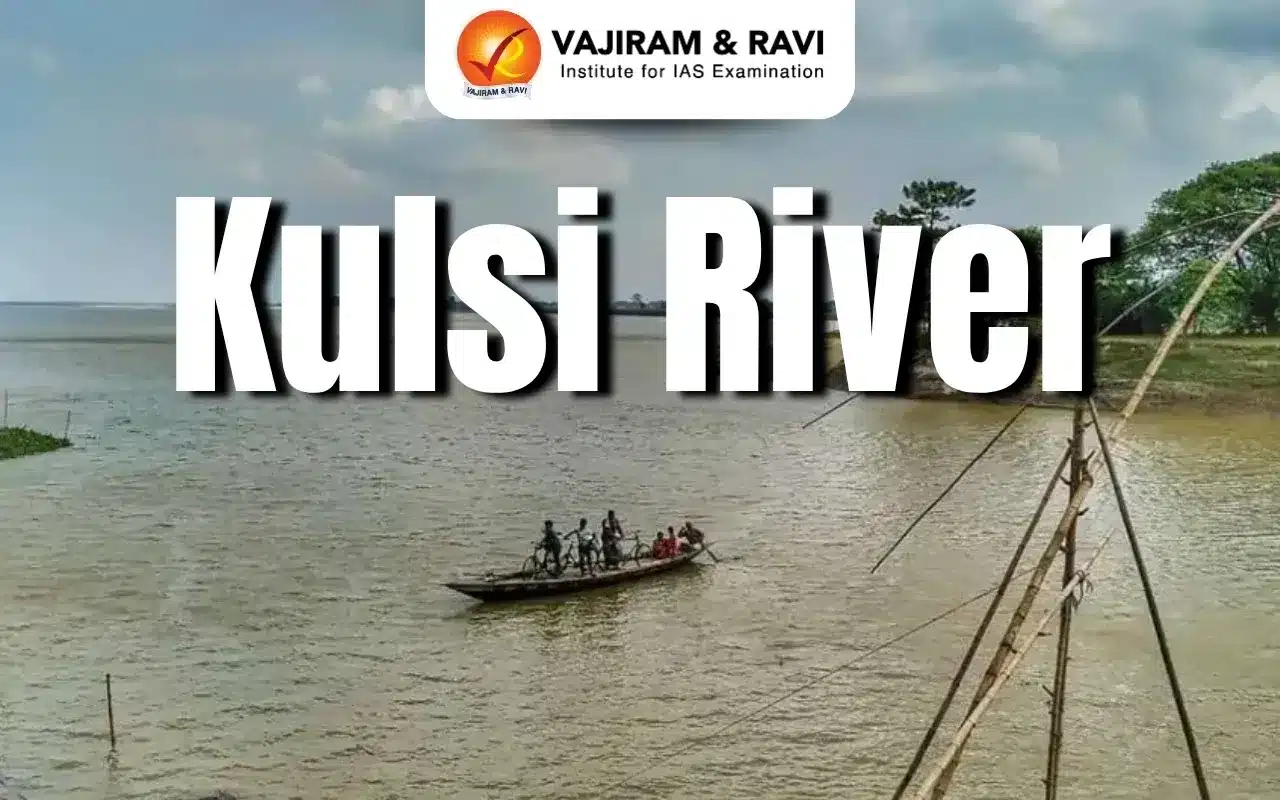
Kulsi River

Kulsi River

Kulsi River Latest News

A proposed hydropower project on the Kulsi River is facing opposition from local residents.

About Kulsi River

  • It is a south-bank tributary of the Brahmaputra River.
  • Course
    • It is composed of three rivers, namely Khri, Krishniya, and Umsiri, all of which originate from the West Khasi hill ranges of Meghalaya from an elevation of over 1800 metres and flow north. 
    • The river is known as Khri in the upper catchments, and after being joined by two other tributaries, namely Krishniya and Umsiri, within the Khasi hills in Meghalaya, it flows northwest and enters Assam at Ukium.
    • After that it flows north up to Kulsi village through the plains of the Kamrup District of Assam. 
    • Finally, it outflows into the Brahmaputra near Nagarbera. 
  • The total length of Kulsi is about 220 km, out of which 100 km is in Meghalaya and the rest, 120 km, is in Assam.
  • It is considered one of the last refuges of the endangered Gangetic dolphin (Platanista gangetica gangetica) in Assam.

Source: ETVB

Kulsi River FAQs

Q1: Kulsi River is a tributary of which river?

Ans: It is a south-bank tributary of the Brahmaputra River.

Q2: From which hills do the source streams of the Kulsi River originate?

Ans: West Khasi hill ranges of Meghalaya

Q3: What are the three rivers that form the Kulsi River?

Ans: Khri, Krishniya, and Umsiri.

Q4: What is the total length of the Kulsi River?

Ans: The total length of Kulsi is about 220 km, out of which 100 km is in Meghalaya and the rest, 120 km, is in Assam.

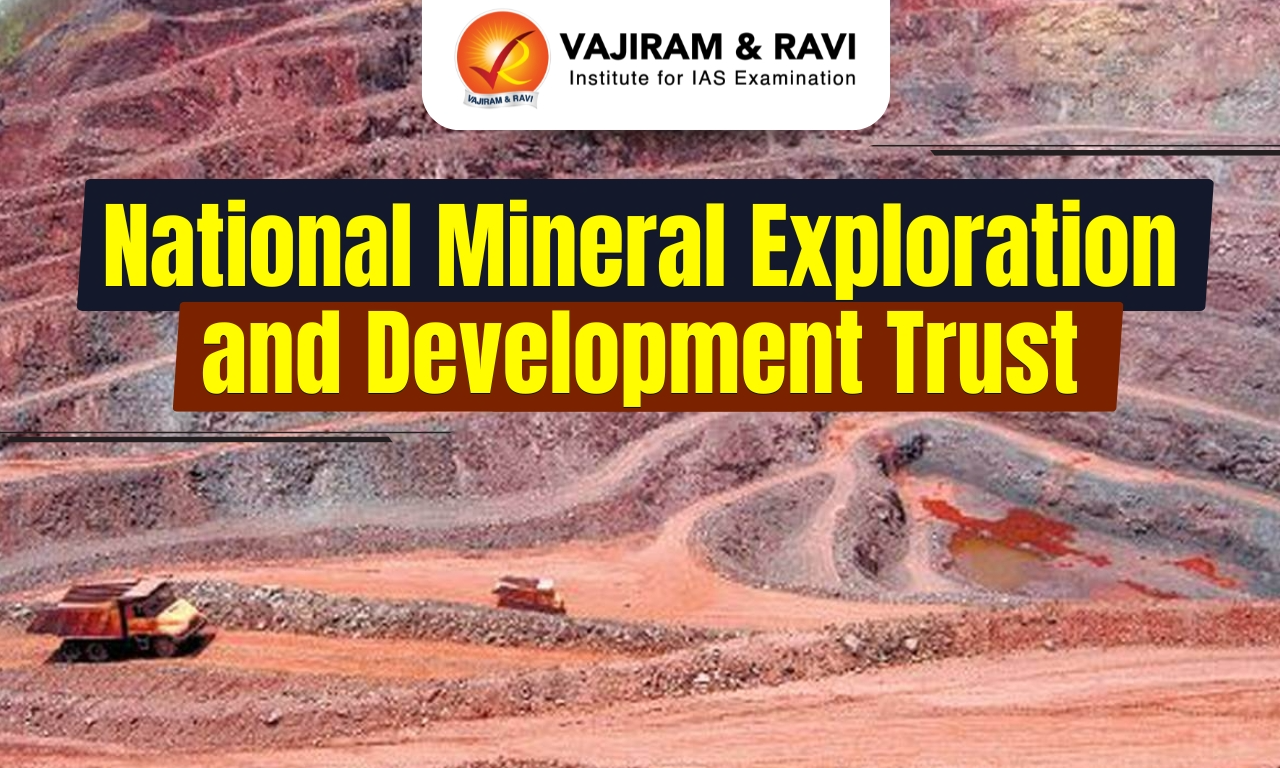
National Mineral Exploration and Development Trust

National Mineral Exploration and Development Trust

National Mineral Exploration and Development Trust Latest News

Recently, in its 23rd report on the National Mineral Exploration and Development Trust (NMEDT), the Standing Committee on Coal, Mines and Steel said offshore exploration presents a “significant opportunity” to harness largely untapped seabed minerals. 

About National Mineral Exploration and Development Trust

  • It is set up by the Central Government for the purposes of regional and detailed exploration of minerals using the funds accrued to it and in such manner as prescribed by the Central Government.
  • It was established under the Mines and Minerals (Development & Regulation) Amendment Act, 2015, (MMRDA)
  • Structure: It has a two-tier structure.
    • Apex Body: It is the Governing Body, chaired by the Minister of Mines. It holds the overall control of the Trust.
    • Executive Committee: It is chaired by the Secretary, Ministry of Mines, administers and manages its activities.
  • Funding: To implement mandated activities an NMET Fund has been established
    • The NMET Fund receives money from holders of mining lease or a prospecting license-cum-mining lease, an amount equivalent to two percent of royalty paid in terms of the Second Schedule of the MMDR Act.

Functions of NMET

  • Funding special studies and projects designed to identify, explore, extract, beneficiate and refine deep-seated or concealed mineral deposits;
  • Undertaking studies for mineral development, sustainable mining, adoption of advanced scientific and technological practices and mineral extraction metallurgy;
  • Detailed and regional exploration for strategic and critical minerals
  • Facilitating a national core repository for encouraging research in earth sciences and for evaluation of the mineral prospects

Source: BS

National Mineral Exploration and Development Trust FAQs

Q1: NMET was established under which Act?

Ans: MMDR Act, 1957

Q2: Who chairs the Governing Body of NMET?

Ans: Union Minister of Mines

Amchang Wildlife Sanctuary

Amchang Wildlife Sanctuary

Amchang Wildlife Sanctuary Latest News

The Gauhati High Court recently directed the Assam govt to respond to a petition alleging that the forest department floated an e-tender for felling trees in Amchang Wildlife Sanctuary without obtaining mandatory forest clearance from the central govt.

About Amchang Wildlife Sanctuary

  • It is located in the eastern fringe of Guwahati city in Assam.
  • The sanctuary was formed by merging three reserve forest areas: South Amchang Reserve Forest, Amchang Reserve Forest, and Khanapara Reserve Forest.
  • It stretches from the Brahmaputra River in the north to the hilly forests of Meghalaya in the south, forming a continuous forest belt through Meghalaya’s Maradakdola Reserve Forests.
  • Vegetation: Khasi Hill Sal Forests, East Himalayan Mixed Deciduous Forest, Eastern Alluvial Secondary Semi-evergreen Forests, and East Himalayan Sal Forests.
  • Flora: The forest is dominated by teak, white iris, axle wood, terminalia, wild java plum, elephant rope tree, beechwood, bitter champa, black dammer tree, cluster fig, and arjun trees.
  • Fauna
    • Among the mammals found here are Asian elephants, leopards, fishing cat, Asian palm civet, tadpole, different species of monkeys, gaur or Indian bison, sambar, barking deer, porcupines, mongooses, wild pigs, rabbit, flying squirrel, and otter. 
    • It shelters both resident and migratory birds such a jungle fowl, doves, egrets, teals, partridges, woodpeckers, hornbills, kingfishers, bulbuls, and many others.
    • Tree yellow butterflies (gancana harina) are also found at the Amchang wildlife sanctuary. These butterflies are indigenous to Thailand, Malaysia, Singapore, and Northeast India.

Source: MSN

Amchang Wildlife Sanctuary FAQs

Q1: Where is Amchang Wildlife Sanctuary located?

Ans: On the eastern fringe of Guwahati city in Assam.

Q2: Which major river lies to the north of Amchang Wildlife Sanctuary?

Ans: The Brahmaputra River

Q3: Which tree species dominate the flora of Amchang Wildlife Sanctuary?

Ans: Teak, arjun, terminalia, and wild java plum.

Fructose

Fructose

Fructose Latest News

A recent study presents fructose as a significant biological driver of conditions such as obesity, metabolic syndrome, and related chronic illnesses, challenging conventional understandings of dietary sugars.

About Fructose

  • It is a member of a group of carbohydrates known as simple sugars, or monosaccharides. 
  • It is one of the three most common natural monosaccharides. (The other two are glucose and galactose.) 
  • Chemical Formula: C₆H₁₂O₆ (same as glucose but with a different structure).
  • Fructose is the most water-soluble monosaccharide.
  • It is commonly known as fruit sugar. Fructose naturally occurs in fruits, vegetables, honey, sugar cane, and sugar beets. 
  • Fructose is significantly sweeter than glucose, making it ideal for use in beverages, desserts, and snacks.
  • Fructose and glucose combine to form the disaccharide sucrose, which we know as common sugar/table sugar.
  • However, fructose needs to be converted into glucose by the liver before it can be used by the body.
  • Unlike other sugars, fructose does not require insulin to be absorbed and therefore has a low impact on blood glucose levels.
  • When the digestive system doesn't absorb fructose properly, it can cause stomach pain, bloating, diarrhea and gas. This is known as fructose intolerance.

Source: OLI

Fructose FAQs

Q1: What is Fructose?

Ans: It is a simple sugar (monosaccharide).

Q2: Is fructose sweeter than glucose?

Ans: Yes.

Q3: What is formed when fructose combines with glucose?

Ans: Sucrose (table sugar).

Q4: Where is fructose converted into glucose in the body?

Ans: In the liver.

Q5: What are the symptoms of fructose intolerance?

Ans: Stomach pain, bloating, diarrhea, and gas.

Dung Beetle

Dung Beetle

Dung Beetle Latest News

Scientists have discovered that dung beetles roll in remarkably straight lines—even in complete darkness by using the band of light created by our galaxy, the Milky Way.

About Dung Beetle

  • The Dung Beetle, scientifically known as the Scarabaeidae family within the Animal Kingdom’s order Coleoptera.
  • Appearance
    • They are robust, compact insects known for their hard, protective exoskeletons and strong, clawed legs adapted for digging and rolling dung.
    • They vary in color, with some species displaying dull, black or brown hues, while others exhibit metallic shades of blue, green, or copper.
  • Distribution: Dung beetles are found worldwide, on every continent except Antarctica.
  • Habitat: They live in habitats that range from desert to forest.
  • They feed on the feces of large herbivores during both their larval and adult stages. 
  • Dung beetles span three main lifestyles: rollers (ball-makers), tunnelers (bury beneath), and dwellers (live in the pat).
  • Several dung beetles navigate using celestial cues; some use the Milky Way as an orientation reference during straight-line rolling.
  • Many scarabs have fan-like (lamellate) antennae that open to sample odors-useful for locating fresh dung fast.
  • Ecological Role: They play major ecological roles in nutrient cycling, soil aeration, seed dispersal, and parasite/flies suppression.

Source: IE

Dung Beetle FAQs

Q1: Dung beetles belong to which insect family?

Ans: Scarabaeidae

Q2: What is the main ecological role of dung beetles?

Ans: Decomposition of animal dung & nutrient cycling

Bharat Maritime Insurance Pool

Bharat Maritime Insurance Pool

Bharat Maritime Insurance Pool Latest News

Recently, the union government took a decisive step to shield its seaborne trade from global disruptions with the creation of the Bharat Maritime Insurance Pool (BMI Pool).

About Bharat Maritime Insurance Pool

  • It is a new domestic maritime insurance scheme designed to safeguard the country's shipping and trade interests during periods of global instability.
  • It is a Centre-backed mechanism designed to ensure uninterrupted and affordable maritime insurance coverage.
  • It is backed by a sovereign guarantee of Rs 12,980 crore.
  • The BMI Pool will provide insurance support to Indian-flagged vessels, Indian-controlled ships, and vessels carrying cargo to or from India, including those passing through volatile maritime routes.
  • It will cover a wide range of risks, including hull and machinery, cargo, protection and indemnity, and war risk insurance.
  • The BMI Pool will initially run for 10 years, with the possibility of a five-year extension.
  • Significance: It is expected to strengthen India’s self-reliance in marine insurance, build domestic expertise in underwriting and claims management, and ensure continuity of coverage in case of global disruptions or sanctions. 

Source: FE

Bharat Maritime Insurance Pool FAQs

Q1: What is the sovereign guarantee amount for BMI Pool?

Ans: ₹12,980 crore

Q2: BMI Pool is approved for how many years initially?

Ans: 10 years, extendable by 5 more years

Dalma Wildlife Sanctuary

Dalma Wildlife Sanctuary

Dalma Wildlife Sanctuary Latest News

Recently, a herd of 38 elephant have returned to the Dalma Wildlife Sanctuary after nearly three years.

About Dalma Wildlife Sanctuary

  • Location: It is located in the state of Jharkhand.
  • It is situated around the Dalma Hills on the Chottanagpur Plateau.
  • The Sanctuary gets its name from the “Dalma mai” a local goddess who is revered and worshipped by the local people and the people of adjoining villages of Dalma. 
  • Terrain: The terrain here is hilly and rocky, with dense forests and grasslands. 
  • River: The entire forest of Dalma Sanctuary falls in the catchment of the Subarnarekha River.
  • It features two prominent waterfalls, Sitaguldi and Dassam.
  • Vegetation: The forests of Dalma come under the category “Dry peninsular Sal” and “Northern dry mixed deciduous Forest“.
  • Flora: Medicinal plants like Ananatmula, Satawari, Sarpgandha, etc. are abundant in the sanctuary. 
  • Various types of trees, climbers, herbs, shrubs, and orchids are found here. 
  • Fauna:  Besides elephants, the sanctuary has a considerable population of other wildlife like barking deer, wild boar, giant squirrel, porcupine, pangolin, sloth bear, etc.

Source: AM

Dalma Wildlife Sanctuary FAQs

Q1: What type of forest found in Dalma WLS?

Ans: Dry Peninsular Sal & Northern Dry Mixed Deciduous

Q2: Dalma Wildlife Sanctuary is famous for which animal?

Ans: Indian Elephant

Glutathione

Glutathione

Glutathione Latest News

Researchers recently discovered glutathione's key part in maintaining the smooth operations of a protein-producing hub in the cell called the endoplasmic reticulum (ER).

About Glutathione

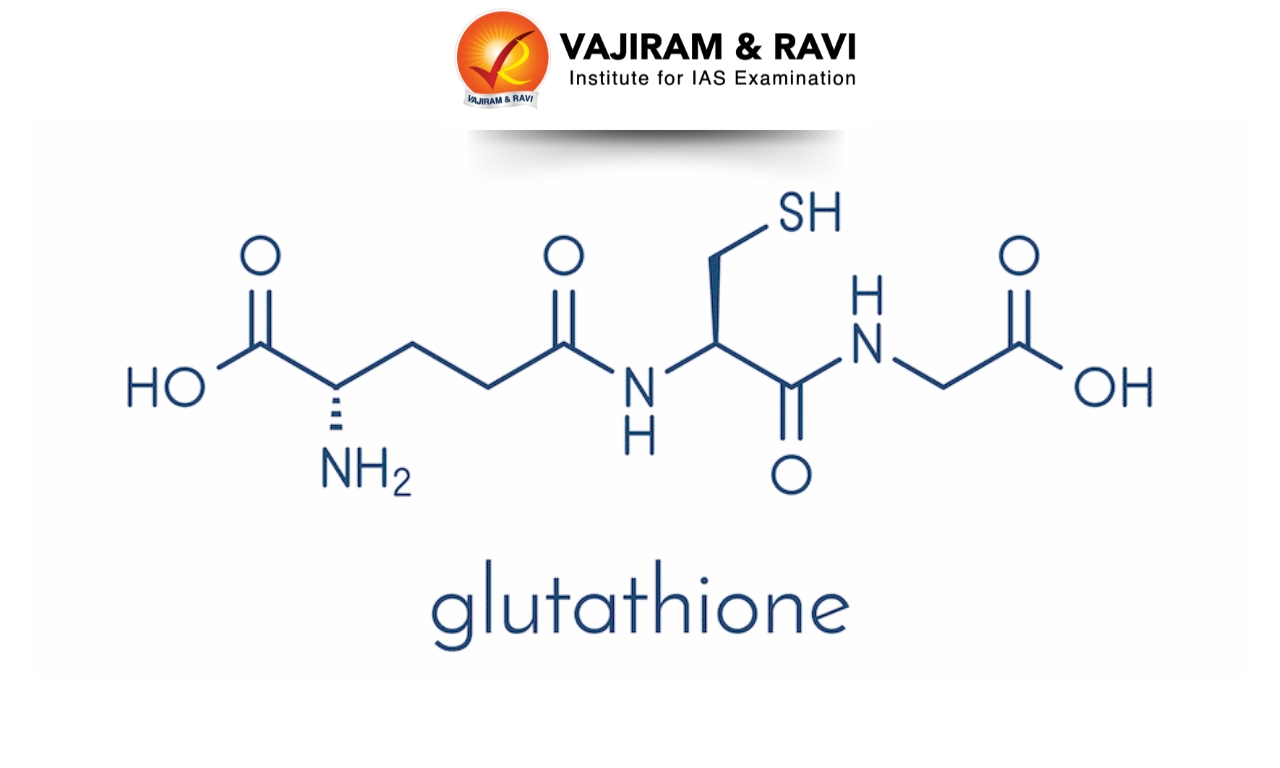
  • Glutathione is an antioxidant produced in the body through enzymatic reactions.
  • It is a tripeptide consisting of three amino acids (glutamate, cysteine, and glycine) and is naturally produced in the liver.
  • These amino acids that make up glutathione are non-essential amino acids that our body can produce on its own when needed. 
  • In addition to being produced naturally by the body, glutathione can be given intravenously, topically, or as an inhalant. It’s also available as an oral supplement in capsule and liquid form.
  • Some of the most abundant food sources of glutathione include cabbage, Brussels sprouts, garlic, onions, broccoli, and cauliflower. 
  • Benefits:
    • Glutathione is often called the “master antioxidant” because of its crucial role in protecting and detoxifying cells.
    • It is involved in tissue building and repair, making chemicals and proteins needed in the body, and in immune system function. 
    • It also can play a role in treating certain genetic conditions.
  • Glutathione levels in the body may be reduced by a number of factors, including poor nutrition, environmental toxins, and stress. Its levels also typically decline with age.

Source: PHYS

Glutathione FAQs

Q1: What is Glutathione?

Ans: It is an antioxidant produced in the body.

Q2: How is glutathione produced in the body?

Ans: Through enzymatic reactions.

Q3: Which three amino acids make up glutathione?

Ans: Glutamate, cysteine, and glycine.

Q4: Where is glutathione mainly produced in the body?

Ans: In the liver.

Q5: What role does glutathione play in the body?

Ans: Tissue building, repair, and immune function.

New Species of Jumping Spiders

New Species of Jumping Spiders

Jumping Spiders Latest News

A team of scientists recently discovered two new species of jumping spiders named Mogrus shushka and Mogrus pune, thriving in the country's drylands and urban green spaces.

About Mogrus shushka and Mogrus pune

  • These are two newly discovered arachnids belonging to the genus Mogrus,  a group of medium-sized jumping spiders typically found in the arid regions of Africa, Europe, and Asia.
  • Mogrus shushka:
    • It was identified in Desert National Park, Rajasthan, a region better known for its sand dunes and iconic desert wildlife. 
    • Derived from the Sanskrit word shushka for 'dry,' the name reflects the extreme, arid conditions in which the spider thrives. 
    • It is highly adapted to intense heat, low humidity, and sandy terrain, conditions that define the Thar desert.
    • Males of M. shushka stand out from their closest relative, M. cognatus, by having a distinct triangular-shaped bump on their mating appendage, rather than a thumb-shaped one. 
    • The females feature a deep, semi-circular depression on their underside with short, closely spaced internal ducts. 
  • Mogrus pune:
    • It was discovered in the Alfa Laval Biodiversity Park in Maharashtra. It was named after the city of Pune.
    • Male M. pune can be easily distinguished by a heart-shaped bump on its reproductive organ and uniquely curved structures, while the female possesses a distinctively wide and membranous central depression.

Source: RM

Jumping Spiders FAQs

Q1: What are Mogrus shushka and Mogrus pune?

Ans: They are newly discovered species of jumping spiders.

Q2: Where was Mogrus shushka discovered?

Ans: It was identified in Desert National Park, Rajasthan.

Q3: Where was Mogrus pune discovered?

Ans: It was discovered in the Alfa Laval Biodiversity Park in Maharashtra.

Q4: What is a distinguishing feature of male Mogrus pune?

Ans: A heart-shaped bump on its reproductive organ.

The Delimitation Controversy – A Battle Deferred, Not Resolved

The Delimitation Controversy

The Delimitation Controversy Latest News

  • The defeat of the Constitution (131st Amendment) Bill, 2026 in the Lok Sabha, along with the associated Delimitation Bill and Union Territory Bill, has reignited one of India's most politically charged constitutional debates. 
  • While the immediate legislative push has failed, the underlying issue — the redrawing of parliamentary constituency boundaries based on updated population data — remains very much alive.
  • It will demand resolution before Census figures are published.

The Three Bills

  • Objectives:
    • Advance the operationalisation of the Women's Reservation Law (106th Constitutional Amendment, 2023), which mandates that reservation for women in Lok Sabha and State Assemblies can only take effect after delimitation.
    • Expand the total number of seats in the Lok Sabha in an enlarged House.
  • Their defeat: Means both women's reservation in Parliament and the seat expansion remain stalled.

The Constitutional Framework

  • Understanding Article 81: It governs the composition of the Lok Sabha.
  • Article 81(2)(a) — Inter-State seat distribution — Mandates that seats are allotted to each state in proportion to its population, ensuring one person, one vote, one value. This has been frozen at 1971 Census levels.
  • Article 81(2)(b) — Intra-State delimitation — Requires that constituencies within each state are drawn proportionally. This has been frozen at 2001 Census levels.
  • Article 81(3) — The freeze clause — This clause explicitly extends the above freezes "until the relevant figures for the first census taken after the year 2026 have been published." 

History of the Freeze

  • 1976: First freeze (42nd Amendment) — Incentivise states to adopt family planning.
  • 2001: Extended freeze (84th Amendment) — Protect southern states; freeze extended 25 years to 2026.
  • 2026: Freeze set to expire — Census ongoing; political battle re-ignited.

The North-South Divide

  • Who gains, who loses? This is the sharpest political fault line in the debate.
  • Gainers: States likely to gain seats (higher population growth since 1971) are Uttar Pradesh, Bihar, Rajasthan, Gujarat, Maharashtra.
  • Losers: States likely to lose relative representation (lower population growth) are Kerala, Tamil Nadu, Andhra Pradesh, Karnataka, Telangana.
  • Concerns
    • The constitutional principle of "one person, one vote, one value" embedded in Article 81 inherently favours states with larger populations — rewarding higher birth rates.
    • According to the southern states, this is constitutionally unjust given their demographic success.

The Census Timeline and the Legal Trigger

  • The Cabinet announced on December 12, 2025, that Census 2026 will be conducted in two phases:
    • Houselisting and Housing Census — April to September 2026.
    • Population enumeration — February 2027 (with earlier enumeration for snow-bound regions like Ladakh, J&K, Himachal Pradesh, and Uttarakhand in September 2026).
  • Census figures are expected to be available by late 2027. Once published, the current freeze under Article 81(3) will automatically expire.
  • According to former Lok Sabha Secretary General P.D.T. Achary, this will make a fresh delimitation based on updated population data constitutionally mandatory, unless Parliament amends Article 81 again to extend the freeze.

Key Challenges

  • Federal trust deficit: Southern states fear being constitutionally penalised for better governance and population control.
  • Political arithmetic: Any delimitation that reduces the effective weight of southern votes will face fierce resistance from regional parties.
  • Women's reservation in limbo: The 2023 law cannot be operationalised without delimitation, leaving a landmark reform effectively frozen.
  • Constitutional rigidity: Article 81 (one person, one vote) leaves little room for a politically convenient solution without a constitutional amendment.
  • Thin parliamentary majority: The defeat of the Amendment Bill itself signals that the ruling coalition lacks the numbers for such politically divisive legislation.

Way Forward

  • Another freeze: This would require a constitutional amendment with a special majority, making political consensus essential.
  • Compensatory mechanisms: Such as increasing total Lok Sabha seats (without reducing any state's current count) have been discussed as a middle path.
  • Coalition factor: The ruling party’s dependence on coalition partners from the South (TDP) may act as a political brake on any hasty delimitation push.
  • Act fast: Before Census figures are officially published (likely late 2027) to prevent an automatic and politically explosive change in seat distribution.

Conclusion

  • The defeat of the 131st Amendment Bill has merely postponed a politically sensitive constitutional question. 
  • As the post-2026 Census data emerges, India must reconcile two competing principles: population-based democratic representation and fair federal balance among States. 
  • The delimitation debate will test India’s cooperative federalism, constitutional adaptability, and political maturity. 
  • A carefully negotiated solution is essential to preserve both national unity and representative democracy.

Source: IE

Delimitation Controversy FAQs

Q1: What is the constitutional significance of Article 81?

Ans: It ensures population-based representation in Lok Sabha through seat allocation among States and delimitation within States.

Q2: Why has the issue of delimitation become politically contentious after 2026?

Ans: The expiry of the freeze may shift parliamentary seats toward high-population northern States, raising concerns among southern States.

Q3: How can fresh delimitation affect India’s federal structure?

Ans: It may alter the balance of political power among States, creating regional and federal tensions.

Q4: What is the relationship between Census data and delimitation in India?

Ans: Delimitation is based on Census population figures to ensure equal representation through revised constituency boundaries and seat distribution.

Q5: What measures are needed to address concerns arising out of future delimitation exercises?

Ans: Political consensus, increasing Lok Sabha seats, and balancing population with federal equity can help resolve disputes.

PMGSY and Its Extension – Strengthening Rural Connectivity in India

Rural Connectivity

Rural Connectivity Latest News

  • The Union Cabinet has approved the extension of PMGSY-III with enhanced financial outlay and extended timelines.

Pradhan Mantri Gram Sadak Yojana (PMGSY)

  • Pradhan Mantri Gram Sadak Yojana is a centrally sponsored scheme launched in 2000 to provide all-weather road connectivity to unconnected rural habitations. 
  • It is one of India’s most significant rural infrastructure programmes aimed at reducing regional disparities.

Objectives and Approach

  • The primary objective of PMGSY is to ensure connectivity to eligible rural habitations based on population thresholds
  • It focuses on providing reliable road access to markets, schools, and healthcare facilities.
  • The scheme also aims to improve rural livelihoods by facilitating economic activities, reducing transportation costs, and integrating rural areas with the broader economy.

Key Features

  • The scheme ensures the construction of all-weather roads with standardised technical specifications. 
  • It uses modern technologies such as GIS-based monitoring and quality control mechanisms.
  • A key feature is its emphasis on connectivity to Gramin Agricultural Markets (GrAMs), which strengthens rural supply chains and agricultural marketing.

Phases of PMGSY

  • PMGSY-I (2000): Focused on providing new connectivity to unconnected habitations. 
  • PMGSY-II (2013): Emphasised the upgradation of existing rural roads to improve quality and durability. 
  • RCPLWEA (2016): Targeted connectivity in Left Wing Extremism-affected areas. 
  • PMGSY-III (2019): Focuses on the consolidation of rural road networks by connecting habitations to key economic and social infrastructure such as markets, schools, and hospitals. 

Funding Pattern

  • PMGSY is funded jointly by the Centre and States. 
  • The typical sharing pattern is 60:40 for general states and 90:10 for north-eastern and Himalayan states.
  • Funds are allocated for the construction, maintenance, and upgradation of rural roads, ensuring the sustainability of assets.

Achievements of PMGSY

  • PMGSY has significantly improved rural connectivity across India. Millions of kilometres of rural roads have been constructed, linking previously isolated villages.
  • The scheme has contributed to better school attendance, improved healthcare access, and increased rural incomes. It has also played a crucial role in poverty reduction and regional development.

News Summary

  • According to the official Cabinet approval document, the government has extended PMGSY-III beyond March 2025 up to March 2028 with a revised outlay of Rs. 83,977 crore
  • The extension includes completion timelines up to March 2028 for roads and bridges in plain areas and roads in hilly areas, while bridges in hilly regions can be completed up to March 2029. 
  • The outlay has been increased by Rs. 3,727 crore from the earlier Rs. 80,250 crore, reflecting the government’s continued focus on rural infrastructure. 
  • The scheme continues to prioritise consolidation of through routes and major rural links connecting habitations to Gramin Agricultural Markets, higher secondary schools, and hospitals. 
  • Additionally, works sanctioned before March 2025 but not yet awarded will now be taken up for execution. 
    • Long Span Bridges, including 161 pending projects worth Rs. 961 crore, will also be sanctioned and implemented along existing road alignments. 
  • The extension is expected to generate employment, boost rural trade, and improve access to essential services. 
  • It will also contribute to bridging the rural-urban divide and advancing inclusive development goals. 

Source: IE | PMO

Rural Connectivity FAQs

Q1: When was PMGSY launched?

Ans: It was launched in 2000 to provide rural road connectivity.

Q2: What is the focus of PMGSY-III?

Ans: It focuses on connecting rural areas to markets, schools, and hospitals.

Q3: What is the revised outlay for PMGSY-III?

Ans: Rs. 83,977 crore.

Q4: Till when has PMGSY-III been extended?

Ans: Up to March 2028, with some components till 2029.

Q5: What is the key benefit of PMGSY?

Ans: It improves rural connectivity, boosting economic and social development.

Russian Oil Waiver Extended: How Russian Oil Waiver Boosts India’s Energy Security

Russian Oil Waiver

Russian Oil Waiver Latest News

  • The United States has reversed its earlier stance and extended the sanctions waiver for Russian crude purchases till May 16, allowing countries like India to continue importing Russian oil despite sanctions.
  • The extension enables India to continue large-scale imports of discounted Russian crude, which is crucial given supply disruptions from West Asia. It helps maintain stable energy availability and pricing.

Impact of West Asia Supply Disruptions

  • Ongoing tensions in West Asia, including disruptions around the Strait of Hormuz, have constrained oil flows. 
  • Even with a fragile easing of tensions, recovery in supply is expected to take time, keeping global markets tight.
  • India is likely to continue relying on Russian crude as a major source, especially as alternatives remain uncertain. The waiver ensures uninterrupted access to non-West Asian oil supplies.
  • Without the extension:
    • Indian refiners would face secondary sanctions risks from the US 
    • They would be unable to deal with sanctioned Russian suppliers or tankers 
    • This could have reduced imports and increased costs
  • As the world’s third-largest oil consumer, importing over 88% of its crude needs, India benefits significantly from the waiver, which supports energy security, price stability, and supply diversification.

US Reversal on Russian Oil Waiver: Context and Implications

  • The United States has extended the sanctions waiver on Russian oil. The waiver allows countries to import Russian crude loaded on tankers—including sanctioned vessels. 
  • This reverses an earlier statement by US officials that the waiver would not be renewed.
  • Washington’s U-turn reflects evolving geopolitical and economic considerations.
  • The waiver extension comes amid disruptions in global oil supplies due to the West Asia conflict and reduced vessel movement through the Strait of Hormuz. The move aims to increase oil availability in global markets and stabilise prices.

Strategic Motives Behind the Decision

  • The policy shift is seen as part of efforts by the administration of Donald Trump to:
    • Prevent a spike in international oil prices 
    • Avoid a rise in domestic fuel costs in the US 
    • Manage economic pressures ahead of upcoming elections

Criticism and Controversy

  • The waiver has faced criticism within the US:
    • Critics argue it provides financial gains to Russia, potentially supporting its war efforts in Ukraine. 
    • Similar concerns have been raised regarding the waiver on Iranian oil.

Wider Policy Implications

  • The Russian oil waiver was initially issued for India and later extended globally. 
  • With a similar waiver for Iranian oil nearing expiry, there is uncertainty about whether Washington will adopt a similar extension.

US Waiver Extension: Strategic Gains for India’s Oil Imports

  • The extension of the US sanctions waiver on Russian crude has positioned India as a major beneficiary, enabling it to continue importing large volumes of discounted oil from Russia—one of its top suppliers.
  • With a significant portion of India’s oil imports—around 2.5–2.7 million barrels per day—normally passing through the Strait of Hormuz, disruptions due to the West Asia conflict have severely constrained supplies. The waiver helps offset these losses.
  • The waiver also eases friction between India and the US over India’s purchases of Russian oil, especially amid ongoing trade negotiations and tariff-related discussions.

Operational Flexibility for Indian Refiners

  • The waiver allows Indian refiners to:
    • Import crude via sanctioned tankers 
    • Deal directly with sanctioned Russian firms like Rosneft and Lukoil
  • This significantly reduces logistical and legal constraints.

Fluctuating Import Trends

  • February: ~1 million bpd (decline due to sanctions pressure) 
  • March: ~2 million bpd (44.4% of total imports amid waiver and war) 
  • Early April: ~1.6 million bpd 
  • Despite fluctuations, Russia has remained India’s largest crude supplier.

Strategic Energy Security

  • As India imports over 88% of its crude oil needs, the waiver ensures:
    • Supply stability 
    • Cost-effective sourcing 
    • Continued diversification away from volatile West Asian supplies 
  • The waiver extension strengthens India’s energy security and bargaining position, allowing it to navigate global supply disruptions while maintaining economic and strategic flexibility.

Source: IE | TP

Russian Oil Waiver FAQs

Q1: What is the Russian oil waiver?

Ans: The Russian oil waiver allows countries to import Russian crude despite sanctions, enabling continued global oil supply and preventing disruptions in energy markets.

Q2: How does the Russian oil waiver benefit India?

Ans: The Russian oil waiver helps India secure discounted crude, maintain supply stability, reduce costs, and diversify imports amid disruptions in West Asian oil supplies.

Q3: Why did the US extend the Russian oil waiver?

Ans: The US extended the Russian oil waiver to stabilise global oil markets, prevent price spikes, and manage domestic fuel costs amid geopolitical tensions.

Q4: What happens if the Russian oil waiver ends?

Ans: Without the Russian oil waiver, India could face supply disruptions, higher costs, and risks of secondary sanctions while importing Russian crude.

Q5: Why is India dependent on the Russian oil waiver?

Ans: India depends on the Russian oil waiver because it imports over 88% of its crude needs and relies on affordable Russian oil amid global supply constraints.

Maoist Insurgency in India: Why Maoist Insurgency Is Nearing Its End

Maoist Insurgency

Maoist Insurgency Latest News

  • The killing of top Maoist leader Nambala Keshava Rao in May 2025 and the surrender of his successor Thippiri Tirupati in early 2026 have significantly weakened the CPI (Maoist). 
  • With most of its top leadership eliminated or arrested, the organisation appears largely leaderless. 
  • These developments have prompted claims, including by Amit Shah, that the decades-old Maoist insurgency is nearing its end, though questions remain about whether it can truly be considered finished.

Decline of India’s Maoist Insurgency: Near End or Strategic Lull

  • Recent operations, especially Operation Kagar (2024), have dealt severe blows to the Left-Wing Extremist (LWE) movement. 
  • Security forces have recorded thousands of surrenders (≈3,840), arrests (≈2,220), and deaths (≈600). 
  • Several top leaders, including Central Committee and Politburo members, have been eliminated or captured, leaving the organisation structurally weakened and leaderless.

Collapse of Organisational Structure

  • The Maoist leadership has sharply declined:
    • Central Committee strength reduced from ~40 members to just 2 
    • Many senior leaders killed, arrested, or surrendered
    • This reflects a near breakdown of command and coordination within the organisation.

Shrinking Geographical Influence

  • The Maoists’ territorial control has drastically reduced:
    • From ~180 districts in 2013 
    • To just two districts (Bijapur and Sukma in Chhattisgarh) today 
  • Their once expansive “Red Corridor” has effectively collapsed, marking the end of large-scale insurgent dominance.

History of Resilience and Regrouping

  • Despite current setbacks, Maoists have previously demonstrated remarkable resilience:
    • Reduced to minimal strength in the early 1990s 
    • Re-emerged by 2000 with expanded influence 
    • Formation of CPI (Maoist) in 2004 strengthened their reach 
  • Their secretive and tightly controlled structure makes it difficult to fully assess their remaining capacity.

Current Reality: Weak but Not Eliminated

  • While the Maoists’ armed dominance has nearly ended, they cannot be completely written off. 
  • Residual networks and the potential for regrouping remain, especially given their past ability to revive after setbacks.

Origins and Expansion of the Maoist Movement in India

  • The Maoist movement began with the Naxalbari uprising in 1967 in West Bengal, led by Charu Majumdar. 
  • Inspired by Marxism-Leninism and Mao Zedong’s ideas, the movement emphasised armed struggle led by landless peasants, targeting feudal landlords as “class enemies.”
  • By 1972, most early leaders, including Majumdar, had been killed, causing a temporary decline.

Revival through People’s War Group

  • The movement was revived in the late 1970s by Kondapalli Seetharamaiah, who founded the People’s War Group (PWG) in Telangana. 
  • It gained momentum by mobilising educated youth from universities and technical institutions, expanding its organisational base.
  • The formation of CPI (Maoist) under Muppala Lakshmana Rao marked a turning point. 
  • The group developed a structured insurgent force, including the People’s Liberation Guerrilla Army (PLGA), transforming into a well-organised guerrilla movement.
  • The Maoists evolved into a highly militarised insurgency, reportedly receiving training from the Liberation Tigers of Tamil Eelam. 
  • At its peak, the movement was described by the them PM Manmohan Singh as India’s “biggest internal security threat.”

Decline of the Maoist Movement: Key Factors Behind the Downfall

  • From its early years under Charu Majumdar, the movement was plagued by ideological conflicts. 
  • Disagreements over violent annihilation versus mass mobilisation led to splintering into multiple factions and frequent leadership changes, weakening organisational cohesion.
  • Shift to Militarisation and State Response - Although militarisation brought temporary success, it also provoked a strong state response. Special forces like the Greyhounds in Andhra Pradesh and coordinated operations such as Operation Kagar significantly eroded Maoist strongholds.
  • Tribal vs Non-Tribal Leadership Rift - A key internal contradiction emerged as tribals formed the core fighting force, while leadership remained largely non-tribal. This created tensions within the organisation, prompting efforts to promote tribal leaders like Madvi Hidma.
  • Declining Relevance of Ideology - The Maoist ideology gradually lost appeal as government welfare schemes expanded into tribal areas, reducing grievances. The notion of “class enemy” became less relevant in changing socio-economic conditions.
  • Attempts at Dialogue and Strategic Reassessment - Internal documents by leaders such as Muppala Lakshmana Rao acknowledged the need to reconnect with society and intellectuals. Some leaders, including Cherukuri Rajkumar, even explored peace talks with the government, indicating strategic uncertainty.
  • Declining Recruitment and Rise of Democratic Alternatives - Falling recruitment levels, sustained security pressure, and the growing effectiveness of democratic protest mechanisms weakened support for armed struggle. Efforts to enter mainstream politics also reflected the movement’s diminishing influence.

Prospects of Maoist Revival: Constraints and Uncertainties

  • A large-scale revival of the Maoist insurgency appears unlikely in the near term, given the severe weakening of leadership, organisational structure, and territorial control.
  • Reports suggest that some cadres may have surrendered tactically to rebuild networks overground. 
  • The future trajectory depends significantly on the effectiveness of rehabilitation measures.
  • Many surrendered cadres face serious criminal charges, including murder, complicating their reintegration.
    • Withdrawal of prosecution requires judicial approval.
    • Victims’ families can file protest petitions, often holding stronger legal standing.
  • While a full-scale insurgent revival appears difficult, residual risks remain, contingent on rehabilitation outcomes, legal processes, and the ability of former cadres to reintegrate into mainstream society.

Source: TH

Maoist Insurgency FAQs

Q1: What is the current status of Maoist insurgency in India?

Ans: Maoist insurgency in India has weakened significantly due to leadership losses, shrinking territory, and security operations, though it has not been completely eliminated.

Q2: What led to the decline of Maoist insurgency?

Ans: Maoist insurgency declined due to internal divisions, strong security responses, reduced recruitment, loss of ideological relevance, and improved governance in affected regions.

Q3: Can Maoist insurgency revive in India?

Ans: Maoist insurgency revival appears unlikely in the short term, but residual networks, rehabilitation gaps, and past resilience suggest limited risks cannot be ruled out.

Q4: What role did Operation Kagar play?

Ans: Operation Kagar significantly weakened Maoist insurgency by targeting leadership, increasing surrenders, arrests, and dismantling core operational strongholds.

Q5: Why did Maoist insurgency begin?

Ans: Maoist insurgency began with the 1967 Naxalbari uprising, driven by land inequality, class conflict, and Maoist ideology advocating armed revolution by peasants.

Enquire Now