Tasgaon Lift Irrigation Scheme

Tasgaon Lift Irrigation Scheme

Tasgaon Lift Irrigation Scheme Latest News

Maharashtra Krishna Valley Development Corporation recently issued the Letter of Award (LoA) to a joint venture involving Mumbai-based infrastructure company Patel Engineering Ltd (PEL) for an irrigation project under the Tasgaon Lift Irrigation Scheme in Maharashtra.

About Tasgaon Lift Irrigation Scheme

  • It is an important irrigation infrastructure initiative in Maharashtra.  
  • It encompasses the construction of a comprehensive water distribution system for a command area of 2,277 hectares across six villages in Satara Taluka in Satara district
  • The villages included in the project scope are Tasgaon, Varne, Karandwadi, Devkarwadi, Degaon, and Nigadi.  
  • The project is expected to improve water availability and irrigation access across the region, supporting long-term agricultural and rural development.
  • Lift irrigation schemes, unlike gravity-fed canal systems, rely on electrically powered pumping infrastructure to raise water from a source body and push it through a pressurized distribution network to farmland at higher elevations.
  • The scheme includes multiple work fronts: head works, pump houses, switch yards, rising mains, delivery chambers, and a closed-pipe distribution network.  
  • The scheme falls under the Maharashtra Krishna Valley Development Corporation, Pune.  

News: HBL

Tasgaon Lift Irrigation Scheme FAQs

Q1: What is the Tasgaon Lift Irrigation Scheme?

Ans: It is an important irrigation infrastructure initiative in Maharashtra.

Q2: In which state is the Tasgaon Lift Irrigation Scheme located?

Ans: Maharashtra.

Q3: Which villages are included in the Tasgaon Lift Irrigation Scheme?

Ans: Tasgaon, Varne, Karandwadi, Devkarwadi, Degaon, and Nigadi.

Q4: What is a lift irrigation scheme?

Ans: A system that uses electrically powered pumps to lift water from a source and distribute it to higher-elevation farmland.

Q5: Which organization is responsible for the Tasgaon Lift Irrigation Scheme?

Ans: The Maharashtra Krishna Valley Development Corporation (MKVDC), Pune.

Knob-Billed Duck

Knob-Billed Duck

Knob-Billed Duck Latest News

A rare knob-billed duck — a species usually associated with the wetlands of Central India, particularly Rajasthan and Gujarat — has been recently recorded for the first time at Pong Lake Wildlife Sanctuary.

About Knob-Billed Duck

  • The knob-billed duck, or African comb duck, is a species of duck named for the prominent, leaf-shaped comb on top of the male's bill. 
  • Scientific Name: Sarkidiornis melanotos 

Knob-Billed Duck Habitat and Distribution 

  • It is found in tropical wetlands in Sub-Saharan Africa, Madagascar, and the Indian subcontinent from northern India to Laos and extreme southern China. 
  • It still breeds in freshwater swamps and lakes in the tropics. It is largely resident, apart from dispersion in the wet season. 

Knob-Billed Duck Features

  • It is one of the largest species of duck. Length can range from 56 to 76 cm, wingspan ranges from 116 to 145 cm and weight from 1.03 to 2.9 kg.
  • Adults have a white head freckled with dark spots and a pure white neck and underparts.  
  • The upperparts are glossy blue-black upperparts, with bluish and greenish iridescence especially prominent on the secondaries (lower arm feathers). 
  • The male is much larger than the female.
  • Young birds are dull buff below and on the face and neck, with dull brown upperparts, top of the head, and eyestripe. 

Knob-Billed Duck Conservation Status

It is classified as 'Least Concern' under the IUCN Red List.

News: TI

Knob-Billed Duck FAQs

Q1: Where is the Knob-billed Duck found?

Ans: It is found in tropical wetlands of Sub-Saharan Africa, Madagascar, and the Indian subcontinent from northern India to Laos and extreme southern China.

Q2: What is the color of the adult Knob-billed Duck's head?

Ans: The head is white with dark spots.

Q3: What is the IUCN Red List status of the Knob-billed Duck?

Ans: Least Concern (LC).

Q4: What distinctive feature of male Knob-billed Duck?

Ans: Prominent, leaf-shaped comb on top of the male's bill.

GRAPES-3 Telescope

GRAPES-3 Telescope

GRAPES-3 Telescope Latest News

Recently, researchers from Mumbai, Kochi, and Japan used the GRAPES-3 telescope to track how the earth’s upper atmosphere temperature and the sun’s magnetic field affect muons — subatomic particles from space.  

About GRAPES-3 Telescope

  • Gamma Ray Astronomy PeV EnergieS phase-3 (GRAPES-3) is designed to study the origin, acceleration and propagation of cosmic rays through measurement of extensive air showers.
  • It is induced by primary cosmic rays or gamma rays entering the Earth’s atmosphere in tera to peta electronvolt energies.
  • It also studies solar and thunderstorm phenomena using cosmic ray muons.
  • GRAPES-3 employs an array of plastic scintillator detectors and a large area muon detector based on proportional counters.
  • Location: It is located in Ooty, India.
  • It is operated by the Tata Institute of Fundamental Research.

Key Facts about Cosmic rays

  • These rays were discovered more than a century ago.
  • They are considered to be the most energetic particles in the universe.
  • Our planet is constantly bombarded by them from outer space almost uniformly from all directions at a constant rate.
  • They enter into Earth’s atmosphere and induce a shower of particles that travel to the ground almost at the speed of light.
  • The shower particles constitute electrons, photons, muons, protons, neutrons etc.
  • They have been observed over a remarkably wide energy range (108 to 1020 eV).

Source: TH

GRAPES-3 Telescope FAQs

Q1: What is the unique feature of GRAPES-3 that makes it the world’s most sensitive in its class?

Ans: World’s largest muon telescope covering 560 m² area with 16 modules – detects muons from cosmic rays

Q2: Which fundamental physics question does GRAPES-3 help address through PeV energy cosmic-ray studies?

Ans: Origin and acceleration mechanism of galactic cosmic rays

Wind Turbine Supply Chain Management Portal

Wind Turbine Supply Chain Management Portal

Wind Turbine Supply Chain Management Portal Latest News

Recently, the Union Minister for New and Renewable Energy launched India’s first dedicated Wind Turbine Supply Chain Management Portal. 

About Wind Turbine Supply Chain Management Portal

  • It is India's first dedicated digital platform for streamlining the wind energy supply chain.
  • It is aimed at strengthening the country's domestic wind manufacturing ecosystem and accelerating its clean energy ambitions.
  • It has been developed under the aegis of the Ministry for New and Renewable Energy (MNRE) with support from Indian Wind Turbine Manufacturers Association (IWTMA).
  • Key Features
    • Visibility: It is designed to improve visibility across the wind energy supply chain.
    • Approved List of Models and Manufacturers Linkage:  It facilitates compliance with domestic sourcing requirements under the Approved List of Models and Manufacturers (ALMM) framework,
    • Collaboration: It supports supplier discovery and qualification, strengthens collaboration among stakeholders and enhances export readiness.

What is Wind Energy?

  • Wind energy is a renewable energy source that uses the wind's kinetic energy to generate electricity.
  • Wind turbines capture the wind's power and use it to spin a generator, which creates electricity.
  • Wind Energy Top States in India: Tamil Nadu, Gujarat (Has highest potential), Rajasthan, Karnataka, Maharashtra, Telangana, Madhya Pradesh etc.

Source: DD News

Wind Turbine Supply Chain Management Portal FAQs

Q1: Which industry association partnered with MNRE to develop India’s first Wind Turbine Supply Chain Management Portal?

Ans: Indian Wind Turbine Manufacturers Association (IWTMA)

Q2: Wind Turbine Supply Chain Management Portal aims to ensure compliance with which framework?

Ans: Approved List of Models and Manufacturers (ALMM) framework

Joint Crediting Mechanism

Joint Crediting Mechanism

Joint Crediting Mechanism Latest News

Recently, India and Japan have adopted the Rules of Implementation for the Joint Crediting Mechanism (JCM) under Article 6.2 of the Paris Agreement.

About Joint Crediting Mechanism

  • It was first proposed by the Government of Japan and was officially launched in 2013.
  • Aim: It is a Japanese initiative that aims to facilitate diffusion of leading decarbonizing technologies and infrastructure through investment by Japanese entities and contributes to sustainable development of partner countries.
  • It is a bilateral mechanism which is being implemented in accordance with Article 6 of the Paris Agreement.
  • The JCM contributes to the achievement of both countries’ NDC (Nationally Determined Contribution) by evaluating Japan’s contributions in a quantitative manner and acquiring the part of credit.
  • It operates under the United Nations Framework Convention on Climate Change (UNFCCC).
  • It complements other existing mechanisms, such as the Clean Development Mechanism (CDM) and Joint Implementation (JI).
  • India is one of the 31 partner countries of the Joint Crediting Mechanism.
  • Focus Area of Joint Crediting Mechanism
    • This mechanism focuses on priority sectors which includes renewable energy with storage, sustainable aviation fuel, compressed biogas, green hydrogen and green ammonia, and in hard-to-abate sectors.

Source: PIB

Joint Crediting Mechanism FAQs

Q1: The Joint Crediting Mechanism is a bilateral carbon credit system initiated by which country?

Ans: Japan

Q2: Which Indian ministry is the nodal body for implementing JCM projects in India?

Ans: Ministry of Environment, Forest and Climate Change

Powai Lake

Powai Lake

Powai Lake Latest News

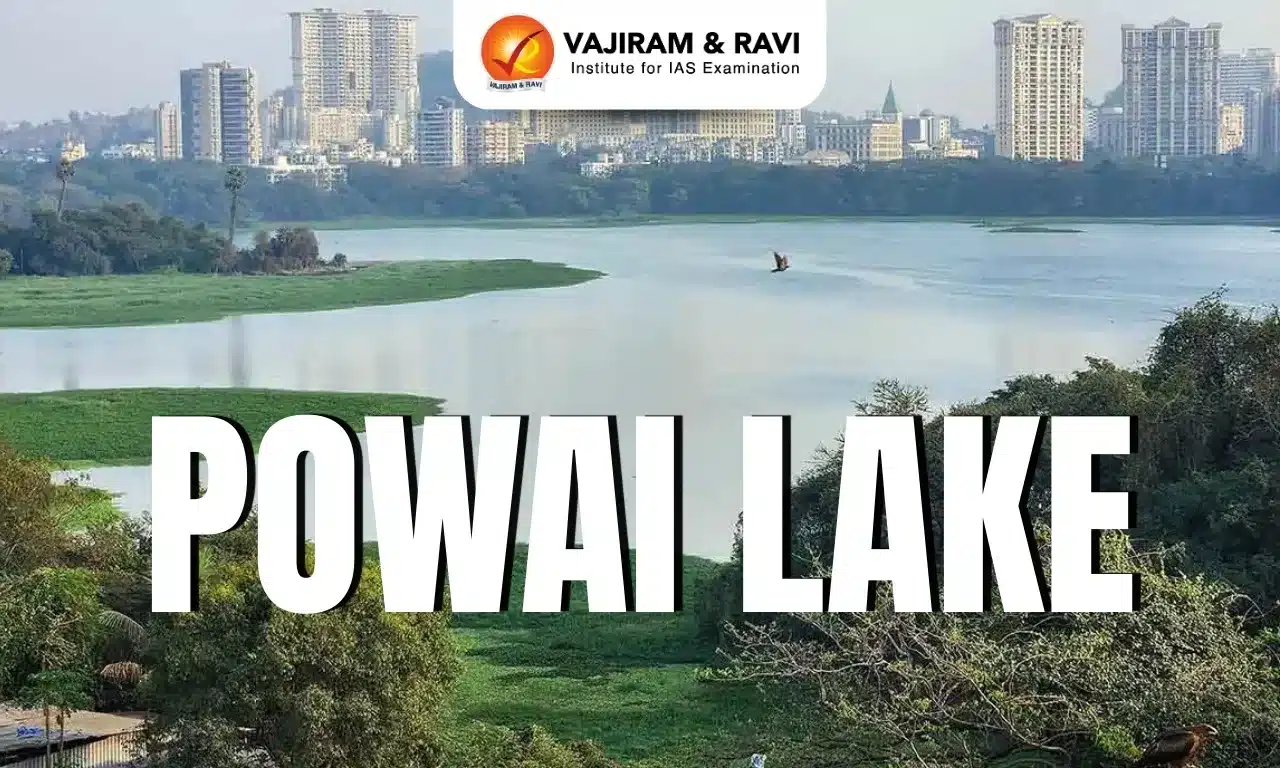
The BMC recently proposed appointing infrastructure consultancy firm AECOM Asia Company Limited to prepare a comprehensive redevelopment plan for a stretch of Powai Lake along Adi Shankaracharya Marg at a consultancy cost of Rs 1.85 crore.

About Powai Lake

  • It is an artificial lake situated in the northern suburb of Mumbai, Maharashtra.
  • The lake was built by the British in 1890, after constructing two dams between two hillocks across Mithi River, to augment the water supply to Bombay.
  • The hillocks seen on the south end of the lake are the lowest slopes of the Western Ghats.
  • The catchment area of the lake is 6.6 sq.km., with the depth varying from 3 to 12 metres.
  • Around Powai Lake are two famed institutions-Indian Institute of Technology-Bombay (IIT-B) and the National Institute of Industrial Engineering (NITIE).
  • The Padmavati Devi Temple, situated on the bank of the lake inside IIT Bombay campus dates back to the 10th century AD.
  • The lake is surrounded by the Powai Bird Sanctuary.
  • It is an important resting, feeding, and breeding site of several bird species, resident and migratory. 
  • Among some of the lake’s rare and distinguished residents and visitors are the Watercock, Pheasant-tailed Jacana, Slaty-legged Crake, Ruddy-breasted Crake, Woolly-necked Stork, Caspian Tern, and Peregrine Falcon.
  • It is also home to a small population of the marsh crocodile.
  • It has been extensively used for fishing over the years. Currently, it is being used for the conservation of the Indian mahaseer. 
  • In recent times, 40% of the lake has disappeared. The lake has deteriorated due to accelerated growth of residential, commercial, and industrial areas around the lake.

News: TOI

Powai Lake FAQs

Q1: Where is Powai Lake situated?

Ans: In the northern suburb of Mumbai, Maharashtra.

Q2: Is Powai Lake a natural or artificial lake?

Ans: It is an artificial lake.

Q3: When was Powai Lake constructed?

Ans: The lake was built by the British in 1890.

Q4: Why was Powai Lake built?

Ans: To augment the water supply to Bombay (Mumbai).

Q5: Which premier educational institution is located near Powai Lake?

Ans: The Indian Institute of Technology Bombay (IIT Bombay).

Amangarh Tiger Reserve

Amangarh Tiger Reserve

Amangarh Tiger Reserve Latest News

The fourth eco-tourism season at Amangarh Tiger Reserve in Uttar Pradesh was recently extended by 15 days.

About Amangarh Tiger Reserve

  • It is situated in the Bijnor district of Uttar Pradesh.
  • It encompasses an area of approximately 95 sq.km.
  • It forms a part of the Terai-Bhabar ecosystem, a unique stretch of forests at the foothills of the Himalayas. 
  • It was originally part of the Jim Corbett National Park, and after the state of Uttarakhand was carved out of Uttar Pradesh, Jim Corbett went to Uttarakhand, and Amangarh remained in Uttar Pradesh. 
  • The landscape here is a mesmerising blend of dense forests, rolling hills, grassy meadows, and pristine water bodies. 
  • Flora
    • The most dominant tree in Amangarh’s landscape is Sal (Shorea robusta), which forms large, continuous forests across the reserve.  
    • Alongside sal, species like Khair (Acacia catechu), Sheesham (Dalbergia sissoo), and Haldu (Adina cordifolia) thrive abundantly.
  • Fauna:
    • Mammals: Tiger, Elephant, Swamp Deer, Sambar, Cheetal, Hog Deer, Kakar, Langur, Sloth Bear, Porcupine, Otter.
    • Birds: Hornbill, Red Jungle Fowl, Pea Fowl, Bengal Florican, Fishing Eagle, Serpent Eagle, Osprey, Woodpeckers, Shama, Indian Pitta, Paradise Flycatcher, Orioles, Emerald Dove.
    • Reptiles: Monitor Lizard, Turtles, Python, Gangetic Dolphin, Mugger, Gharia, etc.

News: ET

Amangarh Tiger Reserve FAQs

Q1: Where is the Amangarh Tiger Reserve located?

Ans: It is located in the Bijnor district of Uttar Pradesh.

Q2: Which famous national park was Amangarh originally a part of?

Ans: Jim Corbett National Park.

Q3: Which is the dominant tree species in the Amangarh Tiger Reserve?

Ans: Sal (Shorea robusta).

Q4: What are the major landscape features of the Amangarh Tiger Reserve?

Ans: Dense forests, rolling hills, grassy meadows, and pristine water bodies.

INS Tarkash

INS Tarkash

INS Tarkash Latest News

Indian Naval Ship Tarkash, a stealth frigate of the Indian Navy, recently arrived in Port Victoria, Seychelles, during its ongoing deployment in the South West Indian Ocean Region.

About INS Tarkash

  • It is a state-of-the-art stealth frigate of the Indian Navy.
  • It is the second of three Talwar-class guided missile frigates. 
  • Designed and built in Russia, the Talwar-class guided missile frigates are modified version of the Krivak III-class frigate 
  • It was built by the Yantar shipyard in Kaliningrad, Russia.
  • It was commissioned into Indian Navy service on 9 November 2012 at Kaliningrad and joined the Western Naval Command on 27 December 2012.

INS Tarkash Features

  • Displacing 3,850 tonnes, it has a length of 124.8 m, a beam of 15.2 m, and a draught of 4.2 m.
  • With maximum speeds in excess of 30 knots, a range of 4,500 miles or 30 days and a complement of 253 personnel, the ship is powered by four gas turbines. 
  • It has been equipped with a weapon sensor that enables it to address threats in all dimensions. 
  • It uses stealth technologies and a special hull design to ensure a reduced radar cross-section.
  • It can board one Ka-28 Helix-A antisubmarine helicopter or one Ka-31 Helix-B airborne early warning helicopter.
  • It carries cutting-edge weaponry, which includes advanced surface-to-air missiles, 100 mm calibre guns (artillery), close-range guns, torpedoes, rocket launchers, and associated fire control systems. 
  • It is also equipped with BrahMos missiles instead of the Klub-N missiles, which makes it different from the earlier flight of Talwar-class ships.

News: DEF

INS Tarkash FAQs

Q1: What is INS Tarkash?

Ans: INS Tarkash is a state-of-the-art stealth frigate of the Indian Navy.

Q2: To which class of warships does INS Tarkash belong?

Ans: Talwar-class guided missile frigates.

Q3: In which country was INS Tarkash designed and built?

Ans: Russia.

Q4: When was INS Tarkash commissioned into the Indian Navy?

Ans: 9 November 2012.

Q5: What is the operational range of INS Tarkash?

Ans: 4,500 miles or 30 days at sea.

Manas National Park

Manas National Park

Manas National Park Latest News

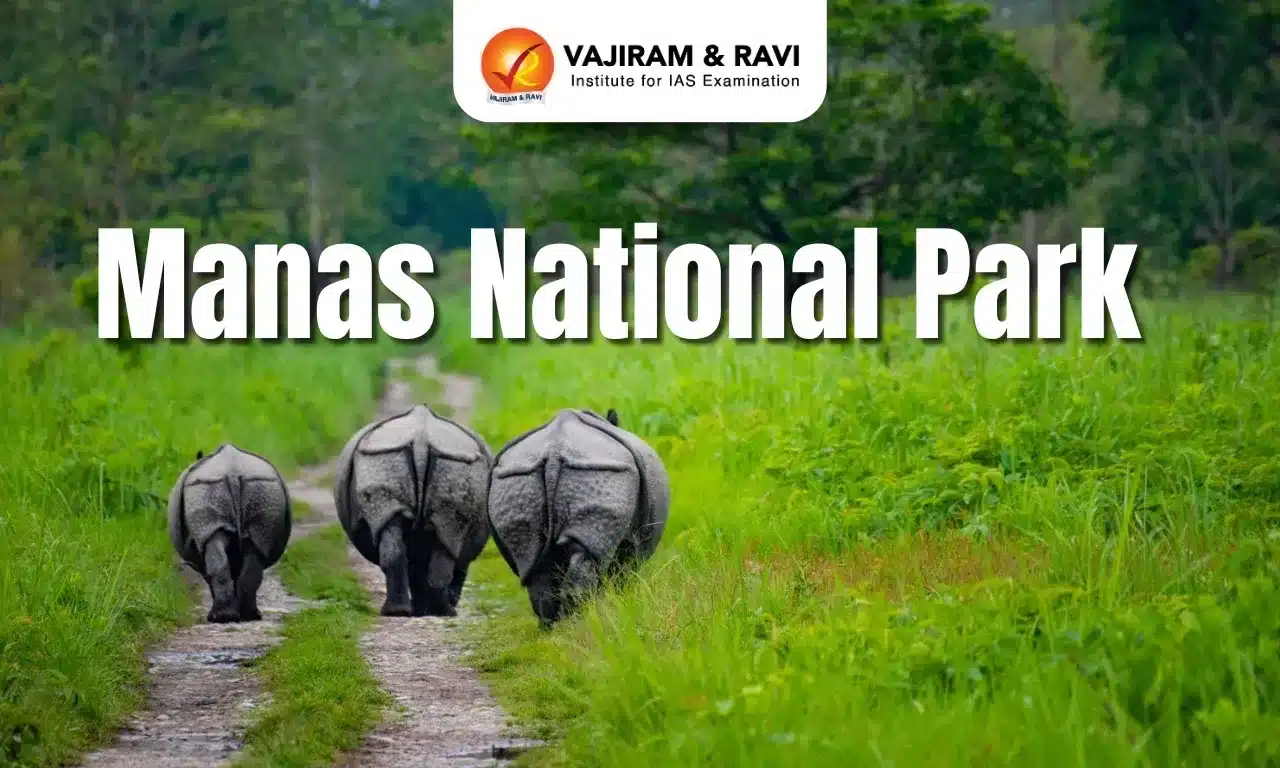
Recently, Assam Chief Minister announced that Manas National Park has recorded zero rhino and tiger poaching cases for three consecutive years. 

About Manas National Park

  • Location: It is located in the foothills of Himalayas in Assam. 
  • It shares a border with Bhutan’s Royal Manas National Park.
  • River: The Manas River (A major tributary of the Brahmaputra River), from which its name has been derived, flows through the west of the park and is the main river within it. 
  • The park’s elevation ranges from 60 to 1,500 meters (200 to 4,900 feet) above sea level, contributing to its rich biodiversity.
  • The area has the unique distinction of being a UNESCO World Heritage Site, a Tiger Reserve, an Elephant Reserve, a Biosphere Reserve, and an Important Bird Area.
    • It is one of the first reserves included in the tiger reserve network under Project Tiger in 1973.
  • It forms part of a large tiger conservation landscape which includes Buxa-Nameri-Pakke-Namdapha tiger reserves and protected areas of Bhutan and Myanmar.
  • The park is inhabited by several indigenous communities, including the Bodo.
  • Vegetation: It consists of semi-evergreen and mixed deciduous forests, interspersed with grasslands and riparian vegetation (in core area).
  • Flora: The most presiding plant species found here are hoolong trees. Some other prominent species available here are Amari, Dewa Sam, Himolu, Garjan, etc.
  • Fauna: It is home to Hispid Hare, Pygmy Hog, Golden Langur, Indian Rhinoceros, Asiatic Buffalo, etc.

Source: DD News

Manas National Park FAQs

Q1: Manas National Park is located in which state?

Ans: Assam, India

Q2: Which endangered species, once thought extinct, was reintroduced in Manas NP under species recovery program?

Ans: Pygmy Hog

National Anthem of India, Jana Gana Mana, Code of Conduct, History

National Anthem of India

The National Anthem of India, Jana Gana Mana, holds a deep place in the nation’s collective consciousness. It stands not merely as a song but as a symbol of unity, diversity, national identity and respect for our democracy. Adopted officially on 24 January 1950, the anthem is more than lyrics and melody: it reflects India’s plural heritage, cultural unity, and aspirations. 

National Anthem of India

The National Anthem of India is the first stanza (and lines) of the larger hymn titled Bharoto Bhagyo Bidhata, composed by Rabindranath Tagore on December 11, 1911. The words are in highly Sanskritised Bengali, and the official Hindi version is used for national purposes.

The anthem celebrates India’s geographical spread, cultural diversity, and spiritual unity by invoking the names of regions, rivers and mountains. It is meant to be sung standing, with respect, and evokes a sense of national pride. Also official government documentation lists how and when it must be played or sung. 

National Anthem of India Historical Background

The National Anthem of India, Jana Gana Mana, reflects unity, pride, and patriotism, evolving through history and legal recognition.

  • Composition and Origin
    • Composed by Rabindranath Tagore in Bengali on December 11, 1911.
    • It was part of a five-stanza Brahmo hymn titled "Bharoto Bhagyo Bidhata"
    • It was first sung at the Indian National Congress session in Calcutta, performed by Tagore's niece, Sarala Devi Chowdhurani, and other students on December 27, 1911.
  • Official Adoption
    • Adopted as the National Anthem on January 24, 1950, by the Constituent Assembly after independence.
    • The anthem’s authorized Hindi version retains Tagore’s poetic essence.
    • The duration is officially fixed at 52 seconds when sung in full.
  • Legal and Constitutional Recognition
    • Governed under the Prevention of Insults to National Honour Act, 1971, ensuring respect for the anthem.
    • Violations such as mocking or disrupting its performance attract legal consequences.
  • National Anthem in Cinemas (Supreme Court Directive)
    • In November 2016, the Supreme Court mandated the playing of the anthem before all movie screenings.
    • The rule aimed to instill respect and unity among citizens.
    • In January 2018, the Court revised the order, making the practice optional, but urged audiences to stand as a mark of respect. 

National Anthem of India Lyrics

The official lyrics of the National Anthem of India consist of the first stanza of Jana Gana Mana composed by Rabindranath Tagore.

Full version (52 seconds):

“Jana-gana-mana-adhinayaka jaya hey, Bharata-bhagya-vidhata;

Panjaba-Sindhu-Gujarata-Maratha, Dravida-Utkala-Banga;

Vindhya-Himachala-Yamuna-Ganga, Ucchala-Jaladhi-Taranga;

Tava Shubha Name Jage, Tava Shubha Ashisa Mage, Gahe Tava Jaya-Gatha;

Jana-gana-mangala-dayaka jaya hey, Bharata-bhagya-vidhata;

Jaya hey, Jaya hey, Jaya hey, Jaya Jaya Jaya Jaya hey.”

Short version (for selected occasions, 20 seconds):

“Jana-gana-mana-adhinayaka jaya hey,

Bharata-bhagya-vidhata;

Jaya hey, Jaya hey, Jaya hey, Jaya Jaya Jaya Jaya hey.”

National Anthem of India Meaning

The lyrics of ‘Jana Gana Mana’ contain deep meaning and symbolism. The first stanza refers to India (Bharat) by invoking different regions (Punjab, Sindh, Gujarat, Maratha, Dravid, Utkala) and physical features (Vindhya, Himachal, Yamuna, Ganga, waves of the sea). 

The National Anthem of India addresses “Thou art the Ruler of the Minds of all people, Thou Dispenser of India’s Destiny”. It acknowledges the varied regions and peoples of India and unites them in one expression of hope, destiny and victory. Language Features of National Anthem of India:

  • The song was originally written in the Bengali language in a highly Sanskritized dialect (Sadhu Bhasha), giving it a pan-Indian tone rather than being regional.
  • Every state and region is explicitly mentioned, signifying unity in diversity.
  • Musical composition: The melody is based on the Hindustani classical raga Alhaiya Bilaval. 

National Anthem of India Code of Conduct

The Government of India has laid down clear guidelines for performing the national anthem to ensure respect and decorum. 

  • Everyone present must stand at attention when the anthem is sung or played.
  • The anthem may be sung in any location- indoors or outdoors, but it must be the original version without any addition or omission.
  • The full version (~52 seconds) is played at formal state occasions; a shorter version (~20 seconds) may be used for other events.
  • It should not be used for commercial purposes or mis-appropriated so as to demean its dignity.

National Anthem of India Case Laws

The National Anthem of India has been the subject of several important judicial interpretations that define the duties, rights, and limits of citizens concerning respect and freedom of expression. Indian courts have consistently emphasized that showing respect to the National Anthem is a constitutional duty under Article 51A(a), yet individuals cannot be forced to participate in ways that violate personal beliefs or freedoms.

  • Bijoe Emmanuel vs. State of Kerala (1986)
    • Three school students belonging to the Jehovah’s Witnesses faith were expelled for not singing the National Anthem, though they stood respectfully during it.
    • The Supreme Court ruled in their favor, holding that freedom of conscience and religion (Article 25) protects individuals from being compelled to sing the anthem.
    • The Court clarified that standing in respect is sufficient and that refusal to sing does not amount to disrespect.
  • Shyam Narayan Chouksey vs. Union of India (2016-2018)
    • A petition sought mandatory playing of the anthem in cinema halls before every movie screening.
    • In 2016, the Supreme Court directed all theaters to play the National Anthem and required the audience to stand in respect.
    • However, in 2018, the Court modified its order, making it optional and allowing the government to frame suitable guidelines instead.
    • The judgement emphasized voluntary patriotism over enforced nationalism.

National Anthem of India Significance

The cultural and political significance of the National Anthem of India has been discussed below:

  • Unity, Diversity and Identity: The national anthem is a powerful expression of India’s unity in diversity: by referencing every major geographical and cultural region, it highlights that though Indians differ in language, faith and region, they share a single national identity.
  • Freedom Movement & Symbolism: While Vande Mataram played a key role during India’s freedom struggle, Jana Gana Mana became an inclusive anthem suited for a plural nation. The anthem is played at schools, stadiums, public events and international forums, reinforcing national pride.
  • International Use: The Indian anthem is used at international sporting events, diplomatic ceremonies and missions abroad to signal India’s identity. For example, Indian embassies use the anthem in their pages and videos. 
  • Symbol of Sovereignty: The anthem embodies India’s independence, Constitution and democratic identity.
  • Nation-Building Tool: It fosters respect for national symbols and creates a shared sense of belonging.
  • Cultural Soft Power: At global events, the anthem projects India’s identity and values.
  • Educational Role: At schools and institutions, it serves as a daily reminder of civic responsibility.

National Anthem of India Criticism

In contemporary India, National Anthem of India faces several backlashes for: 

  • Inclusivity and Representation: Though the anthem explicitly mentions many regions, the reference to Sindh (now in Pakistan) is sometimes discussed in debates. Yet the anthem continues to be seen as all-India inclusive.
  • Obligatory Nature and Debate: Recent government directives in states (e.g., Rajasthan) mandating anthem singing in schools stirred debate on balance between patriotism, freedom and discipline.
  • Digital Age Usage: The anthem is used widely online, in videos and social media, raising questions about proper use, copyright, and respect. Official portals provide authorized versions for download.

National Anthem of India Status in Present Day

The National Anthem of India continues to be deeply relevant in India’s evolving context. With digital media, mass participation campaigns and usage at global events, Jana Gana Mana remains a living symbol of national cohesion. In 2023-24, over millions of students in schools across India sang the anthem every morning. 

Amid social change, the anthem keeps reminding us of our collective identity and the values of the Indian Republic. It remains central to public ceremonies, educational rituals and national expressions. The Government of India launched campaigns encouraging mass singing of the national anthem. For example, in 2020 the Ministry of Culture invited citizens to sing Jana Gana Mana together, which broke records and galvanized national sentiment.

Also Read: National Song of India

National Anthem of India FAQs

Q1: When was the National Anthem of India Jana Gana Mana composed and by whom?

Ans: It was composed by Rabindranath Tagore on 11 December 1911.

Q2: When was it officially adopted as the National Anthem of India?

Ans: It was adopted by the Constituent Assembly on 24 January 1950. 

Q3: What is the duration of the full National Anthem of India?

Ans: The full version takes about 52 seconds; a short version is about 20 seconds.

Q4: What is the language of the National Anthem of India?

Ans: Originally Bengali-Sanskritised; officially used in Hindi transliteration nationwide.

Q5: On what occasions is the full version of National Anthem of India played?

Ans: On state ceremonies, parades, arrival/departure of President, and other formal occasions.

Memory Chip Shortage Driving India’s Inflation – Explained

Memory Chip Shortage

Memory Chip Shortage Latest News

  • A global shortage of memory chips, driven by the AI investment boom, is pushing up prices of consumer electronics in India, with retail inflation data reflecting sustained price increases in items like smartphones, laptops, fridges, and pen drives.

Understanding Memory Chips and Their Importance

  • Memory chips are essential semiconductor components that enable modern electronic devices to store and process data. The two major categories are:
    • Dynamic Random Access Memory (DRAM): Used for temporary data storage and active processing.
    • NAND Flash Memory: Used for permanent storage in devices.
  • These chips are critical for the functioning of:
    • Smartphones and tablets.
    • Laptops and computers.
    • Refrigerators, televisions, and washing machines.
    • Pen drives, hard disks, and earphones.
    • Electric batteries and data centres.
  • Without memory chips, modern electronics cannot function.

Global Supply Chain for Memory Chips

  • The global semiconductor industry is highly concentrated, with production dominated by a few firms:
    • TSMC (Taiwan): World's largest contract chip manufacturer.
    • Samsung (South Korea): Major producer of memory and logic chips.
    • SK Hynix (South Korea): Leading producer of DRAM memory chips.
    • Micron (United States): Major supplier of DRAM and NAND memory.
  • This concentration makes the global supply chain vulnerable to disruptions.

How the AI Boom Is Causing a Memory Chip Shortage

  • The recent boom in Artificial Intelligence has significantly altered semiconductor demand patterns.
  • Shift in Production Priorities
    • Chipmakers are increasingly diverting production capacity toward high-end chips needed for AI systems, including:
      • High Bandwidth Memory (HBM) used in AI computing
      • Server DRAM required for data centres
      • Advanced processors for AI training and inference
    • This has reduced the production of chips widely used in consumer electronics, such as:
      • LPDDR4 (Low Power Double Data Rate 4) memory chips used in smartphones
        • LPDDR is the most widely used "working memory" memory in mobile devices worldwide.
        • LDDDR4 provides 32Gbps bandwidth, which is 1.7 times faster than LPDDR 3 memory and 2 times faster than DDR3 RAM.
      • Standard DRAM chips for household appliances
      • Storage chips used in personal electronic devices

Supply-Demand Imbalance

  • According to Counterpoint Research, the global supply of LPDDR4 chips may decline by more than 40% in 2026 as manufacturing capacity shifts toward AI-oriented chips.
  • Similarly, Nomura analysts warn that chip demand could exceed supply for 3-5 years, making the shortage structural rather than temporary. 
  • Buyers are increasingly entering multi-year contracts and pre-funding production, leaving fewer chips available in spot markets.
  • The shortage of memory chips has emerged as an unexpected driver of inflation in India’s electronics market.

Sequential Price Increases

  • Retail inflation data show persistent month-on-month price increases:
    • Laptops, computers, and tablets: Prices increased for seven consecutive months.
    • Mobile phones: Prices rose for six consecutive months.
    • Refrigerators, washing machines, and televisions: Prices increased for four months in a row.
    • Air conditioners, batteries, headphones, and earphones: Prices rose for three straight months.
    • Pen drives and hard disks: Prices increased in 15 of the last 16 months, recording the steepest monthly rise of nearly 3%.
  • Most electronics categories are witnessing monthly price increases approaching 1%, indicating sustained inflationary pressure.

Global Concerns About Chip-Driven Inflation

  • Policymakers globally are beginning to recognise semiconductor shortages as a new inflationary challenge.
  • Economists at the US Federal Reserve have identified unusually high price increases in the “Computer Software and Accessories” category as a major contributor to core inflation. 
  • Since core inflation excludes food and fuel, rising electronics prices are increasingly influencing monetary policy discussions.

Implications for India

  • Impact on Consumers
    • Higher semiconductor costs are reducing the affordability of essential electronic products, potentially delaying purchases and affecting household consumption.
  • Impact on Industry
    • Make in India initiatives could face component shortages.
    • Beneficiaries under the Production Linked Incentive (PLI) Scheme may experience rising input costs.
    • Mobile phone manufacturing, a flagship export sector, could face production disruptions.
    • Micron executives have also warned that Indian firms are not making sufficient long-term purchase commitments, raising the risk of future shortages.
  • Inflation Outlook
    • The impact on headline inflation has so far remained moderate because electronics constitute only around 1% of India’s Consumer Price Index (CPI) basket. However, manufacturers are increasingly unable to absorb rising costs.
    • The Reserve Bank of India (RBI) currently projects CPI inflation at 5.9% in the final quarter of 2026, close to the upper limit of its inflation target range. 
    • If chip shortages persist, electronics could contribute more significantly to inflation in the coming years.

Long-Term Concerns and Policy Response

  • Experts warn that the current shortage may persist for 3-5 years, implying prolonged price pressures.
  • To reduce vulnerability, India may need to accelerate efforts under the India Semiconductor Mission (ISM) and expand domestic semiconductor manufacturing capacity. 
  • Policymakers may also need supply-side interventions beyond conventional demand management to address this emerging source of inflation.

Source: IE

Memory Chip Shortage FAQs

Q1: What is causing the global memory chip shortage?

Ans: The AI investment boom has caused chip manufacturers to reallocate capacity toward advanced chips for AI and data centres, reducing supply of memory chips used in consumer electronics.

Q2: How many electronic items have seen sustained price increases in India?

Ans: Nine items including smartphones, laptops, fridges, washing machines, ACs, TVs, earphones, electric batteries, and pen drives have seen sequential price increases.

Q3: What percentage of India's CPI basket do these items constitute?

Ans: These nine items together make up just 1% of India's Consumer Price Index basket.

Q4: How long is the memory chip shortage expected to last?

Ans: Analysts expect demand to overwhelm supply for at least 3-5 years, making the shortage structural.

Q5: What is the RBI's current inflation projection?

Ans: The RBI expects CPI inflation to average 5.9% in the final three months of 2026, close to the upper bound of its 2-6% target range.

Dancing Girl Controversy: History, Interpretation and the NCERT Debate

Dancing Girl Controversy

Dancing Girl Controversy Latest News

  • NCERT's Class 9 Arts Education textbook carried a digitally modified image of the iconic Harappan bronze figurine — the 'Dancing Girl' — with its torso covered, giving the impression of clothing. 
  • After widespread criticism, NCERT restored the original image. The episode has reignited a long-standing debate about historical authenticity versus contemporary moral sensibilities in educational content.

About the Artefact: Key Facts

  • Civilisation - Harappan (Indus Valley), circa 2600–1900 BCE
  • Discovered in - 1926, Mohenjo-daro (present-day Pakistan)
  • Discovered by - John Marshall, then Director-General, ASI
  • Material – Bronze
  • Height - 10.8 cm
  • Technique - Lost-wax casting (cire perdue)
  • Currently housed - National Museum, New Delhi
  • Description - Bare-torso female figure; 24–25 bangles on left arm, 4 on right; necklace; head tilted back, knees slightly bent
  • The use of the lost-wax casting technique nearly 4,500 years ago is significant — it demonstrates the advanced state of ancient Indian metallurgy. The technique is still used in many parts of India today.

Why is it Called the 'Dancing Girl' — The Colonial Label

  • The name was given by John Marshall during the 1926 excavation. 
  • Marshall described the figurine as a "young aboriginal nautch girl (professional female dancers and courtesans), her hand on hip in half-impudent posture… as she beats time to the music with her feet."
  • This label is now widely contested. Key points:
    • No textual or archaeological evidence confirms she was a dancer.
    • Historian Upinder Singh writes that the figurine "may not have been dancing at all, and even if she was, she may not represent a professional dancer."
    • Scholar Gregory Possehl also expressed doubt about the dancer identification.
    • Historian Ashish Kumar (Panjab University) argues that colonial officials' personal familiarity with nautch girls may have driven the instant association.
  • Marshall also linked the figurine to the devadasi tradition — an attempt to project continuity from Harappan times to his own era, which scholars consider speculative.
  • The label reflects colonial interpretive bias, not archaeological evidence. As historians note, labels attached to artefacts must be read in the context of the historical circumstances in which they were created.

Colonial Morality and the 'Vulgarity' Controversy

  • The association of the figurine with vulgarity and nudity is not a recent development. It is rooted in the colonial value system itself.
  • Colonial officials considered nudity in art as "immoral" and "vulgar." They held Greek and Roman art as superior because it captured anatomy "accurately."
  • Indian representations — multiple limbs, heads, or nude forms — were dismissed as "irrational" and evidence of cultural inferiority.
  • By contrast, the many nude terracotta female figurines found at Harappan sites were labelled as representations of the Mother Goddess — a more "respectable" category. 
  • The bronze figurine alone was singled out as a nautch girl. This double standard reveals how colonial frameworks shaped the interpretation of India's own archaeological heritage.

Multiple Historical Interpretations

  • Scholars have offered several alternative readings of who the figurine represents:
    • Mother Goddess / Ritualistic Figure — Some scholars link it to the Mother Goddess cult prevalent across Harappan sites.
    • Parvati / Shakti connection — A more recent theory draws on the existing association of Harappan religion with proto-Shiva imagery (the Pashupati seal). Where there is Shiva, there should be Shakti. This interpretation is not unanimously accepted.
    • Warrior figure — The left arm shows an empty socket suggesting she may have held an object like a spear. The left arm is more ornamented than the right, which some interpret as the right arm being kept free for combat.
  • The absence of written records from the Harappan civilisation means all interpretations remain speculative.

India-Pakistan Dispute Over the Artefact

  • The figurine has also been at the centre of a bilateral heritage dispute — historically significant for understanding post-Partition cultural politics.
  • At the time of Partition, around 12,000 Harappan objects from Mohenjo-daro were in Delhi, having been brought by Mortimer Wheeler (DG, ASI, 1944–48) for an exhibition. Pakistan demanded them back, claiming the sites lay in Pakistani territory.
  • India argued that the Harappan civilisation was a common South Asian heritage, not exclusively Pakistani. Eventually, both countries agreed to a 50:50 division of artefacts from Mohenjo-daro and Chanhu-daro.
  • Pakistan wanted both the 'Dancing Girl' and the 'Priest King'. India was willing to part with only one. 
  • Pakistan chose the Priest King — precisely to avoid domestic backlash over a nude female figure, which officials feared would provoke religious opposition.

The NCERT Controversy and the Textbook Question

  • The NCERT episode is not an isolated incident. A pattern of attempts to "clothe" or sanitise the figurine is visible:
    • 2023: A fully clothed, colourful "contemporised version" of the Dancing Girl was unveiled as the mascot of the International Museum Expo by PM Modi.
    • 2026: NCERT's Class 9 textbook carried the digitally altered image with the torso covered.
  • The core question raised is: should historical artefacts be presented as they are — reflecting the civilisational context in which they were created — or adapted to contemporary moral standards? 
  • Altering the artefact misrepresents the actual material culture of the Harappan civilisation and imposes present-day value judgements on the past.

Conclusion

  • The 'Dancing Girl' is more than a 4,500-year-old bronze figurine — she is a mirror reflecting colonial biases, post-Partition politics, and contemporary anxieties about nudity and modernity. 
  • Altering her image in a textbook does not protect children; it distorts history. Honest engagement with the past, including its complexity, is the foundation of genuine historical education.

Source: IE | IE

Dancing Girl Controversy FAQs

Q1: What is the Dancing Girl Controversy in recent debates?

Ans: The Dancing Girl Controversy emerged after NCERT used a digitally modified image of the Harappan figurine, prompting concerns about historical authenticity.

Q2: Why is the label central to the Dancing Girl Controversy?

Ans: The Dancing Girl Controversy questions the colonial-era assumption that the figurine represented a dancer despite the absence of supporting archaeological evidence.

Q3: What historical interpretations feature in the Dancing Girl Controversy?

Ans: The Dancing Girl Controversy includes interpretations ranging from a ritual figure and Mother Goddess representation to a warrior or symbolic cultural icon.

Q4: How is Partition linked to the Dancing Girl Controversy?

Ans: The Dancing Girl Controversy also reflects post-Partition heritage disputes between India and Pakistan over ownership of important Harappan artefacts.

Q5: What educational issue lies at the heart of the Dancing Girl Controversy?

Ans: The Dancing Girl Controversy raises the question of whether historical artefacts should be presented authentically or altered to suit contemporary moral sensibilities.

Telegram Ban in India: Why Telegram Was Temporarily Blocked Over NEET Controversy

Dancing Girl Controversy

Telegram Ban in India Latest News

  • The Ministry of Electronics and IT (MeitY) has blocked Telegram in India until June 22, at the request of the National Testing Agency (NTA)
  • The ban is linked to the NEET UG 2026 paper leak controversy. The original NEET exam held on May 3, 2026 was cancelled due to widespread paper leak allegations. The re-examination is scheduled for June 21, 2026.

About Telegram

  • Telegram is a cloud-based instant messaging platform founded by Pavel Durov in 2013. 
  • Unlike WhatsApp, it supports channels with unlimited subscribers, large group chats, anonymous broadcasting, and easy file sharing including large PDFs. 
  • Its end-to-end encryption, minimal data retention, and server infrastructure spread across multiple jurisdictions make it difficult for any single government to regulate or monitor. 
  • Channels can be created anonymously, messages can be edited post-posting with timestamps retained, and bots can be deployed at scale.
  •  This makes it a preferred tool for misinformation networks, exam fraud rackets, and organised cybercrime, posing serious challenges to law enforcement agencies worldwide.

Background: The NEET Paper Leak Crisis

  • NEET UG is India's national undergraduate medical entrance exam, conducted by the NTA. 
  • The May 3 exam was cancelled after evidence emerged of systematic paper leaks and irregularities. A re-examination was then scheduled for June 21.
  • Following the cancellation, Telegram channels openly began offering candidates purported access to the re-examination paper, demanding fees ranging from a few thousand to several lakh rupees. 
  • Some channels were brazenly named — "PAPER LEAKED NEET", "Re-NEET 2026", "Private Mafia", and "REE NEET MAFIAA."
  • The NTA clarified that no actual papers were available outside the secured examination chain. The channels were running fraud operations, exploiting anxious students and parents.

The Government's Response

  • MeitY issued the blocking order under Section 69(A) of the Information Technology Act, 2000. 
  • This provision allows the Central Government to block public access to any online platform or content in the interest of:
    • Sovereignty and integrity of India
    • Defence and security of the state
    • Public order
    • Prevention of cognisable offences
  • The ban applies until June 22 — one day after the re-examination — to prevent any last-minute circulation of leaked content or fabricated paper leak material.

Message-Editing Feature Disabled Until June 30

  • Separately, MeitY directed Telegram to disable its message-editing feature in India until June 30. 
  • This addresses a specific technical misuse. Telegram allows channel administrators to edit previously posted messages — including swapping attached PDF files — while the original timestamp is retained.
  • This feature has been exploited to fabricate paper leak "evidence": an administrator edits an old, innocuous post to insert the actual question paper after the exam is over, making it appear as though the paper was circulating before the exam. 
  • The altered chat is then shared as fake proof of a leak. Disabling this feature closes this avenue of post-exam fabrication.

Enforcement Action

  • The Indian Cyber Crime Coordination Centre (I4C) — acting on inputs from the NTA and police forces of Bihar, Gujarat and Rajasthan — secured the takedown of a substantial number of Telegram channels, groups and bots that openly advertised fraudulent services.
  • Recentky, the cybercrime branch of Ahmedabad police arrested two men from Rajasthan for running a racket that defrauded medical aspirants and families via Telegram by falsely claiming to possess the NEET re-exam question paper.
  • The NTA described the Telegram block as "a measure of last resort."

Broader Issues Raised

  • Systemic vulnerability of examination infrastructure - NEET has now faced paper leak controversies in consecutive years, raising serious questions about how question papers are stored, printed, and distributed.
  • Digital platforms and exam integrity - Telegram's architecture — large anonymous channels, file-sharing capability, message editing — makes it structurally conducive to misuse in high-stakes exam contexts.
  • Platform accountability - The episode raises the question of how much responsibility social media and messaging platforms bear for misuse of their features. The message-editing direction sets a notable precedent for feature-level regulation.
  • Tension between free speech and state regulation - Section 69A allows blocking without any prior judicial scrutiny. The lack of transparency in blocking orders has been a concern raised by digital rights organisations.

Conclusion

  • The Telegram ban is a short-term emergency measure, not a structural solution. It highlights two deeper problems — the fragility of India's examination security chain, and the regulatory gap in holding digital platforms accountable for features that enable large-scale fraud against vulnerable citizens.

Source: IE | BBC | TH

Telegram Ban in India FAQs

Q1: Why was the Telegram Ban in India imposed by the government?

Ans: The Telegram Ban in India was imposed to prevent the spread of fake NEET question papers, exam fraud schemes and misinformation before the re-examination.

Q2: Under which law was the Telegram Ban in India implemented?

Ans: The Telegram Ban in India was issued under Section 69A of the Information Technology Act, allowing online platforms to be blocked in specific circumstances.

Q3: How did Telegram's features contribute to the Telegram Ban in India?

Ans: Features such as anonymous channels, large-scale file sharing and message editing enabled misuse, leading to concerns that triggered the Telegram Ban in India.

Q4: What enforcement measures accompanied the Telegram Ban in India?

Ans: Along with the Telegram Ban in India, authorities removed fraudulent channels, disabled message editing features and arrested individuals involved in exam scams.

Q5: What broader concerns does the Telegram Ban in India raise?

Ans: The Telegram Ban in India raises questions about examination security, platform accountability, digital regulation and balancing free speech with public interest.

Padma Awards 2026 Winners List, Name, Field, State

Padma Awards 2026 Winners List

The Padma Awards are among India’s highest civilian honours and are presented in three categories: Padma Vibhushan, Padma Bhushan, and Padma Shri. These awards recognise excellence and distinguished service across a wide range of fields, including art, social work, public affairs, science and engineering, trade and industry, medicine, literature and education, sports, and civil service. The Padma Vibhushan is conferred for exceptional and outstanding service, the Padma Bhushan for distinguished service of a high order, and the Padma Shri for notable contributions in any area of activity. The awards are traditionally announced every year on the occasion of Republic Day.

The Padma Awards 2026 Winners List has been shared below, along with the field in which it has been awarded.

Padma Awards 2026 Winners List

The Padma Awards 2026 recognise 131 individuals for their exceptional contributions across various fields such as art, public affairs, medicine, literature, science, social work, sports, and trade. The awards include Padma Vibhushan, Padma Bhushan, and Padma Shri, with some honours given posthumously. Notable recipients include Dharmendra Singh Deol, Mammootty, Alka Yagnik, Rohit Sharma, and Uday Kotak. These awards are announced every year on Republic Day to honour distinguished service to the nation.

Padma Vibhushan Winners 2026 List

The Padma Vibhushan 2026 was awarded to five individuals for their exceptional and distinguished service in fields like art and public affairs. The Padma Vibhushan Winners 2026 List has been tabulated below.

Padma Vibhushan Winners 2026
SN Name Field State

1

Shri Dharmendra Singh Deol (Posthumous)

Art

Maharashtra

2

Shri K T Thomas

Public Affairs

Kerala

3

Ms. N. Rajam

Art

Uttar Pradesh

4

Shri P. Narayanan

Literature & Education

Kerala

5

Shri V. S. Achuthanandhan (Posthumous)

Public Affairs

Kerala

Padma Bhushan Winners 2026

The Padma Bhushan 2026 was conferred on 13 individuals for distinguished service of a high order in fields such as art, public affairs, medicine, social work, sports, and trade & industry. The Padma Bhushan Winners 2026 List has been shared below.

Padma Bhushan Winners 2026
SN Name Field State / Country

1

Ms. Alka Yagnik

Art

Maharashtra

2

Shri Bhagat Singh Koshyari

Public Affairs

Uttarakhand

3

Shri K. R. Palaniswamy

Medicine

Tamil Nadu

4

Shri Mammootty

Art

Kerala

5

Dr. Nori Dattatreyudu

Medicine

United States of America

6

Shri Piyush Pandey (Posthumous)

Art

Maharashtra

7

Shri S. K. M. Maeilanandhan

Social Work

Tamil Nadu

8

Shri Shatavadhani R. Ganesh

Art

Karnataka

9

Shri Shibu Soren (Posthumous)

Public Affairs

Jharkhand

10

Shri Uday Kotak

Trade & Industry

Maharashtra

11

Shri V. K. Malhotra (Posthumous)

Public Affairs

Delhi

12

Shri Vellappally Natesan

Public Affairs

Kerala

13

Shri Vijay Amritraj

Sports

United States of America

Padma Shri Winners 2026

The Padma Shri 2026 was awarded to 113 individuals for their distinguished contributions in diverse fields including art, literature and education, medicine, science and engineering, social work, sports, and others. Padma Shri Winners 2026 List is given below.

Padma Shri Winners 2026
SN Name Field State / Country

1

Shri A E Muthunayagam

Science and Engineering

Kerala

2

Shri Anil Kumar Rastogi

Art

Uttar Pradesh

3

Shri Anke Gowda M.

Social Work

Karnataka

4

Ms. Armida Fernandez

Medicine

Maharashtra

5

Shri Arvind Vaidya

Art

Gujarat

6

Shri Ashok Khade

Trade and Industry

Maharashtra

7

Shri Ashok Kumar Singh

Science and Engineering

Uttar Pradesh

8

Shri Asok Kumar Haldar

Literature and Education

West Bengal

9

Shri Baldev Singh

Sports

Punjab

10

Shri Bhagwandas Raikwar

Sports

Madhya Pradesh

11

Shri Bharat Singh Bharti

Art

Bihar

12

Shri Bhiklya Ladakya Dhinda

Art

Maharashtra

13

Shri Bishwa Bandhu (Posthumous)

Art

Bihar

14

Shri Brij Lal Bhat

Social Work

Jammu and Kashmir

15

Shri Buddha Rashmi Mani

Others – Archaeology

Uttar Pradesh

16

Dr. Budhri Tati

Social Work

Chhattisgarh

17

Shri Chandramouli Gaddamanugu

Science and Engineering

Telangana

18

Shri Charan Hembram

Literature and Education

Odisha

19

Shri Chiranji Lal Yadav

Art

Uttar Pradesh

20

Ms. Deepika Reddy

Art

Telangana

21

Shri Dharmiklal Chunilal Pandya

Art

Gujarat

22

Shri Gadde Babu Rajendra Prasad

Art

Andhra Pradesh

23

Shri Gafruddin Mewati Jogi

Art

Rajasthan

24

Shri Gambir Singh Yonzone

Literature and Education

West Bengal

25

Shri Garimella Balakrishna Prasad (Posthumous)

Art

Andhra Pradesh

26

Ms. Gayatri Balasubramanian & Ms. Ranjani Balasubramanian (Duo)

Art

Tamil Nadu

27

Shri Gopal Ji Trivedi

Science and Engineering

Bihar

28

Shri Guduru Venkat Rao

Medicine

Telangana

29

Shri H V Hande

Medicine

Tamil Nadu

30

Shri Hally War

Social Work

Meghalaya

31

Shri Hari Madhab Mukhopadhyay (Posthumous)

Art

West Bengal

32

Shri Haricharan Saikia

Art

Assam

33

Ms. Harmanpreet Kaur Bhullar

Sports

Punjab

34

Shri Inderjit Singh Sidhu

Social Work

Chandigarh

35

Shri Janardan Bapurao Bothe

Social Work

Maharashtra

36

Shri Jogesh Deuri

Others – Agriculture

Assam

37

Shri Juzer Vasi

Science and Engineering

Maharashtra

38

Shri Jyotish Debnath

Art

West Bengal

39

Shri K Pajanivel

Sports

Puducherry

40

Shri K Ramasamy

Science and Engineering

Tamil Nadu

41

Shri K Vijay Kumar

Civil Service

Tamil Nadu

42

Shri Kabindra Purkayastha (Posthumous)

Public Affairs

Assam

43

Shri Kailash Chandra Pant

Literature and Education

Madhya Pradesh

44

Ms. Kalamandalam Vimala Menon

Art

Kerala

45

Shri Kewal Krishan Thakral

Medicine

Uttar Pradesh

46

Shri Khem Raj Sundriyal

Art

Haryana

47

Ms. Kollakal Devaki Amma G

Social Work

Kerala

48

Shri Krishnamurty Balasubramanian

Science and Engineering

Telangana

49

Shri Kumar Bose

Art

West Bengal

50

Shri Kumarasamy Thangaraj

Science and Engineering

Telangana

51

Prof. (Dr.) Lars-Christian Koch

Art

Germany

52

Ms. Liudmila Viktorovna Khokhlova

Literature and Education

Russia

53

Shri Madhavan Ranganathan

Art

Maharashtra

54

Shri Maganti Murali Mohan

Art

Andhra Pradesh

55

Shri Mahendra Kumar Mishra

Literature and Education

Odisha

56

Shri Mahendra Nath Roy

Literature and Education

West Bengal

57

Shri Mamidala Jagadesh Kumar

Literature and Education

Delhi

58

Ms. Mangala Kapoor

Literature and Education

Uttar Pradesh

59

Shri Mir Hajibhai Kasambhai

Art

Gujarat

60

Shri Mohan Nagar

Social Work

Madhya Pradesh

61

Shri Narayan Vyas

Others – Archaeology

Madhya Pradesh

62

Shri Naresh Chandra Dev Varma

Literature and Education

Tripura

63

Shri Nilesh Vinodchandra Mandlewala

Social Work

Gujarat

64

Shri Nuruddin Ahmed

Art

Assam

65

Shri Othuvaar Thiruthani Swaminathan

Art

Tamil Nadu

66

Dr. Padma Gurmet

Medicine

Ladakh

67

Shri Palkonda Vijay Anand Reddy

Medicine

Telangana

68

Ms. Pokhila Lekthepi

Art

Assam

69

Dr. Prabhakar Basavprabhu Kore

Literature and Education

Karnataka

70

Shri Prateek Sharma

Medicine

USA

71

Shri Praveen Kumar

Sports

Uttar Pradesh

72

Shri Prem Lal Gautam

Science and Engineering

Himachal Pradesh

73

Shri Prosenjit Chatterjee

Art

West Bengal

74

Dr. Punniamurthy Natesan

Medicine

Tamil Nadu

75

Shri R Krishnan (Posthumous)

Art

Tamil Nadu

76

Shri R V S Mani

Civil Service

Delhi

77

Shri Rabilal Tudu

Literature and Education

West Bengal

78

Shri Raghupat Singh (Posthumous)

Others – Agriculture

Uttar Pradesh

79

Shri Raghuveer Tukaram Khedkar

Art

Maharashtra

80

Shri Rajastapathi Kaliappa Goundar

Art

Tamil Nadu

81

Shri Rajendra Prasad

Medicine

Uttar Pradesh

82

Shri Rama Reddy Mamidi (Posthumous)

Others – Animal Husbandry

Telangana

83

Shri Ramamurthy Sreedher

Others – Radio Broadcasting

Delhi

84

Shri Ramchandra Godbole & Ms. Suneeta Godbole (Duo)

Medicine

Chhattisgarh

85

Shri Ratilal Borisagar

Literature and Education

Gujarat

86

Shri Rohit Sharma

Sports

Maharashtra

87

Ms. S G Susheelamma

Social Work

Karnataka

88

Shri Sangyusang S Pongener

Art

Nagaland

89

Sant Niranjan Dass

Others – Spiritualism

Punjab

90

Shri Sarat Kumar Patra

Art

Odisha

91

Shri Saroj Mandal

Medicine

West Bengal

92

Shri Satish Shah (Posthumous)

Art

Maharashtra

93

Shri Satyanarayan Nuwal

Trade and Industry

Maharashtra

94

Ms. Savita Punia

Sports

Haryana

95

Prof. Shafi Shauq

Literature and Education

Jammu and Kashmir

96

Shri Shashi Shekhar Vempati

Literature and Education

Karnataka

97

Shri Shrirang Devaba Lad

Others – Agriculture

Maharashtra

98

Ms. Shubha Venkatesha Iyengar

Science and Engineering

Karnataka

99

Shri Shyam Sundar

Medicine

Uttar Pradesh

100

Shri Simanchal Patro

Art

Odisha

101

Ms. Sivasankari

Literature and Education

Tamil Nadu

102

Dr. Suresh Hanagavadi

Medicine

Karnataka

103

Swami Brahmdev Ji Maharaj

Social Work

Rajasthan

104

Shri T T Jagannathan (Posthumous)

Trade and Industry

Karnataka

105

Shri Taga Ram Bheel

Art

Rajasthan

106

Shri Tarun Bhattacharya

Art

West Bengal

107

Shri Techi Gubin

Social Work

Arunachal Pradesh

108

Shri Thiruvaarur Bakthavathsalam

Art

Tamil Nadu

109

Ms. Tripti Mukherjee

Art

West Bengal

110

Shri Veezhinathan Kamakoti

Science and Engineering

Tamil Nadu

111

Shri Vempaty Kutumba Sastry

Literature and Education

Andhra Pradesh

112

Shri Vladimer Mestvirishvili (Posthumous)

Sports

Georgia

113

Shri Yumnam Jatra Singh (Posthumous)

Art

Manipur


[youtube url="https://www.youtube.com/watch?v=fbMRY-9iRHA" width="560" height="315"]

Padma Awards 2026 Winners List FAQs

Q1: What are the Padma Awards?

Ans: The Padma Awards are among India’s highest civilian honours, bestowed annually to individuals for distinguished service in various fields such as art, public affairs, science, social work, medicine, sports, and literature.

Q2: When were the Padma Awards 2026 announced?

Ans: The Padma Awards 2026 were announced by the Government of India in January ahead of Republic Day, recognising achievements across diverse fields.

Q3: How many categories are there in the Padma Awards?

Ans: There are three main categories: Padma Vibhushan (second highest civilian award), Padma Bhushan (third highest civilian award) and Padma Shri (fourth highest civilian award)

Q4: How many recipients were named in the Padma Awards 2026?

Ans: A total of 131 recipients were conferred with Padma honours in 2026 across the three categories.

Q5: Which category includes the largest number of recipients?

Ans: The Padma Shri category has the most recipients, honouring individuals from a wide range of professions and regions.

South Asian Association for Regional Cooperation (SAARC), Headquarter

South Asian Association for Regional Cooperation

The South Asian Association for Regional Cooperation (SAARC) is a regional organisation established on 8th December 1985 in Dhaka, Bangladesh, to promote economic, social, cultural, and technical cooperation among South Asian countries. It comprises 8 member states: India, Pakistan, Bangladesh, Sri Lanka, Nepal, Bhutan, the Maldives, and Afghanistan, with its headquarters in Kathmandu, Nepal. SAARC has launched initiatives like the SAARC Development Fund, South Asian University, and SAARC Satellite to strengthen regional collaboration. Despite achievements in trade, education, and disaster management, the organisation faces challenges due to political tensions and low intra-regional trade.

South Asian Association for Regional Cooperation (SAARC)

The South Asian Association for Regional Cooperation (SAARC), established on 8th December 1985 in Dhaka, is a regional organisation. The table gives an overview of the SAARC organisation.

South Asian Association for Regional Cooperation (SAARC) Overview
Information Details

SAARC Established

1985 (December 8), Dhaka, Bangladesh

Number of Member Countries

8 - India, Bangladesh, Nepal, Sri Lanka, Maldives, Bhutan, Afghanistan, Pakistan

Number of Observers

9 - Australia, European Union (E.U), Iran, Japan, Mauritius, South Korea, USA, China, Myanmar

SAARC Headquarters

Kathmandu, Nepal

Launch of SAARC Satellite for South Asia

2017

SAARC Specialised Bodies

  1. South Asian University (SAU) - India
  2. South Asian Regional Standards Organization (SARSO) - Dhaka
  3. SAARC Development Fund (SDF) - Bhutan
  4. SAARC Arbitration Council (SARCO) - Pakistan

1st Secretary General of SAARC

Abul Ahsan (Bangladesh)

Current Secretary-General of SAARC

Golam Sarwar (Bangladesh) - Took office on 4th March 2023

Last Member to Join SAARC

Afghanistan (April 2007)

Last SAARC Summit

19th SAARC Summit in Pakistan (Cancelled)

Also Read: United Nations Environment Programme

SAARC Historical background

The historical evolution of the South Asian Association for Regional Cooperation (SAARC) has been highlighted below:

  • Formation Idea (1980s): The idea of a South Asian regional organisation was first proposed by Ziaur Rahman (Bangladesh), Indira Gandhi (India), and other leaders to promote regional cooperation.
  • Treaty Signed (1985): The SAARC Charter was signed on 8 December 1985 in Dhaka, Bangladesh, officially establishing the organisation.
  • Founding Members: The original members were Bangladesh, Bhutan, India, the Maldives, Nepal, Pakistan, and Sri Lanka. Afghanistan joined later in 2007.
  • Objectives: The main aim was to promote economic, social, cultural, and technical cooperation among South Asian countries and to strengthen regional integration.
  • Headquarters and Secretariat: The SAARC Secretariat was established in Kathmandu, Nepal, in 1987 to coordinate activities and implement programs.
  • Early Initiatives: Initially, SAARC focused on health, population, agriculture, rural development, and education, laying the groundwork for later economic and trade cooperation.

SAARC Principles

The major principles of the South Asian Association for Regional Cooperation (SAARC) has been listed below:

  • All member countries are equal in status, regardless of their size or power.
  • Cooperation is aimed at economic, social, and cultural development for all members.
  • Decisions are taken jointly by all members to ensure a collective agreement.
  • The main focus is on strengthening regional resources and reducing dependence on external powers.
  • Encouragement of collaboration in trade, technology, education, and culture.
  • Respect for each country’s internal affairs, and there is no interference in domestic matters.

Also Read: International Labour Organisation

SAARC Objectives

The key objectives of the South Asian Association for Regional Cooperation (SAARC) has been highlighted below:

  • To promote cooperation in economic, social, cultural, technical, and scientific fields among member countries.
  • To enhance economic growth and trade within the region.
  • To strengthen social development in areas like health, education, and poverty alleviation.
  • To ensure regional peace and stability through dialogue and cooperation.
  • To encourage cultural exchange and knowledge-sharing among member states.
  • To promote regional self-reliance by efficiently utilising shared resources.

South Asian Association for Regional Cooperation (SAARC) Countries List

There are 8 member nations in the South Asian Association for Regional Cooperation (SAARC) organisation. Here is the list of all the SAARC member countries along with their capital, population and area.

South Asian Association for Regional Cooperation (SAARC) Countries List
S.No Country Capital Population Area (sq km)

1

Afghanistan

Kabul

42 million

652,230

2

Bangladesh

Dhaka

170 million

147,570

3

Bhutan

Thimphu

0.8 million

38,394

4

India

New Delhi

1.42 billion

3,287,263

5

Maldives

Malé

0.5 million

298

6

Nepal

Kathmandu

31 million

147,516

7

Pakistan

Islamabad

240 million

881,913

8

Sri Lanka

Colombo / Sri Jayawardenepura Kotte

22 million

65,610

Structure and Composition of SAARC

SAARC’s structure consists of the Secretariat in Kathmandu, the Council of Ministers, and various Technical Committees, and its composition includes eight member states: Afghanistan, Bangladesh, Bhutan, India, Maldives, Nepal, Pakistan, and Sri Lanka.

  • SAARC Summit - The highest decision-making body, comprising the Heads of State or Government of member countries, which meets biennially to set policies and priorities.
  • Council of Ministers (COM) - Composed of Foreign Ministers of member states, responsible for implementing Summit decisions and reviewing progress of SAARC programs.
  • Standing Committee - Consists of Foreign Secretaries of member countries; monitors and coordinates activities of various SAARC bodies.
  • SAARC Secretariat - Headquartered in Kathmandu, Nepal, led by the Secretary-General, it coordinates and implements programs and maintains records of decisions.
  • Observers: SAARC has nine observers: Australia, China, the European Union, Iran, Japan, Mauritius, Myanmar, South Korea, and the United States.

SAARC’s Specialised Bodies

The specialised bodies of South Asian Association for Regional Cooperation (SAARC) are given below:

  1. SAARC Arbitration Council (SARCO) - Pakistan: The SAARC Arbitration Council (SARCO), based in Pakistan, was established to resolve commercial and investment disputes among member countries. It aims to promote regional trade and economic cooperation by providing a fair and efficient arbitration mechanism.
  2. SAARC Development Fund (SDF) - Bhutan: The SAARC Development Fund (SDF), headquartered in Bhutan, finances social, economic, and infrastructure projects across member states. Its goal is to reduce regional disparities and promote sustainable development in South Asia.
  3. South Asian University (SAU) - India: The South Asian University (SAU), located in India, was set up to provide postgraduate education and research for students from SAARC countries. It fosters regional integration and knowledge exchange in higher education and research.
  4. South Asian Regional Standards Organisation (SARSO) - Dhaka: The South Asian Regional Standards Organisation (SARSO) in Dhaka develops regional standards and quality assurance for products and services. It helps facilitate trade and technical cooperation among SAARC member countries.

Also Read: United Nations Development Programme

SAARC Significance

The major significance and importance of the South Asian Association for Regional Cooperation (SAARC) has been provided below:

  • South Asian Association for Regional Cooperation (SAARC) comprises of 21% of world’s population, 3% of the world’s area and 3.8% (US$2.9 trillion) of the world economy.
  • Neighbourhood First Policy: India gives primacy to its immediate South Asian neighbours through initiatives in trade, connectivity, and development projects, strengthening regional ties.
  • Act East Policy Integration: Linking South Asian economies with Southeast Asia through SAARC-driven projects promotes economic integration, especially in the services sector, IT, tourism, and trade.
  • Global Leadership Role: Active participation in SAARC allows India to assert regional leadership, take on development and humanitarian responsibilities, and influence policy-making in South Asia.
  • Regional Stability: SAARC provides a platform for political dialogue and conflict resolution, helping to build mutual trust, peace, and cooperation among South Asian nations historically affected by disputes.

SAARC Achievements

Key achievements of the  South Asian Association for Regional Cooperation (SAARC) has been provided below:

  • SAFTA (South Asian Free Trade Area) came into effect in 2006, which aims to reduce tariffs and promote intra-regional trade.
  • Intra-SAARC trade, low compared to global trade, increased from $1 billion in 1995 to around $23 billion in 2020.
  • SAARC also launched the SAARC Development Fund (SDF) in 2010, with a total capital of $300 million, to finance social, economic, and infrastructure projects.
  • Initiatives like the SAARC Motor Vehicles Agreement (2010) and SAARC Railway Cooperation aim to improve transport links.
  • SAARC established several specialised bodies, e.g., SAARC Tuberculosis and HIV/AIDS Centre (Bangladesh) and SAARC Agriculture Centre (Bhutan).
  • Launched programs like the SAARC Food Bank (2013) to help member countries in times of food shortages.
  • The SAARC Disaster Management Centre (SDMC), based in India, coordinates disaster preparedness and emergency response.
  • Established the SAARC Cultural Centre (Sri Lanka) and SAARC Documentation Centre (India) to promote regional culture and knowledge sharing.

SAARC Challenge

Challenges associated with the South Asian Association for Regional Cooperation (SAARC) has been highlighted below:

  • The relation between India and Pakistan has escalated tensions and conflicts which hamper the prospects of SAARC.
  • Geopolitical factors and the influence of external powers like China create additional complications for regional dynamics.
  • SAARC operates on the consensus of all members which means that a single member's opposition can block reforms and policies.
  • SAARC has often struggled to effectively implement agreements and regional projects due to limited authority and coordination.
  • Trade among SAARC countries remains limited due to similar export products, high tariffs, and investment barriers, restricting regional economic integration.
  • Addressing environmental issues is a common challenge for member nations.

Way Forward

  • Boost Intra-Regional Trade: Intra-SAARC trade is only 5% of the total trade of member countries; reducing tariffs, removing non-tariff barriers, and diversifying exports can significantly increase regional economic integration.
  • Enhance Connectivity: Only 50% of South Asian countries are well-connected via transport and digital networks; improving roads, railways, energy grids, and internet infrastructure will facilitate trade and mobility.
  • Strengthen Institutions: SAARC Secretariat and specialised bodies like SDF ($300 million fund) need greater authority and efficiency to implement regional projects effectively.
  • Support Less-Developed Members: Countries like Afghanistan, Bhutan, and the Maldives lag in development; targeted programs can reduce regional disparities and ensure inclusive growth.
  • Promote Peace and Political Dialogue: Regular SAARC summits and councils can help build trust among India, Pakistan, and other members, ensuring regional stability.
  • Collaborate on Emerging Challenges: Focus on climate change, health, technology, disaster management, and sustainable development, areas where joint action can yield significant regional benefits.

South Asian Association for Regional Cooperation (SAARC) FAQs

Q1: What is SAARC?

Ans: The South Asian Association for Regional Cooperation (SAARC) is a regional organization established in 1985 to promote economic, social, cultural, technical, and scientific cooperation among South Asian countries.

Q2: When and where was SAARC established?

Ans: SAARC was established on 8th December 1985 in Dhaka, Bangladesh.

Q3: How many member countries are in SAARC?

Ans: SAARC has 8 member countries: Afghanistan, Bangladesh, Bhutan, India, Maldives, Nepal, Pakistan, and Sri Lanka.

Q4: How many observer countries does SAARC have?

Ans: There are 9 observer countries: Australia, European Union (EU), Iran, Japan, Mauritius, South Korea, USA, China, and Myanmar.

Q5: Where is the SAARC Secretariat located?

Ans: The SAARC Secretariat is located in Kathmandu, Nepal.

Major Crops of India, State Wise List, Classification, Government Initiatives

Major Crops of India

India is one of the largest agricultural countries in the world, producing a wide variety of crops due to its diverse climate, soil, and irrigation facilities. Crops in India are mainly classified into food crops, cash crops, fibre crops, oilseeds, and plantation crops. These crops not only meet the country’s domestic consumption needs but also contribute to exports and rural employment. Understanding the Major Crops of India and their distribution is essential for food security and economic planning.

Classification of Major Crops in India

The types of Crops Produced in India include:

  • Food Crops: Crops grown primarily for human consumption, including cereals like rice, wheat, and millets, as well as pulses.
  • Cash Crops: Crops cultivated for commercial purposes, such as cotton, sugarcane, and tobacco.
  • Fibre Crops: Crops like cotton, jute, and hemp used in textiles and industrial applications.
  • Plantation Crops: Long-duration crops like tea, coffee, rubber, and spices grown mainly in hilly regions.
  • Oilseed Crops: Crops like groundnut, mustard, soybean, and sunflower cultivated for oil extraction.
  • Horticultural Crops: Fruits, vegetables, and flowers grown for domestic consumption and export.

Major Crops of India

The Major Crops in India consist of the following examples:

1. Rice

  • Rice is a staple food crop for a large part of India, especially in eastern and southern states.
  • Requires high temperature (20-37°C), high humidity, and abundant water for cultivation.
  • India is the second-largest producer of rice in the world.
  • Primarily a Kharif crop, sown with the onset of monsoon and harvested in autumn.
  • Important varieties include Basmati, Sona Masuri, Ponni, and non-Basmati hybrids.
  • Grown in alluvial soils of river valleys and irrigated plains.
  • Major Producing States: West Bengal, Uttar Pradesh, Punjab, Andhra Pradesh, Tamil Nadu

Also Read: Rice Cultivation in India

2. Wheat

  • Wheat is a Rabi crop and staple food in northern and north-western India.
  • Requires cool and dry climate with moderate rainfall (50-75 cm) and fertile, well-drained loamy soil.
  • Grown under irrigated conditions, making it suitable for areas like Punjab, Haryana, and Uttar Pradesh.
  • India ranks among the top three wheat-producing countries globally.
  • Varieties include Sharbati, Lok-1, PBW-343, and HD-2967.
  • Plays a major role in food security and national buffer stocks.
  • Major Producing States: Uttar Pradesh, Punjab, Haryana, Madhya Pradesh, Rajasthan, Bihar and Gujarat.

Also Read: Wheat Cultivation in India

3. Maize (Corn)

  • Maize is a versatile crop used for human consumption, animal feed, and industrial purposes.
  • Can be cultivated in both Kharif and Rabi seasons depending on climatic conditions.
  • Requires moderate rainfall (50-100 cm), well-drained fertile soil, and warm temperature.
  • Varieties include sweet corn, hybrid maize, and popcorn, with high-yield hybrids increasing productivity.
  • India is among the top 10 maize-producing countries.
  • Contributes to processed foods, poultry feed, and starch industries.
  • Major Producing States: Karnataka, Madhya Pradesh, Bihar, Tamil Nadu, Telangana, Maharashtra and Andhra Pradesh.

Also Read: Maize Cultivation in India

4. Millets (Jowar, Bajra, Ragi)

  • Millets are drought-resistant cereals suitable for semi-arid and arid regions.
  • Require minimal irrigation, grow in poor or less fertile soils, and are nutritionally rich.
  • Includes Jowar, Bajra, and Ragi, widely used for human consumption and fodder.
  • Serve as subsistence crops in dry regions, ensuring food security.
  • Can withstand high temperatures and low rainfall, making them climate-resilient.
  • India is a major producer of millets, supporting rural livelihoods.
  • Major Producing States: Rajasthan is the largest producer, followed by Uttar Pradesh, Karnataka, and Maharashtra.

Also Read: Millets in India

5. Pulses

  • Pulses are a vital protein source, complementing cereals in the Indian diet.
  • Mostly grown as Rabi crops, requiring moderate water and well-drained soil.
  • Improve soil fertility by nitrogen fixation, making them important in crop rotation.
  • Common varieties: Gram (chana), Moong, Urad, Arhar (Tur), Masoor.
  • Essential for nutrition, protein supply, and soil conservation.
  • India is the largest producer of pulses, contributing 25% of global production, the largest consumer with 27% of world consumption, and also accounts for 14% of global imports.
  • Major Producing States: Madhya Pradesh, Maharashtra, Rajasthan, Uttar Pradesh, Karnataka

6. Sugarcane

  • Sugarcane is a major cash crop cultivated for sugar, jaggery, and ethanol.
  • Requires tropical to subtropical climate, high temperature, and abundant water.
  • Long-duration crop grown mainly in irrigated regions due to high water requirement.
  • Varieties include Co 86032, Co 0238, and others suitable for sugar mills.
  • Supports sugar, ethanol, and paper industries, generating rural employment.
  • India ranks second globally in sugarcane production.
  • Major Producing States: Uttar Pradesh, Maharashtra, Karnataka, Tamil Nadu, Andhra Pradesh

7. Cotton

  • Cotton is the primary fibre crop for India’s textile industry.
  • Requires warm, frost-free climate and moderate rainfall (50-100 cm).
  • Can be grown under rainfed or irrigated conditions depending on region.
  • Varieties include Hirsutum (long-staple) and Desi cotton (short-staple).
  • Supports cotton textile industry, exports, and employment in rural areas.
  • India is among the top five cotton-producing countries globally.
  • Major Producing States: Gujarat, Maharashtra, Telangana, Punjab, Haryana

Also Read: Cotton Production in India

8. Tea

  • Tea is a plantation crop grown mainly in hilly and high rainfall areas.
  • Requires acidic soil, humidity, well-distributed rainfall (200-250 cm), and cool climate.
  • Varieties include Assam, Darjeeling, Nilgiri, each with unique characteristics.
  • India is the second-largest tea producer and a major exporter.
  • Plantation sector provides employment in rural and tribal areas.
  • Tea is used domestically and internationally as a beverage commodity.
  • Major Producing States: Assam, West Bengal, Tamil Nadu, Kerala

9. Coffee

  • Coffee is grown in tropical regions with high rainfall and shade conditions.
  • Requires well-drained soil, moderate temperature (15-28°C), and humidity.
  • Produces Arabica and Robusta varieties, used domestically and exported.
  • Plantation crop providing employment in hilly and forested areas.
  • India ranks among top 10 coffee producers globally.
  • Major for export revenue and specialty coffee industry.
  • Major Producing States: Karnataka, Kerala, Tamil Nadu

10. Rubber

  • Rubber is a plantation crop cultivated for latex production.
  • Requires tropical climate, rainfall above 2000 mm, and temperatures 25-35°C.
  • Supports industrial sectors like tires, gloves, and adhesives.
  • Plantation cultivation ensures employment in rural southern India.
  • India is among the top 10 rubber producers, mainly in tropical south.
  • Varieties include RRII 105, RRII 414, and high-yield clones.
  • Major Producing States: Kerala, Tamil Nadu, Karnataka

Major Crops Producing States in India​

India’s diverse climate and fertile soils support the cultivation of a wide variety of crops across different states. Each state specialises in certain major crops based on regional climate, soil type, and irrigation facilities, contributing significantly to national agricultural production. Here is the List of Major Crops Producing States in India​.

Major Crops Producing States in India​
State Major Crops Produced

Uttar Pradesh

Wheat, Sugarcane, Rice, Maize

Punjab

Wheat, Rice, Cotton

Madhya Pradesh

Soybean, Wheat, Rice, Pulses

Maharashtra

Sugarcane, Cotton, Rice

West Bengal

Rice, Jute, Pulses, Oilseeds

Rajasthan

Bajra (Pearl Millet), Wheat, Pulses, Oilseeds

Bihar

Rice, Wheat, Maize

Karnataka

Coffee, Sugarcane, Rice, Oilseeds

Andhra Pradesh

Rice, Sugarcane, Cotton

Tamil Nadu

Rice, Sugarcane, Banana, Oilseeds

Major Crops and Cropping Seasons

India’s agriculture follows three main cropping seasons: Kharif, Rabi, and Zaid, determined by the monsoon and climatic conditions. Different crops are cultivated in these seasons based on temperature, rainfall, and soil requirements.

Major Crops and Cropping Seasons (Kharif, Rabi, Zaid)
Season Months Major Crops Features

Kharif

June - October

Rice, Maize, Cotton, Sugarcane, Soybean, Millets

Sown with the onset of monsoon; requires high rainfall and warm temperature; harvested in autumn

Rabi

November - April

Wheat, Barley, Gram, Mustard, Peas

Sown after monsoon; requires cool, dry climate; harvested in spring

Zaid

March - June

Watermelon, Muskmelon, Cucumber, Maize, Vegetables

Short-duration crops grown between Rabi and Kharif; require warm and sunny climate

Perennial/Plantation

Year-round (specific to crop)

Tea, Coffee, Rubber, Sugarcane

Long-duration crops grown in tropical/hilly regions; require specific climatic and soil conditions

Factors Influencing Crop Distribution in India

Crop Distribution in India is influenced by natural and human factors, determining which crops are suitable for different regions. Key factors include:

  • Climate: Temperature, rainfall, and humidity directly affect crop growth.
    • Example: Rice requires annual rainfall above 100 cm and temperatures of 20-37°C, which is why it is mainly grown in West Bengal, Uttar Pradesh, and Punjab.
    • Wheat grows best in cool, dry climates with rainfall 50-75 cm, making Punjab, Haryana, and Madhya Pradesh major producers.
  • Soil Type: Fertility and soil texture influence crop suitability.
    • Example: Alluvial soils of the Indo-Gangetic plains support rice and wheat, while black soils of Maharashtra and Gujarat are ideal for cotton cultivation.
    • Laterite soils in Kerala and Tamil Nadu are suited for tea and coffee plantations.
  • Irrigation Availability: Access to water determines high-yield crop cultivation.
    • Example: Sugarcane, which requires 150-250 cm of water, is grown in Uttar Pradesh and Maharashtra, where irrigation infrastructure is well-developed.
  • Topography: Landforms and elevation impact crop choice.
    • Example: Hilly areas like Assam, Darjeeling, and Nilgiris grow tea due to sloping terrain and high rainfall, while the plains of Punjab and Haryana favour wheat and rice.
  • Technology and Inputs: High-yield varieties (HYVs), fertilisers, pesticides, and mechanisation improve productivity.
    • Example: Adoption of HYV wheat and rice varieties during the Green Revolution doubled yields in Punjab and Haryana between 1965-1975.
  • Socio-Economic Factors: Market demand, government policies, and cropping patterns influence decisions.
    • Example: Cotton cultivation in Gujarat and Maharashtra is promoted due to domestic textile industry demand and government support for cash crops.

Government Initiatives Related to Major Crops

The Indian government has implemented several schemes and programs to enhance crop production, improve farmers’ income, and ensure food security. These initiatives focus on insurance, diversification, technology adoption, and crop management.

  • Pradhan Mantri Fasal Bima Yojana (PMFBY):
    • Provides crop insurance against natural calamities, pests, and diseases.
    • Ensures farmers receive compensation for crop losses, reducing financial risk.
    • In 2022-23, over 50 million farmers were covered under this scheme, with claims of around ₹30,000 crore paid.
  • National Food Security Mission (NFSM):
    • Aims to increase production of rice, wheat, pulses, and coarse cereals.
    • Promotes high-yield varieties, improved seeds, fertilizers, and crop management practices.
    • Between 2019-2023, NFSM contributed to ~10-15% increase in pulse production in targeted districts.
  • Rashtriya Krishi Vikas Yojana (RKVY):
    • Encourages crop diversification, modernization, and infrastructure development.
    • Supports irrigation projects, farm machinery, and post-harvest storage.
    • States like Maharashtra and Madhya Pradesh used RKVY funds for modern storage and drip irrigation projects.
  • Soil Health Card Scheme:
    • Provides farmers with soil nutrient status and fertilizer recommendations.
    • Promotes balanced fertilization and enhances crop productivity.
    • As of 2023, 12 crore soil health cards were issued to farmers across India.
  • National Mission on Oilseeds and Oil Palm (NMOOP):
    • Focuses on increasing oilseed crop production to reduce dependency on imports.
    • Supports high-yielding varieties, technology, and extension services.
    • Oilseed production increased from 27 million tonnes in 2014-15 to 35 million tonnes in 2023.

Challenges Related to Crop Production in India

The challenges associated with the Major Crops Production in India has been discussed below:

  • Climate change and erratic rainfall reduce crop yields; e.g., 2022 monsoon caused an almost 15% decline in Kharif rice in eastern states.
  • Soil degradation and nutrient depletion from monocropping and overuse of fertilisers affect fertility; Punjab and Haryana face declining soil health.
  • Water scarcity and inefficient irrigation limit high-water crops like sugarcane; Maharashtra suffers from falling water tables.
  • Post-harvest losses due to inadequate storage and transport infrastructure lead to 20-25% loss in fruits and vegetables.
  • Low mechanisation and limited technology adoption reduce productivity, especially in rainfed regions of Rajasthan and Madhya Pradesh.
  • Pest and disease outbreaks damage crops; e.g., 2020 locust swarms affected wheat and millet in Rajasthan and Madhya Pradesh.
  • Market and price volatility impact farmers’ income; cotton and soybean farmers in Maharashtra faced losses due to low MSP in 2021-22.

Way Forward

  • Promote climate-resilient and drought-tolerant crop varieties to withstand erratic weather, as seen with drought-resistant jowar and pulses in Maharashtra, increasing yields by 15–20%.
  • Improve irrigation efficiency through drip, sprinkler systems, and watershed management, like the Mula Pravara project in Maharashtra, reducing water use by 40% for sugarcane.
  • Encourage modern farming techniques such as mechanisation, precision agriculture, and high-yield seeds, similar to Punjab’s adoption of PBW-343 wheat during the Green Revolution.
  • Strengthen storage, cold chain, and processing infrastructure to reduce post-harvest losses, exemplified by the Amul cold chain system in Gujarat.
  • Provide better market access, MSP support, and crop insurance to stabilize farmers’ income, as under PMFBY where 50 million farmers received ₹30,000 crore in claims in 2022–23.
  • Enhance research, extension services, and farmer training for sustainable agriculture practices, like ICAR-KVK programs increasing yields by 10–15%.
  • Promote crop diversification and organic farming to improve soil health and reduce dependency on a few crops, following Sikkim’s 100% organic farming policy.

Major Crops of India FAQs

Q1: What are the main food crops of India?

Ans: Rice, wheat, maize, millets (jowar, bajra, ragi), and pulses (gram, moong, urad, arhar, masoor).

Q2: Which crops are grown in Kharif season?

Ans: Rice, maize, cotton, sugarcane, soybean, and millets; sown with the onset of monsoon and harvested in autumn.

Q3: Which crops are grown in Rabi season?

Ans: Wheat, barley, gram, mustard, peas; sown after monsoon and harvested in spring.

Q4: Which crops are grown in Zaid season?

Ans: Watermelon, muskmelon, cucumber, maize, and vegetables; grown between Rabi and Kharif seasons.

Q5: Which states are major rice producers?

Ans: West Bengal, Uttar Pradesh, Punjab, Andhra Pradesh, and Tamil Nadu.

Thailand

Thailand

Thailand Latest News

Recently, India & Thailand agreed to deepen collaboration in manufacturing, research, innovation & capability development during 10th Defence Dialogue in Bangkok. 

About Thailand

  • Location: It is located in the center of mainland Southeast Asia.
  • Bordering Countries:  It shares boundaries with Myanmar (North West), Laos (North Easst), Cambodia (East), and Malaysia (South).
  • Maritime boundary: It is bordered by Andaman Sea (SW) and Gulf of Thailand (S)
  • Capital City: Bangkok.

Geographical Features of Thailand

  • Terrain: The Fold Mountains dominate the country's landscape to the north and west.
  • Climate: It is influenced by Southwest and Northeast Monsoon.
  • Highest Peak: Doi Inthanon (Approx. 2,565 m)
  • Plateau: Khorat Plateau in the northeast region which is a vast tableland bounded by the Mekong River on the north and east.
  • Major Rivers: Chao Phraya River and Mekong River (Forms a natural border with Laos)
  • Natural Resources: It consists of Rubber, Rice, Tin, Natural Gas, Timber, Tungsten, Tantalum

Source: PIB

Thailand FAQs

Q1: Thailand shares land borders with which countries?

Ans: Myanmar, Laos, Cambodia, Malaysia

Q2: India and Thailand conduct which annual bilateral army exercise focused on counter-insurgency?

Ans: Exercise Maitree

Daily Editorial Analysis 17 June 2026

Daily-Editorial-Analysis

A Nation Determined to Endure and Overcome

Context

  • Iran's modern history is characterised by the interplay of nationalism, modernisation, foreign intervention, and religious revivalism.
  • Located at the crossroads of Asia and the Middle East, Iran has experienced repeated attempts to reconcile traditional values with modern political and economic structures.
  • The country's transition from the rule of Shah Mohammad Reza Pahlavi to the establishment of the Islamic Republic in 1979 fundamentally reshaped its domestic politics, regional role, and relations with global powers.

Historical Background: Oil, Foreign Influence, and Modernisation

  • The discovery of oil in 1901 transformed Iran into a strategically important state.
  • The establishment of the Anglo-Iranian Oil Company (AIOC) gave Britain significant influence over Iranian resources.
  • Later, the nationalization of the oil industry under Mohammad Mosaddeq and his subsequent overthrow with support from the CIA reinforced widespread perceptions of foreign interference.
  • During the 1960s and 1970s, the Shah launched ambitious modernization programs such as the White Revolution and the vision of a Great Civilisation.
  • Rising oil revenues financed industrialisation, military expansion, and social reforms.
  • However, these policies generated economic inequalities, weakened traditional institutions, and alienated large sections of society.
  • Opposition emerged among the ulema, bazaaris, intellectuals, workers, and the growing middle class.

Rise of Revolutionary Ideologies

  • The weakening legitimacy of the monarchy encouraged the emergence of alternative political visions.
  • Ali Shariati popularized Red Shiism, combining Islamic principles with social justice and anti-imperialism.
  • The Tudeh Party promoted Marxist ideas among workers and intellectuals.
  • The most influential challenge came from Ayatollah Khomeini, who advocated Vilayat-e-Faqih, or governance by Islamic jurists.
  • His message resonated with groups dissatisfied by corruption, authoritarianism, and dependence on Western powers.
  • By the late 1970s, revolutionary sentiments had united diverse social groups against the Shah.

The Islamic Revolution of 1979

  • The Islamic Revolution of 1979 marked a turning point in Iranian history.
  • While rooted in Shi'a religious traditions, the revolution was also driven by demands for political freedom, economic justice, and national sovereignty.
  • The monarchy collapsed, and a referendum established the Islamic Republic.
  • Subsequently, a process of Islamisation transformed state institutions, laws, and public life.
  • The new regime sought to combine religious authority with political governance, creating a unique model of revolutionary statehood.

Deterioration of U.S.-Iran Relations

  • Relations between Iran and the United States worsened rapidly after the revolution.
  • In November 1979, Iranian students seized the U.S. Embassy in Tehran and held American diplomats hostage for 444 days.
  • The crisis symbolized Iranian resistance to decades of perceived foreign domination and marked the beginning of a prolonged period of hostility between the two countries.
  • The hostage crisis reshaped regional geopolitics and reinforced mutual distrust, influencing U.S.-Iran relations for decades.

The Iran-Iraq War and Regional Dynamics

  • In 1980, Saddam Hussein's Iraq invaded Iran after repudiating the Algiers Treaty.
  • The resulting Iran-Iraq War lasted eight years and became one of the most destructive conflicts in modern Middle Eastern history.
  • Supported by several Arab states and the United States, Iraq sought to exploit Iran's post-revolutionary instability.
  • For Iran, however, the conflict evolved into a struggle for national survival and territorial integrity.
  • The war strengthened national unity and reinforced the legitimacy of the revolutionary regime.
  • Khomeini's calls to export the revolution also generated concern among neighbouring states, contributing to broader regional opposition to Iran.

Israel's Strategic Calculations

  • Despite ideological hostility toward the Islamic Republic, Israel considered Iraq a greater strategic threat.
  • Consequently, Israel covertly supplied Iran with military equipment, spare parts, and ammunition while receiving crude oil in return.
  • This cooperation reflected the importance of strategic interests over ideological differences in international relations.
  • By preventing either Iran or Iraq from achieving decisive dominance, Israel maintained a favourable regional balance of power.

Iran's Resilience and Consolidation of Power

  • The Islamic Revolutionary Guard Corps (IRGC) expanded rapidly and emerged as a central pillar of the state's security structure.
  • Iran demonstrated remarkable resilience by maintaining oil exports, diversifying sources of military supplies, reducing non-essential imports, and mobilising public support for the war effort.
  • Despite criticism from groups such as the Islamic Liberation Movement, the regime successfully consolidated its authority.
  • Experiences of revolution, war, and external pressure fostered a strong sense of national determination and self-reliance.

Conclusion

  • Iran's transformation from monarchy to revolutionary state was shaped by the combined forces of oil politicsforeign interventionmodernizationrevolutionary ideology, and warfare.
  • The shortcomings of the Shah's modernization project, coupled with political repression and foreign influence, created the conditions for revolutionary change.
  • The Islamic Revolution and the Iran-Iraq War subsequently forged a resilient political system that continues to play a significant role in regional and global affairs.
  • Today, Iran remains a major Middle Eastern power whose identity is deeply rooted in its experiences of resistance, sovereignty, and national endurance.

A Nation Determined to Endure and Overcome FAQs

Q1. What was the White Revolution?
Ans. The White Revolution was a series of modernization reforms introduced by Shah Mohammad Reza Pahlavi to transform Iran's economy and society.

Q2. Why did the Islamic Revolution occur in 1979?
Ans. The Islamic Revolution occurred due to widespread dissatisfaction with political repression, corruption, economic inequality, and foreign influence.

Q3. What is Vilayat-e-Faqih?
Ans. Vilayat-e-Faqih is the doctrine that political authority should be exercised by qualified Islamic jurists.

Q4. Why did Iraq invade Iran in 1980?
Ans. Iraq invaded Iran to exploit post-revolutionary instability and assert its regional influence.

Q5. How did the Iran-Iraq War strengthen the Islamic Republic?
Ans. The war strengthened the Islamic Republic by fostering national unity and expanding the influence of the Islamic Revolutionary Guard Corps (IRGC).

Source: The Hindu


The Long-Term Implications of the U.S.-Iran Deal

Context

  • The proposed Memorandum of Understanding (MoU) between Iran and the United States marks a significant step towards de-escalation after years of hostility.
  • The agreement seeks to establish a ceasefire and create space for negotiations on contentious issues.
  • However, deep-rooted mutual distrust, unresolved strategic disputes, and competing regional interests make a durable settlement uncertain.
  • Beyond immediate diplomacy, the conflict has already triggered profound geopolitical, economic, and security transformations across West Asia, with implications for the global order.

Challenges to a Durable Peace

  • Unresolved Strategic Disputes

    • Several contentious issues continue to impede progress in negotiations.
    • These include S. sanctions, the release of frozen Iranian assets, demands for reparations, and broader regional security concerns.
    • The most difficult issues remain nuclear enrichment and Iran’s role in the Strait of Hormuz.
    • For Washington, limiting Iran’s nuclear capabilities remains a strategic priority. For Tehran, such demands are viewed as infringements on national sovereignty.
    • Reconciling these positions will require complex negotiations and mutually acceptable compromises.
  • The Strait of Hormuz as a Flashpoint

    • The Strait of Hormuz remains central to the dispute because of its importance to global energy flows.
    • Any disruption in this maritime chokepoint threatens international trade and energy security.
    • Consequently, the management of Hormuz has emerged as both a strategic challenge and a potential bargaining tool in future negotiations.

Geopolitical Lessons from the Conflict

  • Limits of Military Power

    • The conflict exposed the limits of American military power despite technological superiority and extensive military capabilities.
    • Iran demonstrated the effectiveness of asymmetric warfare through resilient command structures, strategic planning, and the use of geographic advantages.
    • The experience challenged traditional assumptions regarding military dominance and highlighted the difficulties of securing decisive victories against determined regional actors.
  • Return of Multilateralism

    • The shortcomings of unilateral military action and coercive diplomacy have strengthened the case for multilateralism.
    • Countries are increasingly recognising the importance of preventive diplomacy, international cooperation, and collective approaches to conflict resolution.
    • Furthermore, governments are likely to prioritise supply-chain resilience, strategic reserves, and the protection of critical infrastructure in response to vulnerabilities exposed during the conflict.

Impact on Energy Security and the Global Economy

  • Vulnerability of Hydrocarbon Supplies

    • The disruption of maritime trade routes revealed the fragility of global hydrocarbon supplies.
    • Energy-importing nations experienced heightened concerns regarding access to essential resources and market stability.
  • Acceleration of the Energy Transition

    • Persistently high oil prices and supply uncertainty may accelerate investment in clean energy
    • The crisis has reinforced the importance of diversified energy sources and increased strategic reserves, potentially hastening movement towards a peak oil

Regional Realignments in West Asia

  • Reassessment by Gulf States

    • The conflict has altered strategic calculations within the Gulf Cooperation Council (GCC).
    • Many Gulf states were dissatisfied with the consequences of military escalation and questioned the reliability of external security guarantees.
    • As a result, regional actors may increasingly seek independent defence capabilities and adopt more flexible foreign policy approaches.
  • Emerging Strategic Autonomy

    • Internal divisions, including the Saudi–Emirati rivalry, may hinder collective security initiatives.
    • Consequently, some Gulf states may pursue bilateral arrangements with Iran while simultaneously strengthening their own defence capacities.

Iran’s Evolving Security Doctrine

  • From Nuclear Deterrence to Maritime Leverage

    • An important shift appears to be emerging within Iranian strategic thinking.
    • Rather than relying solely on nuclear deterrence, some policymakers increasingly view influence over the Strait of Hormuz as a more effective means of deterrence.
    • The ability to disrupt global energy markets has demonstrated the strategic value of maritime leverage, potentially reducing the centrality of nuclear ambiguity in Iran’s security calculations.
  • Prospects for a New Regional Framework

    • A cooperative mechanism involving the littoral states of Hormuz could provide a more sustainable security arrangement.
    • Although legal and political obstacles remain significant, such a framework may offer a pathway towards reducing tensions while preserving regional stability.

The Implications of US-Iran Conflict

  • Rise of Non-State Actors

    • Even if diplomatic efforts succeed, instability may persist.
    • The weakening of Iran and its allied networks could create opportunities for non-state actors and militant organisations.
    • Groups such as Islamic Stateal-Qaeda, and other extremist movements may exploit political vacuums and social grievances to expand their influence.
  • Risk of Prolonged Instability

    • Military confrontations often leave behind conditions conducive to insurgency, radicalisation, and proxy conflicts.
    • Without inclusive political settlements, the region may continue to experience cycles of violence despite formal agreements.

Conclusion

  • The conflict has reshaped regional geopolitics, underscored the importance of energy security, revealed the limitations of military solutions, and accelerated strategic realignments across West Asia.
  • Achieving lasting peace will depend on sustained diplomacy, mutual compromise, and the development of cooperative regional security frameworks.
  • While immediate tensions may subside, the long-term consequences of the crisis will continue to influence both regional and global affairs.

The Long-Term Implications of the U.S.-Iran Deal FAQs

Q1. What is the main objective of the Iran–U.S. MoU?

Ans. The main objective of the Iran–U.S. MoU is to reduce hostilities and create a framework for diplomatic negotiations.

Q2. Why is the Strait of Hormuz important in the conflict?

Ans. The Strait of Hormuz is important because it is a critical route for global energy supplies and international trade.

Q3. What lesson did the conflict reveal about military power?

Ans. The conflict revealed that military superiority alone cannot guarantee a decisive political victory.

Q4. How has the conflict affected Gulf states?

Ans. The conflict has prompted Gulf states to reassess their security strategies and regional alliances.

Q5. What is a major long-term risk after the conflict?

Ans. A major long-term risk is the resurgence of extremist groups and other non-state actors in the region.

Source: The Hindu


India at the G7 - Managing a Changing West While Accelerating Domestic Transformation

Context:

  • The Indian PM’s participation in the 52nd G7 Summit at Évian (France) marks India’s 13th appearance at the forum and his seventh consecutive attendance since 2019.
  • India’s repeated invitations reflect its growing economic weight, strategic relevance, and deepening engagement with the developed West.
  • In this context, there is the need to examine the significance of India-G7 relations, the changing nature of Western power, and the lessons India can draw from China’s rise.

India’s Expanding Engagement with the G7:

  • India’s association with the G7 began at Évian in 2003 when Prime Minister Atal Bihari Vajpayee was invited.
  • Since then, India has emerged as a regular participant due to:
    • Economic liberalisation and integration with global markets after 1991.
    • Growing geopolitical significance in an increasingly multipolar world.
    • Strong trade, investment, technology, education, and migration linkages with developed economies.
  • Today,
    • Nearly one-third of India’s merchandise exports go to G7 countries.
    • A major share of India’s services exports is directed towards G7 markets.
    • The G7 remains the principal destination for Indian students, professionals, and skilled migrants.
  • This underlines that India’s economic future remains deeply linked with the developed West despite growing engagement with forums such as BRICS.

India’s New Economic Diplomacy:

  • Contrary to perceptions that India is prioritising BRICS-led alternatives, recent economic diplomacy indicates a stronger emphasis on:
    • Trade liberalisation with developed economies.
    • Strengthening ties with Europe, the United Kingdom, and Canada.
    • Diversifying partnerships within the Western bloc rather than away from it.
  • India’s strategic objective is no longer balancing the West against BRICS but broadening opportunities across different Western economies.

Major Transformations within the West:

  • Rise of American unilateralism:

    • The return of Donald Trump has reinforced the “America First” approach, with
      • Greater emphasis on narrow US national interests.
      • Increased pressure on allies to align with Washington.
      • Growing transatlantic differences between the US and Europe.
    • This trend creates uncertainty for countries like India that rely on stable Western partnerships.
  • Growing American economic dominance:

    • Contrary to narratives of American decline:
      • The US economy has significantly outpaced its traditional allies.
      • The Eurozone’s economy is now little more than half the size of the US economy (~ $31 trillion GDP, which is still growing at 2.5%).
      • Japan’s relative economic weight has also diminished.
    • Key strengths of the United States include:
      • Deep capital markets.
      • Technological leadership.
      • Robust innovation ecosystems.
      • Dominance in frontier sectors such as AI, space technology, and advanced research.
    • This widening asymmetry is reshaping the balance of power within the Western alliance.
  • Rise of tech capitalism:

    • The emergence of powerful technology firms is transforming global politics and economics.
    • Indicators include:
      • Massive valuations of technology companies (SpaceX - $2 trillion).
      • Expansion of the digital and space economy.
      • Increasing influence of private technology leaders in policymaking forums.
    • Technology and innovation are becoming central determinants of geopolitical power, economic competitiveness, and national security.

Trump’s Reordering of Global Geopolitics:

  • Trump’s foreign policy departs from established Western positions. This is visible in:
    • Pursuit of new arrangements with Iran.
    • Frictions with traditional allies such as Israel.
    • Renewed engagement with Pakistan.
    • Reassessment of relations with Russia and China.
  • Such shifts could reshape geopolitical dynamics across Europe, Middle East, Indo-Pacific, and South Asia.
  • India must therefore prepare for a more fluid and less predictable international environment.

The Real Challenge for India - Domestic Transformation:

  • India’s response cannot rely solely on diplomacy.
  • Key priorities include:

    • Economic restructuring: Accelerating industrial growth, enhancing productivity, and improving competitiveness in global markets.
    • Defence modernisation: Strengthening the defence-industrial base, reducing technological dependence, and promoting indigenous capabilities.
    • Technological advancement: Building innovation ecosystems, investing in research and development, and developing cutting-edge technologies.
  • Partnerships with the West remain crucial for achieving these objectives through capital, technology, education, and market access.

China’s Experience - A Lesson in Strategic Realism:

  • A comparison with China highlights India’s developmental challenge.
  • For example, China’s GDP increased from ~$1.6 trillion (2003) to ~$20 trillion (2025). India’s GDP reached from ~$0.6 trillion to less than $4 trillion in the same period.
  • China’s success stems from rapid economic transformation, technological upgrading, scientific advancement, strong state capacity, and long-term strategic planning.
  • Importantly, China combined deep engagement with Western markets and technology, simultaneous strengthening of national capabilities.
  • This dual strategy enabled China to become both a major economic partner and a strategic competitor of the West.

Strategic Autonomy vs Partnership - The Chinese Lesson:

  • A recurring debate in India is whether strategic autonomy is compatible with close Western partnerships.
  • China demonstrated that:
    • Engagement with the West need not undermine national autonomy.
    • Economic integration can strengthen domestic capabilities.
    • Pragmatism often delivers better outcomes than ideological rigidity.
  • Even after the Korean War, China eventually normalised relations with the United States and leveraged those ties for national development.
  • Such cold realism and strategic flexibility offer valuable lessons for India.

Conclusion:

  • India’s growing prominence at the G7 reflects its increasing integration with the developed world.
  • For India, sustained domestic reform and pragmatic external partnerships will be the key to achieving great-power status in an era of profound global change.

India at the G7 FAQs

Q1. How has India’s engagement with the G7 evolved since economic liberalisation?

Ans. It has deepened through expanding trade, services, technology, education, and strategic partnerships.

Q2. What is the significance of the rise of American unilateralism for India’s foreign policy?

Ans. It necessitates greater diplomatic agility by India to navigate shifting alliances.

Q3. Why India’s primary challenge is domestic rather than external?

Ans. Because India’s long-term global influence depends on economic restructuring, technological innovation, etc.

Q4. What lesson does China’s rise offer for India’s pursuit of strategic autonomy?

Ans. Strategic autonomy can coexist with deep economic engagement with the West.

Q5. How is the changing nature of Western power affecting India’s international strategy?

Ans. Evolving geopolitical alignments require India to diversify partnerships and enhance domestic competitiveness.

Source: IE

Daily Editorial Analysis 2026 FAQs

Q1: What is editorial analysis?

Ans: Editorial analysis is the critical examination and interpretation of newspaper editorials to extract key insights, arguments, and perspectives relevant to UPSC preparation.

Q2: What is an editorial analyst?

Ans: An editorial analyst is someone who studies and breaks down editorials to highlight their relevance, structure, and usefulness for competitive exams like the UPSC.

Q3: What is an editorial for UPSC?

Ans: For UPSC, an editorial refers to opinion-based articles in reputed newspapers that provide analysis on current affairs, governance, policy, and socio-economic issues.

Q4: What are the sources of UPSC Editorial Analysis?

Ans: Key sources include editorials from The Hindu and Indian Express.

Q5: Can Editorial Analysis help in Mains Answer Writing?

Ans: Yes, editorial analysis enhances content quality, analytical depth, and structure in Mains answer writing.

Enquire Now