Vitamin B1

Vitamin B1

Vitamin B1 Latest News

Analysis of bowel habits in over 268,000 people reveals how thiamine-related genes influence gut motility, linking constipation and diarrhea to shared biology and suggesting new IBS treatments.

About Vitamin B1

  • Also known as thiamine or thiamin, vitamin B1 is a water-soluble vitamin, as are all vitamins of the B complex. 
  • Benefits:
    • Thiamine helps convert carbohydrates into energy, allowing our cells to function optimally. 
    • It is also involved in supporting the nervous system, promoting healthy brain function, and aiding in the metabolism of proteins and fats.
    • Vitamin B1 helps prevent complications in the:
      • nervous system
      • brain
      • muscles
      • heart
      • stomach
      • intestines
    • It is also involved in the flow of electrolytes into and out of muscle and nerve cells.
  • Thiamine occurs naturally in specific diets, is added to food products, and is available in dietary supplements. 
  • Brown rice, whole grains, pork, poultry, soybeans, nuts, peas, dried beans, and fortified or enriched grain products such as bread, cereals, and infant formulas are rich sources of thiamine.
  • Humans need a continuous supply of vitamin B1 because the body does not store it in significant amounts. It should be part of someone’s daily diet.
  • Vitamin B1 Deficiency:
    • A deficiency in thiamine can lead to a condition known as beriberi, which can cause symptoms like weakness, fatigue, nerve problems, and heart issues.
    • Wernicke-Korsakoff syndrome: This severe form of thiamine deficiency is often associated with alcohol abuse and can lead to symptoms such as:  
      • Confusion and memory loss.  
      • Difficulty with balance and coordination.  
      • Visual disturbances, including double vision or eye muscle weakness. 

Source: NM

Vitamin B1 FAQs

Q1: What is Vitamin B1 also known as?

Ans: Vitamin B1 is also known as thiamine or thiamin.

Q2: Is Vitamin B1 water-soluble or fat-soluble?

Ans: Vitamin B1 is a water-soluble vitamin.

Q3: What is the primary role of thiamine in the body?

Ans: Thiamine helps convert carbohydrates into energy for proper cellular function.

Q4: Which foods are rich sources of Vitamin B1?

Ans: Brown rice, whole grains, pork, poultry, soybeans, nuts, peas, dried beans, and fortified cereals and breads.

Q5: What disease is caused by Vitamin B1 deficiency?

Ans: Thiamine deficiency can cause beriberi.

Tailings

Tailings

Tailings Latest News

The central government recently announced the country’s first tailings policy, setting guidelines for exploration of critical minerals from primary as well as the secondary sources like mine dumps and tailings of existing mines.

About Tailings

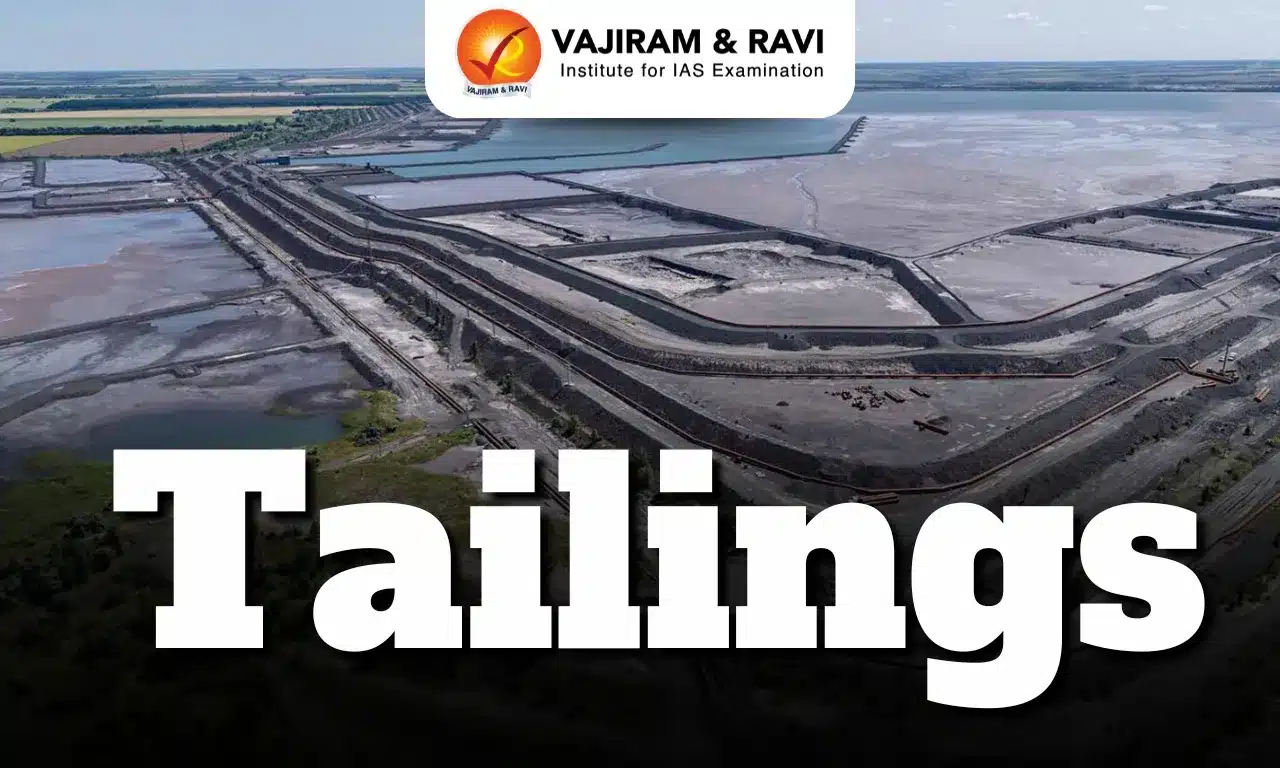
  • Tailings are the leftover materials from the processing of mined ore. 
  • They consist of finely ground rock, unrecoverable or uneconomic metals, chemicals, organic matter, and effluent from the extraction process. 
  • They usually take the form of a liquid slurry made of fine mineral particles, created as mined ore is crushed, ground, and processed. 
  • Effective tailings management is integral to the safe and sustainable production of metals and minerals.
  • Tailings can be stored in a variety of ways; which way depends on numerous factors, for instance, the local topography, how much rainfall an area gets, whether there is regular or irregular seismic activity recorded, the type of mineral being mined, and how close the mine is to populated areas. 
  • There is no one-size-fits-all solution; each tailings facility (also commonly known as a tailings storage facility) is unique.
  • Dams, embankments, and other types of surface impoundments are by far the most common storage methods used today.

India's First Tailings Policy for Critical Minerals

  • It sets guidelines for exploration of critical minerals from primary as well as secondary sources like mine dumps and tailings of existing mines.
  • The new policy is developed on the idea that a few commodities currently mined in India as primary ore may have scope for recovery of companion metals or elements from the tailings, anode slimes, pot linings, and slags. 
    • For example, a copper mine may have Selenium, Tellurium, Molybdenum, Cobalt, Rhenium, Gold, and Silver as companion elements.
    • Similarly, Zinc is found along with Germanium, Silver, Cadmium, and Indium.
  • Critical minerals, including lithium, cobalt, nickel, rare earth elements (REE), etc., are vital for solar panels, wind turbines, batteries and are essential for India’s economic growth.

Source: BS

Tailings FAQs

Q1: What are tailings?

Ans: Tailings are the leftover materials produced after processing mined ore.

Q2: What do tailings mainly consist of?

Ans: They consist of finely ground rock, unrecoverable or uneconomic metals, chemicals, organic matter, and effluent from the extraction process.

Q3: In what physical form are tailings usually found?

Ans: Tailings usually take the form of a liquid slurry.

Q4: What is a tailings storage facility (TSF)?

Ans: It is a specially designed facility used to store tailings safely.

Q5: What are the most commonly used methods for storing tailings today?

Ans: Dams, embankments, and other surface impoundments are the most common storage methods.

Lord Hardinge II (1858-1944), Biography, Contributions, Events

Lord Hardinge II

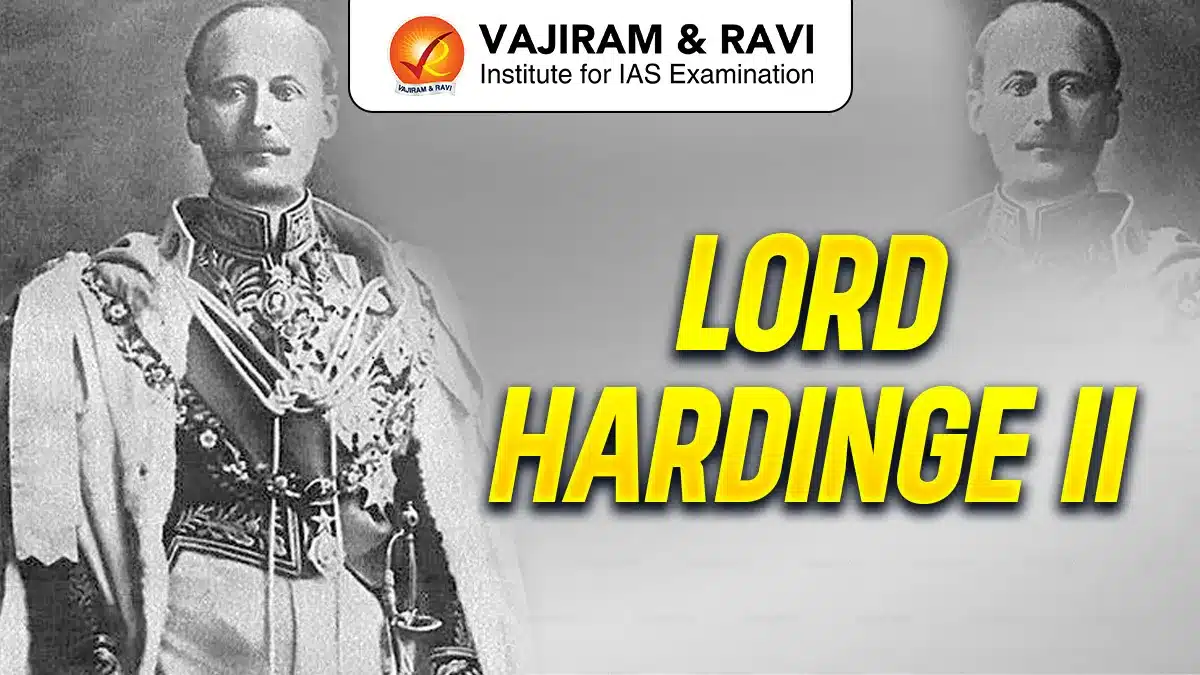
Lord Hardinge II, formally known as Charles Hardinge, 1st Baron Hardinge of Penshurst. He was one of the most significant British Viceroys of India in the early twentieth century. He served as Viceroy and Governor General of India from 1910 to 1916. This  period was marked by major political, administrative and nationalist developments. His tenure witnessed historic decisions such as the annulment of the Partition of Bengal, the transfer of India’s capital from Calcutta to Delhi and India’s entry into the First World War, making his administration highly consequential.

Lord Hardinge II Biography

Lord Hardinge II was born on 20 June 1858 into an influential British aristocratic family with deep imperial connections. He was the second son of Charles Hardinge, 2nd Viscount Hardinge and the grandson of Henry Hardinge, a former Governor General of India. He was educated at Cheam School, Harrow School and Trinity College, Cambridge, he entered the British diplomatic service in 1880. He was appointed as the Viceroy and Governor General of India in 1910. In 1916, Hardinge returned to Britain as Permanent Under-Secretary for Foreign Affairs, later serving at the Paris Peace Conference and as Ambassador to France before retiring in 1922. He was attacked with a bomb in 1912 but survived all assassination attempts and later died peacefully on 2 August 1944.

Lord Hardinge II Contributions

Lord Hardinge II is famous for balancing imperial interests with cautious accommodation of Indian political opinion during a sensitive phase of colonial rule.

  • Cancellation of Bengal Partition (1911): He officially reversed Lord Curzon’s 1905 Partition of Bengal, responding to sustained Indian protests such as Swadeshi Movement and unrest, thereby restoring Bengal as a single administrative unit and easing nationalist resentment.
  • Transfer of Capital to Delhi (1911): Hardinge oversaw the historic decision to shift the capital from Calcutta to Delhi, reviving Delhi’s imperial significance and laying the foundation for New Delhi as a planned administrative city.
  • Support to Morley-Minto Reforms: He implemented the constitutional reforms of 1909, which expanded legislative councils and introduced limited Indian representation, improving dialogue between the colonial state and Indian elites.
  • Improved Nationalist Relations: Hardinge maintained comparatively cordial relations with Indian leaders, openly admiring Mahatma Gandhi’s moral approach and criticizing racial discrimination against Indians in South Africa.
  • World War I Mobilisation: His policies enabled Britain to deploy nearly all European troops from India and over one million Indian soldiers abroad, significantly strengthening the British war effort between 1914 and 1918.
  • Educational Initiatives: During his tenure, the BHU Act of 1915 was passed, enabling Pandit Madan Mohan Malviya to establish Banaras Hindu University, one of India’s most prominent educational institutions.
  • Infrastructure Development: The Hardinge Railway Bridge over the Padma River, inaugurated in 1915, enhanced rail connectivity in eastern India and remains vital for regional transport even today.

Events during Lord Hardinge II Tenure

Lord Hardinge II’s tenure was marked by dramatic political events, revolutionary activity and global conflict, including a Bomb attack that nearly claimed his life.

  • Delhi Durbar of 1911: The grand imperial assembly marked King George V and Queen Mary’s coronation, witnessed by nearly five lakh people, during which the annulment of Bengal’s partition and capital transfer to Delhi were proclaimed.
  • Hardinge Bomb Case (1912): It was also known as Delhi Conspiracy Case and Delhi-Lahore Conspiracy Case. Revolutionary nationalists detonated a bomb at Chandni Chowk targeting the Viceroy; Hardinge survived with injuries, but his mahout was killed by the blast.
  • Delhi-Lahore Conspiracy Trial: The assassination attempt was linked to Rash Behari Bose, with Basanta Kumar Biswas, Amir Chand and Avadh Behari convicted and executed, intensifying Revolutionary Underground Movements.
  • Formation of Ghadar Party (1913): Lal Hardayal founded the Pacific Coast Hindustan Association in San Francisco, later known as the Ghadar Party, mobilising Indian immigrants in the US and Canada against British rule.
  • Outbreak of World War I (1914): Following the war’s start on 28 June 1914, India automatically became belligerent, contributing men, money and material to Britain’s global military campaigns.
  • Indian Army in Mesopotamia: Indian troops played a decisive, though initially mismanaged, role in the Mesopotamian campaign, reflecting India’s strategic importance to the British Empire.
  • Return of Mahatma Gandhi (1915): Gandhi returned to India on 8 January 1915 and established Sabarmati Ashram, beginning a new phase in Indian politics that Hardinge’s administration largely tolerated.
  • Establishment of Hindu Mahasabha (1915): Pandit Madan Mohan Malviya founded the Hindu Mahasabha, aiming to consolidate Hindu social and political interests during a period of rising communal awareness.

Opposition to Racial Laws Abroad: Hardinge publicly opposed the Union of South Africa’s Anti-Indian Legislations, earning goodwill among Indians for challenging racial discrimination within the Empire.

Lord Hardinge II FAQs

Q1: Who was Lord Hardinge II?

Ans: Lord Hardinge II, Charles Hardinge, was the Viceroy and Governor General of India from 1910 to 1916 and a senior British diplomat.

Q2: What were the significant events that happened during the tenure of Lord Hardinge II

Ans: He is famous for annulling the Partition of Bengal, shifting India’s capital from Calcutta to Delhi and managing India during the First World War.

Q3: What was the Delhi Conspiracy Case 1912 related to Lord Hardinge II?

Ans: It was a revolutionary Bomb attack in Delhi aimed at killing Lord Hardinge; he survived, but his elephant keeper was killed in the explosion.

Q4: What role did Lord Hardinge II play during World War I?

Ans: He facilitated large scale deployment of Indian and British troops from India, strengthening Britain’s global war effort after 1914.

Q5: Which major institutions were established during the tenure of Lord Hardinge II?

Ans: Banaras Hindu University was founded under the BHU Act of 1915 and major infrastructure like the Hardinge Railway Bridge was completed during his tenure.

National Girl Child Day, History, Importance, Theme, Schemes

National Girl Child Day

National Girl Child Day is observed on 24 January every year, with an aim to spread awareness about the challenges faced by girls in Indian Society. The day highlights the prevailing problems of gender inequalities, stereotypes, discrimination and violence against girls in society. By celebrating this day, the government aims to empower girl childs and the message of importance of providing equal opportunities to girls in the education, nutrition and healthcare field. 

National Girl Child Day 2026 Objectives

The objective of celebrating National Girl Child Day 2026 is: 

  1. The day was chosen to promote gender equality and address the challenges associated with gender stereotypes related to girls. 
  2. The goal is to spread the knowledge and awareness about girl education and empower girls with the chance to realise their own potential. 
  3. Focus is also on protecting girl’s rights and safeguarding them against malnutrition, gender violence and early child marriages. 

National Girl Child History 

National Girl Child Day was implemented for the first time by the Ministry of Women and Child Development in 2008 also marks the launch date of Beti Bachao Beti Padhao by the Prime Minister on 22 January 2015. The National Girl Child Day initiative is taken up by three ministries including Ministry of Women and child development ,Ministry of Health and Family Welfare and Ministry of Education. The goal is to focus on the issue of declining child sex ratio. 

National Girl Child Day 2026 Importance

National Girl Child Day 2026 is significant due to the following reasons: 

  • Enhanced Awareness: Efforts to raise awareness about the importance of girls’ education, empowerment, and safety have led to positive outcomes such as a rise in female employment, reduced school dropout rates among girls, and an improving sex ratio.
  • Improved Education Access: More girls now have access to education, with increasing participation in higher education contributing to higher literacy rates among females.
  • Reduction in Child Marriages: Legal measures and awareness campaigns have significantly reduced the prevalence of child marriages, ensuring better opportunities for girls.
  • Empowerment and Independence: Girls are increasingly empowered to chase their dreams, make informed decisions, and actively contribute to societal growth.

Schemes for the Girl Child in India

Beti Bachao, Beti Padhao Scheme

  • Launch Date: January 22, 2015, by the Prime Minister.
  • Objective: Address the declining Child Sex Ratio (CSR) and promote women’s empowerment.
  • Implementation by:
    • Ministry of Women and Child Development (MW&CD)
    • Ministry of Health & Family Welfare (MH&FW)
    • Ministry of Education

Main Objectives:

  1. Prevent gender-biased sex-selective elimination.
  2. Ensure the survival, protection, and education of the girl child.
  3. Promote her participation and safeguard her rights.

Key Interventions:

  1. Guddi-Gudda Boards: Display gender-wise birth statistics to promote awareness (e.g., Jalgaon district, Maharashtra).
  2. Breaking Gender Stereotypes: Celebrate the girl child through initiatives like plantation drives, special days, and campaigns like Selfie with Daughters (e.g., Jind district, Haryana).

Sukanya Samriddhi Yojana (SSY)

Launched as part of the Beti Bachao Beti Padhao campaign, this is a small deposit scheme for girl children with the following benefits:

Benefits:

  • Attractive Interest Rate: 8.40% per annum (as of October 2019).
  • Triple Tax Benefits:
    • No tax on deposits, interest earned, or maturity withdrawals under Section 80C of the IT Act.

Eligibility Criteria:

  • Who Can Apply: Parents or guardians of up to two daughters aged below 10.
  • Exceptions for twins or triplets from the second birth.
  • Account Limit: One account per girl child.

Deposit Details:

  • Minimum deposit: Rs. 250; further deposits in multiples of Rs. 150.
  • Maximum annual deposit: Rs. 1,50,000.

Account Maturity:

  • Tenure: 15 years from the account's opening date.
  • Closure: At 21 years or upon the girl’s marriage (whichever is earlier).

This holistic initiative ensures financial security and educational opportunities for girls while promoting societal awareness of their rights and importance.

National Girl Child day FAQs

Q1: What is special on 24 January?

Ans: National Girl Child Day is celebrated in India on 24 January to promote awareness about the rights and well-being of the girl child.

Q2: What is the slogan of National Girl Child Day?

Ans: The slogan of National Girl Child Day varies each year; a commonly associated phrase is "Empower a Girl Empower a Nation."

Q3: What is the theme of Girl Child Day 2026?

Ans: The theme of Girl Child Day 2026 has not been announced yet.

Q4: Which day is Girls’ Day in 2024?

Ans: Girls' Day is observed on 11 October 2024 as the International Day of the Girl Child.

Lord Amherst (1773-1857), Biography, Contributions, Events

Lord Amherst

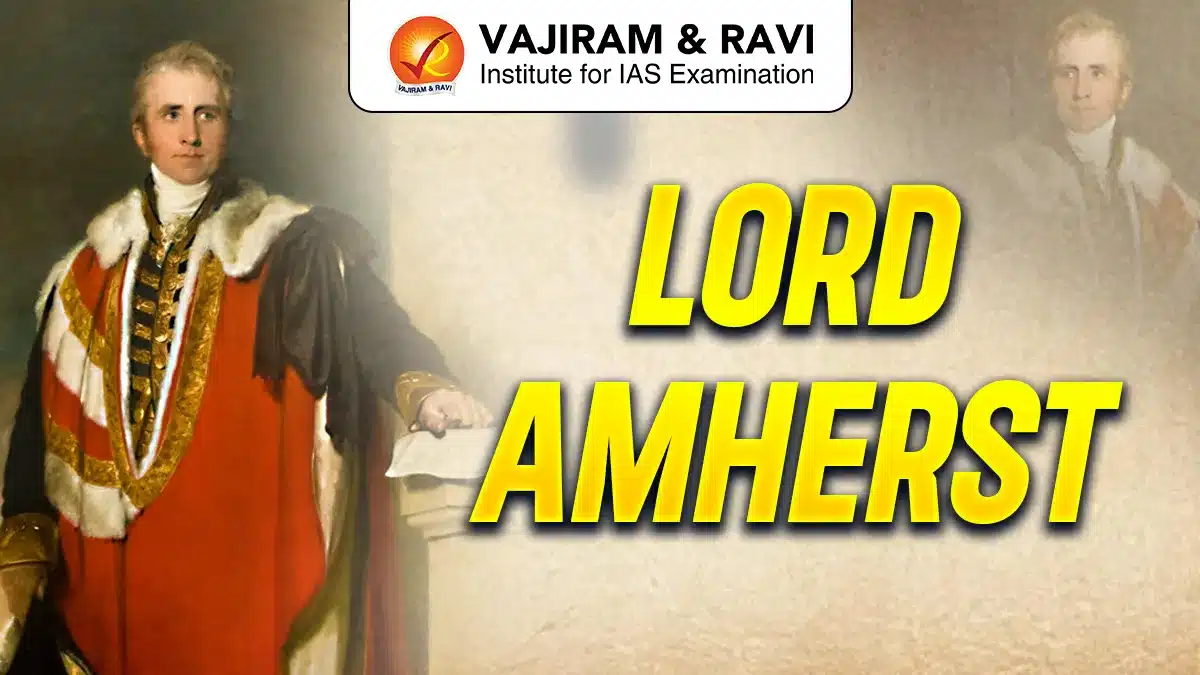
William Pitt Amherst, 1st Earl Amherst, was a British diplomat and colonial administrator. Lord Amherst served as Governor General of India from 1823 to 1828. His tenure marked a decisive phase of British territorial expansion in eastern India and Burma. He is known earlier for his failed diplomatic mission to China in 1816, Amherst entered Indian administration during a fragile period of border tensions, military unrest and imperial consolidation.

Lord Amherst Biography

Lord Amherst was born on 14 January 1773 at Bath, Somerset, into an aristocratic British family and was closely related to General Jeffrey Amherst. Educated at Christ Church, Oxford, he earned his BA in 1793 and MA in 1797. He succeeded to the Amherst title through a special remainder in 1797. Before India, he served as ambassador extraordinary to Qing China in 1816, where diplomatic failure shaped his cautious yet consequential colonial career. After retirement, Amherst lived in England until his death at Knole House, Kent, in 1857 at the age of 84, closing a career marked by diplomacy and war.

Read about: Lord Northbrook

Lord Amherst Contributions

Lord Amherst’s administration reshaped British India’s eastern frontier through war, annexation and institutional development, leaving lasting political, economic and administrative impacts.

  • Territorial Expansion in Eastern India: His decisions led to British acquisition of Assam, Arakan and Tenasserim. By policies initiated under Amherst, British control extended over Cachar in 1832 and Upper Assam in 1833.
  • Economic Impact on British India: The annexation of Assam during his tenure directly enabled the expansion of tea cultivation, later making India a global tea producer.
  • Educational Development: Amherst sanctioned the establishment of Sanskrit College in Calcutta in 1824, supporting classical Indian learning under colonial administration.
  • Administrative Precedents: He became the first Governor General to spend summers in Shimla in 1827, setting a precedent for future colonial governance practices.
  • Recognition: In 1826, during his tenure, he was elevated to Earl Amherst of Arracan, reflecting imperial approval despite heavy war costs.

Events during Lord Amherst

Major Political, Social and Military events that occurred during the tenure of Lord Amherst have been listed below:

  • Anglo-Burmese Border Conflict: Violence erupted on 24 September 1823 along the Naaf River due to Burmese incursions, compelling Amherst to deploy troops to defend British claims. 
    • The First Anglo-Burmese War 1824-26 lasted two years, involved land and naval campaigns and cost Britain nearly 13 million pounds, triggering financial strain in India.
    • The Treaty of Yandaboo 1826 concluded the war and forced Burma to pay one million pounds sterling, accept British diplomatic presence and surrender territories of Arakan, Tenasserim, Assam and Manipur, ending its influence over eastern Bengal frontiers.
  • Barrackpore Mutiny 1824: Sepoys of the Bengal Army revolted over forced sea travel to Rangoon, violating the Kaala Pani taboo, combined with grievances over pay and logistics. 
    • The mutiny was led by sepoy Binda, who expelled British officers from Barrackpore cantonment before being captured and executed as a warning example. 
    • British troops killed nearly 200 Indian sepoys during the suppression, reinforcing military discipline through extreme punitive measures. 
    • The execution of Binda left a lasting memory, commemorated today by the Binda Baba Temple at Barrackpore, marking early resistance to colonial authority.

Administrative Transition: Amherst left India in 1828, succeeded temporarily by William Butterworth Bayley and permanently by Lord William Bentinck, signaling a shift toward reformist governance.

Lord Amherst FAQs

Q1: Who was Lord Amherst?

Ans: Lord Amherst was a British diplomat and colonial administrator who served as Governor General of India from 1823 to 1828.

Q2: Why is Lord Amherst historically important?

Ans: He is mainly known for the First Anglo-Burmese War, which led to major British territorial expansion in eastern India and Burma.

Q3: What major war took place during Lord Amherst’s tenure?

Ans: The First Anglo-Burmese War from 1824 to 1826 occurred during his rule and ended with the Treaty of Yandaboo.

Q4: Which regions were annexed under Lord Amherst?

Ans: Assam, Arakan and Tenasserim were annexed to the British Empire during his administration.

Q5: What was the Barrackpore Mutiny of 1824?

Ans: It was a revolt by Bengal Army sepoys against forced sea travel and pay issues, suppressed harshly by British forces.

ASC Arjun

ASC Arjun

ASC Arjun Latest News

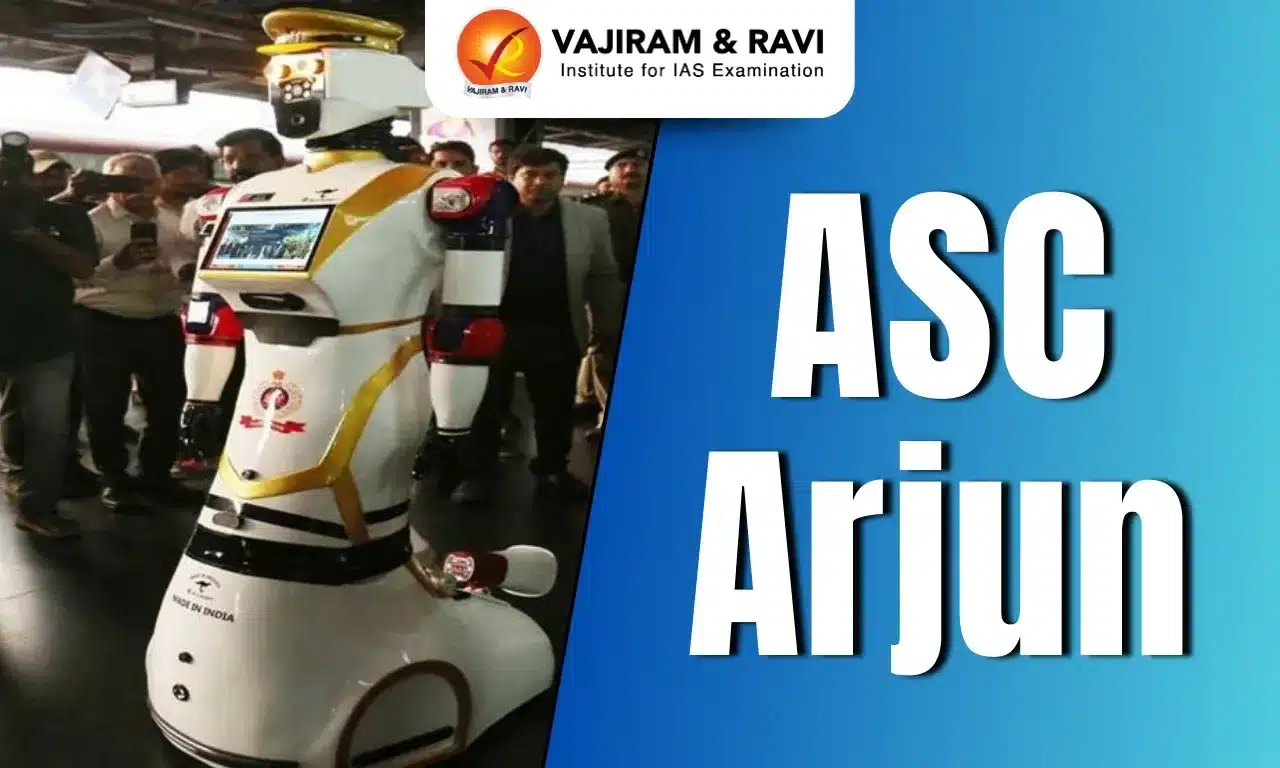
Recently, the Indian Railways has introduced a humanoid robot named “ASC ARJUN” at Visakhapatnam Railway Station.

About ASC Arjun

  • It is a humanoid robot introduced by the Indian Railways.
  • The robot will operate alongside Railway Protection Force (RPF) personnel to assist in station operations, particularly during periods of heavy passenger movement. 
  • It is designed and developed entirely in Visakhapatnam using home-grown technology.

Features of ASC Arjun

  • It is equipped with a Face Recognition System (FRS) for intrusion detection, AI-based crowd monitoring and real-time alert generation for RPF control rooms.
  • It can also make automated public announcements in English, Hindi and Telugu to assist passengers and promote safety awareness.
  • It also features semi-autonomous navigation with obstacle-avoidance capability,
  • It can patrol station platforms round the clock, supporting surveillance and optimising manpower deployment.
  • It is also fitted with fire and smoke detection systems to aid timely response during emergencies.
  • It has been designed for passenger interaction, offering gestures such as a ‘Namaste’ for passengers and salutes for RPF personnel, along with an interface to provide information and assistance.

Source: PIB

ASC Arjun FAQs

Q1: What is ASC Arjun?

Ans: It is a humanoid robot introduced by the Indian Railways.

Q2: Which technology is used in Face Recognition System?

Ans: It uses artificial intelligence, machine learning, and computer vision.

Asiatic Wild Dog

Asiatic Wild Dog

Asiatic Wild Dog Latest News

A rare Asiatic Wild Dog 'Dhole', has been seen for the first time in Ratapani Tiger Reserve in Madhya Pradesh recently.

About Asiatic Wild Dog

  • The Asiatic wild dog, also called Dhole, is a wild Asian carnivore of the dog family (Canidae).
  • Scientific Name: Cuon alpinus
  • Other Names: Indian wild dog, whistling dog, red wolf, red dog, and mountain wolf.

Asiatic Wild Dog Habitat and Distribution

  • They are found throughout Central, Eastern and Southeastern Asia. 
  • In India, they are found in three clusters across India, namely the Western and Eastern Ghats, the central Indian landscape, and Northeast India. 
  • The Western and Eastern Ghats are stronghold regions for dholes.
  • They inhabit dense jungles, steppes, mountains, scrub forests, and pine forests.

Asiatic Wild Dog Features

  • It is a sleek, reddish-brown, medium-sized dog.
  • It measures up to around 20 inches with a bushy black tail, which adds up to a foot and a half. 
  • Males are generally more muscular than females.
  • Their broad head and exceptionally sharp jaws give them an iconic facial appearance, which makes their body look more aligned. 
  • This species tends to live in groups with numbers ranging from 2-25 individuals. 
  • They are fast runners, excellent swimmers, and impressive jumpers.
  • They are great communicators and use an eerie whistle to communicate with each other. 
  •  

Asiatic Wild Dog Conservation Status

It is classified as 'Endangered' under the IUCN Red List.

Source: ETVB

Asiatic Wild Dog FAQs

Q1: What is the Asiatic wild dog commonly known as?

Ans: The Asiatic wild dog is commonly known as the dhole.

Q2: In which regions of Asia is the Asiatic wild dog found?

Ans: It is found across Central, Eastern, and Southeastern Asia.

Q3: What are the main distribution clusters of dholes in India?

Ans: The Western and Eastern Ghats, the central Indian landscape, and Northeast India.

Q4: What is the general appearance of the Asiatic wild dog?

Ans: It is a sleek, reddish-brown, medium-sized dog.

Q5: What is the IUCN Red List status of the Asiatic wild dog?

Ans: The Asiatic wild dog is listed as Endangered on the IUCN Red List.

Daily Editorial Analysis 24 January 2026

Daily Editorial Analysis

Delimitation After 2027, Redrawing Power in India

Context

  • Every democracy must periodically realign political representation to reflect demographic change.
  • In India, this process, delimitation, is constitutionally mandated but politically fraught.
  • The exercise due after Census 2027 will be the most consequential redistribution of power since Independence, reshaping representation, federalism, and the ethical foundations of democratic fairness.

Historical Context and the Frozen Constitution

  • The Constitution originally required delimitation after every Census to ensure equal suffrage.
  • This principle was suspended in 1976, freezing the inter-State distribution of Lok Sabha seats at 1971 population levels so that States would not be penalised for controlling population growth.
  • The 84th Amendment (2001) extended this freeze until the first Census after 2026.
  • As a result, India’s parliamentary map reflects a country of 548 million, not today’s 47 billion people.
  • With the suspension expiring after Census 2027, redistribution becomes unavoidable, raising profound constitutional and political challenges.

Demographic Divergence and the Moral Paradox

  • In the 1970s, fertility rates across States were broadly similar. Today, sharp divergence defines India’s demographic landscape.
  • Southern and western States invested in education, health, and women’s empowerment, achieving below-replacement fertility.
  • Northern States such as Uttar Pradesh and Bihar continue to record higher population growth.
  • Population-based redistribution would dramatically increase northern representation.
  • Projections suggest that in an expanded House of around 888 seats, U.P. and Bihar together would command over a quarter of Parliament.
  • Although southern States gain seats in absolute terms, their share of total representation declines.
  • This creates a moral paradox. States that demonstrated governance success and adhered to national population goals face diminished political influence, while those that did not gain power. The ethical reasoning behind the original freeze therefore remains compelling.

Arithmetic versus Assurances

  • Political assurances that no State will lose seats offer limited comfort. Parliamentary power functions through absolute numbers, not proportional guarantees.
  • Even if southern States retain current seat counts, the dramatic rise in northern representation weakens their bargaining capacity.
  • Suspending redistribution indefinitely to preserve balance risks violating Article 14, which guarantees equality and fair representation.
  • The dilemma is thus structural: reconciling constitutional fairness with political stability.

Evaluating the Options

  • Extending the freeze preserves balance but undermines democratic equality.
    • Expanding the Lok Sabha ensures no State loses seats but fails to address disproportionate dominance by larger States.
  • A weighted formula, combining population with development indicators such as literacy, health, or sustained fertility control, offers a more ethically balanced model, rewarding outcomes rather than numbers alone.
  • Strengthening the Rajya Sabha as a truly federal chamber could offset Lok Sabha imbalances.
  • Restoring domicile requirements and restructuring seat allocation to emphasise State equality, rather than population, would revive its moderating role.
  • Bifurcating Uttar Pradesh presents another federal solution.
    • Dividing its projected strength across multiple States would prevent excessive concentration of power while addressing long-standing regional demands.
  • Finally, phased redistribution across two election cycles would reduce political shock while respecting constitutional obligations.

Procedural Integrity and Democratic Trust

  • Beyond numerical formulas, legitimacy depends on procedure.
  • The Delimitation Commission must be transparent, inclusive, and supported by expertise in demography and constitutional law.
  • Meaningful State participation and public consultation are essential, particularly when redrawing internal constituencies and allocating SC/ST reserved seats.
  • Poorly managed discretion risks perceptions of manipulation and deepening distrust.
  • Delimitation also intersects with reforms such as women’s reservation, complicating timelines and political consensus.
  • Without careful sequencing, overlapping changes may strain institutional credibility.

Conclusion

  • Delimitation will reshape coalition politics, alter regional influence, and test the balance between democratic equality and federal justice.
  • If guided by transparency, empathy, and institutional imagination, it can modernise representation while reinforcing national unity.
  • If driven solely by political arithmetic, it risks eroding trust and injuring the federal spirit.
  • The Census will count India’s people; delimitation will judge its democracy. Once numbers harden into seats, consensus will fade.
  • The present moment therefore demands dialogue, foresight, and shared responsibility, before the moral balance of the Republic is redrawn.

Delimitation After 2027, Redrawing Power in India FAQs

Q1. What is delimitation in the Indian context?
Ans. Delimitation is the constitutional process of redrawing electoral boundaries and redistributing parliamentary seats based on population changes.

Q2. Why was delimitation frozen after 1976?
Ans. Delimitation was frozen to ensure that States were not penalised for successfully controlling population growth.

Q3. What moral paradox arises from population-based redistribution?
Ans. Population-based redistribution reduces political influence of States that achieved better governance and population control.

Q4. How could strengthening the Rajya Sabha help federal balance?
Ans. Strengthening the Rajya Sabha could counterbalance Lok Sabha dominance by ensuring greater equality among States.

Q5. Why is the upcoming delimitation politically significant?
Ans. The upcoming delimitation will significantly reshape political power, coalition politics, and federal relations in India.

Source: The Hindu


India and the EU — A Fit Partnership in a Divided World

Context

  • In an era of geopolitical uncertainty, moments of strategic clarity are increasingly rare yet profoundly consequential.
  • The evolving relationship between the European Union and India, highlighted by the visit of senior EU leaders to New Delhi for India’s 77th Republic Day and the 16th India–EU Summit, marks such a moment.
  • Their presence signals a deliberate shift toward deeper alignment, driven by shared concerns about global instability and a common pursuit of autonomy in foreign policy decision-making.

Changing Global Context and Strategic Urgency

  • The strengthening of India–EU ties must be understood against a backdrop of eroding trust in traditional alliances.
  • India’s relationship with the United States has come under strain due to punitive tariffs and sharp rhetoric linked to India’s energy ties with Russia.
  • Europe has faced similar disillusionment amid shifting U.S. priorities and the consequences of the Ukraine conflict.
  • These experiences have reinforced a shared conclusion: reliance on any single power is increasingly risky, and strategic diversification is essential for long-term stability.

Untapped Potential in India–EU Relations

  • Despite clear complementarities, India–EU relations have historically fallen short of their promise.
  • Engagement has been uneven, often sidelined by disagreements over Russia and China or overshadowed by stronger ties with Washington.
  • The current moment, however, reflects a recalibration. Both sides now view the relationship not as secondary, but as central to their broader global strategies, creating conditions for more sustained and meaningful engagement.

The Strategic Importance of the Free Trade Agreement

  • A key pillar of this renewed engagement is the long-pending Free Trade Agreement between India and the EU.
  • Negotiated intermittently since 2007, the FTA has taken on new significance as a tool of economic and strategic diversification.
  • Its conclusion could expand trade across sectors such as textiles, pharmaceuticals, automobiles, machinery, and digital services.
  • For India, it offers greater access to European markets and support for its manufacturing ambitions.
  • For the EU, it provides an opportunity to reduce over-dependence on China by engaging one of the world’s fastest-growing major economies.

Climate Equity and Trade Challenges

  • The FTA negotiations also expose important tensions, particularly around climate equity.
  • The EU’s Carbon Border Adjustment Mechanism, which imposes carbon-related charges on imports such as steel and cement, has emerged as a major concern for India.
  • These measures risk undermining the economic benefits of the agreement by acting as de facto non-tariff barriers.
  • A balanced approach, one that recognises developmental differences while maintaining environmental ambition, is essential to prevent climate policy from becoming a source of strategic friction.

Defence and Security Cooperation

  • Beyond economics, defence cooperation represents a critical dimension of India–EU engagement.
  • Proposals for a dedicated security and defence partnership, comparable to EU arrangements with Japan and South Korea, reflect growing strategic convergence.
  • For Europe, closer ties would open access to India’s defence market and enable co-production opportunities.
  • For India, such cooperation aligns with domestic manufacturing goals and enhances access to advanced technology.
  • Expanded collaboration would also strengthen security in the Indian Ocean region, an area of increasing geopolitical competition.

A Model for a Multipolar World

  • At a systemic level, the India-EU relationship has the potential to serve as a template for cooperation in a multipolar
  • Both partners emphasise sovereignty and resist external vetoes over national decision-making, whether from Washington, Beijing, or Moscow.
  • Having experienced the costs of over-dependence-on energy supplies, markets, or security guarantees-India and the EU increasingly view strategic resilience as a shared objective.
  • Their partnership demonstrates how flexibility, mutual respect, and pragmatic cooperation can coexist with differing domestic priorities.

Conclusion

  • The deepening India-EU relationship reflects a broader search for stability and balance in a rapidly changing global order.
  • By advancing collaboration in trade, climate policy, defence, and global governance, both sides can translate long-standing potential into durable outcomes.
  • Success will depend on political resolve and the ability to overcome bureaucratic inertia.
  • If sustained, this partnership could strengthen multilateralism and contribute meaningfully to a more balanced, equitable, and resilient international system.

India and the EU — A Fit Partnership in a Divided World FAQs

Q1. Why is the current India–EU engagement considered strategically important?
Ans. It reflects a shared response to geopolitical uncertainty and a mutual shift toward strategic autonomy.

Q2. What has prompted India and the EU to reassess their traditional alliances?
Ans. Both have experienced instability and unpredictability in their relationships with long-standing partners.

Q3. Why is the India–EU Free Trade Agreement significant beyond economics?
Ans. It serves as a tool for strategic diversification and reduced dependence on a single global power.

Q4. What is India’s main concern regarding the EU’s Carbon Border Adjustment Mechanism?
Ans. India views it as a potential trade barrier that could undermine the benefits of the FTA.

Q5. How could the India–EU partnership influence the global order?
Ans. It could model cooperation in a multipolar world based on sovereignty, resilience, and mutual respect.

Source: The Hindu

Daily Editorial Analysis 24 January 2026 FAQs

Q1: What is editorial analysis?

Ans: Editorial analysis is the critical examination and interpretation of newspaper editorials to extract key insights, arguments, and perspectives relevant to UPSC preparation.

Q2: What is an editorial analyst?

Ans: An editorial analyst is someone who studies and breaks down editorials to highlight their relevance, structure, and usefulness for competitive exams like the UPSC.

Q3: What is an editorial for UPSC?

Ans: For UPSC, an editorial refers to opinion-based articles in reputed newspapers that provide analysis on current affairs, governance, policy, and socio-economic issues.

Q4: What are the sources of UPSC Editorial Analysis?

Ans: Key sources include editorials from The Hindu and Indian Express.

Q5: Can Editorial Analysis help in Mains Answer Writing?

Ans: Yes, editorial analysis enhances content quality, analytical depth, and structure in Mains answer writing.

Sergeant Plan of Education 1944, Objectives, Provisions, Limitations

Sergeant Plan of Education

The Sergeant Plan of Education was proposed in 1944 by Sir John Sargent under the British Indian government to comprehensively reform India’s weak education system. It was officially known as Report of the Sargent Commission on Post War Education Development in India. Earlier efforts like the Government of India Resolution 1913, Sadler Commission 1917 and Hartog Committee 1929 failed to ensure universal access and quality. 

The Central Advisory Board of Education prepared this plan with a long term national vision. It aimed to systematically develop education from pre-primary to university level, address illiteracy, improve teacher status and create equal opportunities. The plan is also called Sargent’s 40 Year Scheme because it envisioned achieving educational standards comparable to England within four decades.

Sergeant Plan of Education Objectives

The Sergeant Plan of Education aimed to fulfill the below mentioned objectives:

  • The plan aimed to reach England’s educational standards in at least forty years through gradual, planned expansion of institutions and trained manpower.
  • It sought free and compulsory education for all children to improve literacy, enrollment and retention nationwide.
  • It emphasized removing social and regional barriers so that rural, urban and disadvantaged children could access schooling equally.
  • It stressed effective teaching, better curriculum relevance and improved learning outcomes rather than mere numerical expansion of schools.
  • Education was viewed as essential for producing skilled citizens for administration, industry and post war economic development.

Sergeant Plan of Education Provisions

The major provisions of the Sergeant Plan of Education has been listed below:

  • Pre-Primary Education: Recommended organized education for children aged 3 to 6 to build early learning habits before entering formal primary schooling.
  • Primary Education: Proposed free and universal education for the 6-11 age group with compulsory attendance to sharply reduce mass illiteracy.
  • Secondary Education: Suggested high school education for selected children aged 11-17, 
  • Divided Secondary Education into Academic and Vocational streams.
  • University Education: Recommended a three year university degree after higher secondary education and abolition of the intermediate course for efficiency.
  • Vocational and Technical Education: Emphasized skill based training aligned with agriculture, industry and services to support economic needs.
  • Teacher Training: Stressed systematic training institutions, better salaries and improved working conditions to raise teacher quality and professional status.
  • Adult Education: Aimed to liquidate adult illiteracy within 20 years through organized literacy programs and community based learning initiatives.
  • Education for Differently Abled: Included special provisions for physically and mentally handicapped learners to ensure inclusive education.
  • Physical Education: Highlighted physical training as essential for healthy development alongside intellectual growth.
  • Community Participation: Encouraged local involvement in school management to improve accountability and public ownership of education.

Sergeant Plan of Education Limitations

Despite its comprehensive vision, Sergeant Plan of Education faced several limitations and drawbacks as highlighted below:

  • Financial Constraints: The ambitious expansion required massive funding, but wartime pressures and limited colonial resources made adequate financing unrealistic.
  • Western Centric Orientation: The plan largely followed English educational models, neglecting indigenous knowledge systems, languages and cultural traditions.
  • Teacher Quality Gaps: Rapid expansion emphasized numbers over depth, leading to shortages of well trained teachers and weak professional preparation.
  • Limited Social Reach: It failed to fully address deep rural-urban and class disparities, leaving large sections without quality access.
  • Implementation Disruptions: Political instability, the end of British rule and Partition severely hindered systematic execution of recommendations.

Sergeant Plan of Education FAQs

Q1: Who proposed the Sergeant Plan of Education?

Ans: The plan was prepared in 1944 by Sir John Sargent for the British Indian government.

Q2: Why is the Sergeant Plan of Education called the 40 Year Plan?

Ans: It aimed to achieve educational standards equal to England within a minimum period of forty years, the plan was called the 40 Year Plan.

Q3: What age group was targeted for compulsory education in the Sergeant Plan of Education?

Ans: Compulsory, free primary education was proposed for children between 6 and 11 years of age.

Q4: Which organization developed the Sergeant Plan of Education?

Ans: The Central Advisory Board of Education developed the Sergeant Plan of Education in 1944.

Q5: What was a major long term goal of the Sergeant Plan of Education?

Ans: The plan aimed to eliminate adult illiteracy across India within a period of twenty years.

Gandak River

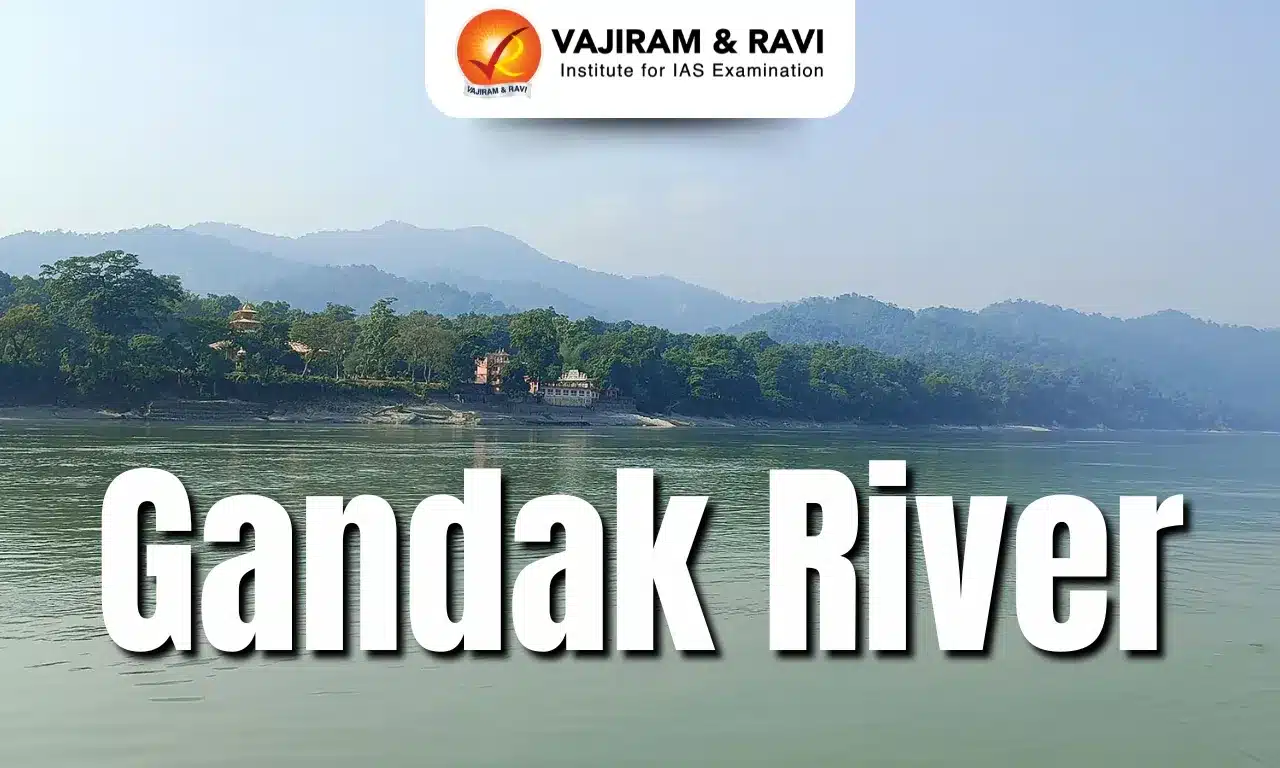
Gandak River

Gandak River Latest News

The Gandak River has emerged as the second major river after the Chambal with the highest number of gharials, also known as fish-eating crocodiles.

About Gandak River

  • The Gandak River, also known as the Narayani and Gandaki, is one of the major rivers in Nepal and a left-bank tributary of the Ganges in India.
  • It is mentioned in the ancient Sanskrit epic Mahabharata.
  • Course:
    • It originates at an altitude of 7620 m above msl to the north of Dhaulagiri Mountain in Tibet near the Nepal border. 
    • After flowing through Tibet, it crosses Nepal, where it is also known as Narayani, to enter the Indian Territory. 
    • The river enters India from Valmikinagar in the West Champaran district of Bihar. The entry point of the river is at the Indo–Nepal border and is known as Triveni.
    • In India, it flows southeast, across the upper Gangetic plain in eastern Uttar Pradesh and northwestern Bihar. 
    • Gandak joins Ganga near Patna in Vaishali district of Bihar.
  • The total length of the river is 700 km. In India, it covers a course of more than 300 km.
  • It is bounded on the north by the Himalayas, south by the River Ganga, east by the Burhi Gandak Basin and on the west by the Ghagra Basin.
  • There are about 1,710 glaciers and over 300 lakes in the upper catchment of Gandaki.
  • Due to the steep slope and loose soil in the upper catchment, Gandak carries a lot of silt and other deposits to the Indian side, resulting in a continuous shifting course of the river.
  • While flowing through the Nepal Himalayas, it forms the Kali Gandaki gorge, one of the deepest river gorges in the world.
  • Two important protected areas, Chitwan National Park in Nepal and the adjacent Valmiki Tiger reserve in India, have been established in the basin.
  • Major Tributaries: Daraudi, Seti, Madi, Marsyandi, and Budhi Gandaki.

Key Facts about Gharial

  • It is a freshwater crocodile.
  • Scientific Name: Gavialis gangeticus
  • The name ‘gharial’ comes from the Hindi word ghara, meaning pot or vessel, referring to the bulbous snout tip of adult males, which resembles an inverted pot.
  • Distribution: 
    • Historically, the gharial's range spanned rivers of Bangladesh, Bhutan, India, Myanmar, Nepal and Pakistan. 
    • Today, only fragmented populations remain in Nepal and northern India.
    • The Gharial reserves of India are located in three States: Uttar Pradesh, Madhya Pradesh, and Rajasthan.
    • In India, the National Chambal Sanctuary holds about 90% of the surviving gharials. 
  • Features:
    • It is one of the largest crocodilian species, with males reaching 16 to 20 feet (5 to 6 meters) in length. 
    • Females typically grow to lengths of 11.5 to 15 feet (3.5 to 4.5 meters).
    • They have thick skin covered with smooth epidermal scales that do not overlap. 
    • The snout of the gharial is uniquely the thinnest and most elongated among all the crocodilians.
    • In addition, the adult males sport a large bulb at the tip of their snout, called the ‘ghara’. 
    • It is also the most aquatic of all crocodilians, for it never moves far from the water.  Individuals typically only leave the water to bask and nest on sandbanks.
    • Reproduction: They mate during November–January and lay eggs March–May.
  • Conservation Status:
    • IUCN Red List: Critically Endangered

Source: TOI

Gandak River FAQs

Q1: What is the Gandak River also known as?

Ans: The Gandak River is also known as the Narayani and Gandaki.

Q2: Which major river system does the Gandak belong to in India?

Ans: It is a left-bank tributary of the Ganga River.

Q3: Where does the Gandak River originate?

Ans: It originates north of the Dhaulagiri Mountain in Tibet at an altitude of about 7,620 metres above mean sea level.

Q4: Which Indian states does the Gandak River flow through?

Ans: It flows through eastern Uttar Pradesh and Bihar.

Q5: Which famous gorge is formed by the Gandak River in the Himalayas?

Ans: It forms the Kali Gandaki Gorge, one of the deepest river gorges in the world.

Pandoh Dam

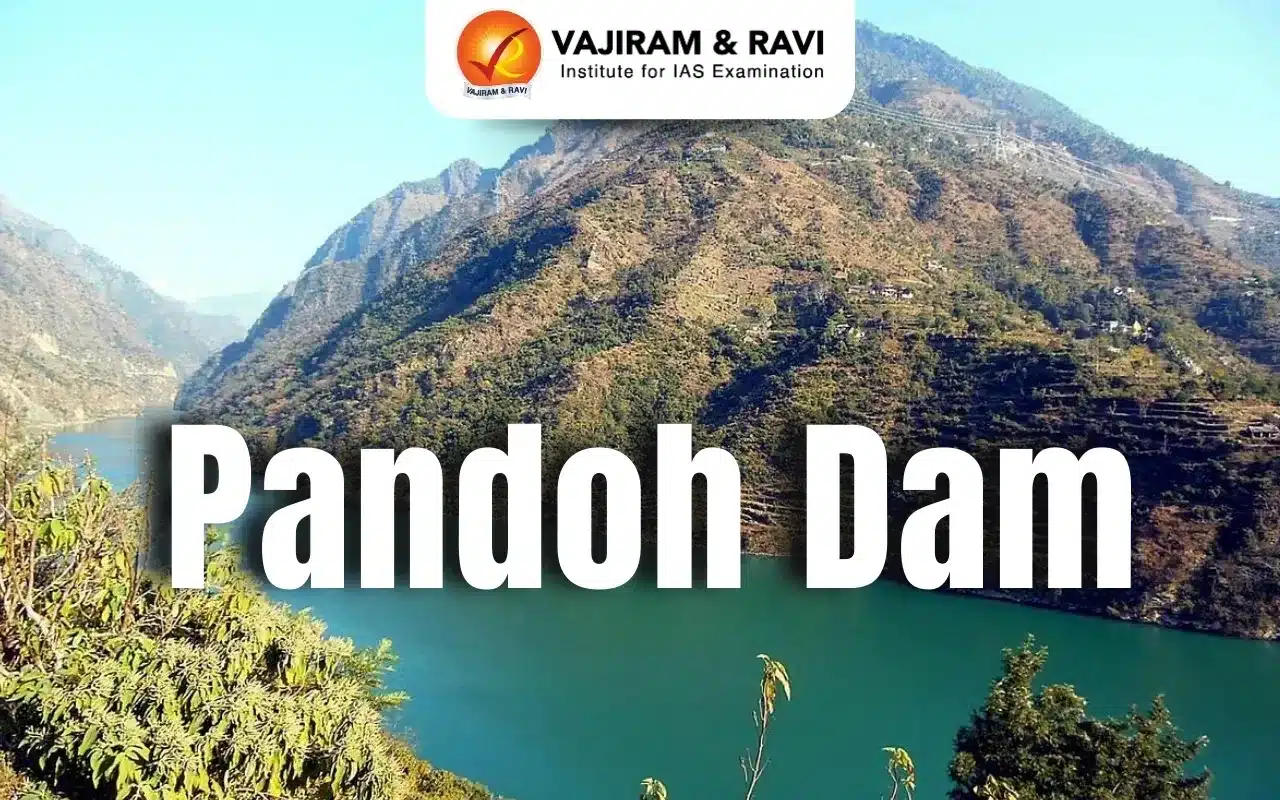
Pandoh Dam

Pandoh Dam Latest News

The release of silt-laden water from Pandoh Dam into the Sutlej river, instead of the Beas, by Bhakra Beas Management Board (BBMB) has drawn the ire of the Punjab Government.

About Pandoh Dam

  • It is an embankment dam constructed on the Beas River in the Mandi district of Himachal Pradesh.
  • It is located at a distance of 10 km from Manali.
  • Under the Beas Project, the dam was completed in the year 1977, and it was built with the primary purpose of hydroelectric power generation. 
  • It is a concrete gravity dam, around 76 meters high and about 492 meters long.
  • Being a part of a run-of-the-river power design, this dam diverts the water of the Beas River through 38 km long canals and tunnels to generate power at the Dehar Power House before being discharged into the Sutlej River. 
    • The powerhouse has an installed capacity of 990 MW.
  • The dam has also created the Pandoh Lake, a popular tourist spot located 19 km upstream from the town of Mandi.
  • The dam is under the Bhakra Beas Management Board.
  • The road that goes over the dam is NH 21.

Source: TRIBI

Pandoh Dam FAQs

Q1: Where is Pandoh Dam located?

Ans: It is constructed on the Beas River in the Mandi district of Himachal Pradesh.

Q2: What type of dam is Pandoh Dam?

Ans: Pandoh Dam is a concrete gravity dam.

Q3: When was Pandoh Dam completed?

Ans: The dam was completed in the year 1977.

Q4: What is the primary purpose of Pandoh Dam?

Ans: Its primary purpose is hydroelectric power generation.

Q5: At which powerhouse is electricity generated from Pandoh Dam waters?

Ans: Electricity is generated at the Dehar Power House.

Rajasthan Disturbed Areas Act: Why Gujarat-Style Property Law Is Triggering Constitutional Debate

Rajasthan Disturbed Areas Act

Rajasthan Disturbed Areas Act Latest News

  • Rajasthan is preparing to introduce a Bill to declare certain localities as “disturbed areas” to address what it describes as demographic imbalance and improper clustering
  • Though the draft is not public yet, it closely mirrors Gujarat’s 1991 Disturbed Areas Act. 
  • While the state government presents the move as necessary to preserve communal harmony, the Gujarat law it draws from has faced sustained criticism over constitutional concerns and repeated judicial curbs on executive overreach in private property transactions.

Gujarat Disturbed Areas Act: An Overview

  • Enacted in 1991 after repeated communal riots, the Gujarat Disturbed Areas Act was designed to prevent “distress sales” of property during periods of violence or intimidation. 
  • Its stated aim was to protect vulnerable property owners from being forced to sell assets below market value due to fear or coercion.

How the Act Works

  • Under the law, the state government can notify an area as a “disturbed area” based on a history of communal violence or mob unrest. 
  • Once notified, any transfer of immovable property — including houses, shops or land — requires prior approval from the district collector
  • Transactions carried out without this sanction are deemed void.

Role of the District Collector

  • The collector is mandated to conduct a formal inquiry before granting approval, to ensure that the sale is voluntary and not the result of pressure, threat or inducement. 
  • This administrative scrutiny is central to the functioning of the Act.

Constitutional and Legal Concerns

  • Critics argue that by regulating property transactions, the Act effectively enables the state to influence the demographic composition of neighbourhoods. 
  • This raises concerns under Article 19(1)(e), which guarantees the right to reside and settle anywhere in India, and Article 15, which prohibits discrimination on grounds such as religion or caste. 
  • Legal scholars contend that the law risks curbing free movement and organic social integration under the guise of protection.

Legal Scrutiny of the Gujarat Disturbed Areas Act

  • The constitutional validity of the Gujarat Disturbed Areas Act is currently being examined by the Gujarat High Court. 
  • Two key petitions, filed in January 2021 and August 2022, are pending before benches led by the Chief Justice.
  • One petition filed by Jamiat Ulama-e-Hind Gujarat sought an interim stay in 2024, alleging misuse of the Act to harass citizens. 
  • The High Court refused interim relief. The Supreme Court also declined to intervene, directing an expedited hearing in the High Court instead.

Challenge to the 2020 Amendment

  • Petitioners, however, succeeded in challenging the 2020 amendment that expanded the Act’s scope. 
  • The amendment introduced vague concepts such as “proper clustering” and “demographic equilibrium,” granting collectors wider discretionary powers.
  • In January 2021, the Gujarat High Court stayed the operation of these expanded provisions, preventing the state from issuing notifications under the amended language. This interim stay remains in force.

Relevance to Rajasthan’s Proposal

  • The Rajasthan government’s stated objective of preventing “improper clustering” closely mirrors the language of the stayed Gujarat amendment, raising fresh constitutional and legal concerns.

Free Consent and Fair Market Value: Limits on State Power

  • Collector’s Authority Under Judicial Review - Although the Disturbed Areas Act declares the collector’s decision final, the Gujarat High Court has consistently exercised judicial review under Article 226 to check administrative overreach and rights violations.
  • Narrow Scope of Collector’s Inquiry - Through multiple rulings, the High Court has clarified that a collector’s role is strictly limited to verifying two factors: whether the sale reflects free consent and whether it is at fair market value. No other considerations are permitted.
  • Law and Order Grounds Rejected - In a March 2020 case involving a Hindu seller and Muslim buyers in Vadodara, the High Court quashed a collector’s refusal based on police reports citing law and order concerns. The court held such inquiries irrelevant to the Act’s purpose.
  • No Role for Neighbours’ Objections - The court has repeatedly ruled that neighbours have no legal standing in private property transactions.
  • Police Reports as Extraneous Considerations - In October 2023, the High Court set aside another collector’s rejection that relied on police inputs. The court reiterated that relying on such extraneous grounds amounted to jurisdictional overreach.
  • Core Purpose of the Act Reaffirmed - As recently as September 2025, the High Court emphasised that the Act’s sole objective is to prevent distress sales caused by coercion or fear — not to manage law and order or regulate demographic patterns.

Source: IE

Rajasthan Disturbed Areas Act FAQs

Q1: What is the Rajasthan Disturbed Areas Act proposal?

Ans: The Rajasthan Disturbed Areas Act proposes declaring select zones as “disturbed areas,” requiring government approval for property transfers to address demographic imbalance and improper clustering concerns.

Q2: How is the Rajasthan Disturbed Areas Act linked to Gujarat’s law?

Ans: The Rajasthan Disturbed Areas Act closely mirrors Gujarat’s 1991 Disturbed Areas Act, which restricts property transfers in notified areas and has faced repeated constitutional challenges.

Q3: Why is the Rajasthan Disturbed Areas Act controversial?

Ans: Critics argue the Rajasthan Disturbed Areas Act may violate constitutional rights under Articles 14, 15 and 19 by enabling state interference in private property transactions.

Q4: What limits have courts placed on similar laws?

Ans: Courts have ruled that under laws like the Rajasthan Disturbed Areas Act, authorities can only verify free consent and fair market value, not block sales on law-and-order or demographic grounds.

Q5: What legal risks does Rajasthan face by adopting this law

Ans: If enacted, the Rajasthan Disturbed Areas Act may face immediate judicial scrutiny, especially as Gujarat High Court has stayed similar provisions citing executive overreach and vague criteria.

Antibiotic Pipeline Running Dry: India’s Growing Antimicrobial Resistance Crisis

Antimicrobial Resistance

Antimicrobial Resistance Latest News

  • India is facing a growing threat from antimicrobial resistance (AMR) driven by widespread antibiotic overuse. In 2021, an estimated 2.67 lakh deaths were linked to AMR. 
  • Key data point to alarmingly high resistance levels — including evidence that 83% of Indians carry drug-resistant bacteria — alongside major treatment gaps and widespread antibiotic misuse, rendering routine infections harder to treat and threatening the foundations of modern medicine. 
  • Experts warn that the global antibiotic pipeline is nearly dry, with few genuinely new drugs in development, putting modern medicine at serious risk.

Antimicrobial Resistance in India: A Growing but Largely Invisible Crisis

  • Antimicrobial resistance (AMR) is emerging as a silent pandemic in India, intensifying both within hospitals and in the community. 
  • High antibiotic use in hospitals creates strong pressure on bacteria to evolve resistance through genetic mutations, which then spread rapidly via resistance genes, fuelled by antibiotic misuse.
  • Patients often enter hospitals for unrelated conditions such as heart or kidney disease but acquire drug-resistant infections during treatment, sometimes with fatal outcomes. 
  • This hidden pathway makes AMR difficult to quantify accurately. Reliable global estimates only began emerging in 2021, and even now, comprehensive data remains limited.
  • Beyond hospitals, common community infections such as typhoid, diarrhoea and pneumonia are increasingly becoming drug-resistant. 
  • Given that India accounts for about 18% of the world’s population, roughly one-fifth of global infections are estimated to occur in the country, underscoring the scale of the challenge despite the absence of precise national figures.

Behaviour Drives Antibiotic Overuse in India

  • Antibiotic misuse in India is largely behavioural. Many people take antibiotics for common ailments like coughs, colds or diarrhoea without confirming whether the infection is bacterial. 
  • Antibiotics are often taken on pharmacists’ advice or prescribed prophylactically by doctors, reinforcing habitual overuse. This behaviour needs urgent correction.

A Drying Antibiotic Pipeline

  • Although a few antibiotics have been approved in recent decades, almost none belong to new drug classes or use novel mechanisms. 
  • With no strong replacements in sight, continued misuse risks exhausting the effectiveness of existing drugs.

Treating Routine Infections Is Getting Harder

  • Drug-resistant infections now require stronger, last-resort antibiotics. 
  • Even community infections like UTIs and typhoid are becoming harder to treat due to repeated inappropriate antibiotic use. 
  • Resistance to fluoroquinolones in Salmonella typhi is rising, while overuse of ceftriaxone and azithromycin risks rendering them ineffective. 
  • However, resistance can reverse when drugs are withdrawn, as seen with older typhoid medicines regaining effectiveness.

Role of Antibiotic Stewardship

  • Antibiotic stewardship is the effort to measure and improve how antibiotics are prescribed by clinicians and used by patients.
  • Stewardship programmes are more effective than sudden bans. Kerala’s antimicrobial stewardship programme, launched in 2015, focused on rational prescribing and awareness. 
  • Only after nearly a decade did the state ban over-the-counter sales, with reasonable success. Responsible use requires public understanding, not just regulation.

Role of Livestock, Environment and Humans

  • High resistance levels in humans are largely driven by human antibiotic use, not livestock. 
  • Studies by ICMR found significant overlap of resistance genes between human and hospital environments, but minimal overlap with animals. 
  • A key concern is antibiotic residues in food, which persist in the gut microbiome and act as a reservoir for resistance.

Data Gaps Limit the Full Picture

  • India’s AMR data mainly comes from 25 tertiary hospitals under the ICMR network, where resistance rates are higher due to prior hospitalisation and antibiotic exposure. 
  • This limits nationwide representation. Wider surveillance, similar to Japan’s system covering around 2,000 hospitals, is needed.

Exploring Alternative Therapies

  • Phage therapy, which uses bacteria-eating viruses, shows promise for infections like UTIs but requires precise matching and often virus combinations. 
  • Resistance can develop even here. Monoclonal antibodies are another emerging option, though still in early stages of development.

Source: IE

Antimicrobial Resistance FAQs

Q1: How serious is antimicrobial resistance in India?

Ans: Antimicrobial resistance is severe, with an estimated 2.67 lakh deaths in 2021 and rising resistance in both hospital-acquired and community infections.

Q2: What does “antibiotic pipeline running dry” mean?

Ans: It means very few new antibiotics are being developed, and existing drugs are losing effectiveness due to widespread antimicrobial resistance.

Q3: Why is antibiotic misuse so common in India?

Ans: Behavioural habits, self-medication, pharmacist advice, and prophylactic prescribing drive antibiotic misuse without confirming bacterial infections.

Q4: Can antibiotic resistance be reversed?

Ans: In some cases, yes. Reducing antibiotic use has allowed older drugs to regain effectiveness, as seen in past typhoid treatments.

Q5: What solutions exist beyond new antibiotics?

Ans: Antibiotic stewardship, improved surveillance, phage therapy, monoclonal antibodies, and public awareness are key alternatives to address AMR.

Governor’s Address and Constitutional Limits – Reasserting the Parliamentary Spirit

Governor’s Address

Governor’s Address Latest News

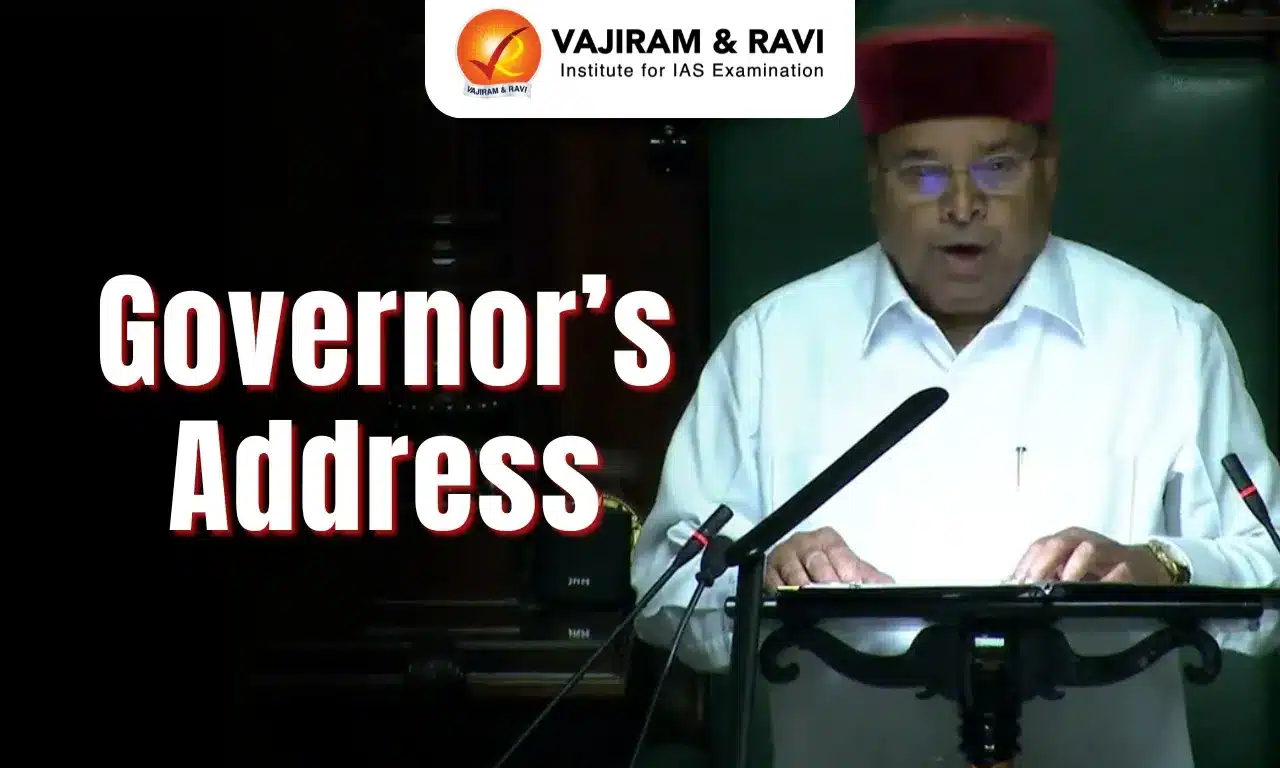
  • Recent walkouts by Governors during inaugural sessions of State Legislative Assemblies in Opposition-ruled States like Karnataka, Tamil Nadu and Kerala have triggered a constitutional debate. 
  • These incidents relate to the Governor’s refusal to read or complete the customary address under Article 176(1), prompting concerns over the erosion of constitutional conventions and federal balance. 
  • The Karnataka government is reportedly considering approaching the Supreme Court (SC) for a judicial declaration on the issue, which is required to touch upon key constitutional principles of -
    • Parliamentary democracy,
    • Collective responsibility of the Cabinet,
    • Federalism,
    • Constitutional morality, and
    • Limited discretion of constitutional authorities.

Constitutional Position of the Governor

  • Article 176(1): 
    • It mandates that the Governor “shall” address the Legislative Assembly (or both Houses where a Legislative Council exists) at the beginning of the first session every year.
    • The address reflects the policies and programmes of the elected State Cabinet, not the personal views of the Governor.
    • The Governor acts indirectly as a communicator to the people, through their elected representatives.
  • Aid and advice of the Council of Ministers:
    • A Council of Ministers, led by the Chief Minister, must aid and advise the Governor in performing their functions, except where the Constitution requires the Governor to act in their discretion (Article 163).
    • Selective reading, skipping paragraphs, or walking out amounts to constitutional impropriety.

Constituent Assembly Debates - Ambedkar’s Vision

  • The Governor has no independent functions.
  • He is a constitutional head, not a political actor.
  • He represents the people of the State as a whole, not any party or ideology.

Judicial Interpretation and Key SC Judgements

  • Shamsher Singh vs State of Punjab (1974) – Seven-Judge Bench:
    • Governors cannot take public stances critical of Cabinet policy. Any such conduct is an “unconstitutional faux pas”.
    • Even the limited discretion is not personal, but effectively “remote-controlled” by the Union Council of Ministers, which is accountable to Parliament.
  • Nabam Rebia vs Deputy Speaker (2016) – Five-Judge Constitution Bench:
    • The Constitution explicitly defines areas of limited gubernatorial discretion, such as appointment of Chief Minister, dissolution of the House, Governor’s report under Article 356, and granting or withholding assent to Bills.
    • Addressing the House under Articles 175(1) and 176(1) is an executive function, not a discretionary one.
  • Tamil Nadu Governor case:
    • The Supreme Court held that discretionary powers cannot be exercised to negate the authority of an elected government.
    • A subsequent Presidential Reference described the Governor as a “guide, philosopher and friend”, not an adversary.

Challenges Highlighted and Way Ahead

  • Politicisation of the Governor’s office: Centre–State friction especially in Opposition-ruled States. 
    • Reinforcing constitutional morality - Governors must act as neutral constitutional heads, not political actors.
  • Erosion of constitutional conventions: Codification of conventions - development of binding guidelines for gubernatorial conduct, possibly through an Inter-State Council or SC jurisprudence.
  • Risk of turning the Governor into a parallel power centre: Judicial clarification - a clear SC declaration on the mandatory and non-discretionary nature of Article 176(1).
  • Undermining the authority of elected State governments: Strengthening federalism - Respect for State autonomy and Cabinet supremacy in policy matters.

Conclusion

  • The recent gubernatorial walkouts mark a troubling departure from India’s parliamentary and federal ethos. 
  • The Constitution envisages the Governor as a constitutional sentinel, not a veto-wielding authority. 
  • Judicial precedents—from Shamsher Singh to Nabam Rebia—clearly establish that discretionary power is limited, defined, and non-personal. 
  • Upholding constitutional morality and democratic accountability is essential to prevent the Governor’s office from becoming, as the SC warned, a “reincarnation of colonial authority” inimical to responsible government.

Source: TH

Governor’s Address FAQs

Q1: What is the constitutional mandate of the Governor under Article 176(1)?

Ans: Article 176(1) mandates that the Governor shall address the State Legislature at the beginning of the first session each year.

Q2: Why is the Governor not permitted to exercise discretion while delivering the address to the Legislature?

Ans: Articles 175(1) and 176(1) entails that the Governor's executive function must be performed strictly on the aid and advice of the Council of Ministers.

Q3: What the SC said in the Shamsher Singh vs State of Punjab case (1974)?

Ans: The Court held that Governors cannot publicly oppose Cabinet policy.

Q4: What are the key areas where the Constitution allows limited discretion to the Governor as per Nabam Rebia (2016)?

Ans: Limited discretion exists in appointment of the CM, assent to Bills, dissolution of the House, Article 356 reports, and specific gubernatorial responsibilities.

Q5: Why are recent gubernatorial walkouts during Assembly addresses seen as a threat to parliamentary democracy?

Ans: They undermine Cabinet supremacy, violate constitutional conventions, and risk converting the Governor into a parallel political authority.

India’s ACC Battery Manufacturing Push – Promise and Policy Bottlenecks

ACC Battery

ACC Battery Latest News

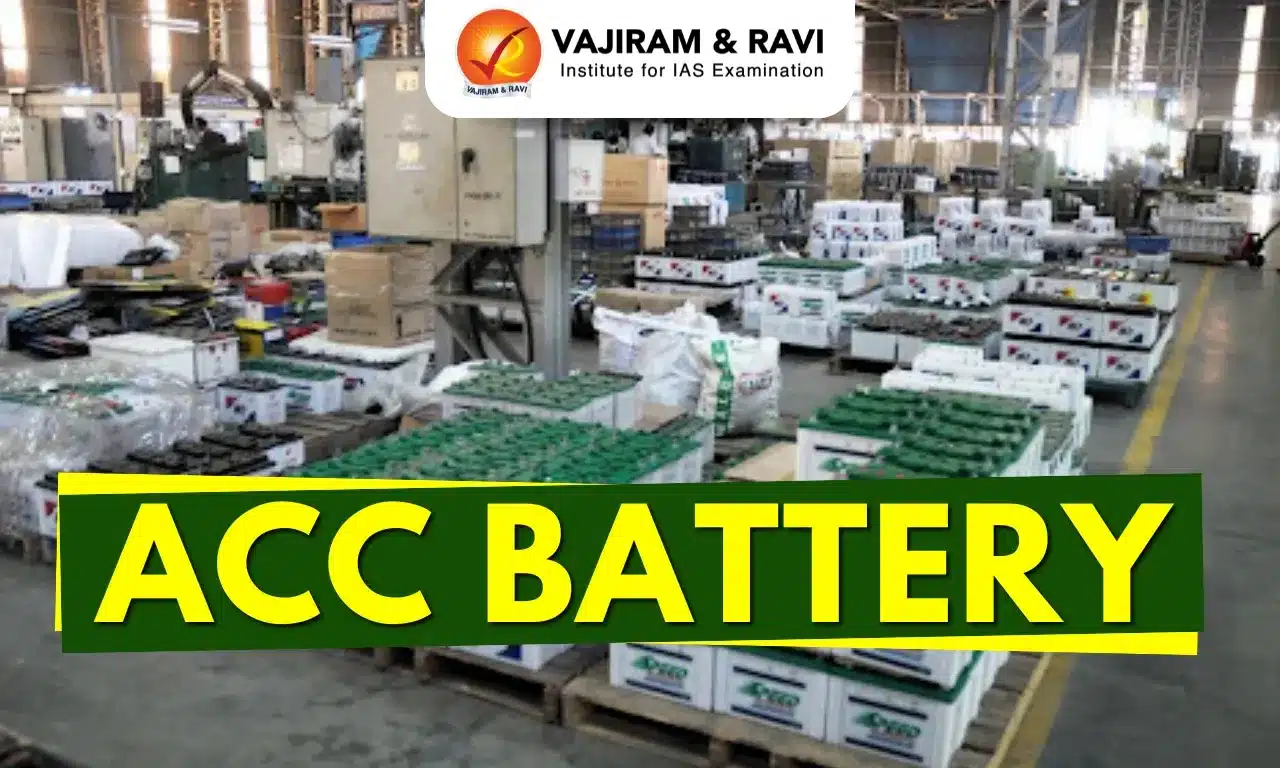
  • India’s flagship ACC Battery Manufacturing PLI scheme has fallen significantly short of its targets due to delays in capacity creation and technology constraints. 

Background: Advanced Chemistry Cells and Their Strategic Importance

  • Advanced Chemistry Cells (ACCs) are next-generation battery technologies, such as lithium-ion cells, that power electric vehicles (EVs), renewable energy storage systems, and consumer electronics. 
  • Unlike traditional lead-acid batteries, ACCs offer higher energy density, faster charging, and longer lifecycle performance.
  • For India, domestic ACC Battery Manufacturing is strategically important for three reasons. 
    • First, batteries account for nearly 40% of the cost of electric vehicles, making local production critical for EV affordability. 
    • Second, India is heavily dependent on imports, mainly from China, for lithium-ion cells and battery components. 
    • Third, battery manufacturing is central to India’s clean energy transition and its commitments toward reducing carbon emissions and enhancing energy security.

The ACC Production Linked Incentive (PLI) Scheme

  • The ACC-PLI scheme was launched in October 2021 by the Ministry of Heavy Industries to catalyse domestic manufacturing of next-generation battery cells. 
  • With a total financial outlay of Rs. 18,100 crore, the scheme aimed to establish 50 GWh of battery manufacturing capacity by 2026.
  • Under the scheme, selected manufacturers were promised incentives linked to actual battery sales, with a maximum subsidy of about Rs. 2,000 per kilowatt-hour. 
  • Companies were required to make a minimum investment of Rs. 1,100 crore and meet phased domestic value-addition targets, 25% within two years and 60% within five years.
  • Beyond capacity creation, the policy intended to develop a complete battery supply chain covering cathodes, anodes, electrolytes, and cell assembly, while also generating over one million jobs.

Current Status and Performance Gap

  • Despite its ambitious design, the scheme’s on-ground performance has been weak. 
  • As of October 2025, only 1.4 GWh of battery cell capacity had been commissioned on time, while 8.6 GWh was under development but delayed. This is far below the original 50 GWh target.
  • Although bids were invited for the entire capacity, only 30 GWh was finally allotted. 
  • Importantly, none of the selected firms had prior experience in large-scale battery cell manufacturing.
  • As no company has begun commercial battery sales, zero incentives have been disbursed so far, against a targeted Rs. 2,900 crore payout by October 2025. 
  • Job creation has also been minimal, with just over 1,100 jobs generated compared to the projected 1.03 million. 

Key Challenges Affecting Implementation

  • One major bottleneck is the lack of a mature battery manufacturing ecosystem in India. 
  • Critical inputs such as lithium refining, cathode materials, and specialised machinery remain import-dependent, largely sourced from China.
  • Delays in visa approvals for foreign technical experts, especially Chinese specialists needed for equipment installation, have further slowed plant commissioning. 
  • Additionally, strict localisation norms and aggressive installation timelines have posed challenges for companies without prior technical expertise.

Implications for Electric Mobility and Energy Transition

  • The EV sector accounts for nearly 70-80% of lithium-ion battery demand in India. 
  • Slower progress in ACC Battery Manufacturing directly affects EV affordability, supply chain resilience, and the pace of clean mobility adoption.
  • While EV sales continue to grow, the pace has been lower than earlier projections, partly reflecting supply-side constraints in battery availability and pricing. 
  • Continued reliance on imports also exposes India to geopolitical risks and trade disruptions.

Way Forward

  • To revive momentum, India needs a more flexible and phased localisation strategy that aligns with existing industrial capabilities. 
  • Facilitating technology partnerships, easing skilled-visa processes, and supporting component-level manufacturing are critical.
  • Policy recalibration may also be required to encourage participation by experienced manufacturers and align incentives with realistic timelines. 
  • Without such course correction, India’s ambition of becoming a global battery manufacturing hub may remain unfulfilled.

Source: TH

ACC Battery FAQs

Q1: What are Advanced Chemistry Cells (ACCs)?

Ans: ACCs are next-generation battery technologies such as lithium-ion cells used in electric vehicles and energy storage systems.

Q2: What is the objective of the ACC-PLI scheme?

Ans: The scheme aims to promote domestic battery manufacturing, reduce import dependence, and support India’s EV and clean energy transition.

Q3: How much battery capacity was targeted under the scheme?

Ans: The ACC-PLI scheme targeted 50 GWh of battery manufacturing capacity by 2026.

Q4: Why has the scheme underperformed so far?

Ans: Key reasons include technology gaps, strict localisation norms, delays in skilled visas, and lack of manufacturing experience among beneficiaries.

Q5: Why is battery manufacturing critical for India’s EV sector?

Ans: Batteries form the largest cost component of EVs and are essential for affordability, energy security, and supply-chain resilience.

PLI Scheme for White Goods

PLI Scheme for White Goods

PLI Scheme for White Goods Latest News

Recently, five companies have been selected under the PLI Scheme for white goods.

About PLI Scheme for White Goods

  • It aims to create a robust domestic component ecosystem for the Air Conditioners and LED Lights industry and position India as an integral part of the global supply chains.
  • Objectives: It proposes a financial incentive to boost domestic manufacturing and attract large investments in the White Goods manufacturing value chain.
    • Its prime objectives include removing sectoral disabilities, creating economies of scale, enhancing exports, creating a robust component ecosystem and employment generation.
  • Incentives: The scheme will extend an incentive of 4-6% on incremental turnover over base year (2019-20) of goods sold in India and exported to global markets, to eligible companies for a period of 5 years.
  • Eligibility
    • Applicants can be any company that should be incorporated in India under the provisions of the Company Act, 2013.
    • Eligibility shall be subject to the achievement of thresholds of net incremental sales of Eligible Products for the respective financial year over the base year and cumulative incremental investment in the preceding financial year.
    • Any entity availing benefits under any other PLI Scheme of Govt. of India will not be eligible under this scheme for the same products.
  • Duration: It is to be implemented over FY 2021-22 to FY 2028-29
  • Nodal Ministry: The scheme was notified by the Department for Promotion of Industry and Internal Trade (DPIIT), Ministry of Commerce and Industry.

Source: PIB

PLI Scheme for White Goods FAQs

Q1: What is the objective of PLI Scheme for White Goods?

Ans: Boost domestic manufacturing

Q2: Which products are covered under PLI Scheme for White Goods?

Ans: Air conditioners and LED lights

Subhash Chandra Bose Aapda Prabandhan Puraskar

Subhash Chandra Bose Aapda Prabandhan Puraskar

Subhash Chandra Bose Aapda Prabandhan Puraskar Latest News

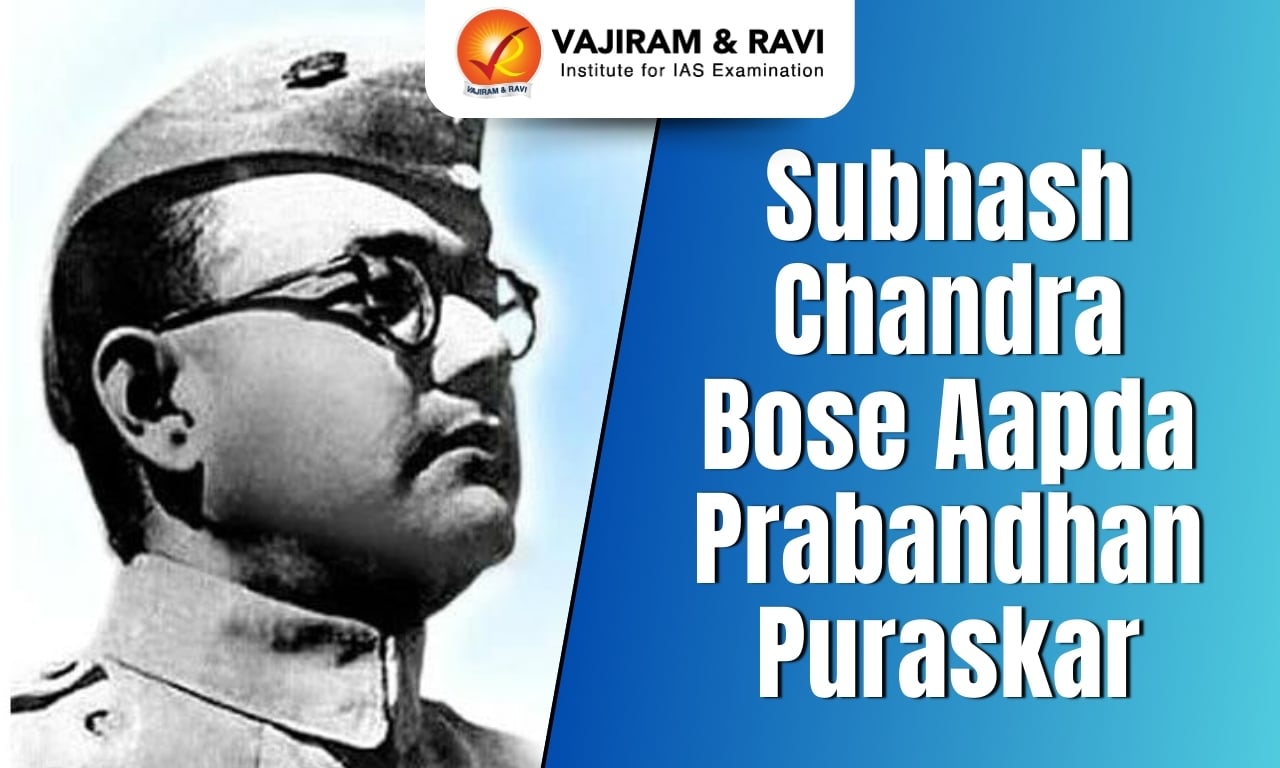
Recently, the Sikkim State Disaster Management Authority (SSDMA), in the Institutional Category, and Lieutenant Colonel Seeta Ashok Shelke, in the individual Category, have been selected for the Subhash Chandra Bose Aapda Prabandhan Puraskar 2026.

About Subhash Chandra Bose Aapda Prabandhan Puraskar

  • It is an annual award instituted to recognize and honour the invaluable contribution and selfless service rendered by individuals and organizations in India in the field of disaster management.
  • The award is announced every year on the 23rd January, the birth anniversary of Netaji Subhash Chandra Bose.
  • Eligibility
    • Only Indian nationals and Indian institutions are eligible to apply for the award.
    • Institutions, voluntary organisations, corporate entities, academic/research institutions, response/ uniformed forces or any other institution may apply as an institution for the award.
    • The candidate for the award must have worked in the area of Disaster Management like Prevention, Mitigation, Preparedness, Rescue, Response, Relief, Rehabilitation, Research/ Innovations or Early Warning related work in India.
  • Selection Process: A Screening Committee may be constituted by Member secretary/ member, NDMA to screen all the applications received.
  • Award
    • In case the winner is an institution, it shall receive a certificate and a cash prize of Rs.51 lakhs. This cash prize shall be utilized by the winning institution for Disaster Management related activities only.
    • In case of the winner being an individual, winner shall receive a certificate and a cash prize of Rs.5.00 lakhs.

Source: PIB

Subhash Chandra Bose Aapda Prabandhan Puraskar FAQs

Q1: What is the award amount given to institutions under Subhash Chandra Bose Aapda Prabandhan Puraskar?

Ans: ₹51 lakh

Q2: Who is eligible for the Subhash Chandra Bose Aapda Prabandhan Puraskar?

Ans: Both Indian individuals and institutions

Beti Bachao Beti Padhao Scheme

Beti Bachao Beti Padhao Scheme

Beti Bachao Beti Padhao Scheme Latest News

Recently, the Beti Bachao Beti Padhao campaign completed 11 years. 

About Beti Bachao Beti Padhao Scheme

  • Beti Bachao Beti Padhao (BBBP) initiative, meaning “Save the Girl Child, Educate the Girl Child,”
  • It is a flagship initiative of the Government of India launched in 2015.
  • It is a Centrally Sponsored Scheme and is component of SAMBAL sub-scheme under Mission Shakti.
  • Aim: It aims to address the declining child sex ratio, prevent gender-based discrimination, and promote education and empowerment of girls across the country.
  • Objectives of Beti Bachao Beti Padhao Scheme
    • Prevent Gender-Based Discrimination: Combat societal norms and practices that lead to discrimination against the girl child.​
    • Improve Child Sex Ratio (CSR): Address the declining number of girls per 1,000 boys by curbing practices like female foeticide.​
    • Promote Education for Girls: Ensure access to quality education for girls, thereby empowering them to lead independent lives.​
    • Enhance Participation of Girls: Encourage the active participation of girls in various spheres, including sports, arts, and leadership roles.​
    • Strengthen Existing Schemes: Integrate and reinforce existing government schemes aimed at the welfare of the girl child.
  • It was initiated as a tri-ministerial effort of Ministries of Women and Child Development, Health & Family Welfare and Ministry Of Education.
    • From 2021-22, the Ministry of Skill Development and Entrepreneurship and Ministry of Minority Affairs have also been added as partners.

Source: News On Air

Beti Bachao Beti Padhao Scheme FAQs

Q1: When was the Beti Bachao Beti Padhao Scheme launched?

Ans: 2015

Q2: What is the main focus of Beti Bachao Beti Padhao?

Ans: It is aimed at addressing gender imbalance, empowering girls, and driving societal transformation.

Anna Chakra

Anna Chakra

Anna Chakra Latest News

Recently, the Department of Food and Public Distribution (DFPD) has achieved a remarkable milestone by being named as finalist for the 2026 Franz Edelman Award for its Anna Chakra initiative.

About Anna Chakra

  • It is a supply chain optimization tool under the Public Distribution System (PDS).
  • It is an operations research–based decision support system designed to optimise state-specific food grain logistics under India’s Public Distribution System (PDS).
  • The initiative was developed through a Government–UN–Academia partnership, involving:
    • The Department of Food and Public Distribution,
    • The United Nations World Food Programme (WFP) in India, and
    • Indian Institute of Technology (IIT) Delhi.
  • It leverages advanced algorithms to identify optimal routes and ensure seamless movement of food grains across supply chain nodes. 
  • It is integrated with the PM Gati Shakti platform and FOIS (Freight Operations Information System) portal of the Railways through Unified Logistics Interface Platform (ULIP).

What is the Franz Edelman Award?

  • It recognizes the world’s most impactful, high-value applications of advanced analytics.
  • It is widely regarded as the “Nobel Prize of Operations Research and Analytics”.
  • It recognizes and rewards outstanding examples of operations research, management science, and advanced analytics practice in the world.
  • Award: Winner gets a $10,000 prize. 

Source: PIB

Anna-Chakra FAQs

Q1: What is the main objective of the Anna Chakra?

Ans: Its main objective is to ensure food security and reduce hunger by distributing essential commodities at affordable prices.

Q2: What is Anna Darpan?

Ans: The ANNADARPAN SMART is a non-invasive digital image processing technology based system for quality inspection of rice.

Enquire Now