Vajiram and Ravi provide Current Affairs of 22 March 2026 for UPSC aspirants. We cover all relevant news and important events crucial for the exam, helping you stay updated and well prepared.
Recently, the President of India extended greetings to the countrymen on the occasion of the Sarhul festival.
About Sarhul Festival
Sarhul, literally “worship of the Sal tree”, is among the most revered Adivasi festivals.
It is rooted in nature worship and celebrates the symbolic union of the Sun and the Earth.
The Sal tree is revered as the abode of Sama Maa, the village-protecting deity.
Rituals: A pahan (male priest) represents the Sun, while his wife (pahen) symbolizes the Earth, signifying the essential connection between sunlight and soil for sustaining life.
Sarhul marks the renewal of life.
It is celebrated by various tribes, including the Oraon, Munda, Santal, Khadia, and Ho, each with unique names and traditions associated with the festival.
Sarhul is celebrated in Jharkhand and parts of Odisha, West Bengal, and Chhattisgarh.
Three-Day Festival
Day 1 – Preparations begin, with homes and Sarna Sthals cleaned, Sal flowers gathered, and the village priest (pahan) observing a strict fast.
Day 2 – Main rituals are performed at Sarna Sthals (Sacred Groves), including sacrifices, prayers for prosperity, and cultural performances.
Day 3 – Concludes with a community feast, featuring Handia (rice beer), ceremonial fishing, and traditional Adivasi cuisine.
Only after its rituals are completed do Adivasis begin agricultural activities like ploughing, sowing, and forest gathering, emphasizing the festival’s deep ties to nature and sustenance.
Recently, the Union Minister for Finance launched ‘PRARAMBH 2026’ initiative.
About PRARAMBH 2026
PRARAMBH (Policy Reform and Responsible Action for Mission Viksit Bharat) is a nationwide awareness campaign on Income Tax Act, 2025.
It has been designed as an extensive, multi-channel initiative spanning print, television, radio, outdoor advertising, digital platforms, and social media.
It is aimed at familiarising citizens with the provisions of the Income Tax Act, 2025, set to come into effect from April 1, 2026.
Key Features of PRARAMBH 2026
Comprehensive Outreach:It includes a wide range of taxpayer-centric resources such as, guidance notes and brochures, tutorial videos, FAQs and educational content and Public engagement initiatives like the MyGov Quiz.
Multilingual Approach: Brochures containing detailed information were also launched in 10 regional languages beside English and Hindi for wider outreach and awareness
AI-Driven Support : AI-enabled chatbot ‘Kar Saathi’, designed to assist taxpayers with queries related to the new Act, rules, and procedures.
Income Tax Website 2.0: The upgraded platform is designed to offer improved usability, simpler navigation, and more efficient service delivery for taxpayers.
Recently, the Supreme Court refused to interfere with the Bombay High Court order allowing the removal of 45,675 mangrove trees for the proposed Versova-Bhayandar coastal road.
About Mangroves
Mangroves are salt-tolerant trees and shrubs that grow in coastal intertidal zones, primarily in tropical and subtropical regions.
It thrives in saline or brackish waters, withstanding harsh environmental conditions such as tidal fluctuations, high salinity, and low oxygen levels in the soil.
Mangroves Characteristics
Salt Tolerance: They possess specialised root structures, such as salt-filtering roots and salt-excreting leaves, to manage high salinity levels.
Aerial Roots (Pneumatophores): These roots help in respiration by obtaining oxygen from the air in waterlogged soils.
Prop Roots: Provide stability against tidal waves and storm surges.
Vivipary (Seed Germination): Seeds germinate while still attached to the parent tree to overcome the challenge of germination in saline water.
Efficient Carbon Sequestration: Mangroves are among the most carbon-rich ecosystems, playing a vital role in mitigating climate change..
Mangrove forests act as a crucial buffer between land and sea, providing habitat for various marine and terrestrial species
In India this ecosystem is found in Sundarbans (West Bengal), Mahanadi, Godavari, and Krishna Deltas (Odisha & Andhra Pradesh), Pichavaram Mangroves (Tamil Nadu), Bhitarkanika Mangroves (Odisha), Gulf of Kutch (Gujarat), Andaman & Nicobar Islands and Lakshadweep regions.
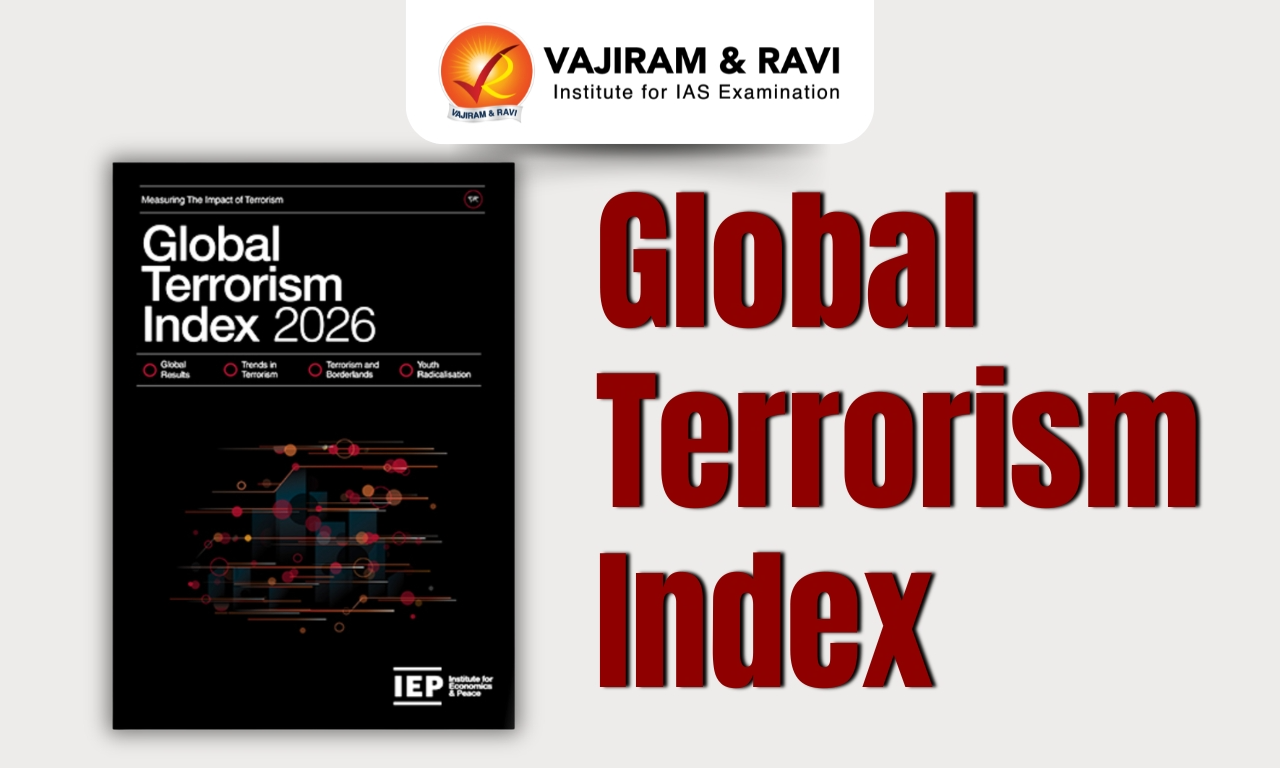
Recently, the Global Terrorism Index, 2026 was published by the Institute for Economics and Peace (IEP).
About Global Terrorism Index
It is published by the Institute for Economics and Peace (IEP), a Sydney-based independent, non-profit think tank.
It is a comprehensive study analysing the impact of terrorism for 163 countries covering 99.7 per cent of the world’s population.
Methodology
The GTI scores each country on a scale from 0 to 10; where 0 represents no impact from terrorism and 10 represents the highest measurable impact of terrorism.
This produces a composite score so as to provide an ordinal ranking of countries on the impact of terrorism.
Key Highlights of Global Terrorism Index 2026
Deaths from terrorism fell by 28 per cent and incidents decreased by 22 per cent
Six of the ten countries most impacted by terrorism are in sub-Saharan Africa, maintaining its position as the epicenter.
For the first time, Pakistan leads the Index as the country most impacted by terrorism.
India is placed 13th on the list.
Deadliest terror outfits (2025): IS, Jamaat Nusrat Al-Islam wal Muslimeen (JNIM), Tehrik-e-Taliban Pakistan (TTP), and alShabaab.
The Government has modified the Mutual Credit Guarantee Scheme (MCGS) to support Micro, Small and Medium Enterprises (MSME) Manufacturers and Exporters in line with Budget 2025-26.
About Mutual Credit Guarantee Scheme
It provides 60 % guarantee coverage by National Credit Guarantee Trustee Company Limited (NCGTC) to Member Lending Institutions for credit facilities up to 100 crore rupees sanctioned to eligible MSMEs under MCGS-MSME for purchase of equipment and machinery.
Salient Features of Mutual Credit Guarantee Scheme
Target: Borrower should be an MSME with valid Udyam Registration Number;
The eligibility criteria have also been expanded to service sector MSMEs.
The minimum project cost requirement towards machinery and equipment has been reduced to 60 per cent from the earlier 75 per cent.
The 5% upfront contribution has been made refundable, with one per cent returned each year from the fourth year onwards, subject to satisfactory loan performance.
The credit guarantee would expire after 10 years, as compared to the unspecified period in the earlier scheme.
It is applicable to all loans sanctioned under MCGS-MSME during the period of 4 years or till cumulative guarantee of Rs. 7 lakh crore are issued, whichever is earlier.
Eligible exporters
Profitable units having exported at least 25% of their sales turnover in each of previous 3 financial years
Guaranteed loan amount is pegged at ₹20 crore, and upfront contribution is 2% of the loan amount, a maximum of ₹40 lakh, with 1% each refundable in the 4th and 5th year of the guarantee period.
Credit Guarantee Scheme for Microfinance Institutions-2.0 Latest News
Recently, the Government of India has introduced Credit Guarantee Scheme for Microfinance Institutions-2.0 (CGSMFI-2.0).
About Credit Guarantee Scheme for Microfinance Institutions-2.0
It aims to provide guarantee cover to Banks/ FIs through National Credit Guarantee Trustee Company Limited (NCGTC).
It provides guaranteeagainst expected losses on the financial assistance extended by them to Non-Banking Financial Company-Microfinance Institutions (NBFC-MFIs) and MFIs for on lending to small borrowers.
Features of the scheme
Eligible borrowers:Existing or new small borrowers within the regulatory definition of micro finance as prescribed by RBI from time to time.
Guarantee coverage: 80% of amount in default for small, 75% for medium and 70% for large NBFC-MFIs/ MFIs.
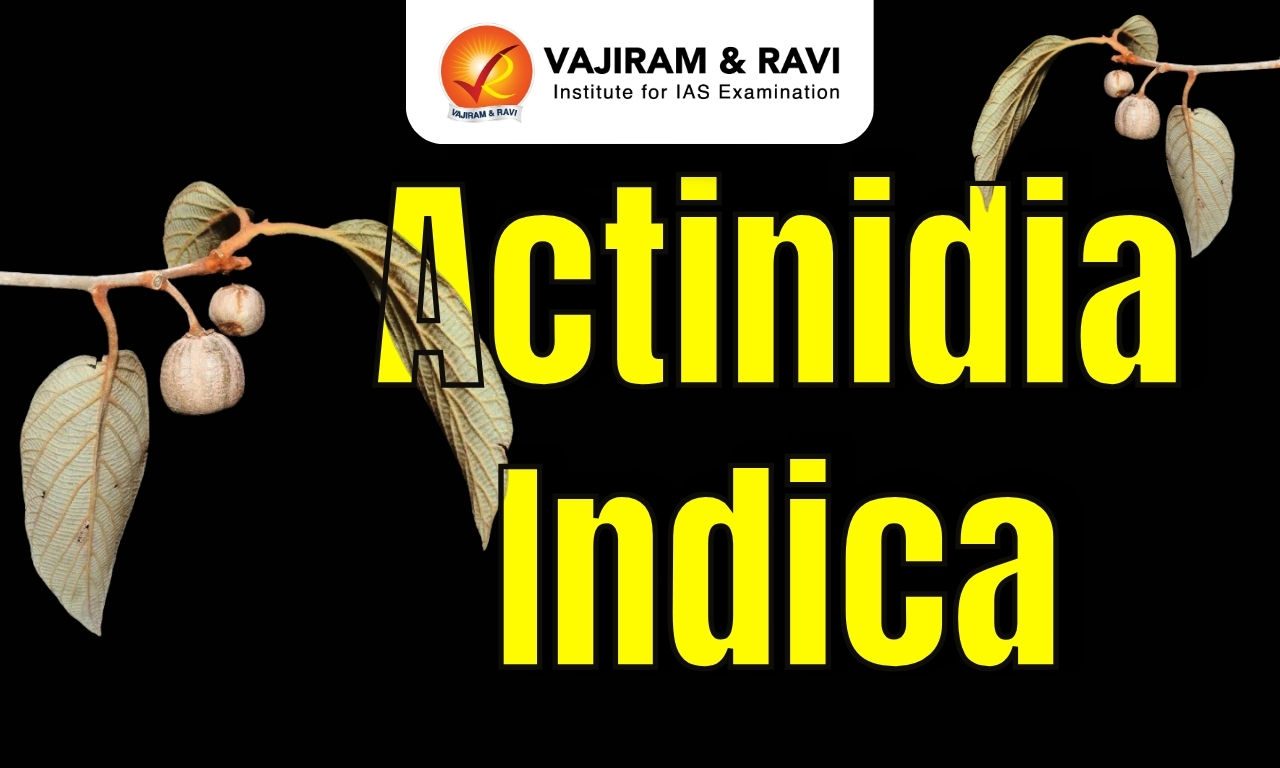
Scientists from the Botanical Survey of India (BSI) have identified a new species of wild kiwi, Actinidia indica (Actinidiaceae), in Arunachal Pradesh.
About Actinidia Indica
It is a new species of wild kiwi.
The species has been recorded only from a narrow stretch near Ziro Valley at an elevation of around 1,725 metres.
Habitat: It thrives in a biologically rich transition zone between temperate and subtropical forests.
Features of Actinidia Indica
Actinidia indica is a perennial climbing shrub reaching 2–4 meters in height.
It features densely hairy young branches, large ovate leaves, and white to creamy flowers measuring 4–6 cm.
The plant bears globose, olive-green fruits of 2.5–4 cm with a distinctive reticulate lenticel pattern, a key identifying trait.
The discovery increases the global count of Actinidia species to 56, only a few of which occur in India.
The Indian Navy is preparing to commission its latest stealth Frigate, Taragiri (F41), on 03 Apr 2026.
About INS Taragiri
It is the fourth ship of Nilgiri Class (Project 17A) built by Mazagon Dock Shipbuilding Ltd (MDL).
It is a reincarnation of the erstwhile INS Taragiri, a Leander-class frigate that was part of the Indian Naval fleet.
It is designed by the Warship Design Bureau (WDB).
Features of INS Taragiri
It is fitted with an advanced weapon and sensor suite compared to the P17 (Shivalik) class.
It is designed for ‘High-Speed – High Endurance’ versatility and multi-dimensional maritime operations.
The ship’s weapon suite is featuring supersonic Surface-to-Surface Missiles, Medium Range Surface-to-Air Missiles, and a specialised Anti-Submarine Warfare suite.
Propulsion: It is configured with Combined Diesel or Gas (CODOG) propulsion plants, comprising a diesel engine and a gas turbine that drive a Controllable Pitch Propeller (CPP) on each shaft, and state-of-the-art Integrated Platform Management System (IPMS).
Weapon suit: The potent weapon and sensors suite comprises BrahMos SSM, MFSTAR and MRSAM complex, 76mm SRGM, and a combination of 30 mm and 12.7 mm close-in weapon systems, along with rockets and torpedoes for anti-submarine warfare.
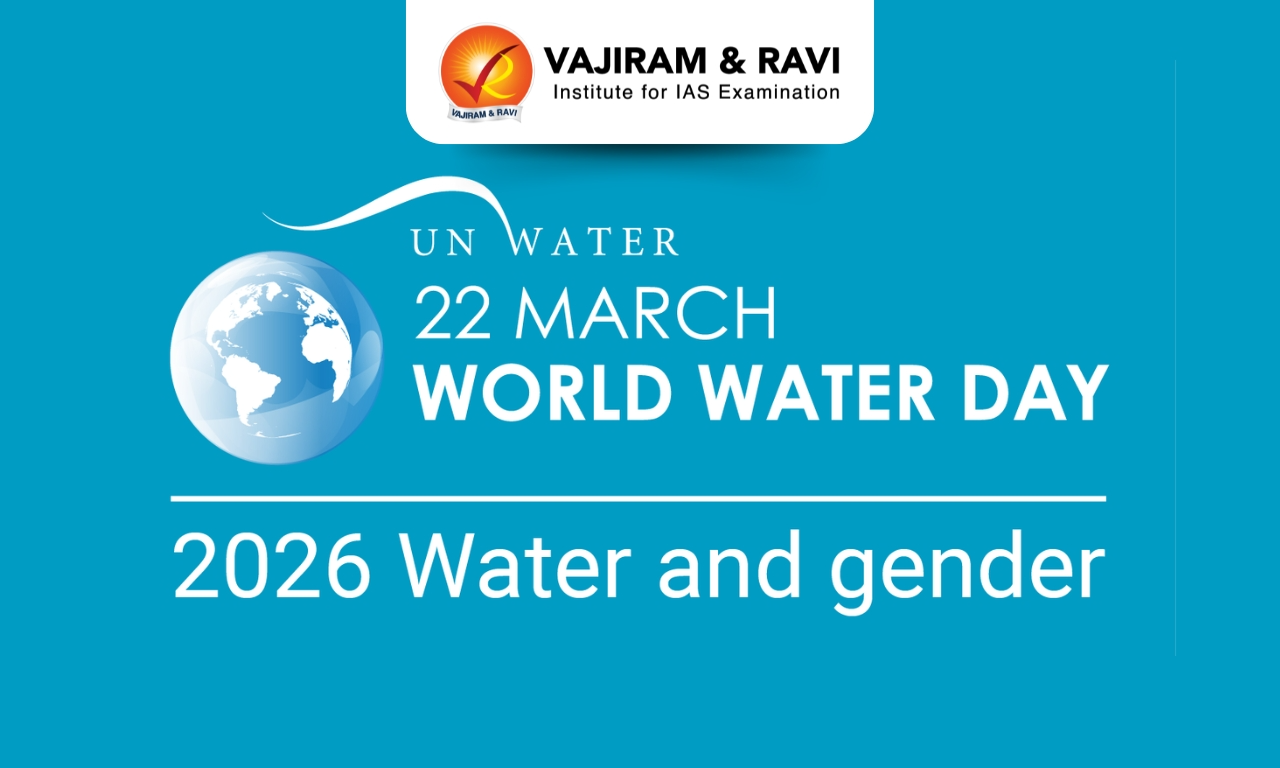
Recently, the Prime Minister of India conveyed his greetings to the people on the occasion of World Water Day.
About World Water Day
World Water Day has been held on March22 every year since 1993.
It is an annual United Nations Observance focusing on the importance of fresh water.
History
The idea of World Water Day was first introduced in 1992 during the United Nations Conference on Environment and Development held in Rio de Janeiro.
Following the conference, the United Nations declared March 22 as the official day to focus on water-related issues worldwide.
A core focus of World Water Day is to support the achievement of Sustainable Development Goal 6: water and sanitation for all by 2030.
Theme (2026): Water and Gender.
This theme highlights the important role of women and girls in water management.
Significance of the World Water Day: World Water Day raises awareness about serious water challenges such as water scarcity, pollution, and lack of sanitation facilities.
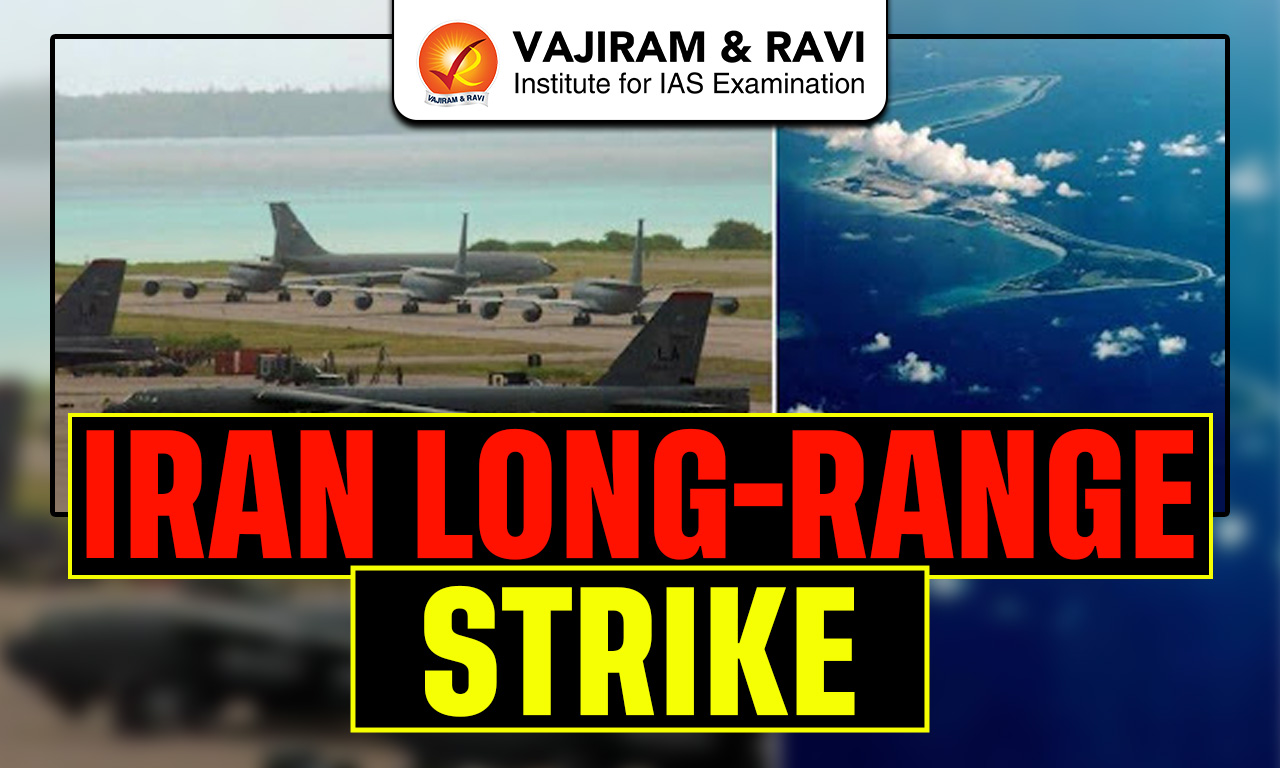
Iran launched two intermediate-range ballistic missiles targeting the US-UK military base at Diego Garcia — located approximately 4,000 km from Iran's coastline in the Indian Ocean.
This marks one of Tehran's longest-range strike attempts ever, sharply escalating the West Asia conflict beyond its regional boundaries and raising alarms in Washington and allied capitals worldwide.
Background: What Exactly Happened
Iran fired two ballistic missiles at Diego Garcia. Neither hit its target:
One failed mid-flight;
The second was intercepted by a US Navy destroyer using an SM-3 missile interceptor — though whether the interception was fully successful remains unclear.
Despite causing no physical damage, the attempt itself has triggered serious concern — it signals that Iran may now possess, or is willing to demonstrate, strike capabilities far beyond previously declared limits.
Why the Distance Matters
Diego Garcia lies ~3,800–4,000 km from Iran.
Iran had long claimed its missile programme had a maximum range of ~2,000 km.
This strike attempt effectively doubles that claimed range, suggesting Iran has significantly advanced its missile capabilities.
If confirmed, it would be the first operational indication that Iran can strike targets at such distances.
A 4,000 km strike radius from Iran would theoretically place within reach:
Large parts of Europe, including cities like Paris and London
This fundamentally changes the threat perception for NATO countries that had so far viewed the West Asia conflict as a regionally contained crisis
The Missile Used: Khorramshahr-4
The Khorramshahr-4 itself is a liquid-fuelled missile capable of carrying a warhead exceeding one tonne, with the option of deploying cluster munitions.
Its design, derived in part from earlier North Korean and Soviet systems, combines relatively simple architecture with high payload capacity.
The missile is also believed to feature manoeuvrable re-entry capabilities, making interception more difficult.
Assessed range - Potentially exceeds 4,000 km (previously undemonstrated).
Diego Garcia and its Significance
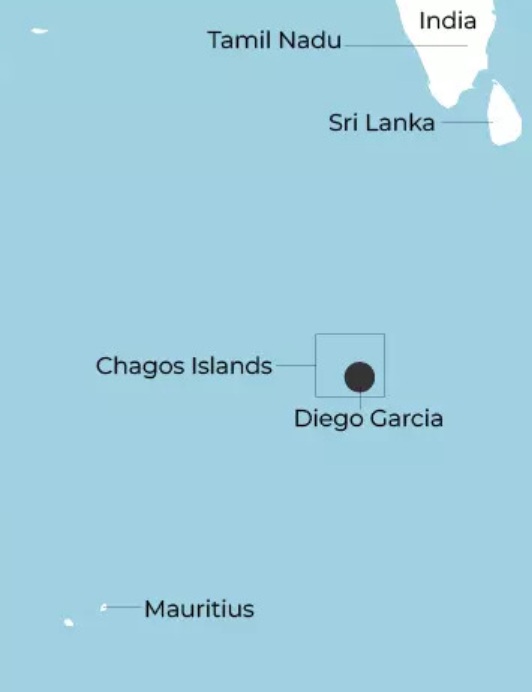
[caption id="attachment_94247" align="alignnone" width="532"] Location of Diego Garcia[/caption]
Diego Garcia, located in the central Indian Ocean in the Chagos Archipelago, is a key US military base and one of only two major bomber bases in the Indo-Pacific, along with Guam.
It is operated jointly by the United States and the United Kingdom.
Diego Garcia sits approximately 3,000 km from both the Bab-el-Mandeb Strait at the mouth of the Red Sea and the Malacca Strait near the South China Sea.
Strategic Importance
Serves as a critical logistics and operations hub for long-range military missions.
Has historically supported US bombing campaigns in Afghanistan, Iraq, and recent Middle East operations.
Its airfield can host:
Heavy bombers
Surveillance aircraft
Pre-positioned military equipment
Enables rapid military deployment across Asia, Africa, and the Gulf.
Additionally, it plays an important role in US Space Force tracking systems, enhancing its strategic significance.
Ownership and Control of Diego Garcia
Historical Control and Lease to the US - Diego Garcia is part of the Chagos Archipelago, originally controlled by the UK. In 1966, the UK leased the island to the US for a military base for 50 years. The lease was extended in 2016 for 20 more years, initially up to 2036.
International Legal Dispute - In 2019, the International Court of Justice (ICJ) ruled that the UK’s separation of the Chagos Islands from Mauritius was illegal. It recommended that sovereignty should be returned to Mauritius.
Current Status
In May 2025, the UK formally transferred sovereignty of the Chagos Islands to Mauritius.
However, Diego Garcia was leased back to the UK for 99 years at £101 million annually.
The move was partly driven by strategic concerns, including preventing rival powers like China from gaining access.
Missile Defence: The SM-3 System
The attempted interception was carried out using the SM-3 interceptor, deployed on US Navy warships.
The SM-3 uses a "hit-to-kill" approach — it destroys incoming missiles through kinetic force (physical impact), not explosives.
It is well-established against short and medium-range threats, but the uncertainty around this interception highlights the challenges posed by advanced manoeuvrable ballistic missiles.
Iran's Broader Escalation Strategy
The Diego Garcia strike is not an isolated event — it fits into a wider pattern of Iranian escalation:
Stepped-up attacks on energy infrastructure across the Gulf, including drone strikes on Kuwait's Mina Al-Ahmadi refinery.
Warnings issued to countries hosting US forces.
Iranian officials signalling that targets could extend beyond traditional battlefields.
This points to a strategy combining conventional missile strikes with the threat of asymmetric warfare.
Q1: What is the Iran long-range strike on Diego Garcia?
Ans: Iran long-range strike refers to missile attacks targeting Diego Garcia, demonstrating extended missile capability and escalating tensions beyond the West Asia region.
Q2: Why is Diego Garcia strategically important?
Ans: Diego Garcia is a key US-UK military base enabling long-range operations, monitoring key sea routes, and supporting global military deployments across Asia, Africa, and the Middle East.
Q3: What missile was used in the Iran long-range strike?
Ans: Iran used the Khorramshahr-4 missile, capable of carrying heavy payloads and potentially exceeding 4,000 km range, indicating significant advancement in missile technology.
Q4: What are the implications of the Iran long-range strike?
Ans: The Iran long-range strike expands conflict beyond West Asia, increases risks for NATO countries, and signals a shift toward broader geopolitical escalation and deterrence dynamics.
Q5: How was the Iran long-range strike countered?
Ans: The attack was intercepted using the SM-3 missile defence system, which uses a hit-to-kill approach, though challenges remain against advanced manoeuvrable ballistic missiles.
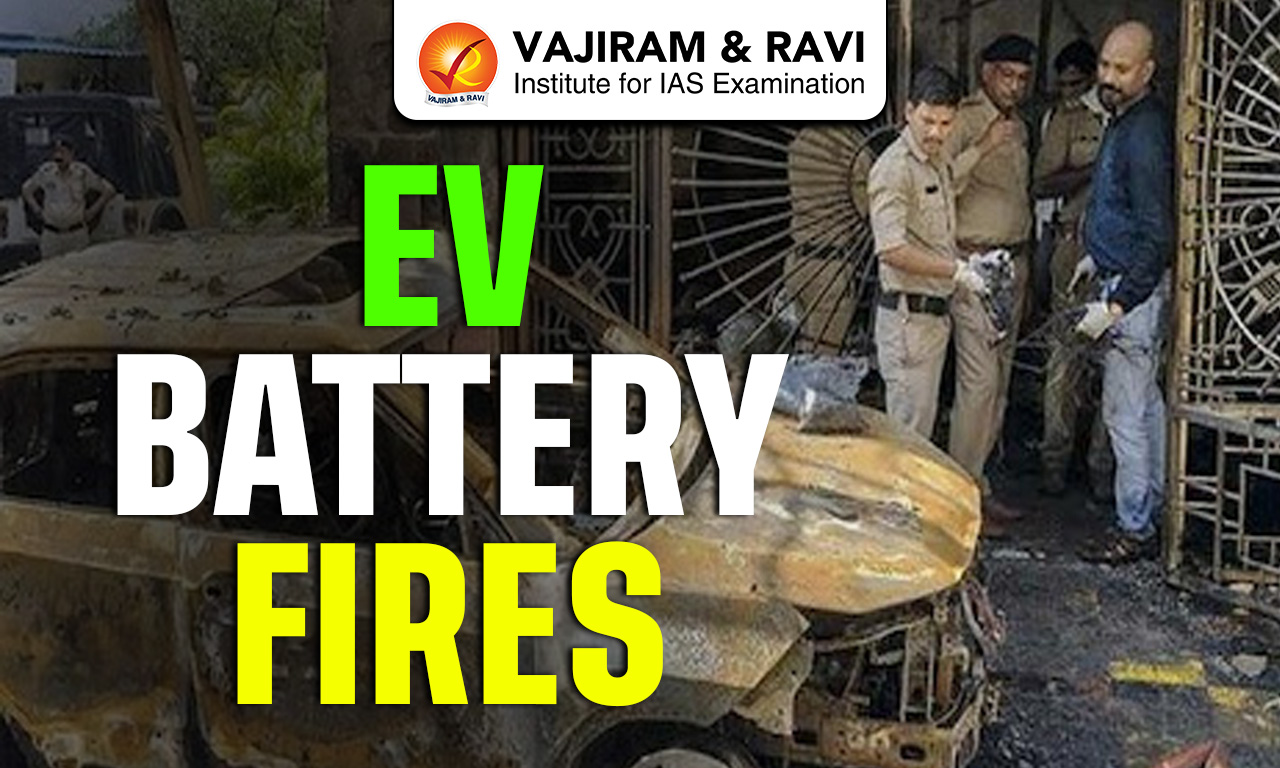
A devastating fire tore through a house in Indore recently, killing 8 people — including 2 children.
The blaze is suspected to have originated from an EV charging point located outside the house. An official investigation is currently underway.
Safety of EV Batteries
Lithium-Ion Batteries: Common but Efficient - Most EVs use lithium-ion batteries, similar to those in smartphones and laptops. They offer high energy density and are generally safe when properly managed.
Role of Battery Management System (BMS) - EVs are equipped with a Battery Management System (BMS). It regulates temperature and ensures the battery operates within safe limits during charging and discharging.
Risk of Thermal Runaway - A key risk is thermal runaway, where:
One battery cell overheats
Heat spreads to nearby cells
A chain reaction occurs, overwhelming the cooling system.
Fire and Toxic Gas Risk - During thermal runaway, batteries release flammable and toxic gases such as hydrogen fluoride. These gases can intensify fire risk and make incidents more hazardous.
Overall Insight - EV batteries are generally safe, but rare failures like thermal runaway can lead to serious fire hazards if not properly controlled.
Causes of Thermal Runaway in EV Batteries
Physical Damage to Battery Pack - Strong impacts (especially to the undercarriage) can damage the battery casing. This may puncture or deform cells, leading to internal short circuits and overheating.
Overcharging and Faulty Chargers - Charging beyond safe limits can cause charge buildup in unstable areas of the battery. Use of third-party or damaged chargers increases this risk. Repeated overnight charging with unsafe chargers can worsen the problem.
Manufacturing Defects - Rare defects like metal protrusions inside cells can connect positive and negative electrodes. This leads to sudden high current flow, generating excessive heat and triggering thermal runaway.
Electrical Infrastructure Issues - Weak or old wiring and extension cords may not handle sustained current. This can cause overheating during charging, indirectly increasing fire risk.
Impact of External Conditions on EV Battery Safety
Heat and Thermal Stress - High temperatures, especially during Indian summers, can strain the cooling system. Parking in direct sunlight or charging immediately after long drives increases thermal stress on batteries.
Battery Age and Maintenance - Over time, batteries degrade internally, increasing risk. Ignoring warning signs or skipping inspections may hide issues like swelling or chemical breakdown.
Risk from Flooding - Floodwater can enter battery packs, causing short circuits. Several EV fires have been reported days after vehicles were submerged.
EV vs Petrol Vehicle Fires - EVs are not uniquely dangerous—petrol vehicles catch fire more often. However, EV battery fires:
Burn hotter and faster
Are harder to extinguish due to oxygen release
Firefighting requires large amounts of water or special equipment.
Role of Surrounding Factors - Fire risks can increase due to external elements like: LPG cylinders stored nearby; Presence of other vehicles; Power failure affecting safety systems (e.g., electronic locks).
Industry and User Measures to Improve EV Battery Safety
Advanced Cooling Technologies - EVs use coolant channels to absorb and dissipate heat. New systems are being developed where coolant evaporates to improve heat transfer, helping manage sudden temperature spikes.
Safer Battery Design Innovations - Shift towards solid-state batteries (using solid electrolytes) to reduce fire risks. Improved internal firewalls to prevent fire from spreading between cells if one fails
User-Level Safety Precautions
Use only manufacturer-approved chargers.
Avoid unattended or overnight charging with unsafe setups.
Ensure home electrical systems can handle high loads.
Get batteries checked after impacts.
Allow battery to cool after long drives before charging and keep charging areas clear.
Strengthened Safety Standards in India
Bureau of Indian Standards (BIS) updated EV battery safety norms in 2023.
Under AIS-156 standards, batteries must:
Undergo tests for heat propagation
Provide at least five minutes for passenger evacuation in case of fire
Q1: What are EV battery fires and why do they occur?
Ans: EV battery fires occur due to thermal runaway, where overheating spreads across cells, releasing flammable gases and causing intense fires that are difficult to control.
Q2: What is thermal runaway in EV battery fires?
Ans: Thermal runaway in EV battery fires is a chain reaction where one overheated cell triggers neighbouring cells, leading to rapid temperature rise and potential fire.
Q3: Are EV battery fires more dangerous than petrol fires?
Ans: EV battery fires are less frequent but burn hotter, spread faster, and are harder to extinguish compared to petrol fires due to internal oxygen release.
Q4: What precautions can prevent EV battery fires?
Ans: Using certified chargers, avoiding overcharging, ensuring proper wiring, cooling batteries before charging, and regular inspections help reduce the risk of EV battery fires.
Q5: What steps are being taken to reduce EV battery fires?
Ans: Manufacturers are improving cooling systems, developing solid-state batteries, and governments have introduced safety standards like AIS-156 to reduce EV battery fire risks.
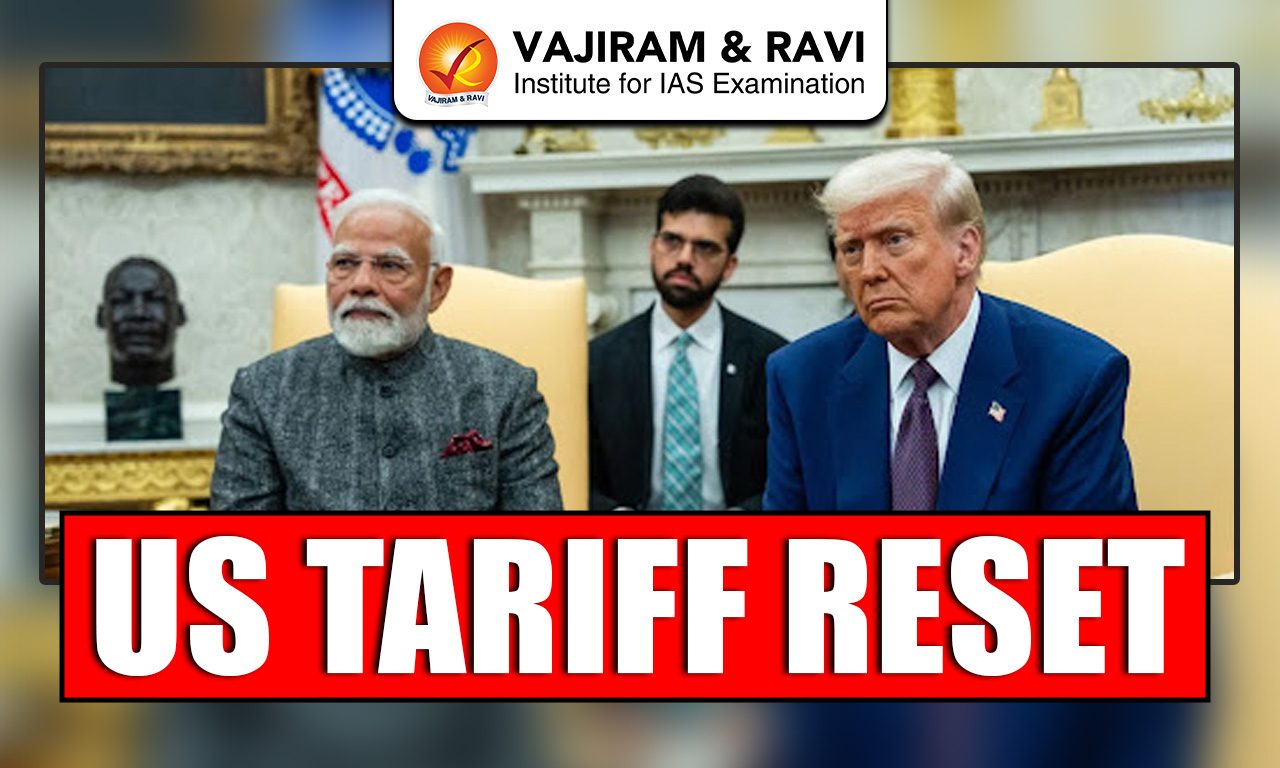
A recent ruling by the US Supreme Court striking down tariffs imposed under the International Emergency Economic Powers Act (IEEPA) has disrupted the legal foundation of U.S. trade policy.
In response, the U.S. administration has imposed temporary 10% global tariffs under Section 122 and is exploring a more durable tariff regime through Section 301 investigations by the United States Trade Representative (USTR).
This shift has created uncertainty in ongoing and prospective trade agreements, including the India–U.S. trade deal.
Shift in US Trade Strategy
From IEEPA to Section 122 and Section 301:
IEEPA-based tariffs were invalidated, undermining earlier “reciprocal tariff” arrangements.
Temporary 10% global tariffs are imposed under Section 122 of the Trade Act, 1974 (valid till July).
The USTR is now pursuing Section 301 investigations to -
Establish a new legal basis for tariffs.
Enable country-specific and sector-specific tariffs.
Replace Section 122 tariffs before expiry.
Fast-track investigations: Section 301 probes are being conducted rapidly. They allow the executive to impose long-lasting and flexible tariff measures without Congressional approval.
Rationale Behind Section 301 Investigations
Key grounds for investigation:
Structural excess capacity in manufacturing sectors.
Overproduction and export distortions.
Use of forced labour in supply chains.
Strategic objective:
Recreate a reciprocal tariff framework with stronger legal backing.
Maintain trade pressure even on countries that have signed agreements.
Impact on Global Trade Agreements
Erosion of existing trade deals:
Countries like Japan, South Korea, Vietnam, Indonesia, Bangladesh, India, and the EU had accepted tariffs of 15–20% and offered significant concessions on market access, procurement, and regulations.
With uniform 10% tariffs post-ruling, earlier concessions appear politically costly and economically redundant.
Global reactions:
Malaysia declared its trade agreement with the U.S. null and void.
The European Commission has put EU–U.S. trade talks on hold, seeking clarity on future U.S. tariff policy.
South Korea has expressed concerns over investment commitments and currency stability.
Implications for India
Trade and tariff concerns:
India faces Section 301 scrutiny for excess capacity in sectors like solar modules, petrochemicals, steel.
In 2025, India had a bilateral trade surplus with the US of $58 billion.
Comparative advantage consideration: Any India–U.S. trade deal will depend on India’s tariff advantage in the U.S. market, the structure of new U.S. tariffs.
Uncertainty in trade negotiations: Even negotiated deals may not guarantee protection from future investigations, stability in tariff treatment.
Key Challenges
Legal and policy uncertainty: Frequent shifts in U.S. tariff frameworks undermine predictability.
Weakening multilateralism: Rise of unilateral tariff actions over WTO-based dispute resolution.
Erosion of trust in trade agreements: Countries question the value of concessions when tariff benefits are not assured, trade pressure persists.
Impact on global supply chains: Increased tariffs may disrupt value chains, raise production costs, encourage protectionism.
Way Forward
For India:
Diversify export markets to reduce U.S. dependency.
Engage in strategic trade negotiations focusing on stable tariff commitments, dispute resolution mechanisms.
Align with like-minded countries to revive multilateral trade norms.
For Global trade system:
Reinforce rules-based trading order under WTO.
Ensure legal certainty in tariff regimes.
Promote transparent and predictable trade policies.
Conclusion
The U.S. shift from IEEPA-based tariffs to a Section 301-driven framework marks a significant recalibration of global trade dynamics.
While it aims to provide a stronger legal basis for tariffs, it has simultaneously eroded trust in trade agreements and heightened uncertainty.
For India and other trading partners, the challenge lies in navigating this evolving landscape by balancing strategic engagement with economic self-reliance and diversification.
The Supreme Court has expanded paid maternity leave for adoptive mothers, striking down restrictive provisions in the Social Security Code, 2020.
Maternity Leave Framework in India
India’s maternity benefit framework has evolved over time to support working women and child welfare.
The Maternity Benefit Act, 1961, provided 12 weeks of paid leave.
The 2017 Amendment increased leave for biological mothers to 26 weeks.
It also introduced maternity leave for adoptive and surrogate mothers, but with conditions.
Under Section 5(4) of the Act (later Section 60(4) of the Social Security Code, 2020), adoptive mothers were entitled to 12 weeks of leave only if the child was below three months of age.
This created a distinction between biological and adoptive motherhood in law.
Supreme Court Judgment and Legal Changes
The Supreme Court struck down the restrictive provision limiting maternity leave for adoptive mothers.
Adoptive mothers are now entitled to 12 weeks of paid maternity leave regardless of the child’s age at adoption.
The Court held that such restrictions violate principles of equality and child welfare.
The judgment recognises adoptive mothers as having the same rights and responsibilities as biological mothers.
Rationale Behind the Judgment
The Court’s reasoning reflects a broader and more inclusive understanding of motherhood.
Beyond Biological Definitions
The Court stated that motherhood cannot be viewed through a “narrow lens of biology” and must include adoptive relationships.
Child-Centric Approach
Adopted children often face emotional and psychological challenges.
The initial bonding period is critical for their development.
The Court noted that children raised in institutional settings may have higher stress levels, requiring greater parental care after adoption.
Right to Reproductive Autonomy
Adoption was recognised as part of an individual’s reproductive choices, linking the judgment to broader constitutional rights.
Limitations of the Earlier Law
The earlier provision was considered inadequate for several reasons:
The three-month age limit excluded most adoptive parents
Adoption procedures in India often take longer than three months
Data showed that less than 5% of adopted children were below three months of age
As a result, many adoptive mothers were effectively denied maternity benefits.
Impact of the Judgment
Greater Inclusivity: The judgment ensures equal treatment of adoptive and biological mothers under labour laws.
Improved Child Welfare: Adequate maternity leave allows adoptive parents to:
Build emotional bonds
Support child development
Provide a stable home environment
Support for Working Women: The decision reduces the conflict between career and caregiving responsibilities for adoptive mothers.
Court’s Observations on Parenthood
The Supreme Court emphasised that parenting responsibilities should not be viewed as solely maternal.
It highlighted the importance of shared parenting
Recognised the role of fathers in childcare
The Court recommended that the Union government consider a formal legal framework for paternity leave.
Status of Paternity Leave in India
Currently, male government employees are entitled to 15 days of paternity leave.
In the private sector, policies vary across organisations.
There is no comprehensive national law governing paternity leave, leading to uneven benefits.
Significance of the Judgment
Constitutional Values: The judgment strengthens principles of Equality (Article 14) and Dignity & autonomy.
Gender Justice: By recognising shared parenting, it moves toward a more gender-balanced framework.
Labour Law Reform: It highlights gaps in India’s labour laws and the need for modern, inclusive policies.








 Location of Diego Garcia[/caption]