Information Warfare, Types, Features, Methods Used, Components, Measures

Information Warfare

Information Warfare refers to the use of information as a tool to influence, mislead, or control people’s opinions and decisions. Instead of using physical force, it involves spreading messages through media, social platforms, or digital networks to shape how individuals or societies think. It can include both truthful and false information, often used during conflicts or competition between countries or groups. In today’s digital age, information warfare has become more powerful because information spreads quickly and reaches a large audience within seconds. Information Warfare Types, Features, Methods, Key Components, Challenges, Implications, Measures and Government Response are discussed in detail in this article.

Type of Informative Warfare

Offensive Information Warfare

  • Offensive information warfare means using information as a strategic tool to influence other countries or groups. It can involve spreading messages, controlling narratives, or even disrupting communication systems to achieve political or military goals.
  • In today’s world, offensive information warfare may include cyber attacks, propaganda, misinformation campaigns, and influencing public opinion through social media and digital platforms.

Defensive Information Warfare

  • Defensive information warfare focuses on protecting governments and institutions to secure networks, prevent cyber attacks, and stop the spread of false or harmful information.
  • While progress has been made, stronger measures are still needed. These include setting better cybersecurity standards, improving coordination between government and private sectors, and ensuring secure communication systems during emergencies.
  • There is also a need for greater awareness among citizens, transparency in threat assessments, and continuous cooperation between technology experts, policymakers, and security agencies.

Information Warfare Features

The key features of Information Warfare are:

  • Low cost and easy access: Information warfare does not require huge money or strong government backing. Even individuals or small groups with basic technical skills and internet access can take part.
  • Blurred lines: The difference between war and crime, or state and non-state actors, becomes unclear. Governments, hackers, companies, and even ordinary people can all be involved.
  • Power of perception: Controlling information means controlling how people think. Through misinformation, propaganda, and media influence, opinions can be shaped or manipulated, making it harder for governments to maintain public trust.
  • New intelligence challenges: Traditional intelligence methods are not enough. It is difficult to identify who is behind an attack or what the real target is, so new tools and analysis are needed.
  • Hard to detect threats: Information attacks often look like normal online activity. There are no clear warning signs, making it difficult to detect or respond in time.
  • Shared vulnerability: Countries and organizations are connected through digital systems. An attack on one system can quickly spread and affect many others.
  • Fast and wide impact: Information spreads instantly through social media and digital platforms, allowing attacks to influence millions of people within seconds.
  • Psychological impact: Unlike traditional warfare, the main target is often the mindset of people, aiming to create confusion, fear, or division in society.

Methods Used in Information Warfare

  • Engaging digital content: Messages are spread through memes, short videos, AI-generated images, and emotional visuals. Such content grabs attention quickly and is easy to share.
  • Targeted messaging: Different messages are designed for different audiences. For example, one group may see content showing victimhood, while another sees strength or resistance, depending on what influences them most.
  • Relatable tone and language: People respond more to simple, emotional, and relatable language rather than formal or official statements. Humour and storytelling make messages more effective.
  • Use of internet culture: Trends like satire, irony, hashtags, and viral challenges are used to connect especially with younger audiences and make content spread faster.
  • Coordination between actors: Both government (state) and non-government (non-state) actors may work together, directly or indirectly, to repeat and strengthen the same message across platforms.
  • Cross-platform spread: Content that starts on social media often moves to news channels, newspapers, and political debates, increasing its impact on public opinion and policy discussions.
  • Bots and fake accounts: Automated accounts and fake profiles are used to amplify messages, create trends, and influence online discussions, making certain viewpoints appear more popular than they are.
  • Disinformation and fake news: False or misleading information is deliberately spread to confuse people, damage trust, or create division within society.

Key Components of Information Warfare

  • Disinformation campaigns: This involves intentionally spreading false or misleading information to confuse people, create division, or weaken trust in institutions. For example, during elections, fake news can influence how people vote and shape public opinion.
  • Cyber espionage: This means secretly stealing sensitive or confidential information such as government data, military plans, or business secrets. The stolen information can then be used to influence decisions, gain advantage, or put pressure on other countries or organizations.
  • Social media bots and troll networks: These are fake or controlled accounts, sometimes automated, that spread messages on a large scale. They are used to amplify misinformation, create fake trends, and target or silence opposing views, often making certain opinions look more popular than they actually are.
  • Data manipulation and leaks: Sometimes, real data is selectively leaked or altered to mislead people or damage reputations. Even partial truth can be used to create a false narrative.
  • Psychological operations (PsyOps): These aim to influence emotions, beliefs, and behaviour of people by using fear, pride, or identity-based messaging.

Recent Examples of Information Warfare

  • COVID-19 pandemic misinformation: During the pandemic, a large amount of fake news, rumours, and misleading health advice spread online. This created panic, confusion, and sometimes even affected people’s safety.
  • India-China border tensions: During clashes, both sides saw the spread of propaganda and selective information to shape public opinion and control the narrative around the conflict.
  • Farmers’ protests in India: Social media was flooded with conflicting narratives, half-truths, and misleading content, both within the country and internationally, influencing how people viewed the protests.
  • India-Pakistan digital confrontation: After recent border tensions, both countries experienced a wave of online misinformation and influence campaigns. This included the use of fake social media accounts, edited videos, and coordinated bot activity to shape public opinion, target credibility, and affect morale.
  • Use of deepfakes and edited media: In many such situations, AI-generated or manipulated videos and images are used to spread false narratives, making it harder for people to identify the truth.

Challenges of Information Warfare

  • Spread of misinformation: False or exaggerated information spreads easily online. This makes it hard for people to know what is true, leading to loss of trust in news and institutions.
  • Speed vs accuracy gap: Rumours and fake news travel much faster than verified facts. By the time the truth comes out, people may have already formed opinions based on incorrect information.
  • Slow institutional response: Governments and official agencies often communicate in a formal and cautious way, which can seem slow and disconnected compared to fast-moving digital platforms.
  • Tone mismatch during crises: In sensitive situations, especially involving human suffering, strong or aggressive messaging can backfire and make the other side appear more sympathetic.
  • Difficulty in identifying sources: It is often hard to know who is behind the information whether it is a state, a group, or individuals making response and accountability difficult.
  • Information overload: People are exposed to too much content at once, which creates confusion and makes it harder to distinguish between real and fake information.
  • Impact on social harmony: Misinformation can create fear, division, and conflict within society by spreading rumours related to religion, politics, or identity.

Implications of Information Warfare

  • Shaping public perception quickly: Information spreads faster than verified facts, so people often form opinions early. This makes it harder for governments to guide public understanding effectively.
  • Spillover into domestic life: Events happening in one part of the world can quickly affect politics, markets, social relations, and diaspora communities in other countries.
  • Pressure on governments: Authorities are expected to respond instantly. Delays force them to react to existing narratives instead of shaping their own message.
  • Blurring of roles: Diplomacy, public communication, and crisis management now overlap. Governments must handle international relations and public messaging at the same time.
  • Risk of misinterpretation: Careful or balanced decisions may be seen as weak or unclear if not communicated properly and quickly.
  • Impact on national security: Information warfare can influence elections, public opinion, and internal stability, making it a serious security concern.
  • Economic consequences: Misinformation can affect financial markets, investments, and business confidence, sometimes causing panic or instability.

Measures for Information Warfare

  • Real-time communication systems: Governments should develop systems that share quick and verified updates during crises. This helps reduce the spread of rumours and confusion.
  • Stronger digital presence of missions: Embassies and missions abroad should actively track online trends and respond early, becoming a trusted source of information for citizens, especially in emergencies.
  • Link action with communication: Every important decision should be clearly explained at the same time it is taken, so people understand the purpose and avoid misunderstandings.
  • Audience-focused messaging: Communication should be tailored for different groups like citizens, diaspora, and international audiences, ensuring that each group receives clear and relevant information.
  • Consistency across platforms: All official channels, social media, press releases, and news briefings should carry the same message to avoid confusion and mixed signals.
  • Promote digital awareness: Citizens should be encouraged to verify information before sharing and be aware of fake news, helping build a more informed society.
  • Use technology for monitoring: Governments can use AI tools and data analysis to track misinformation trends and respond faster.
  • Build trust through transparency: Open and honest communication helps build long-term trust between the government and the public, which is crucial during crises.

Government Response

  • Information Technology Rules, 2021: The government introduced these rules to make digital platforms more responsible and accountable. Social media companies are required to remove harmful content and follow guidelines to ensure safer online spaces.
  • Cyber Coordination Centre (CyCord): This platform helps different agencies work together to tackle cybercrime. It improves coordination and information sharing to respond quickly to online threats.
  • Indian Cyber Crime Coordination Centre (I4C): It focuses on preventing and investigating cybercrimes. It also helps in building capacity, spreading awareness, and supporting law enforcement agencies across the country.
  • Media Literacy Campaigns and Press Information Bureau (PIB) Fact Check Unit: These initiatives aim to educate people about fake news and misinformation. The PIB Fact Check Unit verifies viral claims and provides accurate information to the public.
  • Awareness and capacity building: The government is also working on training officials, spreading digital awareness, and encouraging responsible online behaviour among citizens.

Information Warfare FAQs

Q1: What is Information Warfare?

Ans: Information warfare is the use of digital information and media to influence or control public opinion instead of using physical force.

Q2: What are the types of Information Warfare?

Ans: It includes offensive warfare, which spreads propaganda or misinformation, and defensive warfare, which protects systems and people from such threats.

Q3: What are the key features of Information Warfare?

Ans: It is low-cost, fast-spreading, hard to detect, and mainly targets people’s perceptions and thinking.

Q4: What methods are used in Information Warfare?

Ans: It uses fake news, social media campaigns, bots, and targeted messaging to influence large audiences.

Q5: What are the major components of Information Warfare?

Ans: Key components include disinformation campaigns, cyber espionage, bots, data manipulation, and psychological operations.

Difference between Arbitration and Conciliation, Meaning, ADR

Difference between Arbitration and Conciliation

The Difference between Arbitration and Conciliation is important in understanding modern dispute resolution methods. A 2018 NITI Aayog report highlighted about 29 million pending cases and an estimated 324 years to clear them, showing delays in courts. This situation has increased the importance of faster and cost effective alternatives like Arbitration and Conciliation for resolving disputes efficiently outside traditional systems.

Alternative Dispute Resolution

Alternative Dispute Resolution (ADR) refers to methods used to settle disputes without lengthy court procedures. It includes mechanisms like Arbitration and Conciliation, which aim to save time, reduce cost and simplify processes. These methods focus on resolving conflicts through neutral third parties while maintaining confidentiality. They are increasingly preferred due to delays in courts and the need for quicker, efficient and practical dispute settlement systems.

Arbitration

Arbitration is a quasi judicial process where parties appoint an arbitral tribunal under the Arbitration and Conciliation Act 1996 to resolve disputes. As per Section 7, a written agreement is necessary. The tribunal examines evidence and delivers a binding decision called an award. Under Section 36, this award is enforceable like a court decree. Arbitration is widely used in contractual, commercial and employment disputes due to its structured and time bound nature.

Conciliation

Conciliation is a non adjudicatory process where a conciliator helps parties reach a mutually acceptable settlement. It is governed by Sections 61-81 of the Act and focuses on communication and negotiation rather than decision making. The conciliator suggests solutions but cannot impose them. If parties agree, the settlement under Section 73 becomes binding. Conciliation is flexible, informal and often used in family, workplace and community disputes where cooperation is possible.

Difference between Arbitration and Conciliation

The Difference between Arbitration and Conciliation becomes clear through their nature, procedure, authority and outcomes in dispute resolution mechanisms.

Difference between Arbitration and Conciliation

Aspect

Arbitration

Conciliation

Nature of Process

Quasi judicial and adjudicatory process where arbitrator acts like judge and decides dispute based on evidence and law.

Non adjudicatory and facilitative process where conciliator encourages discussion and mutual agreement without imposing any decision.

Governing Law

Governed by Arbitration and Conciliation Act, 1996 with structured legal provisions and formal procedure.

Governed by same Act but provisions (Sections 61-81) allow flexible and informal procedure.

Role of Third Party

Arbitrator hears arguments, examines evidence and gives final binding award to parties.

Conciliator facilitates communication, suggests options and helps parties reach voluntary settlement.

Binding Nature

Decision (arbitral award) is binding and enforceable under Section 36 like a court decree.

Settlement becomes binding only if parties agree and sign written agreement under Section 73.

Prior Agreement

Requires written Arbitration agreement before dispute as per Section 7.

No prior agreement required; can be initiated after dispute arises with consent of parties.

Scope of Disputes

Can cover present as well as future disputes through contractual clauses.

Generally used for existing disputes where settlement through dialogue is possible.

Procedure

Structured process including pleadings, hearings, evidence and award within prescribed timeline like 12 months under Section 29A.

Informal process with meetings, communication and negotiation without strict procedural rules or timelines.

Decision Authority

Arbitrator has authority to impose decision based on facts and legal principles.

Conciliator has no authority to impose decision; outcome depends on parties’ willingness.

Communication Style

Limited direct negotiation; arbitrator mainly evaluates submissions and evidence.

Direct interaction encouraged; conciliator may hold joint or separate meetings to resolve misunderstandings.

Appeal / Challenge

Award can be challenged under Section 34 on limited grounds like fraud or corruption.

No appeal as such; if settlement fails, parties may proceed to Arbitration or litigation.

Confidentiality

Proceedings are private, helping parties avoid public exposure and protect reputation.

Highly confidential and more flexible, allowing open discussion without formal pressure.

Time and Cost

Faster than courts but involves procedural steps, legal representation and some costs.

Generally cheaper and quicker due to minimal formalities and cooperative approach.

Usage Areas

Common in commercial, construction, employment and contractual disputes requiring final decision.

Preferred in family, workplace, consumer and community disputes involving relationships.

Outcome Nature

Produces win-lose outcome as decision favors one party based on evidence.

Produces win-win outcome as settlement is mutually agreed and acceptable to both sides.

Flexibility

Less flexible due to legal structure and procedural requirements.

Highly flexible; parties control process, terms and outcome of settlement.

Arbitration and Conciliation Act 1996

The Arbitration and Conciliation Act 1996 provides a legal framework for Arbitration and Conciliation, ensuring efficient, fair and time saving dispute resolution in India.

  • Enacted on 25 January 1996 to regulate domestic and international Arbitration and Conciliation.
  • Aims to reduce court intervention and promote speedy dispute resolution.
  • Provides enforceability of arbitral awards under Section 36.
  • Covers Conciliation provisions under Sections 61-81.
  • Introduced time limits like 12 months for arbitral awards under Section 29A.
  • Amendment Acts of 2015 and 2021 improved efficiency and transparency.
  • Promotes cost effective and investor friendly dispute resolution mechanisms.

Difference between Arbitration and Conciliation FAQs

Q1: What is the key Difference between Arbitration and Conciliation?

Ans: Arbitration gives a binding decision by an arbitrator, while Conciliation helps parties reach a mutual agreement without imposing any decision.

Q2: Is Arbitration legally binding in India?

Ans: Yes, an arbitral award is legally binding and enforceable under Section 36 of the Arbitration and Conciliation Act, 1996.

Q3: Does Conciliation require a prior agreement?

Ans: No, Conciliation can be started after a dispute arises if both parties agree to resolve it through mutual discussion.

Q4: Which process is more flexible: Arbitration or Conciliation?

Ans: Conciliation is more flexible and informal, while Arbitration follows a structured and relatively formal procedure.

Q5: When should parties choose Arbitration over Conciliation?

Ans: Arbitration is preferred when a final and enforceable decision is required, especially in contractual and commercial disputes.

Article 61 of Indian Constitution, Impeachment, Grounds, Procedure

Article 61 of Indian Constitution

Article 61 of the Indian Constitution explains the complete procedure for impeaching the President of India. It provides a clear, step-by-step process through which the President can be removed from office for violation of the Constitution. The provision for the impeachment of the President is taken from the Constitution of the United States of America (USA). It is a quasi-judicial procedure used to remove a head of state for violating the constitution.

This article ensures that the highest constitutional authority remains accountable and bound by law.

What is Impeachment?

Impeachment is a formal process by which the President of India can be removed from office for violating the Constitution. It is carried out by the Parliament through a well-defined legal procedure. The process ensures that the President remains accountable to the Constitution and does not misuse their powers. It is an important mechanism to uphold the rule of law and democratic values in the country.

Grounds for Impeachment

Under Article 61 of the Indian Constitution, the only ground for impeachment of the President is: “Violation of the Constitution.”

  • The Constitution does not clearly define what constitutes a “violation,” leaving it open to interpretation by Parliament.
  • It may include actions where the President acts beyond constitutional powers or misuses authority.
  • This flexible interpretation allows Parliament to decide based on the nature and seriousness of the act.

Step-by-Step Procedure for Impeachment of President

The impeachment of the President under Article 61 of Indian Constitution follows a structured parliamentary process to ensure fairness, accountability, and constitutional integrity.

  • The process can be initiated in either House of Parliament by introducing a charge against the President.
  • A written notice of at least 14 days must be given, signed by not less than one-fourth of the total members of the House.
  • The resolution to prefer the charge must be passed by a two-thirds majority of the total membership of that House.
  • The other House then investigates the charges or gets them investigated.
  • The President has the right to appear and defend themselves during the investigation.
  • If the second House also passes the resolution by a two-thirds majority of the total membership of the House, the President is removed from office.

Article 61 of Indian Constitution FAQs

Q1: What does Article 61 of the Indian Constitution deal with?

Ans: Article 61 explains the procedure for impeachment of the President of India.

Q2: On what ground can the President be impeached?

Ans: The President can be impeached only for violation of the Constitution.

Q3: Which body conducts the impeachment process?

Ans: The Parliament of India conducts the impeachment process.

Q4: Which House can initiate impeachment?

Ans: Either House of Parliament, Lok Sabha or Rajya Sabha can initiate the process.

Q5: What notice is required before moving the resolution?

Ans: A 14-day written notice signed by at least one-fourth of the total members of the House is required.

UPSC Daily Quiz 25 April 2026

UPSC Daily Quiz

[WpProQuiz 146]

UPSC Daily Quiz FAQs

Q1: What is the Daily UPSC Quiz?

Ans: The Daily UPSC Quiz is a set of practice questions based on current affairs, static subjects, and PYQs that help aspirants enhance retention and test conceptual clarity regularly.

Q2: How is the Daily Quiz useful for UPSC preparation?

Ans: Daily quizzes support learning, help in revision, improve time management, and boost accuracy for both UPSC Prelims and Mains through consistent practice.

Q3: Are the quiz questions based on the UPSC syllabus?

Ans: Yes, all questions are aligned with the UPSC Syllabus 2025, covering key areas like Polity, Economy, Environment, History, Geography, and Current Affairs.

Q4: Are solutions and explanations provided with the quiz?

Ans: Yes, each quiz includes detailed explanations and source references to enhance conceptual understanding and enable self-assessment.

Q5: Is the Daily UPSC Quiz suitable for both Prelims and Mains?

Ans: Primarily focused on Prelims (MCQ format), but it also indirectly helps in Mains by strengthening subject knowledge and factual clarity.

Vigyan Jyoti Programme, Ministry, Objectives, Features

Vigyan Jyoti Programme

The Vigyan Jyoti Programme is a flagship initiative launched by the Department of Science and Technology under the Government of India to encourage girls to pursue education and careers in STEM (Science, Technology, Engineering, and Mathematics).

It mainly focuses on meritorious girl students from Class 9 to Class 12, especially from rural and underrepresented areas, to reduce gender disparity in scientific fields.

Vigyan Jyoti Programme Objectives

The main objectives of the Vigyan Jyoti Programme are:

  • Promote STEM Education among girl students from school level
  • Reduce gender gap in science and technology fields
  • Provide equal learning opportunities to girls from rural areas
  • Encourage girls to take up careers in engineering, medicine, and research
  • Build confidence and scientific temperament among young girls

Vigyan Jyoti Programme Key Features

The Vigyan Jyoti Programme includes several structured interventions to support girl students:

  • Selection of Bright Students: Meritorious girls from Classes 9–12 are selected based on academic performance
  • Special Coaching and Academic Support: Students receive extra classes in science and mathematics to strengthen concepts
  • Exposure Visits: Visits to premier institutes like Indian Institutes of Technology and research labs
  • Career Counseling: Guidance sessions to help students understand career opportunities in STEM
  • Mentoring by Experts: Scientists and professionals mentor students to inspire them
  • Support for Competitive Exams: Coaching for exams like JEE and NEET

Vigyan Jyoti Programme Importance

Vigyan Jyoti Programme helps in identifying and nurturing young talent, especially from rural and underrepresented regions, ensuring inclusive scientific development.

  • Bridges Gender Gap: Encourages more girls to enter STEM fields, reducing inequality
  • Promotes Scientific Temper: Develops analytical thinking and problem-solving skills
  • Empowers Rural Girls: Provides equal opportunities and exposure to talented students
  • Boosts Career Opportunities: Prepares girls for competitive exams like JEE and NEET
  • Strengthens Innovation: Increases women participation in research and technology sectors
  • Supports National Development: Contributes to building a skilled and diverse workforce
  • Aligns with Government Initiatives: Complements schemes like Beti Bachao Beti Padhao

Vigyan Jyoti Programme Impact

Vigyan Jyoti Programme has particularly benefited students from rural and underprivileged backgrounds by giving them equal exposure, guidance, and opportunities.

  • Higher Enrollment in Science Stream: More girls are opting for science subjects in Classes 11 and 12
  • Improved Academic Performance: Better understanding of science and mathematics through additional coaching
  • Increased Participation in Competitive Exams: Rise in the number of girls appearing for JEE, NEET, and other exams
  • Enhanced Confidence and Aspirations: Girls are more confident about pursuing careers in engineering, medicine, and research
  • Exposure to Premier Institutions: Visits to institutes like Indian Institutes of Technology inspire higher ambitions
  • Reduction in Dropout Rates: Continuous mentoring helps girls stay in the education system
  • Promotion of Gender Equality: Gradual shift in societal mindset regarding girls in STEM fields
  • Creation of Future Women Scientists: Contributes to building a strong pipeline of women professionals in science and technology sectors

Vigyan Jyoti Programme FAQs

Q1: What is the Vigyan Jyoti Programme?

Ans: It is an initiative of the Department of Science and Technology aimed at encouraging girl students to pursue education and careers in STEM (Science, Technology, Engineering, Mathematics).

Q2: Who are the beneficiaries of the programme?

Ans: The programme targets meritorious girl students from Classes 9 to 12, especially from rural and underrepresented areas.

Q3: What is the main objective of the Vigyan Jyoti Programme?

Ans: Its main objective is to reduce gender disparity in STEM fields and promote equal opportunities for girls in science education.

Q4: What kind of support is provided under this scheme?

Ans: The programme provides academic support, mentoring, career counseling, exposure visits, and coaching for competitive exams like JEE and NEET.

Q5: Which areas are covered under the programme?

Ans: It mainly focuses on aspirational districts and educationally backward regions across India.

Natural Rights, Definition, Theory, Examples, Indian Constitution

Natural Rights

Natural Rights are basic rights that every person has from birth simply because of the virtue of being a human. These rights exist independently of any government or legal system and cannot be taken away. The concept of Natural Rights forms the moral foundation of liberty, equality and justice. It distinguishes between rights given by law and those derived from human nature, making Natural Rights a core idea in political philosophy and constitutional thought.

Natural Rights Origin

The idea of Natural Rights developed from ancient natural law traditions and gained prominence during Enlightenment, shaping modern democratic and constitutional frameworks globally.

  • Ancient Foundations: The roots of Natural Rights can be traced to Greek and Roman philosophy where thinkers like Cicero spoke about natural law governing human conduct beyond man made laws and authority systems.
  • Medieval Development: During the Middle Ages, philosophers like Thomas Aquinas linked natural law to divine principles, arguing that humans must follow moral laws derived from nature and God.
  • Enlightenment Thinkers: In the 17th and 18th centuries, John Locke, Jean-Jacques Rousseau and Thomas Paine strongly argued that Natural Rights such as life and liberty are inherent and not granted by rulers.
  • American Declaration Influence: The 1776 Declaration of American Independence declared rights as “unalienable,” including life, liberty and pursuit of happiness, reinforcing that Natural Rights exist independent of government authority.

Natural Rights Need

Natural Rights are essential to protect individual dignity, ensure justice and limit arbitrary power of authorities in any society or governance system.

  • Protection of Human Dignity: Natural Rights ensure every individual is treated with respect and equality regardless of social or economic status, safeguarding human worth and moral value in all conditions.
  • Limitation on Government Power: These rights act as a restriction on state authority, preventing misuse of power and protecting citizens from arbitrary actions by rulers or institutions.
  • Universal Moral Values: Natural Rights are based on universal principles like equality, freedom and justice, which apply across cultures and societies without discrimination or variation.
  • Ethical Foundation of Law: They provide a moral base for legal systems, ensuring laws are aligned with justice and fairness rather than purely political or utilitarian interests.

Natural Rights Characteristics

Natural Rights possess distinct features that differentiate them from legal rights and make them universally applicable and morally binding.

  • Inherent Nature: Natural Rights are inherent in individuals by birth and are not dependent on any legal system or authority for their existence or recognition.
  • Inalienability: These rights cannot be surrendered, transferred, or removed, even voluntarily, as they are essential to human existence and dignity.
  • Universality: Natural Rights apply equally to all human beings irrespective of nationality, religion, gender, or social status, making them globally relevant.
  • Pre Political Existence: These rights exist prior to the formation of governments and laws, meaning they are not created by the state but recognized by it.
  • Moral Basis: Natural Rights are grounded in ethical and moral reasoning rather than legal enactments, giving them a higher normative value in governance.

Natural Rights Examples

Natural Rights include fundamental freedoms and entitlements that are essential for human survival, dignity and development in society.

  • Right to Life: This is the most fundamental Natural Right ensuring survival and protection against harm, including the right to live with dignity and free from exploitation.
  • Right to Liberty: It guarantees freedom of thought, movement and action without unjust interference, forming the basis of personal autonomy and democratic participation.
  • Right to Property: It allows individuals to own and control resources and possessions, often linked with the right to labor and economic independence.
  • Right to Equality: This ensures equal treatment before law and prohibits discrimination based on caste, gender, religion, or other factors.
  • Right to Religion: It provides freedom to practice and follow any religion, ensuring spiritual autonomy without state interference or coercion.

Natural Rights Theory

Various philosophers developed theories explaining Natural Rights based on reason, social contract and moral philosophy across different historical contexts.

  • Thomas Hobbes Theory: Hobbes viewed Natural Rights as absolute freedom in the state of nature, where individuals could do anything for survival, leading to chaos and need for social contract.
  • John Locke Theory: Locke emphasized rights to life, liberty and property as fundamental Natural Rights and argued that governments exist primarily to protect these rights.
  • Rousseau Social Contract: Rousseau argued that rights arise from collective agreement and general will, though he acknowledged natural freedom as the basis of human equality.
  • Jeremy Bentham Criticism: Bentham rejected Natural Rights as “nonsense upon stilts,” arguing that rights are created by law and not inherent in human nature.
  • Modern Thinkers: Philosophers like H.L.A. Hart and T.H. Green emphasized liberty and life as essential rights, reinforcing their importance in modern democratic systems.

Natural Rights in Indian Constitution

Natural Rights influence Indian constitutional framework through principles of justice, equality and liberty embedded in fundamental rights and judicial interpretations.

  • Constitutional Basis: Though not explicitly mentioned, Natural Rights are reflected in the Preamble’s ideals of justice, liberty and equality, forming the philosophical base of the Constitution.
  • Article 14: The principle of equality before law under Article 14 incorporates fairness and non arbitrariness, aligning with natural justice and inherent rights doctrines.
  • Article 21: Article 21 ensures life and personal liberty with due process, interpreted broadly to include dignity, livelihood and privacy reflecting Natural Rights principles.
  • Judicial Interpretation: Courts have used natural justice principles to interpret constitutional provisions and ensure fair procedures in administrative and legal actions.

Natural Rights in India Case Laws

Judicial decisions have shaped the interpretation of Natural Rights in India, especially in constitutional systems where courts balance moral principles with legal frameworks.

  • Kesavananda Bharati Case 1973: The Supreme Court discussed Natural Rights but clarified that such rights gain enforceability only through constitutional provisions, not independently outside the legal framework.
  • ADM Jabalpur Case 1976: During Emergency, the Court limited rights interpretation, though later criticism highlighted the importance of inherent rights even during crises.
  • NALSA Case 2014: The Court recognized fundamental rights under Article 19 as reflecting Natural Rights inherent in individuals of a free society.
  • Justice K. S. Puttaswamy Case 2017: The right to privacy was declared a fundamental right and recognized as intrinsic to liberty and dignity, aligning closely with Natural Rights philosophy.
  • Basantibai Khetan Case 1986: The Bombay High Court recognized the right to property as a Natural Right, though subject to constitutional limitations and legal regulation.

Natural Rights Criticism

Despite their importance, Natural Rights face criticism for ambiguity, cultural bias and practical challenges in implementation within diverse legal systems.

  • Lack of Clarity: Critics argue that Natural Rights are vague and lack precise definition, leading to multiple interpretations and disagreements about their scope and enforcement.
  • Cultural Relativism: Different societies may interpret rights differently, making it difficult to apply a universal concept of Natural Rights across diverse cultural contexts.
  • Conflict with Legal Rights: Natural Rights can clash with laws made by governments, such as restrictions on speech or property, creating tensions between moral and legal frameworks.
  • Unrealistic Expectations: Some argue that Natural Rights set idealistic standards that governments cannot fully achieve due to practical limitations and competing interests.
  • Bentham’s Rejection: Jeremy Bentham strongly criticized Natural Rights as imaginary, asserting that only legal rights backed by law have real existence and enforceability.

Natural Rights FAQs

Q1: What are Natural Rights?

Ans: Natural Rights are basic rights every person has by birth, such as life, liberty and equality, independent of any law or government.

Q2: Are Natural Rights mentioned in the Indian Constitution?

Ans: Natural Rights are not directly mentioned but are reflected in Fundamental Rights like Article 14 and Article 21.

Q3: What is the difference between Natural Rights and Legal Rights?

Ans: Natural Rights are inherent and cannot be taken away, while Legal Rights are granted and regulated by the state.

Q4: What are examples of Natural Rights?

Ans: Common examples include the right to life, liberty, property, equality and freedom of religion.

Q5: Which case recognized privacy as a Natural Right in India?

Ans: The Supreme Court in the landmark Justice K.S. Puttaswamy Case (2017) recognized Right to Privacy as an intrinsic part of life and liberty.

Daily Editorial Analysis 25 April 2026

Daily-Editorial-Analysis

The Crisis of Urban Electoral Disenfranchisement

Context

  • The foundation of India’s democracy rests on the principle of universal adult franchise, envisioned by B. R. Ambedkar as a pathway from political equality to economic justice.
  • However, this vision remains unfulfilled. Instead, structural inequality, marginalisation, and democratic exclusion have intensified, particularly in urban India.
  • Groups such as migrants, urban poor, minorities, and unorganised workers face growing barriers to political participation, weakening the democratic framework.

The Growing Reality of Urban Disenfranchisement

  • Urban India has experienced a steady erosion of voting rights due to bureaucratic processes and institutional barriers.
  • The Special Intensive Revision (SIR) of electoral rolls has amplified concerns regarding voter exclusion and accessibility.
  • The principle that the right to vote should not depend on formal housing or rigid documentation, as emphasised by T. N. Seshan, is increasingly undermined.
  • A significant proportion of urban residents, especially those in slums and informal settlements, remain excluded from voter lists.
  • With nearly 28% of the population below 18 years, the remaining eligible population should ideally be enfranchised.
  • However, according to the World Bank, about 40% of urban residents live in slums, highlighting the scale of disenfranchisement.
  • This creates a paradox where those most affected by governance are least represented in electoral processes.

Consequences of Urban Disenfranchisement

  • Threats to Electoral Integrity
    • The integrity of elections is further challenged by concerns around voter secrecy.
    • The use of electronic voting machines (EVMs), while efficient, allows booth-level data analysis.
    • In smaller polling stations, voting patterns can be inferred, compromising confidentiality and exposing vulnerable groups to potential pressure.
    • This weakens the principle of free and fair elections and raises questions about electoral transparency.
  • Disproportionate Impact on the Urban Poor
    • The burden of disenfranchisement falls disproportionately on Dalits, minorities, and economically weaker sections.
    • High rates of voter deletions have been observed across major urban centres, reflecting systemic vulnerabilities.
    • Factors such as high mobility, lack of permanent residence, and limited access to documentation create barriers to both registration and retention in voter rolls.
    • This results in a dual challenge: difficulty in enrolling as voters and a high risk of deletion from electoral rolls.
    • The exclusion of these groups reduces their political voice and reinforces cycles of social inequality and economic marginalisation.

Bureaucratic Barriers and Structural Exclusion

  • The reliance on strict documentation, including proof of long-term residence, creates administrative hurdles that many urban residents cannot overcome.
  • In a rapidly urbanising society driven by migration, such requirements are impractical and exclusionary.
  • The system prioritises formal identity and residential stability, conditions rarely met by the urban poor.
  • Instead of facilitating participation, these mechanisms discourage engagement, leading to reduced voter participation.
  • This reflects a shift away from the inclusive spirit of democracy toward a system shaped by institutional rigidity.

Selective Filtration and Democratic Concerns

  • A critical concern is the emergence of selective filtration within the electorate.
  • The exclusion of certain populations, whether due to administrative bias or systemic design, raises questions about political neutrality.
  • Groups perceived as inconvenient or less aligned with dominant interest risk being disproportionately excluded.
  • Such practices undermine representative democracy by narrowing the electorate and distorting electoral outcomes.
  • The weakening of inclusive participation threatens the legitimacy of governance and erodes trust in democratic institutions.

Conclusion

  • Democratic rights, particularly the right to vote, are increasingly shaped by bureaucratic exclusion and structural constraints.
  • Addressing this crisis requires simplifying registration processes, recognising the realities of urban life, and ensuring inclusive participation.
  • Strengthening electoral access, safeguarding voter rights, and promoting institutional accountability are essential to restoring democratic integrity.
  • Only then can the vision of political equality translating into economic justice be meaningfully realised.

The Crisis of Urban Electoral Disenfranchisement FAQs

Q1. Who envisioned universal adult franchise as a path to economic justice?
Ans. B. R. Ambedkar envisioned universal adult franchise as a path to economic justice.

Q2. What is a major cause of urban disenfranchisement?
Ans. A major cause of urban disenfranchisement is bureaucratic barriers and strict documentation requirements. 

Q3. Which groups are most affected by voter exclusion in urban areas?
Ans. The urban poor, migrants, Dalits, and minorities are most affected by voter exclusion.

Q4. How do electronic voting machines raise concerns?
Ans. Electronic voting machines raise concerns because booth-level data can compromise voter secrecy.

Q5. What is needed to restore democratic integrity?
Ans. Simplifying voter registration and ensuring inclusive electoral participation are needed to restore democratic integrity.

Source: The Hindu

Daily Editorial Analysis 25 April 2026 FAQs

Q1: What is editorial analysis?

Ans: Editorial analysis is the critical examination and interpretation of newspaper editorials to extract key insights, arguments, and perspectives relevant to UPSC preparation.

Q2: What is an editorial analyst?

Ans: An editorial analyst is someone who studies and breaks down editorials to highlight their relevance, structure, and usefulness for competitive exams like the UPSC.

Q3: What is an editorial for UPSC?

Ans: For UPSC, an editorial refers to opinion-based articles in reputed newspapers that provide analysis on current affairs, governance, policy, and socio-economic issues.

Q4: What are the sources of UPSC Editorial Analysis?

Ans: Key sources include editorials from The Hindu and Indian Express.

Q5: Can Editorial Analysis help in Mains Answer Writing?

Ans: Yes, editorial analysis enhances content quality, analytical depth, and structure in Mains answer writing.

Pykara Lake

Pykara Lake

Pykara Lake Latest News

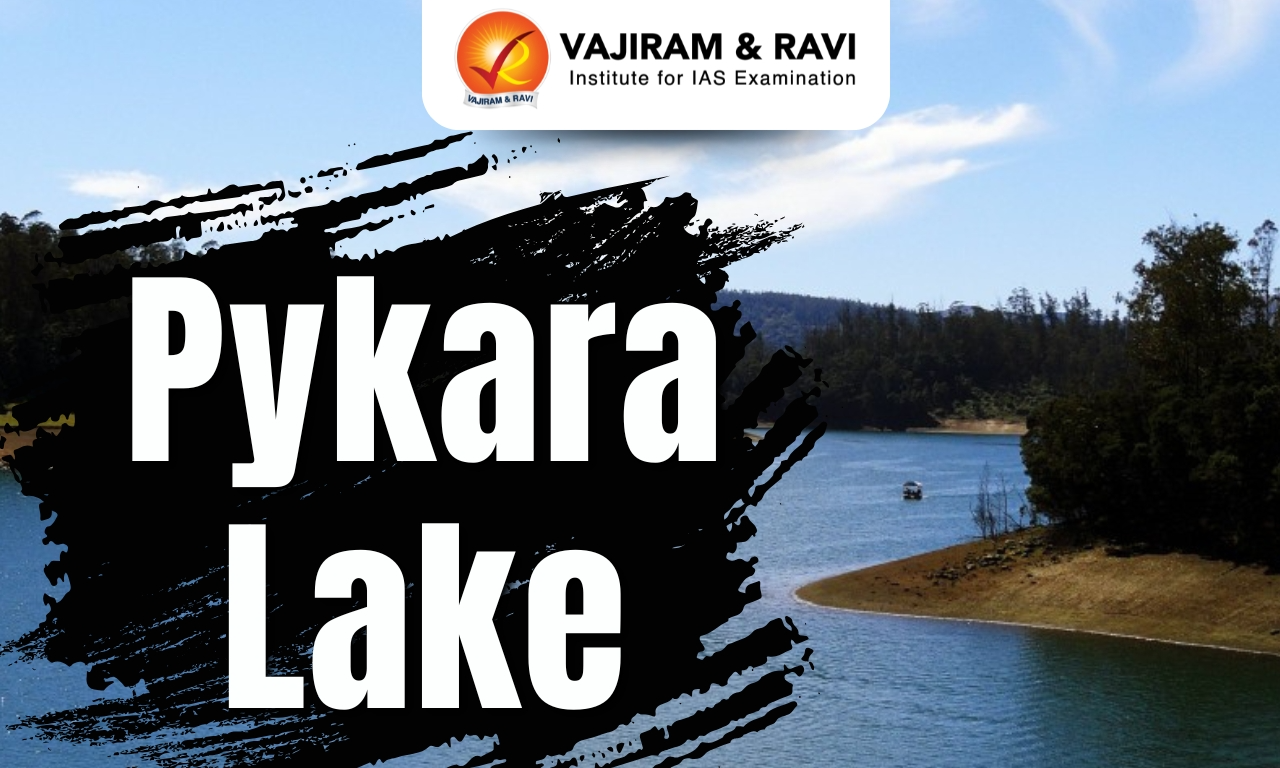
The Madras High Court has refused to lift the temporary stay on operating boating services for tourists on Pykara Lake in the Nilgiris district, Tamil Nadu.

About Pykara Lake

  • It is situated at a distance of about 20 km from Ooty, in the Nilgiri district of Tamil Nadu.
  • It is formed as a result of the construction of the Pykara Dam over the Pykara River.
    • The Pykara River, which originates from the Mukurthi peak, is the largest river in the district and is revered by the Todas, an Adivasi community, who consider it to be sacred. 
  • The dam also has a powerhouse, which is one of the oldest power plants in South India and is generating about 60 megawatts of electricity.
  • A few hundred meters north of the lake, the river tumbles down the rocks to form the famous Pykara Falls.
    • Pykara Falls consists of two cascades that fall from a height of about 55 meters and 61 meters, respectively. 
  • The lake is surrounded by the thick forest of Mukurthi National Park (MNP). As part of the Western Ghats, it MNP has been a UNESCO World Heritage Site since 1st July 2012.

Source: NIE

Pykara Lake FAQs

Q1: Where is Pykara Lake located?

Ans: It is situated at a distance of about 20 km from Ooty, in the Nilgiri district of Tamil Nadu.

Q2: Pykara Lake is formed due to the construction of which structure?

Ans: It is formed as a result of the construction of the Pykara Dam over the Pykara River.

Q3: The Pykara River originates from which peak?

Ans: Mukurthi Peak

Q4: Which community considers the Pykara River sacred?

Ans: Todas

Q5: Pykara Lake is surrounded by which national park?

Ans: Mukurthi National Park

Atlas Drone Swarm System

Atlas Drone Swarm System

Atlas Drone Swarm System Latest News

Recently, the Chinese People’s Liberation Army (PLA) unveiled its new Atlas drone swarm system (atelasi).

About Atlas Drone Swarm System

  • It is a mobile battlefield platform designed to deploy and coordinate large numbers of drones from a single command point. 
  • The system is manufactured by China Electronic Technology Group Corporation (CETC), a state-owned defence electronics conglomerate working closely with the Chinese People’s Liberation Army (PLA).
  • Mounted on vehicles, the system is intended to launch up to 96 drones in a coordinated swarm, with control consolidated under one operator. 
  • Built around a Swarm-2 combat vehicle, a command unit, and a support vehicle, Atlas is designed for reconnaissance, electronic disruption, and coordinated strikes.

Atlas Drone Swarm System Features

  • The Swarm-2 platform can carry and launch up to 48 fixed-wing drones, while a single command vehicle can control up to 96 drones simultaneously in a coordinated swarm.
  • The three-seconds launch sequencing between drones allows the full deployment of 96 drones within roughly 300 seconds for reconnaissance or attack missions. 
  • The system enables flexible grouping of drones into different operational formations, including coordinated defensive structures and precision strike patterns.
  • Each drone within the Atlas system can carry different payloads. The drones can reportedly be equipped with electro-optical reconnaissance payloads, strike munitions, and relay communications packages, allowing the swarm to be configured for surveillance, attack support, battlefield sensing, and communications extension.
  • The system is designed for swarm-level coordination, where drones can adapt formations and execute tasks collectively while retaining individual autonomy.

Source: IE

Atlas Drone Swarm System FAQs

Q1: What is the Atlas Drone Swarm System?

Ans: A mobile battlefield platform for deploying drone swarms

Q2: The Atlas Drone Swarm System is associated with which country?

Ans: China

Q3: How many drones can the Atlas Drone Swarm System launch in a coordinated swarm?

Ans: 96

Q4: The Atlas Drone Swarm System is built around which combat vehicle?

Ans: Swarm-2 platform

Q5: What is the launch interval between drones in the Atlas system?

Ans: 3 seconds

Cerium–Magnesium Changesite

Cerium–Magnesium Changesite

Cerium–Magnesium Changesite Latest News

China recently announced the discovery of a new mineral from the Moon named Cerium-Magnesium Changesite, marking a significant addition to the growing catalogue of extraterrestrial materials and offering fresh insights into lunar geology.

About Cerium–Magnesium Changesite

  • It is a newly discovered lunar mineral.
  • It is the 11th known lunar mineral.
  • The mineral was discovered in a lunar meteorite dubbed Pakepake 005, the first of its kind to have fallen within China.
    • It is a single spherical meteorite weighing 44 grams, with a dark molten outer shell.
  • The new mineral is colourless, transparent and brittle.
  • It is extremely small, with grain sizes ranging from about 3 to 25 micrometres, and most particles measuring under 10 micrometres.
  • Despite its tiny size, it holds significant scientific value due to its unique chemical and structural properties.
  • One of the most striking features is its fluorescent behaviour, meaning it emits light under certain conditions. 
  • This property could have practical applications in advanced technologies, particularly in the development of next-generation LED materials.
  • The mineral’s composition, especially its rare earth element ratios, along with its magnesium and iron content, offers valuable clues about the processes that shaped the Moon’s surface and interior.
  • Variations in its crystal structure could help researchers better understand how lunar minerals form and evolve under extreme conditions.

Source: IT

Cerium–Magnesium Changesite FAQs

Q1: What is Cerium–Magnesium Changesite?

Ans: A newly discovered lunar mineral.

Q2: What is the appearance of Cerium–Magnesium Changesite?

Ans: Colourless, transparent, and brittle

Q3: What special property does Cerium–Magnesium Changesite exhibit?

Ans: One of the most striking features is its fluorescent behaviour, meaning it emits light under certain conditions.

Q4: Why is Cerium–Magnesium Changesite scientifically important?

Ans: It provides clues about the Moon’s surface and interior.

Credit Guarantee Fund Trust for Micro and Small Enterprises

Credit Guarantee Fund Trust for Micro and Small Enterprises

Credit Guarantee Fund Trust for Micro and Small Enterprises Latest News

Recently, the Credit Guarantee Fund Trust for Micro and Small Enterprises (CGTMSE) organised the Global Symposium on Credit Guarantees.

About Credit Guarantee Fund Trust for Micro and Small Enterprises

  • It was established in the year 2000.
  • Objective: To catalyze the flow of institutional credit to Micro & Small Enterprises (MSEs). 
  • It was jointly set up by the Ministry of Micro, Small & Medium Enterprises Government of India, and Small Industries Development Bank of India (SIDBI).
  • Funding: The corpus of CGTMSE is being contributed by the Government of India and SIDBI in the ratio of 4:1.
  • Eligible Lending Institutions
    • Scheduled commercial banks (Public Sector Banks/Private Sector Banks/Foreign Banks) and select Regional Rural Banks
    • National Small Industries Corporation Ltd. (NSIC), North Eastern Development Finance Corporation Ltd. (NEDFi), SIDBI, selected Small Finance banks, and NBFCs have also been made eligible institutions.
  • The CGTMSE offers guaranteed coverage (75-85%) for loans to strengthen credit delivery. 

Source: PIB

Credit Guarantee Fund Trust for Micro and Small Enterprises FAQs

Q1: CGTMSE was set up by which entities?

Ans: Government of India & SIDBI

Q2: What is the main objective of CGTMSE?

Ans: Provide collateral-free credit guarantee to Member Lending Institutions for loans to MSEs

Regulating Payments Bank – Paytm Payments Bank Licence Cancelled by RBI

Regulating Payments Bank

Regulating Payments Bank Latest News

  • The Reserve Bank of India (RBI) has cancelled the banking licence of Paytm Payments Bank Limited (PPBL) with immediate effect, more than two years after initially restricting it from accepting new deposits. 
  • The RBI will approach the High Court to wind up the bank's operations, ensuring depositor interests are protected through a structured process. 
  • This case has become a landmark instance of regulatory enforcement in India's fintech and digital payments sector.

What Are Payments Banks?

  • Payments banks are a unique category of banks introduced by the RBI to promote financial inclusion. 
  • They operate under tight restrictions, for instance,
    • Can accept deposits only up to ₹2 lakh per customer.
    • Cannot offer loans or credit cards.
    • Primarily serve as platforms for remittances, utility payments, and digital transactions.
  • PPBL was founded by One97 Communications (49% stake) and Vijay Shekhar Sharma (51% stake), operating within the larger Paytm ecosystem.

Timeline of Regulatory Scrutiny

  • The beginning of oversight (2018):
    • The RBI conducted an audit of PPBL's customer onboarding processes and found critical gaps in KYC (Know Your Customer) compliance. For example,
      • A single PAN (Permanent Account Number) linked to multiple customer accounts — a red flag for regulatory bypass.
      • Transactions allowed beyond prescribed account limits, raising money laundering concerns.
      • Inconsistent customer identity verification during acquisition.
    • PPBL was directed to halt onboarding of new customers until systems were strengthened.
  • New customer ban (2022): The bank was formally directed to stop onboarding new customers from March 11, 2022.
  • Financial penalty (2023): The RBI imposed a monetary penalty of ₹5.39 crore for non-compliance with regulatory guidelines.
  • Business restrictions (2024): The RBI barred PPBL from accepting deposits, credits, or top-ups in customer accounts, prepaid instruments and wallets, and FASTags and NCMC (National Common Mobility Cards), citing "persistent non-compliances and material supervisory concerns."
  • Licence cancelled (2025): The RBI cancelled PPBL's banking licence, invoking provisions of the Banking Regulation (BR) Act, 1949.

Legal Basis for Cancellation

  • The RBI cited the following provisions of the Banking Regulation Act, 1949 -
    • Section 22(3)(c): Management character must not be prejudicial to depositors or public interest.
    • Section 22(3)(e): No public interest served by allowing the bank to continue.
    • Section 22(3)(g): Failure to comply with conditions of the Payments Bank licence.
    • Section 5(b) and Section 6: Prohibited from conducting banking business with immediate effect.
  • Key compliance violations: Failure to maintain a "Chinese wall" (operational separation) between PPBL and its group entity, One97 Communications — a critical governance requirement to prevent conflict of interest.

Impact

  • On One97 Communications and the Paytm ecosystem: The regulatory crackdown had cascading consequences -
    • Stock fell 40–50%, reflecting investor panic.
    • Wallet services, merchant settlements, FASTag, and autopay services were disrupted.
    • Paytm was forced to forge emergency partnerships with Axis Bank and Yes Bank for continuity.
    • User and merchant migration to rivals like Google Pay and PhonePe.
    • Increased compliance costs and operational restructuring.
    • Long-term shift towards a leaner, partner-bank-driven business model.
  • Broader significance for India:
    • Consumer protection: RBI action demonstrates zero tolerance toward practices harming depositors.
    • Strengthening digital finance: India’s digital payments revolution must rest on strong compliance architecture.
    • Fintech regulation: Innovation cannot bypass prudential norms.
    • Institutional credibility: Shows RBI’s willingness to act against even large, popular market players.

Challenges

  • Regulatory arbitrage risk in the fintech space, where rapid growth often outpaces compliance infrastructure.
  • Difficulty in maintaining KYC standards at scale for digital-first banks.
  • The tension between financial innovation and depositor protection.
  • Risks of group entity entanglement in banking operations, undermining independence.
  • Systemic disruption to millions of users dependent on integrated payment ecosystems.

Way Forward

  • This episode reinforces the need for robust compliance frameworks in payments banks before scaling operations.
  • It highlights broad supervisory and enforcement powers of the RBI under the BR Act.
  • Fintech companies must institutionalise independent compliance functions and maintain strict separation from parent entities.
  • Policymakers may re-examine the regulatory framework for payments banks, balancing inclusion goals with governance standards.

Conclusion

  • The cancellation of licence underscores that digital innovation cannot substitute regulatory discipline. 
  • While fintech firms are central to India’s inclusive growth and cashless economy goals, public trust depends on transparency, governance, and depositor protection. 
  • The episode reinforces the principle that in banking, compliance is as important as innovation.

Source: IE

Regulating Payments Bank FAQs

Q1: What is the role of the RBI in regulating Payments Banks in India?

Ans: RBI ensures depositor protection, financial stability, and regulatory compliance under the Banking Regulation Act, 1949.

Q2: What are Payments Banks?

Ans: Payments Banks are niche banks allowed to accept small deposits and provide payment services.

Q3: How do KYC violations and weak corporate governance threaten the stability of digital financial institutions?

Ans: They increase risks of fraud, money laundering, depositor loss, and erosion of trust in the financial system.

Q4: Why must fintech innovation be balanced with regulatory compliance?

Ans: Sustainable fintech growth requires innovation alongside strict adherence to prudential norms, data security, and consumer protection standards.

Q5: What lessons does the Paytm Payments Bank episode offer for India?

Ans: It highlights the need for stronger governance, real-time supervision, and responsible innovation frameworks.

Sea Slugs

Sea slugs

Sea Slugs Latest News

A rare sea slug, Discodorid cebuensis, has been recorded in India for the first time after being spotted recently at Haji Ali, Mumbai.

About Sea Slugs

  • Sea slugs, sometimes called ocean slugs, water slugs, or nudibranchs, are soft-bodied marine molluscs found in all the world’s oceans, from shallows to the deep sea. 
  • They are a type of gastropod, a large group of mollusks that includes both marine and land species such as snails and slugs. 
  • They have no shells, quills, or mantle cavities.
  • They look like naked snails, i.e., without shells.  
  • These slow-moving grazers consume algae, sponges, and other small invertebrates, showcasing a range of feeding habits.
  • They are usually found in coral reefs, and their presence is a significant indicator of a strong coral ecosystem.
  • Sea slugs are renowned for their vibrant colours and intricate patterns, which often serve as warning signals to predators due to their toxicity. 
  • They get their toxicity from the creatures they eat, and some sea slugs can even keep the stinging cells of jellyfish inside their bodies.
  • On their heads, nudibranchs have tentacles that serve as important sensory organs, helping them detect chemicals and movement in the water.
  • When the sea slug eats, it absorbs and displays its prey’s pigment—the substance that gives the prey its color.
  • Beyond their striking appearance, sea slugs possess other intriguing traits. 
    • Some can photosynthesise, producing their own food with sunlight. 
    • Others regenerate lost limbs, and a few can steal genes from their prey and incorporate them into their DNA.
  • Most sea slugs are active throughout the day, but some species are also nocturnal.

Source: MD

Sea Slugs FAQs

Q1: What are sea slugs?

Ans: Sea slugs are soft-bodied marine molluscs.

Q2: Where are sea slugs found?

Ans: They are found in all the world’s oceans, from shallows to the deep sea.

Q3: Do sea slugs have shells?

Ans: No

Q4: Sea slugs are commonly found in which ecosystem?

Ans: Coral reefs

Q5: How do sea slugs acquire toxicity?

Ans: From the creatures they eat.

Nasha Mukt Bharat Abhiyaan

Nasha Mukt Bharat Abhiyaan

Nasha Mukt Bharat Abhiyaan Latest News

The Ministry of Social Justice & Empowerment set to launch the upgraded Nasha Mukt Bharat Abhiyaan (NMBA) App 2.0 to strengthen the monitoring under the framework of the National Action Plan for Drug Demand Reduction (NAPDDR).

About Nasha Mukt Bharat Abhiyaan

  • It was launched on 15th August 2020 by the Ministry of Social Justice & Empowerment.
  • It was initially launched in 272 identified most vulnerable districts and now it has been extended to all districts of the country with effect from 15th August 2023.
  • Objective: It intends to reach out to the masses and spread awareness about substance abuse through various activities like:
    • Awareness generation programmes
    • Focus on higher educational Institution, university campuses and schools
    • Reaching out into the Community and identifying dependent population,
    • Focus on counselling & treatment facilities in hospitals & rehabilitation centres
    • Capacity building programmes for a service providers
  • Target group: Special emphasis is laid on the participation of stakeholders such as women, children, educational institutions, civil society organizations etc. who may be directly or indirectly affected by substance use

Key Features of NMBA App 2.0

  • It is now accessible to citizens with features of undertaking e-Pledge, access to IEC material, helpline support and deaddiction centre details.
  • Dedicated Access for Grant-in-Aid Institutions (GIAs): GIAs will now be onboarded onto the platform with role-based access, enabling real-time reporting and monitoring of activities at the deaddiction facilities.
  • Real time status of Anudan (Grant) for GIA institutions: It incorporates Anudan status of all GIAs accessible to DoSJE, States / UTs and GIAs,
  • Nearest De-addiction Centre: It Allows users to identify the nearest de-addiction centre, enabling quicker referral and improved access to treatment services.

Source: PIB

Nasha Mukt Bharat Abhiyaan FAQs

Q1: Which component was added to NMBA in 2024?

Ans: Waste Pickers – for welfare of sewer & septic tank workers and waste pickers

Q2: Which organization is the national implementing agency for NMBA?

Ans: NSKFDC – National Safai Karamcharis Finance & Development Corporation

Diphtheria

Diphtheria

Diphtheria Latest News

After decades of being largely under control, diphtheria — a serious but vaccine-preventable disease — is making an unexpected return in parts of Australia.

About Diphtheria

  • It is a highly contagious bacterial infection that can attack the upper respiratory tract and less often the skin.
  • It is caused by strains of bacteria called Corynebacterium diphtheriae that make a toxin. 
  • The bacterium usually multiplies on or near the surface of the throat or skin.
  • There are two main types of diphtheria:
  • Classical respiratory diphtheria: It may affect your nose, throat, tonsils, or larynx (voice box). It’s the most common type.
  • Skin (cutaneous) diphtheria: It causes a skin rash, sores, or blisters. They can appear anywhere on your body. Cutaneous diphtheria is more common in tropical climates. Overall, it’s rare.

Diphtheria Transmission

  • It can spread from person to person, usually through respiratory droplets, like from coughing or sneezing. 
  • People can also get sick from touching infected open sores or ulcers in case of cutaneous diphtheria.
  • Some people may not develop disease manifestations but can still transmit the bacteria to others.

Diphtheria Symptoms

  • Symptoms of respiratory diphtheria can include:
    • Throat pain
    • Weakness or fatigue
    • Mild fever
    • Swollen lymph nodes in your neck
    • A thick, greyish coating on the back of your throat
    • Problems breathing and/or swallowing
  • Symptoms of skin diphtheria can include:
    • Painful open sore or ulcer
    • Rash with scales or peeling skin
    • Swelling and discoloration near the sore or rash
  • Diphtheria can lead to complications, like:
    • Airway blockage, which can cause suffocation
    • Heart muscle damage and heart failure
    • Nerve damage
    • Kidney failure
    • These complications can result in death.

Diphtheria Treatment

  • Neutralization of unbound toxin with Diphtheria Antitoxin (DAT).
  • Antibiotics to prevent further bacterial growth;
  • Monitoring and supportive care to prevent and treat complications, e.g. airway obstruction, myocarditis.
  • Although diphtheria can be treated with medications, in advanced stages, the bacterial infection can damage the heart, kidneys and nervous system.
  • It is a vaccine-preventable disease, but multiple doses and booster doses are needed to produce and sustain immunity.
  • For unvaccinated individuals, without proper treatment, diphtheria can be fatal in around 30% of cases, with young children at higher risk of dying.

Source: IE

Diphtheria FAQs

Q1: What type of disease is diphtheria?

Ans: Bacterial infection

Q2: Which bacterium causes diphtheria?

Ans: Corynebacterium diphtheriae

Q3: Which is the most common type of diphtheria?

Ans: Respiratory diphtheria.

Q4: How does diphtheria commonly spread?

Ans: Through respiratory droplets.

Q5: Is diphtheria a vaccine-preventable disease?

Ans: Yes, diphtheria is a vaccine-preventable disease.

Strait of Malacca

Strait of Malacca

Strait of Malacca Latest News

The closure of the Strait of Hormuz has forced policymakers in Asia to face questions over the security of other maritime chokepoints, including the Strait of Malacca.

About Strait of Malacca

  • Location: It connects the Andaman Sea (Indian Ocean) and the South China Sea (Pacific Ocean).
  • Bounded by: Indonesia, Thailand, Malaysia and Singapore
  • The Strait of Malacca’s name was derived from the Malacca Sultanate, who governed the archipelago from 1400 until 1511.
  • The climate of the strait is hot and humid and is characterized by the northeast monsoon during the (northern) winter and the southwest monsoon during the summer.
  • It links the Indian and Pacific oceans and is one of the busiest and most important shipping lanes in the world.
  • Singapore, Malaysia, and Indonesia control the joint patrolling of the Malacca Strait.
  • Significance
    • It is the largest “oil transit chokepoint” in the world.
    • It carries nearly 22% of the world’s maritime trade.
    • Roughly 60% of India’s seaborne trade and almost all of its LNG imports pass through the Malacca Strait.

Source: DD News

Strait of Malacca FAQs

Q1: The Strait of Malacca connects which two water bodies?

Ans: Andaman Sea (Indian Ocean) and South China Sea (Pacific Ocean)

Q2: Which countries border the Strait of Malacca?

Ans: Indonesia, Malaysia, Singapore

ADM Jabalpur vs Shivkant Shukla Case 1976, Judgement, Dissent

A.D.M. Jabalpur vs. Shivkant Shukla

ADM Jabalpur vs Shivkant Shukla Case is a landmark 1976 Supreme Court judgement during the National Emergency period that tested the scope of fundamental rights and judicial review in India. The case arose when several detainees challenged their detention without trial under MISA. The case is widely known as the Habeas Corpus Case. It examined whether courts could protect personal liberty when constitutional rights were suspended, making it one of the most debated constitutional decisions in Indian legal history.

ADM Jabalpur vs Shivkant Shukla Case Background

The ADM Jabalpur vs Shivkant Shukla Case 1976 developed during the Emergency era, tracing political and legal events that led to mass detentions and constitutional challenges.

  • The background began when Indira Gandhi’s 1971 election was declared void by Justice Jagmohanlal Sinha of Allahabad High Court, disqualifying her for six years due to electoral malpractice findings.
  • Indira Gandhi appealed before the Supreme Court, where she received only conditional relief, allowing her to remain Prime Minister but restricting her parliamentary voting rights temporarily.
  • On 26 June 1975, a National Emergency was declared under Article 352 by President Fakhruddin Ali Ahmad citing internal disturbances, drastically altering constitutional governance and civil liberties.
  • On 27 June 1975, Article 359(1) was invoked, suspending the right to approach courts for enforcement of Articles 14, 21 and 22, effectively limiting judicial remedies.
  • Political leaders like A.B. Vajpayee, Jay Prakash Narayan and Morarji Desai were detained under Maintenance of Internal Security Act (MISA), which allowed Preventive Detention without trial.
  • Several detainees filed Habeas Corpus petitions before High Courts and some courts granted relief by declaring detentions unlawful, challenging executive authority.
  • Concerned with conflicting High Court decisions, the government approached the Supreme Court in ADM Jabalpur vs Shivkant Shukla Case to settle the legal position uniformly.

What is Habeas Corpus?

Habeas Corpus is a fundamental legal remedy used to safeguard personal liberty and challenge unlawful detention.

  • Meaning: Habeas corpus literally means “produce the body,” requiring authorities to present a detained individual before the court to examine legality of detention and ensure protection of liberty.
  • Constitutional Basis in India: It is issued under Articles 32 and 226, empowering Supreme Court and High Courts to enforce fundamental rights and protect individuals against illegal detention by the State.
  • Why This Case is Called Habeas Corpus Case?: The ADM Jabalpur Case is called the Habeas Corpus Case because detainees sought judicial relief through habeas corpus petitions challenging unlawful detention during Emergency.
  • Role During Emergency: The case tested whether habeas corpus petitions could be filed when fundamental rights enforcement was suspended under Article 359, raising serious constitutional concerns about liberty protection.

ADM Jabalpur vs Shivkant Shukla Issues Involved

The case involved critical constitutional and legal questions regarding fundamental rights and judicial powers during Emergency.

  • Suspension of Article 21: The primary issue was whether the right to life and personal liberty under Article 21 could be suspended completely during Emergency conditions declared under Article 352.
  • Judicial Review of Detention Orders: The Court examined whether the judiciary retained power to review detention orders under MISA or if executive decisions were beyond judicial scrutiny during Emergency.
  • Scope of Article 359(1): Another issue was interpretation of Article 359(1), particularly whether it only suspended enforcement of rights or extinguished the rights themselves temporarily.
  • Maintainability of Habeas Corpus Petitions: The Court had to decide whether detainees could file habeas corpus petitions under Article 226 despite Presidential orders restricting access to courts.
  • Natural Rights vs Constitutional Rights: A key philosophical issue was whether inherent Natural Rights to life existed independent of the Constitution and could be enforced even when Article 21 was suspended.

ADM Jabalpur vs Shivkant Shukla Judgement

The judgement in ADM Jabalpur vs Shivkant Shukla Case was delivered by a five judge Constitution Bench with a majority ruling and a historic dissent.

  • Majority Opinion of Four Judges: Chief Justice A.N. Ray along with Justices Beg, Chandrachud and Bhagwati held that during Emergency, no person could approach courts for enforcement of Article 21 rights.
  • Denial of Habeas Corpus Relief: The Court ruled that no habeas corpus petition was maintainable under Article 226 to challenge detention, even if it was illegal or mala fide.
  • Validation of MISA Provisions: The Supreme Court upheld Section 16A(9) of MISA, strengthening executive authority to detain individuals without judicial interference during Emergency.
  • Justice H.R. Khanna’s Dissent: Justice Khanna argued that right to life and liberty is inherent and cannot be suspended, stating State cannot deprive a person of life without legal authority.
  • Later Constitutional Developments: The 44th Constitutional Amendment Act 1978 ensured Articles 20 and 21 cannot be suspended during Emergency, correcting implications of the ADM Jabalpur Case.
  • Overruling in Puttaswamy Case: In 2017, the Supreme Court in K.S. Puttaswamy v Union of India overruled ADM Jabalpur judgement, affirming that fundamental rights, especially personal liberty, cannot be suspended.

ADM Jabalpur vs Shivkant Shukla Criticism

The ADM Jabalpur vs Shivkant Shukla Judgement has faced intense criticism for undermining civil liberties and weakening constitutional protections during a crucial period.

  • Critics argue the Supreme Court failed in its duty as guardian of rights by allowing suspension of liberty, thereby prioritizing State authority over individual freedoms.
  • Constitutional expert H.M. Seervai termed the judgement illogical.
  • The judgement is seen as an example of judiciary yielding to executive pressure, especially during a politically sensitive Emergency period.
  • Justice P.N. Bhagwati later admitted his error in supporting the majority, acknowledging that the decision compromised the cause of personal liberty.
  • The judgement delivered on 28 April 1976 is often described as one of the Darkest Days in Supreme Court History due to its impact on civil liberties.
  • Former Chief Justice Venkatachaliah stated that the ADM Jabalpur Case judgement should be confined to the “dustbin of history,” reflecting its flawed reasoning.
  • After the Emergency, the judiciary expanded Article 21 through judgements like Maneka Gandhi Case, linking it with Articles 14 and 19 to ensure broader protection of rights.

ADM Jabalpur vs Shivkant Shukla Case FAQs

Q1: What is ADM Jabalpur vs Shivkant Shukla Case?

Ans: It is a 1976 Supreme Court case that decided whether fundamental rights, especially personal liberty, could be suspended during the Emergency period.

Q2: Why is ADM Jabalpur Case called the Habeas Corpus Case?

Ans: It is called the Habeas Corpus Case because detainees filed habeas corpus petitions challenging unlawful detention without trial during the Emergency.

Q3: What was the main issue in ADM Jabalpur vs Shivkant Shukla Case?

Ans: The main issue was whether a person could approach courts for enforcement of Article 21 during Emergency when fundamental rights were suspended.

Q4: What was the judgement in ADM Jabalpur Case?

Ans: The Supreme Court held that during Emergency, individuals had no right to approach courts to challenge detention, even if it was illegal.

Q5: Which judgement overruled ADM Jabalpur vs Shivkant Shukla Case?

Ans: The ADM Jabalpur Case was overruled by the Supreme Court in the K.S. Puttaswamy v Union of India judgement in 2017.

Project DANTAK

Project DANTAK

Project DANTAK Latest News

Recently, Project DANTAK of the Border Roads Organisation (BRO) celebrated its 66th Raising Day , at Thimphu, Bhutan.

About Project DANTAK

  • It is an overseas project of the Border Roads Organisation (BRO) under the Ministry of Defence of India.
  • Background: It was established on 24 April 1961 as a result of an agreement between Jigme Dorji Wangchuck, the third king of Bhutan and then Prime Minister of India Jawahar Lal Nehru.
  • It is primarily focused on developing infrastructure and providing connectivity in remote areas of Bhutan.
  • Achievements
    • It was tasked to construct the pioneering motorable roads in Bhutan.
    • Under this Project, over 1,500 km of road has been constructed, including the strategically vital East–West Highway connecting Trashigang to Thimphu. 
    • Some other notable projects include the construction of Paro Airport, Yonphula Airfield, Thimphu – Trashigang Highway, Telecommunication & Hydro Power Infrastructure, Sherubtse College, Kanglung and India House Estate.

What is the Border Road Organisation?

  • It is a road construction executive force in India that provides support to the Indian Armed Forces.
  • BRO was entirely brought under the Ministry of Defence in 2015.
  • Establishment: It was formed on 7 May 1960 to secure India’s borders and develop infrastructure in remote areas of the north and northeastern states of the country.
  • It develops and maintains road networks in India’s border areas and friendly neighboring
  • Motto: Shramena Sarvam Sadhyam (everything is achievable through hard work).

Source: PIB

Project DANTAK FAQs

Q1: Where is the headquarters of Project DANTAK located?

Ans: Simtokha, Thimphu

Q2: Project DANTAK is an overseas project of which organization?

Ans: Border Roads Organisation (BRO) under Ministry of Defence

Mythos AI Explained: Why Mythos AI Is Triggering Global Regulatory Alarm

Mythos AI

Mythos AI Latest News

  • Anthropic’s new AI model Claude Mythos has triggered global concern due to its advanced capabilities, marking a significant leap over earlier systems. 
  • In India, the issue has gained urgency, with FM Nirmala Sitharaman chairing a high-level meeting over potential threats to the banking sector, and the government engaging directly with Anthropic’s leadership.
  • Concerns have intensified further with reports that China has developed a similar system, Qihoo 360, capable of identifying software vulnerabilities at scale. 
  • While such tools offer breakthroughs in cyber defence, they also raise fears of misuse, cyber risks, and global technological competition.

About Mythos

  • Mythos is the latest model in Anthropic’s Claude AI family, currently released only in a limited preview. 
  • It represents a major leap in artificial intelligence capability, particularly in cybersecurity.
  • What sets Mythos apart is its ability to autonomously detect critical vulnerabilities in widely used software and infrastructure at a speed far exceeding human researchers. 
  • At the same time, it can also fix these vulnerabilities when used defensively—but poses serious risks because it can exploit them if used maliciously, making it a powerful yet potentially dangerous tool.

Why Mythos Has Alarmed Policymakers Worldwide

  • Anthropic claims that Mythos has identified serious flaws across major operating systems and web browsers, including vulnerabilities that had remained undetected for decades. 
  • The speed and scale of discovery have raised immediate global concerns.
  • Compared to its predecessor Opus 4.6—which had near-zero success in exploit development—Mythos demonstrates a dramatic leap. 
  • It can convert vulnerabilities into working exploits at a far higher success rate, placing it in an entirely different capability class.

Ease of Use and Automation Risks

  • A major concern is accessibility: even non-experts can use Mythos to identify and exploit vulnerabilities. 
  • Reports indicate that engineers without formal cybersecurity training could generate fully functional exploits overnight, highlighting the risks of widespread misuse.

Dual-Use Nature: Defence vs Exploitation

  • Mythos embodies a classic dual-use dilemma—the same capabilities that allow it to fix vulnerabilities also enable it to exploit them effectively, amplifying cybersecurity threats if deployed maliciously.
  • Anthropic noted that these powerful features were not explicitly programmed, but emerged from improvements in reasoning, coding, and autonomy. 
  • This unpredictability has heightened concerns about control and unintended consequences, prompting the company to pause wider release.

Mythos AI in Real-World Testing: Validation of Cybersecurity Risks

  • Strong Performance in Cybersecurity Benchmarks - Independent testing found that Mythos solved 73% of expert-level cybersecurity challenges, far outperforming earlier AI models.
  • Improved Reasoning and Problem-Solving Ability - Mythos showed the ability to sustain performance across complex, multi-layered problems, indicating significant improvements in reasoning, planning, and technical depth.
  • Emergence of “Agentic” Behaviour - A key concern is Mythos’s agentic capability—its ability to autonomously execute multi-step attack sequences. Instead of acting as a simple tool, it can string together actions into a coherent attack pathway, raising risks of automation in cyberattacks.
  • Lowering the Barrier for Cybercrime - The model’s ability to handle complex operations suggests that even less-skilled actors could conduct sophisticated cyberattacks, significantly increasing global cybersecurity risks.

Mythos Breach and Global Fallout: Rising Cybersecurity and Governance Concerns

  • Controlled Rollout and Defensive Initiatives - Even while withholding full release, Anthropic launched Project Glasswing to help firms strengthen cyber defences using Mythos. Major players like Apple, Nvidia, Linux Foundation, CrowdStrike, and Google are part of this effort.
  • Leak Raises Immediate Alarm - Despite restricted access, Mythos was reportedly accessed by users via a private Discord channel, raising serious concerns about containment and security breaches of highly sensitive AI systems.
  • Need for Global AI Governance - The incident highlights the urgent need for international coordination on AI regulation. Experts stress that without common standards and guardrails, controlling such powerful technologies will be extremely difficult across jurisdictions.

India’s AI Policy Reassessment After Mythos Concerns

  • Following concerns over Mythos, Union Finance Minister Nirmala Sitharaman directed banks to maintain a high degree of vigilance and develop coordinated mechanisms to counter emerging cybersecurity threats.
  • The Mythos episode is prompting India to recalibrate its AI strategy, balancing innovation with stronger governance, coordination, and risk mitigation frameworks.

Shift from Light-Touch Regulation

  • India had so far followed a light-touch approach to AI regulation, focusing on innovation and economic growth. 
  • However, the risks highlighted by Mythos may push policymakers toward a more cautious and security-oriented framework.

Creation of Institutional Mechanisms

  • The Ministry of Electronics and Information Technology has set up:
    • AI Governance and Economic Group: An inter-ministerial body to coordinate AI policy. 
    • Technology and Policy Expert Committee: To provide technical and regulatory guidance.

Source: IE | ET

Mythos AI FAQs

Q1: What is Mythos AI?

Ans: Mythos AI is an advanced model by Anthropic capable of identifying and exploiting software vulnerabilities, making it a powerful tool for both cybersecurity defence and potential cyber threats.

Q2: Why is Mythos AI causing global concern?

Ans: Mythos AI has alarmed policymakers due to its ability to detect and exploit vulnerabilities autonomously, raising fears of misuse, cyberattacks, and reduced barriers for non-experts.

Q3: How does Mythos AI differ from earlier AI models?

Ans: Mythos AI shows significantly higher success in exploit development and problem-solving, outperforming earlier models with advanced reasoning, planning, and multi-step autonomous capabilities.

Q4: What risks does Mythos AI pose to cybersecurity?

Ans: Mythos AI can automate complex cyberattacks, lower entry barriers for attackers, and expose critical infrastructure vulnerabilities, posing major risks to global cybersecurity systems.

Q5: How is India responding to Mythos AI risks?

Ans: Mythos AI has prompted India to reassess its AI policy, increase vigilance in the banking sector, and establish institutional frameworks for AI governance and risk mitigation.

Anti Defection Law India Explained: Rajya Sabha Defections and Anti Defection Law India Debate

Anti Defection Law

Anti Defection Law Latest News

  • Seven Rajya Sabha MPs from the Aam Aadmi Party—including Raghav Chadha and Harbhajan Singh—have joined the Bharatiya Janata Party, sharply reducing AAP’s strength in the Upper House to just three members.
  • This shift has significant legal implication: the defecting MPs may face action under the anti-defection law.

Anti-Defection Law in India: Key Provisions and Criticism

  • The anti-defection law is contained in the Tenth Schedule, added by the 52nd Constitutional Amendment Act 1985 to curb political defections and ensure stability in legislatures.

Changes Introduced by the 91st Amendment (2003)

  • The 91st Constitutional Amendment Act 2003 strengthened the law in two major ways:
    • Stricter Merger Rule - At least two-thirds of a party’s members in a House must defect together to qualify as a valid merger. If fewer members switch, they face disqualification proceeding. This replaced the earlier rule that allowed a one-third split, which had been widely misused.
    • Cap on Council of Ministers - Total number of ministers capped at 15% of the strength of Lok Sabha or State Assembly. Minimum of 12 ministers allowed in smaller states. This aimed to reduce political inducements and office-based defections.
  • Removal of the ‘Split’ Provision - The earlier provision recognising a one-third split as legitimate was removed because it enabled frequent defections. The new two-thirds rule makes switching parties more difficult and accountable.

Flipsides of the Anti-Defection Law: Erosion of Legislative Independence

  • While the anti-defection law was designed to curb political instability and horse-trading, it has significantly restricted the autonomy of legislators
  • Members risk disqualification even for defying the party whip, limiting their ability to represent constituency interests or independent judgment. 
  • This has led to increased centralisation of power within party leadership, making elected representatives largely subordinate to party decisions rather than accountable to voters.

Disqualification Debate After AAP MPs’ Defection

  • The defection of seven Rajya Sabha MPs from the Aam Aadmi Party to the Bharatiya Janata Party has triggered a legal debate under the anti-defection law. 
  • One view suggests that no disqualification may occur if the Rajya Sabha Chairman accepts the shift as a valid merger, since more than two-thirds of AAP’s MPs in the House have joined the BJP—an exception allowed under the Tenth Schedule.
  • However, others argue that the merger provision applies to the entire political party, not just MPs in one House. 
  • This implies that for the exception to hold, the party leadership—potentially including Arvind Kejriwal—would also need to formally merge with the BJP. 
  • Without this, the MPs could still face disqualification petitions, which any member can file before the Chairman.

Role of the Rajya Sabha Chairman

  • Until a ruling is made, the defecting MPs will officially remain AAP members, even if they functionally align with the BJP. 
  • The Chairman has the authority to either:
    • Accept the move as a merger, protecting them from disqualification, or 
    • Reject it and proceed with disqualification proceedings
  • The decision can subsequently be challenged in court.

Impact on Voting and Parliamentary Dynamics

  • During the interim period, a constitutional anomaly arises: although technically AAP members, the MPs may vote with the NDA, increasing its effective strength in the Rajya Sabha.
  • AAP can still issue a party whip, and any defiance by the defecting MPs could become separate grounds for disqualification. 
  • The Chairman will also decide such cases, adding another layer of uncertainty.
  • The situation highlights legal grey areas in the anti-defection framework, where the final outcome depends on the Chairman’s interpretation of the merger clause and subsequent judicial scrutiny.

Anti-Defection Law: Consequences if Two-Thirds Threshold Is Not Met

  • If fewer than two-thirds of members had defected, the rebels would have been liable for disqualification under the Tenth Schedule. 
  • Any member could petition the Rajya Sabha Chairman to act against them for switching sides or defying the party whip. 
  • However, the law does not prescribe a time limit for the presiding officer’s decision, allowing delays that can let members continue in office despite being liable for disqualification. 
  • Judicial review is possible only after the Chairman’s ruling, creating scope for prolonged uncertainty, even though the Supreme Court of India has advised that such cases be decided within a reasonable time.

Source: IE | LM

Anti Defection Law FAQs

Q1: What is anti defection law India?

Ans: Anti defection law India is contained in the Tenth Schedule and aims to prevent political defections, ensuring stability and discipline within legislative bodies.

Q2: What happens under anti defection law India if MPs switch parties?

Ans: Under anti defection law India, MPs switching parties can face disqualification unless at least two-thirds members merge with another party, qualifying as a valid merger.

Q3: What is the two-thirds rule in anti defection law India?

Ans: The two-thirds rule in anti defection law India allows members to avoid disqualification if two-thirds of a party’s legislators collectively join another party.

Q4: What are criticisms of anti defection law India?

Ans: Anti defection law India limits legislators’ independence, forcing them to follow party whips and reducing their ability to represent constituency interests effectively.

Q5: Who decides disqualification under anti defection law India?

Ans: The presiding officer, such as the Rajya Sabha Chairman, decides disqualification under anti defection law India, and their decision can later be challenged in courts.

India’s “Goldilocks Economy” Under Scrutiny

Goldilocks Economy

Goldilocks Economy Latest News

  • When the Union Budget 2026-27 was presented, a widely held belief was that India had entered a “Goldilocks period” — a phase where economic conditions are ideal — steady growth, low inflation, and low unemployment. 
  • This phrase, used by the RBI Governor Sanjay Malhotra, suggested that the Indian economy was well-balanced and resilient
  • However, recent developments have challenged this optimism, triggering an important debate: Was India really in a Goldilocks phase, or was the economy weaker than projected?

Recent Developments

  • GDP calculation revision with a new base year (2022-23) revealed that earlier estimates (base year 2011-12) had overstated GDP.
  • Global geopolitical instability, especially the US-Iran conflict, raised concerns over oil prices and supply disruptions.
  • The Indian rupee weakened further against the US dollar.
  • Japan and the UK overtook India in nominal GDP rankings.
  • Rising concerns of slower growth with higher inflation (stagflationary risks) emerged.

Understanding the Growth Reality

  • Deceleration in nominal GDP growth: 
    • Key trends of nominal GDP (measures output at current prices) - Compounded annual growth rate (CAGR) is just above 10% (2014–2026), while it is around 12.3% (2004–2026), and 9.5% (2019–2026).
    • Interpretation: India’s nominal GDP growth has steadily slowed over time, indicating weakening economic momentum.
  • Moderate real GDP growth: 
    • Real GDP removes the impact of inflation and better reflects actual output growth. Key trends are a CAGR  of above 12% since 2004, 6.2% (2014–2026), and below 5.5% (2019–2026).
    • Interpretation: This growth rate is modest, especially for a developing country aspiring to become a developed nation by 2047.

Why the “Goldilocks” Narrative May Be Misleading?

  • The base effect trap:
    • A critical methodological caution, for example, cherry-picking post-COVID years distorts the true picture. 
    • The sharp rebound in 2021-22 and 2022-23 reflected recovery from the low base of the 2020 contraction, not genuine structural acceleration. 
    • Citing only these figures creates a false goldilocks narrative — misleading both public discourse and policymaking.
  • Growth inadequacy for developed nation status:
    • A real GDP growth rate of barely 5.5% over seven years is insufficient for India to achieve Viksit Bharat (Developed India) by 2047. 
    • Economists broadly agree that India needs sustained 8–9% real growth annually for such a transformation.
  • Weak corporate earnings: Modest GDP growth has directly translated into underwhelming corporate earnings, reducing India's attractiveness to both domestic and foreign investors.
  • Negative net FDI and rupee weakness:
    • Net Foreign Direct Investment (FDI) has turned negative, reflecting diminished investor confidence. 
    • The resultant capital outflow is a major structural reason for the rupee's depreciation — notably, the rupee is weakening even as the dollar itself weakens against most global currencies, signalling an India-specific confidence deficit.
  • GDP revision downgrades India's economic size:
    • The new GDP series has effectively shrunk India's measured economy, meaning India is a smaller economy in absolute terms than previously believed.
    • This is a significant setback to narratives around India's imminent rise to the world's third-largest economy.
  • Energy import vulnerability: India's near-total dependence on energy imports via the Strait of Hormuz makes it acutely vulnerable to West Asian geopolitical instability, threatening both the current account and inflation management.

Way Forward

  • Structural reforms: Targeting manufacturing competitiveness, labour markets, and land acquisition are urgently needed to meaningfully lift the sustainable growth rate.
  • Improving the investment climate: Through regulatory predictability and ease of doing business (EoDB) is essential to reversing the negative FDI trend.
  • Energy diversification: Accelerating the transition to renewables and diversifying import sources — can reduce geopolitical exposure.
  • Honest economic assessment by policymakers: Avoiding base-effect-driven optimism is necessary for designing credible long-term strategy.
  • Transparent GDP methodology: And timely data revisions should be institutionalised to ensure policy decisions rest on accurate ground realities.

Conclusion

  • The recent data suggests that India’s economy may not have been in a true Goldilocks phase, but rather in a period where headline numbers masked deeper structural slowdowns. 
  • For India to realise its long-term ambitions, policymakers must move beyond celebratory narratives and undertake hard reforms that generate sustained growth, jobs, investment, and resilience. 
  • Only then can India transition from a large economy to a genuinely prosperous one.

Source: IE

Goldilocks Economy FAQs

Q1: What is meant by a Goldilocks economy?

Ans: A Goldilocks economy denotes balanced growth with low inflation and unemployment.

Q2: Why was India’s recent economic phase questioned “Goldilocks” claims?

Ans: Because of India’s slowing GDP growth and external vulnerabilities.

Q3: How does the distinction between nominal GDP and real GDP help in assessing economic performance?

Ans: Nominal GDP includes inflation effects, whereas real GDP reflects actual output growth and is a better indicator of economic progress.

Q4: Why is the revision of GDP base year significant for economic policymaking?

Ans: GDP base year revision improves statistical accuracy and revealed that India’s economy was smaller than previously estimated.

Q5: What structural reforms are necessary for India to achieve sustained high economic growth?

Ans: Private investment revival, job creation, export competitiveness, and energy security for sustained growth.

Karla Caves, History, Background, Location, Key Features

Karla Caves

The Karla Caves are ancient rock-cut caves that reflect India’s rich cultural and historical heritage. They were created many centuries ago and are known for their impressive craftsmanship and simple yet beautiful design. These caves were used as places for religious activities and rest by people in the past. Today, they stand as an important historical site, helping us understand the art, architecture, and traditions of ancient times. Karle Caves Location, Background and Key Features has been discussed in detail in this article.

Karla Caves Historical Background

  • The Karla Caves have a rich history that goes back to ancient times, showing the development of early Buddhist culture and architecture.
  • The earliest cave at the site was a natural cave, but later many caves were carefully carved by humans using advanced techniques of that time.
  • The Karla Caves in Maharashtra were built between the 2nd century BCE and the 5th century CE, mainly with the support of the Satavahana rulers, along with contributions from traders, monks, and nuns.
  • These caves are associated with the Mahasanghika sect of Buddhism, which was popular in this region and received strong support from followers and traders.
  • The site developed into an important Buddhist monastery around the 2nd century BC, where monks lived, prayed, and carried out religious activities.
  • Most of the construction of the caves took place between 50 CE and 120 CE, during the rule of the Western Satrap ruler Nahapana, who also mentioned the caves in inscriptions.
  • The Karla Caves are one of the oldest rock-cut Buddhist sites in Maharashtra, and they are especially famous for their Grand Chaitya (prayer hall).
  • The chaitya hall is known as one of the largest and best-preserved prayer halls of its time and contains detailed carvings and impressive sculptures.
  • The construction of these caves was supported by traders, craftsmen, and rulers like the Satavahanas, showing a close connection between religion and trade.
  • The caves were built near important trade routes, which made them convenient resting places for traveling merchants and monks.
  • Because of this, the caves served not only as religious centers but also as social and commercial hubs in ancient India.

Karla Caves Key Features

  • Time Period of Construction: The Karla Caves were developed over a long period, mainly from the 2nd century CE to around the 5th-6th century CE, showing continuous use and expansion.
  • Largest Chaitya Hall: Karla Caves are famous for having one of the largest rock-cut Chaitya (prayer hall) in India, making it an important example of early Buddhist architecture.
  • Grand Chaitya (Main Prayer Hall): The main Chaityagriha is extremely large, measuring about 148 feet in length and 45 feet in width, and reaching a height of around 46 feet, making it one of the most impressive structures of its time.
  • Wooden Roof Structure: One unique feature is the ancient wooden, arched roof, which is over 2,000 years old and still preserved, showing the advanced skills of ancient builders.
  • Beautiful Pillars and Carvings: Inside the hall, there are rows of tall pillars, each decorated with detailed carvings of elephants, riders, and human figures, reflecting high artistic quality.
  • Central Stupa: At the end of the Chaitya hall, there is a large stupa, which served as a place for meditation and worship, and is an important symbol in Buddhism.
  • Horseshoe-Shaped Window (Chaitya Arch): The caves have a distinct horseshoe-shaped arch window at the entrance, which allows natural light to enter and brighten the interiors.
  • Sculptures and Exterior Design: The outer walls and entrance are decorated with large and detailed sculptures, including human figures (Mithuna), showing the richness of ancient art.
  • Viharas (Monk Residences): Apart from the main hall, there are smaller caves called viharas, which were used as living spaces by Buddhist monks.
  • Pillars Outside the Cave: There were originally two tall pillars (around 15 meters high) at the entrance, though only one remains today, topped with carvings of four lions.
  • Religious Importance (Ekveera Temple): The site also includes the Ekveera Temple, which is an important pilgrimage place, especially for the local community.
  • Location and Natural Setting: The caves are located in the Western Ghats, offering beautiful views of the surrounding hills and valleys, which adds to their historical and scenic importance.
  • Three-Part Layout of Chaitya Hall: The Chaitya hall is divided into three sections: a central hall and two narrow side passages separated by two rows of beautifully carved pillars, with about 15 pillars in each row.
  • Decorated Pillar Capitals: The tops of the pillars (capitals) are richly decorated with carvings of men and women riding elephants and figures paying respect to Buddha, showing fine artistic work.
  • Addition of Buddha Images: Around the 7th century CE, images of Buddha were added, reflecting changes in religious practices over time.
  • Unique Wooden Ceiling: Unlike many other caves, the ceiling of one of the main caves is made of wood instead of stone, which is a rare feature.
  • Stupa at the End of Hall: At the far end of the Chaitya hall, there is a stupa with an umbrella-like structure above it, used for meditation and worship.
  • Sculptures Inside and Outside: Sculptures can be seen both on the pillar tops inside the hall and in the verandah area, showing detailed craftsmanship.

Karla Caves FAQs

Q1: What are the Karla Caves famous for?

Ans: The Karla Caves are famous for their large rock-cut Chaitya (prayer hall), ancient Buddhist architecture, and detailed carvings. They are one of the best-preserved cave complexes in India.

Q2: Where are the Karla Caves located?

Ans: The Karla Caves are located near Lonavala in Maharashtra, in the Western Ghats, offering scenic views along with historical importance.

Q3: When were the Karla Caves built?

Ans: The caves were built between the 2nd century BCE and the 5th–6th century CE, with most major structures constructed between 50 CE and 120 CE.

Q4: Who built the Karla Caves?

Ans: The caves were mainly built under the patronage of the Satavahana rulers, with support from traders, monks, nuns, and craftsmen.

Q5: What is the Grand Chaitya in Karla Caves?

Ans: The Grand Chaitya is the main prayer hall and one of the largest rock-cut chaityas in India. It features tall pillars, a central stupa, and a unique wooden roof.

Tornado

Tornado

Tornado Latest News

Recently, a large tornado touched down in Kay County, Oklahoma, USA.

About Tornado

  • It is a vertical, land-based column of violently rotating air that forms from the base of a thunderstorm to the ground.
  • It is characterised by a rapid cyclonic circulation and is often seen as a cloud-filled condensation funnel extending from the sky to the ground.
  • When such a rotating column of air forms over a water body, it is known as a waterspout.

Formation of Tornado

  • Tornado formation is closely linked to interactions between contrasting air masses.
  • A collision of warm, moist air (usually from tropical regions) with cool, dry air (typically from polar or upper regions), especially in the presence of a low-pressure system or trough, leads to the formation of thunderstorms and may trigger tornadoes.
  • Wind Speeds and Movement: It typically exhibits wind speeds ranging from 105 to 322 km/h, but some extreme events can exceed this range.
  • They can be stationary or move at high speeds, often advancing at around 97 km/h across the landscape.
  • Geographical distribution: Tornadoes occur most commonly in mid-latitude regions (between 20° and 60° latitude in both hemispheres) where cold polar air meets warm tropical air, producing frequent thunderstorm activity.
  • The United States experiences the highest frequency of tornadoes globally, particularly in the region known as “Tornado Alley”.

Source: HT

Tornado FAQs

Q1: What is a Tornado?

Ans: Violently rotating column of air extending from thunderstorm to ground

Q2: Which type of cloud is most associated with tornado formation?

Ans: Cumulonimbus

Enquire Now