PM Modi Receives FAO Agricola Medal, India’s Agricultural Transformation

PM Modi Receives FAO Agricola Medal (2026)

Prime Minister Narendra Modi was conferred the 2026 Agricola Medal by the Food and Agriculture Organization at its headquarters in Rome. The award recognises his leadership in advancing food security, sustainable agriculture, and rural development. The visit is also significant as it marks the first visit by an Indian Head of Government to FAO in nearly three decades, highlighting the growing importance of India–FAO engagement.

About FAO Agricola Medal

  • The FAO Agricola Medal is the highest honour awarded by the Food and Agriculture Organization (FAO) to recognise outstanding leadership in global food security and agriculture.
  • It is conferred upon national leaders who have made significant contributions to eradicating hunger, reducing poverty, and promoting sustainable agriculture.
  • The award reflects efforts aligned with the FAO mandate and the Sustainable Development Goals (SDGs), particularly Zero Hunger.
  • The term “Agricola” is derived from Latin, meaning “farmer”, symbolising the centrality of agriculture in human civilisation.
  • The medal has been awarded since 1977 to global leaders for contributions to agrifood systems and rural development.
  • The award has earlier been given to prominent global leaders, including King Bhumibol Adulyadej of Thailand, former French President Jacques Chirac, former Egyptian President Hosni Mubarak, and former Indian Prime Minister Manmohan Singh. 

The medal was presented by FAO Director-General Qu Dongyu at a formal ceremony held at FAO headquarters in Rome. 

  • Prime Minister Modi dedicated the honour to Indian farmers, referred to as “Annadatas,” and to India’s agricultural scientists, recognising their central role in ensuring national food security.
  • He described the award as a reflection of India’s commitment to human welfare, sustainable development, and global food security. 

Key Drivers of India’s Agricultural Transformation

India’s agricultural progress highlighted during the award ceremony is based on a multi-dimensional policy and technology framework.

  • The “Per Drop More Crop” initiative focuses on improving water-use efficiency through micro-irrigation, helping farmers increase productivity while conserving water resources.
  • The adoption of precision farming techniques enables efficient use of inputs such as seeds, fertilisers, and irrigation based on soil and crop needs, thereby reducing costs and improving yields.
  • The expansion of Digital Public Infrastructure in agriculture is providing farmers with access to real-time information, weather forecasts, market prices, and government schemes.
  • The use of Artificial Intelligence-based advisory systems is helping farmers make data-driven decisions related to crop selection, pest management, and productivity optimisation.
  • The introduction of drones and sensor-based technologies is improving crop monitoring, soil analysis, and pesticide application efficiency, reducing manual labour and increasing accuracy.
  • India has also developed nearly 3,000 climate-resilient crop varieties over the past decade, strengthening the ability of agriculture to withstand droughts, floods, and changing climate conditions.

India-FAO Engagement 

  • India is a founding member of the FAO and has maintained a long-standing partnership with the organisation in areas of food security, nutrition, and agricultural development.
  • India has actively contributed to global initiatives such as the International Year of Millets, promoting nutritious and climate-resilient crops at the global level.
  • Through its engagement with FAO, India has positioned itself as a key contributor to global discussions on sustainable agriculture, particularly for developing countries facing food insecurity and climate vulnerability.

FAO Agricola Medal (2026) Significance 

  • The Agricola Medal reflects international recognition of India’s transformation from a food-deficit economy to a food-surplus and technology-driven agricultural system.
  • Reinforces India’s leadership in climate-resilient and science-based agriculture systems.
  • Highlights India’s contribution to global food security, particularly in the Global South.
  • Strengthens India’s position in multilateral agricultural and nutrition governance platforms.
  • Validates India’s farmer-centric approach combining traditional knowledge with modern agricultural technologies.
  • Enhances India’s global image as a key stakeholder in sustainable agrifood systems.

PM Modi Receives FAO Agricola Medal FAQs

Q1: What is the FAO Agricola Medal?

Ans: It is the highest honour awarded by the Food and Agriculture Organization (FAO) to recognise global leaders for exceptional contributions to food security, sustainable agriculture, and rural development.

Q2: Who was conferred the FAO Agricola Medal in 2026?

Ans: Prime Minister Narendra Modi was conferred the 2026 FAO Agricola Medal.

Q3: Which global leaders have previously received the FAO Agricola Medal?

Ans: Notable recipients include King Bhumibol Adulyadej of Thailand, Jacques Chirac, Hosni Mubarak, and former Indian Prime Minister Manmohan Singh.

Q4: What are the key drivers of India’s agricultural transformation highlighted in the award?

Ans: They include micro-irrigation (“Per Drop More Crop”), precision farming, digital public infrastructure, AI-based advisory systems, drones, sensors, and climate-resilient crop varieties.

Q5: What is the significance of the FAO Agricola Medal for India?

Ans: It recognises India’s transformation into a food-secure nation and strengthens its global leadership in sustainable, climate-resilient agriculture.

India-Netherlands Strategic Partnership (2026-2030) Roadmap

India-Netherlands Strategic Partnership (2026-2030) Roadmap

Prime Minister Narendra Modi visited the Netherlands in May 2026. During the visit, India and the Netherlands elevated their bilateral ties to a Strategic Partnership and adopted the India–Netherlands Strategic Partnership Roadmap (2026–2030) at The Hague with Dutch Prime Minister Rob Jetten.

Key Pillars of the India-Netherlands Strategic Partnership

The India–Netherlands Strategic Partnership (2026–2030) is a comprehensive framework that strengthens cooperation between the two countries across political, economic, technological, security, and socio-cultural domains for long-term mutual benefit.

Political and Diplomatic Cooperation

  • India and the Netherlands agreed to maintain regular high-level political interactions between Heads of Government, Foreign Ministers, and senior ministers.
  • A new annual mechanism at the level of Foreign Ministers will review the implementation of the strategic roadmap.
  • Both countries will deepen cooperation in multilateral forums such as the United Nations, G20, and WTO.
  • Ministries from both sides will increase regular interaction to improve coordination in multiple sectors.

Economic Cooperation and Investments

  • The Joint Trade and Investment Committee will work to increase trade, investment, and market access in key sectors like semiconductors, energy, telecom, infrastructure, agriculture, and pharmaceuticals.
  • Both countries will promote participation in trade fairs and business forums to connect companies and industry bodies.
  • The Fast Track Mechanism will be reviewed regularly to resolve investment-related issues quickly.
  • Cooperation will expand in critical minerals to strengthen and diversify global supply chains.
  • Two-way investments will be promoted in renewable energy, maritime, infrastructure, medtech, and high-tech sectors, with focus on startups and SMEs.

Water, Agriculture and Health Cooperation

  • The Netherlands will continue supporting India in integrated water management, flood control, and climate-resilient water infrastructure.
  • Cooperation will focus on river basin management, urban water systems, coastal zone management, and water quality improvement in the Ganga Basin.
  • Urban River Management Plans will be developed using the Dutch “Water as Leverage” approach.
  • Collaboration through the Coalition for Disaster Resilient Infrastructure will strengthen disaster-resilient urban infrastructure.
  • Agricultural cooperation will include agri-tech, biotechnology, sustainable farming, food security, and climate-resilient agriculture.
  • Both countries will strengthen cooperation in infectious diseases, antimicrobial resistance, digital health, and disease surveillance.
  • Collaboration between the Indian Council of Medical Research and Dutch health institutions will support One Health research and public health preparedness.
  • Cooperation in pharmaceuticals and medical devices will strengthen resilient healthcare supply chains.

Emerging Technologies, Innovation and Education

  • India and the Netherlands agreed to enhance cooperation in semiconductors, artificial intelligence, quantum technologies, cybersecurity, and advanced materials.
  • The Indian Semiconductor Mission will collaborate with the Dutch Semicon Competence Centre to build trusted semiconductor supply chains.
  • A semiconductor “Brain Bridge” will connect Dutch universities with Indian institutions such as Indian Institute of Science and IITs.
  • Dutch technology companies such as ASML and NXP Semiconductors will play an important role in semiconductor cooperation.
  • Both countries signed an MoU on Higher Education to strengthen academic exchanges and research partnerships.
  • Space cooperation will focus on climate monitoring, food security, water management, and environmental sustainability.

Energy Transition and Maritime Development

  • A Joint Working Group on Renewable Energy will promote cooperation in green hydrogen, renewable energy, battery storage, and clean technologies.
  • India and the Netherlands will develop a Green and Digital Sea Corridor for sustainable maritime connectivity. The corridor is expected to facilitate India’s future green hydrogen exports to Europe.
  • Both countries will cooperate under initiatives such as the International Solar Alliance and the Global Biofuels Alliance.
  • Cooperation will also expand in circular economy practices, waste-to-energy systems, and sustainable urban development.
  • Maritime cooperation will include green ports, digital shipping, and inland waterways.

Defence and Security Cooperation

  • India and the Netherlands agreed to strengthen military cooperation through structured tri-services interactions.
  • Maritime cooperation will increase through naval exercises and engagement with the Information Fusion Centre–Indian Ocean Region.
  • The Netherlands will enhance participation in India-led Indo-Pacific initiatives.
  • A Defence Industrial Roadmap will promote cooperation between defence industries and research institutions of both countries.
  • Both countries will explore a Mutual Logistic Support Agreement for operational cooperation.
  • Cybersecurity, cybercrime prevention, and counterterrorism cooperation will be strengthened.
  • India and the Netherlands will also work towards concluding a Mutual Legal Assistance Treaty and a new Extradition Treaty.

Migration and Mobility 

  • Resolved to facilitate fair migration and mobility to each other’s countries.
  • Determined to jointly take appropriate steps to prevent and counter irregular migration.
  • Cooperate to facilitate fair mobility of students, academics, doctoral students, researchers, and highly skilled professionals, including young professionals.

Culture and People-to-People Exchanges

  • Enhance bilateral cultural cooperation through continuous dialogue, exchange programs, and joint initiatives, including knowledge exchange on preservation and restoration of heritage sites and buildings.
  • Welcome the ongoing efforts for implementation of Memorandum of Understanding on cultural cooperation with the focus on strengthening collaboration in design, visual arts, cultural heritage, performing arts and museum sectors.
  • Continue to cooperate in the handling of the request for the return and restitution of cultural artifacts.
    • The return of the Leiden Copper Plates symbolised growing trust and cultural diplomacy between the two countries.
  • Both sides will support cultural exhibitions and museum partnerships to increase awareness of each other’s culture.
  • Efforts will be made to increase tourism and travel between the two countries.
  • The two countries acknowledged the important contribution of Indian and Dutch communities, including the Indian diaspora in the Netherlands, in strengthening long-standing cultural relations and promoting enduring people-to-people ties

India-Netherlands Strategic Partnership (2026-2030) Roadmap Significance

  • The partnership strengthens India’s engagement with Europe through a trusted and innovation-driven partner in the Netherlands.
  • It supports India’s strategic interests in the Indo-Pacific region by enhancing maritime cooperation and aligning with a rules-based order.
  • It helps diversify and secure global supply chains, especially in critical areas such as semiconductors, critical minerals, pharmaceuticals, and renewable energy.
  • The partnership supports India’s ambitions under initiatives such as Make in India, Digital India, Semiconductor Mission, National Green Hydrogen Mission, and Smart Cities Mission.
  • It accelerates India’s green transition by expanding cooperation in green hydrogen, renewable energy, circular economy, and climate adaptation technologies.
  • It boosts India’s technological capabilities through collaboration in semiconductors, AI, quantum technologies, cybersecurity, and advanced manufacturing.
  • It strengthens India’s water governance and climate resilience by leveraging Dutch expertise in flood management, urban water systems, and river basin management.
  • It enhances India’s trade and investment flows by promoting joint ventures, SME participation, and improved market access in high-value sectors.
  • It supports India’s human capital development through academic exchange, research collaboration, and skill-building in emerging technologies.
  • It deepens defence and security cooperation, including maritime security, cyber security, and defence industry collaboration.
  • It strengthens cultural diplomacy and people-to-people ties, reinforcing long-term goodwill through diaspora engagement and heritage cooperation.

India-Netherlands Strategic Partnership (2026-2030) Roadmap FAQs

Q1: What is the India–Netherlands Strategic Partnership (2026–2030)?

Ans: It is a long-term cooperation framework between India and the Netherlands adopted in 2026 to deepen bilateral relations across trade, technology, defence, climate, and people-to-people ties with structured institutional mechanisms.

Q2: Where was the Strategic Partnership Roadmap adopted?

Ans: It was adopted at The Hague during the visit of Prime Minister Narendra Modi in May 2026 in a meeting with the Prime Minister of the Netherlands Rob Jetten.

Q3: Why is the partnership significant for India’s foreign policy?

Ans: It strengthens India’s engagement with Europe, supports Indo-Pacific cooperation, and helps India build resilient supply chains in critical sectors like semiconductors, energy, and pharmaceuticals.

Q4: Which are the key economic sectors covered under the roadmap?

Ans: The key sectors include semiconductors, renewable energy, infrastructure, pharmaceuticals, telecommunications, agriculture, maritime industries, and critical minerals.

Q5: Why is the Netherlands important for India in this partnership?

Ans: The Netherlands is a key European gateway, a hub for advanced technology, and a strong partner in water management, logistics, and innovation ecosystems.

Evergreen Revolution, Meaning, Features, Importance, Challenges in India

Evergreen Revolution

Evergreen Revolution refers to an approach in agriculture that aims to increase food production in a sustainable and long-lasting way without harming the environment. It focuses on using natural resources wisely so that farming can continue productively for future generations.

Background Evergreen Revolution

  • The idea of the Evergreen Revolution developed as a response to the earlier Green Revolution of the 1960s and 1970s. During that time, countries like India, Mexico, and the Philippines were facing serious food shortages.
  • The Green Revolution brought major changes in agriculture by introducing high-yielding seeds (HYVs), increased use of chemical fertilizers and pesticides, better irrigation systems, and modern machines. This helped in rapidly increasing food production and made many countries self-sufficient in food.
  • Although it solved the problem of hunger, over time several serious environmental problems began to appear:
  • To overcome these issues, agricultural scientist M. S. Swaminathan introduced the concept of the Evergreen Revolution.
  • He defined it as increasing agricultural production continuously without causing harm to the environment or society.
  • The Evergreen Revolution does not reject the achievements of the Green Revolution but aims to improve and make them sustainable in the long run.
  • Core Idea Behind Evergreen Revolution
    • The main goal is to ensure that agriculture remains productive, environmentally safe, and sustainable for future generations.
    • It focuses on a balanced approach where growth in food production goes hand in hand with conservation of natural resources.

Key Drivers of Evergreen Revolution

  • Ecological Sustainability
    • Encourages farming methods that protect nature
    • Promotes organic farming, natural fertilizers, and reduced use of harmful chemicals
    • Helps in maintaining soil fertility and protecting ecosystems
  • Efficient Use of Resources
    • Aims to produce more output using fewer resources
    • Promotes better use of water (like drip irrigation), land, and energy
    • Reduces wastage and increases efficiency in farming practices
  • Climate Resilience
    • Focuses on crops that can survive climate change and extreme weather conditions
    • Helps farmers adapt to problems like droughts, floods, and temperature changes
  • Nutritional Security
    • Moves beyond just producing enough food to ensuring healthy and nutritious food
    • Encourages cultivation of diverse crops like millets, pulses, fruits, and vegetables instead of only wheat and rice

Objectives of Evergreen Revolution

  • The Evergreen Revolution aims to increase agricultural productivity while protecting natural resources like soil, water, and biodiversity, ensuring long-term sustainability.
  • It promotes environment-friendly farming methods such as organic farming, bio-fertilizers, and integrated pest management to reduce dependence on harmful chemicals.
  • A key objective is to ensure food and nutritional security, focusing not just on enough food but also on healthy and diverse diets.
  • It seeks to empower small and marginal farmers by improving access to technology, knowledge, markets, and fair prices, thereby helping to increase their incomes and living standards.
  • The approach encourages efficient use of resources like water and land through modern techniques such as drip irrigation, rainwater harvesting, and precision farming.
  • It focuses on climate-resilient agriculture, promoting crops and practices that can withstand changing weather conditions like droughts and floods.
  • It supports crop diversification, encouraging farmers to grow a variety of crops, including high-value and nutritious crops, instead of relying only on a few staples.
  • It also emphasizes the use of modern technology and digital tools (ICT) to provide farmers with information about weather, prices, and farming practices for better decision-making.

Key Features of Evergreen Revolution

  • The Evergreen Revolution focuses on sustainable farming, where soil health, water conservation, and protection of biodiversity are given top priority to ensure long-term productivity.
  • It promotes eco-friendly agricultural practices such as organic fertilizers, bio-pesticides, crop rotation, and reduced use of harmful chemicals to maintain ecological balance.
  • A key feature is the use of modern technology, including biotechnology, information technology, and tools like remote sensing, to make farming more precise and efficient.
  • It emphasizes climate-resilient agriculture, encouraging methods like agroforestry, conservation farming, and water-saving techniques (such as drip irrigation) to deal with climate change and extreme weather.
  • The approach supports efficient water management, including rainwater harvesting and proper use of water resources, instead of over-exploiting groundwater.
  • It promotes nutritional security by encouraging the cultivation of a variety of crops such as millets, pulses, fruits, and vegetables, rather than focusing only on cereals.
  • The Evergreen Revolution is inclusive in nature, giving importance to small and marginal farmers, as well as women farmers, by improving their access to technology, training, and market opportunities.
  • It encourages active participation of farmers in decision-making, innovation, and resource management, making them key stakeholders in agricultural development.
  • Another important feature is balanced and equitable growth, ensuring that the benefits of agricultural progress reach all sections of society.

Components of Evergreen Revolution

  • The Evergreen Revolution is built on a combination of sustainable practices, modern technology, and farmer-focused development to improve agriculture in a balanced way.
  • Sustainable Resource Management
    • Focuses on improving soil health and fertility through organic manures, crop rotation, and proper residue management.
    • Encourages efficient use of water by adopting methods like drip irrigation, rainwater harvesting, and watershed management instead of overusing groundwater.
    • Promotes agroforestry and mixed farming, which help maintain ecological balance, reduce soil erosion, and improve biodiversity.
  • Scientific and Technological Innovation
    • Uses biotechnology and improved seeds (including high-yielding and pest-resistant varieties) to increase productivity in a sustainable way.
    • Applies modern tools like GIS, remote sensing, and precision farming for better crop monitoring and decision-making.
    • Encourages the use of renewable energy and climate-smart practices to make farming more efficient and environmentally friendly.
  • Diversification of Agriculture
    • Promotes a shift from monoculture (single crop farming) to multi-cropping, including pulses, oilseeds, fruits, vegetables, and millets.
    • Supports integrated farming systems, where crops are combined with livestock, fisheries, and horticulture to increase income and reduce risks.
  • Ecological and Climate-Focused Practices
    • Encourages biodiversity conservation by protecting traditional seed varieties and promoting diverse cropping patterns.
    • Promotes integrated pest management (IPM) using natural methods instead of heavy chemical use.
    • Supports climate-resilient agriculture with drought-resistant and flood-tolerant crops.
  • Human and Institutional Development
    • Focuses on training and educating farmers through extension services, farmer field schools, and “lab-to-land” demonstrations.
    • Strengthens farmer groups, cooperatives, and self-help groups to improve access to resources, markets, and knowledge.
    • Aims to empower small and marginal farmers, ensuring inclusive growth and better livelihoods.
  • Policy Support and Governance
    • Requires supportive government policies like fair pricing, subsidies, and market reforms to encourage sustainable farming.
    • Promotes public-private partnerships for better research, infrastructure, and technology distribution.

Relevance of Evergreen Revolution in Indian Agriculture

  • The Evergreen Revolution is very important for India because the country has a large and growing population, while farmland is decreasing and natural resources are under pressure.
  • Tackling Major Agricultural Problems
    • Helps deal with issues like overuse of groundwater and chemical fertilisers, which harm the environment.
    • Addresses declining soil fertility and falling productivity over time.
    • Provides solutions to climate-related problems such as droughts, floods, and unpredictable rainfall.
    • Aims to reduce inequality in agriculture, so that small farmers also benefit, not just large ones.
  • Focus on Sustainable Growth
    • Encourages increasing food production without damaging natural resources like soil and water.
    • Promotes farming methods that are eco-friendly and long-lasting, instead of short-term gains.
  • Climate-Resilient Agriculture
    • Supports the use of drought-resistant and flood-tolerant crops to handle changing weather conditions.
    • Improves water management through better irrigation and watershed practices.
  • Improving Soil Health and Ecology
    • Works towards restoring soil by using organic methods, crop rotation, and agroforestry.
    • Reduces dependence on harmful chemicals through natural pest control methods (IPM).
    • Helps maintain ecological balance and biodiversity.
  • Ensuring Nutritional Security
    • Goes beyond just producing more food by focusing on nutritious crops.
    • Promotes biofortified and diverse crops to fight malnutrition in India.
  • Efficient Use of Resources
    • Encourages smart farming techniques like drip irrigation and rainwater harvesting.
    • Focuses on getting more output from less land and water, which is crucial for India.
  • Improving Farmers’ Livelihoods
    • Helps farmers by reducing input costs and increasing income through diversified farming.
    • Provides better access to technology, knowledge, and markets.
    • Supports long-term rural development and stability.
  • Role of Vision and Government Initiatives

Roadmap for Evergreen Revolution by NITI Aayog

  • The NITI Aayog prepared a three-year plan to improve agriculture with a focus on better farmer income and higher productivity.
  • The plan promotes fair and remunerative prices to ensure farmers get proper returns for their produce.
  • The National Food Security Mission (NFSM-Pulses) aims to increase pulses production through better farming practices and improved seeds.
  • Farmers are supported with high-yielding varieties (HYVs), modern techniques, and training to boost productivity.
  • New steps like seed hubs, breeder seed production, and minikit distribution help improve seed quality and availability.
  • The Pradhan Mantri Krishi Sinchayee Yojana (PMKSY) focuses on using wasteland and rainfed areas through better irrigation and water management.
  • The Seed Village Programme encourages farmers to use and produce quality seeds locally with financial support.
  • Farmers receive subsidies on seeds (50-60%) to make high-quality seeds affordable.
  • The programme also promotes certified seed production, especially for pulses, oilseeds, and fodder crops.
  • Financial assistance up to 75% is provided for producing certified seeds to improve crop output.
  • The Model Contract Farming Act aims to create fair agreements between farmers and buyers, ensuring better market access.
  • These schemes are demand-driven, meaning they are implemented based on farmers’ needs at the local level.
  • State governments and agencies play an important role in executing and managing these programs.
  • The overall goal is to achieve sustainable agricultural growth, improve farmer livelihoods, and ensure food and nutritional security in the country.

Challenges of Evergreen Revolution

  • High initial cost of adopting modern and sustainable technologies makes it difficult for small and marginal farmers.
  • Lack of awareness and training among farmers about eco-friendly practices and new techniques slows down adoption.
  • Limited access to quality seeds and technology, especially in remote and rural areas.
  • Overdependence on traditional methods makes farmers hesitant to shift to new sustainable practices.
  • Water scarcity and poor irrigation facilities continue to affect implementation in many regions.
  • Climate change impacts like irregular rainfall, droughts, and floods create uncertainty in farming.
  • Declining soil health due to past excessive use of chemicals makes recovery slow and challenging.
  • Weak market linkages and lack of proper pricing systems reduce farmers’ motivation to adopt sustainable farming.
  • Fragmented landholdings in India make it difficult to implement large-scale modern practices efficiently.
  • Insufficient institutional support such as extension services and financial assistance in some areas.
  • Policy implementation gaps between central plans and ground-level execution reduce effectiveness.
  • Balancing productivity with sustainability remains a challenge, as farmers often prefer short-term gains over long-term benefits.
  • Limited research and innovation reach at the grassroots level slows progress.
  • Socio-economic inequalities prevent equal benefits for all farmers, especially smallholders and women farmers.

Difference Between Green Revolution and Evergreen Revolution

The Green Revolution and the Evergreen Revolution are two important approaches in the development of agriculture. The key differences between these two approaches are discussed below.

Aspect

Green Revolution

Evergreen Revolution

Main Focus

Focused on increasing crop production quickly, especially food grains.

Focuses on increasing production in a sustainable and eco-friendly way.

Approach

Relied heavily on chemical fertilizers, pesticides, and irrigation.

Uses a balanced mix of organic methods and modern science.

Impact on Environment

Led to soil degradation, water depletion, and pollution over time.

Aims at protecting and improving soil, water, and biodiversity.

Type of Farming

Encouraged monoculture (growing one crop repeatedly).

Promotes diversified farming with multiple crops and systems.

Beneficiaries

Mostly benefited large and resource-rich farmers.

Designed to support small and marginal farmers as well.

Technology Used

Based on HYV seeds, fertilizers, and irrigation systems.

Uses biotechnology, IT tools, renewable energy, and climate-smart practices.

Water Usage

Required large amounts of water, often leading to overuse.

Encourages efficient water use like drip irrigation and rainwater harvesting.

Soil Health

Often ignored long-term soil health, causing fertility loss.

Focuses on improving and maintaining soil fertility naturally.

Sustainability

More short-term productivity oriented.

Focuses on long-term sustainability and resilience.

Goal

Achieve food security (enough food production).

Achieve sustainable food and nutritional security for future generations.

Evergreen Revolution FAQs

Q1: What is Evergreen Revolution?

Ans: Evergreen Revolution is an approach to agriculture that aims to increase food production in a sustainable way without harming the environment, ensuring long-term productivity.

Q2: Who introduced the concept of Evergreen Revolution?

Ans: The concept was introduced by Dr. M. S. Swaminathan, who emphasized increasing agricultural output without damaging natural resources.

Q3: Why is Evergreen Revolution important for India?

Ans: It is important because India faces challenges like population growth, shrinking farmland, soil degradation, and climate change, making sustainable agriculture essential.

Q4: How is Evergreen Revolution different from Green Revolution?

Ans: While the Green Revolution focused on rapid production using chemicals, the Evergreen Revolution focuses on eco-friendly, sustainable, and long-term agricultural growth.

Q5: What are the main objectives of Evergreen Revolution?

Ans: Its main goals include sustainable productivity, conservation of natural resources, nutritional security, and improving farmers’ livelihoods.

UPSC Daily Quiz 21 May 2026

UPSC Daily Quiz

[WpProQuiz 164]

UPSC Daily Quiz FAQs

Q1: What is the Daily UPSC Quiz?

Ans: The Daily UPSC Quiz is a set of practice questions based on current affairs, static subjects, and PYQs that help aspirants enhance retention and test conceptual clarity regularly.

Q2: How is the Daily Quiz useful for UPSC preparation?

Ans: Daily quizzes support learning, help in revision, improve time management, and boost accuracy for both UPSC Prelims and Mains through consistent practice.

Q3: Are the quiz questions based on the UPSC syllabus?

Ans: Yes, all questions are aligned with the UPSC Syllabus 2025, covering key areas like Polity, Economy, Environment, History, Geography, and Current Affairs.

Q4: Are solutions and explanations provided with the quiz?

Ans: Yes, each quiz includes detailed explanations and source references to enhance conceptual understanding and enable self-assessment.

Q5: Is the Daily UPSC Quiz suitable for both Prelims and Mains?

Ans: Primarily focused on Prelims (MCQ format), but it also indirectly helps in Mains by strengthening subject knowledge and factual clarity.

PCOS Renamed as PMOS, Meaning, Causes, Symptoms, Significance

PCOS Renamed as PMOS

In May 2026, Polycystic Ovary Syndrome (PCOS) was officially renamed Polyendocrine Metabolic Ovarian Syndrome (PMOS) after a global consensus led by international endocrine and reproductive health experts. The decision was published in The Lancet and presented at the European Congress of Endocrinology in Prague.

About PCOS

Polycystic Ovary Syndrome (PCOS) is one of the most common hormonal disorders affecting women of reproductive age. 

  • It occurs when the ovaries produce excess androgens, which are male-type hormones normally present in small amounts in women.
  • This hormonal imbalance disrupts the normal functioning of the ovaries and affects ovulation, menstruation, metabolism and overall reproductive health.
  • In a normal menstrual cycle, several follicles begin developing inside the ovaries, but only one follicle matures completely and releases an egg during ovulation. In women with PCOS, this process gets disturbed. Instead of one follicle fully maturing, many follicles stop developing midway and remain immature. 
  • These immature follicles appear as small fluid-filled structures on ultrasound scans and were earlier mistaken for ovarian cysts. However, experts now clarify that these are not true cysts but “arrested follicles.”
  • The condition is commonly associated with irregular menstrual cycles, difficulty in ovulation, infertility, weight gain, acne and excessive facial or body hair growth. Many women also experience thinning of scalp hair, darkening of skin folds and difficulty in losing weight.
  • The exact cause of PCOS is still not fully known, but experts believe that genetics, insulin resistance, hormonal imbalance, obesity, unhealthy diet, stress and sedentary lifestyle play an important role in its development.

Why was PCOS Renamed as PMOS?

Polycystic Ovary Syndrome (PCOS) was renamed Polyendocrine Metabolic Ovarian Syndrome (PMOS) in 2026 because experts believed the old name was medically misleading and failed to reflect the true nature of the disorder.

The term “PCOS” focused mainly on ovarian cysts, even though many women with the condition do not actually have cysts. The small structures seen on ultrasound are usually immature or arrested follicles, not true cysts. As a result, many women were misdiagnosed or diagnosed late.

Experts also found that PCOS is not only a reproductive disorder. It is a multisystem condition affecting the endocrine, metabolic, psychological and cardiovascular systems. Women with PCOS face a higher risk of Type 2 diabetes, obesity, hypertension, fatty liver disease, heart disease, anxiety and depression if the condition remains unmanaged for a long time. The new name better explains the condition:

  • “Polyendocrine” shows that multiple hormone systems are affected.
  • “Metabolic” highlights its link with obesity and diabetes.
  • “Ovarian” retains its reproductive aspect.
  • “Syndrome” indicates a group of related symptoms.

Management and Treatment of PMOS

Although the name has changed from PCOS to PMOS, the treatment approach remains largely the same. Management mainly focuses on controlling symptoms, improving hormonal balance and reducing long-term metabolic risks.

Treatment usually includes regular physical activity, weight management, balanced nutrition, proper sleep and stress reduction. Doctors may also prescribe hormonal therapy and insulin-sensitising medicines such as Metformin when required.

Significance of Renaming PCOS as PMOS

The renaming of PCOS to PMOS shows a better medical understanding of the disorder. The new name explains that the condition is not only related to the ovaries, but also affects hormones, metabolism and overall health.

  • The renaming shifts attention from only fertility and menstrual issues to the overall physical and mental health of women.
  • It may improve early diagnosis because many women were earlier misdiagnosed or diagnosed late due to confusion related to ovarian cysts.
  • The new terminology encourages doctors to adopt a more comprehensive treatment approach that includes screening for diabetes, cholesterol abnormalities, obesity and mental health problems.
  • It also promotes multidisciplinary care involving endocrinologists, gynaecologists, nutritionists and mental health experts instead of focusing only on reproductive treatment.
  • The renaming can help reduce social stigma associated with infertility, obesity, acne and irregular periods by presenting the condition as a broader medical disorder.
  • In India, the change is especially important because PMOS cases are rising rapidly among adolescents and young urban women due to sedentary lifestyles, unhealthy diets, stress and obesity.
    •  Different Indian studies estimate that between 3.7% and 22% of women are affected, while experts believe nearly 16–18% of Indian women suffer from PMOS.
    • Studies show that more than one-third of Indian women with PMOS suffer from metabolic syndrome.
  • Indian women are also genetically more vulnerable to diabetes and cardiovascular diseases, making early diagnosis and management of PMOS more important.
  • Overall, the renaming reflects a growing scientific understanding that PMOS is a lifelong hormonal and metabolic disorder requiring early intervention, lifestyle management and holistic healthcare.

PCOS Renamed as PMOS FAQs

Q1: What is Polycystic Ovary Syndrome (PCOS)?

Ans: Polycystic Ovary Syndrome (PCOS) is a common hormonal disorder affecting women of reproductive age in which the ovaries produce excess androgens, leading to irregular menstruation, ovulation problems, infertility and metabolic complications such as obesity and insulin resistance.

Q2: Why was PCOS renamed as PMOS?

Ans: PCOS was renamed as PMOS because the earlier term was medically misleading and focused mainly on ovarian cysts, whereas the disorder actually affects multiple hormonal, metabolic and reproductive systems of the body.

Q3: Why is the term “PCOS” considered inaccurate?

Ans: Many women with the condition do not have actual ovarian cysts. The small structures seen on ultrasound are immature or arrested follicles, which led experts to consider the old terminology scientifically incorrect.

Q4: What does the new term PMOS signify?

Ans: The term “Polyendocrine Metabolic Ovarian Syndrome” highlights that the disorder involves multiple hormone systems, metabolic dysfunction such as obesity and diabetes, and ovarian or reproductive abnormalities.

Q5: Why is PMOS becoming a major health concern in India?

Ans: PMOS cases are increasing rapidly in India due to sedentary lifestyles, obesity, unhealthy diets, stress and genetic predisposition. Indian women also face higher risks of diabetes and cardiovascular diseases at younger ages.

Dominion Status, Definition, Key Features and India’s Demand

Dominion Status

Dominion Status refers to a form of government where a country is self-governing but still remains a part of a larger empire, usually under a monarch. In this system, the country has control over its internal affairs, such as laws and administration, but may still recognize an external authority for certain matters like foreign policy or symbolic leadership. It was often seen as a transitional stage between colonial rule and complete independence.

About Dominion Status

  • The concept of Dominion Status developed through a number of laws passed by the British Parliament, starting with the Dominion of Canada Act in 1867 (officially known as the British North America Act, 1867), which gave Canada a significant level of self-rule.
  • Under this system, countries like Canada, Australia, New Zealand, South Africa, Eire (Ireland), and Newfoundland were given the status of “Dominions” before 1939.
  • These countries were allowed to govern themselves in most internal matters. They had their own parliaments, laws, and administrative systems, giving them control over domestic affairs.
  • However, Britain still handled important areas like foreign policy and defence, especially in the earlier phase of Dominion Status.
  • There was no clear legal definition of Dominion Status at first, but in the Imperial Conference of 1926, it was described as:
    • Self-governing communities within the British Empire
    • Equal in status to Britain
    • Not subordinate to one another
    • United by a shared loyalty to the British Crown
  • A major development came with the Statute of Westminster in 1931, which gave dominions full legislative independence, meaning they could make their own laws without British interference.
  • In terms of executive power, dominion governments gained the right to advise the British monarch directly, instead of going through British ministers.
  • Internationally, dominions (except Newfoundland) started to be treated as separate countries:
    • They had their own representation in global organizations like the League of Nations
    • They could appoint ambassadors
    • They could sign their own international treaties
  • Even with these powers, dominions were still not considered completely separate foreign countries from Britain or from each other.
  • After 1947, the term “dominion” was gradually dropped because it was seen as suggesting dependence. Instead, countries began to be called “members of the Commonwealth.”
  • In 1949, the system was further changed to allow countries to remain part of the Commonwealth without recognizing the British monarch as their ruler.
  • The monarch then became only a symbolic head of the Commonwealth, representing unity among independent nations.
  • India was the first country to adopt this new arrangement, and later many other countries followed the same path.

India’s Demand for Dominion Status

  • India’s demand for Dominion Status was an important stage in its freedom struggle, where leaders wanted self-rule while still being linked to the British Empire.
  • This demand was mainly supported by moderate leaders, but it later created differences of opinion within the national movement.
  • The demand was first clearly raised by the Indian National Congress in 1917, when Indian leaders began asking for greater control over their own governance.
  • Later, this demand was included in the Nehru Report (1928), which was a major proposal for constitutional reforms in India.
  • The idea behind demanding Dominion Status was that India should be treated like other dominions such as Canada or Australia:
    • It should have self-government in internal matters
    • It should be able to run its own administration and make its own laws
    • But it could still remain connected to the British Empire for the time being
  • Indian leaders believed that India was fully capable of responsible self-rule, and that Dominion Status would act as a stepping stone towards complete independence.
  • This demand also reflected a moderate and gradual approach, where leaders wanted political progress without sudden disruption.
  • Despite several discussions and negotiations with the British government, India was not granted full Dominion Status immediately.
  • The Irwin Declaration (1929)
    • In response, Lord Irwin, the British Viceroy, announced that Dominion Status was the ultimate goal for India. However, this statement did not satisfy Indian leaders because:
      • It did not give any clear timeline
      • It lacked a proper plan for transferring power
  • As a result, many leaders felt it was only a delaying tactic by the British.
  • Shift to Complete Independence (1929-1930)
    • Over time, the demand for Dominion Status was gradually replaced by the demand for complete independence (Purna Swaraj), especially after growing dissatisfaction with British policies. Younger leaders like Jawaharlal Nehru and Subhash Chandra Bose began to oppose Dominion Status.
    • They believed it was not enough and that India should aim for complete freedom.
    • In the Lahore Session of 1929, the Indian National Congress officially:
      • Rejected Dominion Status
      • Adopted the goal of Purna Swaraj (Complete Independence)
    • This decision was publicly declared on 26 January 1930, which later became an important date in Indian history.
  • Instead, the Government of India Act, 1935 was passed:
    • It provided limited self-governance to Indians
    • It expanded provincial autonomy
    • But it still kept major powers in British hands and did not grant true Dominion Status
  • Later Developments and Final Outcome (1942-1947)
    • During World War II, the British government sent the Cripps Mission (1942):
      • It offered Dominion Status to India after the war
      • Indian leaders rejected it, calling it a “post-dated cheque” because it did not give immediate power
  • Finally, in 1947, India achieved full independence after the British Parliament passed the Indian Independence Act 1947.
  • This marked the end of British rule, and India moved beyond the idea of Dominion Status to become a fully sovereign nation.

Dominion Status FAQs

Q1: What is Dominion Status?

Ans: Dominion Status is a system where a country governs itself in internal matters but still remains connected to a larger empire, usually under a monarch.

Q2: Which countries were given Dominion Status?

Ans: Countries like Canada, Australia, New Zealand, South Africa, Ireland (Eire), and Newfoundland were given Dominion Status under the British Empire.

Q3: What was the role of the Statute of Westminster, 1931?

Ans: It gave dominions full law-making power, allowing them to create their own laws without interference from Britain.

Q4: Why did India demand Dominion Status?

Ans: India demanded Dominion Status to gain self-governance and control over its internal affairs as a step towards full independence.

Q5: What was the Nehru Report (1928)?

Ans: The Nehru Report was a constitutional proposal by Indian leaders that demanded Dominion Status and responsible government for India.

Palliative Care in India 2026, Need, Current Status, Challenges, Measures

Palliative care in India

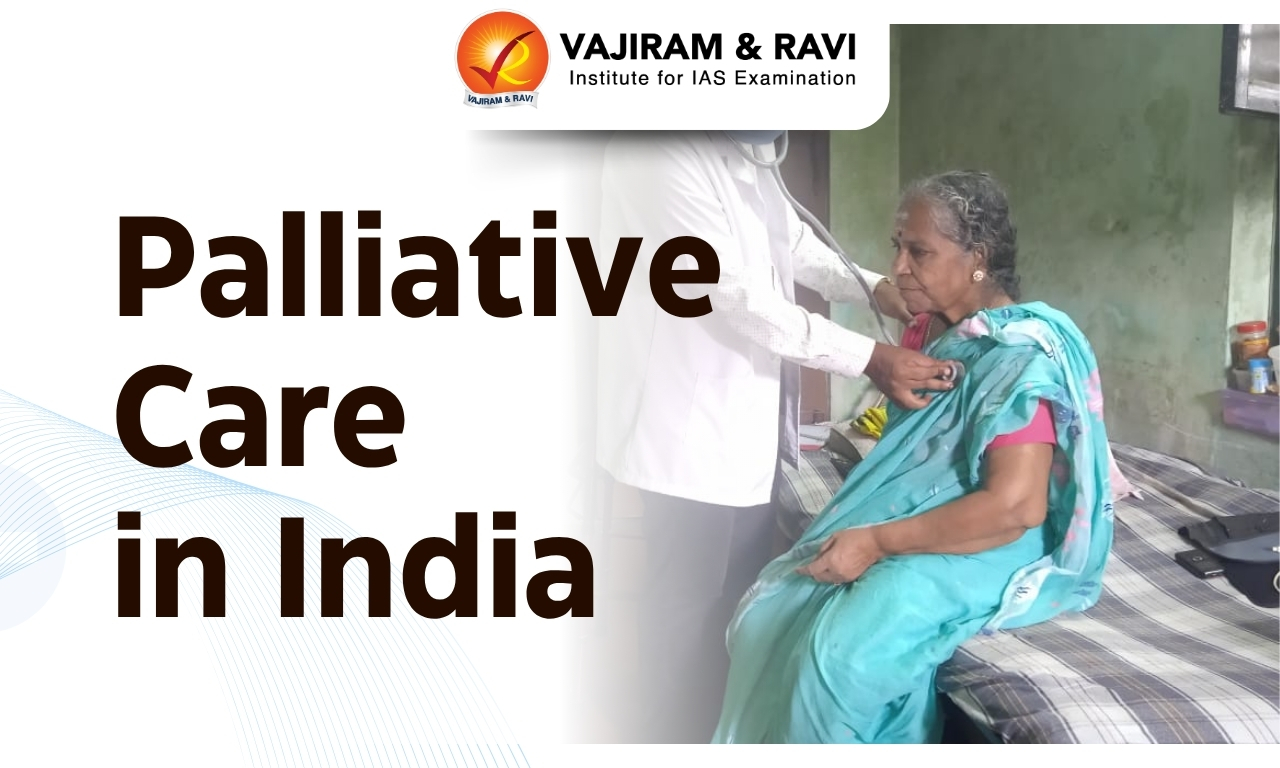
Palliative care in India focuses on improving the quality of life of people who are suffering from serious or long-term illnesses. It is not just about treating the disease, but about reducing pain, stress, and emotional suffering. This type of care supports both patients and their families by addressing physical, mental, and social needs. In recent years, awareness about palliative care has grown, but access is still limited in many parts of the country.

About Palliative Care in India

  • Palliative care is a form of medical support that aims to make life more comfortable for people living with serious or long-term illnesses, by managing pain and addressing their physical, emotional, and social needs, instead of focusing only on curing the disease.
  • It is considered part of the right to health, as it aims to reduce pain, suffering, and emotional stress for patients and their families.
  • This care looks after the overall well-being of a person by addressing physical discomfort, mental health, social support, and even spiritual concerns.
  • It is especially important for people with conditions like cancer, heart disease, kidney failure, and neurological disorders, where long-term care is needed.
  • Palliative care also helps in avoiding unnecessary or excessive medical treatments that may not improve life quality and can create financial burden on families.
  • With the rise of non-communicable diseases (NCDs) worldwide, the need for palliative care is increasing rapidly.
  • According to the World Health Organization (WHO), around 40 million people need palliative care every year globally, and most of them live in low- and middle-income countries.
  • However, only a small percentage (about 14%) of people actually receive this care, showing a large gap in access.
  • Recognizing its importance, global health policies now include palliative care as a key part of managing chronic diseases and improving healthcare systems.

Palliative Care in India Need

  • Palliative care is needed in India because many people suffer from serious and long-term illnesses that cannot always be cured.
  • These patients often go through pain, discomfort, and emotional stress, so care should focus on making their lives more comfortable and dignified.
  • In India, the need is very high, around 7-10 million people require palliative care every year, but only 1-2% actually receive it, showing a huge gap.
  • India’s healthcare system is already under pressure, and palliative care can help by reducing unnecessary hospital visits and treatments.
  • It also supports families by lowering emotional stress and financial burden, especially by avoiding expensive treatments that may not improve quality of life.
  • With the rise of chronic diseases like cancer, diabetes, and heart problems, the demand for such care is increasing rapidly.
  • Although the National Health Policy (2017) recognizes palliative care as important, its implementation is still weak due to lack of funds, awareness, and trained professionals.
  • Overall, palliative care is essential to ensure that patients in India can live with comfort, dignity, and proper support.

Palliative Care in India Current Status, Facilities and Provisions

  • Growing but Limited Services: India has around 100-150+ palliative care centers, but most are located in big cities and cancer hospitals, leaving many regions underserved.
  • Kerala as a Model State: Kerala stands out with a strong community-based network, covering a large population. It was the first state to introduce a palliative care policy (2008) and is often seen as a global example.
  • Role of NGOs: Organizations like CanSupport (Delhi) and Guwahati Pain and Palliative Care Society (Assam) provide home-based care, support services, and awareness, showing the importance of NGO participation.
  • Hospice & Institutional Care: Centers like Karunashraya (Bengaluru) and major hospitals provide hospice care, home care, and hospital-based services, ensuring continuous support to patients.
  • Integration with Cancer Care: Some institutions have started combining palliative care with cancer treatment, helping patients receive support from the early stages of illness.
  • Home-Based Care Expansion: Care at home is becoming popular as it allows patients to stay comfortable with family, reduces hospital visits, and is more affordable and culturally suitable.
  • Community Participation (NNPC Model): The Neighbourhood Network in Palliative Care (NNPC) shows how trained local volunteers can deliver effective, low-cost care at the community level.
  • Rising Need: Millions of people in India need palliative care every year due to cancer and other chronic diseases, and this demand is increasing with longer life expectancy.
  • Limited Pain Relief Access: Despite medical advances, very few patients receive proper pain relief, mainly due to strict regulations on medicines like morphine.
  • Government Efforts: Policies and programs now recognize palliative care as important, with steps like training healthcare workers and setting up basic facilities at district hospitals.

Palliative Care in India Challenges

  • Limited Access & Inequality: Palliative care services are unevenly distributed, especially in rural and poorer regions, leaving many people without proper support.
  • Lack of Awareness: Many people, including healthcare workers, do not clearly understand palliative care and often confuse it only with end-of-life care.
  • Shortage of Trained Professionals: Even though India has a reasonable doctor-population ratio, there is a lack of specialists trained in palliative care, affecting proper pain management and support.
  • Inadequate Infrastructure: There are few dedicated centers, hospices, and facilities, making it difficult to deliver quality care across the country.
  • Limited Funding: Insufficient financial support restricts the expansion and improvement of services.
  • Poor Integration in Healthcare: While included in primary healthcare, palliative care is not well integrated into higher-level (tertiary) hospitals.
  • Weak Policy Implementation: Programs like the National Programme for Palliative Care (NPPC) have been slow and unevenly implemented, limiting their impact.
  • Cultural and Social Barriers: In many communities, talking about death or serious illness is avoided, so families delay seeking care.
  • Neglect of Pediatric Care: Children’s palliative care is often overlooked, even though many children in India suffer from serious conditions needing such support.
  • Systemic Challenges: Overall inefficiencies in the healthcare system continue to affect timely and effective delivery of palliative care services.

Steps Taken for Palliative Care in India

  • Strengthening Healthcare System: India has a three-tier health system and schemes like Ayushman Bharat to improve access to healthcare, including support for serious illnesses.
  • National Programme for Palliative Care (NPPC): Launched in 2012 to expand services, but lack of dedicated funding has slowed its full implementation.
  • Support under NHM: Palliative care is included under the National Health Mission (NHM), allowing states to plan and receive support through flexible funding.
  • Care for the Elderly: The National Programme for Health Care of the Elderly (2010) focuses on providing long-term and supportive care to the ageing population.
  • Focus on NCDs: The National Programme for Prevention & Control of Non-Communicable Diseases (NP-NCD) works to manage diseases like cancer and has been updated to strengthen palliative care services.
  • Role of NGOs: Organizations like Pallium India, Karunashraya, and CanSupport are actively providing care and spreading awareness, though their reach is limited compared to government capacity.
  • District-Level Services: Efforts are being made to provide basic palliative care at district hospitals and integrate it into regular healthcare services.
  • Training & Capacity Building: Programs focus on training doctors, nurses, and health workers and improving infrastructure for better care delivery.
  • Community Participation: There is increasing emphasis on involving families and communities in caregiving and support.
  • Awareness Initiatives: Campaigns and activities are being conducted to spread awareness and encourage people to seek timely palliative care.

Palliative Care in India FAQs

Q1: What is Palliative Care?

Ans: Palliative Care is a type of healthcare that focuses on improving the quality of life of people with serious or long-term illnesses by reducing pain, stress, and emotional suffering, rather than only curing the disease.

Q2: Why is Palliative Care important in India?

Ans: It is important because millions of people suffer from chronic and life-threatening diseases. Palliative Care helps them live with comfort and dignity while also supporting their families emotionally and financially.

Q3: How much Palliative Care is available in India?

Ans: Although around 7-10 million people need Palliative Care every year in India, only about 1–2% actually receive it, showing a large gap in access.

Q4: What are the major challenges in Palliative Care in India?

Ans: Key challenges include limited access in rural areas, lack of awareness, shortage of trained professionals, poor infrastructure, low funding, and weak implementation of government policies.

Q5: What is the current status of Palliative Care services in India?

Ans: Services are growing but still limited. Most centers are in urban areas, while states like Kerala have better community-based models. NGOs and some hospitals are helping expand care.

World Day for Cultural Diversity, History, Significance, Celebrations

World Day for Cultural Diversity

World Day for Cultural Diversity is a day that reminds us to respect and celebrate the different cultures, traditions, languages, and ways of life found around the world. It highlights how diversity makes our societies richer and more interesting. This day encourages people to learn from each other, promote understanding, and live together peacefully despite differences.

About the Day

  • World Day for Cultural Diversity is observed every year on 21 May, and it is led by UNESCO to promote awareness about the importance of cultural diversity across the world, encouraging people to respect and appreciate different traditions, languages, and ways of life instead of seeing differences as barriers.
  • The main idea behind celebrating this day is not just to recognize cultural richness, but also to highlight how understanding and dialogue between cultures can help build peaceful societies and support overall development at the global level.
  • It also serves as a reminder that in today’s interconnected world, cooperation between cultures is essential for solving global challenges and ensuring inclusive growth.

Origin and History

  • The idea of promoting cultural diversity gained global recognition when UNESCO adopted the Universal Declaration on Cultural Diversity in 2001, highlighting its importance for humanity.
  • In 2002, the UN General Assembly officially declared 21 May as the World Day for Cultural Diversity for Dialogue and Development.
  • Later, in 2015, another resolution emphasized the role of culture in sustainable development, further strengthening its importance at the global level.

Goals of the Day

  • The day aims to support strong systems for managing and promoting culture effectively at national and international levels.
  • It encourages the balanced exchange of cultural goods and services and promotes the mobility of artists and cultural professionals across countries.
  • It also focuses on integrating culture into development policies so that it becomes a key part of decision-making processes.
  • Another important goal is to promote human rights and fundamental freedoms, ensuring that everyone has the right to express and practice their culture.

Significance of Protecting Cultural Diversity

  • Protecting cultural diversity has become more important than ever because globalization, digital media, and modernization are slowly reducing the uniqueness of many cultures, making it necessary to preserve traditions, languages, and cultural expressions for future generations.
  • Studies show that around 89% of current conflicts occur in countries where intercultural dialogue is weak, which clearly indicates that misunderstanding between cultures often leads to tension, conflict, and instability.
  • Strengthening intercultural dialogue helps people understand each other better, reduces prejudice and discrimination, and creates a foundation for long-lasting peace and cooperation among nations.
  • Cultural diversity also promotes creativity and innovation, as different perspectives and ideas come together, leading to new solutions and progress in society.

Role of Culture in Development

  • The cultural and creative sector plays a very important role in global development, as it provides employment to more than 48 million people worldwide, making it one of the largest sources of jobs across the globe.
  • Nearly half of these jobs are held by women, which shows that this sector also contributes significantly to gender equality and women’s empowerment.
  • It accounts for about 6.2% of total global employment and 3.1% of global GDP, highlighting its strong economic importance.
  • The sector is especially important for young people under the age of 30, as it offers a wide range of opportunities in areas like art, music, design, media, and digital content creation.
  • However, despite its major contribution, the cultural sector is still often ignored in government policies and international cooperation, which limits its full potential for growth and development.

Significance of Cultural Diversity

  • Cultural diversity is extremely important because around three-fourths of global conflicts have a cultural dimension, meaning they are influenced by differences in beliefs, traditions, or identities.
  • Promoting understanding and dialogue between cultures can help reduce these conflicts and build more stable and peaceful societies.
  • Cultural diversity is not only important for economic growth but also for improving people’s quality of life, including their emotional, intellectual, moral, and spiritual well-being.
  • It acts as a powerful tool for poverty reduction and sustainable development, as it creates opportunities and promotes inclusion.
  • The use of modern technologies like media and Information and Communication Technologies (ICTs) helps spread awareness about different cultures and encourages mutual respect and understanding.

World Day for Cultural Diversity Celebration

  • On this day, people around the world, including communities, schools, organizations, and governments organize activities that promote respect, inclusion, and understanding among different cultures, helping people connect beyond differences.
  • Cultural festivals are commonly held where different traditions are showcased through music, dance, art, clothing, and food, allowing people to experience and appreciate cultural diversity in an enjoyable way.
  • Educational workshops and discussions are organized in schools, colleges, and workplaces to spread awareness about the importance of cultural diversity, especially in building inclusive environments and reducing discrimination.
  • Community dialogues and group discussions are encouraged so that people can share ideas, talk about cultural differences, and challenge stereotypes, which helps in building trust and stronger social relationships.
  • Schools and institutions often conduct activities like debates, essay writing, and cultural programs, helping students learn about different cultures and develop respect from an early age.
  • Governments and organizations also run awareness campaigns through media and social platforms, spreading messages of unity, equality, and peaceful coexistence.

Culture and Sustainable Development

  • In September 2015, the United Nations adopted the 2030 Agenda for Sustainable Development, which focuses on achieving global progress through 17 Sustainable Development Goals (SDGs).
  • Later, in December 2015, the UN also passed a resolution highlighting the important role of culture in sustainable development, making the message of cultural diversity even more relevant.
  • Culture plays a key role in achieving the SDGs, as it brings creativity, innovation, and different perspectives that help solve global challenges in more inclusive ways.
  • By using the richness of diverse cultures and encouraging continuous dialogue among people, societies can ensure that development benefits everyone equally, without leaving any group behind.
  • Cultural diversity also helps promote social inclusion, mutual respect, and peaceful coexistence, which are essential for sustainable growth.
  • To measure the role of culture in development, UNESCO introduced the Culture | 2030 Indicators.
  • These indicators act as a framework to track and monitor how culture contributes to achieving the SDGs, helping governments and organizations make better policies and decisions.

World Day for Cultural Diversity FAQs

Q1: What is World Day for Cultural Diversity?

Ans: It is an international day observed on 21 May to promote respect for different cultures, traditions, and languages, and to encourage peaceful coexistence among people.

Q2: What is World Day for Cultural Diversity and why is it celebrated?

Ans: World Day for Cultural Diversity is celebrated to promote respect for different cultures, traditions, and languages. It encourages people to understand each other and live peacefully despite cultural differences.

Q3: When is World Day for Cultural Diversity observed every year?

Ans: It is observed every year on 21 May across the world to highlight the importance of cultural diversity and dialogue.

Q4: Who started World Day for Cultural Diversity?

Ans: The day was declared by the United Nations in 2002, following an initiative by UNESCO.

Q5: Why is cultural diversity important in today’s world?

Ans: Cultural diversity is important because it promotes peace, creativity, innovation, and mutual understanding, and helps reduce conflicts caused by cultural differences.

Razakars, History, Bangladesh War, Human Rights Violations

Razakars

The Razakars were a group of armed volunteers that existed during the final years of princely rule in parts of India, especially around the time of independence. They were formed to support and protect the ruling authority and its interests during a period of political uncertainty and change.

About Razakars

  • The Razakars were a volunteer paramilitary group formed in 1971 during the time of the Bangladesh Liberation War.
  • The word “Razakar” means volunteer or helper, but later it came to be associated with collaborators in Bangladesh.
  • They were created by the Pakistani military to get local support in East Pakistan (now Bangladesh).
  • Most Razakars were Urdu-speaking migrants (Biharis), along with some Pro-Pakistani Bengalis who opposed the separation of East Pakistan.
  • Many members were linked to religious and political groups like Jamaat-e-Islami and its student wing.
  • Over time, they were trained and organised into groups like Al-Badr and Al-Shams to assist the army more effectively.
  • Their knowledge of local language, people, and geography made them useful for military operations.

Razakars in Bangladesh Liberation War

  • Razakars worked closely with the Pakistani army to control the rebellion in East Pakistan.
  • They helped in identifying, tracking, and targeting local people, especially those supporting independence.
  • They were involved in raids, arrests, and intelligence gathering, acting as guides for the army.
  • Many reports and accounts accuse them of being involved in serious human rights violations, including violence against civilians.
  • They are often linked to the killing of intellectuals, journalists, and professionals towards the end of the war.
  • Their actions contributed to the fear and suffering of the local population during the conflict.
  • After Bangladesh became independent in 1971, many Razakars were seen as collaborators and faced backlash, while some fled or later became part of political debates in the country.

Also Read:- Indo-Pak War 1971

Razakar Post-War Fate in Bangladesh

  • After Bangladesh became independent in December 1971, the new government took strong steps against those who had supported the Pakistani forces.
  • Organizations that were seen as collaborators, such as Jamaat-e-Islami, were banned, and many of their leaders fled to Pakistan to avoid action.
  • In 1972, the government introduced the Bangladesh Collaborators (Special Tribunals) Order to identify and try people accused of helping the Pakistani military.
  • In 1973, under the leadership of Sheikh Mujibur Rahman, the International Crimes (Tribunal) Act was passed to investigate and punish war crimes committed during the conflict.
  • These steps were taken to ensure justice for victims and to hold those responsible for violence and atrocities accountable.

Razakars FAQs

Q1: Who were the Razakars in the Bangladesh Liberation War?

Ans: Razakars were a paramilitary volunteer force created in 1971 by the Pakistani military in East Pakistan (now Bangladesh) to support their operations during the Liberation War.

Q2: What does the term “Razakar” mean?

Ans: The word “Razakar” means “volunteer” or “helper,” but in Bangladesh it later became associated with collaborators who supported Pakistani forces during the war.

Q3: What role did Razakars play in the 1971 war?

Ans: Razakars assisted the Pakistani army in intelligence gathering, identifying pro-independence supporters, conducting raids, and controlling local populations.

Q4: Who were the members of the Razakar force?

Ans: The group mainly included Urdu-speaking migrants (Biharis) and some pro-Pakistani Bengalis, often linked to organizations like Jamaat-e-Islami.

Q5: Were Razakars involved in human rights violations?

Ans: Yes, many reports accuse Razakars of participating in violence against civilians, including killings, arrests, and targeting intellectuals during the war.

Ammonium Sulphate

Ammonium Sulphate

Ammonium Sulphate Latest News

Recently, the Indian Council for Agricultural Research (ICAR) suggested ammonium sulphate be used for paddy as an affordable option.

About Ammonium Sulphate

It is an inorganic sulfate salt obtained by reaction of sulfuric acid with two equivalents of ammonia.

Properties of Ammonium Sulphate

  • It is a white odorless solid and has a high-melting point.
  • It is very soluble in water.
  • It is widely used as a fertilizer for alkaline soils.
  • Ammonium Sulphate contains 21% nitrogen and 24% sulphur, making it an excellent source of essential nutrients for plants.
  • Ammonium sulfate is available as a byproduct from the steel industry (recovered from coke oven gas) and from some metallurgical and chemical processes.

Applications of Ammonium Sulphate

  • Agriculture and Fertilizers: It is used in the agricultural region as a nitrogen fertilizer.
  • Water Treatment: The water treatment industry is some other significant region where ammonium sulphate is appreciably used.
  • Food Industry Additive: It is used as a food additive and dough conditione.
  • Pharmaceutical Industry: Ammonium sulphate also unearths programs in the pharmaceutical enterprise
  • Textile and Leather Processing: The textile enterprise is any other vicinity wherein ammonium sulphate is hired, mainly in dyeing and printing tactics.

Source: NIE

Ammonium Sulphate FAQs

Q1: Which form of Ammonium Phosphate is most widely used in India as fertilizer?

Ans: Diammonium Phosphate

Q2: Which country is the largest producer of DAP globally?

Ans: China

RAINMUMBAI

RAINMUMBAI

RAINMUMBAI Latest News

The National Commodities and Derivatives Exchange (NCDEX) recently announced the launch of India’s first SEBI-approved exchange-traded weather derivatives contract, named “RAINMUMBAI”.

About RAINMUMBAI

  • It is India’s first exchange-traded weather derivatives contract.
  • It was launched by the National Commodity ​and Derivatives Exchange (NCDEX).  
  • The instrument will be used to hedge losses from unpredictable weather and monsoon variability.  
    • Unlike conventional insurance products, weather derivatives are settled directly against observed weather data rather than physical loss assessments, enabling faster payouts and reducing operational complexity. 
    • These products are widely used globally by sectors such as agriculture, power, construction, logistics, tourism, and energy, where revenues can be heavily impacted by weather variability.
  • RAINMUMBAI, which has received approval from the Securities and Exchange Board of India (SEBI), was developed in collaboration with the Indian Institute of Technology (IIT) Bombay, based on rainfall data in Mumbai.
  • India Meteorological Department (IMD) surface rainfall and automatic weather stations (AWS) observations at Santacruz and Colaba will be the source of rainfall data. 
  • The contract will be cash-settled and will track the deviation of actual rainfall from the city's long-period average (LPA) during the monsoon season. 
  • Only contracts for the months of June, July, August, and September will be available to trade, tracking Mumbai's monsoon patterns.
  • RAINMUMBAI will be traded in lots with a base cost of ₹50 per millimetre of rainfall, allowing participants to engage in contracts that suit their specific risk management needs. 
  • The trading hours for this contract will be from 10:00 a.m. to 11:30 p.m. on weekdays. 

What are Derivatives?

  • Derivatives are financial contracts that derive value from an underlying asset. 
  • Common underlying assets: Stocks, bonds, commodities, currencies, interest rates, and market indexes.
  • Derivatives allow traders to bid on the direction of the underlying asset’s price change without owning them. 
  • They allow investors to speculate on price movements, hedge against risks, or enhance portfolio returns.

Key Facts about National Commodity and Derivatives Exchange (NCDEX)

  • It is a commodities exchange dealing primarily in agricultural commodities in India. 
  • The NCDEX was established in 2003, and its headquarters are in Mumbai
  • The primary purpose of the exchange is to facilitate the electronic trading of agricultural derivative contracts like futures.  
  • The exchange mainly focuses on agricultural commodities like wheat, sugar, spices, and cotton. 
  •  At present, the NCDEX is managed by an independent board, with the SEBI maintaining supervision and oversight of the exchange.

Source: ET

RAINMUMBAI FAQ's

Q1: What is RAINMUMBAI?

Ans: It is India’s first exchange-traded weather derivatives contract.

Q2: Which organization launched RAINMUMBAI?

Ans: It was launched by the National Commodity and Derivatives Exchange.

Q3: What is the main purpose of RAINMUMBAI?

Ans: It is used to hedge losses arising from unpredictable weather and monsoon variability.

Q4: Which institution collaborated in developing RAINMUMBAI?

Ans: Indian Institute of Technology Bombay collaborated in developing it.

Q5: What does the RAINMUMBAI contract track?

Ans: It tracks the deviation of actual rainfall from Mumbai’s long-period average (LPA) during the monsoon season.

Velimalai Pumped Storage Hydro Electric Project

Velimalai Pumped Storage Hydro Electric Project

Velimalai Pumped Storage Hydro Electric Project Latest News

The 1,100 MW Velimalai Pumped Storage Hydroelectric Project in the Kanniyakumari district has been granted Terms of Reference (ToR) clearance by the Union Ministry of Environment, Forest, and Climate Change recently.

About Velimalai Pumped Storage Hydro Electric Project

  • It is an 1100 MW pumped hydropower storage plant to be developed at Vellimalai in the Kanyakumari district of Tamil Nadu.
  • This is the first project in Tamil Nadu to be developed under the public-private partnership model on a build-own-operate-transfer basis in accordance with Section 63 of the Electricity Act. 
  • The project, planned as a closed-loop off-river system, is aimed at strengthening peak power management in the State and enabling round-the-clock integration of renewable energy. 
  • The project will comprise an underground powerhouse comprising four units of 275 MW each.  
  • Two new off-river reservoirs will be built. 
    • The upper reservoir will have a gross storage capacity of 4.39 million cubic metres. 
    • The lower reservoir, upstream of the existing Mambazhathuraiyar dam, will have a gross storage capacity of 4.91 million cubic metres. 
  • The project is designed to pump about 3.94 million cubic metres of water to the upper reservoir over 6.94 hours during off-peak periods. 
  • Electricity generation is planned for six hours a day using stored water, with peak annual energy generation estimated at 2,080.55 million KWh. 
  • As a closed-loop off-river project, both reservoirs will be artificially created and will not be located on perennial rivers or streams.
    • Water will circulate between the two reservoirs in a controlled cycle with minimal reliance on natural inflows. 

Source: NIE

Velimalai Pumped Storage Hydro Electric Project FAQs

Q1: Where is the Velimalai Pumped Storage Hydro Electric Project located?

Ans: It is located at Vellimalai in the Kanyakumari district of Tamil Nadu.

Q2: What is the installed capacity of the Velimalai Pumped Storage Hydro Electric Project?

Ans: The project has an installed capacity of 1100 MW.

Q3: What type of system is planned for the Velimalai Pumped Storage Hydro Electric Project?

Ans: It is planned as a closed-loop off-river system.

Q4: Will the reservoirs of the Velimalai Project be located on perennial rivers?

Ans: No, the reservoirs will not be located on perennial rivers or streams

National Centre for Sustainable Coastal Management (NCSCM)

National Centre for Sustainable Coastal Management (NCSCM)

National Centre for Sustainable Coastal Management Latest News

The National Centre for Sustainable Coastal Management (NCSCM) recently completed the documentation and ground-truthing of all but 11 of Maharashtra’s 23,415 wetlands.

About National Centre for Sustainable Coastal Management

  • It was established by the Ministry of Environment, Forest, and Climate Change (MoEF&CC) in 2011 as an autonomous institution to support the protection, conservation, rehabilitation, management, and policy advice of the coast. 
  • Headquarters: Chennai, Tamil Nadu
  • Aims and Objectives:
    • Strive for being a world-class knowledge institution related to coastal zones, environment, resources, and processes.
    • To promote integrated and sustainable management of the coastal and marine areas in India for the benefit and well-being of the traditional coastal and island communities.
    • Advise the Union and State Governments and other associated stakeholder(s) on policy and scientific matters related to Integrated Coastal Zone Management (ICZM).
  • It undertakes studies and research in the area of Coastal Zone Management including coastal resources and environment. 
  • The Six Research Divisions of the NCSCM are: 
    • Geospatial Sciences, Remote Sensing and Geographic Information Systems (GIS), 
    • Integrated Social Sciences & Economics, 
    • Coastal environmental impact assessment, 
    • Conservation of Coastal & Marine Resources, 
    • Knowledge, Governance and Policy, 
    • Futuristic Research and Integrated Island Management Unit. 
  • NCSCM is partnering with leading national and international research institutions and agencies through advanced research, networking, and scientific committees. and peer-reviewed publications in international journals. 

Source: DH

National Centre for Sustainable Coastal Management FAQs

Q1: Which ministry established the National Centre for Sustainable Coastal Management?

Ans: It was established by the Ministry of Environment, Forest and Climate Change.

Q2: Where is the headquarters of National Centre for Sustainable Coastal Management located?

Ans: Its headquarters is located in Chennai, Tamil Nadu.

Q3: What is the primary purpose of establishing National Centre for Sustainable Coastal Management?

Ans: It was established to support the protection, conservation, rehabilitation, management, and policy advice of the coast.

Agricola Medal

Agricola Medal

Agricola Medal Latest News

The Prime Minister was recently conferred with the prestigious FAO Agricola Medal by the Food and Agriculture Organisation of the United Nations.

About Agricola Medal

  • It is the highest honour conferred by the Food and Agriculture Organization (FAO) of the United Nations. 
  • It is awarded to distinguished individuals who have played an exceptional role in advancing efforts toward global food security, improved nutrition and agricultural development. 
  • It is considered one of the highest honours granted by the Organization in recognition of outstanding leadership and tangible contributions in these fields. 

Key Facts about Food and Agriculture Organization 

  • It is a specialized agency of the United Nations (UN) that leads international efforts to defeat hunger.
  • It is the oldest permanent specialized agency of the UN. FAO was founded on October 16, 1945, when its constitution was signed in Canada’s Quebec City by 34 countries.  
  • Headquarters: Rome, Italy.
  • Mandate: To improve nutrition, increase agricultural productivity, raise the standard of living in rural populations, and contribute to global economic growth.
  • FAO’s goal is to achieve food and security for all and make sure that people have regular access to enough high-quality food and lead active, healthy lives. 
  • Functions:
    • The FAO coordinates the efforts of governments and technical agencies in programs for developing agriculture, forestry, fisheries, and land and water resources.
    • It is both a forum for negotiating agreements between developing and developed countries and a source of technical knowledge and information to aid development.
  • The FAO also collaborated with the United Nations to establish the World Food Programme (WFP) to distribute surplus food to those in need.  
  • Members: It currently has 195 members194 countries and the European Union. (India is a founding member of FAO).
  • It is governed by the biennial FAO conference, in which each member country, as well as the EU, is represented. 
  • The conference elects a 49-member Council, which serves as its executive organ. 
  • Funding: FAO receives its funding from its member countries.
  • Reports published by the FAO: The State of the World’s Forests (SOFO), The State of World Fisheries and Aquaculture (SOFIA), The State of Agricultural Commodity Markets (SOCO), The State of Food Security and Nutrition in the World (SOFI).
  • World Food Day is observed annually on October 16 to commemorate the founding of FAO in 1945.

Source: NDTV

Agricola Medal FAQs

Q1: What is the Agricola Medal?

Ans: It is the highest honour conferred by the Food and Agriculture Organization of the United Nations.

Q2: To whom is the Agricola Medal awarded?

Ans: It is awarded to distinguished individuals for exceptional contributions to global food security, nutrition, and agricultural development.

Q3: What type of organization is the Food and Agriculture Organization (FAO)?

Ans: It is a specialized agency of the United Nations.

Q4: What is the primary goal of the Food and Agriculture Organization (FAO)?

Ans: Its goal is to achieve food security for all and ensure access to sufficient high-quality food.

Q5: Where is the headquarters of the Food and Agriculture Organization (FAO) located?

Ans: Its headquarters is located in Rome, Italy.

Warm Nights: India’s Hidden Summer Health Threat Explained

Warm Nights

Warm Nights Latest News

  • Warmer nights may pose a greater health risk than daytime heatwaves during Indian summers, especially for people living in low- and middle-income housing. 
  • While daytime heat receives most attention, nighttime temperatures in India are rising even faster, increasing the danger of prolonged heat exposure. 
  • Normally, cooler nights allow the human body to recover from daytime heat, but persistently high night temperatures prevent this recovery, leading to continuous physiological stress. 
  • The risk is particularly severe in poorly ventilated homes without air-conditioning, where people remain trapped in hot indoor conditions for hours. 
  • A recent Climate Trends study in Chennai found many households experiencing indoor nighttime temperatures above 32°C, sometimes even crossing 35°C, comparable to peak daytime heat. 
  • Though research in India is limited, global studies suggest that warmer nights could significantly increase heat-related deaths, making indoor heat exposure an emerging public health concern. 

Rising Night-Time Temperatures: An Emerging Heat Risk

  • India’s average temperature increased by about 0.7°C between 1901 and 2018, according to the 2020 climate assessment for the Indian region. 
  • While both daytime and nighttime temperatures have risen, their rates differ.
  • By the end of the century:
    • Warmest day temperatures may rise by 4.7°C 
    • Coldest night temperatures may rise by 5.5°C 
  • This indicates that nighttime temperatures are likely to rise faster than daytime temperatures, a trend already visible in recent IMD data.

Urban Heat Island Effect

  • The rise in nighttime temperatures is particularly severe in cities due to the urban heat island effect.
  • Causes - Urban materials such as: Concrete; Roads; Bricks; Metal structures, absorb heat during the day and release it at night.
  • This effect is intensified by: Lack of vegetation and green spaces; Loss of water bodies; Dense clusters of high-rise buildings; Growing use of air-conditioners that release hot air outdoors. 
  • As a result, nighttime temperatures in dense urban areas can be 4–6°C higher than in city outskirts.

Impact on Urban Residents

  • The problem is especially acute in urban India, where many people live in: Small houses; Poorly designed structures; Homes with inadequate ventilation. 
  • This leaves residents with little nighttime relief from heat.
  • Persistently warm nights can lead to: Sleep discomfort; Restlessness; Physical exhaustion; Reduced energy levels; Lower productivity the following day. 
  • Experts warn that the full scale of health impacts is still being studied, but the risks are likely to be significant.

Heat Beyond Heatwaves: The Hidden Danger of Warm Nights

  • Evidence suggests that high night-time temperatures may significantly increase mortality
  • Public health experts highlighted that when daytime temperatures exceeded 45°C but night temperatures stayed below 28°C, daily deaths remained close to the normal average of 100. 
  • However, when nighttime temperatures rose to 28–30°C, daily deaths increased to around 165, and when they crossed 30°C, mortality surged to nearly 265 deaths per day. 
  • This indicates a strong correlation between warmer nights and increased health risks.

Limitations of Current Heat Action Plans

  • India has heat action plans in at least 23 states and over 200 cities, but these largely focus on managing heatwave events, which occur only when specific temperature thresholds are met and may happen only a few times a month
  • However, extreme summer heat and rising night-time temperatures are a persistent reality, suggesting that existing responses may be too narrowly focused on episodic heatwaves rather than continuous heat exposure.

Need for Long-Term Structural Measures

  • Experts stress the need to strengthen the long-term components of heat action plans, including:
    • Improved urban infrastructure 
    • Better low-cost, heat-resilient housing 
    • Expansion of green spaces 
    • Better urban planning to reduce heat stress

Immediate Relief Measures

  • For vulnerable households, especially those in cramped living conditions, simple low-cost solutions can offer quick relief. 
  • The Climate Trends Chennai study suggests measures such as:
    • Reflective roof coatings 
    • Whitewashed roofs and walls 
    • Improved natural ventilation 
  • These passive cooling interventions can help reduce indoor heat exposure and lessen health risks from increasingly warmer nights.

Source: IE

Warm Nights FAQs

Q1: Why are warm nights considered a major health threat?

Ans: Warm nights prevent the human body from recovering from daytime heat, causing prolonged thermal stress, sleep disruption, exhaustion, and potentially increasing heat-related mortality.

Q2: Why are urban areas more vulnerable to warmer nights?

Ans: Urban areas experience the heat island effect, where concrete structures trap daytime heat and release it at night, keeping temperatures significantly higher than surrounding areas.

Q3: What evidence links warm nights to mortality?

Ans: Ahmedabad data showed that when nighttime temperatures rose above 30°C, daily all-cause mortality increased sharply, indicating a strong connection between warmer nights and health risks.

Q4: Why are current heat action plans inadequate?

Ans: Most heat action plans focus mainly on heatwaves, whereas rising nighttime temperatures and continuous heat exposure pose a persistent and often overlooked public health challenge.

Q5: What measures can reduce indoor heat stress?

Ans: Low-cost solutions like reflective roof coatings, whitewashed walls, better ventilation, greener urban spaces, and heat-resilient housing can significantly reduce indoor heat exposure.

How States Are Tackling Peak Summer Power Demand in India

Peak Summer Power Demand

Peak Summer Power Demand Latest News

  • India’s summer electricity demand has surged earlier than expected, with peak power demand reaching a record 256.1 GW on April 25, followed by even higher peaks on May 19 and 20. 
  • Nearly one-third of this peak demand was met through renewable energy sources, helping the national grid remain stable during daylight hours. 
  • However, during non-solar hours, when renewable generation declined, the grid faced a 2% power deficit (4,243 MW), highlighting the growing challenge of meeting rising evening and night-time electricity demand.

Understanding Peak Power Demand

  • Peak demand refers to the highest level of electricity consumption on a power grid during a specific period, usually measured over a 15-minute interval. 
  • Although it represents a single point in time, peak demand generally occurs during a 2–4 hour period of unusually high electricity use.

Why Peak Demand Matters

  • The power grid must be able to instantly meet peak electricity demand, even if it lasts only for a short duration. 
  • This means the entire electricity infrastructure—generation, transmission, and distribution systems—must be designed with peak demand in mind.
  • Managing peak demand is difficult because: 
    • Building enough infrastructure to meet the highest demand at all times can be: Expensive; Inefficient. Much of the capacity would remain underutilised during normal or off-peak hours.
    • If adequate capacity is unavailable during peak periods, it can lead to: Load shedding; Power shortages. 
  • Thus, balancing reliability and economic efficiency remains a key challenge for the power sector.

How States Manage Power Demand

  • States manage electricity demand through contractual supply and power exchange purchases. 
  • The primary mechanism is long-term Power Purchase Agreements (PPAs) signed by State distribution companies (DISCOMs) with power generators, ensuring a stable electricity supply over several years. 
  • When contractual supply falls short due to sudden spikes in demand, power plant outages, or transmission failures, DISCOMs turn to the second mechanism—purchasing electricity from power exchanges
  • These short-term market purchases help address real-time supply-demand mismatches. 
    • Currently, about 10–15% of electricity in India is traded through power exchanges.

Demand-Side Management During Peak Hours

  • Some states are using more advanced tools. Delhi, for example, has increasingly adopted time-of-day tariffs, where electricity prices vary according to the time of use, encouraging consumers to shift usage away from peak periods. 
  • The use of smart meters is also helping flatten evening demand peaks, particularly those caused by heavy cooling loads during summer.

Challenges Faced by States Amid Rising Power Demand

  • India’s electricity demand has risen sharply. Over the last five years, the country’s peak demand has increased by 37%, rising from 183 GW in December 2020 to over 250 GW in April 2026, making it increasingly difficult for states to meet demand reliably.
  • State DISCOMs largely depend on long-term power purchase agreements (PPAs) with fixed capacity and pricing. 
  • However, when demand exceeds contracted supply, they must purchase electricity from short-term power exchanges, where prices rise sharply during peak period, increasing the financial burden on states.

Weak Distribution Infrastructure

  • While India has significantly expanded generation and transmission capacity, distribution infrastructure has not kept pace.
  • Over the last decade:
    • Generation capacity increased by 76% (303 GW to 532 GW) 
    • Transmission network expanded by 47% 
    • Transformation capacity increased by 115% 
  • However, distribution systems remain under severe stress, affecting last-mile electricity delivery.

Frequent Equipment Failures

  • The distribution network faces major operational challenges:
    • Nearly 13 lakh distribution transformers fail annually 
    • Several northern states experience failure rates as high as 20% 
  • Key reasons include:
    • Overloaded transformers and feeders 
    • Ageing equipment 
    • Poor maintenance 
    • Infrastructure operating near capacity limits 
  • This often leads to local outages during peak demand periods.

Financial Constraints of States

  • The problem is particularly severe for financially weak states, which struggle to:
    • Buy expensive short-term electricity 
    • Upgrade ageing distribution infrastructure 
  • States such as Uttar Pradesh and Bihar continue to face high distribution losses, overloaded transformers, and outdated infrastructure, making them especially vulnerable during demand surges.

Role of Renewable Energy in Managing Power Demand

  • Renewable energy (RE) has become crucial in meeting rising summer electricity demand, especially because solar and wind power have low operating costs, reducing DISCOMs’ power purchase burden.
  • States like Gujarat and Karnataka effectively meet daytime peak demand through solar power, while Tamil Nadu benefits from strong wind generation during monsoon months.
  • RE’s variable nature limits round-the-clock reliability:
    • Solar generation drops after sunset, just when evening demand rises 
    • Wind power is seasonal and weather-dependent 
  • States with low RE capacity, such as Punjab, rely more on hydro imports and costly market purchases.

The Way Forward

  • To manage rising peak demand efficiently, states need:
    • Energy storage systems such as Battery Energy Storage Systems (BESS) and Pumped Hydro Storage (PHS) 
    • Smarter transmission and distribution networks 
    • Energy efficiency measures 
    • Demand-side tools like time-of-day tariffs and agricultural load scheduling
  • India’s power challenge is shifting from merely generating more electricity to managing supply efficiently across time and regions, requiring major investments in storage and grid flexibility.

Source: TH | ToI

Peak Summer Power Demand FAQs

Q1: What is peak summer power demand?

Ans: Peak summer power demand refers to the highest electricity consumption during hot months, driven mainly by cooling loads such as air conditioners, coolers, and agricultural demand.

Q2: How do states manage sudden electricity demand spikes?

Ans: States rely on long-term power purchase agreements, short-term market purchases through power exchanges, and demand-side measures like advisories, smart meters, and time-of-day tariffs.

Q3: What challenges do states face in meeting rising power demand?

Ans: States face expensive short-term electricity purchases, weak distribution infrastructure, transformer failures, overloaded feeders, and financial stress, especially in high-loss states like Bihar and Uttar Pradesh.

Q4: How does renewable energy help manage electricity demand?

Ans: Renewable energy helps meet daytime demand at lower costs, especially through solar and wind power, but its intermittent nature creates challenges during evening peak hours.

Q5: Why are energy storage systems important for India’s power sector?

Ans: Battery storage and pumped hydro systems help store renewable power and supply electricity during peak hours, improving grid reliability and reducing dependence on costly short-term purchases.

South Korea

Key Facts about South Korea

South Korea Latest News

Recently, the Indian  Defence minister and Minister of National Defence, South Korea held comprehensive bilateral discussions in Seoul. 

About South Korea

  • Location: It occupies the southern half of the Korean Peninsula.
  • Bordering Country: North Korea
  • Maritime Borders: To the east by the East Sea (Sea of Japan), to the south by the East China Sea, and to the west by the Yellow Sea.
  • To the southeast it is separated from the Japanese island of Tsushima by the Korea Strait.
  • Capital City: Seoul.

Geographical Features of South Korea

  • Climate: South Korea has a continental climate, with hot, rainy summers and cold winters. 
  • Major Rivers: Han River, Nakdong River.
  • Major Islands: Jeju Island in the Korea Strait is the largest island.
  • Mountains: The country is dominated by the Taebaek Mountain range along the eastern coast.
  • Highest Peak: Mount Halla on Jeju Island (1,950 meters), an extinct volcano.
  • Natural Resources: The most important reserves are anthracite coal, iron ore, graphite, gold, silver, tungsten, lead, and zinc.

Source: PIB

South Korea FAQs

Q1: Which water body separates South Korea from Japan?

Ans: Sea of Japan

Q2: Capital and largest city of South Korea is?

Ans: Seoul

Suryastra Rocket System

Suryastra Rocket System

Suryastra Rocket System Latest News

India recently achieved a major milestone in indigenous defence technology after private defence firm Nibe Limited successfully tested the long-range Suryastra rocket system at Chandipur.

About Suryastra Rocket System

  • It is India’s first indigenous universal multi-calibre rocket launcher system.
  • It is developed by Pune-based NIBE Limited in collaboration with Israel’s Elbit Systems.
  • It is designed to deliver precision strikes against enemy positions, command centres, radar installations and logistics hubs deep inside hostile territory. 

Suryastra Rocket System Features

  • It is an advanced long-range rocket launcher system.
  • It is mounted on a highly mobile 6x6 Tatra truck. 
  • Multi-target Capability: It is designed to engage multiple targets simultaneously at varying ranges.
  • Precision: It achieves a high degree of accuracy with a circular error probable (CEP) of less than five metres during trials.
  • Instead of being limited to a single type of ammunition, it uses interchangeable modular pods that can fire a variety of munitions. 
  • This includes 122 mm rockets for closer engagements, 306 mm EXTRA missiles capable of hitting targets at 150 kilometres, and 370 mm Predator Hawk missiles that can reach up to 300 kilometres. 
  • The system can also launch SkyStriker loitering munitions—often referred to as suicide drones, capable of traveling up to 100 kilometres . 
  • Technology used: The system is based on Elbit Systems’ PULS (Precise & Universal Launching System) launcher technology.
  • It is equipped with a modern fire control system that integrates GPS, inertial navigation, and digital ballistic computation.
  • Its semi-automated reload and shoot-and-scoot capabilities reduce exposure to counter-battery fire.

Source: ITV

Suryastra Rocket System FAQs

Q1: What is the Suryastra Rocket System?

Ans: It is India’s first indigenous universal multi-calibre rocket launcher system.

Q2: Which company developed the Suryastra Rocket System?

Ans: It was developed by NIBE Limited in collaboration with Elbit Systems.

Q3: On what type of vehicle is the Suryastra system mounted?

Ans: It is mounted on a highly mobile 6x6 Tatra truck.

Q4: What is the strike range of the 306 mm EXTRA missiles used in Suryastra?

Ans: They can strike targets up to 150 kilometres away.

Q5: Which missile in the Suryastra system can hit targets up to 300 kilometres away?

Ans: The 370 mm Predator Hawk missile can hit targets up to 300 kilometres away.

Pulicat Lake

Pulicat Lake

Pulicat Lake Latest News

A historic Pulicat Lake draws birders and photographers from across South India who visit the lake to see the graceful flamingo in still waters.

About Pulicat Lake

  • It is a vast coastal shallow, brackish water lagoon along the coast of Bay of Bengal into which streams drain.
  • It is the second largest brackish water lagoon in India after Chilika, sprawling across Andhra Pradesh and Tamil Nadu.
  • This lagoon is separated from the Bay of Bengal by the Sriharikota island.
  • It is fed by the Aarani River at the southern tip and the Kalangi River from the northwest. The Buckingham Canal, a navigation channel, passes through the lagoon.
  • It was designated as a Ramsar site in 2002.
  • Biodiversity: It is a unique ecotone that supports rich biodiversity — from aquatic life such as mudskippers, seagrass beds, and oyster reefs to more than 200 avian species,
  • Flora: The green kingdom is represented with about 132 plant species like Walsura piscida; Manilkara elengi, Excoecaria agallocaha, Spinifex littoreus, Calamus viminalis, etc.
  • Fauna: It includes migratory birds such as Flamingo, Eurasian curlews, oystercatchers, bar-tailed godwits, sand plovers, and greater flamingos.

Source: TH

Pulicat Lake FAQs

Q1: Which island separates Pulicat Lake from Bay of Bengal?

Ans: Sriharikota Island

Q2: Pulicat Lake is located between which two states?

Ans: Andhra Pradesh & Tamil Nadu

Judicial Oral Remarks and Institutional Limits of Courts in India

Judicial Oral Remarks

Judicial Oral Remarks Latest News

  • Recent remarks by the Chief Justice of India from the Bench have reignited debate on the limits of judicial oral observations and the standards of judicial conduct.

Judicial Oral Remarks and Institutional Limits of Courts

  • Courts frequently make oral observations during hearings to test arguments, clarify legal positions, and engage lawyers in meaningful debate. 
  • However, when such remarks become controversial or appear excessive, questions arise about the institutional limits of judicial speech and the distinction between a judge’s oral comments and a court’s final judgment.
  • The recent controversy over remarks made by the Chief Justice of India has revived an important constitutional question: How far can judges go in their oral observations from the Bench?

About Judicial Oral Remarks

  • Judicial oral remarks are comments, questions, or observations made by judges during court proceedings. These remarks help judges:
    • Test the strength of legal arguments. 
    • Clarify facts and legal principles. 
    • Examine possible implications of a legal position. 
    • Understand competing viewpoints before delivering a judgment. 
  • Importantly, oral observations are not legally binding. The official position of a court is reflected only in its written judgments and formal orders.
  • This distinction was strongly emphasised by the Supreme Court in the Chief Election Commissioner vs M.R. Vijayabhaskar (2021) case.

The Vijayabhaskar Judgment and Judicial Standards

  • The issue gained prominence during the COVID-19 pandemic in 2021, when the Madras High Court criticised the Election Commission for permitting political rallies during elections and orally remarked that officials should perhaps face “murder charges”.
  • The Election Commission approached the Supreme Court seeking restrictions on media reporting of such oral remarks. 
  • However, the Supreme Court rejected this demand and upheld the importance of courtroom openness.
  • At the same time, the Court clarified an important principle:
    • The formal opinion of a judicial institution is expressed through judgments and orders, not oral observations made during hearings.
    • The judgment also warned judges against using “scathing” or “inappropriate” language directed at individuals or institutions.
  • Thus, the Supreme Court recognised two dimensions of oral remarks:
    • The bench question that tests arguments. 
    • The remark that wounds or unnecessarily harms. 

The Role of Bench Questions

  • Judges often ask difficult or provocative questions to evaluate legal arguments. These questions may not necessarily reflect the final opinion of the court.
  • For example, during hearings on same-sex marriage in Supriyo vs Union of India (2023), oral observations of the Bench suggested openness to broader recognition of gender identity. However, the final judgment adopted a different legal position.
  • This demonstrates that courtroom questioning is often a method of legal testing rather than judicial endorsement.
  • In constitutional democracies, judges are expected to challenge lawyers rigorously before arriving at a considered conclusion.

Institutional Limits on Judicial Speech

  • While judges enjoy freedom to ask searching questions, judicial conduct is constrained by constitutional morality, institutional discipline, and public trust.
  • India’s Restatement of Values of Judicial Life (1997), adopted by the Supreme Court, provides ethical guidance for judges. 
  • It cautions judges against entering public controversies or expressing opinions in ways that may compromise judicial neutrality.
  • Similarly, legal scholar and judge Benjamin Cardozo argued that judicial discretion must be guided by tradition, legal reasoning, and institutional order rather than impulsive emotion.
  • The concern becomes serious when judges use language that may appear:
    • Dehumanising or offensive. 
    • Politically charged. 
    • Excessively personal or emotional. 
    • Capable of undermining institutional dignity. 
  • Because courts derive legitimacy from public confidence, judicial speech must remain measured and restrained.

The Recent Controversy and Institutional Concerns

  • The recent controversy arose when the Chief Justice reportedly referred to some individuals using strong expressions while hearing matters related to senior advocate designations. A later clarification attempted to limit the scope of the criticism.
    • Hearing applications relating to the designation of senior advocates, the Chief Justice remarked that “there are youngsters like cockroaches” and that some advocates were “parasites of society.” 
    • The clarification confined the criticism to fake-degree-holding designees.
  • However, the episode revived concerns over whether controversial oral remarks, particularly when amplified instantly through media and social platforms, can weaken institutional credibility.
  • Unlike earlier decades, oral observations today spread rapidly into the public sphere even before formal judgments are delivered. This creates a tension between:
    • The need for free and spontaneous courtroom discussion
    • The obligation to maintain judicial restraint and institutional dignity
  • Many legal experts argue that clarifications alone may not fully address concerns if the original remarks appear inconsistent with established judicial standards.

Source: TH

Judicial Oral Remarks FAQs

Q1: Are judicial oral remarks legally binding?

Ans: No. Only written judgments and formal court orders are legally binding.

Q2: What did the Vijayabhaskar judgment clarify?

Ans: It held that courts speak officially through judgments, not oral observations during hearings.

Q3: What is the Restatement of Values of Judicial Life (1997)?

Ans: It is an ethical framework adopted by the Supreme Court to guide judicial conduct.

Q4: Why are judicial oral remarks controversial?

Ans: They can influence public perception and sometimes appear harsh or prejudicial.

Q5: Why are institutional limits important for judges?

Ans: They preserve judicial neutrality, public trust, and institutional credibility.

India-Italy Relations Enter a New Phase – From Strategic Partnership to Special Strategic Partnership

India-Itlay Relations

India-Itlay Relations Latest News

  • During the Indian PM’s visit to Italy, India and Italy elevated bilateral ties to a “Special Strategic Partnership”, signalling a qualitative transformation in relations. 
  • The Italian PM (Giorgia Meloni) and the Indian PM agreed on a broad-based cooperation agenda spanning trade, defence, technology, connectivity, energy security and geopolitics. 
  • The visit concluded the Indian PM’s wider Europe tour, which started with UAE, and included visits to Norway, Sweden and Netherlands.

Elevation to “Special Strategic Partnership”

  • The upgradation of ties reflects growing convergence between India and Italy on global governance, economic resilience and strategic autonomy. 
  • The partnership is anchored in the Joint Strategic Plan of Action 2025–29, which provides an operational roadmap for deeper engagement.
  • Italy increasingly views India not merely as a large market but as a major geopolitical and economic power essential for Europe’s future engagement with the Indo-Pacific and Global South.
  • Both leaders highlighted shared commitments towards international stability, rule-based order, economic security, resilient supply chains, peaceful conflict resolution, and inclusive development.

Expanding Economic and Trade Partnership

  • India and Italy set an ambitious target to raise bilateral trade from €14 billion to €20 billion by 2029
  • Both sides also underlined the importance of the proposed India–EU Free Trade Agreement (FTA) in accelerating trade and investment flows.
  • Key areas of economic cooperation: Advanced manufacturing, infrastructure, green energy, agribusiness, tourism and culture, maritime logistics, space economy, AI and quantum technology.
  • The Indian PM described the partnership as a blend of Italy’s design and precision with India’s scale, talent and affordable innovation, summarised in the principle: “Design and Develop in India and Italy, Deliver for the World.”
  • Italy’s industrial expertise and India’s digital infrastructure were identified as complementary strengths capable of generating high-quality industrial collaboration and employment.

Defence and Strategic Cooperation

  • A major outcome was the agreement on a Defence Industrial Roadmap, opening avenues for co-development, co-production, technology transfer, and industrial partnerships.
  • Priority defence sectors: 
    • Helicopters (renewed momentum after cooperation between India’s Adani Defence and Italy’s Leonardo S.p.A), 
    • Naval platforms, 
    • Marine armaments, 
    • Electronic warfare systems, and
    • MRO (maintenance, repair and overhaul) facilities.
  • The roadmap assumes significance because defence ties had slowed after the AgustaWestland corruption controversy. 
  • Both countries also agreed to strengthen the protection of critical infrastructure and supply chains, reflecting emerging concerns over strategic vulnerabilities.

IMEEC and Maritime Connectivity

  • Italy reiterated strong support for the India–Middle East–Europe Economic Corridor (IMEEC), where it sees itself as Europe’s western anchor.
  • IMEEC aims to enhance trade connectivity, supply chain resilience, energy security, and maritime integration.
  • The two countries agreed to hold the first IMEEC ministerial meeting in 2026.

Other Areas of Cooperation

  • Maritime cooperation: As two important maritime powers located in the Mediterranean and the Indo-Pacific, both countries recognised the strategic necessity of strengthening inter-regional connectivity through -
    • Maritime transport, 
    • Port modernisation, 
    • Logistics, and
    • Blue economy cooperation
  • Critical minerals, technology and innovation:
    • An India–Italy Innovation Centre is proposed to connect industries, research institutions and start-ups.
    • Emerging technology sectors (like space cooperation, civil nuclear energy) identified for collaboration to align with India’s goals of technological self-reliance and supply-chain diversification.
  • Mobility, education and social cooperation: 
    • Agreements include mobility of Indian nurses to Italy, roadmap on higher education and research, cooperation in agriculture, export of Indian seafood, etc.
    • The two sides also discussed a future Social Security Agreement, which would benefit Indian professionals working in Italy.
  • Convergence on global and regional issues: India and Italy expressed broad alignment on major geopolitical crises (Ukraine conflict, West Asia tensions, Iran crisis, and Indo-Pacific stability).

India-Italy Relations

  • Diplomatic relations between India and Italy were established in 1947. After some years of tensions (due to the 2012 case of the two Italian marines), the two countries revived normal relations.
  • The visit of the Italian PM Gentiloni to India in 2017 marked a "new beginning" and a great opportunity for both countries.
  • At the 50th G7 Summit (held in Italy in 2024), the Italian PM Giorgia Meloni gave a new height to the relations with the caption of "Melodi". 
  • Italy is India's 3rd largest trading partner in export in EU, after Germany and Netherland and 4th largest trading partner in import after Germany, Belgium and France. 
  • The Indian community in Italy (estimated at 2.5 lakh including PIOs) is the third largest community of Indians in Europe after the UK and the Netherlands.

Conclusion

  • The India–Italy Special Strategic Partnership marks a significant expansion of India’s engagement with Europe beyond traditional partners such as France and Germany. 
  • At a broader level, the partnership reflects India’s growing role as a balancing power in the Indo-Pacific and a trusted partner in shaping an emerging multipolar world order.

Source: IE | DH

India-Italy Relations FAQs

Q1: How does the India–Italy Special Strategic Partnership strengthen India’s Indo-Pacific outreach?

Ans: It enhances connectivity, maritime cooperation and strategic coordination through initiatives like IMEEC.

Q2: Why is the India–Italy Defence Industrial Roadmap strategically important for India?

Ans: It promotes co-development, co-production and technology transfer, supporting India’s Atmanirbhar Bharat objectives.

Q3: What is the significance of IMEEC in India–Italy relations?

Ans: IMEEC can improve trade connectivity, energy security and supply-chain resilience linking India, the Middle East and Europe.

Q4: How do India and Italy complement each other economically?

Ans: India’s scale, digital infrastructure and innovation complement Italy’s manufacturing excellence.

Q5: What emerging sectors have become key pillars of India–Italy cooperation?

Ans: AI, quantum technology, critical minerals, space cooperation, maritime logistics and green energy.

Asian Productivity Organization

Asian Productivity Organisation (APO)

Asian Productivity Organization Latest News

The 68th Session of the Asian Productivity Organization (APO) Governing Body is being hosted by the Government of India in New Delhi. 

About Asian Productivity Organization

  • It is an intergovernmental organization which was established in 1961.
  • The APO is committed to enhancing productivity for sustainable socioeconomic development through mutual cooperation and knowledge sharing.
  • APO membership is open to countries in Asia and the Pacific that are members of the United Nations Economic and Social Commission for Asia and the Pacific (UN ESCAP). 
  • Members: It comprises 21 member economies from the Asia-Pacific region.
    • Bangladesh, Cambodia, Republic of China, Fiji, Hong Kong, India, Indonesia, Islamic Republic of Iran, Japan, Republic of Korea, Lao PDR, Malaysia, Mongolia, Nepal, Pakistan, Philippines, Singapore, Sri Lanka, Thailand, Türkiye, and Vietnam.
  • India is a founding member of APO.
  • These countries/economies support each other in their productivity drives in a spirit of mutual cooperation and coordinate with the APO through the designated national productivity organizations (NPOs).
    • National Productivity Council (NPC) under the Ministry of Commerce and Industry, is the designated NPO for India. 
  • Headquarters: Tokyo, Japan
  • Organisational Structure
    • APO is composed of the governing body, the NPOs, and the secretariat, which is headed by a secretary-general. 
    • The Governing Body is the APO’s highest decision-making authority and meets annually to set the organisation’s strategic direction, approve major proposals, and review Secretariat performance.

Source: PIB

Asian Productivity Organization FAQs

Q1: What is the highest decision-making body of APO?

Ans: Governing Body

Q2: Which Indian body is designated as the National Productivity Organization (NPO) for APO?

Ans: National Productivity Council (NPC)

Rupa Tarakasi

Rupa Tarakasi

Rupa Tarakasi Latest News

Cuttack’s centuries-old Rupa Tarakasi,silver filigree industry is getting impacted by the soaring prices and fresh import curbs push on silver.

About Rupa Tarakasi

  • It is one of the most exquisite silver crafts.
  • This centuries-old, sophisticated craft is practiced in the silver city of Cuttack, Odisha.
  • In Odia, “tara” means wire and “kasi” means to design.
  • Origin: While the exact origin of the filigree art in Cuttack is not clear, it is known to have existed as far back as the 12th century.
  • Patronage: The art form received considerable patronage under the Mughals.
  • Over the years, as Cuttack transitioned through the hands of different rulers, the silver filigree took on a new form with each.
  • Process
    • As part of Rupa tarakasi, silver bricks are transformed into thin fine wires or foils and used to create jewellery, artefacts or showpieces.
    • While different grades of silver are used in the main metal alloy, the craftsmen also use other metals like copper, zinc, cadmium, and tin.
  • The artists involved with this filigree work are called “Rupa Banias” or “Roupyakaras” (in Odia). 
  • This craftsmanship extends to creating various items, including jewellery worn by Odissi dancers, decorative artifacts, accessories, and religious and cultural pieces.
  • The famed handicraft work received a geographical indication (GI) tag in 2024.

Source: IE

Rupa Tarakasi FAQs

Q1: Rupa Tarakasi is a traditional craft of which Indian city?

Ans: Cuttack, Odisha

Q2: The artisans practicing Rupa Tarakasi are traditionally called?

Ans: Rupa Banias or Roupyakaras

Daily Editorial Analysis 21 May 2026

Daily-Editorial-Analysis

Preparing India for a Credible Digital Census

Context

  • The 2027 Census is one of the most important administrative exercises in India because it will influence political representation, welfare schemes, and future governance.
  • The upcoming Census is unique due to two major developments: the inclusion of caste enumeration for the first time since Independence and the use of digital enumeration through smartphones and self-enumeration systems.
  • While these measures may improve efficiency and data collection, they also raise concerns regarding accuracy, technology, confidentiality, and public trust.

Inclusion of Caste Enumeration

  • The inclusion of caste-related questions is a major development because caste remains a sensitive social and political issue in India.
  • Surveys conducted in Bihar and Karnataka demonstrated that disputes often emerge over caste classification and population figures.
  • Many communities may reject the results if they believe they have been undercounted.
  • To avoid confusion and inconsistency, extensive pre-testing of the questionnaire is necessary.
  • Enumerators must clearly understand the concepts, definitions, and instructions before conducting the survey.
  • Without proper preparation, inaccurate caste data could create social tensions and reduce confidence in the Census process.

Method of Enumeration and Political Representation

  • India follows an extended de facto method of enumeration, where people are counted at their usual place of residence during the Census period.
  • This method includes persons temporarily absent as well as visitors staying in a household during the enumeration period.
  • However, this creates differences between Census population figures and voter population data.
  • Such differences are politically significant because the Census will be used for the future delimitation of Lok Sabha and State Assembly constituencies.

Digital Enumeration and Technological Challenges

  • Lack of Technical Skills

    • A major concern is that many enumerators may not be adequately trained to use digital devices.
    • Difficulties in operating electronic equipment were already observed during the Socio Economic and Caste Survey in Karnataka.
    • Uneven technological skills among enumerators could affect the quality of data collection.
  • Concerns Regarding Confidentiality

    • There are also risks related to data confidentiality and accountability.
    • If data collected on paper is later transferred to electronic systems, mistakes and misuse may occur.
    • Family members or students assisting with data entry could compromise privacy.
    • Since Census information includes sensitive details related to caste, migration, occupation, and disability, strict safeguards are essential.

Problems in Self-Enumeration

  • Complexity of Census Questions

    • Definitions related to disability, work status, occupation, and industry often require lengthy explanations.
    • For example, the meaning of work in Census terminology includes unpaid and irregular economic activities that many people may not identify as employment.
    • Incorrect understanding of such concepts can lead to inaccurate statistics and poor policy planning.
  • Respondent Fatigue

    • Another issue is respondent fatigue. Since information must be provided for every member of the household, long and complicated questionnaires may discourage careful responses.
    • Some respondents may intentionally provide incorrect answers to avoid follow-up questions. Simplified language and better question design are therefore necessary.
  • Risk of Omissions and Fraudulent Enumeration

    • Past post-enumeration surveys have shown that domestic helpers, distant relatives, and unrelated persons living in households are more likely to be omitted from Census records.
    • Self-enumeration systems may increase this risk because respondents may not fully understand who qualifies as a household member.
    • There is also the possibility of fraudulent enumeration. Since Census figures influence reservations, welfare distribution, and political representation, some groups may attempt to manipulate population numbers.

Measures to Improve Accuracy

  • Several measures can improve the quality and reliability of the Census:
    • Extensive field testing of questionnaires
    • Better training for enumerators
    • Simplified and clearly worded questions
    • Strong verification systems for digital data entry
    • Safeguards to maintain confidentiality
    • Questions designed to reduce omissions of household members
    • Monitoring mechanisms to prevent fraudulent enumeration

Conclusion

  • The 2027 Census combines technological innovation with complex social and political challenges.
  • The inclusion of caste data and the use of digital systems can improve the scope and efficiency of data collectiona, but they also create risks related to accuracy, privacy, and representation.
  • The success of the Census will depend on proper training, simplified questionnaires, reliable digital systems, and strict safeguards against omissions and manipulation.
  • An accurate and credible Census is essential for ensuring fair representation, effective policymaking, and democratic accountability in India.

Preparing India for a Credible Digital Census FAQs

Q1. Why is the 2027 Census important?
Ans. The 2027 Census is important because it will influence political representation, welfare policies, and governance in India.

Q2. Why is caste enumeration significant in the Census?
Ans. Caste enumeration is significant because it is being included in the national Census for the first time since Independence.

Q3. What is the extended de facto method of enumeration?
Ans. The extended de facto method counts people at their usual place of residence during the Census period.

Q4. What challenge may arise from digital enumeration?
Ans. Digital enumeration may create difficulties for enumerators who are not skilled in using smartphones and tablets.

Q5. Why is respondent fatigue a concern in the Census?
Ans. Respondent fatigue is a concern because long and complex questionnaires may lead to inaccurate or incomplete answers.

Source: The Hindu


Analysing India’s Budgets for Justice

Context

  • The lack of targeted funding for justice reforms in the Union Budget 2026–27 reflects India’s continued neglect of the rule of law as a pillar of economic growth and democratic governance.
  • Although large amounts are spent on the justice system, the allocation of resources remains deeply uneven.
  • Across 11 high-GDP States, around ₹2 lakh crore was spent on justice-related institutions in 2024–25, accounting for nearly 4.6% of State budgets.
  • However, the majority of this expenditure is concentrated on policing, while sectors such as the judiciary, legal aid, prisons, and human rights bodies remain significantly underfunded.

Structure of Justice Expenditure in India

  • Dominance of Police Funding

    • More than 80% of justice-related expenditure is allocated to the police system and around ₹1,616 per capita is spent on policing, making it the largest component of justice budgets.
    • Since policing is a core responsibility of the State, substantial funding is necessary.
    • However, most police expenditure is directed towards salaries, administrative management, and infrastructure such as vehicles and computers.
    • Less than 1.5% of police budgets are spent on training, while only around 1% is allocated to forensics.
  • Underfunding of the Judiciary

    • The judiciary receives less than 1% of total State budgets despite handling enormous caseloads and judicial delays.
    • District courts alone manage seven times more cases than High Courts, yet they receive only three times the budget.
    • Limited investment in judicial infrastructure and staff creates delays in dispute resolution and affects public confidence in the legal system.
    • India currently has only 15 judges per 10 lakh population, far below the Law Commission recommendation of 50 judges per 10 lakh people.
    • In addition, every judge requires several clerical and support staff members for efficient functioning.
    • Insufficient judicial capacity slows down economic activity, weakens contract enforcement, and reduces access to timely justice.

Crisis in Supporting Institutions

  • Condition of Prisons

    • The 11 States discussed account for nearly 60% of India’s prisoners, with prison occupancy reaching 137%, higher than the national average.
    • Despite this, prisons receive only 0.14% of State budgets.
    • Very little funding is directed towards prison staff development, welfare, or rehabilitation
    • On average, only ₹0.23 out of every ₹100 spent on prisons is allocated to training.
    • High vacancy rates and overcrowded prisons create poor living conditions and reduce the possibility of reforming inmates.
  • Neglect of Legal Aid

    • Legal aid receives the least amount of funding among all justice institutions.
    • Since legal aid is the primary mechanism through which poor and marginalised citizens access justice, inadequate funding directly affects equal justice and constitutional rights.
    • Limited financial support reduces the reach of legal services and delays legal representation for vulnerable groups.
    • As a result, economically weaker sections often struggle to defend themselves within the legal system, increasing inequality in access to justice.

Systemic Priorities and Institutional Imbalance

  • Focus on Enforcement Over Justice

    • The current distribution of funds reflects a justice system primarily designed around enforcement and surveillance rather than fairness and accessibility.
    • Strong emphasis on policing creates a system capable of producing arrests and detentions but less effective in delivering remedies and protecting rights.
    • Data from the National Crime Records Bureau (NCRB) show that nearly 26 lakh people were arrested in 2024, many from socially and economically disadvantaged communities.
  • Weak Oversight Institutions

    • Institutions responsible for accountability and rights protection also suffer from neglect.
    • State Human Rights Commissions (SHRCs) receive only around 80 paisa per capita despite their statutory responsibility to investigate rights violations and monitor safeguards.
    • Many SHRCs continue to function with over 40% vacancies, limiting their effectiveness and weakening independent oversight.
    • Without strong accountability institutions, citizens face greater difficulty in seeking protection against abuse of power.

The Way Forward: Need for Recalibration of Justice Budgets

  • A balanced justice system requires equal attention to all its pillars, policing, judiciary, prisons, legal aid, and oversight institutions.
  • Excessive dependence on policing creates pressure on other institutions and results in delays, overcrowding, and procedural inefficiencies.
  • Greater investment in judicial infrastructure, legal representation, prison reforms, and professional training would strengthen the overall justice delivery mechanism.
  • A more balanced allocation of resources would also improve accessibility, fairness, and institutional accountability.

Conclusion

  • While policing receives the largest share of resources, institutions essential for ensuring rights, fairness, and accountability remain underfunded.
  • Shortages of judges, overcrowded prisons, weak legal aid systems, and ineffective oversight bodies undermine public trust and disproportionately affect marginalised communities.
  • A meaningful recalibration of justice budgets is essential for building a people-centred and constitutionally grounded justice system.
  • Strengthening every component of the justice ecosystem would not only improve access to justice but also support democracy, social stability, and long-term economic development.

Analysing India’s Budgets for Justice FAQs

Q1. Why is policing criticised in the justice budget?
Ans. Policing receives the largest share of justice funding, while other important institutions remain underfunded.

Q2. How does judicial underfunding affect justice delivery?
Ans. Judicial underfunding causes delays, case backlogs, and shortage of judges.

Q3. Why is legal aid important in the justice system?

Ans. Legal aid helps poor and marginalised people access fair legal representation.

Q4. What problem exists in Indian prisons?
Ans. Indian prisons face overcrowding, staff shortages, and poor rehabilitation facilities.

Q5. Why are State Human Rights Commissions important?
Ans. They protect citizens’ rights and provide independent oversight against abuse of power.

Source: The Hindu

Daily Editorial Analysis 2026 FAQs

Q1: What is editorial analysis?

Ans: Editorial analysis is the critical examination and interpretation of newspaper editorials to extract key insights, arguments, and perspectives relevant to UPSC preparation.

Q2: What is an editorial analyst?

Ans: An editorial analyst is someone who studies and breaks down editorials to highlight their relevance, structure, and usefulness for competitive exams like the UPSC.

Q3: What is an editorial for UPSC?

Ans: For UPSC, an editorial refers to opinion-based articles in reputed newspapers that provide analysis on current affairs, governance, policy, and socio-economic issues.

Q4: What are the sources of UPSC Editorial Analysis?

Ans: Key sources include editorials from The Hindu and Indian Express.

Q5: Can Editorial Analysis help in Mains Answer Writing?

Ans: Yes, editorial analysis enhances content quality, analytical depth, and structure in Mains answer writing.

Enquire Now