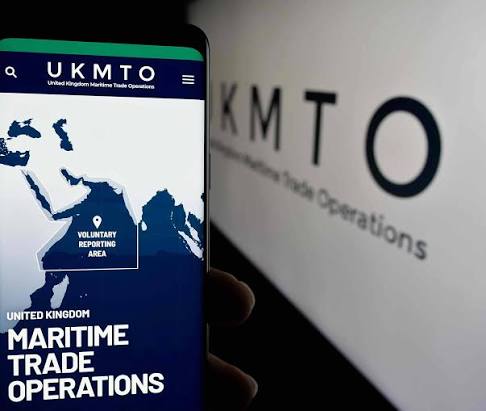
United Kingdom Maritime Trade Operations (UKMTO)

What is the United Kingdom Maritime Trade Operations (UKMTO)

United Kingdom Maritime Trade Operations Latest News

A tanker was boarded by six armed people who took control of the vessel and diverted it towards Somalia, the United Kingdom Maritime Trade Operations (UKMTO) said recently.

About United Kingdom Maritime Trade Operations 

  • It is a British Royal Navy-sponsored organisation that was formed in 2001 with an office in Dubai to handle distress calls during maritime security threats. 
  • In 2014, it was moved to Portsmouth in the U.K. 
  • It is the primary point of contact for commercial vessels with military forces in the region.  
  • For its scale of operations, the UKMTO is a lean organisation with a team of 15 civilian ‘watchkeepers’ and three managers. 
  • The team, which works in shifts, takes calls from ship masters irrespective of their nationalities and coordinates rescue responses and issues warnings and advisories. 
  • The UKMTO works in West Asia and the Indian Ocean Region through an information framework agreement and operates a “Voluntary Reporting Scheme (VRS) within the Voluntary Reporting Area (VRA)” outlined in a maritime security chart.
  • This zone stretches to almost 2.5 million sq. miles of the ocean and includes the Red Sea, Arabian Sea, a majority of the northwestern Indian Ocean, Gulf of Aden, Gulf of Oman, and the Persian Gulf. 
  • The UKMTO has three 24/7 phone lines and an e-mail to report emergencies or incidents. 
  • Ship masters are requested to file multiple reports — an initial report when entering the VRA, a daily report while transiting the area, and a final report after exiting the VRA or reaching a port. 
  • UKMTO issues several categories of communication to the maritime community.  These are in the form of Warnings, Advisories, Reports, and Records of Maritime Information Exchange Meetings. 
  • The UKMTO hosts all warnings on its website as well as hosting notices from partner organisations.

News: TP

United Kingdom Maritime Trade Operations FAQs

Q1: What is United Kingdom Maritime Trade Operations?

Ans: It is a British Royal Navy-sponsored organisation that supports maritime security and serves as a point of contact between commercial vessels and military forces.

Q2: Where was United Kingdom Maritime Trade Operations moved in 2014?

Ans: It was moved to Portsmouth, United Kingdom, in 2014.

Q3: What is the primary role of United Kingdom Maritime Trade Operations?

Ans: It serves as the primary point of contact between commercial vessels and military forces in the region.

Q4: Which regions does United Kingdom Maritime Trade Operations cover?

Ans: It operates across West Asia and the Indian Ocean Region.

Mauritius

Key Facts about Mauritius

Mauritius Latest News

Recently, India and Mauritius have inked a long-term fuel supply agreement with Indian Oil Corporation Ltd (IOC) to supply the island nation’s entire import requirement of petrol, diesel and aviation turbine fuel. 

About Mauritius

  • Location: It is an island country located off the southeast coast of Africa in the Indian Ocean.
  • It is a member of the Common Market for Eastern and Southern Africa (COMESA) and the Southern African Development Community (SADC).
  • Both the Indian Ocean Rim Association and the Indian Ocean Commission have their headquarters in Mauritius.
  • Capital City: Port Louis.

Geographical Features of Mauritius

  • It is part of the Mascarene islands, a group of islands created by volcanic activity in the Indian Ocean. 
  • Terrain: It is made up of the main island of Mauritius and several outlying islands, like Ambre Island, Est Island, Cerfs Island, Benitiers Island, etc.
  • The island of Mauritius is a volcanic island formed by volcanic activity around 8 million years ago. 
  • Climate: The climate is maritime subtropical, with fairly uniform temperatures throughout the year.
  • Highest peak:  , is located in the southwest of the plateau.
  • Lakes: Lake Vacoas, which is a main water source.
  • Major Rivers: Grand River South East and the Black River.

Source: NIE

Mauritius FAQs

Q1: What is the capital of Mauritius?

Ans: Port Louis

Q2: Where is Mauritius located?

Ans: Indian Ocean

Narwhals

Narwhals

Narwhals Latest News

Scientists recently discovered that a narwhal’s uniquely straight tusk grows strong because opposing twists in its inner and outer collagen fibril layers create internal tension that keeps it straight.

About Narwhal

  • It is a medium-sized toothed whale that belongs to the family Monodontidae. 
  • The only other member of this family is the beluga whale.  
  • Scientific Name: Monodon monoceros 

Narwhal Habitat and Distribution

  • They live in the Arctic Ocean, mostly in the Atlantic sector, but they have also been recorded in the Pacific sector. 
  • Their largest numbers live around Canada, Greenland, and eastern Russia. 
  • They usually migrate from under the ice in the winter to inshore waters in the spring and coastal waters in the summer.

Narwhal Features

  • It is best known for its tuska long, spiraled tooth that usually only the males develop. (Females occasionally do.) 
    • Recent observations suggest that the males use their tusks to hunt fish and to detect the level of salt in the waters through which they swim. 
    • The tusk can grow to 3 meters long and weigh more than 10 kilograms. 
    • In mediaeval times, narwhals were hunted for their tusks, and people would sell them as unicorn horns—earning narwhals the nickname 'unicorn of the sea'. 
  • Narwhals have stout, torpedo-shaped bodies with a low dorsal ridge in place of a dorsal fin and a concave-shaped tail fin. 
  • Like belugas, narwhals have short paddle-shaped front flippers, but they lack their extremely flexible neck and well-defined beak.  
  • Adult narwhals are light grey with numerous irregular black spots; the spots are more numerous on the back and fewer on the belly.  
  • Narwhals tend to travel in groups of 15 to 20, though larger gatherings of hundreds or even thousands of individuals have been observed.
  • They are one of the deepest diving whales in the world and can hold their breath for 25-30 minutes at a time.
  • Narwhals feed on fish, squid, and shrimp.  
  • They use sound to communicate with each other, as well as to navigate their surroundings, hunt, and see. 

Narwhal Conservation Status

It is classified as 'Least Concern' under the IUCN Red List.

News: TH

Narwhal FAQs

Q1: What is a narwhal?

Ans: A narwhal is a medium-sized toothed whale belonging to the family Monodontidae.

Q2: Where do narwhals primarily live?

Ans: They primarily live in the Arctic Ocean, especially in the Atlantic sector.

Q3: Around which regions are the largest numbers of narwhals found?

Ans: Around Canada, Greenland and eastern Russia.

Q4: What is the most distinctive feature of a narwhal?

Ans: Its long, spiraled tusk, which is actually an elongated tooth.

Q5: What is the IUCN Red List conservation status of the narwhal?

Ans: Least Concern.

Thiksey Monastery

Thiksey Monastery

Thiksey Monastery Latest News

Recently, US Ambassador to India Sergio Gor visited the historic Thiksey Monastery in Ladakh. 

About Thiksey Monastery

  • Location: It is one of the largest and most prominent monastic complexes located in central Ladakh.
  • It was founded in 1433 which belongs to the Gelug sect.
  • It was founded by Spon Palden Sherab with his Master Jangsem Sherab Zang (the founder of Gelugpa school of Tibetan Buddhism).
  • The structure and architecture of Thiksey resembles the Potala Palace of Lhasa, Tibet

Features of Thiksey Monastery

  • Architectural uniqueness: The twelve storey complex resembles the Potala Palace of Lhasa and is one of the most visually striking monasteries in India.
  • It is also home to a 15-metre-high statue of Maitreya Buddha, installed in the 1980s.
  • Cultural assets: It houses stupas, statues, thangkas, wall paintings and ancient artifacts showcasing Buddhist artistic richness.
    • An annual festival held in the monastery precincts is known as the Gustor ritual, which is held from the 17th to 19th day of the ninth month of the Tibetan calendar (October–November).
  • Religious Role: Thiksey functions as a major centre for monastic education and spiritual training in Ladakh.

Source: DD India

Thiksey Monastery FAQs

Q1: Thiksey Monastery belongs to which sect of Buddhism?

Ans: Gelugpa - Yellow Hat sect

Q2: Where is Thiksey Monastery located?

Ans: Ladakh

Long Tailed Marmot

Long Tailed Marmot

Long Tailed Marmot Latest News

Recently, Shri Amarnath Ji Yatra brings thousands of pilgrims into a fragile Himalayan ecosystem where long‑tailed marmots live. 

About Long Tailed Marmot

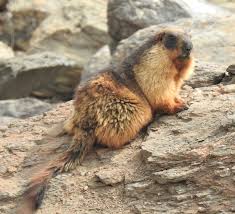
  • It is a rodent of the high-altitude areas of the Kashmir Himalaya.
  • It is also known as the golden marmot and is a member of the Sciuridae family.
  • Appearance: It has vibrant golden fur and has a relatively long tail, robust body, and golden-brown coat that vary among subspecies.
  • Habitat:  It inhabits alpine meadows and rocky slopes, where its life is closely linked to the seasonal availability of vegetation.
  • Distribution: They are found in parts of Central Asia and South Asia, including Kyrgyzstan, Tajikistan, Kazakhstan, Afghanistan, Pakistan, China, and Northwestern India.
    • In India, they are found in Jammu and Kashmir and Ladakh. They occur between 3200 to 4850 m above sea level.
  • Diet: Herbivorous by nature, it feeds on vegetation in its alpine habitat.
  • It is a diurnal and social mammal that thrives in challenging alpine habitats.
  • It hibernates from September to April/May
  • Conservation Status: IUCN Red List: Least Concern

Source: DTE

Long Tailed Marmot FAQs

Q1: What is the Scientific name of Long-tailed Marmot?

Ans: Marmota caudata

Q2: What is the IUCN status of Long-tailed Marmot?

Ans: Least Concern

Squint Eye

Squint Eye

Squint Eye Latest News

A recent study estimated that horizontal strabismus affects 1.81% of the global population, or about 138.5 million people.  

About Squint Eye

  • It is medically known as strabismus.
  • It is a condition in which the two eyes do not align properly.
  • It can affect children and adults and, when it develops during childhood, can interfere with the normal development of vision.
  • In this condition one eye may turn inwards towards the nose (esotropia), outwards (exotropia), upwards or downwards, while the other eye remains focused on an object.
  • Causes of Squint Eye
    • Strabismus occurs when the systems that control eye movement and alignment do not work properly together. 
    • Genetic factors can play a role, and children with a family history of strabismus are at higher risk.
    • It is also more common in children with certain neurological or developmental conditions. Being born prematurely or with low birth weight are recognised risk factors.
    • In adults, strabismus can develop due to conditions such as diabetes, thyroid eye disease, stroke, neurological disorders or trauma.
  • Symptoms of Squint Eye
    • The most obvious sign is that the eyes appear to point in different directions.
    • Some children may close one eye in bright light, tilt or turn their head to see, or have difficulty judging distances.
    • Adults may experience double vision, blurred vision, eye strain, headaches or difficulty with depth perception. 
  • Treatment: Glasses are often the first treatment when a refractive error contributes to the misalignment. Surgery may be needed when glasses and other treatments do not adequately correct the misalignment. 

Source: TH

Squint Eye FAQs

Q1: What is the medical term for Squint Eye?

Ans: Strabismus

Q2: Which complication will occur in children if squint not treated early?

Ans: Amblyopia

Endoscopic Camera

What is an Endoscopic Camera

Endoscopic Camera Latest News

A Chhattisgarh professor and five students were recently arrested for allegedly leaking an entomology exam using an endoscopic camera.

About Endoscopic Camera

  • It is a device used to view, capture, and record videos in small, hard-to-reach places of the human body with limited to no visibility. 
  • It allows doctors to visualize the surgery or diagnostic procedure on a larger medical-grade screen, like a TV display, a computer monitor, or a stereoscopic viewing console.
  • Most modern endoscope camera modules utilize “chip-on-tip” technology, where the lens and imaging electronics are combined into a miniature package located at the end of the device. 
  • Endoscopic cameras illuminate the anatomical area through fiber optics or LEDs on the tip, and the image signal is transferred out from the camera on an electrical cable. 
  • The light source must provide sufficient brightness and illumination angle to ensure true-color properties and brilliant image presentation to aid medical professionals in their diagnoses and procedures.
  • There are many types of endoscopes used for diagnostic, preventative, and surgical applications:
    • Cystoscope: This is used to study the inside of the bladder, urethra, urinary tract, and prostate (in men) and is often inserted through the urethra.
    • Laryngoscope: This is an endoscope used to view the larynx or the voice box and is inserted through the mouth.
    • Otoscope: The otoscope is designed for visual examination of the eardrum and the passage of the outer ear.
    • Gastroscope: This is used to check the upper part of the digestive system, which includes the inside of your throat, food pipe (esophagus), and stomach.
    • Laparoscope: A laparoscope is inserted through the abdomen to study the stomach, liver, abdominal organs, and female reproductive organs such as the fallopian tubes, uterus, and ovaries.
    • Arthroscope: An arthroscope is an endoscope that’s inserted into the joint through a small incision near the site.
    • Duodenoscope: This is a long flexible endoscope inserted through the mouth to the top of the small intestine (duodenum).
  • It has revolutionized numerous fields due to its ability to inspect internal or hard-to-reach areas without requiring invasive procedures. 
  • Its use has expanded across various sectors such as industry, research, and even security.

News: TH

Endoscopic Camera FAQs

Q1: What is an endoscopic camera?

Ans: It is a device used to view, capture and record images or videos from small, hard-to-reach areas of the human body with limited or no visibility.

Q2: How does an endoscopic camera help doctors during medical procedures?

Ans: It allows doctors to visualize diagnostic procedures or surgery on a larger medical-grade screen.

Q3: What is “chip-on-tip” technology in an endoscopic camera?

Ans: It is a technology in which the lens and imaging electronics are combined into a miniature package at the tip of the endoscope.

Q4: How is the image signal transferred from an endoscopic camera?

Ans: The image signal is transferred through an electrical cable from the camera.

Terrier Cyber Quest 2026 (TCQ 3.0)

Terrier Cyber Quest 2026 (TCQ 3.0)

Terrier Cyber Quest 2026 Latest News

The Territorial Army, along with CyberPeace, recently launched the third edition of Terrier Cyber Quest 2026 (TCQ 3.0), a national-level hackathon focused on cybersecurity, defence and digital threats.

About Terrier Cyber Quest 2026

  • It is a national-level hackathon focused on cybersecurity, defence, and digital threats. 
  • It is being organised by the Territorial Army in collaboration with CyberPeace (an Indian non-partisan civil society organisation). 
  • The competition aims to bring together talent from educational institutions, industry, research organisations, government bodies, and the Armed Forces
  • Participants will work on technology-based solutions to address emerging cybersecurity and national security challenges. 
  • This year's competition will be held across three tracks.
    • Bug Hunting: Participants will identify security flaws in simulated critical infrastructure systems. The challenge will begin with an online Capture-the-Flag round, followed by a live final round.
    • AI Kavach: This track will focus on artificial intelligence and machine learning. Participants will develop solutions for detecting threats, identifying unusual activity, and improving cyber defence.
    • Creators Challenge: Content creators, communicators, and influencers can take part in this track. They will be asked to create digital campaigns on threats such as deepfakes, phishing, online scams, and misinformation. 
  • The hackathon gives students, technology enthusiasts, and other participants a chance to showcase their skills and work on real-world cybersecurity challenges linked to national security. 
  • Winners could further get a chance to visit defence establishments and contribute to future cybersecurity initiatives with the Territorial Army.

Key Facts about Territorial Army

  • It is a part of the Indian Army that consists of volunteers who undergo military training and serve when required. 
  • Unlike regular army officers, Territorial Army officers maintain their civilian jobs while dedicating a few weeks each year to military service. 
  • It’s a platform for motivated individuals to contribute to national defence without sacrificing their primary professions.
  • Often called the “Second Line of Defence,” the TA plays a crucial role in:
    • Relieving the regular army from static duties.
    • Assisting the civil administration in dealing with natural calamities and maintaining essential services.
    • Providing units for the regular Army as and when required.
  • Motto: Savdhani Va Shoorta (Vigilance and Valour)
  • Eligibility:
    • Nationality: Citizens of India. (Men & Women).
    • Age: 18 to 42 years
    • Educational Qualifications: Graduate from any recognized university
    • Physical Standards: A candidate must be physically and medically fit in all respects.
    • Employment: Gainfully Employed
    • Serving members of the Regular Army/Navy/Air Force/Police/GREF/Para Military and like forces are not eligible.

News: NDTV

Terrier Cyber Quest 2026 FAQs

Q1: What is Terrier Cyber Quest 2026?

Ans: It is a national-level hackathon focused on cybersecurity, defence and digital threats.

Q2: Who is organising Terrier Cyber Quest 2026?

Ans: The Territorial Army is organising it in collaboration with CyberPeace.

Q3: What is the main objective of Terrier Cyber Quest 2026?

Ans: Its objective is to develop technology-based solutions to address emerging cybersecurity and national security challenges.

Q4: Who can participate in Terrier Cyber Quest 2026?

Ans: Talent from educational institutions, industry, research organisations, government bodies and the Armed Forces can participate.

KN-30 Missile

What is the KN-30 Missile

KN-30 Missile Latest News

Russia recently received North Korea’s KN-30 ballistic missile for the first time, according to Ukraine’s defence intelligence directorate (HUR).

About KN-30 Missile

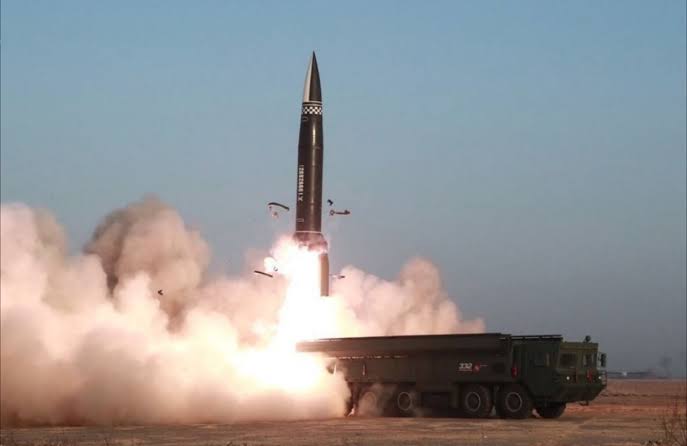
  • The KN-30 is the Western designation for the North Korean Hwasong-11C ballistic missile, also known as the Hwasong-11Da. 
  • It is an enlarged version of the Hwasong-11 family and belongs to the short-range ballistic missile class. 

KN-30 Missile Features

  • It is 10.1 to 10.2 m in length and 1.26 m in diameter. 
  • It is powered by a solid-fuel engine and launched from a mobile ground-based launcher. 
    • The use of solid-fuel engines offers distinct advantages in terms of faster response times, longer storage capacity, and reduced deployment complexity compared to traditional liquid-fuel missiles. 
  • Its estimated range reaches 600-900 km, and its claimed warhead mass reaches 2,500 kg.  
  • Maximum speed is approximately Mach 5-6.
  • The missile can fly in a low quasi-ballistic profile at nearly 50 km in altitude, which reduces the engagement window compared with a higher and more conventional ballistic trajectory.

News: TOI

KN-30 Missile FAQs

Q1: What is the KN-30 missile?

Ans: The KN-30 is the Western designation for the North Korean Hwasong-11C ballistic missile, also known as the Hwasong-11Da.

Q2: What type of missile is the KN-30?

Ans: It is a short-range ballistic missile (SRBM).

Q3: What type of engine powers the KN-30 missile?

Ans: A solid-fuel engine.

Q4: What is the estimated range of the KN-30 missile?

Ans: Approximately 600–900 km.

Chromium

What is Chromium?

Chromium Latest News

Decades of improper industrial waste management have contaminated groundwater with toxic hexavalent chromium across parts of three districts of Uttar Pradesh, exposing villagers to unsafe water and serious health risks. 

About Chromium

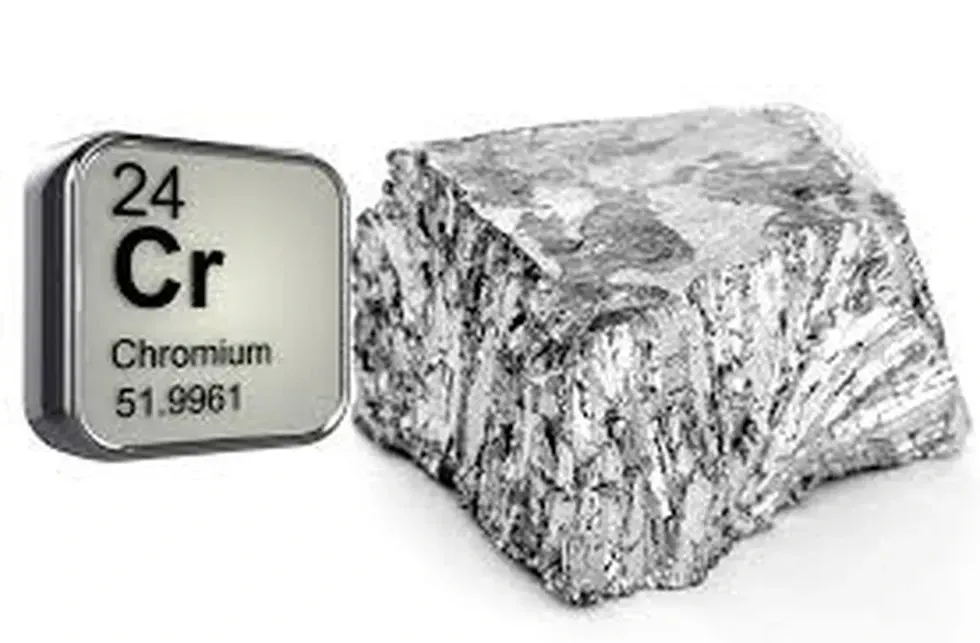
  • It is a naturally occurring element found in rocks, animals, plants, soil, and in volcanic dust and gases.
  • There are two forms: trivalent chromium, which is safe for humans, and hexavalent chromium, which is a toxin.
  • Properties
    • It is a very hard gray solid with a metallic luster.
    • It does not tarnish in air, when heated it borns and forms the green chromic oxide.
    • Chromium is unstable in oxygen, it immediately produces a thin oxide layer that is impermeable to oxygen and protects the metal below.

Applications of Chromium

  • It is used in iron, steel, and nonferrous alloys to enhance hardenability and resistance to corrosion and oxidation.
  • The use of chromium to produce stainless steel and nonferrous alloys are two of its more important applications.
  • Other applications are in alloy steel, plating of metals, pigments, leather processing, catalysts, surface treatments, and refractories.

Source: TH

Chromium FAQs

Q1: What is the main ore of Chromium?

Ans: Chromite

Q2: Which Indian state has the highest chromite reserves?

Ans: Odisha

Mobile Phone Manufacturing Scheme (MPMS) – From Assembly Hub to Indian-Owned Brands

Mobile Phone Manufacturing Scheme (MPMS) - From Assembly Hub to Indian-Owned Brands

Mobile Phone Manufacturing Scheme (MPMS) Latest News

  • The Government has notified the ₹62,500-crore Mobile Phone Manufacturing Scheme (MPMS) for five years from FY 2026-27 to FY 2030-31. 
  • It succeeds the Production Linked Incentive (PLI) Scheme for Large Scale Electronics Manufacturing (PLI-LSEM), whose tenure ended on March 31, 2026. 
  • The new scheme seeks to move India beyond large-scale assembly towards higher domestic value addition (DVA), indigenous design and R&D, stronger component supply chains and globally competitive Indian brands.

Need for the New Scheme

  • India has emerged as a major global mobile-phone manufacturing hub, but much of the value captured in the sector remains concentrated in assembly and foreign-owned brands. 
  • The MPMS therefore attempts to address the “assembly versus value creationgap by incentivising both manufacturing scale and ownership of technology, intellectual property and brands.
  • The earlier PLI-LSEM helped establish India as a major manufacturing and export base.
  • The next challenge is to deepen the ecosystem so that more components, design capabilities, patents and economic value are generated domestically.

Two-Pronged Architecture

  • Scale-up of mobile manufacturing:
    • The first component targets mobile-phone manufacturers and Electronics Manufacturing Services (EMS) companies.
      • Applicant companies must be incorporated in India and have recorded at least ₹10,000 crore turnover in FY 2025-26.
      • Existing brands must achieve incremental sales over a progressively rising threshold - ₹5,000 crore in FY27, rising annually to ₹25,000 crore in FY31.
      • For a new brand, eligibility begins after achieving ₹10,000 crore annual sales, followed by year-on-year incremental sales requirements.
      • A moving baseline is used - baseline sales are the previous year's domestic sales plus 15%. Incentives are calculated on sales exceeding this baseline.
    • This design attempts to reward genuine incremental production rather than merely subsidising existing output.
  • Building Indian-owned mobile brands:
    • The second component represents the more strategic shift
    • The Government wants India not merely to manufacture smartphones for global companies but to develop Indian-owned brands comparable with leading international players.
    • To qualify as an Indian brand, the company must meet conditions relating to -
      • Incorporation in India;
      • Indian ownership of trademark and intellectual property;
      • Management control by Indian citizens;
      • More than 51% Indian ownership/control; and
      • In-house design and R&D capabilities in India.
    • The Government is reportedly working with Indian companies to develop such brands, with the objective of bringing a strong indigenous product to market.

Incentive Structure

  • The scheme provides 2.25%–5% incentives on eligible sales, depending on the category.
  • Indian brands receive stronger support -
    • 5% incentive on eligible incremental sales;
    • Up to 1.5% additional incentive for domestic sourcing of key components and sub-assemblies;
    • Additional 3% incentive for Indian design and R&D;
    • A one-year gestation period is available to Indian brands; and
    • Additional non-fiscal support may be provided through an empowered committee.
  • Thus, the incentive architecture deliberately links public support with domestic sourcing, innovation and intellectual-property creation, rather than focusing solely on production volumes.

The Larger Economic Significance

  • The scheme reflects a transition in India's electronics strategy: Import substitution → domestic assembly → export-oriented manufacturing → domestic value addition → Indian technology, IP and brands.
  • The Government aims to strengthen India's position in Global Value Chains (GVCs) while retaining a larger share of the economic value generated by the electronics sector.
  • India is already the world's second-largest mobile-phone manufacturer by volume, while 99.2% of mobile phones used domestically are now made in India. 
  • Smartphones also became India's largest individual exported product category in 2025.
  • The Government estimates that MPMS -
    • Could generate around ₹39 lakh crore of cumulative production and about 60,000 direct jobs
    • While strengthening technological sovereignty and Indian patents in design and R&D
  • Domestic value addition was around 23% in FY2023-24, highlighting the substantial scope for deeper localisation.

Key Structural Challenges

  • Component ecosystem: India remains dependent on imports for several high-value components and inputs.
  • Technology gap: Manufacturing at scale does not automatically translate into ownership of core technologies.
  • Global competition: Indian brands must compete with established firms possessing strong R&D, supply chains, consumer loyalty and distribution networks.
  • Cost competitiveness: Higher domestic sourcing can initially raise production costs.
  • Innovation ecosystem: Sustained investment in R&D, semiconductor technology, design and skilled manpower is essential.
  • MSME integration: Benefits should eventually reach smaller domestic component manufacturers rather than remaining concentrated among large firms.

Way Forward

  • MPMS should be integrated with the India Semiconductor Mission, electronics-component ecosystem, skill development, R&D incentives and trade policy. 
  • Greater support for Indian design houses, startups and component manufacturers can help create an end-to-end electronics ecosystem.
  • The real measure of success should therefore be domestic value addition, rather than merely the number of smartphones assembled in India.

Source: IE

Mobile Phone Manufacturing Scheme (MPMS) FAQs

Q1: How does the ₹62,500-crore Mobile Phone Manufacturing Scheme seek to move India to value-added electronics production?

Ans: By incentivising domestic value addition, component sourcing, indigenous design and R&D.

Q2: What is the significance of the Mobile Phone Manufacturing Scheme in promoting technological sovereignty?

Ans: By supporting Indian-owned brands, domestic IP, in-house R&D and design capabilities.

Q3: How does the new mobile manufacturing scheme improve upon the earlier PLI approach?

Ans: While the earlier PLI primarily scaled up production and exports, the new scheme links incentives with incremental sales.

Q4: What challenges may limit India’s ambition to develop globally competitive domestic smartphone brands?

Ans: Dependence on imported high-value components, technology gaps, high R&D requirements, intense global competition, etc.

Q5: Why India’s success in mobile manufacturing should be measured by value captured?

Ans: Sustained success requires higher domestic value addition, indigenous patents, component manufacturing, etc.

US–India Trade Tensions: The Great Transhipment Scam and Tariff Allegations

The 'Great Transhipment Scam' Allegations

US–India Trade Tensions Latest News

  • Recently, the U.S. accused India of violating fair trade practices through a White House report titled 'The Great Transhipment Scam'. 
  • The report named about 40 countries, including India, as helping China evade U.S. tariffs — the latest in a series of American trade grievances against India.

Background: The U.S.–China Trade Relationship

  • Over nearly three decades, the U.S. and Chinese economies have grown deeply intertwined — the U.S. relying on China as a manufacturing hub, and China relying on the U.S. as a market and source of investment. 
  • This relationship has produced large U.S. trade deficits with China, a concern President Trump has repeatedly raised, driving his tariff policy through both terms.
  • China faced tariff action as early as 2018, when the U.S. imposed duties of 7.5% to 100% on Chinese goods such as electric vehicles, semiconductors, and medical products under Section 301 of the Trade Act, 1974, citing unfair trade and technology practices. 
  • The White House report claims this narrowed the U.S.–China trade deficit in 2019 and 2020. 
  • In July 2026, Washington added a further 12.5% tariff citing gaps in forced-labour compliance.

What is the 'Great Transhipment Scam'?

  • According to the report, Chinese exporters have increasingly routed goods through third countries since 2018 to dodge tariffs — through limited assembly, repackaging, relabeling, or documentation changes that create the appearance of a different country of origin.
  • The U.S. has identified more than 40 countries with "elevated illegal transshipment risk," naming India among the top "enablers," alongside Mexico, Canada, the European Union, Japan, and South Korea. 
  • The allegation: these countries import Chinese goods, modify them marginally, and re-export them to the U.S. at tariffs lower than China would face directly — causing significant U.S. revenue loss.

India's Alleged Role

  • The U.S. Office of Trade and Economic Analysis estimates that about $67 billion in U.S.-bound goods were transshipped through the top three hubs — Mexico, India, and Vietnam — in 2025, resulting in an estimated $28 billion in lost tariff revenue. 
  • The report specifically cites the Pune-Gujarat-Chennai industrial belt, alleging it "absorbs" Chinese pumps and compressors, thereby affecting supply chains in U.S. manufacturing hubs like Cincinnati, Dayton, and Columbus.

Did U.S. Tariffs Actually Work?

  • The report's broader findings reveal a policy shortfall: U.S. imports from China fell from $525.8 billion in 2017 to $327.5 billion in 2025, but total U.S. imports from all countries rose sharply from $2.41 trillion to $3.50 trillion over the same period. 
  • This suggests the U.S. substituted Chinese finished goods with imports from other nations rather than boosting domestic production.
  • Experts noted that the tariffs changed the source of imports without reducing America's overall import dependence.

A Pattern of U.S. Trade Grievances Against India

  • This is not an isolated complaint. In Trump's first term, the U.S. objected to India's tariffs on luxury motorcycles, prompting a reduction. 
  • Last year, Washington blamed India for financing Russia's war effort through oil imports, raising tariffs on Indian goods to 50% as a penalty. 
  • More recently, the U.S. Senate passed a Trump-backed Bill proposing tariffs of up to 100% over India's Russian oil imports, pending introduction in the House of Representatives. 
  • Separately, a 10% tariff already applies to Indian imports over inadequate curbs on forced-labour-linked goods, with a further investigation on excess capacity ongoing. The transshipment allegations carry no penal action yet, but further tariffs remain a possibility.

Implications for India's Economy

  • Unlike a simple pass-through of Chinese finished goods, India's trade pattern shows deepening manufacturing integration
  • Electronic components rose from 3.3% of India's imports from China in Q1 2015-16 to nearly 13% in Q1 2026-27, alongside rising shares of electric machinery, chemicals, and plastics — signalling genuine value addition rather than repackaging. 
  • Correspondingly, the share of finished goods has declined: telecom instruments fell from about 18% to 11%, manufactured fertilisers from 7.5% to under 1%, and consumer electronics roughly halved.
  • This data undercuts the "transshipment" characterisation, but any punitive U.S. action would still hurt India's 'Make in India, For the World' strategy, which relies heavily on Chinese inputs. 
  • Restricting these imports would raise India's manufacturing costs, eroding the competitiveness of its exports.

Conclusion

  • The U.S.'s transshipment allegations add to mounting trade friction with India, following disputes over oil imports and forced-labour compliance. 
  • While India's rising import of intermediate goods suggests genuine manufacturing integration rather than mere relabeling, any resulting U.S. tariffs could raise costs and threaten India's export competitiveness and manufacturing ambitions.

Source: TH

US–India Trade Tensions FAQs

Q1: What are the Great Transhipment Scam allegations in US–India Trade Tensions?

Ans: US–India Trade Tensions intensified after Washington alleged that India helped Chinese exporters evade American tariffs through limited processing, repackaging, relabelling, or altered documentation.

Q2: Why has India been named in US–India Trade Tensions over transhipment?

Ans: US–India Trade Tensions involve allegations that Chinese goods enter India, undergo marginal modification, and are subsequently exported to America under lower tariff rates.

Q3: Did U.S. tariffs reduce import dependence amid US–India Trade Tensions?

Ans: US–India Trade Tensions reveal that declining imports from China were partly offset by rising imports from other countries, rather than significantly reducing overall American import dependence.

Q4: What evidence challenges transhipment allegations in US–India Trade Tensions?

Ans: US–India Trade Tensions data shows India increasingly imports Chinese intermediate goods and components, indicating deeper manufacturing integration and value addition rather than simple repackaging.

Q5: How could further tariffs affect India amid US–India Trade Tensions?

Ans: US–India Trade Tensions could raise manufacturing costs, weaken export competitiveness, disrupt Chinese input supplies, and threaten India's broader Make in India manufacturing ambitions.

U.S.–India Electoral Systems: Trump’s Voting ID Rules and the SAVE America Act

Trump's Remarks on Voting ID Rules

U.S.–India Electoral Systems Latest News

  • U.S. President Donald Trump posted on Truth Social that India's Chief Election Commissioner Gyanesh Kumar had asked his administration how American elections function without a mandatory photo ID. 
  • Trump also noted that only 1% of India's 64.64 crore voters in the last general election voted by mail, unlike the widespread use of mail-in voting in the U.S. 
  • He used this exchange to renew his push for Congress to pass the Safeguard American Voter Eligibility (SAVE America) Act, which would mandate documentary proof of citizenship for voter registration and a photo ID to vote.

How U.S. Elections Differ from India's

  • Article I, Section 4 of the U.S. Constitution (the Elections Clause) gives State legislatures authority over the "times, places, and manner" of federal elections, while allowing Congress to alter such rules. 
  • Unlike India, the U.S. has no national election authority — the Federal Election Commission only regulates campaign finance, while registration, balloting, and counting are handled by county and municipal jurisdictions
  • Two key federal laws shape U.S. voting: 
    • the National Voter Registration Act, 1993 (requiring States to offer registration at motor vehicle and public assistance offices) and 
    • the Help America Vote Act, 2002 (funding new voting machines and State-wide elector databases). 
  • Voter eligibility remains a State subject, and registration is elector-initiated — citizenship is self-affirmed under penalty of perjury rather than documented upfront. 
  • Thirty-six States require some form of ID at polling booths, and 23 require a photo ID specifically.

India's System

  • India's system works differently. The Election Commission of India (ECI) compiles electoral rolls through house-to-house enumeration and has superintendence over the entire registration process. 
  • Eligible electors receive an Electoral Photo Identity Card (EPIC), though other documents like Aadhaar are also accepted at polling booths.

Is Non-Citizen Voting a Real Problem in the U.S.?

  • Independent studies suggest non-citizen registrations in the U.S. are almost always accidental, with only a small fraction actually voting. 
  • The Trump administration's claims have faced scrutiny: after announcing in July that 2,78,000 non-citizens were found on rolls across four States (including 15,903 in Nevada), the Department of Homeland Security later told Nevada officials it had identified just 185 potential non-citizens, describing the earlier figure as merely a "ceiling."
  • Surveys do show broad public support for photo ID requirements at polling booths — but this falls short of the stricter citizenship-proof-at-registration requirement proposed under the SAVE America Act.

The SAVE America Act: Provisions and Opposition

  • Passed by the House of Representatives in February along party lines, the SAVE America Act would require every new or updating voter to submit a passport, birth certificate, or naturalisation papers alongside a government photo ID
  • Mail-in voters would need to enclose a copy of their photo ID. States would cross-check names against U.S. Department of Homeland Security records, and election officials registering undocumented voters could face up to five years in prison.
  • Analysts estimate that over 20 million eligible American citizens lack ready access to a passport or birth certificate, with young first-time registrants particularly affected. 
  • This concern has driven Democratic opposition, stalling the Bill in the Senate.

Parallel with India's Special Intensive Revision (SIR)

  • India's ECI-led SIR process, aimed at "purifying" electoral rolls, requires electors to self-enumerate on forms distributed door-to-door, which are then scrutinised against records from the previous SIR conducted over two decades ago. 
  • All three phases of the SIR have shown anomalies — by phase 2, over 7 crore names were deleted, accompanied by a sharp fall in gender ratios across most States. 
  • An analysis found a religious skew in deletions in West Bengal, which affected electoral outcomes there. Despite these irregularities, the Supreme Court upheld the SIR as within the ECI's statutory mandate.
  • Critics note a structural similarity between the two processes: both the SIR and the SAVE America Act shift the burden of proving eligibility onto individual electors, departing from earlier systems where officials proactively identified and enrolled eligible citizens.

Conclusion

  • Trump's remarks highlight starkly different electoral architectures — the U.S.'s decentralised, elector-initiated, State-led system versus India's centralised ECI-driven process. 
  • Both nations now face contested reforms — the SAVE America Act and India's SIR — that shift verification onus onto voters, raising similar concerns about disenfranchisement despite claims of ensuring electoral integrity.

Source: TH

U.S.–India Electoral Systems FAQs

Q1: How do U.S.–India Electoral Systems differ in election management?

Ans: U.S.–India Electoral Systems differ fundamentally because America uses decentralised State and local authorities, while India's Election Commission centrally supervises electoral registration and elections.

Q2: How do U.S.–India Electoral Systems differ in voter registration?

Ans: U.S.–India Electoral Systems follow different approaches: American voters generally initiate registration, whereas India's Election Commission proactively compiles and maintains electoral rolls.

Q3: What is the SAVE America Act in the context of U.S.–India Electoral Systems?

Ans: In U.S.–India Electoral Systems debates, the SAVE America Act would require documentary citizenship proof and government photo identification for voter registration and voting.

Q4: What concerns surround stricter verification in U.S.–India Electoral Systems?

Ans: U.S.–India Electoral Systems face disenfranchisement concerns because stricter eligibility requirements may burden citizens lacking passports, birth certificates, or other required documentary proof.

Q5: How is India's SIR similar to proposed reforms in U.S.–India Electoral Systems?

Ans: U.S.–India Electoral Systems show a structural similarity between India's SIR and the SAVE America Act, as both shift eligibility verification burdens onto individual voters.

NITI Aayog Report Flags Large Gap Between Education and Employment for Indian Youth

NITI Aayog Report Flags Large Gap Between Education and Employment for Indian Youth

NITI Aayog Report Latest News

  • NITI Aayog's report 'Reimagining Skilling for Viksit Bharat@2047' has found that an estimated 8.7 crore Indians aged 15 to 29 were neither studying, working nor undergoing training, prompting recommendations to overhaul India's skilling approach.

Understanding NEET Youth

  • The report identifies this group as NEET youth, those not in education, employment or training, including the unemployed
  • The figure of 8.7 crore is based on data from the 78th round of the National Sample Survey, conducted in 2021.
  • The number matters because it represents young people who are not making a direct transition from education to either employment or skill development. 
  • For a country counting on its demographic advantage, this represents a substantial loss of productive potential.
  • The report divides India's workforce and learners into five broad groups: 
    • Those in schooling, those in tertiary education, those in formal and informal work, NEET youth, and women. 
  • Each group faces different constraints and therefore requires different interventions.

The Core Problem: Degrees Without Jobs

  • The most striking finding is the weak link between formal education and employment.
  • Only 8.25% of graduates are employed in roles that match their qualifications. 
  • This means the vast majority of degree holders are either working in unrelated fields or unable to find suitable work at all.
  • The report attributes this to limited practical exposure and insufficient industry-aligned training, which continues to affect employability even among formally educated young people. 
  • A degree, in other words, does not automatically translate into employability.

Why Cost Becomes a Barrier

  • For students from low-income households, adding a paid skilling course on top of college fees and private tuition is often unaffordable. 
  • This leaves little room to invest in additional training alongside a conventional degree.
  • The consequences follow two paths. Some graduates take up formal employment simply to secure an income and support their families, accepting whatever provides stability even when it is low-paying. 
  • Others struggle to make the transition into work at all and eventually become NEET.
  • The report notes that NEET youth face a particular financial difficulty. They have no income while having already spent on their earlier education, what the report describes as the sunk cost of prior education. 
  • This makes paid skilling especially difficult to access precisely for those who need it most.

Bringing Skilling Into Schools

  • NITI Aayog's central recommendation is to move skilling into the school system rather than treating it as an option after formal education is complete.
  • It has proposed universal General Employability and Entrepreneurship Skills from Class 6 to Class 12, along with structured vocational pathways called Kaushal Tracks from Class 9. 
  • These tracks would offer deeper vocational specialisation based on local and national demand.
  • The report notes that fewer than one in 12 secondary schools currently offer vocational subjects, despite both the National Education Policy 2020 and the National Curriculum Framework providing for greater integration of vocational education and employability skills from Class 6.
  • For Classes 10 and 12, the report suggests including vocational subjects in the board subject scheme with equal weightage, and allowing state boards to accept the revised scheme for certification. 
  • It also proposes continuing General Employability and Entrepreneurship Skills as a separate subject in Classes 11 and 12.

Reforming Higher Education

  • The recommendations extend well beyond schools.
  • For higher education, the report calls for a shift away from generic degrees towards applied, industry-aligned specialisations. It advocates greater use of apprenticeships and work-integrated degree and diploma programmes.
  • It also proposes flexible, modular and earn-while-you-learn options, recognising that many students cannot afford to study full-time without an income.

The Apprenticeship Gap

  • Apprenticeships have been identified as another missing link between education and employment.
  • Schemes such as the National Apprenticeship Promotion Scheme and the National Apprenticeship Training Scheme have expanded access. However, the report notes that participation remains uneven and opportunities are fragmented across sectors and regions.
  • To address this, it suggests expanding apprenticeship opportunities through incentives for MSMEs and creating a unified platform so that credible opportunities are easier for young people to find.

Focusing on Future Sectors

  • The report calls for greater attention to sectors expected to generate demand, including green industries and electric vehicles, while also providing reskilling for workers in declining occupations.
  • A key shift it proposes is in how success is measured. Training should increasingly be linked to measurable employment outcomes rather than participation numbers alone.

Spending Versus Outcomes

  • The scale of India's skilling effort is already substantial. More than 7.67 crore people have been trained since 2014-15, and the Union Budget for 2025-26 allocated Rs. 34,000 crore towards skilling-related expenditure across multiple Central ministries.
  • Despite this, the report observes that outcomes remain uneven. This suggests that increasing spending and training numbers alone may not be enough without stronger links between education, skills, and actual employment.

What Different Groups Need

  • The report tailors its recommendations to the constraints each group faces.
  • For NEET youth and women, it emphasises affordable or subsidised training options backed by dedicated financial support, since financial constraints bind most tightly here. 
  • It also stresses the importance of enabling people to learn while earning.
  • For the existing workforce and NEET youth, the emphasis shifts towards mid-career reskilling, self-employment pathways, and learning options aligned to local demand and emerging sectors.

Source: IE | TOI

NITI Aayog Report FAQs

Q1: What does NEET youth mean in this context?

Ans: NEET refers to young people not in education, employment or training, including those who are unemployed.

Q2: How many young Indians fall into this category?

Ans: An estimated 8.7 crore Indians aged 15 to 29, based on the 78th round of the National Sample Survey.

Q3: What proportion of graduates work in jobs matching their qualifications?

Ans: Only 8.25% of graduates are employed in roles aligned with their qualifications.

Q4: What are Kaushal Tracks?

Ans: These are structured vocational pathways proposed from Class 9 onwards, offering deeper specialisation based on local and national demand.

Q5: How much has been allocated for skilling in the Union Budget 2025-26?

Ans: Rs. 34,000 crore was allocated towards skilling-related expenditure across multiple Central ministries.

Enquire Now