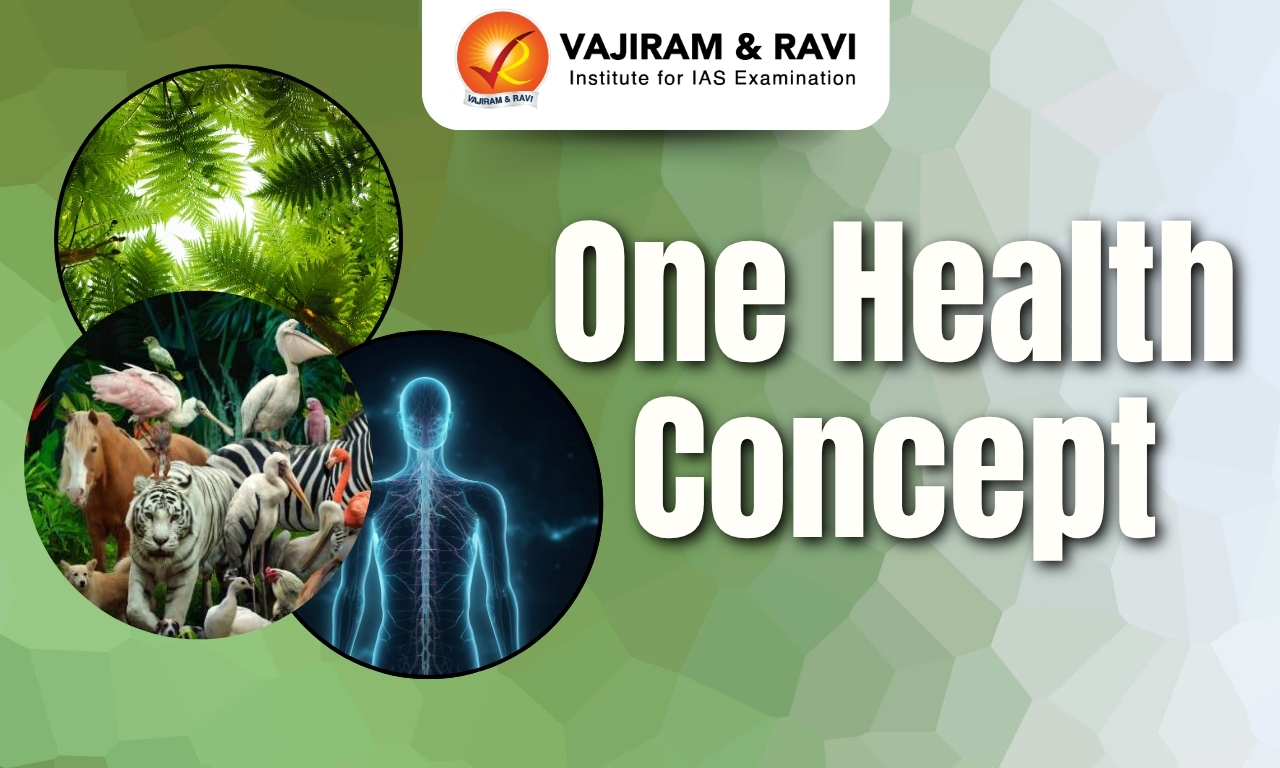
The One Health Concept is a collaborative and multidisciplinary approach that recognizes that the health of humans, animals, plants, and the environment are closely interconnected. It promotes coordination among different sectors such as healthcare, veterinary sciences, environmental science, and public policy to prevent and control diseases, especially those that spread between animals and humans.
This concept has gained global importance due to the increasing emergence of zoonotic diseases like COVID-19, Ebola, and Nipah virus, which highlight how human health is directly linked to animal and environmental health.
One Health Concept Key Features
The key features of One Health Concept have been discussed below in detail
- Interconnected Health Approach: Focuses on the link between human, animal, and environmental health systems.
- Multidisciplinary Collaboration: Involves experts from medicine, veterinary science, ecology, microbiology, and public health working together.
- Prevention of Zoonotic Diseases: Aims to control diseases that spread from animals to humans such as rabies, avian influenza, and COVID-19.
- Global Health Security: Strengthens preparedness and response to pandemics and health emergencies.
- Sustainable Development Focus: Promotes ecological balance and sustainable use of natural resources.
- Policy Integration: Encourages governments to design integrated health policies across sectors.
Pillars of One Health
The Pillars of One Health highlight the three interconnected domains: Human Health, Animal Health, and Environmental Health, that must function together to ensure disease prevention, ecological balance, and overall public health security.
- Human Health: Focuses on public health systems, disease surveillance, and healthcare access. It includes early detection of outbreaks, vaccination programs, sanitation, and nutrition, ensuring a strong response to infectious diseases and improved community health outcomes.
- Animal Health: Emphasizes veterinary care, livestock management, and wildlife monitoring. It plays a key role in controlling zoonotic diseases, vaccination of animals, and ensuring food approval safety, thereby reducing the risk of disease transmission from animals to humans.
- Environmental Health: Deals with ecosystem balance, biodiversity conservation, and pollution control. It includes climate change mitigation, air and water quality management, and sustainable resource use, which help prevent the emergence and spread of diseases.


One Health Concept Importance
The One Health Concept is crucial for addressing modern health challenges by recognizing the strong interconnection between humans, animals, and the environment, and promoting a unified approach to health management.
- Prevention of Emerging Diseases: Enables early detection and control of infectious diseases before they turn into epidemics or pandemics.
- Control of Zoonotic Diseases: Reduces the spread of animal-to-human infections such as rabies, avian influenza, and other viral outbreaks.
- Combating Antimicrobial Resistance (AMR): Promotes the judicious use of antibiotics in both humans and animals to prevent drug resistance.
- Improved Food Safety and Security: Ensures safe agricultural practices, livestock health, and quality food production.
- Environmental Sustainability: Encourages ecosystem conservation, biodiversity protection, and pollution control, reducing health risks.
- Strengthened Public Health Systems: Enhances coordination between sectors, leading to more effective healthcare delivery and crisis management.
- Pandemic Preparedness: Builds resilient surveillance and response systems to tackle global health emergencies efficiently.
Challenges in Implementing One Health
The implementation of the One Health Concept faces several practical and structural challenges due to the need for coordination across multiple sectors and disciplines.
- Lack of Inter-sectoral Coordination: Weak collaboration between human health, animal health, and environmental agencies leads to fragmented efforts and reduced effectiveness.
- Insufficient Funding and Resources: Limited financial support, infrastructure, and skilled workforce restrict the implementation of integrated health programs.
- Data Sharing and Surveillance Gaps: Poor information exchange systems and lack of unified databases hinder early detection and timely response to diseases.
- Low Awareness and Training: Inadequate understanding of the One Health approach among policymakers, professionals, and the public slows its adoption.
- Policy and Institutional Barriers: Absence of clear policies, legal frameworks, and institutional mechanisms creates obstacles in coordinated action.
- Infrastructure Constraints: In many regions, especially developing countries, there is a shortage of healthcare facilities, veterinary services, and environmental monitoring systems.
- Global Coordination Issues: Differences in national priorities, regulations, and capacities make international collaboration challenging.
Role of International Organizations
International organizations play a crucial role in promoting and implementing the One Health Concept by facilitating global coordination, policy support, research collaboration, and capacity building across countries.
- The World Health Organization provides global leadership in public health, supports disease surveillance systems, and helps countries strengthen pandemic preparedness and response mechanisms.
- The Food and Agriculture Organization focuses on food safety, sustainable agriculture, and animal health, ensuring better management of livestock and reducing risks of zoonotic disease transmission.
- The World Organisation for Animal Health works to improve animal health standards, veterinary services, and disease reporting systems, which are essential for early detection of outbreaks.
- The United Nations Environment Programme emphasizes environmental protection, biodiversity conservation, and climate action, helping reduce ecological risks that contribute to disease emergence.
- These organizations jointly promote the One Health approach through global frameworks, technical guidelines, funding support, and international cooperation, enabling countries to effectively address complex health challenges.
About Zoonatic Diseases
Zoonotic diseases are infectious diseases that are transmitted from animals to humans, either directly or indirectly. They are a major focus of the One Health Concept because they arise due to close interactions between humans, animals, and the environment.
- They are caused by viruses, bacteria, parasites, and fungi, affecting both human and animal populations.
- Transmission occurs through direct contact (bites, scratches, handling animals) or indirect exposure (contaminated food, water, or surfaces).
- Some zoonotic diseases are vector-borne, spreading through organisms like mosquitoes, ticks, and fleas.
- These diseases can originate from domestic animals, livestock, or wildlife, increasing risk due to human-animal interaction.
- Common examples include rabies, avian influenza, COVID-19, Nipah virus, and Ebola, many of which have caused global outbreaks.
- Zoonotic diseases pose a serious global health threat, contributing to epidemics and pandemics.
- Increased deforestation, urbanization, and climate change have accelerated the emergence of such diseases.
- They impact public health, food safety, and economic stability, especially in agriculture and livestock sectors.
- Prevention requires vaccination, hygiene practices, safe food handling, and disease surveillance systems.
- Effective control depends on multi-sectoral coordination under the One Health framework to reduce risks and improve response systems.

 Last updated on Oct, 2026
→ UPSC 2027 Notification will be released on 13 January 2027 at upsconline.nic.in.
→ Check Nobel Prize 2026 Winners List here.
→ Download PIB PRiSM Monthly Magazine 2026 here.
→ Check UPSC Monthly Current Affairs Magazine The Recitals here.
→ Check out the latest UPSC Syllabus here.
→ Download UPSC Model Answers for Mains 2026
→ UPSC Mains Question Paper 2026 is out now for Essay & GS Paper 1, 2, 3 & 4.
→ UPSC Calendar 2027 has been released.
→ Enroll in Vajiram & Ravi’s UPSC Mains Test Series 2027 for structured answer writing practice, expert evaluation, and exam-oriented feedback.
→ Join Vajiram & Ravi’s UPSC Mentorship Program 2027 for personalized guidance, strategy planning, and one-to-one support from experienced mentors.
→ Go through the UPSC Mains Previous Year Papers to enhance your preparation.
→ UPSC has released UPSC Toppers List 2025 with the Civil Services final result on its official website.
→ Also check Best UPSC Coaching in India
One Health Concept FAQs
Q1. What is the One Health Concept?+
Q2. Why is the One Health Concept important?+
Q3. What are zoonotic diseases?+
Q4. What are the main pillars of One Health?+
Q5. How does One Health help in pandemic preparedness?+
Tags: environmental science one health concept public health