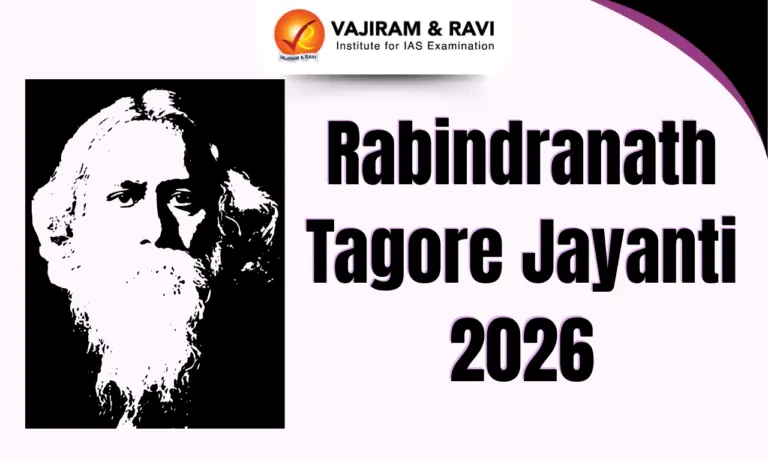
Rabindranath Tagore Jayanti 2026 is observed on 9 May 2026 to mark the 165th birth anniversary of Gurudev Rabindranath Tagore. The celebration honours his immense contribution to literature, music, education, art and philosophy. Across India, especially in West Bengal, schools, universities and cultural organisations organise poetry recitations, Rabindra Sangeet performances, seminars and cultural programmes. Tagore’s ideas on creativity, humanism and education continue to influence modern Indian society and cultural thought.
Rabindranath Tagore Jayanti 2026
Rabindranath Tagore Jayanti 2026 has been celebrated on Thursday, 7 May 2026, while West Bengal observes it on 25th Boishakh according to the Bengali calendar, which falls on 9 May 2026. The occasion commemorates the 165th birth anniversary of the first Asian Nobel Prize winner in Literature. Santiniketan, Kolkata and Jorasanko Thakur Bari remain the major centres of celebration where literary gatherings, cultural performances, exhibitions and educational activities are organised to honour Tagore’s timeless legacy.
Rabindranath Tagore Biography
Rabindranath Tagore’s life reflected literature, philosophy, music, education and nationalism, making him one of modern India’s greatest cultural icons.
- Birth and Family Background: Rabindranath Tagore was born on 9 May 1861 in Jorasanko, Kolkata, to Debendranath Tagore and Sarada Devi. He belonged to the famous Tagore family associated with the Brahmo Samaj and Bengal Renaissance Movement.
- Early Literary Talent: Tagore started writing poetry during childhood and published his first poem “Abhilasha” in 1874. His creative upbringing encouraged deep interest in literature, music, philosophy and nature from an early age.
- Nobel Prize Achievement: Tagore became the first Asian to win the Nobel Prize in Literature in 1913 for his poetry collection “Gitanjali”. The award gave Indian literature global recognition and established Tagore as an international literary figure.
- Educational Vision: In 1901, Tagore founded Patha Bhavana at Santiniketan and later established Visva Bharati University in 1921. He promoted holistic education connected with creativity, nature, cultural exchange and independent thinking.
- Final Years and Legacy: Rabindranath Tagore passed away on 7 August 1941 in Kolkata. His literary works, educational philosophy, songs, paintings and social ideas continue influencing generations across India and the world.


Rabindranath Tagore Contributions
Rabindranath Tagore transformed Indian literature, music, education and cultural identity through his timeless works and progressive philosophical ideas.
- National Anthems Composition: Tagore composed “Jana Gana Mana”, adopted as India’s national anthem in 1950 and “Amar Shonar Bangla”, later adopted as Bangladesh’s national anthem, strengthening cultural identity across South Asia.
- Literary Contributions: Tagore wrote various books, poems, novels, essays, dramas and short stories including “Gitanjali”, “Gora”, “Chokher Bali” and “Ghare Baire”. His writings combined spirituality, humanism, nationalism and emotional depth in modern Bengali literature.
- Rabindra Sangeet: Tagore composed more than 2,000 songs known as Rabindra Sangeet. These songs blended classical ragas, Baul traditions and philosophical themes, becoming an integral part of Bengali cultural and musical heritage.
- Educational Reforms: Through Visva Bharati University, Tagore opposed rote learning and encouraged experiential education. He promoted open air classrooms, artistic learning, creativity and harmony between education, culture and nature.
- Nationalist and Humanist Ideas: Tagore criticised aggressive nationalism and promoted universal humanism, peace and ethical values. He renounced his title of “knighthood” in 1919 after the Jallianwala Bagh Massacre as a protest against British colonial brutality.
Rabindranath Tagore Jayanti 2026 Celebration
Rabindranath Tagore Jayanti 2026 will witness cultural programmes, literary discussions, artistic performances and educational activities organised across India and abroad.
- Rabindra Sangeet Performances: Schools, universities and cultural organisations organise musical performances featuring Rabindra Sangeet songs like “Ekla Chalo Re” and “Tumi Robe Nirobe”, celebrating Tagore’s contribution to Indian music and culture.
- Poetry Recitations and Dramas: Students and artists recite poems from “Gitanjali” and stage dance dramas such as “Chitrangada” and “Chandalika”, highlighting Tagore’s literary and theatrical brilliance before large audiences.
- Santiniketan Celebrations: Santiniketan hosts grand celebrations including Baitalik morning processions, prayer meetings at Upasana Griha, exhibitions of Tagore’s paintings and cultural programmes organised by Visva Bharati University.
- Educational and Creative Competitions: Educational institutions conduct essay writing, quiz contests, poster making, drawing competitions, seminars and discussions focusing on Tagore’s philosophy, literature, educational reforms and cultural contributions.
- International Observance: Universities and Indian cultural centres abroad organise lectures, exhibitions and literary discussions. Tagore’s ideas on universalism, peace and creativity continue attracting global academic and cultural interest.
Also Read: Important Days in May 2026
Rabindranath Tagore Jayanti 2026 Significance
Rabindranath Tagore Jayanti symbolises India’s literary heritage, educational ideals, cultural unity and the continuing relevance of Tagore’s humanistic philosophy.
- Celebration of Literary Heritage: The day honours Tagore’s contribution to Indian and global literature through works like “Gitanjali”, which introduced Indian philosophical and spiritual thought to international audiences during the twentieth century.
- Promotion of Cultural Values: Rabindranath Tagore Jayanti promotes creativity, music, literature, peace and cultural harmony. The celebrations encourage younger generations to appreciate India’s artistic and intellectual traditions in meaningful ways.
- Importance of Educational Philosophy: Tagore’s educational ideas emphasised creativity, freedom and nature based learning. His vision continues influencing modern educational systems that value holistic personality development beyond rote memorisation.
- Symbol of National Pride: As the composer of India’s national anthem and the first Asian Nobel laureate, Tagore remains a symbol of India’s intellectual achievement, cultural identity and contribution to world literature.
- Inspiration for Society: Tagore’s teachings on courage, humanity, independent thinking and universal brotherhood continue inspiring people. His famous message from “Ekla Chalo Re” motivates individuals to pursue truth and justice fearlessly.

 Last updated on Sep, 2026
→ UPSC 2027 Notification will be released on 13 January 2027 at upsconline.nic.in.
→ Check out the latest UPSC Syllabus here.
→ Download UPSC Model Answers for Mains 2026
→ UPSC Mains Question Paper 2026 is out now for Essay & GS Paper 1, 2, 3 & 4.
→ UPSC Calendar 2027 has been released.
→ Enroll in Vajiram & Ravi’s UPSC Mains Test Series 2027 for structured answer writing practice, expert evaluation, and exam-oriented feedback.
→ Join Vajiram & Ravi’s UPSC Mentorship Program 2027 for personalized guidance, strategy planning, and one-to-one support from experienced mentors.
→ Go through the UPSC Mains Previous Year Papers to enhance your preparation.
→ UPSC has released UPSC Toppers List 2025 with the Civil Services final result on its official website.
→ Also check Best UPSC Coaching in India
Rabindranath Tagore Jayanti 2026 FAQs
Q1. When is Rabindranath Tagore Jayanti 2026 celebrated?+
Q2. Why is Rabindranath Tagore Jayanti 2026 important?+
Q3. Which famous book won Rabindranath Tagore the Nobel Prize?+
Q4. Who wrote the National Anthem of India and Bangladesh?+
Q5. How is Rabindranath Tagore Jayanti celebrated in India?+