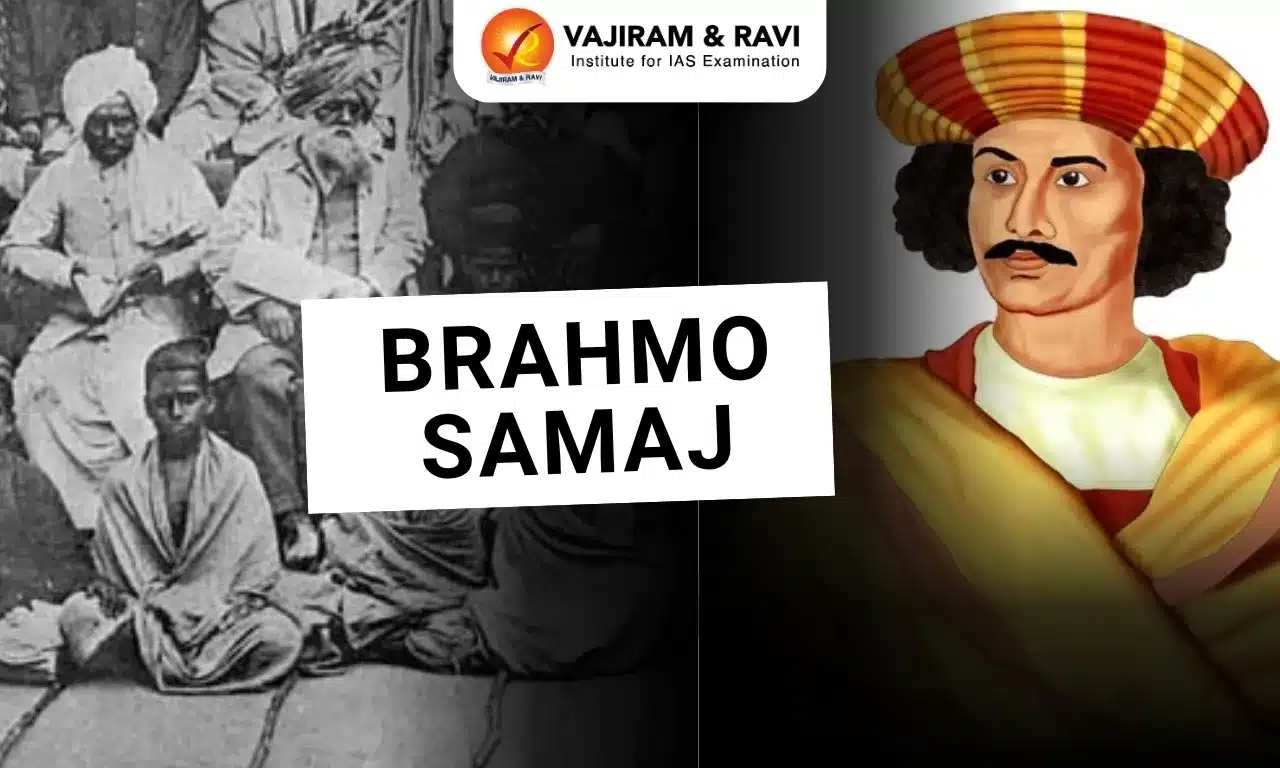
The Brahmo Samaj was a socio-religious reform movement that played a pivotal role in transforming Indian society during the 19th century. The original Brahmo Sabha was founded by Raja Ram Mohan Roy in 1828, while the Brahmo Samaj of India was founded by Keshab Chandra Sen in 1866. The movement aimed to eliminate social evils and promote a more rational and ethical approach to religion.
The Brahmo Samaj spearheaded the Indian Renaissance. By championing monotheism, rationalism, and human rights, it challenged oppressive socio-religious practices and laid the foundation for modern Indian social reform and national consciousness.
Brahmo Samaj History
The Brahmo Samaj was founded on August 20, 1828, by Raja Ram Mohan Roy in Calcutta (now Kolkata), West Bengal. It emerged as a response to India's prevailing social and religious issues, seeking to reform Hinduism and promote a more rational and ethical approach to religion.
- Atmiya Sabha (1814): Raja Ram Mohan Roy initially formed this group for intellectuals to discuss religious and social issues. It laid the foundation for reform by advocating monotheism, rationalism, and ethical behaviour.
- Establishment of Brahmo Sabha (1828): On August 20, 1828, Ram Mohan Roy launched the Brahmo Sabha, later renamed Brahmo Samaj, to give concrete expression to universal worship. Young Bengal leader Tarachand Chakravarti served as its first secretary.
- Core Philosophy & Foundational Pillars: Anchored in twin foundational pillars of the Upanishads and Vedas, the Brahmo Samaj synthesised elements of Hinduism, Islam, and Christianity to unite people against idol worship, caste distinctions, and oppressive social customs.
- Support: The Brahmo Samaj gained support from many reformers and became a symbol of progressive thought, challenging traditional Hindu practices and advocating for social and religious reforms.
- However, a few organisations, such as the Dharma Sabha, were established to counter the social reform movements led by Raja Ram Mohan Roy.
Brahmo Samaj Founder
The founder of Brahmo Samaj was Raja Ram Mohan Roy, who established the reformist movement alongside Dwarkanath Tagore in 1828. Prominent figures like Debendranath Tagore, Keshab Chandra Sen, Anandamohan Bose, and Rabindranath Tagore were associated with the movement and played significant roles in shaping its development.


Brahmo Samaj Leaders
The Brahmo Samaj was associated with several prominent personalities who played significant roles in shaping the movement and advancing its objectives. The prominent leaders of the Brahmo Samaj included Raja Ram Mohan Roy, Debendranath Tagore, Keshab Chandra Sen, Anandamohan Bose and Rabindranath Tagore.
Raja Ram Mohan Roy (1772-1833)
Raja Ram Mohan Roy was the founder of the Brahmo Samaj and is often regarded as the "Father of the Indian Renaissance". He was a visionary reformer who sought to eliminate social evils and promote a more rational and ethical approach to religion. Roy's efforts to abolish sati and promote women's rights were instrumental in advancing social reform in India.
Debendranath Tagore (1817-1905)
Debendranath Tagore, Rabindranath Tagore's father, was a major leader in the Brahmo Samaj. He helped shape its ideas, spread its influence, and stressed the importance of spirituality and ethical living for religious reform.
Keshab Chandra Sen (1838-1884)
Keshab Chandra Sen was a key leader of the Brahmo Samaj who worked to modernise and grow the movement. He pushed for social reforms like women's education and ending caste discrimination, helping to connect the Brahmo Samaj with the larger Indian society.
Anandamohan Bose (1847-1906)
Anandamohan Bose was a key leader of the Sadharan Brahmo Samaj, supporting social reform and education. He pushed for equality and justice, playing a vital role in the movement's efforts for social and religious change.
Rabindranath Tagore (1861-1941)
Nobel-winning poet Rabindranath Tagore was closely linked to the Brahmo Samaj. His writings and ideas reflected the movement's focus on reason, ethics, and social justice.
Brahmo Samaj Objectives
The Brahmo Samaj was founded with specific aims and objectives, reflecting its commitment to social and religious reform. These objectives were designed to promote a more rational and ethical approach to religion and address the pressing social issues of the time.
- Monotheism: The Brahmo Samaj promoted monotheism, rejecting idol worship and superstitions in Hinduism, and aimed for a spiritual, ethical approach to religion.
- Social Equality and Justice: The Brahmo Samaj pushed for social equality, challenging the caste system and advocating for the end of practices like sati and child marriage.
- Rational and Ethical Conduct: The movement emphasised rational thought, ethical conduct, and women's rights, promoting gender equality and education.
- Religious Tolerance and Rejection of Superstition: It encouraged religious tolerance and sought harmony among faiths. It rejected superstitious practices, promoting a more rational and scientific outlook on religion.
Brahmo Samaj Divisions
The Brahmo Samaj experienced several splits and divisions throughout its history, reflecting differing perspectives on social and religious reform. These divisions were often driven by differing interpretations of the movement's principles and objectives, as well as personal and ideological differences among its leaders.
- First Division of Brahmo Samaj (1866): The first major split occurred in 1866 due to ideological differences between Debendranath Tagore and Keshab Chandra Sen. Debendranath Tagore represented the older, relatively conservative section of the movement. Keshab Chandra Sen represented the younger and more radical reformers.
- The division resulted in two organisations: Adi Brahmo Samaj and Brahmo Samaj of India.
- Second Division of Brahmo Samaj (1878): The second major division occurred in 1878 within Keshab Chandra Sen's Brahmo Samaj of India. Keshub Chandra Sen broke his own anti-child-marriage rules by marrying his minor daughter to a wealthy ruler.
- This caused his followers to break away into two groups: Sadharan Brahmo Samaj and Navavidhan (New Dispensation).
Adi Brahmo Samaj
The Adi Brahmo Samaj was the original branch of the Brahmo Samaj, led by Debendranath Tagore after Raja Ram Mohan Roy's death. It focused on spiritual and philosophical reform, supporting monotheism, ethical living, and social change while balancing traditional values with modern ideas.
Brahmo Samaj of India
The Brahmo Samaj of India was started by Keshab Chandra Sen in 1866 after a split in the original movement. It took a more modern and radical approach to social and religious reform. Keshab Chandra Sen advocated more vigorous social reform, including greater emphasis on women's emancipation, education and the abolition of caste distinctions.
Sadharan Brahmo Samaj
The Sadharan Brahmo Samaj was formed in 1878 after a split in the original movement, led by Anandamohan Bose and other progressive leaders like Shibchandra Deb and Umesh Chandra Datta. This group focused on a more inclusive and progressive approach to social and religious reform, promoting gender equality, education, and social justice to address important social issues and build a fairer society.
Brahmo Samaj Socio-Religious Reforms
The Brahmo Samaj was at the forefront of socio-religious reforms in India, challenging deeply entrenched social and religious practices and advocating for a more equitable and enlightened society.
- Abolition of Sati: One of the Brahmo Samaj's most significant achievements was its campaign against the practice of Sati. The movement's efforts, led by Raja Ram Mohan Roy, culminated in the British government's abolition of Sati in 1829 during the tenure of Lord William Bentinck.
- Child Marriage: The Brahmo Samaj also sought to eliminate the practice of child marriage, advocating for age-appropriate marriages and emphasising the importance of education and empowerment for young girls.
- Widow Marriage Advocacy: The Brahmo Samaj advocated for widow remarriage, challenging the social stigma associated with widows in Indian society. It sought to provide widows with equal opportunities for marriage and social participation, reflecting its commitment to gender equality and social justice.
- Women's Education and Status: The Brahmo Samaj advocated equal education and employment opportunities for women, challenging traditional gender roles and promoting gender equality. Its focus on women's education helped advance social reform in India and set the stage for future efforts to empower women.
Brahmo Samaj Contributions
The Brahmo Samaj made several significant contributions to Indian society, shaping the country's social and religious landscape and inspiring future generations of reformers and thinkers.
- Advancement of Social Reforms: The movement's efforts to challenge oppressive social practices such as sati, child marriage, and caste discrimination were instrumental in advancing social reform in India. Its commitment to social equality and justice laid the groundwork for future initiatives to create a more equitable society.
- Promotion of Modern Education: The Brahmo Samaj was instrumental in promoting modern, secular education throughout India. It encouraged the establishment of schools and colleges that provided scientific and rational education as opposed to traditional religious and ceremonial learning.
- Freedom of Speech and Press: The Brahmo Samaj strongly supported civil liberties, including free speech and the press. Members of the Samaj actively participated in journalism, using the press to spread reformist ideas and criticise social injustices.
- Influence on other Reform Movements: The Brahmo Samaj inspired several other reform movements in India, such as the Prarthana Samaj and Arya Samaj. Its focus on rationalism, social justice, and belief in one God resonated with many reformers.
- Inspiration for the Indian National Movement: Brahmo Samaj's ideas of social justice, civil rights, and national unity also influenced leaders of the Indian National Movement, helping shape the intellectual groundwork for India's fight for independence.
Brahmo Samaj vs Arya Samaj
The Brahmo Samaj and the Arya Samaj were major 19th-century Indian reform movements. Both opposed idol worship, child marriage, and the caste system. However, Brahmo Samaj was a liberal, Western-influenced movement treating all religions equally, while Arya Samaj was a revivalist movement focused on the infallible Vedas. Key differences between the Brahmo Samaj and the Arya Samaj include the following:
|
Aspect |
Brahmo Samaj |
Arya Samaj |
|
Founded |
1828 by Raja Ram Mohan Roy |
1875 by Swami Dayanand Saraswati |
|
Core Philosophy |
Rationalism, universal monotheism and synthesis with Western ideas |
“Back to the Vedas”; Vedas considered infallible and the ultimate source of truth |
|
Religion & Culture |
Respected all major religions, including Islam and Christianity |
Used aggressive or assertive propagation, later introducing the Shuddhi movement |
|
Social Reforms |
Opposed Sati, polygamy and caste rigidities |
Opposed caste by birth; advocated merit-based social classification |
|
Education |
Promoted modern Western education for men and women |
Established DAV institutions, combining Vedic learning with modern education |
Brahmo Samaj Decline
Despite its significant contributions to Indian society, the Brahmo Samaj experienced a decline in influence and impact in the late 19th and early 20th centuries. Several factors contributed to this decline, reflecting the challenges faced by the movement in adapting to changing social and political dynamics.
- Internal Conflicts: The Brahmo Samaj faced many internal divisions and conflicts over social and religious reform, which weakened its unity and led to a decline in its influence.
- Changing Context: The social and political changes in India during the late 19th and early 20th centuries, including the rise of nationalist movements, shifted focus away from the Brahmo Samaj’s reform efforts, further diminishing its impact.
- New Movements: New reform movements like the Arya Samaj and Ramakrishna Mission gained prominence, often adopting bolder approaches to reform. These movements overshadowed the Brahmo Samaj and contributed to its decline.
Brahmo Samaj UPSC PYQs
Q1: Trace the rise and growth of socio-religious reform movements with special reference to Young Bengal and Brahmo Samaj. (UPSC Mains 2021)
Q2: Consider the following statements about Raja Ram Mohan Roy: (UPSC Prelims 2025)
- He possessed great love and respect for the traditional philosophical systems of the East.
- He desired his countrymen to accept the rational and scientific approach and the principle of human dignity and social equality of all men and women.
Which of the statements given above is/are correct?
(a) 1 only
(b) 2 only
(c) Both 1 and 1
(d) Neither 1 nor 2
Ans: (c)
Q3: Which of the following statements is/are correct regarding Brahmo Samaj? (UPSC Prelims 2012)
- It opposed idolatry.
- It denied the need for a priestly class to interpret the religious texts.
- It popularised the doctrine that the Vedas are infallible.
Select the correct answer using the codes given below:
(a) 1 only
(b) 1 and 2 only
(c) 3 only
(d) 1, 2 and 3
Ans: (b)

 Last updated on Oct, 2026
→ UPSC 2027 Notification will be released on 13 January 2027 at upsconline.nic.in.
→ Check Nobel Prize 2026 Winners List here.
→ Download PIB PRiSM Monthly Magazine 2026 here.
→ Check UPSC Monthly Current Affairs Magazine The Recitals here.
→ Check out the latest UPSC Syllabus here.
→ Download UPSC Model Answers for Mains 2026
→ UPSC Mains Question Paper 2026 is out now for Essay & GS Paper 1, 2, 3 & 4.
→ UPSC Calendar 2027 has been released.
→ Enroll in Vajiram & Ravi’s UPSC Mains Test Series 2027 for structured answer writing practice, expert evaluation, and exam-oriented feedback.
→ Join Vajiram & Ravi’s UPSC Mentorship Program 2027 for personalized guidance, strategy planning, and one-to-one support from experienced mentors.
→ Go through the UPSC Mains Previous Year Papers to enhance your preparation.
→ UPSC has released UPSC Toppers List 2025 with the Civil Services final result on its official website.
→ Also check Best UPSC Coaching in India
Brahmo Samaj FAQs
Q1. Who founded Brahmo Samaj and why? +
Q2. Is Brahmo Samaj still active?+
Q3. What is the history of Brahmo Samaj?+
Q4. Are Atmiya Sabha and Brahmo Samaj the same?+
Q5. What are the two pillars of Brahmo Samaj?+
Tags: brahmo samaj quest upsc modern history notes