The Theosophical Society was founded in New York City in 1875 to bridge the divide between East and West by emphasising the similarities in human culture. In India, the Theosophical Society played a key role in the Hindu awakening by promoting literary and research activities, reviving faith in Hindu philosophies, studying Aryan religion, publishing and translating scriptures, and supporting reforms and education.
The Society played an important role in the revival of interest in Indian philosophical and religious traditions. However, the movement faced criticism over its occult and mystical claims, internal disagreements, and controversies surrounding some of its teachings and personalities.
Theosophical Society About
Theosophy is a philosophical and religious system that combines mystical insight with teachings about God and the world. It was an occult movement that originated in the 19th century and has roots in ancient Gnosticism and Neoplatonism. Theosophy is the knowledge that forms the basis of all religions, free from superstitions.
- It offers a philosophy that clarifies existence, explaining how law and compassion govern the universe while revealing the spiritual essence of humanity.
- Theosophy Meaning: Theosophy, derived from the Greek words for "god" (Theos) and "wisdom" (Sophia), means "divine wisdom." It emphasises a syncretic approach to uncovering universal truths from various religious traditions, including Hinduism, Buddhism, and Christianity.
Founder of Theosophical Society
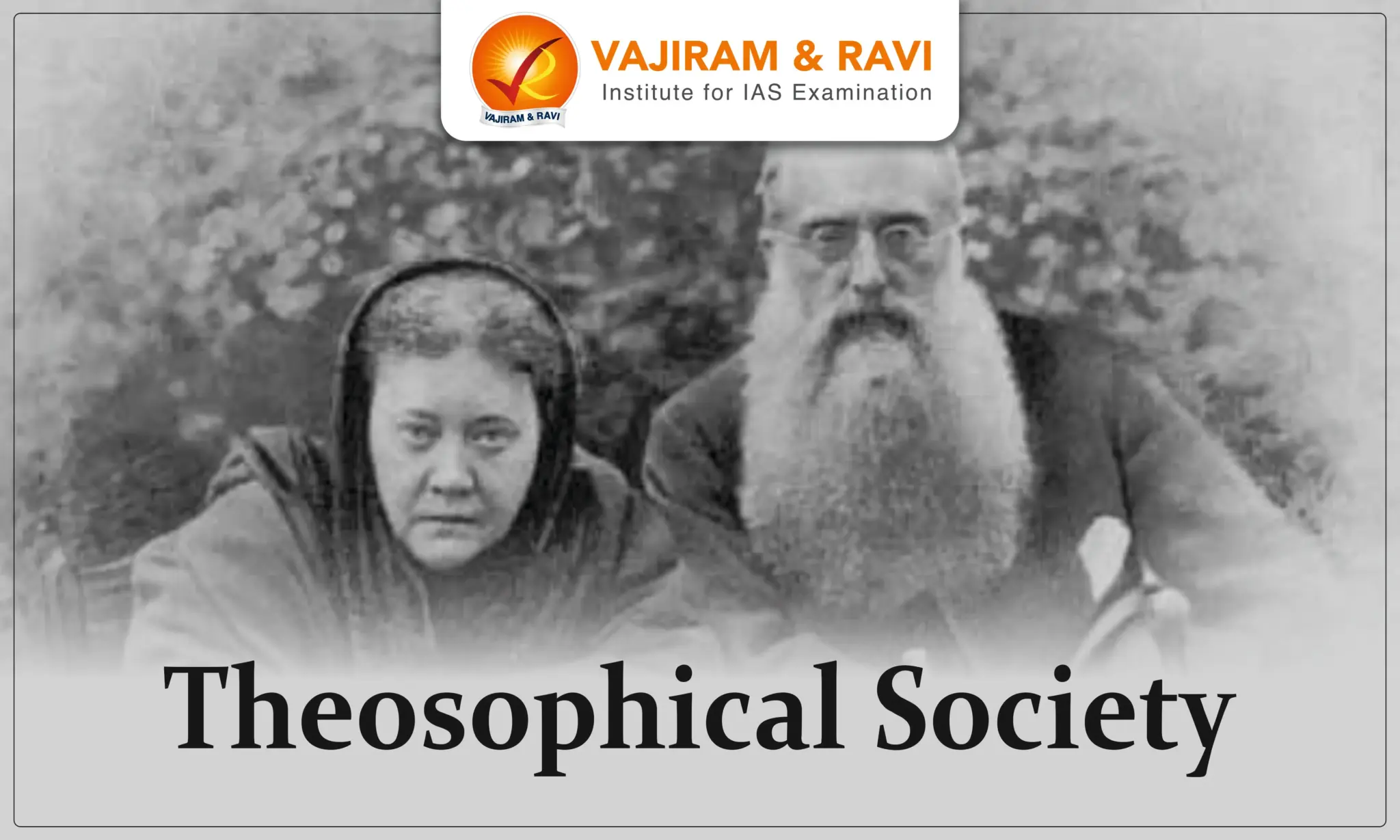
The Theosophical Society was founded in New York City on November 17, 1875, by Helena Petrovna Blavatsky, a Russian occultist and author, and Henry Steel Olcott, an American military officer and lawyer.
Theosophical Society Objectives
The primary goal of the Society was to conduct comparative studies of various religions, philosophies, and sciences. It also aimed to discover the indomitable spirit hidden within humans, emphasising the Universal Brotherhood and Hindu reform. The society also sought to investigate unexplained natural laws and man's latent powers.
Three Tenets of Theosophy
The Society is built upon three foundational tenets: Universal Brotherhood, which fosters unity and compassion; Comparative Study, which promotes the exploration of diverse beliefs; and Exploration of the Unknown, which seeks spiritual enlightenment through nature’s mysteries.
- Universal Brotherhood: This tenet emphasises the unity of all humanity and the importance of compassion and understanding across different races, religions, and cultures.
- Comparative Study: This tenet encouraged the study of various religions, philosophies, and sciences to gain a deeper understanding of universal truths.
- Exploration of the Unknown: This tenet investigates the unexplained laws of nature and the latent powers within humans to achieve spiritual enlightenment


Theosophical Society Features
The Theosophical Society is characterised by its inclusive and universalist outlook, embracing people from all backgrounds and promoting a syncretic approach to spirituality. Several key features distinguish the Theosophical Society:
- Universalism: The Society welcomed people from all religious, cultural, and social backgrounds. It promoted the concept of universal brotherhood, which transcends all human divisions.
- Syncretism: It took a syncretic approach to spirituality, combining elements from various religious traditions to discover universal truths.
- Education and Reform: The Theosophical Society is dedicated to social reform, focusing on caste discrimination, women's rights, and education. It views education as vital for both personal growth and societal advancement.
- Interdisciplinary Approach: The Society promotes studying science, philosophy, and religion as interconnected disciplines. It aims to investigate the mysteries of the universe through an interdisciplinary lens.
Theosophical Society In India
Madame Blavatsky and Colonel Olcott were greeted with open arms everywhere they went in 1879 during their tour of India. This gave the movement its basic structure in India. Thus, the Theosophical Society shifted its headquarters to India in 1882, establishing itself in Adyar, Chennai (then Madras).
- They saw India as ideal for promoting Theosophy, which sought to uncover deeper spiritual truths and universal brotherhood among religions.
- It accepted Hindu beliefs in reincarnation and karma and was inspired by Upanishad philosophy, the Samkhya, yoga, and Vedanta schools of thought.
- The shift to India marked a pivotal moment for the Theosophical Society, enabling deeper engagement with Eastern traditions and playing a vital role in the Indian Renaissance and cultural revival.
Theosophical Society Contributions
The Theosophical Society contributed to education, social and cultural awakening, religious revival and Indian nationalism. In India, Annie Besant played a particularly important role in translating the Society’s ideas into educational and public activities.
Educational Contribution
The Society placed considerable emphasis on education that combined Indian cultural traditions with modern learning.
- Central Hindu College: Annie Besant established the Central Hindu College at Varanasi in 1898, which later became associated with the development of Banaras Hindu University.
- Spread of schools: Theosophical Society lodges supported the establishment of schools in different parts of India.
- Madanapalle College: The Society supported educational development at Madanapalle, where the college became an important centre of educational and national activity.
- National education: The movement promoted education that combined Indian cultural values with Western educational methods.
Society and Cultural Contribution
The Society encouraged social service, cultural awareness and renewed interest in Indian religious and philosophical traditions.
- Cultural revival: Annie Besant's lectures and activities encouraged greater interest in Indian philosophy, religion and cultural heritage.
- Social service: The Theosophical Order of Service, established in 1908, encouraged members to undertake activities aimed at serving people and society.
- Women’s participation: Besant encouraged women's participation in public life and supported organisations connected with women's development.
- Religious understanding: The Society promoted the study and comparative understanding of different religions and philosophies.
Annie Besant and Theosophical Society
Annie Besant was one of the most prominent Theosophists and played a crucial role in both the Theosophical Society and the Indian freedom struggle. She became a member of the Theosophical Society in 1889 and served until she died in 1933. Her leadership significantly expanded the Society's influence, especially in India.
- Political awakening: Besant used her lectures, writings, and organisations to promote greater political awareness among Indians.
- Home Rule: Besant became a prominent advocate of Home Rule for India, and her political activities helped strengthen the nationalist movement.
- National education: Educational institutions associated with the movement became centres for nationalist ideas and political activity.
- Indian National Congress: Annie Besant served as President of the Indian National Congress in 1917, marking her important role in the nationalist movement.
Theosophical Society Limitations
The Theosophical Society had an important role in religious and cultural revival, but its influence was constrained by the controversial nature of occult claims, internal divisions, and the limited scope of its organisational activities.
- Occult and Mystical Claims: The Society's emphasis on occult research and spiritual phenomena attracted criticism because such claims were difficult to establish through scientific methods.
- Annie Besant herself acknowledged that occult observations could not be scientifically proven.
- Internal Divisions: The movement experienced organisational conflicts, including the 1895 split in the American Section following disagreements over autonomy and leadership.
- Dependence on Prominent Leaders: In India, much of the Society's public influence was closely associated with personalities such as Annie Besant, whose leadership connected Theosophy with education, social work and nationalism.
- Limited Political Character: Although Annie Besant played an important role in the Home Rule movement and the Indian National Congress, the Theosophical Society itself remained primarily a philosophical and spiritual organisation, rather than a political organisation.
Theosophical Society UPSC PYQs
Q1: Annie Besant was (UPSC Prelims 2013)
- Responsible for starting the Home Rule Movement
- The founder of the Theosophical Society
- Once the President of the Indian National Congress
Select the correct statement/statements using the codes given below.
(a) 1 only
(b) 2 and 3 only
(c) 1 and 3 only
(d) 1, 2 and 3
Ans: (b)

 Last updated on Oct, 2026
→ UPSC 2027 Notification will be released on 13 January 2027 at upsconline.nic.in.
→ Check Nobel Prize 2026 Winners List here.
→ Download PIB PRiSM Monthly Magazine 2026 here.
→ Check UPSC Monthly Current Affairs Magazine The Recitals here.
→ Check out the latest UPSC Syllabus here.
→ Download UPSC Model Answers for Mains 2026
→ UPSC Mains Question Paper 2026 is out now for Essay & GS Paper 1, 2, 3 & 4.
→ UPSC Calendar 2027 has been released.
→ Enroll in Vajiram & Ravi’s UPSC Mains Test Series 2027 for structured answer writing practice, expert evaluation, and exam-oriented feedback.
→ Join Vajiram & Ravi’s UPSC Mentorship Program 2027 for personalized guidance, strategy planning, and one-to-one support from experienced mentors.
→ Go through the UPSC Mains Previous Year Papers to enhance your preparation.
→ UPSC has released UPSC Toppers List 2025 with the Civil Services final result on its official website.
→ Also check Best UPSC Coaching in India
Theosophical Society FAQs
Q1. Who founded the Theosophical Society in India?+
Q2. Why did Krishnamurti leave the Theosophical Society?+
Q3. Does the Theosophical Society believe in God?+
Q4. What is the main purpose of the Theosophical Society?+
Q5. Is Annie Besant the founder of the Theosophical Society?+
Tags: quest theosophical society upsc modern history notes