The Young Bengal Movement was a pioneering intellectual and social reform movement that emerged in the early 19th century in Bengal. It marked a crucial moment in India's history as young thinkers, inspired by European Enlightenment and liberal values, began to question the entrenched orthodoxies and traditions of Indian society.
Under the leadership of Henry Vivian Derozio, the movement challenged conservative norms and promoted rational thinking. While its influence was limited during its time, the movement played an essential role in shaping the intellectual awakening in Bengal, sowing the seeds for later reformist and nationalist movements.
Young Bengal Movement
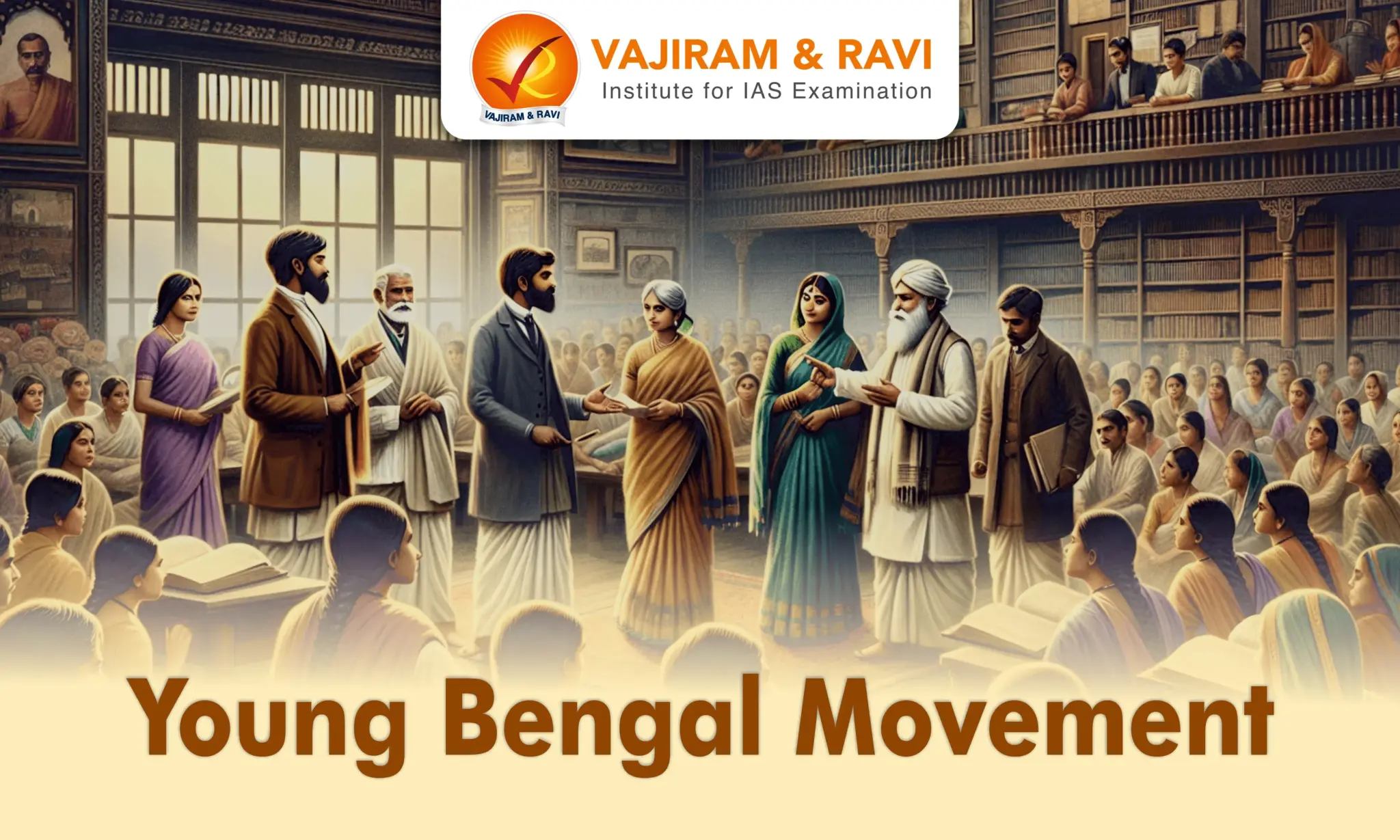
The Young Bengal Movement was an intellectual and social reform movement in Bengal during the early 19th century. Led by Henry Louis Vivian Derozio, a professor at Hindu College, Kolkata, the movement consisted of young radical thinkers who sought to question orthodox practices and promote modern, rational ideas. They were inspired by European Enlightenment values, especially liberalism, and aimed to challenge traditional Indian society.
- The Young Bengal Movement was driven by a strong desire to transform Indian society by instilling rational, progressive ideas among the youth.
- Its primary goals were to challenge the deeply entrenched social norms and to replace them with modern, enlightened principles.
- The movement aimed to foster a critical-thinking culture and promote social and intellectual reforms, ensuring that Indian society could evolve beyond outdated traditions.
Young Bengal Movement Ideas
The movement's ideas were largely shaped by Enlightenment thought and the liberal ideals of the French Revolution. Derozio's influence led the Derozians to embrace rationalism and scientific thinking, rejecting superstitions and conservative religious practices. Some of their key ideas included:
- To promote reason and evidence over blind faith.
- The Derozians believed in social equality for all, rejecting the oppressive systems of the time.
- The Derozians actively promoted the education and emancipation of women.
- They continued Rammohan Roy's legacy of raising awareness on critical social, political, and economic issues.


Young Bengal Movement Advocacy for Reforms
The Young Bengal Movement was not just about intellectual debates; it also pushed for tangible social and political reforms in colonial India. Their demands covered a wide range of issues, from civil liberties to the treatment of the working class.
- The Derozians demanded the inclusion of Indians in higher grades of government services.
- They advocated for protecting ryots (peasants) from the exploitation and oppression of zamindars (landlords).
- The movement sought improved conditions for Indian labourers working abroad in British colonies.
- They called for reforms in the administration of the British East India Company, seeking to hold it accountable for its policies and practices.
- The Derozians emphasized civil liberties, demanding greater freedoms, including a free press and fair trials for all.
Legacy and Impact of the Young Bengal Movement
Despite its bold ideas, the Young Bengal Movement struggled to achieve widespread success due to several factors: it failed to connect with the masses, particularly the rural poor; its radical views faced strong opposition from conservatives; and its activism was largely limited to intellectual debates rather than practical engagement.
- However, the movement significantly influenced Bengal's intellectual and reformist landscape.
- By continuing the challenge against orthodoxy started by reformers like Rammohan Roy, the Derozians promoted rationalism, free thought, and secularism, laying the groundwork for future social reforms in Bengal and India.
- As Surendranath Banerjea noted, the Derozians were pioneers of modern Bengali society, inspiring future generations.

 Last updated on Oct, 2026
→ UPSC 2027 Notification will be released on 13 January 2027 at upsconline.nic.in.
→ Check Nobel Prize 2026 Winners List here.
→ Download PIB PRiSM Monthly Magazine 2026 here.
→ Check UPSC Monthly Current Affairs Magazine The Recitals here.
→ Check out the latest UPSC Syllabus here.
→ Download UPSC Model Answers for Mains 2026
→ UPSC Mains Question Paper 2026 is out now for Essay & GS Paper 1, 2, 3 & 4.
→ UPSC Calendar 2027 has been released.
→ Enroll in Vajiram & Ravi’s UPSC Mains Test Series 2027 for structured answer writing practice, expert evaluation, and exam-oriented feedback.
→ Join Vajiram & Ravi’s UPSC Mentorship Program 2027 for personalized guidance, strategy planning, and one-to-one support from experienced mentors.
→ Go through the UPSC Mains Previous Year Papers to enhance your preparation.
→ UPSC has released UPSC Toppers List 2025 with the Civil Services final result on its official website.
→ Also check Best UPSC Coaching in India
Young Bengal Movement FAQs
Q1. Who was the leader and inspirer of the Young Bengal movement 1820-30?+
Q2. What is the Young Bengal movement?+
Q3. What role did the Young Bengal movement play in the 19th-century reforms?+
Q4. What were the features of the Young Bengal movement?+
Q5. What are the limitations of the Young Bengal movement?+
Tags: quest young bengal movement