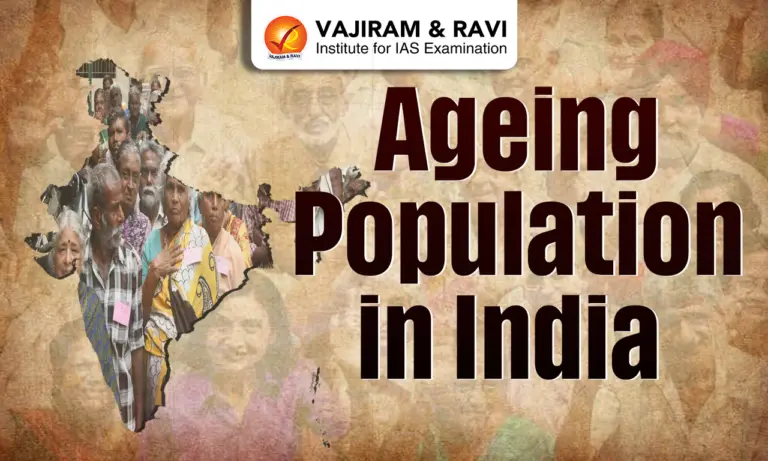
India is witnessing a rapid rise in its elderly population due to increasing life expectancy and declining fertility rates. According to the United Nations Population Fund India Ageing Report 2023, the country’s elderly population may rise from nearly 149 million to around 347 million by 2050. This demographic transition is exposing major gaps in India’s healthcare and social support systems, which remain largely designed for a younger population and short-term illnesses.
Issues in the Existing Elderly Healthcare System
India’s healthcare system is mainly hospital-centric and disease-oriented. However, ageing is not a single disease but a combination of multiple chronic conditions that require continuous and coordinated care. An elderly person may simultaneously suffer from hypertension, diabetes, Parkinson’s disease, arthritis and cognitive decline. Such conditions require rehabilitation, physiotherapy, emotional support and long-term monitoring rather than only hospital treatment. However, the existing healthcare system is not equipped for this complexity, leading to several structural gaps.
Systemic and Structural Gaps
- Hospital-centric approach: Focus remains on treatment after illness in hospitals rather than preventive and long-term elderly care, rehabilitation and home-based support.
- Weak long-term care infrastructure: Assisted living, rehabilitation centres and structured transition care systems are inadequate to support ageing needs.
- Poor continuity of care: Weak coordination between hospitals, clinics and home-care systems disrupts follow-up and long-term management.
Clinical and Service Delivery Gaps
- Poor management of chronic diseases: Over 75% of elderly suffer from chronic illnesses, but care remains fragmented rather than integrated.
- Weak post-hospital recovery support: Lack of physiotherapy, trained caregivers and monitoring after discharge leads to complications and readmissions.
- Limited home-based care: Home healthcare, palliative care and remote monitoring systems are still underdeveloped despite rising demand.
Human Resource and Capacity Gaps
- Shortage of geriatric specialists: India has fewer than 1,000 geriatricians for over 150 million elderly people; in many districts, even basic elderly-specific consultation is unavailable.
- Urban–rural divide: Rural and smaller towns have limited access to specialised elderly care services and trained professionals.
Financing and Insurance Gaps
- High financial burden: Long-term treatment, medicines and caregiving lead to heavy out-of-pocket expenditure for families.
- Insurance bias: Only about 18% of elderly are insured, and schemes mainly cover hospitalisation, not home care or rehabilitation after discharge.
Infrastructure and Technology Gaps
- Weak digital healthcare systems: Absence of integrated health records leads to repeated tests; for example, elderly patients undergo duplicate diagnostics at different hospitals.
- Uneven access to essentials: Medicines, mobility aids and assistive devices are not uniformly available, especially in non-urban areas.
As a result, manageable chronic conditions often worsen over time, leading to avoidable hospitalisations, higher healthcare costs, repeated ICU admissions and significant physical, emotional and financial stress on elderly individuals and their families.
Reforms Needed in Elderly Healthcare
India requires a shift from a hospital-centric healthcare model to a comprehensive long-term elderly care ecosystem.
Strengthening Geriatric Workforce
- India must significantly increase geriatric medicine training seats.
- Specialised training programmes for elderly-care nurses and caregivers should be expanded.
- Healthcare Sector Skill Council (HSSC) should support accredited caregiver skilling systems.
- Physiotherapists and home-care professionals should become part of routine elderly healthcare.
Building Long-Term Care Infrastructure
- Rehabilitation centres and transition care facilities should be expanded.
- Assisted living and daycare facilities for senior citizens should be developed.
- Home-based elderly care systems should be strengthened.
- Community-based support services for elderly citizens should be improved.
Strengthening Digital Healthcare
- Telemedicine systems should support continuous elderly healthcare.
- Remote monitoring should be used for chronic disease management.
- Integrated digital health records should connect hospitals, clinics and home-care systems.
- The Ayushman Bharat Digital Mission should strengthen continuity of care for senior citizens.
Reforming Insurance and Financing
- Insurance schemes should cover preventive and home-based elderly care.
- Rehabilitation, physiotherapy and palliative care should receive insurance coverage.
- Long-term care financing should become part of healthcare policy.
- Out-of-pocket expenditure for elderly healthcare should be reduced.
Improving Healthcare Supply Chains
- Medicines and elderly-care consumables should be easily available in Tier-2 and Tier-3 cities.
- Access to mobility aids and assistive healthcare devices should improve nationwide.
- Healthcare supply systems should become more decentralised and elderly-friendly.


Ageing Population in India: Cultural Shift and Emerging Opportunities
A decade ago, professional care for ageing parents was often seen as family neglect in India. Elderly care was expected to remain entirely within the household, regardless of medical complexity or caregiving burden.
Today, this perception is changing steadily. Families increasingly view senior care as a responsible and informed extension of care rather than a replacement for family responsibility. Key changes include:
- Shift from informal family-only care to acceptance of professional support systems.
- Change in mindset from “whether to spend” to “where to find reliable care providers”.
- Growing acceptance of organised senior care as a normal part of ageing support.
Emerging Senior Care Market: The cultural shift is directly translating into economic expansion of the senior care sector. Key indicators are-
- India’s home healthcare market is projected to reach $21.3 billion by 2027.
- The broader senior care industry is valued at around $30 billion with further growth potential.
- Increasing capital inflow into senior care and home healthcare services.
- Gradual development of regulatory frameworks for elderly care services.
This reflects the emergence of a structured care economy driven by ageing demographics and urbanisation.

 Last updated on Sep, 2026
→ UPSC 2027 Notification will be released on 13 January 2027 at upsconline.nic.in.
→ Check out the latest UPSC Syllabus here.
→ Download UPSC Model Answers for Mains 2026
→ UPSC Mains Question Paper 2026 is out now for Essay & GS Paper 1, 2, 3 & 4.
→ UPSC Calendar 2027 has been released.
→ Enroll in Vajiram & Ravi’s UPSC Mains Test Series 2027 for structured answer writing practice, expert evaluation, and exam-oriented feedback.
→ Join Vajiram & Ravi’s UPSC Mentorship Program 2027 for personalized guidance, strategy planning, and one-to-one support from experienced mentors.
→ Go through the UPSC Mains Previous Year Papers to enhance your preparation.
→ UPSC has released UPSC Toppers List 2025 with the Civil Services final result on its official website.
→ Also check Best UPSC Coaching in India
Ageing Population in India FAQs
Q1. What is the projected size of India’s elderly population by 2050? +
Q2. Why is ageing a challenge for India’s healthcare system? +
Q3. What are common health issues among elderly people in India?+
Q4. What is the main limitation of India’s current healthcare model for elderly care?+
Q5. What reforms are needed to improve elderly healthcare in India?+
Tags: ageing population in india