The Karnali River is one of the major Himalayan river systems of Nepal and India. It is known as the Karnali River in Nepal and becomes the Ghaghara River in India. The river is important for its geographical features, tributary network, biodiversity, agriculture, hydropower potential and the communities that depend on it. Karnali River Origin, Course, Location, Tributaries and its flow in India and Nepal is discussed in detail in this article.
Latest News about Karnali River
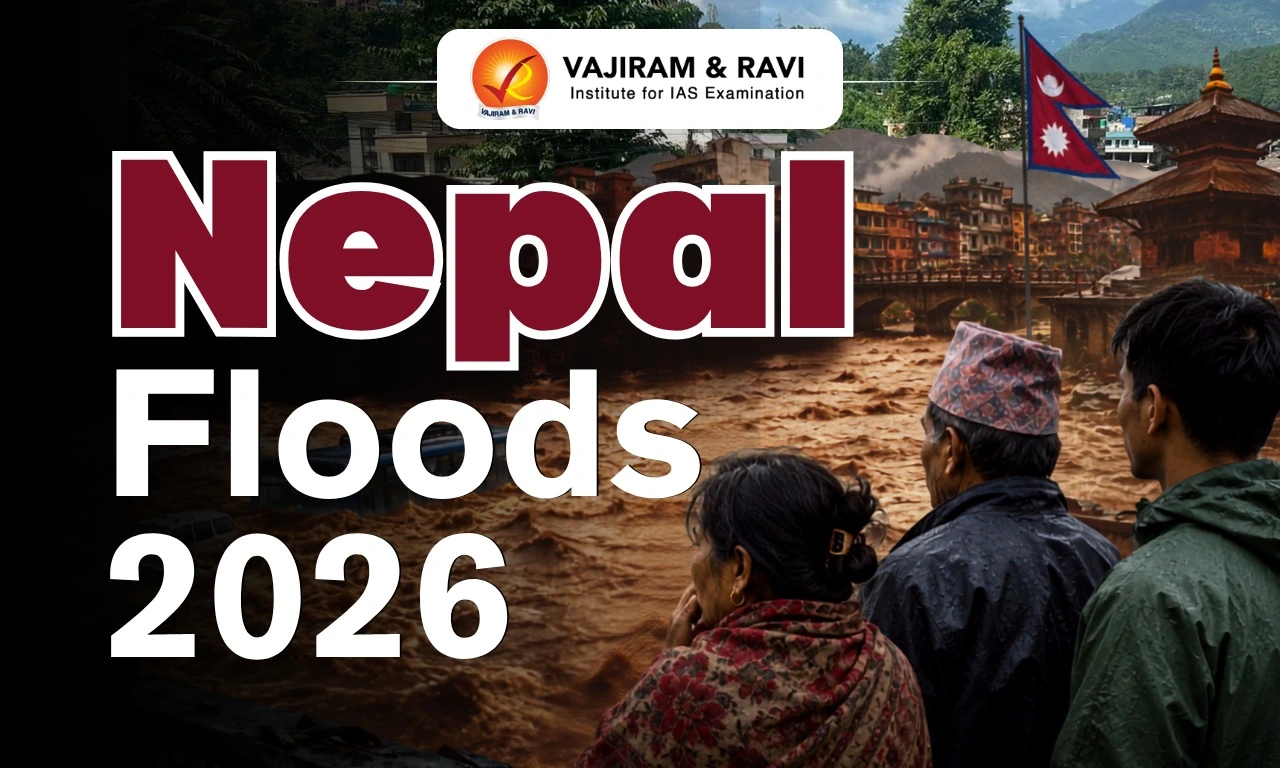
- The Karnali River has recently been in the news following massive flash floods in Nepal occurred on 26th August 2026, raising concerns about rising water levels and possible flooding in downstream areas.
- The Sashastra Seema Bal (SSB) alerted its formations along the 1,751-km India-Nepal international border and deployed 18 teams, including seven on standby, for relief and rescue operations.
- Vulnerable areas along the Ghaghara/Karnali and Mahakali river systems in Uttar Pradesh and Uttarakhand were also monitored due to the possibility of increased river flows and flooding.
- The situation highlights the transboundary nature of the Karnali River, which flows through Nepal and enters India as the Ghaghara River, making flood management important for both countries.
- The floods also caused severe damage in Nepal, particularly in Rasuwa district, where villages and critical infrastructure were affected and nearly 400 people were reported missing, including Indians and NRIs.
Also Read : Transboundary Rivers of India
Karnali River Origin, Course and Location
- Origin: The Karnali River originates in the Tibetan Plateau, near the Mapcha Khambab (Macha-khabab) Glacier in the vicinity of Mount Kailash. It is a snow-fed Himalayan river whose flow is supported by both glacial melt and monsoon rainfall.
- Course through Nepal: After originating in Tibet, the river flows southeastward through the Himalayan region of Nepal and passes through the country’s western and far-western areas. With a length of about 507 km within Nepal, it is considered the longest river flowing through Nepal.
- Karnali River Basin: The Karnali River Basin covers parts of Tibet, Nepal and India, with more than 90% of the basin lying in Nepal. The basin drains a large part of the mid-western and far-western regions of Nepal.
- Climate and rainfall: The river system receives most of its annual rainfall during the South Asian summer monsoon. Around 80% of the basin’s precipitation occurs during the summer monsoon, while parts of the region experience considerable water shortages during winter.
- Glaciers and glacial lakes: The Karnali Basin has a significant Himalayan cryospheric system, containing around 1,459 glaciers and 742 glacial lakes. These glaciers and lakes contribute to the river’s water resources and also make the basin vulnerable to climate-related hazards.
- Flow into India: After crossing the Nepal-India border, the river enters the Indian plains and continues its journey towards the Ganga river system. Its lower course is an important part of the Himalayan river network of northern India.


Karnali River System and Major Tributaries
- The Karnali River System is formed by several snow-fed and rain-fed rivers originating in the high Himalayas. These tributaries drain large mountainous areas before joining the main Karnali River.
- Humla Karnali: The Humla Karnali originates in Tibet and is one of the important headwater streams of the Karnali system. It joins the Mugu Karnali at Galwa, contributing to the formation of the main Karnali River.
- Mugu Karnali: The Mugu Karnali is another important river of the upper Karnali system. Its combination with the Humla Karnali forms an important part of the main river network.
- Bheri River: The Bheri River is one of the major tributaries of the Karnali. It drains a substantial area of western Nepal and contributes significantly to the water flow of the Karnali system.
- West Seti River: The West Seti is another important tributary of the Karnali River. It flows through western Nepal and is significant for the region’s water resources and hydropower potential.
- Other tributaries: The Karnali river system also includes rivers such as the Tila and Budhi Ganga, along with several smaller streams and tributaries that contribute to the basin’s extensive drainage network.
- The tributary network gives the Karnali Basin a large geographical spread and supports agriculture, freshwater ecosystems, local livelihoods and hydropower development across western Nepal.
Karnali River in India and Nepal
- Karnali in Nepal: In Nepal, the river is called the Karnali River and is regarded as the longest and largest river of Nepal. It flows through the western part of Nepal and supports many rural communities along its course.
- Ghaghara in India: After entering India, the Karnali River is known as the Ghaghara River or Ghaghra. It flows through Uttar Pradesh and Bihar before eventually joining the Ganga River, forming an important part of the Ganga river system.
- Sarayu connection: In parts of Uttar Pradesh, particularly around the Awadh region, the lower course is also associated with the Sarayu River. The Sarayu is culturally significant and is closely associated with the holy city of Ayodhya.
- Geographical significance: The river cuts through the Himalayan and Siwalik landscapes before reaching the plains. Its sediment and water contribute to the formation and maintenance of the alluvial plains of northern India.
- Transboundary river: The Karnali-Ghaghara system is a transboundary Himalayan river system, connecting the riverine landscapes of Tibet, Nepal and northern India. Its water resources are therefore important across national boundaries.
- Monsoon influence: The river’s discharge varies considerably with the South Asian monsoon and Himalayan snow and glacier melt. Heavy monsoon rainfall can increase the risk of flooding, while low winter flows can contribute to water shortages.
Karnali River Significance
- Lifeline for local communities: The Karnali is an important source of water for communities living across western Nepal. People depend on the river and its tributaries for agriculture, fishing, household needs and other local activities.
- Agricultural importance: River water supports irrigation and riverbank agriculture. The sediments carried by the river also help maintain fertile alluvial areas, particularly as the river moves towards the plains.
- Biodiversity hotspot: The Karnali Basin supports rich freshwater biodiversity, including more than 70 native fish species as well as several important aquatic and terrestrial species. Its relatively free-flowing stretches are especially valuable for river ecosystems.
- Wildlife habitat: The river and its surrounding floodplains provide habitats for species such as the Ganges river dolphin and gharial, while nearby protected landscapes support other wildlife, including tigers.
- Hydropower potential: With its steep gradients, large water flow and extensive network of tributaries, the Karnali River has considerable hydropower potential. Its water resources are therefore important for Nepal’s future energy development.
- Tourism and adventure activities: The river’s strong currents and rugged landscape make it a major destination for whitewater rafting and kayaking. Adventure tourism along the Karnali also provides livelihood opportunities for local communities.
- Ecological importance: The largely free-flowing nature of the main Karnali makes it valuable for maintaining sediment movement, aquatic habitats, fish migration and downstream ecosystems.
- Climate change vulnerability: The Karnali Basin is considered highly vulnerable to climate change. Changes in rainfall, glacier and snow conditions and extreme weather can increase the risks of floods, landslides, droughts, food insecurity and intense rainfall events.
- Regional water resource: As the Karnali continues into India as the Ghaghara, its water contributes to the wider Ganga river system, making it important not only for Nepal but also for the downstream plains of northern India.

 Last updated on August, 2026
→ UPSC Mains 2026 commenced on 21st August 2026 and will continue through 30th August 2026, as per the official examination schedule.
→ UPSC Mains Question Paper 2026 is out now for Essay & GS Paper 1, 2, 3 & 4.
→ UPSC Mains GS Paper 1 2026 is out now.
→ UPSC Mains GS Paper 2 2026 is out now.
→ UPSC Mains GS Paper 3 2026 is out now.
→ UPSC Mains GS Paper 4 2026 is out now.
→ Check out the latest UPSC Syllabus 2026 here.
→ UPSC Mains Admit Card 2026 is now out.
→ Enroll in Vajiram & Ravi’s UPSC Mains Test Series 2027 for structured answer writing practice, expert evaluation, and exam-oriented feedback.
→ Join Vajiram & Ravi’s UPSC Mentorship Program 2027 for personalized guidance, strategy planning, and one-to-one support from experienced mentors.
→ Go through the UPSC Mains Previous Year Papers to enhance your preparation.
→ Download UPSC Mains Essay Paper 2025, UPSC Mains GS Paper-I 2025, UPSC Mains GS Paper-II 2025, UPSC Mains GS Paper-III 2025, UPSC Mains GS Paper-IV 2025, UPSC Mains English (Compulsory) Paper 2025, UPSC Mains Hindi (Qualifying) Paper 2025 here.
→ UPSC has released UPSC Toppers List 2025 with the Civil Services final result on its official website.
→ UPSC Calendar 2027 has been released.
→ Also check Best UPSC Coaching in India
Karnali River FAQs
Q1. What is the Karnali River?+
Q2. Where does the Karnali River originate?+
Q3. What is the length of the Karnali River in Nepal?+
Q4. What is the Karnali River called in India?+
Q5. What are the major tributaries of the Karnali River?+
Q6. Why is the Karnali River important?+
Q7. Which countries does the Karnali River flow through?+
Q8. What is the Karnali River Basin known for?+
Q9. What wildlife is found around the Karnali River?+
Q10. Why was the Karnali River in the news in 2026?+
Tags: environment environment notes geography geography notes karnali river