What’s in today’s article?
- Why in news?
- What Is the Eurozone?
- What are the requirements for joining the eurozone?
- What is Schengen area?
- News Summary
Why in news?
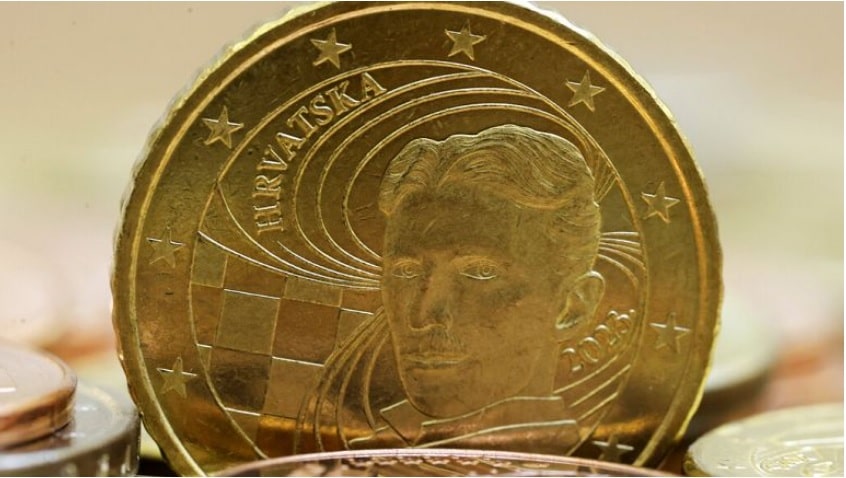
- Croatia adopted the European Union’s common currency, the euro, and joined the Schengen Area, Europe’s visa-free travel area, on January 1.
- With this, Croatia became the fully integrated member of EU. The country had joined the EU in 2013.
- It was the last time a country was admitted as a new member nation of EU.
What Is the Eurozone?
- All European Union Member States are part of Economic and Monetary Union (EMU) and coordinate their economic policy-making to support the economic aims of the EU.
- However, a number of Member States have taken a step further by replacing their national currencies with the single currency – the euro.
- These Member States form the euro area, also known as eurozone.
- In other words, it is a geographic and economic region that consists of all the European Union countries that have fully incorporated the euro as their national currency.
- As of January 2023, the eurozone consists of 20 countries in the European Union (EU):
- Austria, Belgium, Croatia, Cyprus, Estonia, Finland, France, Germany, Greece, Ireland, Italy, Latvia, Lithuania, Luxembourg, Malta, Netherlands, Portugal, Slovakia, Slovenia, and Spain.


What are the requirements for joining the eurozone?
- In order to join the eurozone and use the euro as their currency, EU nations must meet certain criteria consisting of four macroeconomic indicators that focus on:
- Price stability.
- Sound and sustainable public finances.
- The durability of convergence.
- Exchange rate stability
What is Schengen area?
- Schengen Area signifies a zone where 27 European countries, abolished their internal borders, for the free and unrestricted movement of people.
- Croatia became the 27th nation in the passport free Schengen zone.
- Member of this area include: 23 of the 27 EU member states and all members of the European Free Trade Association (Iceland, Liechtenstein, Norway and Switzerland).
- Being part of this area means that countries:
- do not carry out checks at their internal borders, except in cases of specific threats;
- carry out harmonised controls at their external borders, based on clearly defined criteria.
News Summary
- On January 1, 2023, Croatia switched to the shared European currency, the euro, and removed dozens of border checkpoints to join the world’s largest passport-free travel area.
How will this move help Croatia?
- Joining Europe’s ID-check-free Schengen zone means Croats will now be able to roam its 27 member countries without passports for work or leisure.
- Adopting the euro will offer Croatia the benefits stemming from deeper financial ties with the currency’s 19 other users and with the European Central Bank.
- It will also make traveling and doing business easier, removing the hassle of currency exchange for Croats going abroad and for tens of thousands of tourists.
- Experts also believe that the adoption of the euro will help protect Croatia’s economy at a time when inflation has been soaring globally due to Russia-Ukraine war.
- It will also provide a boost to tourism industry, which accounts for 20% of the country’s GDP.
What are the challenges?
- The country is entering the eurozone at a time when the bloc itself is in turmoil as the European Central Bank (ECB) tries to tame inflation.
- Before this, ECB was busy in rekindling the growth which was exceptionally low following the 2008 financial crisis.
- Also, Croatia will have to apply strict border control on its eastern frontier with non-EU neighbours.
- The fight against illegal migration remains the key challenge in guarding the EU’s longest external land border at 1350 km.
Q1) What is eurozone?
Eurozone is a geographic and economic region that consists of all the European Union countries that have fully incorporated the euro as their national currency.
Q2) What is Schengen area?
Schengen Area signifies a zone where 27 European countries, abolished their internal borders, for the free and unrestricted movement of people.
Source: Croatia rings in New Year as fully integrated EU member | European Council of the European Union | European Commission

 Last updated on Oct, 2026
→ UPSC 2027 Notification will be released on 13 January 2027 at upsconline.nic.in.
→ Check Nobel Prize 2026 Winners List here.
→ Download PIB PRiSM Monthly Magazine 2026 here.
→ Check UPSC Monthly Current Affairs Magazine The Recitals here.
→ Check out the latest UPSC Syllabus here.
→ Download UPSC Model Answers for Mains 2026
→ UPSC Mains Question Paper 2026 is out now for Essay & GS Paper 1, 2, 3 & 4.
→ UPSC Calendar 2027 has been released.
→ Enroll in Vajiram & Ravi’s UPSC Mains Test Series 2027 for structured answer writing practice, expert evaluation, and exam-oriented feedback.
→ Join Vajiram & Ravi’s UPSC Mentorship Program 2027 for personalized guidance, strategy planning, and one-to-one support from experienced mentors.
→ Go through the UPSC Mains Previous Year Papers to enhance your preparation.
→ UPSC has released UPSC Toppers List 2025 with the Civil Services final result on its official website.
→ Also check Best UPSC Coaching in India