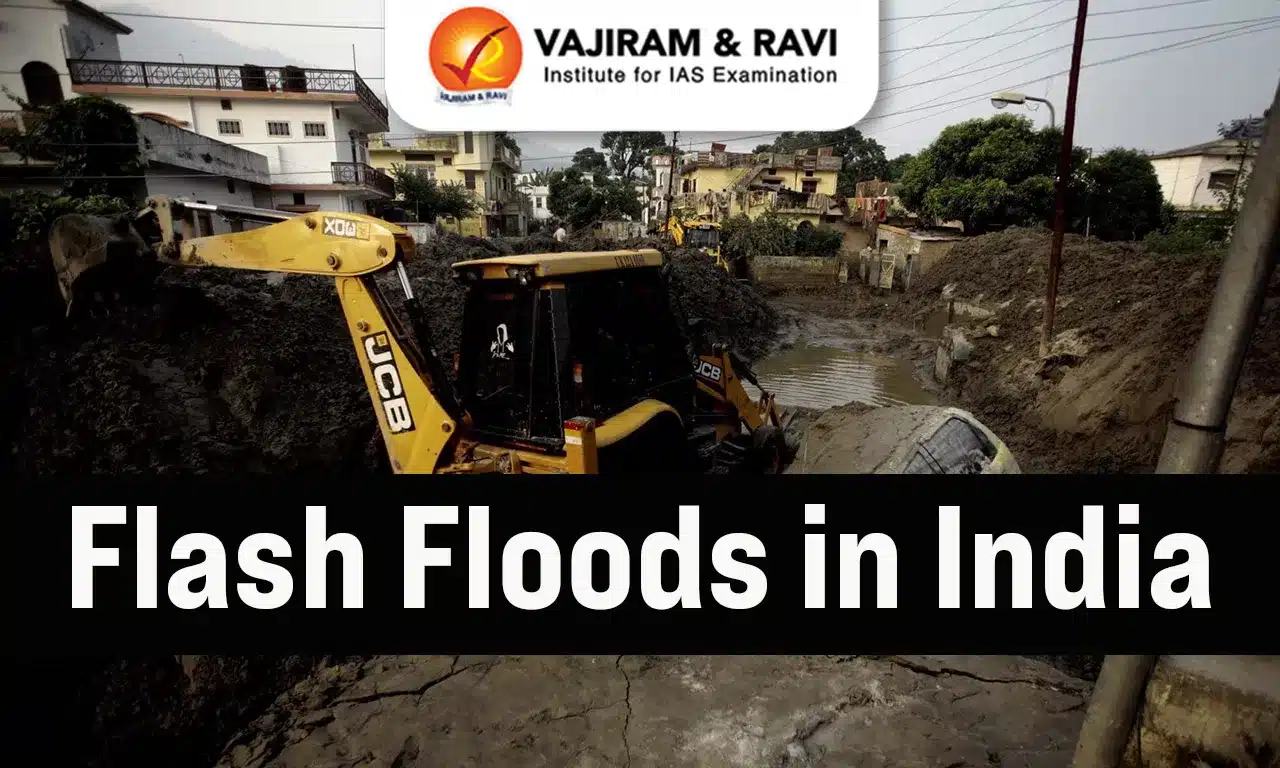
Flash floods are among the most dangerous natural disasters in India, causing sudden destruction to life, property, agriculture, and infrastructure. Unlike regular floods, flash floods develop within a few hours of intense rainfall or other triggering events, leaving very little time for evacuation. During the monsoon season, several states experience flash flood threats due to heavy rainfall, cloudbursts, overflowing rivers, and hilly terrain.
Why in News?
The India Meteorological Department (IMD) has issued red and orange alerts as the southwest monsoon has intensified across several parts of India. The weather agency has forecast extremely heavy rainfall over Gujarat, Konkan, and Madhya Maharashtra, with a flash flood risk in vulnerable districts.
Flash Flood In India
A flash flood is a sudden and rapid rise in water levels caused by intense rainfall, cloudbursts, dam failures, glacial lake outbursts, or blockage of natural drainage systems. These floods generally develop within six hours of heavy rainfall and can occur with little or no warning.
India experiences flash floods mainly during the southwest monsoon (June to September) when torrential rains fall over mountainous regions, river basins, and urban areas with poor drainage.


What Causes Flash Floods in India?
Flash floods in India occur due to a combination of natural factors and human activities that lead to the rapid accumulation of water within a short period.
- Heavy Rainfall: Intense rainfall over a few hours overwhelms rivers and drainage systems, causing sudden flooding.
- Cloudbursts: Extremely heavy rainfall concentrated over a small area, especially in Himalayan regions, triggers flash floods.
- Glacial Lake Outburst Floods (GLOFs): Sudden bursting of glacial lakes releases massive volumes of water downstream.
- Dam or Embankment Failure: Breach or sudden release of water from dams and reservoirs can inundate nearby areas.
- Rapid Urbanization: Concrete surfaces, encroachment on wetlands, and poor drainage increase surface runoff.
- Deforestation: Loss of forest cover reduces the land’s ability to absorb rainwater, accelerating water flow.
- Blocked Drainage Systems: Clogged drains and inadequate stormwater infrastructure lead to waterlogging and flash floods in urban areas.
- Landslides: Landslide-induced blockage of rivers can create temporary dams that may suddenly collapse and cause flash floods.
- Climate Change: Rising global temperatures have increased the frequency of extreme rainfall events and erratic monsoon patterns.
States Most Prone to Flash Floods in India
Several states in India are highly vulnerable to flash floods due to heavy monsoon rainfall, cloudbursts, glacial lakes, steep terrain, and overflowing rivers.
- Uttarakhand: Frequent cloudbursts, glacial lake outburst floods (GLOFs), and steep Himalayan terrain make it highly vulnerable.
- Himachal Pradesh: Heavy rainfall, landslides, and fast-flowing mountain rivers often trigger flash floods.
- Jammu & Kashmir: Cloudbursts, snowmelt, and mountainous river systems increase flash flood risk.
- Sikkim: Glacial lake outbursts, intense rainfall, and fragile mountain ecosystems contribute to frequent flooding.
- Arunachal Pradesh: Receives heavy monsoon rainfall, causing sudden flooding in river valleys.
- Assam: Overflowing rivers, intense rainfall, and low-lying floodplains make it one of the most flood-prone states.
- Meghalaya: Among the highest rainfall-receiving regions in the world, making it susceptible to flash floods and landslides.
- Kerala: Intense southwest monsoon rains, hilly terrain, and overflowing rivers frequently cause flash floods.
- Maharashtra: Konkan and Western Ghats experience extremely heavy rainfall, leading to urban and riverine flash floods.
- Gujarat: Heavy monsoon showers, low-lying coastal areas, and poor drainage increase the likelihood of flash flooding.
- Nagaland: Mountainous terrain and prolonged monsoon rainfall contribute to sudden floods and landslides.
- Manipur and Mizoram: Steep slopes, high rainfall, and river overflow make these northeastern states vulnerable to flash floods.
Difference Between Flash Floods and River Floods
Although both flash floods and river floods involve the overflow of water, they differ in their speed of occurrence, causes, duration, and the extent of damage caused.
| Difference Between Flash Floods and River Floods | |
|
Flash Floods |
River Floods |
|
Occur suddenly, often within a few hours of intense rainfall or a cloudburst. |
Develop gradually as rivers overflow after prolonged or continuous rainfall. |
|
Triggered by heavy rainfall, cloudbursts, dam failures, or glacial lake outbursts. |
Mainly caused by sustained rainfall, snowmelt, or excessive river discharge. |
|
Provide little or no warning, making evacuation difficult. |
Usually allow more time for warnings and evacuation. |
|
Affect localized areas such as valleys, urban regions, and mountain streams. |
Impact larger river basins, floodplains, and downstream regions. |
|
Water flows rapidly with strong currents and debris. |
Water generally rises and spreads more slowly over a wider area. |
|
Usually last for a few hours. |
Can persist for several days or even weeks. |
|
Cause sudden and severe damage to life, property, roads, and infrastructure. |
Cause widespread flooding, crop losses, and prolonged disruption over large areas. |
Impact of Flash Floods on People, Infrastructure, and Agriculture
Flash floods have severe social, economic, and environmental impacts, causing loss of life, widespread damage to infrastructure, disruption of livelihoods, and significant losses to the agricultural sector.
- Loss of Human Lives: Fast-rising floodwaters can lead to drowning, injuries, and missing persons with little time for evacuation.
- Displacement of Communities: Families may be forced to leave their homes and take shelter in relief camps.
- Damage to Houses and Property: Homes, vehicles, household belongings, and commercial establishments can be severely damaged or destroyed.
- Destruction of Roads and Bridges: Floodwaters wash away roads, bridges, and culverts, disrupting transportation and connectivity.
- Disruption of Essential Services: Electricity, drinking water supply, telecommunications, healthcare, and emergency services may be interrupted.
- Crop Damage: Standing crops are submerged, leading to significant agricultural losses and reduced farm income.
- Loss of Livestock: Animals may be swept away or die due to flooding, affecting rural livelihoods.
- Soil Erosion and Land Degradation: Fertile topsoil is washed away, reducing agricultural productivity and increasing erosion.
- Water Contamination: Floodwaters contaminate drinking water sources, increasing the risk of water-borne diseases such as cholera and diarrhoea.
- Economic Losses: Damage to infrastructure, businesses, industries, and agriculture results in substantial financial losses and slows local economic activity.
Government Initiatives for Flash Flood Management in India
The Government of India has implemented several policies, early warning systems, and disaster management programmes to reduce the impact of flash floods through better forecasting, preparedness, mitigation, and emergency response.
- National Disaster Management Authority (NDMA): Frames guidelines for flood risk reduction, disaster preparedness, response, and recovery across the country.
- India Meteorological Department (IMD): Issues weather forecasts and Red, Orange, and Yellow alerts for heavy rainfall and potential flash flood events.
- Central Water Commission (CWC): Monitors river water levels and provides flood forecasts and early warnings for vulnerable river basins.
- Flash Flood Guidance Services (FFGS): Operated by IMD in collaboration with national and international agencies to provide district-level flash flood guidance based on rainfall and soil moisture conditions.
- National Disaster Response Force (NDRF): Conducts search, rescue, evacuation, and relief operations during flood emergencies.
- State Disaster Response Force (SDRF): Assists state governments in emergency response, rescue operations, and relief distribution.
- Flood Forecasting Programme: The Central Water Commission operates flood forecasting stations across major river systems to provide advance warnings.
- Dam Safety Measures: Continuous monitoring of reservoirs and regulated water releases help minimize downstream flood risks during heavy rainfall.
- Integrated Flood Management (IFM): Promotes coordinated river basin management, floodplain zoning, drainage improvement, and sustainable land-use planning.

 Last updated on Sep, 2026
→ UPSC 2027 Notification will be released on 13 January 2027 at upsconline.nic.in.
→ Asian Games 2026 are being held in Aichi-Nagoya, Japan, from 19 September to 4 October.
→ Check out the latest UPSC Syllabus here.
→ Download UPSC Model Answers for Mains 2026
→ UPSC Mains Question Paper 2026 is out now for Essay & GS Paper 1, 2, 3 & 4.
→ UPSC Calendar 2027 has been released.
→ Enroll in Vajiram & Ravi’s UPSC Mains Test Series 2027 for structured answer writing practice, expert evaluation, and exam-oriented feedback.
→ Join Vajiram & Ravi’s UPSC Mentorship Program 2027 for personalized guidance, strategy planning, and one-to-one support from experienced mentors.
→ Go through the UPSC Mains Previous Year Papers to enhance your preparation.
→ UPSC has released UPSC Toppers List 2025 with the Civil Services final result on its official website.
→ Also check Best UPSC Coaching in India
Flash Flood in India FAQs
Q1. What is a flash flood?+
Q2. What causes flash floods in India?+
Q3. Which states are most prone to flash floods in India?+
Q4. What is the difference between a flash flood and a river flood?+
Q5. Which agency issues flash flood warnings in India?+
Tags: flash flash flood flash floods in India