PM POSHAN Scheme Latest News
- A Parliamentary Standing Committee has recommended expanding the PM POSHAN Scheme to include breakfast and extending coverage up to Class 12.
PM POSHAN Scheme
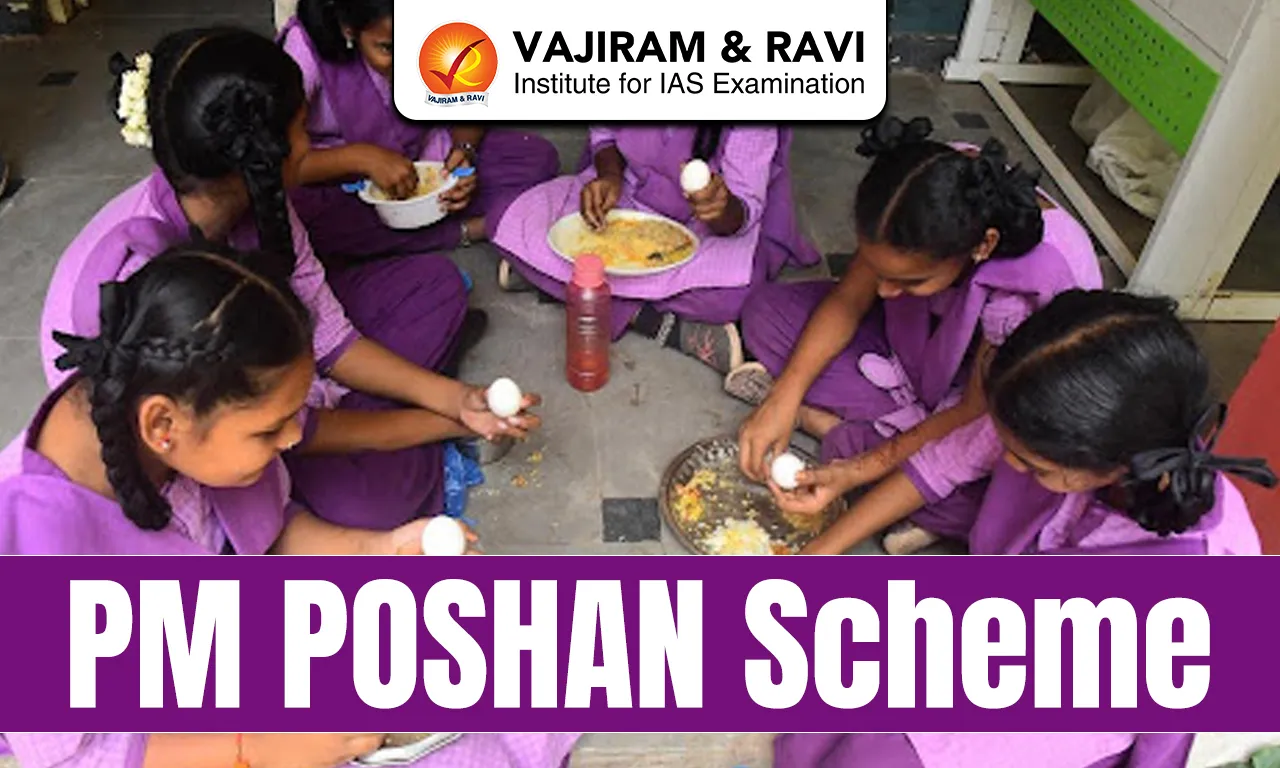
- The PM POSHAN Scheme (Pradhan Mantri Poshan Shakti Nirman) is the restructured version of the Mid-Day Meal Scheme, launched in 2021.
- It is one of the world’s largest school nutrition programmes aimed at improving the nutritional status of children and enhancing school participation.
- Objectives
- Improving nutritional levels among school children
- Increasing enrolment, retention, and attendance in schools
- Reducing dropout rates, especially among disadvantaged groups
- Promoting social equity by encouraging children from different backgrounds to eat together
- Coverage and Beneficiaries
- The scheme currently provides one cooked meal per day to:
- Students of government and government-aided schools
- Students studying from Class 1 to Class 8
- The scheme currently provides one cooked meal per day to:
- Components of the Scheme
- Hot Cooked Meals: Nutritious meals prepared as per prescribed calorific and protein norms
- Nutritional Standards: Meals designed to meet daily energy and protein requirements
- Supplementary Nutrition: Inclusion of local and seasonal foods
- School Nutrition Gardens: Promotion of locally grown vegetables and fruits
- Monitoring Mechanisms: Use of technology for real-time monitoring and quality checks
- Budget and Funding Pattern
- The scheme is centrally sponsored, with funding shared between the Centre and States.
- The overall budget for PM POSHAN (2021-26) is over Rs. 1.3 lakh crore
- The Centre bears a major share of the cost, while States contribute the remaining portion
- Key Achievements
- ~11.80 crore children are covered under the scheme
- Around 100+ crore meals served per month Nutritional Standards Achieved
- Primary (Classes 1-5): 450 calories, 12 grams of protein
- Upper Primary (Classes 6-8): 700 calories, 20 grams of protein


News Summary
- The Parliamentary Standing Committee on Education has recommended significant reforms to strengthen the PM POSHAN Scheme.
- Proposal to Introduce Breakfast
- The Committee has suggested that schools should provide at least a light breakfast along with the existing midday meal.
- Morning nutrition is expected to improve concentration and cognitive performance
- Expansion of Coverage
- The Committee recommended expanding the scheme in a phased manner:
- Immediate extension up to Class 10
- Gradual expansion up to Class 12 within five years
- The Committee recommended expanding the scheme in a phased manner:
- Focus on Adolescent Nutrition
- The Committee highlighted that adolescence is a critical stage of growth.
- Stopping nutritional support after Class 8 leaves a gap during an important developmental phase
- Adequate nutrition during this stage can prevent long-term health issues
- It can also reduce dropout rates, particularly among girls
- Link Between Nutrition and Education
- The Committee emphasised that nutrition and education are closely linked.
- Students in Classes 10 and 12 face academic pressure due to board exams
- Proper nutrition can improve focus, memory, and overall academic performance
- Other Recommendations
- Extending the benefits of PM-SHRI schools to more government schools
- Ensuring the timely release of funds under Samagra Shiksha
- Addressing resource concentration in select institutions
Significance of the Proposed Changes
- The proposed reforms have wider implications for India’s education and health systems.
- Addressing Malnutrition: Expanding the scheme will help tackle malnutrition among adolescents, which remains a major public health issue in India.
- Improving Learning Outcomes: Better nutrition directly contributes to improved cognitive abilities and academic performance.
- Promoting Gender Equity: Nutritional support for older students, especially girls, can reduce dropout rates and encourage continued education.
- Strengthening Human Capital: Investing in nutrition and education simultaneously enhances human capital development, which is crucial for long-term economic growth.
Source: TH

 Last updated on Sep, 2026
→ UPSC 2027 Notification will be released on 13 January 2027 at upsconline.nic.in.
→ Asian Games 2026 are being held in Aichi-Nagoya, Japan, from 19 September to 4 October.
→ Check out the latest UPSC Syllabus here.
→ Download UPSC Model Answers for Mains 2026
→ UPSC Mains Question Paper 2026 is out now for Essay & GS Paper 1, 2, 3 & 4.
→ UPSC Calendar 2027 has been released.
→ Enroll in Vajiram & Ravi’s UPSC Mains Test Series 2027 for structured answer writing practice, expert evaluation, and exam-oriented feedback.
→ Join Vajiram & Ravi’s UPSC Mentorship Program 2027 for personalized guidance, strategy planning, and one-to-one support from experienced mentors.
→ Go through the UPSC Mains Previous Year Papers to enhance your preparation.
→ UPSC has released UPSC Toppers List 2025 with the Civil Services final result on its official website.
→ Also check Best UPSC Coaching in India
PM POSHAN Scheme FAQs
Q1. What is the PM POSHAN Scheme?+
Q2. Who are the beneficiaries under the scheme?+
Q3. What new recommendation has the Parliamentary Committee made?+
Q4. Why is extending the scheme beyond Class 8 important?+
Q5. How does the scheme impact education?+
Tags: mains articles pm-poshan scheme upsc current affairs upsc mains current affairs