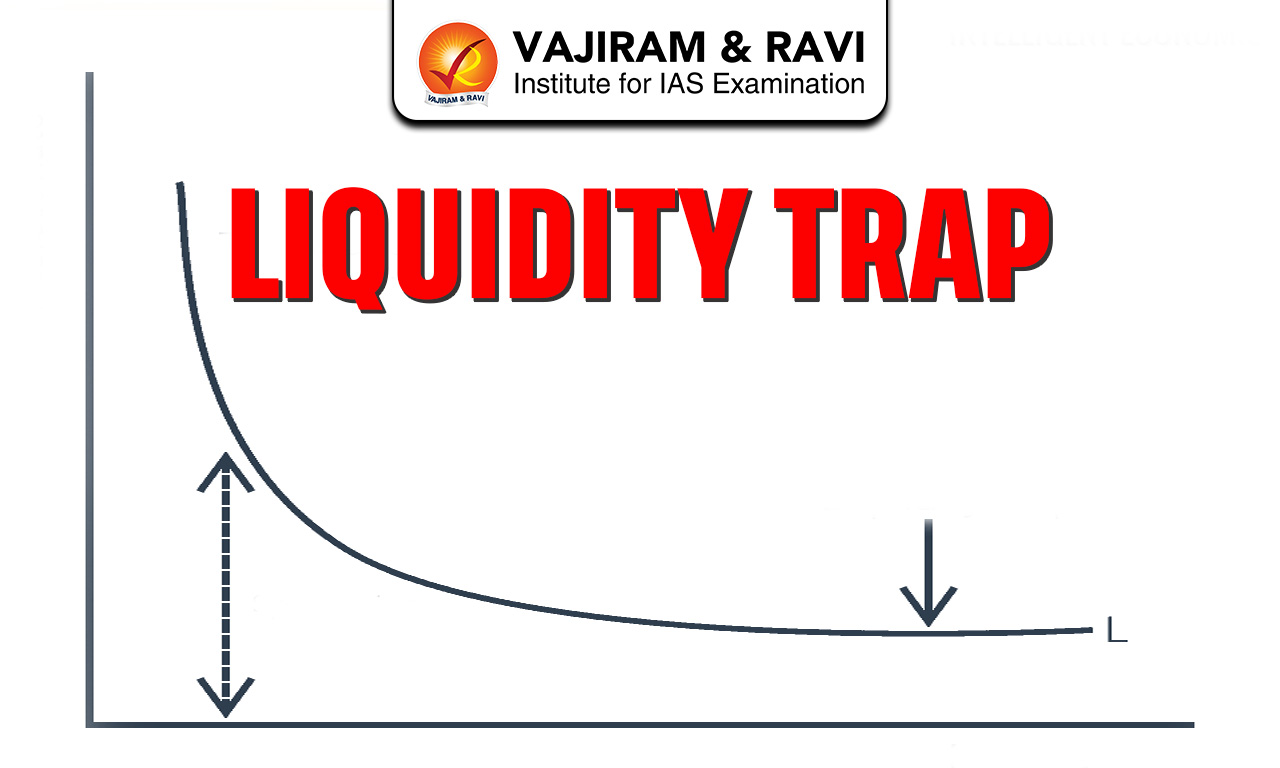
A liquidity trap is a situation when interest rates are very low, but people still prefer to save money instead of spending or investing, which slows down economic activity. It is characterized by features like near-zero interest rates, high cash hoarding, low investment, and ineffective monetary policy. As a result, the economy faces slow growth, low demand, rising unemployment, and risk of Deflation.
What is a Liquidity Trap?
A liquidity trap happens when interest rates fall to very low levels (near 0%), but people still avoid spending or investing. Instead, they save money in bank accounts or hold cash because they are unsure about the future.
This term was first introduced by economist John Maynard Keynes. He explained that when interest rates are extremely low, people expect them to rise in the future. So, they avoid investing in bonds or financial assets, as rising interest rates can reduce their value.
Liquidity Trap Features
A liquidity trap is a situation where even after reducing interest rates, people prefer to save money instead of spending or investing. As a result, the economy does not respond to monetary policy measures.
- Very Low Interest Rates: Interest rates fall to near zero, making borrowing cheaper, but still fail to encourage spending or investment.
- Cash Hoarding Behavior: People prefer to keep money in cash or savings accounts instead of investing in financial assets.
- Ineffective Monetary Policy: Central banks cannot stimulate economic growth even after increasing money supply or lowering interest rates.
- Low Investment Demand: Businesses avoid investing due to low consumer demand and uncertain economic conditions.
- Reduced Consumer Spending: People cut down on spending because of fear about the future economy.
- Expectation of Rising Interest Rates: Investors expect interest rates to increase later, which may reduce bond prices, so they avoid investing now.
- Economic Slowdown or Recession: The economy experiences slow growth or may enter a recession phase.
- Low Inflation or Deflation: Prices either rise very slowly or start falling due to weak demand in the market.


Liquidity Trap Effects on Economy
A liquidity trap has serious effects on the overall economy because money stops circulating, and both spending and investment remain low. Even strong efforts by policymakers fail to revive economic growth.
- Economic Slowdown: When people do not spend or invest, overall economic activity declines, leading to slow or negative growth.
- Ineffective Monetary Policy: Central banks are unable to boost the economy despite lowering interest rates or increasing money supply.
- Low Consumer Demand: People reduce spending on goods and services, which lowers demand in the market.
- Decline in Investment: Businesses avoid new investments due to low demand and uncertain future conditions.
- Unemployment Increases: Companies may cut production and jobs due to weak demand, leading to higher unemployment.
- Deflation Risk: Continuous low demand may lead to falling prices, creating Deflation, which further discourages spending.
- Reduced Business Profits: Lower sales result in declining profits for firms, affecting their growth and expansion plans.
- Stagnation in Credit Growth: Even though loans are cheaper, people and businesses hesitate to borrow, slowing down credit expansion.

 Last updated on Sep, 2026
→ UPSC 2027 Notification will be released on 13 January 2027 at upsconline.nic.in.
→ Asian Games 2026 are being held in Aichi-Nagoya, Japan, from 19 September to 4 October.
→ Check out the latest UPSC Syllabus here.
→ Download UPSC Model Answers for Mains 2026
→ UPSC Mains Question Paper 2026 is out now for Essay & GS Paper 1, 2, 3 & 4.
→ UPSC Calendar 2027 has been released.
→ Enroll in Vajiram & Ravi’s UPSC Mains Test Series 2027 for structured answer writing practice, expert evaluation, and exam-oriented feedback.
→ Join Vajiram & Ravi’s UPSC Mentorship Program 2027 for personalized guidance, strategy planning, and one-to-one support from experienced mentors.
→ Go through the UPSC Mains Previous Year Papers to enhance your preparation.
→ UPSC has released UPSC Toppers List 2025 with the Civil Services final result on its official website.
→ Also check Best UPSC Coaching in India
Liquidity Trap FAQs
Q1. What is a liquidity trap?+
Q2. Who introduced the concept of liquidity trap?+
Q3. Why does a liquidity trap occur?+
Q4. What happens during a liquidity trap?+
Q5. Why does monetary policy fail in a liquidity trap?+
Tags: economics liquidity trap macroeconomics