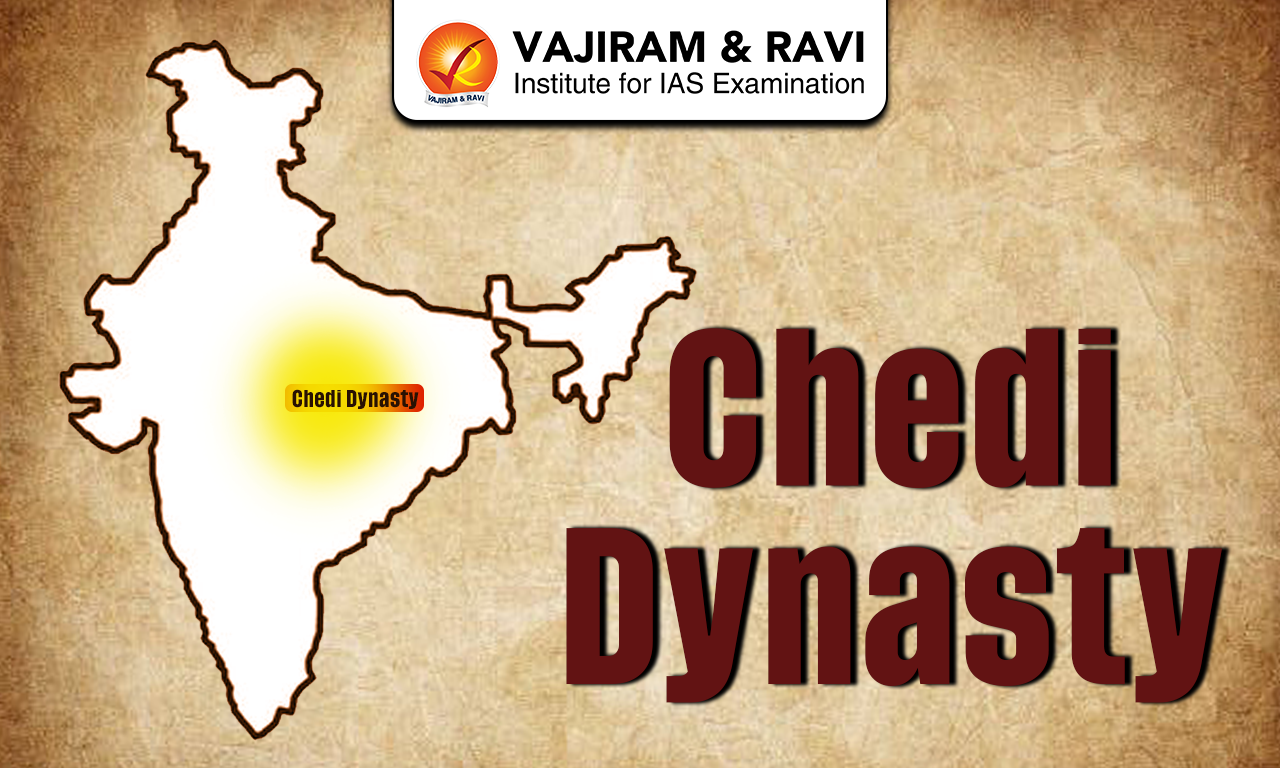
The Chedi Dynasty was an important ruling lineage that emerged in Kalinga around the 1st century BCE. The dynasty was also known as Cheta, Chetavamsa or Mahameghavahana. It gained prominence after Ashoka. There is very limited or no detailed information available about other rulers of the Chedi dynasty. Most historical information about this dynasty comes from the Hathigumpha inscription.
Chedi Dynasty Historical Background
The Chedi Dynasty originated in Kalinga and rose to prominence after the decline of Mauryan influence in the region.
- Origin: The dynasty was founded by King Abhichandra around the 1st century BCE in Kalinga (present day Odisha).
- Rise: After Ashoka’s rule, Kalinga regained importance under the Chedi rulers, who re-established regional political strength and cultural identity in eastern India.
- Capital: Suktimati-Puri served as the capital city, strategically located on the banks of the Suktimati river, supporting political control and regional connectivity in Kalinga.
- Sources: Almost all information about the dynasty comes from the Hathigumpha inscription near Bhubaneswar, making it the primary historical evidence for understanding the dynasty’s political and cultural aspects.
- Mahajanapada Linkage: The Chedi lineage is connected with one of the sixteen monarchical mahajanapadas, earlier located near the Yamuna river between the Vatsas and Kurus.
- Literary References: The Chedi people, a Kshatriya group, are frequently mentioned in Buddhist, Jaina and Brahmanical texts, as well as in the Rigveda, indicating their long standing historical presence.
- Geographic Expansion: In later periods, the Chedi region extended towards the Narmada river and important towns like Sahajati and Tripuri became associated with its political geography.
Chedi Dynasty Features
The Chedi Dynasty displayed significant features in administration, economy, religion and art, mainly reflected through inscriptions and cave architecture.
- Administration: The dynasty followed a monarchical system, with strong centralized authority under the king, as reflected in Kharavela’s detailed inscriptions describing governance and military expeditions.
- Economy: The economy was supported by agriculture and regional trade, with river based settlements like Suktimati aiding in economic activities and sustaining urban centers.
- Religion: Jainism was strongly patronized, especially under Kharavela, who supported Jain monks and religious practices, evident from inscriptions and cave structures linked to Jain traditions.
- Hathigumpha Inscription: Located in the Udayagiri hills near Bhubaneswar, this inscription in Brahmi script provides detailed information about Kharavela’s reign and remains the primary historical source. This inscription is written beginning with Jain Namokar Mantra and detailing military campaigns and achievements of Kharavela.
- Art and Architecture: The dynasty is noted for rock cut cave architecture, inscriptions and sculptures, showing a blend of religious purpose and artistic excellence in early historic India.
- Udayagiri and Khandagiri Caves: Built during the 1st to 2nd century BCE near Bhubaneswar, these caves include both natural and artificial structures, used as residences for Jain monks and religious activities.
- Ranigumpha Cave: The double storeyed Ranigumpha cave in Udayagiri is known for its intricate sculptures, reflecting advanced artistic skills and architectural planning during the Chedi period.
- Cultural Importance: The Chedi dynasty played a role in preserving Kshatriya traditions and contributed to the cultural and religious landscape through its association with Jainism and ancient literature.


Chedi Dynasty Rulers
The information about the Chedi rulers is limited. However King Kharavela is considered as the most prominent and well documented ruler of the dynasty. Major rulers of the Chedi Dynasty are:
- Abhichandra: Considered the founder of the Chedi dynasty in Kalinga during the 1st century BCE, he established the base of the dynasty with Suktimati-Puri as its capital.
- Kharavela: The most important ruler, he ruled around the 1st century BCE and is known through the Hathigumpha inscription, which records his achievements, military campaigns and administrative activities. He was a follower of Jainism and promoted Jain religious traditions, as reflected in the Hathigumpha inscription that begins with the Jain Namokar Mantra.
- Kudepasiri: Kharavela was succeeded by his son Kudepasiri, whose name appears in the Mancapuri Cave inscription, indicating continuation of the dynasty.

 Last updated on Oct, 2026
→ UPSC 2027 Notification will be released on 13 January 2027 at upsconline.nic.in.
→ Check Nobel Prize 2026 Winners List here.
→ Download PIB PRiSM Monthly Magazine 2026 here.
→ Check UPSC Monthly Current Affairs Magazine The Recitals here.
→ Check out the latest UPSC Syllabus here.
→ Download UPSC Model Answers for Mains 2026
→ UPSC Mains Question Paper 2026 is out now for Essay & GS Paper 1, 2, 3 & 4.
→ UPSC Calendar 2027 has been released.
→ Enroll in Vajiram & Ravi’s UPSC Mains Test Series 2027 for structured answer writing practice, expert evaluation, and exam-oriented feedback.
→ Join Vajiram & Ravi’s UPSC Mentorship Program 2027 for personalized guidance, strategy planning, and one-to-one support from experienced mentors.
→ Go through the UPSC Mains Previous Year Papers to enhance your preparation.
→ UPSC has released UPSC Toppers List 2025 with the Civil Services final result on its official website.
→ Also check Best UPSC Coaching in India
Chedi Dynasty FAQs
Q1. What was the Chedi Dynasty?+
Q2. Who founded the Chedi Dynasty?+
Q3. Who was the most important ruler of the Chedi Dynasty?+
Q4. What is the main source of information about the Chedi Dynasty?+
Q5. Which religion was supported by the Chedi Dynasty Rulers?+
Tags: ancient indian history chedi dynasty