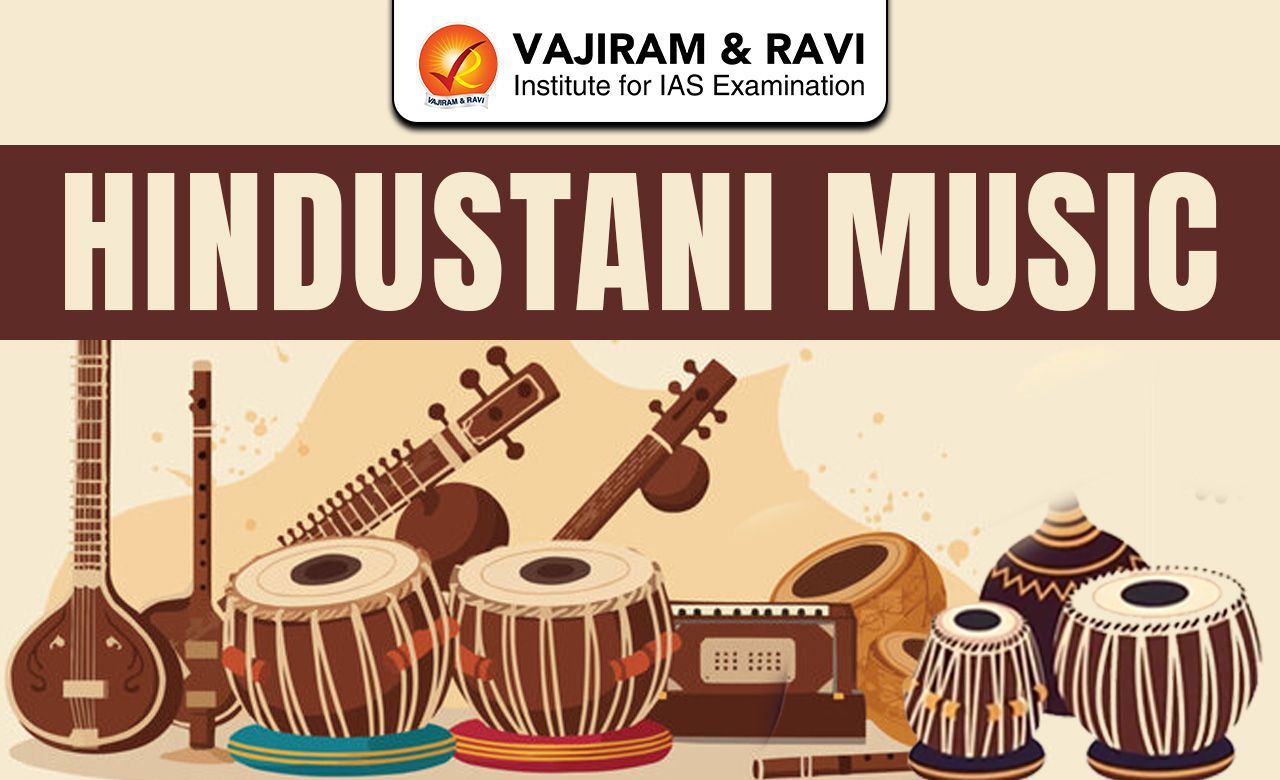
Hindustani Music is one of the two major traditions of Indian classical music, widely practiced in North India. Known for its depth, improvisation, and spiritual essence, Hindustani music has evolved over centuries, blending ancient Vedic traditions with Persian and Mughal influences.
What is Hindustani Music?
Hindustani music is a form of North Indian classical music that focuses on melody (raag) and rhythm (taal). It is known for its improvisation, where artists create music within a set structure. This tradition developed over centuries with influences from ancient Vedic chants and Persian culture. Hindustani music is deeply connected to emotions, spirituality, and cultural expression.
Hindustani Music Historical Evolution
Hindustani music has evolved over thousands of years, blending ancient Indian traditions with external cultural influences. It developed through different historical phases, shaping its present form with rich diversity and depth.
- Originated from Vedic chants, especially the Samaveda, which laid the foundation of Indian music.
- Evolved during the early classical period with texts like Natya Shastra guiding musical structure.
- Transformed in the medieval period under Persian and Islamic influences during the Delhi Sultanate.
- Reached new heights during the Mughal era, especially under rulers like Akbar.
- Flourished during the Bhakti movement, where saints used music for devotion and mass connection.
- Systematized in the modern era into structured forms like Dhrupad and Khayal.


Major Styles of Hindustani Music
Hindustani music is rich in diversity, with several classical and semi-classical styles that have evolved over time. Each style has its own unique features, structure, and emotional expression.
Dhrupad
Dhrupad is the oldest and most traditional form of Hindustani classical music, known for its serious and meditative nature. It focuses on precise and systematic development of a raga.
- Originates from Vedic chanting traditions, especially Samaveda.
- Mentioned in ancient texts like Natya Shastra.
- Consists of two main parts: Alap (slow introduction) and composed section.
- Emphasizes deep, slow, and spiritual singing using sacred syllables.
- Flourished under rulers like Akbar.
- Great musicians include Tansen, Swami Haridas, and Baiju Bawra.
- Raja Man Singh Tomar of Gwalior played a key role in its development.
Khayal
Khayal is the most popular style of Hindustani music today, known for its flexibility and creativity. It allows singers to freely improvise within a structured framework.
- Believed to be developed by Amir Khusrau.
- Based on short compositions called bandish (2-8 lines).
- Offers great scope for improvisation and expression.
- Themes include devotion, love, seasons, and praise of kings.
- More lyrical and expressive compared to Dhrupad.
- Major gharanas include Gwalior, Kirana, Agra, Patiala, and Bhendibazaar.
- Pandit Bhimsen Joshi was a famous exponent of the Kirana Gharana.
Tarana
Tarana is a fast-paced and rhythm-oriented style of singing in Hindustani music. It focuses more on musical syllables rather than meaningful words.
- Known for its rapid tempo and energetic performance.
- Uses syllables like “tanana”, “derena”, instead of full lyrics.
- Strong emphasis on rhythm (taal) and melody.
- Often performed towards the end of a concert.
Thumri
Thumri is a light classical style that is romantic and expressive in nature. It beautifully combines music with poetic emotion.
- Developed in the 18th century in regions like Lucknow and Varanasi.
- Known as the “lyrical” form of Hindustani music.
- Themes revolve around love, separation, and devotion.
- Often depicts stories of Lord Krishna and Radha.
- Usually composed in Braj Bhasha.
- Major gharanas: Benaras, Lucknow, and Patiala.
- Begum Akhtar was a legendary Thumri singer.
- Typically performed at the end of a Khayal concert.
Tappa
Tappa is a lively and fast musical form known for its quick and intricate patterns. It requires great vocal agility.
- Originated from folk songs of camel riders in North-West India.
- Developed during the 18th century.
- Characterized by rapid and rhythmic singing style.
- Focuses heavily on rhythm and quick note changes.
Ghazal
Ghazal is a poetic and musical form that expresses deep emotions, especially love and separation. It combines literature with music beautifully.
- Composed of poetic couplets called ashaar.
- Usually does not exceed 12 couplets.
- Themes include love, pain, longing, and beauty.
- One of the early contributors was Amir Khusrau.
- Famous poets include Mirza Ghalib, Muhammad Iqbal, Rumi, and Kazi Nazrul Islam.
Gharana System in Hindustani Music
The Gharana system in Hindustani music refers to different schools or styles of musical tradition that are passed down from one generation to another. It represents a unique way of teaching, performing, and interpreting music within a particular lineage.
- The word “Gharana” comes from the Hindi word ghar, meaning “house” or “family,” indicating a musical family or tradition.
- It is based on the guru-shishya parampara, where knowledge is transferred directly from teacher to student.
- Each gharana has its own distinctive style in terms of voice culture, raga presentation, and improvisation techniques.
Major Gharanas of Hindustani Music
- Gwalior Gharana: One of the oldest and most important gharanas, known for its simple and structured style.
- Kirana Gharana: Focuses on slow and detailed development of notes and melody.
- Jaipur-Atrauli Gharana: Known for complex ragas and intricate patterns.
- Agra Gharana: Combines elements of Dhrupad and Khayal styles.
- Patiala Gharana: Famous for its fast-paced and decorative singing style.

 Last updated on Sep, 2026
→ UPSC 2027 Notification will be released on 13 January 2027 at upsconline.nic.in.
→ Asian Games 2026 are being held in Aichi-Nagoya, Japan, from 19 September to 4 October.
→ Check out the latest UPSC Syllabus here.
→ Download UPSC Model Answers for Mains 2026
→ UPSC Mains Question Paper 2026 is out now for Essay & GS Paper 1, 2, 3 & 4.
→ UPSC Calendar 2027 has been released.
→ Enroll in Vajiram & Ravi’s UPSC Mains Test Series 2027 for structured answer writing practice, expert evaluation, and exam-oriented feedback.
→ Join Vajiram & Ravi’s UPSC Mentorship Program 2027 for personalized guidance, strategy planning, and one-to-one support from experienced mentors.
→ Go through the UPSC Mains Previous Year Papers to enhance your preparation.
→ UPSC has released UPSC Toppers List 2025 with the Civil Services final result on its official website.
→ Also check Best UPSC Coaching in India
Hindustani Music FAQs
Q1. What is Hindustani music?+
Q2. What are the main elements of Hindustani music?+
Q3. What are the major styles of Hindustani music?+
Q4. Who are some famous Hindustani music artists?+
Q5. What is a raag in Hindustani music?+
Tags: hindustani music history history notes indian history