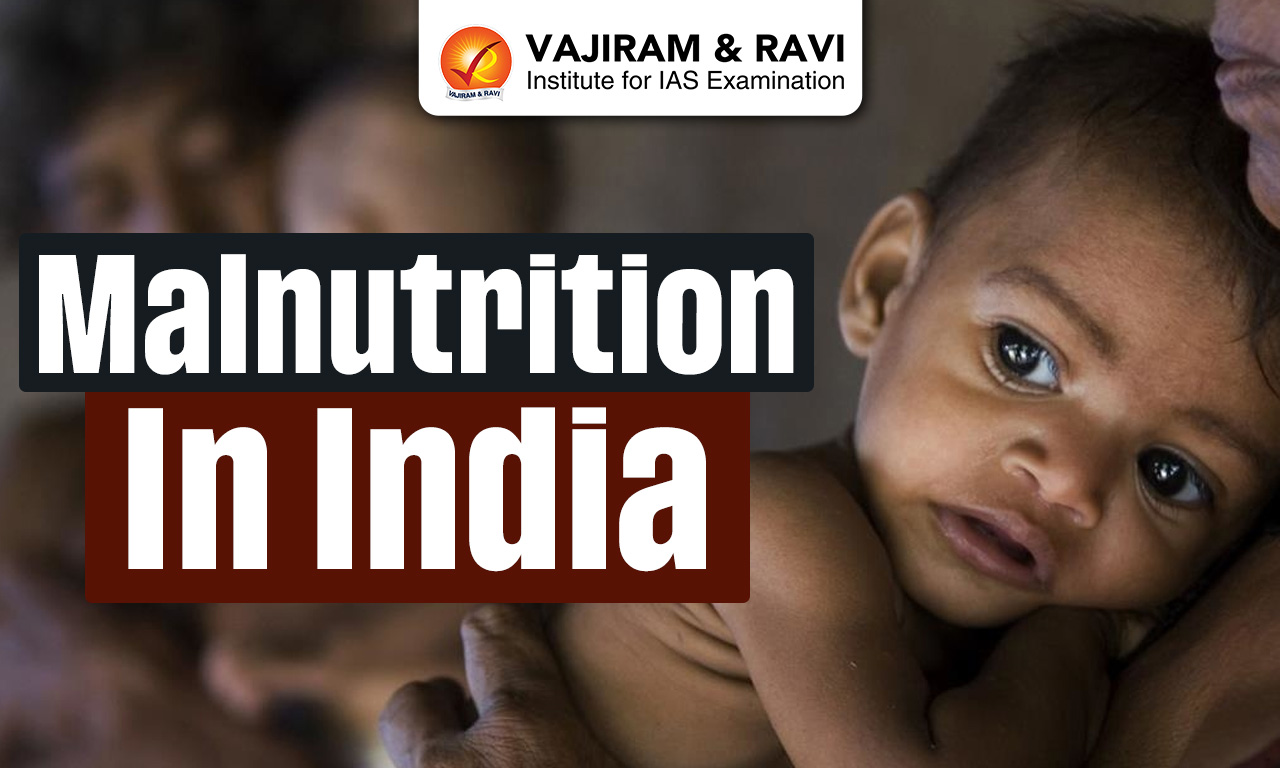
Malnutrition in India is a serious problem that affects many people, especially children and women. It happens when the body does not get the right amount of nutrients needed for healthy growth and development. This can include both undernutrition (lack of food) and overnutrition (unhealthy diet). Poverty, lack of awareness, poor healthcare, and unequal access to food are some of the main causes. Malnutrition not only affects physical health but also reduces learning ability and overall productivity, making it a major challenge for the country’s development.
About Malnutrition
Malnutrition is a condition that occurs when a person does not get the right amount or balance of nutrients from food. This can happen when someone eats too little, too much, or when the body cannot properly use the nutrients. It includes both undernutrition (lack of food and nutrients) and overnutrition (overweight, obesity, and related diseases).
Malnutrition Types
- Undernutrition
- Undernutrition happens when the body does not get enough food or nutrients. It has four main types: wasting, stunting, underweight, and lack of vitamins and minerals. This condition makes children weak and more likely to fall sick.
- Wasting: When a person has very low weight for their height. It usually happens due to sudden weight loss from lack of food or illness like diarrhoea. It can be serious but can be treated.
- Stunting: When a child is shorter than normal for their age. It happens due to long-term lack of proper nutrition, poor health, and repeated illness. It affects both body growth and brain development.
- Underweight: When a child weighs less than normal for their age. This can be due to wasting, stunting, or both.
- Micronutrient-related Malnutrition
- This occurs when the body does not get enough important vitamins and minerals. These nutrients help the body grow and function properly. Lack of nutrients like iodine, vitamin A, and iron can cause serious health problems, especially in children and pregnant women.
- Overweight and Obesity
- This happens when a person has too much body weight or fat for their height. It is usually caused by eating too much unhealthy food and not doing enough physical activity.
- Body Mass Index (BMI) is used to measure this. In adults, a BMI of 25 or more means overweight, and 30 or more means obesity.
- Diet-related Noncommunicable Diseases (NCDs)
- Unhealthy eating habits can lead to serious diseases like heart disease, stroke, diabetes, and some types of cancer. Poor diet and nutrition are major causes of these diseases worldwide.


Malnutrition in India Statistics
- The number of underweight and malnourished children in India is measured through the National Family Health Survey conducted by the Ministry of Health and Family Welfare.
- According to NFHS-5, the nutrition condition of children under 5 years has improved compared to NFHS-4.
- Stunting (low height for age) reduced from 38.4% to 35.5%.
- Wasting (low weight for height) reduced from 21.0% to 19.3%.
- Underweight children reduced from 35.8% to 32.1%.
- Overweight rate stands at 3%
- Malnutrition among women (15-49 years) also decreased from 22.9% to 18.7%.
- As per Poshan Tracker (November 2023 data):
- Around 7.44 crore children under 6 years were measured.
- 37.51% were stunted.
- 17.43% were underweight.
- About 6% of children under 5 years were wasted.
- In the 2025 Global Hunger Index, India is ranked 102nd out of 123 countries. With a score of 25.8, the country falls under the “serious” category of hunger. This is mainly due to ongoing issues like child malnutrition and poor nutrition levels.
Causes for Malnutrition in India
Malnutrition in India is mainly caused by poverty, lack of nutritious food, and poor living conditions. Unhealthy diets, poor sanitation, weak healthcare, and lack of awareness further worsen the problem. Social factors like gender inequality and maternal health also play an important role. Together, these factors create a cycle of poor nutrition and health.
- Poverty and Food Insecurity: Many people cannot afford nutritious food due to low income. They often depend on cheap food like rice or wheat and miss out on proteins and important nutrients. Around 74% of people in India cannot afford a healthy diet, which increases the risk of malnutrition.
- Unhealthy Diet and Changing Food Habits: Eating habits have changed over time, with more people consuming processed and sugary foods instead of balanced meals. Many diets lack important nutrients like iron, vitamin A, and zinc, which are necessary for good health.
- Poor Sanitation and Hygiene: Lack of clean water and proper sanitation leads to infections and diseases like diarrhoea. These illnesses prevent the body from absorbing nutrients properly. According to surveys, only about 69% of households have proper sanitation facilities.
- Weak Healthcare Services: Many people do not have access to basic health services such as immunisation, treatment of diseases, and care during pregnancy. This increases health problems and worsens malnutrition. Also, the number of doctors and nurses in India is lower than recommended standards.
- Problems in Implementation of Schemes: Sometimes government programmes do not reach everyone properly due to delays or poor delivery. For example, only about 50% of children under six receive services from Anganwadi centres, which creates gaps in nutrition support.
- Poor Monitoring and Awareness: Lack of proper tracking and awareness makes it difficult to identify problems and improve nutrition programmes. Many people are also unaware of healthy eating practices.
- Maternal Malnutrition: Malnourished mothers often give birth to weak or low-weight babies. This creates a cycle where poor health continues from one generation to the next.
- Gender Inequality: In some families, women and girls eat less or eat last, which leads to higher malnutrition among them. This also affects the health of future generations.
- Lack of Knowledge about Child Feeding: Many families do not follow proper feeding practices for infants, such as exclusive breastfeeding in the first six months, which affects child growth and health.
- Environmental and Social Factors: Climate change, natural disasters, and pollution can affect food production and health. Poor living conditions and regional differences also increase the problem of malnutrition.
Consequences of Malnutrition in India
Malnutrition has serious effects on health, education, and the economy. It weakens the body, increases the risk of diseases and deaths, and affects children’s learning and growth. Overall, it creates a cycle of poor health and inequality that continues across generations.
- Poor Health and Weak Body: Malnutrition can slow down growth in children (stunting) and make people weak. It also weakens the immune system, so they fall sick more often and recover slowly.
- Higher Risk of Death: Severe malnutrition is linked to nearly half of the deaths of children under 5 years, as their bodies cannot fight diseases properly.
- Lack of Important Nutrients: Deficiency of nutrients like iron, vitamin A, and zinc can cause problems like anemia, poor eyesight, and low immunity.
- Impact on Learning: Malnourished children may have poor memory and concentration. This affects their studies, school performance, and may even lead to dropping out.
- Economic Loss: Weak health reduces a person’s ability to work efficiently. This lowers productivity and causes economic loss to both families and the country (around 3-4% of GDP).
- Cycle Across Generations: Malnourished mothers often give birth to weak or low-weight babies, continuing the cycle of poor health and malnutrition in future generations.
- Social Problems: Malnutrition is more common among poor and disadvantaged groups, increasing inequality. It can also lead to stigma and affect mental well-being.
- Burden on Healthcare System: More illness means higher medical expenses and pressure on hospitals and health services.
- Double Burden of Malnutrition: India faces both undernutrition and rising obesity at the same time, leading to more health problems like diabetes and heart disease.
Measures to Tackle Malnutrition in India
Malnutrition can be reduced by improving diet quality, healthcare, and awareness. Steps like food fortification, better sanitation, and use of technology help ensure proper nutrition reaches people. Special focus on mothers, children, and local food habits is important. Community participation and strong Anganwadi services also play a key role in solving the problem.
- Food Fortification: Adding important nutrients to common foods like rice, wheat, and salt is a low-cost and effective way to improve nutrition. For example, iodised salt has helped reduce diseases like goitre.
- Better Awareness and Behaviour Change: People need clear information about healthy eating, breastfeeding, and hygiene. Simple messages in local languages, through radio, videos, and community workers, can help change habits.
- Focus on Mothers and Young Children: Special care should be given during pregnancy and the first 1,000 days of a child’s life. Proper nutrition, breastfeeding, and timely feeding are very important for healthy growth.
- Strengthening Healthcare Services: Improve hospitals and health centres, especially in rural areas. Train healthcare workers to detect and treat malnutrition early and provide regular check-ups and immunisation.
- Use of Technology and Monitoring: Tools like Poshan Tracker should be used to monitor children’s health in real time and ensure services reach those in need. Proper monitoring helps improve programme effectiveness.
- Promoting Local and Nutritious Food: Encourage people to eat locally available, traditional, and diverse foods like millets, pulses, fruits, and vegetables to improve diet quality.
- Community Participation: Involve local communities, self-help groups, and women in nutrition programmes. This increases awareness and helps families become self-reliant in providing nutritious food.
- Improving Water and Sanitation: Access to clean drinking water and proper sanitation is essential to prevent infections and improve nutrient absorption.
- Strengthening Anganwadi Services: Improve the functioning of Anganwadi centres to ensure proper delivery of nutrition, health services, and child care.
Also Read: Domestic Violence
Government Initiatives for Malnutrition in India
Important Government Initiatives for Malnutrition in India have been highlighted below.
- Under the Integrated Child Development Services, several programmes like Anganwadi Services, Scheme for Adolescent Girls, and Pradhan Mantri Matru Vandana Yojana provide direct support to children, pregnant women, and lactating mothers. These services include supplementary nutrition, health check-ups, immunization, and nutrition education through a wide network of Anganwadi Centres.
- The POSHAN Abhiyaan, launched in 2018, aims to reduce malnutrition in a time-bound manner. It focuses on better coordination between departments, use of technology, and spreading awareness about healthy eating habits. It also promotes community participation to improve nutrition practices.
- Mission Poshan 2.0 is an integrated programme that strengthens nutrition delivery across the country. It focuses on improving the quality of food, ensuring better outreach, and promoting health, wellness, and immunity. Special attention is given to maternal nutrition, child feeding practices, and treatment of malnourished children.
- Under this mission, supplementary nutrition is provided for about 300 days a year through nearly 13.97 lakh Anganwadi Centres. Fortified rice is distributed to reduce micronutrient deficiencies like anemia, and nutritious meals including millets are encouraged for better dietary diversity.
- The government is also using digital tools like the Poshan Tracker for real-time monitoring and better governance of nutrition services.
- Other important steps include promoting AYUSH practices for better health, developing Poshan Vatikas (nutrition gardens) to improve access to diverse foods, and ensuring transparency in food distribution through clear guidelines.
- Awareness campaigns such as Poshan Maah and Poshan Pakhwada, along with community-based events, are conducted to educate people about proper nutrition, child care, and healthy eating habits.

 Last updated on Oct, 2026
→ UPSC 2027 Notification will be released on 13 January 2027 at upsconline.nic.in.
→ Check Nobel Prize 2026 Winners List here.
→ Download PIB PRiSM Monthly Magazine 2026 here.
→ Check UPSC Monthly Current Affairs Magazine The Recitals here.
→ Check out the latest UPSC Syllabus here.
→ Download UPSC Model Answers for Mains 2026
→ UPSC Mains Question Paper 2026 is out now for Essay & GS Paper 1, 2, 3 & 4.
→ UPSC Calendar 2027 has been released.
→ Enroll in Vajiram & Ravi’s UPSC Mains Test Series 2027 for structured answer writing practice, expert evaluation, and exam-oriented feedback.
→ Join Vajiram & Ravi’s UPSC Mentorship Program 2027 for personalized guidance, strategy planning, and one-to-one support from experienced mentors.
→ Go through the UPSC Mains Previous Year Papers to enhance your preparation.
→ UPSC has released UPSC Toppers List 2025 with the Civil Services final result on its official website.
→ Also check Best UPSC Coaching in India
Malnutrition in India FAQs
Q1. What is malnutrition?+
Q2. Who are most affected by malnutrition in India?+
Q3. What are the main types of malnutrition?+
Q4. What does recent data say about malnutrition in India?+
Q5. What are the major causes of malnutrition in India?+
Tags: indian society indian society notes malnutrition in india