What’s in Today’s Article?
- Why in News?
- About the Central Consumer Protection Authority (CCPA)
- About the Consumer Protection Act 2019
- Draft Guidelines for the Prevention of Misleading Ads in Coaching Sector
Why in News?
- The Central Consumer Protection Authority (CCPA), an arm of the Union Consumer Affairs Ministry, has released draft guidelines for the “Prevention of misleading advertisement in the coaching sector”.
- The draft guidelines will bring such offences under the radar of the Consumer Protection Act.





About the Central Consumer Protection Authority (CCPA)
- It is a regulatory authority set up under [Section 10(1)] the Consumer Protection Act 2019 to regulate matters related to violation of consumer rights, unfair trade practices, and misleading advertisements.
- It has an investigation wing, headed by a Director-General, which may conduct inquiry or investigation into such violations.
- Functions of the CCPA:
- Inquiring into violations of consumer rights, investigating and launching prosecution at the appropriate forum;
- Passing orders to recall goods or withdraw services that are hazardous, reimbursement of the price paid, and discontinuation of the unfair trade practices;
- Issuing directions to the concerned trader/ manufacturer/ endorser/ advertiser/ publisher to either discontinue a false or misleading advertisement or modify it;
- Imposing penalties (up to Rs 10 lakh and imprisonment for up to 2 years for a false/ misleading ad) and issuing safety notices to consumers against unsafe goods and services.
About the Consumer Protection Act 2019
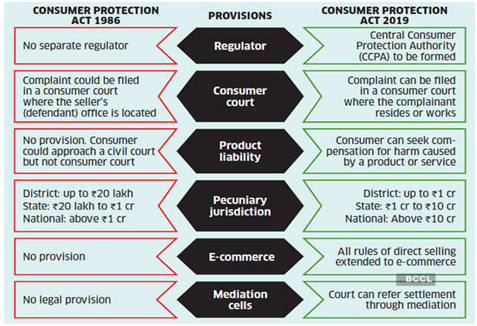
- It was introduced by the Ministry of Consumer Affairs, Food and Public Distribution and replaced the previous – The Consumer Protection Act 1986.
Draft Guidelines for the Prevention of Misleading Ads in Coaching Sector
- Background:
- The CCPA had formed a sub-committee to draft the guidelines after discussions with several stakeholders.
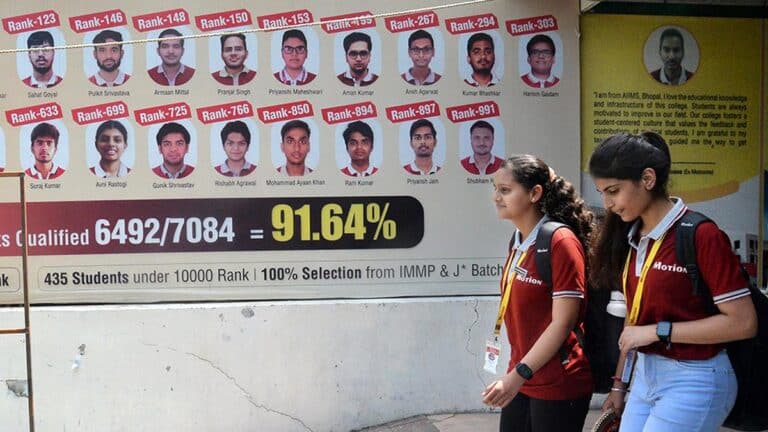
- Such guidelines were initiated after widespread complaints against certain coaching centres for misusing the names and photos of successful candidates in various competitive examinations, including the civil services exam.
- Key Highlights of the Guidelines:
- It has defined coaching as “tuition, instructions or academic support or learning programme or guidance” provided by any person.
- Any individual who engages in coaching shall be considered to be engaging in a misleading advertisement if important information related to the course (free/ paid, duration opted by the successful candidate) is concealed.
- What will be considered as misleading under the new guidelines?
- Making false claims regarding success rates, number of selections, or rankings of students in any competitive exam without providing verifiable evidence;
- Falsely representing students’ success as solely attributable to the coaching, without acknowledging the individual efforts of the students;
- Stating or leading the consumers to believe that enrollment in coaching will guarantee the student a rank, etc., unless the coaching is able to substantiate the claims; and
- Creating false sense of urgency or fear of missing out that may heighten anxieties amongst students or parents.
- The objective of the Guidelines: To protect consumers from misleading ads in the coaching sector by preventing such ads which affect consumers as a class.
Q1) When did the consumer movement start in India?
Consumer movement, in its present form in India, came into being only in the 1960’s with the formation of Consumer Guidance Society of India in 1966 in Bombay. With its success, the consumer movement spread over to fight for availability, purity and standard prices of commodities.
Q2) What are some of the RBI Initiatives for Consumer Protection in India?
The RBI has formulated a “Charter of Customer Rights”, which enshrines following five basic rights of bank customers – Right to Fair Treatment; Right to Transparency, Fair and Honest Dealing; Right to Suitability; Right to Privacy; and Right to Grievances Redress and Compensation.
Source: Draft guidelines make misleading ads by coaching centres punishable | ET

 Last updated on March, 2026
→ UPSC Final Result 2025 is now out.
→ UPSC has released UPSC Toppers List 2025 with the Civil Services final result on its official website.
→ Anuj Agnihotri secured AIR 1 in the UPSC Civil Services Examination 2025.
→ UPSC Marksheet 2025 is now out.
→ UPSC Notification 2026 & UPSC IFoS Notification 2026 is now out on the official website at upsconline.nic.in.
→ UPSC Calendar 2026 has been released.
→ Check out the latest UPSC Syllabus 2026 here.
→ UPSC Prelims 2026 will be conducted on 24th May, 2026 & UPSC Mains 2026 will be conducted on 21st August 2026.
→ The UPSC Selection Process is of 3 stages-Prelims, Mains and Interview.
→ Prepare effectively with Vajiram & Ravi’s UPSC Prelims Test Series 2026 featuring full-length mock tests, detailed solutions, and performance analysis.
→ Enroll in Vajiram & Ravi’s UPSC Mains Test Series 2026 for structured answer writing practice, expert evaluation, and exam-oriented feedback.
→ Join Vajiram & Ravi’s Best UPSC Mentorship Program for personalized guidance, strategy planning, and one-to-one support from experienced mentors.
→ Shakti Dubey secures AIR 1 in UPSC CSE Exam 2024.
→ Also check Best UPSC Coaching in India