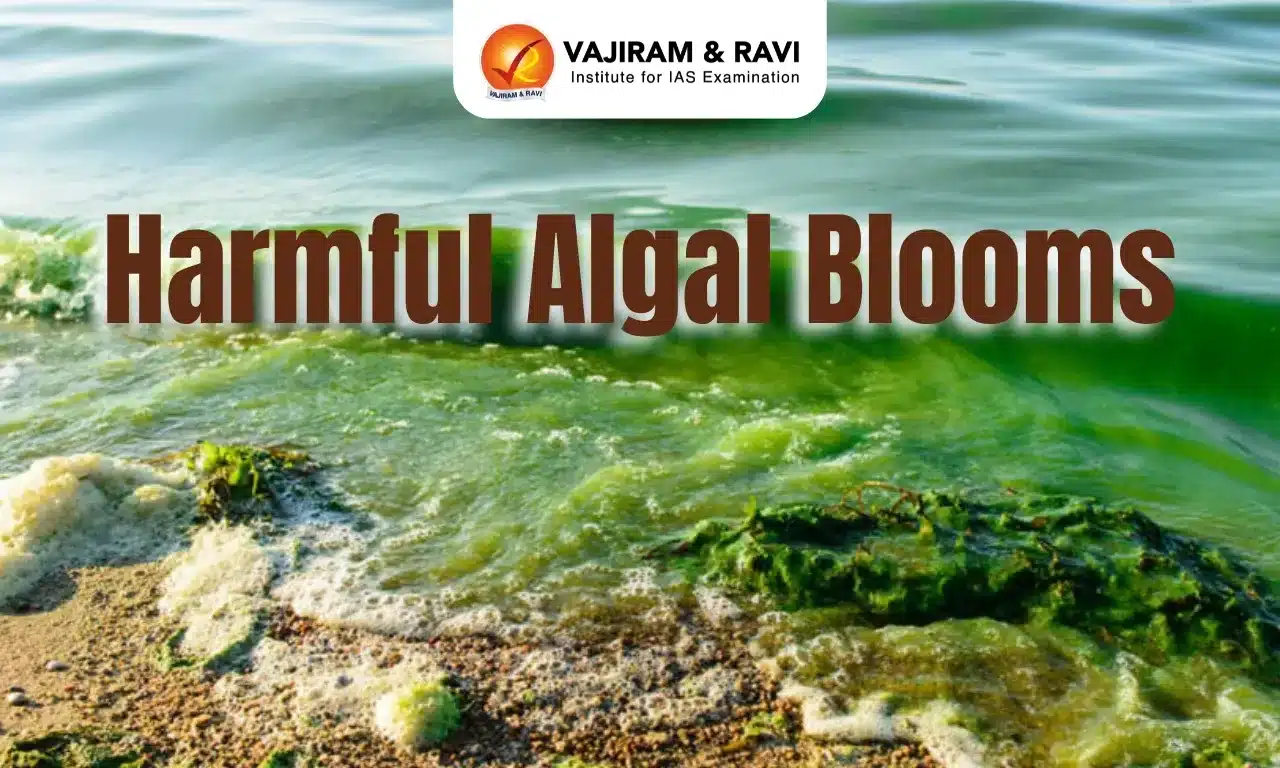
Algal blooms refer to the rapid growth of tiny algae in water bodies like lakes, rivers, and oceans. These algae are naturally present in water, but sometimes they multiply very quickly due to factors like excess nutrients and warm conditions. When this happens, the water can change colour and become harmful for aquatic life and sometimes even for humans. Algal blooms are an important environmental concern today because they can disturb the balance of water ecosystems and affect water quality.
About Algae
- Algae are simple living organisms found almost everywhere in the world, especially in water bodies like oceans, rivers, and lakes. They can be very small, even microscopic, or sometimes large like seaweed. Algae may live alone or grow on rocks, soil, or other organisms.
- They are very important because they produce a large amount of oxygen through photosynthesis, which is needed by humans and animals for survival. Some algae float freely in water and are so tiny that thousands of them can fit on a pinhead.
- Although some algae look like plants, they are not true plants or animals. They belong to a group of organisms called protists. From tiny floating forms to large seaweeds, algae play a key role in maintaining life in aquatic ecosystems.
About Algal Boom
- Algae are tiny photosynthetic organisms found in almost all water bodies like rivers, lakes, and oceans. They can be single-celled or form more complex structures.
- An algal bloom is a rapid and excessive growth of algae in water, which can change the colour of water to green, red, blue-green, or brown depending on the type of algae.
- Although algal blooms can occur naturally, they have become more frequent and intense due to nutrient pollution, especially excess nitrogen and phosphorus from fertilizers, sewage, and waste.
- Warm temperatures and calm water conditions further support their fast growth, allowing algae to spread quickly over the water surface.
- Some algae form thick floating layers or mats that block sunlight and reduce oxygen levels in water, affecting fish and other aquatic life.
- A common type involved in blooms is cyanobacteria (blue-green algae), which can grow in both freshwater and marine environments using sunlight for energy.
- In marine areas, dinoflagellates can also cause blooms, sometimes leading to harmful events like red tides.


Algal Blooms Causes
- Excess nutrients (nutrient pollution): Algal blooms mainly occur when nitrogen and phosphorus enter water bodies in large amounts through sewage, fertilizers, industrial waste, and runoff, acting like fertilizer for algae growth.
- Warm temperature and sunlight: Warm water and bright sunlight speed up algae growth as they support faster metabolism and photosynthesis.
- Slow or stagnant water: Still or slow-moving water allows algae to accumulate and grow densely instead of being washed away.
- Water layering (stratification): In lakes, water layers may not mix properly, trapping nutrients near the surface where algae grow.
- Human activities: Agricultural runoff, urban drainage, septic tanks, and untreated wastewater increase nutrient levels in water bodies.
- Eutrophication: Over-enrichment of water with nutrients, especially due to human activities, accelerates algal growth.
- Other factors: Dams, climate change, and changing rainfall patterns also increase nutrient build-up and water warming, encouraging blooms.
Algal Blooms Impact
- Poor water quality: Algal blooms make water look dirty, reduce its clarity, and often give it a bad smell and unusual colour, making it unsuitable for use.
- Loss of oxygen and fish deaths: When algae die and decompose, they consume oxygen from water. This oxygen shortage can kill fish and other aquatic animals.
- Harm to aquatic life: Some algal blooms release toxins that are harmful or even fatal to fish, plants, and other organisms living in water.
- Human health risks: Toxic algae can affect humans through drinking contaminated water, eating affected seafood, or even skin contact during swimming and other activities.
- Economic losses: Algal blooms damage fisheries, reduce fish production, and negatively affect tourism and recreational activities like boating and swimming.
- Blocked sunlight in water: Thick algal layers prevent sunlight from reaching underwater plants, disturbing the natural balance of the ecosystem.
- Overall ecosystem imbalance: Continuous blooms disrupt food chains in water bodies and can permanently affect the health of aquatic ecosystems if not controlled.
Prevention and Mitigation of Algal Blooms
- Reducing nutrient pollution: Algal blooms can be prevented by controlling the entry of excess nitrogen and phosphorus into water bodies. This can be done by using proper farming practices, reducing chemical fertilizers, using compost wisely, and managing industrial and sewage waste.
- Better agricultural practices: Farmers can help by using methods like crop rotation, cover crops, and reduced tillage, which reduce soil erosion and nutrient runoff into rivers and lakes.
- Proper waste and sewage management: Treating sewage and industrial wastewater before releasing it into water bodies is very important to prevent nutrient overload.
- Regular monitoring of water bodies: Continuous checking of water quality helps in early detection of algal growth so that action can be taken before blooms become severe.
- Use of water treatment methods: In some cases, chemicals (algaecides) or advanced treatment technologies are used to control excessive algae growth in affected water bodies.
- Protection of wetlands and natural filters: Wetlands naturally clean water by trapping nutrients and pollutants, so protecting them helps reduce the chances of algal blooms.
- Restoring riverbank (riparian) zones: Planting vegetation along riverbanks helps filter runoff water and stop excess nutrients from entering lakes and rivers.
- Awareness and sustainable use: Educating people about responsible fertilizer use, waste disposal, and water conservation also plays an important role in long-term prevention.
Significance of Algae
- Source of oxygen: Algae produce a large amount of oxygen through photosynthesis and contribute significantly to the oxygen available in water bodies and the atmosphere, supporting aquatic and terrestrial life.
- Base of food chain: They are primary producers in aquatic ecosystems and form the first step of the food chain, directly or indirectly supporting fish and other marine organisms.
- Indicator of water quality: Changes in algal growth often show water pollution, especially when excess nutrients like nitrogen and phosphorus enter water bodies.
- Provide habitat: Large algae such as kelp form underwater “forests” that provide shelter, breeding grounds, and protection for many marine species.
- Maintain ecosystem balance: Algae help in nutrient cycling and support biodiversity, keeping aquatic ecosystems stable and healthy.
- Useful for environmental monitoring: They are often studied to understand water quality and the impact of pollution on ecosystems.

 Last updated on Oct, 2026
→ UPSC 2027 Notification will be released on 13 January 2027 at upsconline.nic.in.
→ Check Nobel Prize 2026 Winners List here.
→ Download PIB PRiSM Monthly Magazine 2026 here.
→ Check UPSC Monthly Current Affairs Magazine The Recitals here.
→ Check out the latest UPSC Syllabus here.
→ Download UPSC Model Answers for Mains 2026
→ UPSC Mains Question Paper 2026 is out now for Essay & GS Paper 1, 2, 3 & 4.
→ UPSC Calendar 2027 has been released.
→ Enroll in Vajiram & Ravi’s UPSC Mains Test Series 2027 for structured answer writing practice, expert evaluation, and exam-oriented feedback.
→ Join Vajiram & Ravi’s UPSC Mentorship Program 2027 for personalized guidance, strategy planning, and one-to-one support from experienced mentors.
→ Go through the UPSC Mains Previous Year Papers to enhance your preparation.
→ UPSC has released UPSC Toppers List 2025 with the Civil Services final result on its official website.
→ Also check Best UPSC Coaching in India
Algal Bloom FAQs
Q1. What are Algal Blooms?+
Q2. Why do Algal Blooms occur?+
Q3. What are the main impacts of Algal Blooms?+
Q4. How can Algal Blooms be prevented?+
Q5. Why are Algal Blooms a serious environmental concern?+
Tags: algal bloom environment environment notes