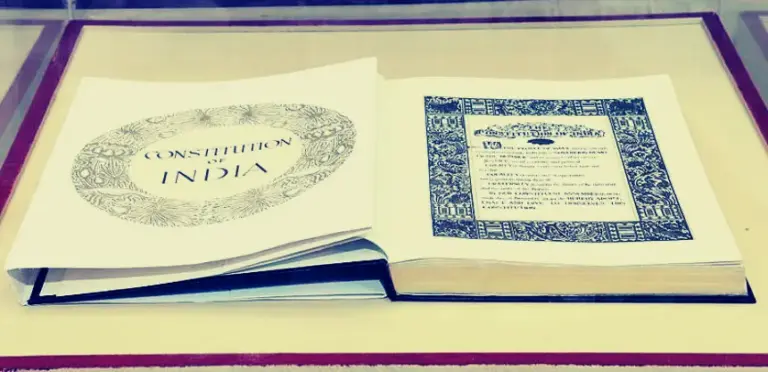
About Article 30
- It is one of the many provisions that ensure the preservation of minority rights.
- Article 30 of the Indian Constitution states the right of minorities to establish and administer educational institutions.
- It says: “All minorities, whether based on religion or language, shall have the right to establish and administer educational institutions of their choice.”
- It was adopted on December 8, 1948.
- Features:
- It consists of provisions that safeguard various rights of the minority community in the country, keeping in mind the principle of equality as well.
- Article 30(1) says that all minorities, whether based on religion or language, shall have the right to establish and administer educational institutions of their choice.
- The right is provided by this clause on two types of minorities, namely, religious and linguistic minorities.
- Article 30(1A) deals with the fixation of the amount for the acquisition of property of any educational institution established by minority groups.
- Article 30(2) states that the government should not discriminate against any educational institution on the ground that it is under the management of a minority, whether based on religion or language, while giving aid.
- Concept of Minorities:
- The Constitution of India uses the word minority but does not define it.
- Article 29 of the Indian Constitution uses the word ‘minorities’ in its marginal heading, but it speaks about “any section of the citizens inhabiting the territory of India or any part of the country should have the right to protect their language or script or culture, which is different and varied.
- It also says that citizens should be allowed to take admission in any educational institution which is maintained by the State or getting help from State funds whether they vary in religion, race, caste, language, or any of them.
- Article 30 of the Constitution of India talks only about religious and linguistic minorities.
- Religious Minority: The basic ground for a community to be nominated as a religious minority is the numerical strength of the community.
- Section 2, clause (c) of the National Commission of Minorities Act, declares six communities as minority communities. They are:
- Muslims
- Christians
- § Buddhists
- Sikhs
- Jains and
- Zoroastrians (Parsis)
- Linguistic Minorities:
- Class or group of people whose mother language or mother tongue is different from that of the majority groups is known as the linguistic minorities.
- Article 350-A of the Indian Constitution imposes an obligation on the states to try to provide enough facilities for instruction in the mother language at the primary level of education to children belonging to the linguistic minority community.
Q1) What are Fundamental Rights under the Indian Constitution?
The Fundamental Rights, embodied in Part III of the Constitution, guarantee civil rights to all Indians, and prevent the State from encroaching an individual’s liberty while simultaneously placing upon it an obligation to protect the citizens’ rights from encroachment by society.. Significantly, fundamental rights are enforceable by the courts, subject to certain conditions. There are six fundamental rights of Indian Constitution : Right to Equality (Article 14-18), Right to Freedom (Article 19-22), Right against Exploitation (Article 23-24), Right to Freedom of Religion (Article 25-28), Cultural and Educational Rights (Article 29-30), Right to Constitutional Remedies (Article 32).
Source: SC: Article 30 on minority institutes not intended to ghettoise communities






 Last updated on April, 2026
→ UPSC Final Result 2025 is now out.
→ UPSC has released UPSC Toppers List 2025 with the Civil Services final result on its official website.
→ Anuj Agnihotri secured AIR 1 in the UPSC Civil Services Examination 2025.
→ UPSC Marksheet 2025 is now out.
→ UPSC Notification 2026 & UPSC IFoS Notification 2026 is now out on the official website at upsconline.nic.in.
→ UPSC Calendar 2026 has been released.
→ Check out the latest UPSC Syllabus 2026 here.
→ UPSC Prelims 2026 will be conducted on 24th May, 2026 & UPSC Mains 2026 will be conducted on 21st August 2026.
→ The UPSC Selection Process is of 3 stages-Prelims, Mains and Interview.
→ Prepare effectively with Vajiram & Ravi’s UPSC Prelims Test Series 2026 featuring full-length mock tests, detailed solutions, and performance analysis.
→ Enroll in Vajiram & Ravi’s UPSC Mains Test Series 2026 for structured answer writing practice, expert evaluation, and exam-oriented feedback.
→ Join Vajiram & Ravi’s Best UPSC Mentorship Program for personalized guidance, strategy planning, and one-to-one support from experienced mentors.
→ Shakti Dubey secures AIR 1 in UPSC CSE Exam 2024.
→ Also check Best UPSC Coaching in India