About Bombay Stock Exchange (BSE)
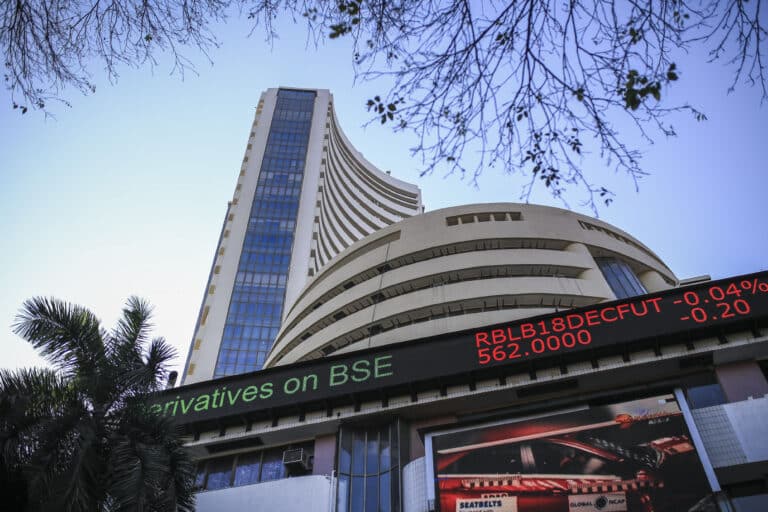
- It is the oldest and largest stock exchange in India.
- It was established in 1875 as the Native Share and Stock Brokers’ Association.
- In 1957, the Indian Government gave recognition to the BSE under the Securities Contracts Regulations Act.
- It is located on Dalal Street, Mumbai, and lists over 6000 companies.
- BSE boasts a variety of trading options in equity, fiat, debt instruments, derivatives, and mutual funds.
- In addition, it offers multiple trading services like clearing, settlement, risk management, and investor awareness.
- How does the BSE work?
- The BSE employs an advanced, electronically managed trading portal to facilitate financial trades.
- The exchange allows shareholders to place orders online without requiring external help from industry experts.
- This process is possible through the direct BSE market access offered by the portal.
- Investors can trade on the BSE share market via a brokerage firm. For this, they need to pay a pre-determined price to the broker.
- The direct investment option is only for a section of investors with bulky BSE transactions to their credit.
- The BSE stock exchange has the Bombay Online Trading Platform (BOLT) to ensure a safe trading experience.
- The BSE Sensex stocks follow a T+2 transaction settlement scheme which implies that each transaction on the exchange takes two days to complete processing.
- BSE market complies with the regulatory guidelines imposed by SEBI to ensure investors’ safety and capital market efficiency.
What is Sensex?
- Sensex is the benchmark index of the BSE.
- It was launched on January 1, 1986, as a basket of 30 stocks representing the country’s largest, financially-sound companies listed on the BSE.
- The term ‘Sensex’ is a blend of words ‘Sensitive’ and ‘Index’ and was coined by stock market expert Deepak Mohini.
- The Sensex reflects the movements in the Indian stock market. It is considered the benchmark index of the Indian stock market.
- How is the Sensex calculated?
- It was calculated based on the market capitalisation, or “Full Market Capitalisation”, when it was launched but shifted to a “Free-float Market Capitalisation” methodology from September 1, 2003.
- Free-float is the proportion of total shares issued by the company that is readily available for trading to the general public. It does not take into account promoters’ holdings, government holdings, and other shares that will not be available in the market for trading in the ordinary course of events.





What are Derivatives?
- A derivative is a contract between two parties which derives its value/price from an underlying asset.
- The commonly used assets are stocks, bonds, currencies, commodities and market indices.
- These instruments allow investors and traders to speculate on the price movements of the underlying asset without owning it directly.
- The value of the underlying assets keeps changing according to market conditions. The basic principle behind entering into derivative contracts is to earn profits by speculating on the value of the underlying asset in future.
- Derivatives serve various purposes, including hedging against risks, providing leverage, and facilitating price discovery.
Q1) What are debt instruments?
Debt instruments are any form of debt used to raise capital for businesses and governments. There are many types of debt instruments, but the most common are credit products, bonds, or loans. Each comes with different repayment conditions, generally described in a contract.
Source: BSE increases transaction charges on the derivative segment from November 1

 Last updated on March, 2026
→ UPSC Final Result 2025 is now out.
→ UPSC has released UPSC Toppers List 2025 with the Civil Services final result on its official website.
→ Anuj Agnihotri secured AIR 1 in the UPSC Civil Services Examination 2025.
→ UPSC Marksheet 2025 is now out.
→ UPSC Notification 2026 & UPSC IFoS Notification 2026 is now out on the official website at upsconline.nic.in.
→ UPSC Calendar 2026 has been released.
→ Check out the latest UPSC Syllabus 2026 here.
→ UPSC Prelims 2026 will be conducted on 24th May, 2026 & UPSC Mains 2026 will be conducted on 21st August 2026.
→ The UPSC Selection Process is of 3 stages-Prelims, Mains and Interview.
→ Prepare effectively with Vajiram & Ravi’s UPSC Prelims Test Series 2026 featuring full-length mock tests, detailed solutions, and performance analysis.
→ Enroll in Vajiram & Ravi’s UPSC Mains Test Series 2026 for structured answer writing practice, expert evaluation, and exam-oriented feedback.
→ Join Vajiram & Ravi’s Best UPSC Mentorship Program for personalized guidance, strategy planning, and one-to-one support from experienced mentors.
→ Shakti Dubey secures AIR 1 in UPSC CSE Exam 2024.
→ Also check Best UPSC Coaching in India