About Camelids
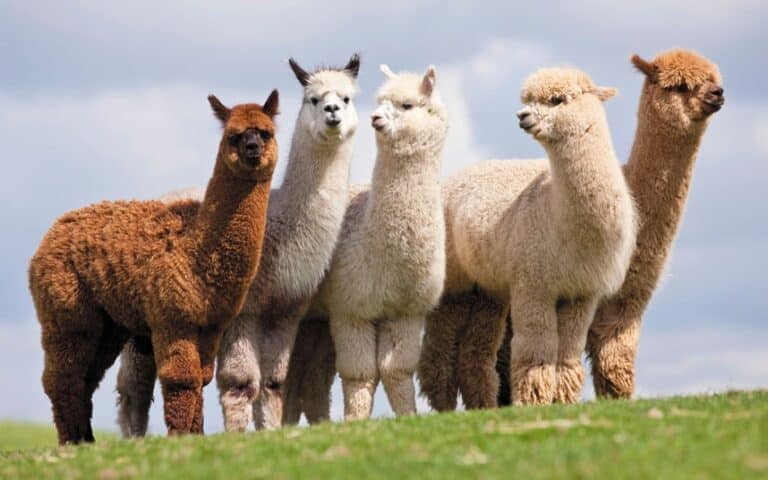
- A Camelid refers to any of the even-toed ungulates of the family Camelidae. E.g. camels, llamas, alpacas, guanacos, and vicuñas.
- They are known for their remarkable adaptations to arid and high-altitude environments.
- These ungulates can be classified into two major groups: the Old World and the New World.
- The Old World Camelids, found in northern Africa and central Asia are the true camels, such as the dromedary camels (one-humped camel) and the Bactrian camels (two-humped camel), characterized by
- their humps on their backs and
- the dulla, which is an organ found on the throat of male camels and is believed to be associated with the display of dominance among males and for attracting females.
- The South American Camelids (New World Camelids) include the modern llamas, alpacas, guanacos, and vicuñas. Wild populations of South American Camelids, such as vicuñas, inhabit the high-altitude regions of the Andes Mountains.
- General features of Camelids:
- They are even-toed ungulates. These mammals are characterized by having soft-padded, snowshoe-like feet where each foot has two toes.
- They have long necks and slender legs.
- Their upper lips are split into two independent mobile protrusions.
- These animals are herbivorous, primarily feeding on vegetation, and have a unique digestive system that allows them to extract nutrients from fibrous plant material.
- They are ruminants, but, unlike other ruminants, the Camelids have true canine teeth. Their stomachs have three chambers, in contrast to other ruminants that have four.
- One of their most recognizable traits is their ability to form herds.
Q1) What are ungulates?
Ungulates are hoofed mammals that walk on their toes. The word ungulate comes from the Latin word “unguis” , which means nail, claw or hoof. Ungulates are divided into two classes: even-toed ungulates such as deer, giraffe, antelopes, and odd-toed ungulates such as horses, zebras and rhinoceroses.
Source: Why UN has declared 2024 the International Year Of Camelids





 Last updated on March, 2026
→ UPSC Final Result 2025 is now out.
→ UPSC has released UPSC Toppers List 2025 with the Civil Services final result on its official website.
→ Anuj Agnihotri secured AIR 1 in the UPSC Civil Services Examination 2025.
→ UPSC Marksheet 2025 is now out.
→ UPSC Notification 2026 & UPSC IFoS Notification 2026 is now out on the official website at upsconline.nic.in.
→ UPSC Calendar 2026 has been released.
→ Check out the latest UPSC Syllabus 2026 here.
→ UPSC Prelims 2026 will be conducted on 24th May, 2026 & UPSC Mains 2026 will be conducted on 21st August 2026.
→ The UPSC Selection Process is of 3 stages-Prelims, Mains and Interview.
→ Prepare effectively with Vajiram & Ravi’s UPSC Prelims Test Series 2026 featuring full-length mock tests, detailed solutions, and performance analysis.
→ Enroll in Vajiram & Ravi’s UPSC Mains Test Series 2026 for structured answer writing practice, expert evaluation, and exam-oriented feedback.
→ Join Vajiram & Ravi’s Best UPSC Mentorship Program for personalized guidance, strategy planning, and one-to-one support from experienced mentors.
→ Shakti Dubey secures AIR 1 in UPSC CSE Exam 2024.
→ Also check Best UPSC Coaching in India