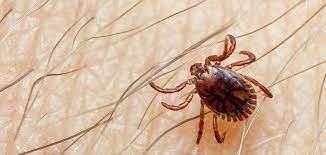
About Crimean-Congo Haemorrhagic Fever
- It is a viral haemorrhagic fever usually transmitted by ticks.
- It can also be contracted through contact with viraemic animal tissues (animal tissue where the virus has entered the bloodstream) during and immediately post-slaughter of animals.
- The disease was first detected among soldiers in the Crimean Peninsula (near the Black Sea) in 1944.
- In 1969, it was found that an ailment identified in the Congo Basin was caused by the same pathogen. Thus, the disease was named the Crimean-Congo haemorrhagic fever.
- Its outbreak constitute a threat to public health services as the virus can lead to epidemics, has a high case fatality ratio (10–40%).
- Transmission:
- Animals such as cattle, goats, sheep and hares serve as amplifying hosts for the virus.
- Transmission to humans occurs through contact with infected ticks or animal blood.
- It can be transmitted from one infected human to another by contact with infectious blood or body fluids”, such as sweat and saliva.
- The ticks can also be hosted by migratory birds.
Symptoms of Crimean-Congo Haemorrhagic Fever
- Include fever, muscle ache, dizziness, neck pain, backache, headache, sore eyes and sensitivity to light.
- After 2–4 days the agitation may be replaced by sleepiness, depression and lassitude
Treatment of Crimean-Congo Haemorrhagic Fever
- There is no vaccine for the virus in either humans or animals, and treatment generally consists of managing symptoms.
- According to the WHO, “the antiviral drug ribavirin has been used to treat CCHF infection with apparent benefit.”
Q1) What is the significance of the Crimean Peninsula?
The Crimean Peninsula is a landmass located on the northern coast of the Black Sea. It is connected to mainland Ukraine by the narrow Isthmus of Perekop. Historically, the Crimean Peninsula has been a region of strategic importance due to its geographical location and natural resources
Source: Climate change aiding spread of deadly virus in Europe: What is CCHF






 Last updated on March, 2026
→ UPSC Final Result 2025 is now out.
→ UPSC has released UPSC Toppers List 2025 with the Civil Services final result on its official website.
→ Anuj Agnihotri secured AIR 1 in the UPSC Civil Services Examination 2025.
→ UPSC Marksheet 2025 is now out.
→ UPSC Notification 2026 & UPSC IFoS Notification 2026 is now out on the official website at upsconline.nic.in.
→ UPSC Calendar 2026 has been released.
→ Check out the latest UPSC Syllabus 2026 here.
→ UPSC Prelims 2026 will be conducted on 24th May, 2026 & UPSC Mains 2026 will be conducted on 21st August 2026.
→ The UPSC Selection Process is of 3 stages-Prelims, Mains and Interview.
→ Prepare effectively with Vajiram & Ravi’s UPSC Prelims Test Series 2026 featuring full-length mock tests, detailed solutions, and performance analysis.
→ Enroll in Vajiram & Ravi’s UPSC Mains Test Series 2026 for structured answer writing practice, expert evaluation, and exam-oriented feedback.
→ Join Vajiram & Ravi’s Best UPSC Mentorship Program for personalized guidance, strategy planning, and one-to-one support from experienced mentors.
→ Shakti Dubey secures AIR 1 in UPSC CSE Exam 2024.
→ Also check Best UPSC Coaching in India