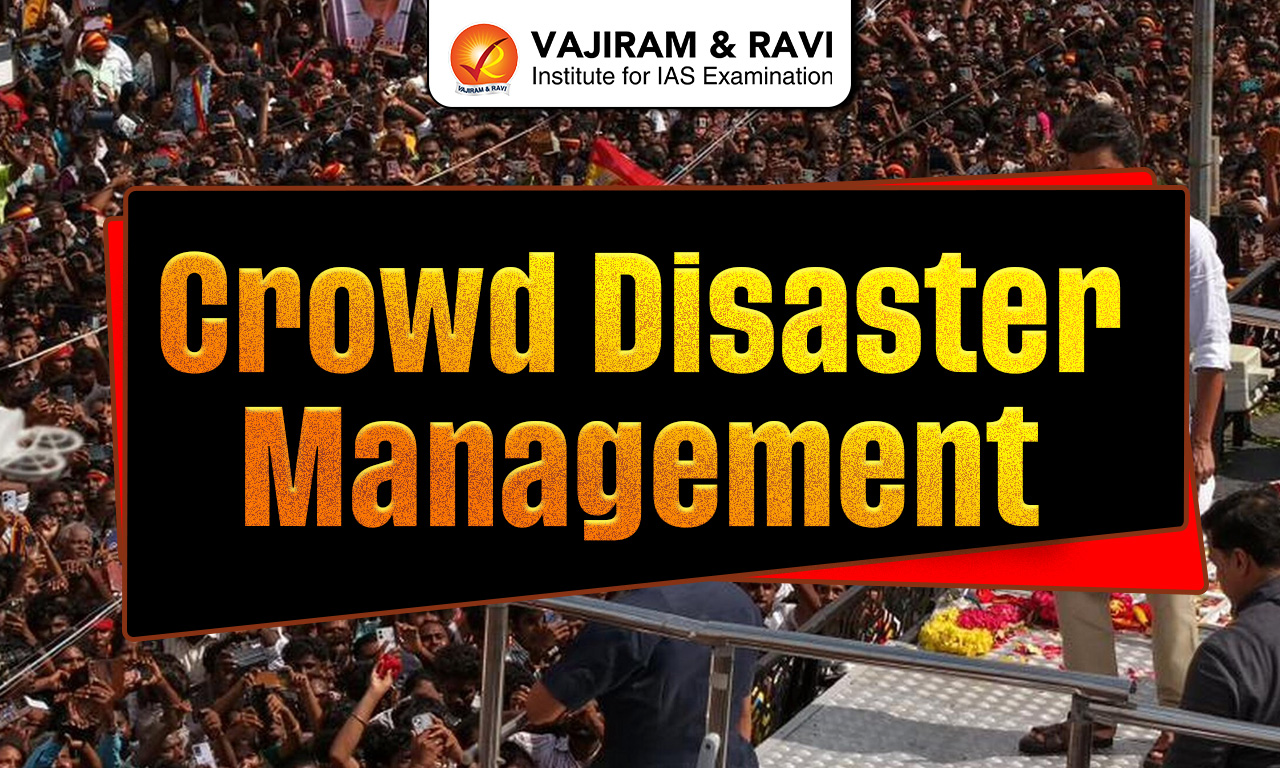
Crowd Disaster Management is a crucial aspect of public safety, especially in a country like India where large gatherings are common during festivals, religious events, political rallies, and sports matches. Poor planning, panic situations, and infrastructure gaps often lead to tragic incidents like stampedes. Effective management ensures safety, reduces risks, and helps authorities respond quickly during emergencies.
What is a Crowd Disaster?
A Crowd Disaster refers to any situation in a large gathering that results in injuries or loss of life due to mismanagement, panic, or structural failure.
A stampede is the most common type of crowd disaster. It is a sudden and uncontrolled rush of people caused by fear, excitement, or confusion. In such situations, people often die due to compressive asphyxia, where the chest is unable to expand due to extreme pressure.
Another concept linked to stampedes is the “black hole effect”, where if one person falls, it creates a gap, causing others to fall on top, leading to a deadly pile-up.
Causes of Crowd Disasters in India
Crowd disasters in India are mainly caused by a combination of poor planning, weak infrastructure, and sudden behavioral reactions like panic. These factors often interact with each other, turning manageable situations into deadly stampedes.
1. Systemic Failures
Systemic issues arise due to gaps in administration, planning, and coordination, making events unsafe from the beginning.
- Poor Planning & Risk Assessment: Authorities often fail to estimate crowd size or identify possible hazards in advance.
- Overcrowding: Entry of people beyond the safe capacity of a venue increases pressure and risk of crushing.
- Lack of Coordination: Miscommunication between organizers, police, and local administration leads to confusion.
- Weak Crowd Control Measures: Absence of barricades, route segregation, and trained staff results in unmanaged crowd flow.
- Inadequate Emergency Preparedness: Lack of evacuation plans, medical teams, and quick response systems delays rescue.
2. Infrastructure Deficiencies
Poor physical arrangements at venues significantly increase the chances of accidents.
- Narrow Entry and Exit Points: Create bottlenecks and slow movement during emergencies.
- Blocked or Poorly Designed Exits: Prevent smooth evacuation and increase panic.
- Slippery or Unsafe Surfaces: Cause people to fall, triggering a domino effect.
- Lack of Signage and Lighting: People cannot find safe routes easily, leading to confusion.
3. Behavioral Factors
Human psychology plays a major role in triggering and worsening crowd disasters.
- Panic and Rumors: Sudden fear (like fire or collapse rumors) leads to uncontrolled running.
- Herd Mentality: Individuals follow others blindly without assessing danger.
- Excitement or Celebrity Attraction: People rush to get a closer view of celebrities or religious figures.
- Disregard for Rules: Queue breaking, pushing, and ignoring instructions increase chaos.
4. Immediate Triggers
Certain sudden events can instantly turn a stable crowd into a dangerous situation.
- Fire or Electrical Failures: Sparks panic and rapid movement toward exits.
- Rumors or Misinformation: False alerts about danger spread quickly in dense crowds.
- VIP Movement or Sudden Announcements: Cause sudden crowd shifts.
- Weather Conditions: Rain, heat, or slippery conditions increase discomfort and risk.
5. Environmental and External Factors
External conditions can also contribute to crowd disasters.
- High Population Density: Large gatherings are common in India, increasing risk levels.
- Festival and Religious Pressure: Emotional and spiritual urgency leads to overcrowding.
- Urban Constraints: Limited space in cities restricts safe crowd movement.


Impact of Crowd Disasters
Crowd disasters have serious and far-reaching consequences that go beyond immediate loss of life. They affect individuals, society, governance systems, and the economy, often leaving long-term impacts on public safety and trust.
- Loss of Lives due to Compressive Asphyxia, Trampling, and Domino Effect in high-density crowds
- Severe Injuries such as Fractures, Head Trauma, and Internal Organ Damage leading to long-term disability
- Psychological Trauma including Stress, Anxiety, PTSD, and lasting Fear of Crowds among survivors
- Decline in Public Trust toward authorities, resulting in Social Anger, Protests, and reduced confidence in safety systems
- Significant Economic Losses through Compensation Burden, Tourism Decline, Event Disruptions, and Business Losses
- Exposure of Administrative Failures like poor planning and coordination, leading to Legal Action, Inquiries, and stricter regulations
- Damage to Infrastructure such as Stadiums, Bridges, and Public Facilities, increasing repair and maintenance costs
- Disruption of Social and Cultural Activities, creating Negative Perception of festivals and public gatherings
- Increased pressure on governance systems for better Policy Implementation, Safety Audits, and Accountability Mechanisms
- Long-term Community Grief, Emotional Loss, and changes in Public Behavior toward large gatherings
Major Stampede Events in India
- Hathras Stampede (2024, Uttar Pradesh): A massive crowd gathered at a religious event led to overcrowding and panic, resulting in over 100 deaths, mostly women and children. The incident exposed failures in crowd control, exit management, and administrative preparedness.
- New Delhi Railway Station Stampede (Multiple Incidents): Heavy rush during festivals and peak travel times has repeatedly led to stampede-like situations due to platform overcrowding, poor crowd flow management, and lack of real-time monitoring, highlighting the risks in transport hubs.
- Prayag Sangam / Maha Kumbh Stampede (2025, Prayagraj): During the holy dip at Sangam, a sudden surge of millions of devotees caused overcrowding and chaos, leading to casualties and injuries, emphasizing the need for scientific crowd estimation and route planning.
- Bengaluru Stadium Stampede (2025): During celebrations related to a major cricket event near M. Chinnaswamy Stadium, crowd size far exceeded capacity, causing a deadly surge and exposing issues like overcrowding and poor coordination.
- Tirupati Stampede (2025, Andhra Pradesh): A stampede occurred near a token distribution counter due to sudden crowd pressure, highlighting problems in queue management and entry regulation at religious sites.
- Mumbai Footbridge Stampede (2017): Panic triggered by rumors during heavy rainfall at a crowded railway footbridge caused a deadly stampede, showing the impact of panic behavior and infrastructure limitations.
NDMA Guidelines on Crowd Disaster Management
The National Disaster Management Authority (NDMA) has issued comprehensive guidelines to ensure safe planning, regulation, and management of large public gatherings in India. These guidelines focus on preparedness, infrastructure, real-time monitoring, and effective emergency response.
1. Preparedness and Planning
Proper planning is the foundation of crowd safety and helps prevent disasters before they occur.
- Conduct Scientific Crowd Estimation to determine expected footfall and avoid overcrowding.
- Carry out Risk Assessment using tools like Failure Mode and Effect Analysis (FMEA).
- Define Maximum Crowd Density Limits per square meter and set clear evacuation triggers.
- Establish a strong Legal Framework under provisions like the Disaster Management Act and Police Act.
- Develop detailed Standard Operating Procedures (SOPs) for all stakeholders.
2. Infrastructure and Venue Design
Safe infrastructure reduces congestion and ensures smooth crowd movement.
- Provide Multiple Wide Entry and Exit Points to avoid bottlenecks.
- Ensure Clear Segregation of Routes for entry and exit.
- Install Multilingual Signage and proper lighting for easy navigation.
- Design venues with Open Spaces and Emergency Escape Routes.
- Maintain Barrier Systems and Zig-Zag Queues to regulate crowd flow.
3. On-Ground Crowd Management
Effective management at the site is essential to control crowd movement.
- Deploy Trained Personnel and Volunteers for crowd control.
- Use Barricading and Route Diversion to manage flow and prevent overcrowding.
- Implement Traffic and Parking Management Plans near event sites.
- Ensure Coordination Between Agencies like police, local administration, and organizers.
4. Facilities and Emergency Services
Immediate support systems are crucial during emergencies.
- Provide On-Site Medical Facilities, ambulances, and first aid centers.
- Ensure availability of Fire Safety Equipment and emergency response tools.
- Deploy Quick Reaction Teams (QRTs) for rapid intervention.
- Arrange Public Utilities like drinking water, sanitation, and rest areas.
5. Real-Time Monitoring and Communication
Continuous monitoring helps detect risks and respond quickly.
- Install CCTV Surveillance Systems and monitoring control rooms.
- Use Public Address Systems for announcements and crowd guidance.
- Provide Real-Time Updates through mobile alerts, digital boards, and loudspeakers.
- Set up Watch Towers and Communication Networks for better visibility and coordination.
6. Emergency Response Mechanism
Quick and coordinated response can minimize damage during disasters.
- Establish an Incident Command System (ICS) for clear decision-making.
- Prepare Evacuation Plans with clearly marked escape routes.
- Conduct Mock Drills and Training Programs for all stakeholders.
- Ensure Coordination with Hospitals and Emergency Services.
7. Awareness and Capacity Building
Public awareness plays a key role in preventing panic and chaos.
- Conduct Awareness Campaigns on safe crowd behavior.
- Train staff in Crowd Psychology and Panic Management.
- Educate people about Emergency Exits and Safety Protocols.
Role of Technology in Crowd Disaster Management
Technology plays a crucial role in preventing crowd disasters by enabling real-time monitoring, early warning, and quick response.
- AI-Based CCTV Surveillance helps detect Crowd Density, Unusual Movement, and potential Bottlenecks in real time
- Drone Monitoring provides Aerial Surveillance, Live Feeds, and better Decision-Making from control centers
- RFID Tagging Systems track Pilgrim Movement and help control Overcrowding at sensitive locations
- IoT Sensors monitor Footfall, Environmental Conditions, and trigger alerts when limits are exceeded
- Integrated Command and Control Centers (ICCCs) enable Real-Time Coordination between police, administration, and emergency services
- Mobile Apps and SMS Alerts provide Live Updates, Route Guidance, and Emergency Notifications to the public
- Digital Signage and Public Address Systems ensure Instant Communication and reduce panic among crowds
- Thermal Imaging Cameras help monitor Night Crowds and detect unusual congestion patterns
- GPS and GIS Mapping assist in Route Planning, Traffic Management, and Emergency Evacuation
- Facial Recognition Systems improve Security Monitoring and help identify missing persons in large gatherings
- Smart Wearables and Tracking Devices are being tested for Volunteer Coordination and Crowd Navigation
Strategies for Effective Crowd Disaster Management
Effective crowd disaster management requires a proactive, multi-layered approach that combines planning, infrastructure, technology, coordination, and public awareness to prevent risks and ensure safety during large gatherings.
- Scientific Crowd Estimation using data analysis to fix safe Capacity Limits and avoid overcrowding
- Comprehensive Risk Assessment through tools like FMEA to identify potential hazards in advance
- Proper Venue Planning with Multiple Entry/Exit Points, Wide Pathways, and Emergency Escape Routes
- Segregation of Crowd Flow using Barricading, Zig-Zag Queues, and separate routes for entry and exit
- Deployment of Trained Personnel including police, volunteers, and crowd managers for effective on-ground control
- Real-Time Monitoring using CCTV, Drones, and Control Rooms for quick detection of overcrowding
- Use of Technology like AI Analytics, RFID Tracking, and Mobile Alerts for crowd guidance and risk prevention
- Effective Communication Systems through Loudspeakers, Digital Boards, and SMS Alerts to inform and guide people
- Public Awareness Campaigns to educate people about Safe Crowd Behavior and emergency protocols
- Training in Crowd Psychology for staff to manage panic and control crowd behavior calmly
- Emergency Preparedness with Quick Reaction Teams (QRTs), Medical Aid, and Ambulances on-site
- Incident Command System (ICS) for clear roles, responsibilities, and quick decision-making during crises
- Regular Mock Drills and Safety Audits to test preparedness and improve response systems
Global Best Practices
Global experiences show that effective crowd disaster management depends on scientific planning, strict regulation, and advanced use of technology.
- Saudi Arabia (Hajj Management): Uses Crowd Simulation Models, AI-Based Monitoring, Time-Slot Entry, and Multi-Level Pathways to safely manage millions of pilgrims
- United Kingdom (Stadium Safety): Venues like Wembley follow Advanced Evacuation Systems, Strict Capacity Norms, and All-Seater Designs for controlled movement
- South Korea (Post-2022 Reforms): Implemented AI-Based CCTV Surveillance and Real-Time Density Alerts to prevent overcrowding in public spaces
- Japan (Event Discipline): Uses Timed Ticketing, Staggered Entry/Exit, and strong Public Awareness Culture for smooth crowd flow
- United States (Event Management Systems): Mandates Trained Crowd Managers, Emergency Protocols, and Integrated Command Centers for large events

 Last updated on Oct, 2026
→ UPSC 2027 Notification will be released on 13 January 2027 at upsconline.nic.in.
→ Check Nobel Prize 2026 Winners List here.
→ Download PIB PRiSM Monthly Magazine 2026 here.
→ Check UPSC Monthly Current Affairs Magazine The Recitals here.
→ Check out the latest UPSC Syllabus here.
→ Download UPSC Model Answers for Mains 2026
→ UPSC Mains Question Paper 2026 is out now for Essay & GS Paper 1, 2, 3 & 4.
→ UPSC Calendar 2027 has been released.
→ Enroll in Vajiram & Ravi’s UPSC Mains Test Series 2027 for structured answer writing practice, expert evaluation, and exam-oriented feedback.
→ Join Vajiram & Ravi’s UPSC Mentorship Program 2027 for personalized guidance, strategy planning, and one-to-one support from experienced mentors.
→ Go through the UPSC Mains Previous Year Papers to enhance your preparation.
→ UPSC has released UPSC Toppers List 2025 with the Civil Services final result on its official website.
→ Also check Best UPSC Coaching in India
Crowd Disaster Management FAQs
Q1. What is a crowd disaster?+
Q2. What is the main cause of deaths in stampedes?+
Q3. What are the major causes of crowd disasters in India?+
Q4. What is the “black hole effect” in crowd disasters?+
Q5. How can crowd disasters be prevented?+
Tags: crowd disaster management disaster management