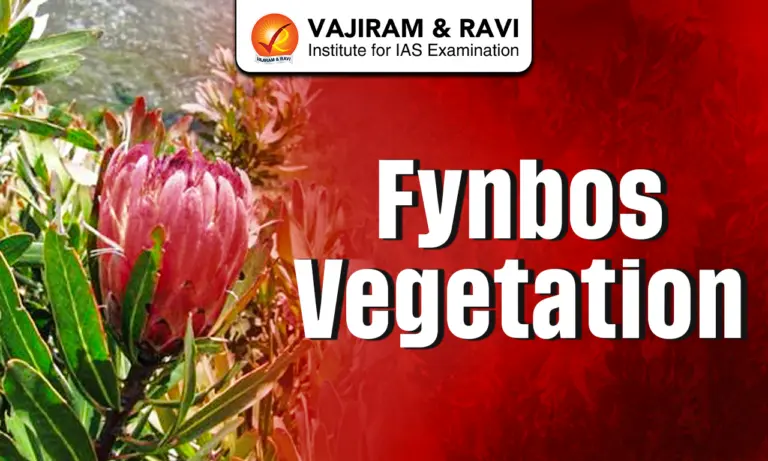
Fynbos vegetation is a unique and highly diverse type of shrubland found in the Western Cape of South Africa. It is part of the Cape Floristic Region, one of the world’s richest floral kingdoms, known for its exceptional plant diversity and endemism.
This vegetation is characterized by small, hard-leaved shrubs adapted to a Mediterranean climate with wet winters and dry summers. Fynbos is especially rich in plant species like proteas, ericas, and restios, many of which are not found anywhere else in the world.
Fynbos Vegetation
Fynbos vegetation is a fire-adapted shrubland ecosystem with remarkable biodiversity, thriving in nutrient-poor soils and a Mediterranean climate. It plays a crucial ecological role and is globally recognized for its conservation importance.
- Found mainly in the Western Cape region of South Africa.
- Part of the Cape Floristic Region, a UNESCO World Heritage Site.
- Dominated by plant groups such as proteas, ericas (heaths), and restios (reed-like plants).
- Contains over 9,000 plant species, with nearly 70% being endemic.
- Adapted to frequent wildfires, which help in seed germination and regeneration.
- Grows in sandy, nutrient-poor soils with low fertility.
- Supports diverse wildlife, including insects, birds, and small mammals.
- Faces threats from urbanization, agriculture, and invasive species.
Flora of Fynbos Vegetation
- Proteas: Large, colorful flowering plants symbolizing the region.
- Ericas (heaths): Small shrubs with bell-shaped flowers, highly diverse.
- Restios: Grass-like plants adapted to poor soils.
- Geophytes: Bulbous plants like lilies and orchids that bloom after rains.
- Shrubs with hard, needle-like leaves to reduce water loss.





Fauna of Fynbos Vegetation
- Small mammals like rodents and antelopes such as the Cape grysbok.
- Rich bird diversity including sunbirds and sugarbirds (important pollinators).
- Numerous insects, especially beetles and butterflies.
- Reptiles like lizards and snakes adapted to dry conditions.
- Amphibians in wetter microhabitats.
- Pollinators play a key role in maintaining plant diversity.

 Last updated on March, 2026
→ UPSC Final Result 2025 is now out.
→ UPSC has released UPSC Toppers List 2025 with the Civil Services final result on its official website.
→ Anuj Agnihotri secured AIR 1 in the UPSC Civil Services Examination 2025.
→ UPSC Marksheet 2025 is now out.
→ UPSC Notification 2026 & UPSC IFoS Notification 2026 is now out on the official website at upsconline.nic.in.
→ UPSC Calendar 2026 has been released.
→ Check out the latest UPSC Syllabus 2026 here.
→ UPSC Prelims 2026 will be conducted on 24th May, 2026 & UPSC Mains 2026 will be conducted on 21st August 2026.
→ The UPSC Selection Process is of 3 stages-Prelims, Mains and Interview.
→ Prepare effectively with Vajiram & Ravi’s UPSC Prelims Test Series 2026 featuring full-length mock tests, detailed solutions, and performance analysis.
→ Enroll in Vajiram & Ravi’s UPSC Mains Test Series 2026 for structured answer writing practice, expert evaluation, and exam-oriented feedback.
→ Join Vajiram & Ravi’s Best UPSC Mentorship Program for personalized guidance, strategy planning, and one-to-one support from experienced mentors.
→ Shakti Dubey secures AIR 1 in UPSC CSE Exam 2024.
→ Also check Best UPSC Coaching in India
Fynbos Vegetation FAQs
Q1. What is Fynbos vegetation?+
Q2. Where is Fynbos vegetation located?+
Q3. What type of climate supports Fynbos vegetation?+
Q4. Why is Fynbos vegetation important?+
Q5. What are the main plants found in Fynbos?+
Tags: fynbos vegetation geography