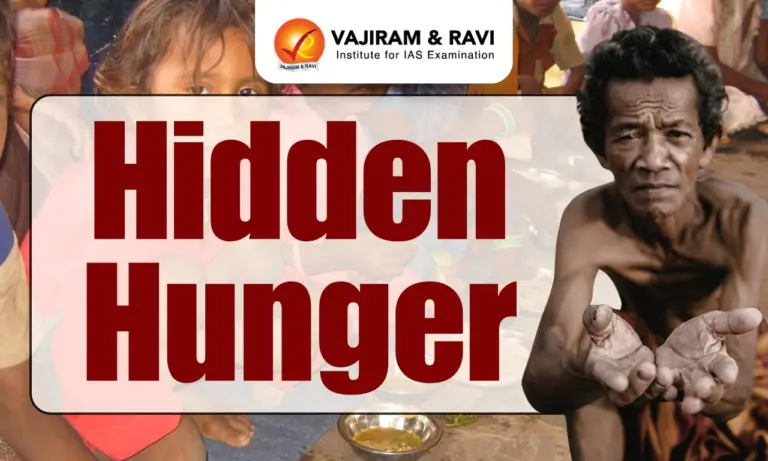
Hidden Hunger is a form of malnutrition that is not easily visible but still affects people’s health and well-being. It occurs when individuals do not get a balanced and nutritious diet over time. Even though people may appear normal and have enough food to eat, their bodies may still lack essential nutrients needed for proper growth and functioning. In general, hidden hunger reflects the broader issue of poor nutrition quality, making it an important concern for public health and development.
About Hidden Hunger
- Hidden hunger refers to a condition where people may consume enough food, but their diet lacks essential vitamins and minerals, leading to poor nutrition over time. It is called “hidden” because its effects are not immediately visible like starvation.
- It mainly occurs due to poor-quality diets that lack diversity, even if calorie intake is adequate. Diets heavily dependent on a few staple foods often fail to provide balanced nutrition.
- Hidden hunger affects overall health by causing weak immunity, poor physical and mental development, fatigue, and reduced productivity, and may also increase the risk of chronic diseases like diabetes and heart problems.
- It is a global issue affecting over 2 billion people, especially in regions with limited access to nutritious food. Children, women, and pregnant mothers are more vulnerable due to higher nutritional needs.
India’s Hidden Hunger Status
- In the Global Hunger Index (2025), India ranks 102 out of 123 countries with a score of 25.8, indicating a serious level of hunger. This score is based on indicators like undernourishment, child stunting, wasting, and child mortality.
- Around 12% of the population is undernourished, while among children under five, nearly one-third are stunted and about one-fifth are wasted, reflecting poor nutrition and health conditions.
- India carries a high global burden of hunger, with over 190 million undernourished people and a significant share of the world’s wasted children.
- Children and adolescents face major nutritional challenges, including poor growth, thinness, and widespread micronutrient deficiencies, affecting their development and productivity.
- Women and children are the most affected, with high levels of anaemia, showing deep-rooted nutritional inequality and health concerns.
- There are also regional disparities, with states like Bihar, Jharkhand, and Gujarat showing higher levels of malnutrition compared to the national average.


Major Causes of Hidden Hunger in India
- Poverty and Low Income: A large section of the population cannot afford nutritious and diverse food due to limited income. This forces people to depend on cheap, filling foods rather than balanced diets, leading to micronutrient deficiencies.
- Dietary Monotony (Overdependence on Staples): Many households rely heavily on rice and wheat, which provide calories but lack essential vitamins and minerals. This reduces the intake of fruits, vegetables, pulses, and protein-rich foods needed for proper nutrition.
- Inequality and Regional Disparities: Nutritional outcomes vary widely across regions and social groups. Tribal areas, rural regions, and poorer states face higher levels of stunting and anaemia due to lack of access to health services and quality food.
- Food Insecurity and Poor Access: Even when food is available, it is often not nutritious enough. Many families face irregular access to healthy food, leading to long-term deficiencies despite meeting basic calorie needs.
- Poor Sanitation and Hygiene (WASH Issues): Lack of clean drinking water, sanitation, and hygiene leads to infections like diarrhoea. These illnesses prevent the body from absorbing nutrients properly, worsening hidden hunger.
- Gender Inequality: In many households, women and girls eat last and less, which leads to high levels of anaemia and malnutrition. Poor maternal health also affects the nutrition of children, continuing the cycle across generations.
- Low Nutrition Awareness: Many people are unaware of what constitutes a balanced diet, proper cooking methods, or child-feeding practices. This lack of knowledge leads to poor dietary choices even when food is available.
- Agricultural and Policy Bias: Government policies have long focused on increasing production of staple grains, which has reduced the cultivation and availability of nutrient-rich crops like millets, pulses, and vegetables.
- Biological Factors (Low Absorption): Even when nutrients are consumed, the body may not absorb them effectively due to poor diet composition or anti-nutritional factors present in some foods.
Hidden Hunger Impacts and Effects
- Intergenerational Cycle of Malnutrition: When mothers are malnourished, they often give birth to low-birth-weight babies, who are more likely to suffer from poor nutrition throughout life. This creates a continuous cycle of malnutrition across generations, making it difficult to break out of poverty.
- Irreversible Damage in Early Life: The first 1,000 days (from pregnancy to early childhood) are very crucial. Lack of essential nutrients during this period can cause permanent damage to physical growth and brain development, which cannot be corrected later.
- Poor Physical Growth and Health: Hidden hunger leads to stunting, weakness, and frequent illnesses. Deficiencies of vitamins and minerals can also cause serious problems like anaemia, weak bones, and even vision loss, affecting overall health and quality of life.
- Weak Immunity and Higher Disease Burden: A lack of proper nutrients weakens the immune system, making people more vulnerable to infections. This results in higher medical expenses and increased pressure on the healthcare system.
- Cognitive and Learning Deficits: Children suffering from micronutrient deficiencies often have poor memory, low concentration, and reduced learning ability, which affects their education and future opportunities.
- Reduced Work Capacity and Productivity: Adults facing hidden hunger experience fatigue, low energy, and poor health, which reduces their ability to work efficiently. This directly impacts individual earnings and overall workforce productivity.
- Economic Loss to the Nation: Due to poor health, low productivity, and high healthcare costs, countries like India lose a significant share of their income around 4% of GDP because of micronutrient malnutrition.
- Threat to Demographic Dividend: India has a large young population, but hidden hunger weakens their health, skills, and productivity, reducing the potential benefits of the demographic dividend.
Government Schemes Addressing Hidden Hunger
- Overall Food Security System: India runs several food security programs to reduce hunger and malnutrition, especially for poor families, children, and vulnerable groups. The country also maintains a large buffer stock of foodgrains, which ensures a steady supply through government schemes.
- National Food Security Act (NFSA): This law provides subsidized food grains to nearly two-thirds of the population (75% rural and 50% urban). It covers around 81 crore people, ensuring that poor households get affordable food regularly.
- Pradhan Mantri Garib Kalyan Anna Yojana (PMGKAY): Started during COVID-19, this scheme provides free food grains to about 81 crore beneficiaries and has been extended till 2024 onwards to support the poor.
- Antyodaya Anna Yojana (AAY): This scheme focuses on the poorest of the poor families, providing them with highly subsidized food grains. It plays a key role in ensuring basic food security for the most vulnerable.
- PM POSHAN Scheme: Earlier known as the Mid-Day Meal Scheme, it provides nutritious cooked meals to school children, improving both nutrition and school attendance, especially among disadvantaged groups.
- POSHAN 2.0 (Mission POSHAN): Aims to improve nutrition among children, pregnant women, and mothers through better Anganwadi services, monitoring, and awareness.
- Food Fortification: The government promotes fortified rice, salt, and edible oil, adding important nutrients like iron and vitamins to commonly consumed foods to tackle hidden hunger.
- Anaemia Mukt Bharat (AMB): Focuses on reducing anaemia, especially among women and children, through iron supplements, deworming, and awareness programs.
- Pradhan Mantri Matru Vandana Yojana (PMMVY): Provides financial support to pregnant and lactating women, helping them maintain proper nutrition and compensate for wage loss.
- Price Stabilization Measures: Through steps like the Price Stabilization Fund, buffer stocks (like onions), and subsidized products such as Bharat Atta, Bharat Rice, and Bharat Dal, the government ensures that essential food items remain affordable.
- Eat Right India Initiative: Promotes healthy eating habits, food safety, and balanced diets through awareness campaigns led by FSSAI.
Measures to Tackle Hidden Hunger in India
- Food Fortification (Improving Everyday Foods): The government adds essential nutrients like iron, folic acid, and vitamins to commonly consumed foods such as rice, salt, and edible oil. This helps improve nutrition without changing eating habits, especially for poor households.
- Biofortified Crops: Scientists and agricultural programs are developing nutrient-rich crops like iron-rich bajra and zinc-rich wheat, so that people get better nutrition directly from the food they grow and eat.
- Promoting Dietary Diversity: Efforts are being made to include millets (nutri-cereals), pulses, fruits, and green vegetables in government food schemes like PDS and school meals. This reduces overdependence on rice and wheat and improves overall diet quality.
- Kitchen and Community Gardens: Encouraging families and villages to grow their own vegetables and fruits ensures a regular supply of fresh and nutritious food at low cost.
- Focus on Mothers and Children: Schemes like POSHAN 2.0 ensure that pregnant women, lactating mothers, and young children receive proper nutrition during the most critical stages of life, preventing long-term damage.
- Fighting Anaemia: Programs like Anaemia Mukt Bharat provide iron tablets, deworming, and awareness, especially targeting women and children who are most at risk.
- Women Empowerment: Training women as nutrition workers or small entrepreneurs helps them produce and supply healthy, local foods, while also improving their income and decision-making power.
- Improving Sanitation and Hygiene (WASH): Linking nutrition programs with initiatives like clean drinking water and sanitation helps prevent infections, ensuring that the body can properly absorb nutrients.
- Awareness and Behaviour Change: Campaigns are promoting balanced diets, proper cooking methods, and healthy eating habits, so that people make better food choices in daily life.
- Convergence of Schemes: Different government programs related to health, nutrition, agriculture, and sanitation are being combined for better results, ensuring a holistic approach to tackling hidden hunger.

 Last updated on Oct, 2026
→ UPSC 2027 Notification will be released on 13 January 2027 at upsconline.nic.in.
→ Check Nobel Prize 2026 Winners List here.
→ Download PIB PRiSM Monthly Magazine 2026 here.
→ Check UPSC Monthly Current Affairs Magazine The Recitals here.
→ Check out the latest UPSC Syllabus here.
→ Download UPSC Model Answers for Mains 2026
→ UPSC Mains Question Paper 2026 is out now for Essay & GS Paper 1, 2, 3 & 4.
→ UPSC Calendar 2027 has been released.
→ Enroll in Vajiram & Ravi’s UPSC Mains Test Series 2027 for structured answer writing practice, expert evaluation, and exam-oriented feedback.
→ Join Vajiram & Ravi’s UPSC Mentorship Program 2027 for personalized guidance, strategy planning, and one-to-one support from experienced mentors.
→ Go through the UPSC Mains Previous Year Papers to enhance your preparation.
→ UPSC has released UPSC Toppers List 2025 with the Civil Services final result on its official website.
→ Also check Best UPSC Coaching in India
Hidden Hunger FAQs
Q1. What is hidden hunger and why is it important?+
Q2. What are the main causes of hidden hunger in India?+
Q3. Who are most affected by hidden hunger?+
Q4. What are the effects of hidden hunger on health?+
Q5. How does hidden hunger impact India’s economy?+
Tags: economy economy notes hidden hunger indian society indian society notes