


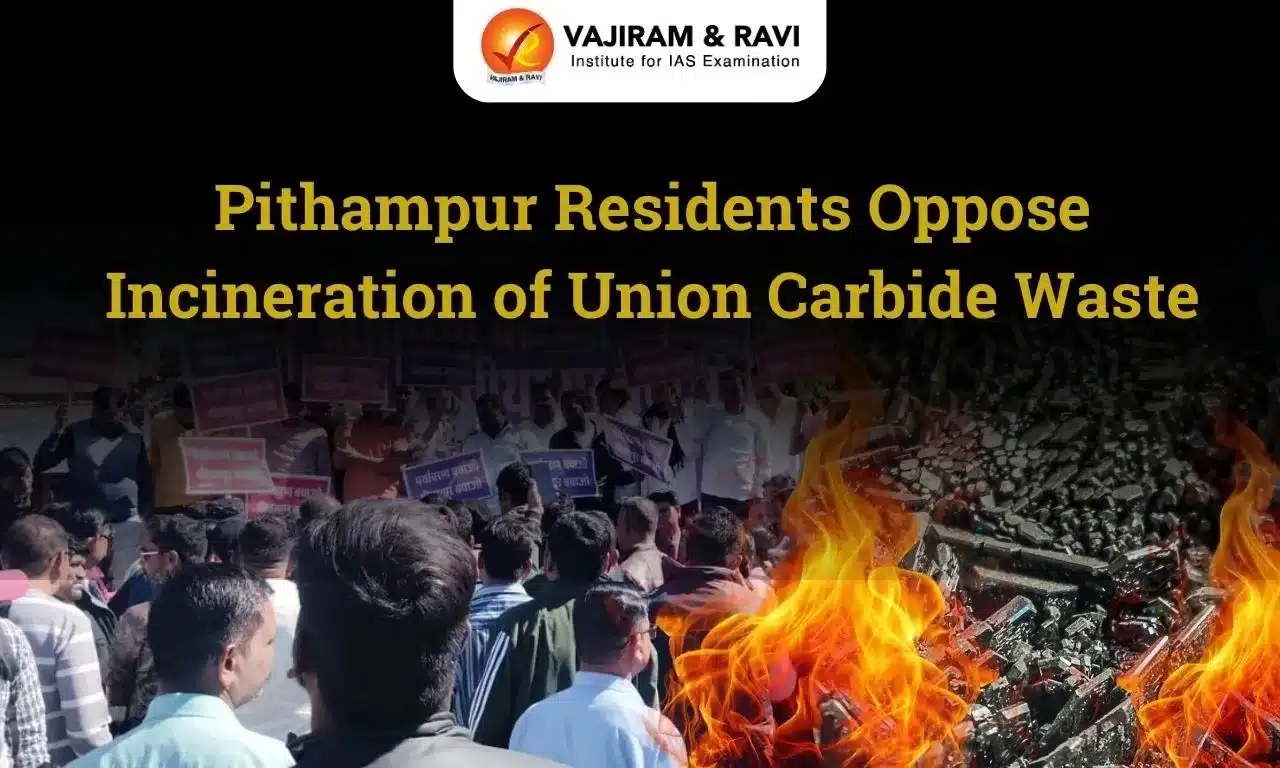
About Incineration:
- Incineration is the process of burning hazardous materials at temperatures high enough to destroy contaminants.
- Incineration is conducted in an “incinerator,” which is a type of furnace designed for burning hazardous materials in a combustion chamber.
- Many different types of hazardous materials can be treated by incineration, including soil, sludge, liquids, and gases.
- Although it destroys many kinds of harmful chemicals, such as solvents, PCBs (polychlorinated biphenyls), and pesticides, incineration does not destroy metals, such as lead and chromium.
- Waste incineration can be a form of waste-to-energy because the heat generated during combustion can be used to create electricity.
- How Does It Work?
- Hazardous materials must be excavated or pumped into containers before incineration.
- They may require further preparation, such as grinding or removing large rocks and debris, or removing excess water.
- The materials are then placed in the combustion chamber of an incinerator where they are heated to an extremely high temperature for a specified period of time.
- The temperature and length of time depend on the types of wastes and contaminants present.
- Air or pure oxygen may be added to the chamber to supply the oxygen needed for burning.
- As the wastes heat up, the contaminants volatilize (change into gases), and most are destroyed.
- Gases that are not destroyed pass through a secondary combustion chamber for further heating and destruction.
- The resulting gases then pass through air pollution control equipment, which removes particulate matter (extremely small particles or liquid droplets) and “acid gases.”
Q1: What is combustion?
Combustion is a chemical process in which a substance reacts rapidly with oxygen and gives off heat. The original substance is called the fuel, and the source of oxygen is called the oxidizer.
Source: FPJ


 Last updated on Oct, 2026
→ UPSC 2027 Notification will be released on 13 January 2027 at upsconline.nic.in.
→ Check Nobel Prize 2026 Winners List here.
→ Download PIB PRiSM Monthly Magazine 2026 here.
→ Check UPSC Monthly Current Affairs Magazine The Recitals here.
→ Check out the latest UPSC Syllabus here.
→ Download UPSC Model Answers for Mains 2026
→ UPSC Mains Question Paper 2026 is out now for Essay & GS Paper 1, 2, 3 & 4.
→ UPSC Calendar 2027 has been released.
→ Enroll in Vajiram & Ravi’s UPSC Mains Test Series 2027 for structured answer writing practice, expert evaluation, and exam-oriented feedback.
→ Join Vajiram & Ravi’s UPSC Mentorship Program 2027 for personalized guidance, strategy planning, and one-to-one support from experienced mentors.
→ Go through the UPSC Mains Previous Year Papers to enhance your preparation.
→ UPSC has released UPSC Toppers List 2025 with the Civil Services final result on its official website.
→ Also check Best UPSC Coaching in India








