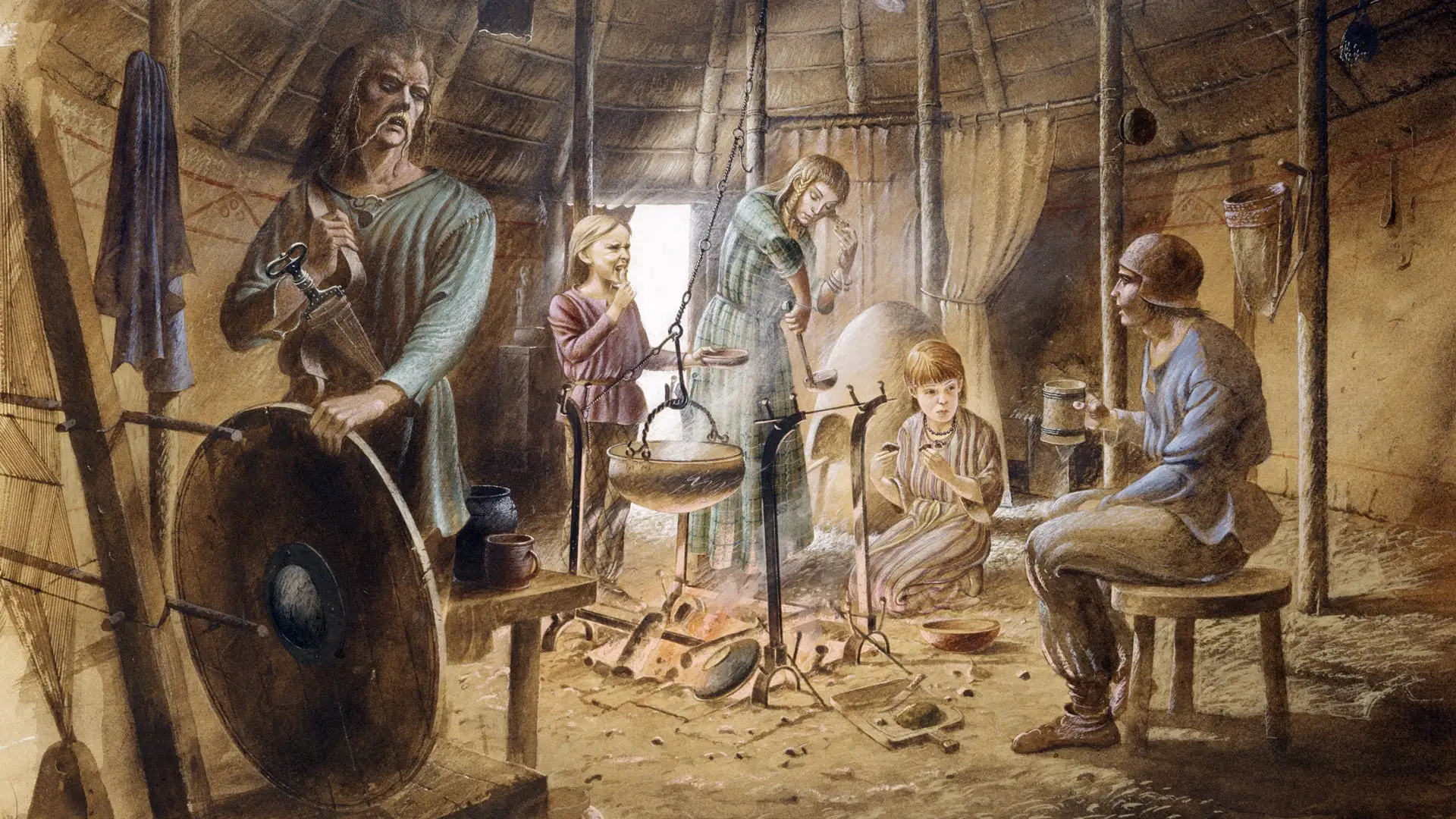
About Iron Age
- The Iron Age was a period in human history that started between 1200 B.C. and 600 B.C., depending on the region, and followed the Stone Age and Bronze Age.
- The Iron Age existed in Africa, Europe, and Asia during prehistoric times in the Old World. The Iron Age didnot occur in America because this was the New World and had not yet been discovered.
- People discovered iron at this time. It quickly became the preferred choice of metal, replacing the use of bronze in metalworking. The use of iron brought important changes to people’s lives.
- Ironwork first began in Turkey before spreading to other European countries.
- People used iron to make strong tools, which made farming easier.
Farmers used an ‘ard’ (an iron plow) during the Iron Age to turn over their fields. These were much more efficient than wooden or bronze plows.
- They also made iron swordsand other weapons.
- Huge armies of soldiers soon carried iron weapons.
- These weapons made an army much harder to defeat.
- Armies traveled to other lands and took over places they liked.
- Kings and other rulers gained great power.
- Other changes in technology also happened during the Iron Age.
- People built large forts and bridges.
- Pottery and weaving improved.
- Humans dug deep mines in the ground to find salt and other valuable minerals.
- End of Iron Age:
- The Iron Age is a part of prehistory, or the time before humans used writing.
- Therefore, the Iron Age ended once writing became widespread.
- Still, iron continues to be a popular choice for crafting iron tools, weapons, doors, windows, building supports, machinery, and more.
Q1: What are megaliths?
A megalith is a large stone used to build a structure or monument, either alone or together with other stones. Megalithic means structures made of such large stones, put together without the use of mortar or cement.
Source: Three new archaeological sites discovered


 Last updated on Oct, 2026
→ UPSC 2027 Notification will be released on 13 January 2027 at upsconline.nic.in.
→ Check Nobel Prize 2026 Winners List here.
→ Download PIB PRiSM Monthly Magazine 2026 here.
→ Check UPSC Monthly Current Affairs Magazine The Recitals here.
→ Check out the latest UPSC Syllabus here.
→ Download UPSC Model Answers for Mains 2026
→ UPSC Mains Question Paper 2026 is out now for Essay & GS Paper 1, 2, 3 & 4.
→ UPSC Calendar 2027 has been released.
→ Enroll in Vajiram & Ravi’s UPSC Mains Test Series 2027 for structured answer writing practice, expert evaluation, and exam-oriented feedback.
→ Join Vajiram & Ravi’s UPSC Mentorship Program 2027 for personalized guidance, strategy planning, and one-to-one support from experienced mentors.
→ Go through the UPSC Mains Previous Year Papers to enhance your preparation.
→ UPSC has released UPSC Toppers List 2025 with the Civil Services final result on its official website.
→ Also check Best UPSC Coaching in India