About Kalagarh Tiger Reserve (KTR):
- Location: It is located in the Nainital district of Uttarakhand.
- When Jim Corbett Park was established in 1974, the northern region of the park was renamed Kalagarh Tiger Reserve.
- It is named after the Kalagarh dam, which was constructed on the Ramganga River.
- KTR is spread over an area of 301.18 sq km. which also includes Sonanadi Wildlife Sanctuary, along with Jim Corbett Park.
- Terrain: The reserve is located in the foothills of the Himalayas, and the terrain is varied, with forests, grasslands, and hills.
- Flora: It is home to several species of trees, such as sal, sheesham, semal, bakli, haladu, tun, sain, fig, bamboo, etc along with medicinal plants.
- Fauna:
- It has a high density of tigers, leopards, elephants and others from the cats family.
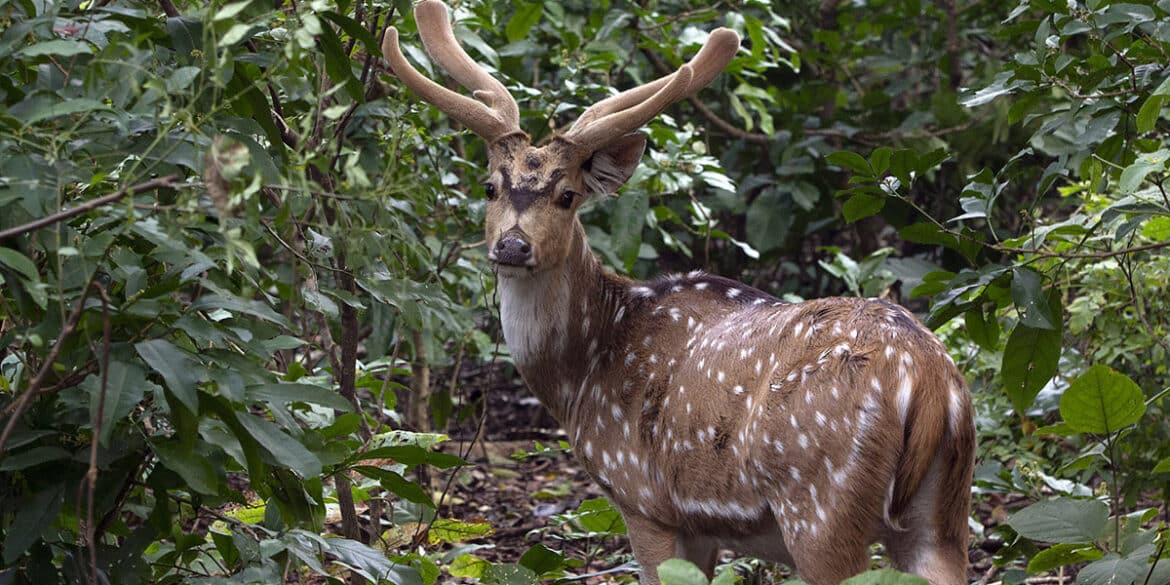
- It carries a lustrous breed of deer -chital, barking deer, goral, sambar, and hog deer.
- The park has more than 580 species of birds, which include kingfishers, wagtails, forktails, pheasants, hornbills etc.
Key facts about Ramganga River:
- It is a tributary of the Ganges River in India.
- Origin: It originates in the Garhwal Himalayas in Uttarakhand state.
- Length: The total length of the river from the source to its outfall into the Ganga is 596 km, and the entire length lies in Uttarakhand and Uttar Pradesh.
- It joins the Ganga on its left bank near Kannauj in the Fategarh district, Uttar Pradesh.
- Tributaries:
- It is fed by several major tributaries, including the Kosi River, which joins it near Kalagarh, forming the Ramganga Reservoir.
- Other significant tributaries include the Khoh, the Gangan, the Aril, and the Deoha (Gorra) rivers.
Q1) What is the Garhwal Himalayas?
The Garhwal Himalayas are a mountain range located in the Indian state of Uttarakhand. They are part of the Greater Himalayas, and are home to some of the highest peaks in India, including Nanda Devi (25,646 ft), Kamet (25,447 ft), and Mana Peak (24,738 ft). The Garhwal Himalayas are also home to a number of glaciers, including the Gangotri Glacier, which is the source of the Ganges River.
Source: Woman, 76, mauled to death by tiger in Pauri


 Last updated on Oct, 2026
→ UPSC 2027 Notification will be released on 13 January 2027 at upsconline.nic.in.
→ Check Nobel Prize 2026 Winners List here.
→ Download PIB PRiSM Monthly Magazine 2026 here.
→ Check UPSC Monthly Current Affairs Magazine The Recitals here.
→ Check out the latest UPSC Syllabus here.
→ Download UPSC Model Answers for Mains 2026
→ UPSC Mains Question Paper 2026 is out now for Essay & GS Paper 1, 2, 3 & 4.
→ UPSC Calendar 2027 has been released.
→ Enroll in Vajiram & Ravi’s UPSC Mains Test Series 2027 for structured answer writing practice, expert evaluation, and exam-oriented feedback.
→ Join Vajiram & Ravi’s UPSC Mentorship Program 2027 for personalized guidance, strategy planning, and one-to-one support from experienced mentors.
→ Go through the UPSC Mains Previous Year Papers to enhance your preparation.
→ UPSC has released UPSC Toppers List 2025 with the Civil Services final result on its official website.
→ Also check Best UPSC Coaching in India