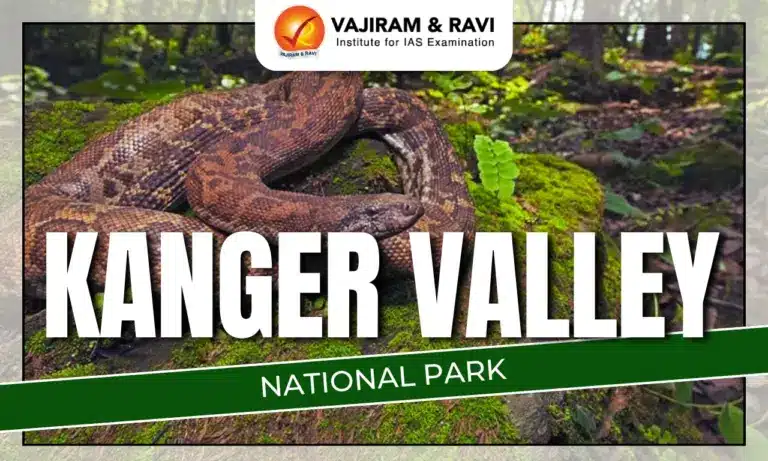
Kanger Valley National Park is one of India’s most biologically diverse protected areas, located in the Bastar region of Chhattisgarh. Established in 1982, the park covers approximately 200 square kilometres and is named after the Kanger River, which flows through its dense forests. It is renowned for its rich biodiversity, limestone caves, underground streams, waterfalls, and evergreen forest patches. The park forms part of the Deccan Peninsula Biogeographic Zone and is home to numerous rare plant and animal species, making it an ecologically significant landscape.
Kanger Valley National Park Location
Kanger Valley National Park is situated in the Bastar district of Chhattisgarh, around 27 km southeast of Jagdalpur. Nestled within the Eastern Ghats, the park is characterized by rugged hills, deep valleys, limestone caves, perennial streams, and dense tropical forests.
Kanger Valley National Park Climate & Vegetation
Kanger Valley National Park experiences a tropical monsoon climate and supports dense tropical moist deciduous forests with rare evergreen patches, creating ideal conditions for rich biodiversity.
- Summer (March-June): Temperatures range from 20°C to 42°C.
- Monsoon (June-September): Receives heavy rainfall that sustains rivers, caves, and waterfalls.
- Winter (November-February): Pleasant temperatures between 10°C and 25°C.
- Dominated by tropical moist deciduous forests with patches of semi-evergreen and evergreen vegetation.
- Major tree species include Sal, Teak, Saja, Bija, Haldu, and Dhaora.
- Dense bamboo forests, shrubs, climbers, and grasses cover large areas.
- The Kanger River and limestone caves create a moist microclimate that supports diverse plant life throughout the year.


Kanger Valley National Park Flora
Kanger Valley National Park is known for its rich floral diversity, with dense tropical moist deciduous forests, bamboo groves, and rare evergreen patches that support a wide variety of wildlife.
- Dominated by Sal (Shorea robusta), Teak, Saja, Bija, Dhaora, Haldu, Mahua, and Tendu trees.
- Extensive bamboo forests provide habitat and food for several animal species.
- Features rare evergreen forest patches, a unique characteristic in central India.
- Rich in medicinal plants, herbs, shrubs, climbers, and grasses.
- Moist valleys and riverbanks support diverse moisture-loving vegetation.
- Seasonal flowering plants attract butterflies, bees, and other pollinators.
- Forests provide food, shelter, and nesting sites for mammals, birds, reptiles, and insects.
- The vegetation helps conserve soil, regulate water flow, and maintain ecological balance in the park.
Kanger Valley National Park Fauna
Kanger Valley National Park is home to a diverse range of wildlife, including several endangered mammals, reptiles, birds, and cave-dwelling species, making it one of the richest biodiversity hotspots in central India.
- Major mammals include Tiger, Leopard, Sloth Bear, Wild Dog (Dhole), Striped Hyena, Jackal, and Indian Wolf.
- Herbivores found in the park include Sambar, Spotted Deer (Chital), Barking Deer, Mouse Deer, Nilgai, and Wild Boar.
- Primates such as Hanuman Langur and Rhesus Macaque are commonly seen.
- The park supports over 200 species of birds, including the Hill Myna (State Bird of Chhattisgarh), Crested Serpent Eagle, Peafowl, Hornbills, and Woodpeckers.
- Reptiles include the King Cobra, Indian Rock Python, Monitor Lizard, and several other snake species.
- The limestone caves amdre home to bats, blind cave fish, and other cave-adapted organisms.
- Rivers and streams support a variety of fish, amphibians, and aquatic reptiles.
Kanger Valley National Park Conservation Efforts
Kanger Valley National Park is protected through habitat conservation, wildlife monitoring, community participation, and sustainable tourism to preserve its unique forests, caves, and rich biodiversity.
- Strengthens anti-poaching patrols and regular wildlife monitoring across the park.
- Conserves tropical forests, limestone caves, rivers, and waterfalls that support diverse ecosystems.
- Protects endangered and vulnerable species such as the Tiger, Leopard, Sloth Bear, and Hill Myna.
- Promotes habitat restoration through afforestation and forest regeneration programmes.
- Regulates tourism to minimize disturbance to wildlife and fragile cave ecosystems.
- Involves local tribal communities in forest protection and biodiversity conservation.
- Conducts awareness programmes to encourage environmental education and responsible tourism.
- Supports long-term biodiversity research and ecological monitoring for effective conservation management.

 Last updated on Oct, 2026
→ UPSC 2027 Notification will be released on 13 January 2027 at upsconline.nic.in.
→ Check Nobel Prize 2026 Winners List here.
→ Download PIB PRiSM Monthly Magazine 2026 here.
→ Check UPSC Monthly Current Affairs Magazine The Recitals here.
→ Check out the latest UPSC Syllabus here.
→ Download UPSC Model Answers for Mains 2026
→ UPSC Mains Question Paper 2026 is out now for Essay & GS Paper 1, 2, 3 & 4.
→ UPSC Calendar 2027 has been released.
→ Enroll in Vajiram & Ravi’s UPSC Mains Test Series 2027 for structured answer writing practice, expert evaluation, and exam-oriented feedback.
→ Join Vajiram & Ravi’s UPSC Mentorship Program 2027 for personalized guidance, strategy planning, and one-to-one support from experienced mentors.
→ Go through the UPSC Mains Previous Year Papers to enhance your preparation.
→ UPSC has released UPSC Toppers List 2025 with the Civil Services final result on its official website.
→ Also check Best UPSC Coaching in India
Kanger Valley National Park FAQs
Q1. Where is Kanger Valley National Park located?+
Q2. When was Kanger Valley National Park established?+
Q3. What is Kanger Valley National Park famous for?+
Q4. Which river flows through Kanger Valley National Park?+
Q5. What animals are found in Kanger Valley National Park?+
Tags: geography kanger valley national park