About Modes of losing Indian Citizenship:
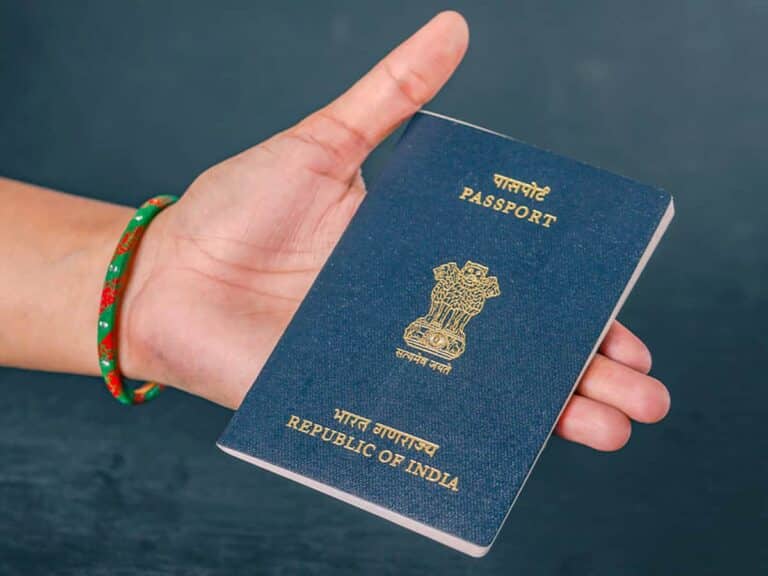
- The Citizenship Act 1955 lays down the three modes by which an Indian citizen, whether a citizen at the commencement of the Constitution or subsequent to it, may lose their citizenship. These are,
- By Renunciation:
- An Indian Citizen of full age and capacity can renounce his Indian citizenship by making a declaration to that effect and having it registered.
- But if such a declaration is made during any war in which India is engaged, the registration shall be withheld until the Central Government otherwise directs.
- When a male person renounces his citizenship, every minor child of him ceases to be an Indian citizen.
- Such a child may, however, resume Indian citizenship if he makes a declaration to that effect within a year of his attaining full age, i.e. 18 years.
- By Termination:
- If a citizen of India voluntarily acquires citizenship of another country, then the citizenship of India gets terminated.
- This provision does not apply during times of war.
- If any question arises as to whether, when, or how any person has acquired the citizenship of another country, it is to be determined by such authority and in such manner as may be prescribed by the rules.
- By Deprivation:
- It is a compulsory termination of citizenship of India.
- A citizen of India by naturalization, registration, domicile and residence may be deprived of his citizenship by order of the Central Government if it is satisfied that:
- The citizen has obtained the citizenship by means of fraud, false representation, or concealment of any material fact;
- The citizen has shown disloyalty to the Constitution of India;
- The citizen has unlawfully traded or communicated with the enemy during a war;
- The citizen has, within five years after registration or neutralization, been imprisoned in any country for two years;
- The citizen has been ordinarily resident out of India for seven years;
Q1) What is the Citizenship Act 1955?
The Citizenship Act, 1955 is an Act of the Parliament of India that defines and regulates the conditions for the acquisition and termination of Indian citizenship. It was enacted on 30 December 1955, and has been amended several times since then.
Source: Over 87,000 Indians Gave Up Citizenship Till June This Year: S Jaishankar






 Last updated on March, 2026
→ UPSC Final Result 2025 is now out.
→ UPSC has released UPSC Toppers List 2025 with the Civil Services final result on its official website.
→ Anuj Agnihotri secured AIR 1 in the UPSC Civil Services Examination 2025.
→ UPSC Marksheet 2025 is now out.
→ UPSC Notification 2026 & UPSC IFoS Notification 2026 is now out on the official website at upsconline.nic.in.
→ UPSC Calendar 2026 has been released.
→ Check out the latest UPSC Syllabus 2026 here.
→ UPSC Prelims 2026 will be conducted on 24th May, 2026 & UPSC Mains 2026 will be conducted on 21st August 2026.
→ The UPSC Selection Process is of 3 stages-Prelims, Mains and Interview.
→ Prepare effectively with Vajiram & Ravi’s UPSC Prelims Test Series 2026 featuring full-length mock tests, detailed solutions, and performance analysis.
→ Enroll in Vajiram & Ravi’s UPSC Mains Test Series 2026 for structured answer writing practice, expert evaluation, and exam-oriented feedback.
→ Join Vajiram & Ravi’s Best UPSC Mentorship Program for personalized guidance, strategy planning, and one-to-one support from experienced mentors.
→ Shakti Dubey secures AIR 1 in UPSC CSE Exam 2024.
→ Also check Best UPSC Coaching in India