About Montreal Protocol:
- The Montreal Protocol on Substances that Deplete the Ozone Layer is a landmark multilateral environmental agreement that regulates the production and consumption of nearly 100 man-made chemicals referred to as ozone depleting substances (ODS).
- ODS are substances that are commonly used in products such as refrigerators, air conditioners, fire extinguishers, and aerosols.
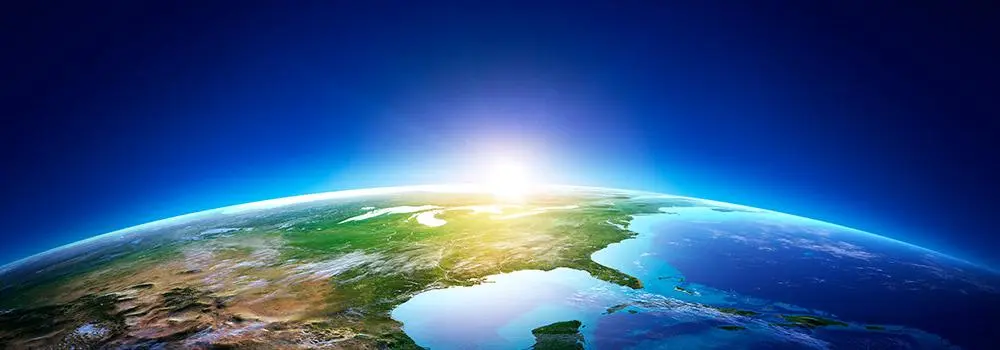
- When released into the atmosphere, those chemicals damage the stratospheric ozone layer, Earth’s protective shield that protects humans and the environment from harmful levels of ultraviolet radiation from the sun.
- The Montreal Protocol sits under the Vienna Convention for the Protection of the Ozone Layer (the Vienna Convention).
- Adopted on 16 September, 1987, the Protocol is, to date, one of the rare treaties to achieve universal ratification.
- The Montreal Protocol phases down the consumption and production of the different ODS in a step-wise manner, with different timetables for developed and developing countries (referred to as “Article 5 countries”).
- Under this treaty, all parties have specific responsibilities related to the phase out of the different groups of ODS, control of ODS trade, annual reporting of data, national licensing systems to control ODS imports and exports, and other matters.
- Developing and developed countries have equal but differentiated responsibilities, but most importantly, both groups of countries have binding, time-targeted, and measurable commitments.
- The Meeting of the Parties is the governance body for the treaty, with technical support provided by an Open-ended Working Group, both of which meet on an annual basis.
- The Parties are assisted by the Ozone Secretariat, which is based at UN Environment Programme headquarters in Nairobi, Kenya.
- Kigali Amendment:
- In 2016, parties to the Montreal Protocol adopted the Kigali Amendment to phase down production and consumption of hydrofluorocarbons (HFCs) worldwide.
- HFCs are widely used alternatives to ODS, such as hydrochlorofluorocarbons (HCFCs) and chlorofluorocarbons (CFCs), which are already controlled under the Protocol.
- HFCs are powerful greenhouse gases, and global implementation of the Kigali Amendment is expected to avoid up to half a degree Celsius of temperature rise by 2100.
- It will phase down HFC consumption and production based on the carbon dioxide equivalent (CO2e) by 80-85 percent by 2045.
Q1: What is Ozone?
It is a gas composed of three atoms of oxygen. It is both a natural and a man-made product that occurs in the Earth’s upper atmosphere (Stratospheric ozone) and lower atmosphere (the troposphere). Stratospheric ozone is formed naturally through the interaction of solar ultraviolet (UV) radiation with molecular oxygen (O2). The “ozone layer,” approximately 6 to 30 miles above the Earth’s surface, reduces the amount of harmful UV radiation reaching the Earth’s surface.
Source: A class of ozone-depleting chemicals is declining, thanks to the Montreal Protocol


 Last updated on Oct, 2026
→ UPSC 2027 Notification will be released on 13 January 2027 at upsconline.nic.in.
→ Check Nobel Prize 2026 Winners List here.
→ Download PIB PRiSM Monthly Magazine 2026 here.
→ Check UPSC Monthly Current Affairs Magazine The Recitals here.
→ Check out the latest UPSC Syllabus here.
→ Download UPSC Model Answers for Mains 2026
→ UPSC Mains Question Paper 2026 is out now for Essay & GS Paper 1, 2, 3 & 4.
→ UPSC Calendar 2027 has been released.
→ Enroll in Vajiram & Ravi’s UPSC Mains Test Series 2027 for structured answer writing practice, expert evaluation, and exam-oriented feedback.
→ Join Vajiram & Ravi’s UPSC Mentorship Program 2027 for personalized guidance, strategy planning, and one-to-one support from experienced mentors.
→ Go through the UPSC Mains Previous Year Papers to enhance your preparation.
→ UPSC has released UPSC Toppers List 2025 with the Civil Services final result on its official website.
→ Also check Best UPSC Coaching in India