What’s in today’s article?
- Why in the News?
- Understanding Patents and Intellectual Property (IP) Rights
- Patent Act, 1970
- National Intellectual Property Rights (IPR) Policy, 2016
- News Summary
Why in the News?
- A patent agent has been removed from the Register of Patent Agents for “alleged professional misconduct” by a committee formed by Department for Promotion of Industry and Internal Trade (DPIIT).




Understanding Patents and Intellectual Property (IP) Rights
- Definition of Patents:
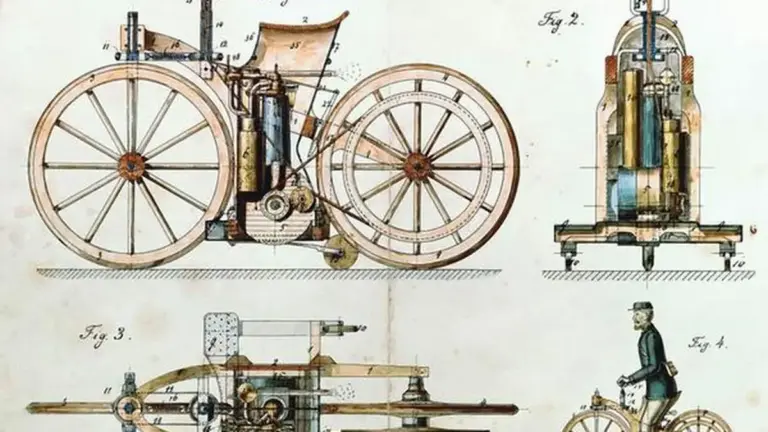
- A patent is a type of intellectual property right that grants an inventor exclusive rights over their invention for a limited time, as approved by the government.
- It prevents others from copying or using the invention without permission.
- Types of Patents:
- Product Patent: Protects the final product, ensuring no one else can manufacture or sell it without the patent holder’s consent during the patent period.
- Process Patent: Allows others to produce the patented product by altering the manufacturing process.
- Historical Context in India:
- Initially, India adopted process patenting in the 1970s, which enabled the country to become a global leader in producing generic drugs.
- Post-TRIPS Agreement (an international trade agreement under the WTO), India also introduced product patenting to comply with global standards.
Patent Act, 1970
- The Patents Act, 1970, and its accompanying rules (Patents Rules, 1972) came into effect in April 1972, replacing the earlier Indian Patents and Designs Act, 1911.
- It was based on recommendations from the Ayyangar Committee Report, led by Justice N. Rajagopala Ayyangar.
- India’s International Patent Commitments:
- Paris Convention (1998): Covers various aspects of industrial property, such as patents, trademarks, and industrial designs, to promote international protection.
- Patent Cooperation Treaty (1998): Simplifies patent filing across multiple countries.
- Budapest Treaty (2001): Eases the process of depositing microorganisms for patent purposes internationally.
- Amendments: The Patents Act has been amended several times to stay updated with global trends and domestic needs.
- Patents (Amendment) Rules, 2021:
- Notified By: The Department for Promotion of Industry and Internal Trade (DPIIT) in September 2021.
- Key Changes:
- Expanded Applicant Categories:
- Educational institutions are now included as a distinct category alongside natural persons, startups, and small entities.
- Rebates on Filing Fees:
- Educational institutions can avail an 80% rebate on patent filing fees, encouraging innovation and the commercialization of new technologies.
National Intellectual Property Rights (IPR) Policy, 2016
- The Union Cabinet approved the IPR Policy in 2016 to provide a strategic roadmap for managing IPRs in India.
- Theme:“Creative India; Innovative India”
- Objectives:
- Awareness and Promotion: Educate society on the economic, social, and cultural benefits of IPRs.
- Fostering Innovation: Encourage the generation and protection of new IPRs.
- Legal Modernization: Replace outdated laws with effective IPR laws that balance owner rights and public interest.
- Human Capital Development: Build capacity in teaching, research, and skill-building in IPR.
- Efficient Administration: Strengthen the IPR administration to make it modern and service-oriented.
- Commercialization: Maximize the economic value of IPRs through commercialization.
- Enforcement: Reinforce mechanisms to combat IPR infringements effectively.
News Summary
- In a landmark decision, a patent agent, Naveen Chaklan, has been removed from the Register of Patent Agents for alleged professional misconduct.
- The decision was made by a five-member ad-hoc committee formed by the Department for Promotion of Industry and Internal Trade (DPIIT) under the direction of the Delhi High Court.
- The committee found Chaklan guilty of negligence, resulting in harassment, financial loss, and mental agony for his client, Saurav Chaudhary.
- Case Highlights:
- Chaklan charged Chaudhary Rs 51,000 for filing and expediting a patent application for a sewing machine in 2019. However, the application was deemed abandoned as Chaklan failed to inform the client about the First Examination Report (FER).
- Chaudhary filed a writ petition in 2023 seeking restoration of the patent application, prompting the High Court to direct the formation of an ad-hoc committee to investigate misconduct by patent agents.
- Findings and Actions:
- The committee noted that 60% of the over 100 applications filed by Chaklan were either abandoned or withdrawn, raising questions about his fiduciary duty, ethical conduct, and accountability.
- Chaklan claimed his mistake was unintentional, citing lack of mentorship and resources as a solo practitioner. He criticized the decision as “harsh and disproportional.”
- The committee observed that this case serves as an example to reinforce accountability and ethical practices among patent agents.
- Broader Implications:
- The High Court directed CGPDTM to draft and publish a Code of Conduct for patent and trademark agents to regulate professional behaviour.
- A framework for handling complaints against patent and trademark agents must also be established by the same deadline.
- Until then, complaints will be handled by an ad-hoc committee consisting of officials and senior IP practitioners with at least 15 years of experience.
Q1. What is the main difference between copyright and patent?
Copyright is an automatic right which protects original literary, dramatic, musical and artistic works. A Patent is a registered right that gives the owner exclusive right to features and processes of inventions.
Q2. What is Fair Use Policy?
Fair use is a legal doctrine that allows the use of copyrighted material without the copyright holder’s permission under certain circumstances. It’s an affirmative defense that can be used in response to a copyright owner’s claim of infringement.
Source : IE

 Last updated on March, 2026
→ UPSC Final Result 2025 is now out.
→ UPSC has released UPSC Toppers List 2025 with the Civil Services final result on its official website.
→ Anuj Agnihotri secured AIR 1 in the UPSC Civil Services Examination 2025.
→ UPSC Marksheet 2025 is now out.
→ UPSC Notification 2026 & UPSC IFoS Notification 2026 is now out on the official website at upsconline.nic.in.
→ UPSC Calendar 2026 has been released.
→ Check out the latest UPSC Syllabus 2026 here.
→ UPSC Prelims 2026 will be conducted on 24th May, 2026 & UPSC Mains 2026 will be conducted on 21st August 2026.
→ The UPSC Selection Process is of 3 stages-Prelims, Mains and Interview.
→ Prepare effectively with Vajiram & Ravi’s UPSC Prelims Test Series 2026 featuring full-length mock tests, detailed solutions, and performance analysis.
→ Enroll in Vajiram & Ravi’s UPSC Mains Test Series 2026 for structured answer writing practice, expert evaluation, and exam-oriented feedback.
→ Join Vajiram & Ravi’s Best UPSC Mentorship Program for personalized guidance, strategy planning, and one-to-one support from experienced mentors.
→ Shakti Dubey secures AIR 1 in UPSC CSE Exam 2024.
→ Also check Best UPSC Coaching in India