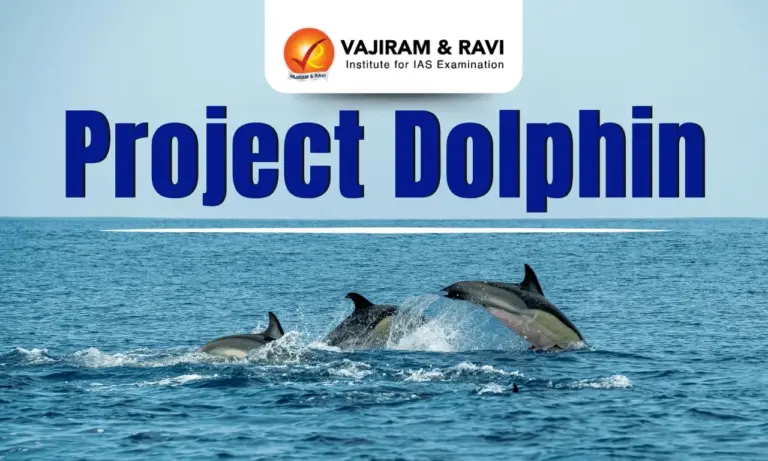
Project Dolphin is a government initiative in India aimed at conserving dolphins and their natural habitats. It focuses on protecting both river and marine dolphins, improving water quality, and spreading awareness about aquatic life. The project also helps maintain the overall health of river and ocean ecosystems.
About Project Dolphin
- Launch and Aim: Project Dolphin was launched on 15 August 2020 to protect river and marine dolphins in India. The main goal is to conserve dolphins by improving their habitats, reducing threats like pollution and poaching, and increasing public awareness.
- Financial Support: The government has been funding the project under the Development of Wildlife Habitats scheme. Regular financial support helps in activities such as research, patrolling, habitat restoration, and awareness programs.
- Important Dolphin Habitats Identified: Key regions such as Assam, Rajasthan, Madhya Pradesh, Punjab, and Lakshadweep have been identified as major dolphin habitats. These areas are receiving special protection, monitoring, and conservation efforts.
- Long-Term Action Plan (2022-2047): A detailed plan has been prepared to guide conservation efforts for the next 25 years. It focuses on scientific research, habitat improvement, pollution control, and involvement of local communities.
Gangetic River Dolphin
- The Gangetic River Dolphin (Platanista gangetica) is a freshwater dolphin species found mainly in the Ganga-Brahmaputra river system and their tributaries across India, Bangladesh, and Nepal.
- In India, it is commonly seen in states like Assam, West Bengal, Bihar, Jharkhand, Uttar Pradesh, Madhya Pradesh, and Rajasthan, especially in deep river stretches.
- It is India’s National Aquatic Animal, a status given in 2009, highlighting its importance in the country’s natural heritage.
- These dolphins are almost blind and depend on a special ability called echolocation (using sound waves) to navigate and hunt for fish in muddy river water.
- They are usually found in turbulent waters with enough fish or in areas with low current, which helps them conserve energy.
- The species is classified as Endangered by the IUCN Red List, which means it faces a high risk of extinction if not protected.
- Conservation Status:
- IUCN: Endangered
- Wild Life (Protection) Act, 1972: Schedule I (highest protection in India)
- CITES: Appendix I (strict control on international trade)
- Globally, there are only four freshwater dolphin species:
-
- Gangetic River Dolphin (South Asia)
- Indus River Dolphin (Pakistan)
- Amazon River Dolphin (South America)
- Irrawaddy Dolphin (found in both freshwater and marine regions)


First Comprehensive Estimate of Gangetic River Dolphins
- India conducted its first-ever large-scale survey of river dolphins, marking a major step in scientific conservation and data collection.
- The survey was conducted by the Wildlife Institute of India under Project Dolphin (2020) to get accurate and scientific data on dolphin populations.
- The findings have been published in the report titled “Population Status of River Dolphins in India – 2024”, which provides a detailed and updated assessment.
- The survey covered a large distance of about 8,507 km across major river systems like the Ganga, Brahmaputra, and Indus basins.
- Key findings of the report include:
- Estimating a total population of around 6,327 dolphins.
- The total population includes about 6,324 Gangetic dolphins and only 3 Indus River dolphins in India.
- Uttar Pradesh has the highest number of dolphins, followed by Bihar, West Bengal, Assam, Jharkhand, Madhya Pradesh, and Rajasthan.
- Punjab recorded the lowest number, with just three dolphins, showing serious conservation concerns.
- The report also highlights that dolphin numbers had declined significantly in the past, from around 4,000-5,000 in the late 20th century to about 1,800, underlining the need for strong conservation efforts.
- The Indus River Dolphin, found in the Beas River, is especially at risk due to its very small population.
- Importantly, dolphins are described as an “umbrella species”, meaning their protection helps conserve the entire river ecosystem and biodiversity.
Policy and Governance Improvements
- Stronger Legal Protection: Changes in the Wild Life (Protection) Act, 1972 (amended in 2022) have strengthened dolphin protection. Species like the Ganges river dolphin now receive the highest level of legal protection, and enforcement agencies have more powers.
- Better Coordination and Monitoring: A Project Dolphin Steering Committee has been set up to guide and review progress. Regular meetings help improve coordination between central and state governments.
- Following International Standards: India is aligning its conservation efforts with global practices by encouraging states to follow international guidelines and appoint dedicated officers for dolphin conservation.
- Major Achievement: Dolphin Tagging
- Historic Step (2024): India successfully tagged a Ganges river dolphin with a satellite device for the first time in Assam.
- Why It Matters: This helps scientists understand movement patterns, habitat use, and threats, which were earlier difficult to track. Since most of the world’s Ganges dolphins are found in India, this step is very important.
- Technology and Future Plans
- Use of Advanced Technology: Lightweight satellite tags are being used to track dolphins, even though they come to the surface for a very short time.
- Expansion Plans: The government plans to expand such tracking programs to more regions, which will help create a strong scientific base for conservation.
Scientific Research and Global Engagement
- Population Estimation: Surveys have been carried out to estimate dolphin populations in rivers. This data will help in making better conservation strategies and policies.
- Focus on Specific Species: Special attention is being given to species like the Irrawaddy dolphin, with discussions and conservation planning at regional levels.
- Global Participation: India is actively participating in international meetings and agreements, showing its commitment to protecting dolphins at a global level.
- Chambal River Conservation Zone: A 200 km stretch of the Chambal River has been proposed as a Dolphin Conservation Zone, where focused protection and monitoring will take place.
Challenges in Project Dolphin
- Slow Progress on Ground: Although the project was launched with strong goals, actual work at the ground level has been slow in some areas. In many regions, visible improvements are still limited.
- Polluted River Systems: Many rivers in India are heavily polluted due to sewage, industrial waste, and plastics. Cleaning rivers is a long process, which makes dolphin conservation more difficult.
- Lack of Reliable Data: There is still limited and incomplete data on dolphin populations, movement, and distribution. This makes it harder to plan effective conservation strategies.
- Habitat Fragmentation: Dams, barrages, and other river projects break rivers into smaller sections, restricting dolphin movement and affecting breeding and survival.
- Difficult Monitoring and Research: Dolphins are hard to track because they live in murky water and surface briefly. This creates challenges in monitoring their numbers and behavior.
- Weak Enforcement of Laws: While laws exist, proper enforcement on the ground is often lacking. Controlling illegal fishing, pollution, and habitat destruction requires stronger implementation.
- Fishing-related Threats: Dolphins often get accidentally caught in fishing nets, and reducing this risk without affecting fishermen’s livelihoods is a major challenge.
- Human Dependence on Rivers: Local communities depend on rivers for fishing, farming, and daily needs, which can sometimes conflict with conservation efforts.
- Coordination Issues: Since rivers flow across multiple states, coordination between different governments and agencies is necessary but can be slow or inefficient.
- Financial Constraints: Although funds are allocated, adequate and timely funding at the ground level remains a challenge for long-term conservation and implementation.
- Low Public Awareness: Many people are still not fully aware of the importance of dolphins, which reduces community participation in conservation.
- Climate Change Impacts: Changes in rainfall, floods, and droughts affect river flow and habitat conditions, making dolphin survival more difficult.
Conservation Initiatives for River Dolphins in India
- Comprehensive Action Plan (2022-2047): The Ministry of Environment, Forest and Climate Change has prepared a long-term plan focusing on dolphin conservation, habitat restoration, pollution control, and scientific research over the next 25 years.
- Development of Wildlife Habitats Scheme: Under this scheme, the Gangetic River Dolphin is listed among critically endangered species, allowing states to receive financial support for conservation activities like monitoring, protection, and awareness.
- Strong Legal Protection: The Wild Life (Protection) Act, 1972 provides Schedule I protection, the highest level of legal security, banning hunting, capture, and habitat destruction.
- National Aquatic Animal Status (2009): The Gangetic dolphin was declared India’s National Aquatic Animal, helping increase public awareness and conservation focus on river ecosystems.
- Protected Areas and Sanctuaries: Important habitats have been protected, including the Vikramshila Dolphin Sanctuary, the only dedicated sanctuary for Gangetic dolphins.
- Chambal River Conservation Zone: A 200 km stretch across Madhya Pradesh, Rajasthan, and Uttar Pradesh has been identified for targeted dolphin protection and monitoring efforts.
- National Dolphin Day (October 5): Celebrated every year to spread awareness about dolphin conservation and the importance of clean rivers.
- Guidelines for States: States are encouraged to follow international conservation standards and appoint Dolphin and Whaling Commissioners for better governance.
- National Dolphin Research Centre (NDRC): India’s first dedicated dolphin research centre has been set up in Patna, Bihar for scientific study and conservation planning.
- Satellite Tagging Breakthrough (2024): In a historic step, India successfully tagged a Gangetic dolphin with a satellite device in Assam, led by the Wildlife Institute of India. This helps track movement, migration patterns, and habitat use.
- Community Participation – “My Ganga, My Dolphin” Campaign:
Led by the WWF-India, this initiative trains local people as “Dolphin Mitras”, involving communities in conservation and reducing threats. - Environmental Flow (E-Flow) Efforts: Measures are being taken to ensure minimum water flow in rivers, which is essential for maintaining healthy dolphin habitats and ecosystems.
Significance of Project Dolphin
- Conservation of Dolphins and Aquatic Biodiversity: The project focuses on protecting both riverine and marine dolphins, which also helps conserve many other aquatic species living in the same ecosystem.
- Indicator of Healthy Ecosystems: Dolphins are top predators (apex species) and act as indicators of a healthy ecosystem. If dolphins survive and thrive, it means the river or ocean environment is clean and balanced.
- Protection of Entire Food Chain (Umbrella Effect): Conserving dolphins automatically protects the entire aquatic food chain, including fish, plants, and microorganisms, ensuring ecological balance.
- Reduction in Water Pollution: Since dolphins are highly sensitive to pollution, efforts under the project push for reduction in industrial waste, sewage, and chemical pollutants, leading to cleaner rivers and oceans.
- Improvement in Water Quality: Conservation measures help improve overall water quality, which benefits both wildlife and humans who depend on these water resources.
- Technological Advancements in Conservation: The project promotes modern, science-based methods, such as satellite tagging of dolphins, to study their movement, habitat use, and threats more effectively.
- Boost to Scientific Research: It encourages research and data collection, helping build better knowledge for long-term conservation planning.
- Empowerment of Local Communities: It helps involve and empower local people by promoting eco-friendly practices and awareness, reducing conflicts and encouraging participation in conservation.
- Strengthening Environmental Governance: The project improves coordination between government bodies, researchers, and local communities, leading to better policy implementation.

 Last updated on Oct, 2026
→ UPSC 2027 Notification will be released on 13 January 2027 at upsconline.nic.in.
→ Check Nobel Prize 2026 Winners List here.
→ Download PIB PRiSM Monthly Magazine 2026 here.
→ Check UPSC Monthly Current Affairs Magazine The Recitals here.
→ Check out the latest UPSC Syllabus here.
→ Download UPSC Model Answers for Mains 2026
→ UPSC Mains Question Paper 2026 is out now for Essay & GS Paper 1, 2, 3 & 4.
→ UPSC Calendar 2027 has been released.
→ Enroll in Vajiram & Ravi’s UPSC Mains Test Series 2027 for structured answer writing practice, expert evaluation, and exam-oriented feedback.
→ Join Vajiram & Ravi’s UPSC Mentorship Program 2027 for personalized guidance, strategy planning, and one-to-one support from experienced mentors.
→ Go through the UPSC Mains Previous Year Papers to enhance your preparation.
→ UPSC has released UPSC Toppers List 2025 with the Civil Services final result on its official website.
→ Also check Best UPSC Coaching in India
Project Dolphin FAQs
Q1. What is Project Dolphin?+
Q2. What are the main objectives of Project Dolphin?+
Q3. Why are dolphins important for the ecosystem?+
Q4. Which areas are important for dolphin conservation in India?+
Q5. What are the major challenges faced by Project Dolphin?+
Tags: environment environment notes project dolphin