About Sensorineural deafness:
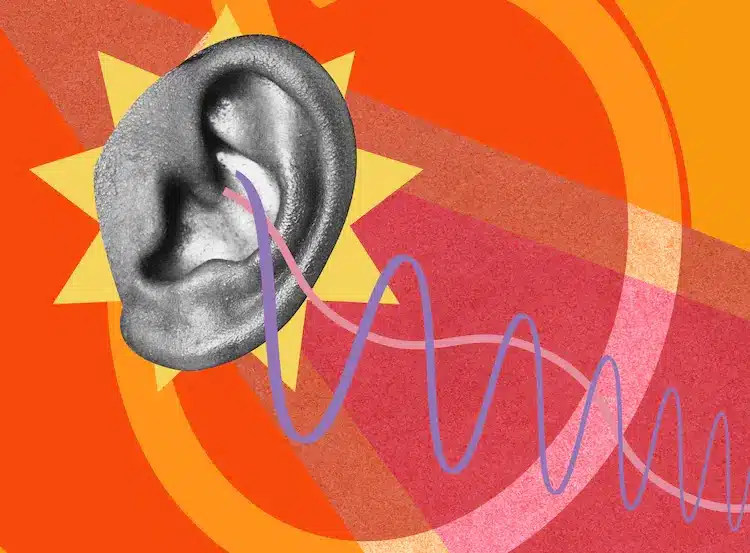
- It is a type of hearing loss caused by damage to the inner ear or the nerve pathways that transmit sound from the ear to the brain.
- Although sensorineural hearing loss (SNHL) is a natural process of aging, listening to very loud music can also cause permanent damage to the inner ear or the auditory nerve.
- Within the human inner ear, a spiral-shaped organ called the cochlea contains tiny hairs known as stereocilia. These hairs are responsible for converting vibrations from sound waves into neural signals, which your auditory nerve then transmits to your brain.
- Causes of Sensorineural deafness
- Congenital Factors: Genetic factors or complications during pregnancy or childbirth.
- Noise Exposure: Prolonged exposure to loud noise can damage inner ear hair cells, leading to noise-induced hearing loss.
- Ageing: Natural ageing processes can damage or destroy hair cells in the inner ear.
- Infections and Diseases: Conditions like meningitis, mumps, measles, and autoimmune diseases like Meniere’s disease.
- Trauma: Head injuries or inner ear trauma.
- Ototoxic Medications: Certain antibiotics and chemotherapy drugs.
- Symptoms
- Difficulty understanding speech
- Muffled or distorted sounds.
- Ringing, buzzing, or hissing in the ears.
- Difficulty hearing high-pitched sounds.
- Balance issues.
Q1:What is decibel?
The decibel (dB) is a logarithmic unit used to measure sound level. It is also widely used in electronics, signals and communication. The dB is a logarithmic way of describing a ratio. The ratio may be power, sound pressure, voltage or intensity or several other things.
Source: Alka Yagnik confirms rare sensory hearing loss: What is it?






 Last updated on April, 2026
→ UPSC Final Result 2025 is now out.
→ UPSC has released UPSC Toppers List 2025 with the Civil Services final result on its official website.
→ Anuj Agnihotri secured AIR 1 in the UPSC Civil Services Examination 2025.
→ UPSC Marksheet 2025 is now out.
→ UPSC Notification 2026 & UPSC IFoS Notification 2026 is now out on the official website at upsconline.nic.in.
→ UPSC Calendar 2026 has been released.
→ Check out the latest UPSC Syllabus 2026 here.
→ UPSC Prelims 2026 will be conducted on 24th May, 2026 & UPSC Mains 2026 will be conducted on 21st August 2026.
→ The UPSC Selection Process is of 3 stages-Prelims, Mains and Interview.
→ Prepare effectively with Vajiram & Ravi’s UPSC Prelims Test Series 2026 featuring full-length mock tests, detailed solutions, and performance analysis.
→ Enroll in Vajiram & Ravi’s UPSC Mains Test Series 2026 for structured answer writing practice, expert evaluation, and exam-oriented feedback.
→ Join Vajiram & Ravi’s Best UPSC Mentorship Program for personalized guidance, strategy planning, and one-to-one support from experienced mentors.
→ Shakti Dubey secures AIR 1 in UPSC CSE Exam 2024.
→ Also check Best UPSC Coaching in India