India’s First Bamboo-Based Ethanol Plant Set Up in Assam

Bamboo-Based Ethanol Plant

Bamboo-Based Ethanol Plant Latest News

  • India inaugurated its first bamboo-based ethanol plant in Assam’s Golaghat, marking a major step in green energy and rural development.

Introduction

  • India has been steadily advancing toward renewable energy as part of its clean energy transition. 
  • Ethanol blending, a central component of this strategy, has gained momentum with sugarcane and maize-based ethanol. 
  • Now, India has achieved a milestone by inaugurating the world’s first green bamboo-based ethanol plant in Golaghat, Assam. 
  • This facility represents both a technological innovation and an economic opportunity for the Northeast, linking biofuel production with rural livelihoods.

Working of Bamboo-Based Ethanol Plants

  • Feedstock and Processing
    • Bamboo, a lignocellulosic biomass, serves as the primary raw material. 
    • It contains cellulose and hemicellulose, which can be broken down into fermentable sugars through biochemical processes.
    • Pre-treatment - Bamboo undergoes mechanical and chemical pre-treatment to separate cellulose and hemicellulose from lignin.
    • Hydrolysis - Enzymes break down cellulose into glucose and hemicellulose into xylose and other sugars.
    • Fermentation - Specialised microorganisms convert these sugars into ethanol.
    • Distillation - Ethanol is purified to achieve fuel-grade quality suitable for blending with petrol.
  • Co-Products and Zero-Waste Approach
    • Besides ethanol, the Golaghat facility will also produce acetic acid, furfural, and food-grade liquid CO₂, creating multiple revenue streams. 
    • Lignin-rich residues can be used for power generation, making the plant energy self-sufficient.
  • Advantages Over Traditional Ethanol
    • Non-food biomass - Unlike sugarcane, bamboo does not compete with food crops.
    • Sustainability - Bamboo regenerates quickly, making it an abundant renewable resource.
    • Localised benefits - Northeast India, with vast bamboo reserves, can integrate farmers and tribal communities into the bio-economy.

News Summary

  • On September 14, 2025, Prime Minister Narendra Modi inaugurated the bamboo-based ethanol plant. 
  • The plant will use five lakh tonnes of bamboo annually from Assam and nearby states to produce:
    • 48,900 MT ethanol
    • 11,000 MT acetic acid
    • 19,000 MT furfural
    • 31,000 MT liquid CO₂
  • It is expected to boost Assam’s rural economy by Rs. 200 crore annually.
  • Foundation laid for a Rs. 7,230 crore polypropylene plant at Numaligarh Refinery to strengthen industrial growth.
  • PM Modi emphasised that this project reflects India’s broader goal of energy self-sufficiency and the Viksit Bharat vision.

Significance of the Project

  • Energy Security: Reduces dependence on imported crude oil, saving foreign exchange.
  • Rural Development: Enhances farmer income and supports tribal livelihoods.
  • Green Economy: Reinforces India’s climate commitments by cutting emissions through biofuel adoption.
  • Regional Growth: Strengthens Assam’s role in India’s industrial map through Make in Assam and Make in India initiatives.

Source: TH | IE

Bamboo-Based Ethanol Plant FAQs

Q1: Where was India’s first bamboo-based ethanol plant inaugurated?

Ans: It was inaugurated in Golaghat, Assam.

Q2: How much bamboo will the plant source annually?

Ans: The plant will use about five lakh tonnes of green bamboo every year.

Q3: What is the ethanol production capacity of the plant?

Ans: The facility can produce 48,900 metric tonnes of ethanol annually.

Q4: Who are the key partners in this project?

Ans: It is a joint venture between Numaligarh Refinery Limited, Finland’s Fortum, and Chempolis OY.

Q5: What is the estimated economic impact of the project on Assam’s rural economy?

Ans: The plant is expected to boost Assam’s rural economy by Rs. 200 crore annually.
Kolhan’s Manki-Munda Governance System: History, Conflict, and Challenges

Manki-Munda System

Manki-Munda System Latest News

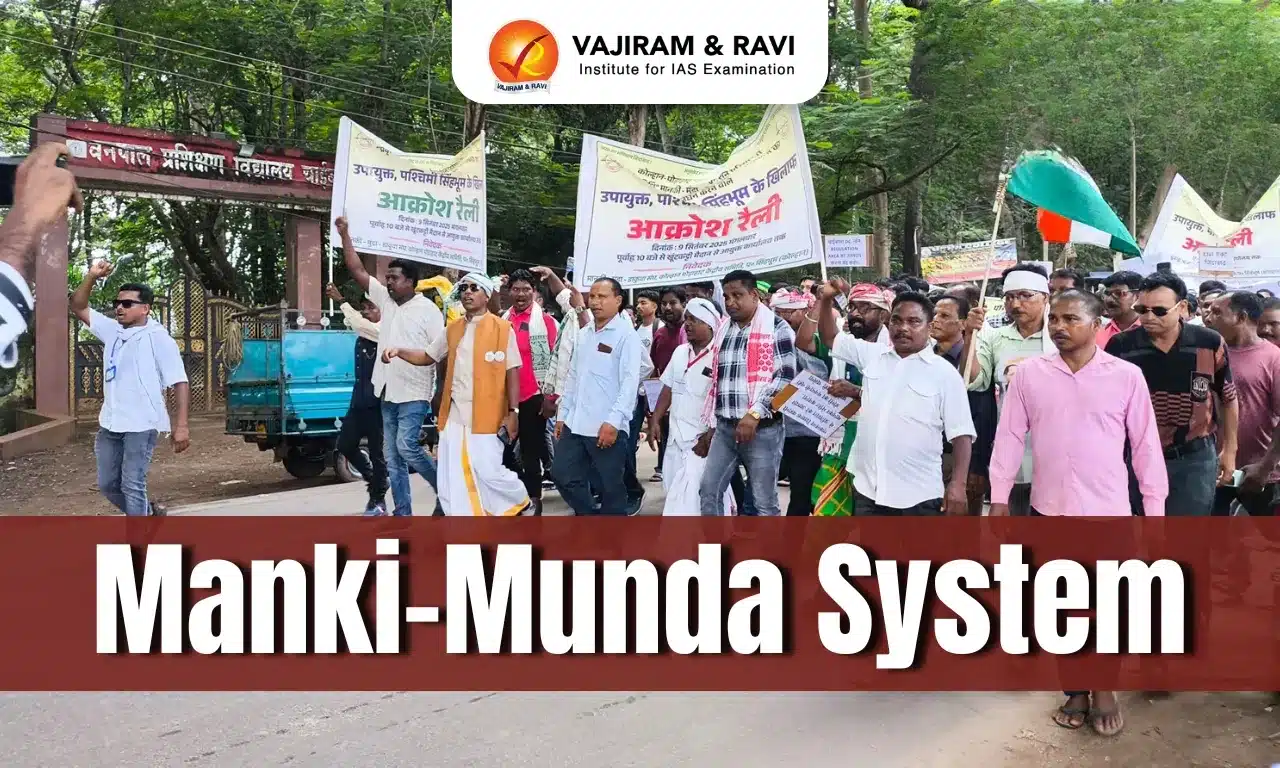
  • Recently, adivasis of the Ho tribe in Jharkhand’s West Singhbhum protested against the Deputy Commissioner, alleging interference in their traditional Manki-Munda self-governance system after the removal of village heads (Mundas). 
  • While the district administration clarified that Mankis and Mundas remain integral to the revenue framework and blamed rumors on social media for the unrest, tribal concerns over losing autonomy persist. 
  • The episode threatens the century-old equilibrium between indigenous governance structures and the state administration in Jharkhand’s Kolhan region.

Traditional Manki-Munda Governance

  • For centuries, the Ho tribe of Jharkhand’s Kolhan region followed a decentralised governance system rooted in social and political responsibilities. 
  • Each village was led by a Munda, the hereditary village head who resolved local disputes. 
  • Groups of 8–15 villages, known as a pidh, were overseen by a Manki, who handled cases unresolved at the village level. 
  • Importantly, the Manki-Munda system dealt only with internal governance, having no role in revenue or land matters, nor any concept of taxes or external sovereign authority. 
  • This changed with the arrival of the East India Company, which introduced taxation.

British Intervention and Co-option of the Manki-Munda System

  • Following victories at Plassey (1757) and Buxar (1764), the East India Company gained diwani rights in 1765, enabling tax collection across Bengal, Bihar, Odisha, and Jharkhand. 
  • The Permanent Settlement Act of 1793 empowered zamindars with land deeds and fixed revenue demands, often beyond their capacity. 
  • To meet targets, zamindars seized Ho lands in Kolhan, sparking adivasi uprisings like the Ho revolt (1821–22) and the Kol revolt (1831). 
  • After repeated military failures, the British adopted a strategic compromise — formally recognising and co-opting the Manki-Munda system into their administration.

Wilkinson’s Rules and Their Lasting Impact

  • In 1837, the British appointed Captain Thomas Wilkinson as Political Agent in the Kolhan Government Estate (KGE) to manage the Ho-dominated region. 
  • Recognising the strength of local governance, Wilkinson drafted 31 “Wilkinson’s Rules” in 1833, formally codifying the Manki-Munda system for the first time. 
  • While appearing to preserve tribal autonomy and restrict outsiders (dikkus), the rules effectively co-opted community leaders as agents of British authority, integrating Kolhan into colonial administration.
  • This shift triggered major changes: the influx of outsiders surged from 1,579 in 1867 to 15,755 by 1897, aided by the railways, creating demographic shifts. 
  • Equally transformative was the introduction of private propertyMundas and Mankis became raiyats (tenants), receiving land deeds (pattas)
  • This altered collective traditions of landholding, fostering individual ownership and reshaping Ho society.

Continuation of Wilkinson’s Rules

  • Although the Kolhan Government Estate was dissolved after Independence in 1947, Wilkinson’s Rules remain in force, with Kolhan exempted from India’s general civil procedure laws
  • Courts upheld their validity for decades, until the Patna High Court in Mora Ho vs State of Bihar (2000) ruled they were old customs, not formal law — yet allowed them to continue in the absence of alternatives. 
  • Despite calls to update the system, neither Bihar nor Jharkhand took action. 
  • A 2021 Jharkhand initiative, Nyay Manch, was proposed but never enacted, leaving Wilkinson’s Rules still operational today.

The Current Conflict in Kolhan

  • The recent unrest in West Singhbhum stems from complaints by Scheduled Castes and OBCs in Ho-dominated villages. 
  • Issues included Mundas restricting the Gope community from pursuing non-traditional livelihoods and prolonged absences of village heads, which hindered access to official documents. 
  • In response, the district administration issued a nine-point directive reminding Mundas of their duties under Wilkinson’s 1837 Hukuknama, aimed at ensuring transparency in the Manki-Munda system. 
  • However, villagers misinterpreted this as interference, sparking rumours of action against Mankis and Mundas. 
  • The administration has clarified that it does not intend to override customary laws.

Larger Issues with the Manki-Munda System

  • In West Singhbhum, 1,850 Manki-Munda posts exist, with 200 vacant, of which 50 were recently filled via Gram Sabhas. 
  • However, concerns remain. Some roles have reportedly been given to non-tribal raiyats, bypassing the village system, sparking discontent. 
  • Within the Ho community, especially among youth, there are growing demands for reforms — including ending the hereditary nature of Munda roles and allowing non-tribal raiyats participation.
  • Hereditary succession often leaves leadership in the hands of individuals lacking formal education, creating challenges in managing today’s document-driven administration. 
  • As a result, villagers frequently escalate unresolved issues to the district administration. 
  • Many leaders note that while the Deputy Commissioner’s role is limited, it is crucial in clarifying provisions of Wilkinson’s Hukuknama and intervening in disputes or succession issues. 
  • Many argue the system should be preserved but modernised to align with democratic needs.

Source: IE | IE | HT

Manki-Munda System FAQs

Q1: What is the Manki-Munda system in Kolhan?

Ans: The Manki-Munda system is a traditional governance structure of the Ho tribe in Jharkhand, with Mundas leading villages and Mankis overseeing groups of villages.

Q2: How did the British impact the Manki-Munda system?

Ans: The British co-opted the system after adivasi revolts, formally codifying it under Wilkinson’s Rules in 1833 to integrate Kolhan into their administration.

Q3: What were Wilkinson’s Rules?

Ans: Wilkinson’s Rules were 31 regulations drafted in 1833 that codified the Manki-Munda system, giving leaders administrative roles while introducing private property concepts.

Q4: Why is the Manki-Munda system facing conflict today?

Ans: Complaints from villagers about leadership failures and misinterpretations of administrative directives sparked fears of government interference in customary laws.

Q5: What reforms are being discussed for the Manki-Munda system?

Ans: Reforms include ending hereditary leadership, involving non-tribal raiyats, and modernising the system to align with today’s democratic and administrative needs.

Supreme Court Guidelines on DNA Evidence: Rules, Rulings, and Importance

Supreme Court DNA Guidelines

Supreme Court DNA Guidelines Latest News

  • In Kattavellai @ Devakar v. State of Tamil Nadu, the Supreme Court mandated strict protocols for DNA evidence in criminal cases. 
  • It directed all State DGPs to prepare Chain of Custody Register forms and related documentation, and circulate them to all districts with clear instructions to ensure the integrity and reliability of DNA samples.

Need for Uniform DNA Handling Guidelines

  • In the Kattavellai @ Devakar case, involving rape, murder, and robbery, the Supreme Court found serious lapses, including unexplained delays in sending vaginal swab samples to the Forensic Science Laboratory and failure to establish a clear chain of custody. 
  • These gaps raised the possibility of contamination. The Court noted that while some bodies had issued guidelines, there was neither uniformity nor a common procedure across states. 
  • Given that ‘Police’ and ‘Public Order’ fall under the State List, the Court still found it essential to issue uniform directions to ensure consistency and reliability in DNA evidence handling nationwide.

Supreme Court’s Guidelines on Handling DNA Evidence

  • The Supreme Court laid down four key guidelines to ensure the integrity of DNA evidence in criminal cases. 
  • First, DNA samples must be collected with due care, properly packaged with FIR details, case particulars, and duly documented with signatures of the medical professional, investigating officer, and independent witnesses. 
  • Second, the investigating officer must transport the samples to the concerned police station or hospital and ensure they reach the Forensic Science Laboratory within 48 hours; any delay must be explained with preservation measures taken. 
  • Third, once stored, samples cannot be opened, altered, or resealed without trial court authorisation. 
  • Finally, a Chain of Custody Register must be maintained from collection until conviction or acquittal, appended to the trial record, with the investigating officer accountable for any lapses.

Supreme Court’s Rulings on DNA Evidence

  • The Supreme Court has consistently stressed that DNA evidence, though powerful, must meet strict standards of collection and handling. 
  • In Anil v. State of Maharashtra (2014), it upheld DNA profiling as valid and reliable, provided laboratory procedures maintain quality control. 
  • In Manoj v. State of Madhya Pradesh (2022), a DNA report was rejected due to contamination risk from recovery in an open area and insufficient, degraded blood samples. 
  • Similarly, in Rahul v. State of Delhi (2022), DNA evidence was discarded because it remained in police custody for two months, raising suspicion of tampering. 
  • In the Devakar case, the Court emphasised that quality control outside laboratories — in collection, sealing, and timely dispatch — is as critical as lab procedure. 
  • Thus, both investigating agencies and forensic experts must ensure rigorous safeguards to maintain credibility of DNA evidence.

Importance of DNA Evidence in Criminal Cases

  • DNA, derived from biological materials like blood, bone, semen, saliva, hair, or skin, helps establish whether a crime scene sample matches a suspect. 
  • While such matches can strongly indicate common biological origin, the Supreme Court in the Devakar case clarified that DNA is only opinion evidence under Section 45 of the Evidence Act (now Section 39 of the Bharatiya Sakshya Adhiniyam, 2023). 
  • Its probative value depends on the circumstances of each case. Thus, DNA evidence is significant but not conclusive, and must be scientifically validated and legally established to hold weight in criminal proceedings.

Conclusion

  • The Supreme Court’s guidelines on DNA evidence aim to ensure reliability, prevent contamination, and strengthen criminal justice. 
  • Their success depends on consistent enforcement by police and forensic agencies.


Source: TH | IE

Supreme Court DNA guidelines FAQs

Q1: Why did the Supreme Court issue guidelines on DNA evidence?

Ans: The Court found serious lapses in handling DNA samples, including delays and poor custody, and mandated uniform procedures to ensure integrity and prevent contamination.

Q2: What are the key Supreme Court guidelines on DNA evidence?

Ans: Samples must be documented, transported to FSL within 48 hours, stored securely with court authorisation for access, and tracked via a Chain of Custody Register.

Q3: What rulings has the Supreme Court made on DNA evidence?

Ans: The Court upheld DNA profiling but rejected reports where samples were degraded, contaminated, or tampered with, stressing strict collection and handling standards.

Q4: Why is DNA evidence not considered conclusive proof?

Ans: The Court ruled DNA is opinion evidence under the Evidence Act; its weight varies by case and must be scientifically and legally validated for credibility.

Q5: How does the new framework improve criminal justice?

Ans: The guidelines strengthen reliability, minimise contamination risks, and ensure consistent handling of DNA, bolstering its value in fair criminal investigations.

Presidential Reference on Governor’s Assent to Bills

Presidential Reference

Presidential Reference Latest News

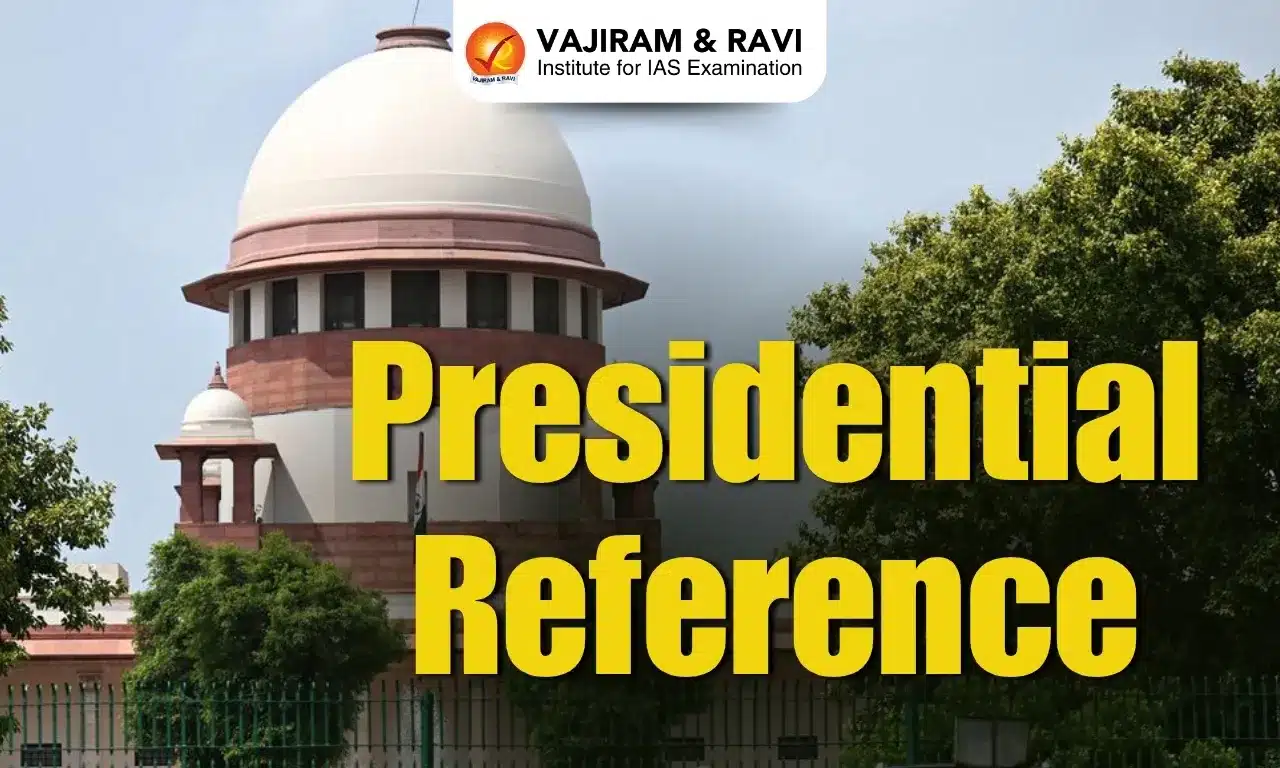
  • The Supreme Court has reserved its opinion on the Presidential reference under Article 143(1) of the Constitution concerning the powers of the President and Governors in granting assent to Bills. 
  • The reference comes after the SC’s ruling (April 2025) that held Tamil Nadu Governor R. N. Ravi’s delay in assenting to 10 Bills unconstitutional, invoking Article 142 to enforce assent and prescribing timelines.
  • This development raises fundamental issues of federalism, separation of powers, and judicial review in India’s constitutional framework.

Nature of the Reference

  • Presidential reference under Article 143(1): It enables the President to seek SC’s opinion on questions of law/fact of public importance.
  • States’ argument: The reference is an indirect appeal against the SC’s ruling, violating stare decisis - review lies only before the same Bench.
  • Centre’s argument: The court’s advisory jurisdiction under Article 143 is distinct, and could be used to clarify constitutional doubts, even if past rulings existed.
  • Past practice: SC has earlier refused to answer Presidential references.

Governor’s Powers - Aid and Advice vs. Discretion

  • States’ stance:
    • The governor is bound by the aid and advice of the Council of Ministers (Article 163).
    • Governance must reflect popular mandate, not the Governor’s discretion.
    • Historical rulings of SC have restricted the Governor's role to avoid overreach.
  • Centre’s stance:
    • The governor is not a “postman” or “showpiece.”
    • Discretionary powers exist in exceptional circumstances.
    • Example: A 2004 Punjab law unilaterally terminated a tripartite river-water sharing treaty, highlighting the importance of a Governor’s discretionary powers. The SC in 2016 declared the law unconstitutional.
    • Data (from 1970 to the present): Only 20 out of 17,000 bills were withheld by Governors, with 90% granted assent within the first month.

Governor’s Veto and “Pocket Veto”

  • SC’s ruling (State of TN vs Governor of TN case): Governor cannot indefinitely withhold assent, concluding that a Governor cannot exercise a “pocket veto” over the elected government.
  • Centre’s argument: Withholding assent means the Bill lapses, citing the Government of India Act 1935 as precedent, where the Governor’s “initial withholding was an absolute veto.”
  • States’ rebuttal: Governors are not colonial-era Viceroys - such discretions were consciously omitted in the Constitution.

Judicial Enforcement of Timelines

  • SC ruling: Introduced timelines for assent to prevent delays.
  • Centre’s objection:
    • Timelines amount to judicial amendment of the Constitution.
    • The Constituent Assembly rejected fixed timelines, replacing a six-week limit with the phrase “as soon as possible” in Article 200
    • Impasses should be resolved politically through dialogue between the state and the Governor, rather than the court acting as a “judicial headmaster”.
  • States’ argument:
    • “As soon as possible” implies urgency.
    • The timelines in the April 2025 ruling did not specify when automatic assent would take place; rather, they specified when judicial review would be available.

Fundamental Rights and Writ Jurisdiction

  • Centre’s position: States cannot invoke Article 32, meant for fundamental rights of individuals.
  • States’ counter:
    • Governors act as links between Union and States.
    • Denying writ remedy to states weakens federal balance.
    • Even Andhra Pradesh (where the ruling party is a coalition partner in the Centre) defended states’ right to move SC.

Larger Constitutional and Political Implications

  • Executive vs. judiciary: The reference has become a flashpoint testing limits of judicial review over executive action.
  • Polyvocal court challenge: Whether a 5-judge Bench will reaffirm or differ from the 2-judge ruling of April 2025.
  • Federalism at stake: Opposition-ruled states back judicial intervention; Centre resists it.
  • Impact on democratic governance: Issue of whether Governors’ discretionary power can override popular will of elected legislatures.

Way Forward

  • Clarity on Governor’s role: A constitutional definition of timelines and scope of discretion is necessary to prevent misuse.
  • Strengthening federalism: Balance must be maintained between Union authority and state autonomy.
  • Judicial prudence: SC must respect separation of powers but ensure constitutional morality is upheld.
  • Political dialogue: State–Centre–Governor coordination mechanisms need strengthening to avoid judicialisation of governance.
  • Long-term reform: Consideration of a constitutional amendment or codification of Governor’s functions to prevent recurring disputes.

Conclusion

In essence, the Presidential reference will determine how India negotiates the delicate balance between federalism, constitutional conventions, and judicial oversight.

Source: IE

Presidential Reference FAQs

Q1: What is the significance of Article 143 of the Indian Constitution?

Ans: Article 143 empowers the President to seek the Supreme Court’s advisory opinion on questions of law/public importance.

Q2: How does the principle of stare decisis apply in the debate over the validity of the Presidential reference?

Ans: States argue that the SC’s ruling is binding law under stare decisis and cannot be indirectly reviewed by a different Bench through a Presidential reference.

Q3: Why is the debate on Governors’ discretionary powers central to India’s federal structure?

Ans: It raises the issue of whether Governors act as neutral constitutional authorities or as checks on elected state governments, directly impacting federal balance.

Q4: What constitutional controversy arises from the SC’s ruling prescribing timelines for Governors to assent to Bills?

Ans: The Centre contends it amounts to judicial amendment of the Constitution, while states argue it ensures accountability.

Q5: How does the question of states invoking Article 32 highlight challenges in federalism?

Ans: According to the Centre, states can't invoke Article 32, but states argue it is essential to safeguard their constitutional rights against arbitrary gubernatorial actions.

Enquire Now