US Government Shutdown 2025: Causes, Impact, and Why It’s Different

US Government Shutdown

US Government Shutdown Latest News

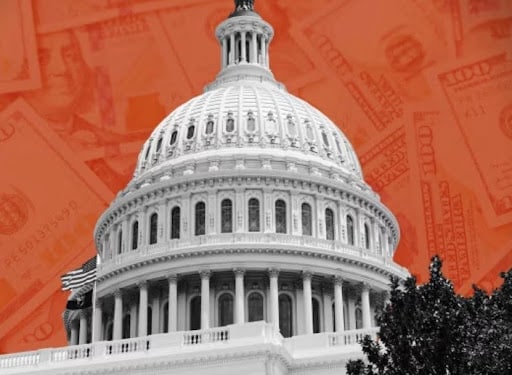
  • The US government entered a shutdown on October 1, 2025, at 12:01 AM—the first in seven years—after Republicans and Democrats failed to agree on federal funding. 
  • The impasse has forced thousands of federal employees into furlough and disrupted essential public services. 
  • Economic consequences include delayed release of key US data, adding uncertainty to markets. 
  • Since 1980, the US has witnessed 14 shutdowns, three of which occurred during Trump’s first term.

What Triggers a US Government Shutdown

  • A US government shutdown occurs when Congress fails to pass annual appropriations bills—about a dozen in total—that allocate funds for federal agencies, and the President does not give assent before the October 1 deadline. 
  • These bills are often bundled into an “omnibus” package to hasten approval. 
  • If funding lapses, government operations are forced to either fully or partially shut down, depending on which agencies remain unfunded.

Reasons Behind the US Government Shut Down

  • The current US government shutdown stems from a deadlock between Republicans and Democrats over federal funding. 
  • Democrats demanded an extension of expiring healthcare subsidies and the reversal of Medicaid cuts introduced under Trump’s “Big, Beautiful Bill” — a sweeping tax and spending package passed earlier this year. 
  • The law boosted defence spending and tax breaks for the wealthy by cutting federal programs, including Medicaid, while funding departments like Defence and Homeland Security, which continue to operate despite the shutdown.
  • Republicans pushed for a “clean” continuing resolution to extend funding at current levels until November 21, but Democrats countered with a proposal that tied funding to healthcare provisions and limits on Trump’s fiscal powers. 
  • The standoff over these conditions caused Congress to miss the October 1 deadline, triggering the shutdown.

Impact of the US Government Shutdown

  • A shutdown halts all non-essential federal government functions under the Antideficiency Act, while essential services for safety and property protection continue. This affects employees, citizens, and the broader economy.
  • For federal employees, around 750,000 are expected to be furloughed, losing $400 million per day in back pay, similar to the 2018–19 shutdown that sent 800,000 home. 
  • Essential workers, including military personnel, law enforcement, and constitutional officers, will continue working.
  • For the public, core benefits like Medicare, Medicaid, and Social Security remain operational since they are permanently funded. 
  • However, new enrolments may face delays, travel and transport disruptions could occur if airport staff protest unpaid salaries, and public landmarks may shut down.
  • For the economy, the extent of damage depends on the shutdown’s duration. The 2018–19 shutdown cost $11 billion in lost output, with $3 billion never recovered. 
  • The current closure could delay critical data releases such as the September jobs report, complicating Federal Reserve decisions on interest rates and forcing reliance on regional data instead.

Why This Shutdown Could Be Different

  • Unlike previous shutdowns, the current one may have lasting consequences due to the role of Trump’s Department of Government Efficiency, a quasi-government body aimed at shrinking federal operations. 
  • Instead of treating the shutdown as a temporary pause, the department has encouraged federal agencies to view it as an opportunity for permanent workforce reduction.
  • In a memo, the Office of Management and Budget advised agencies to plan for “reduction in force” rather than simply furloughs. 
  • This means that programs without mandatory appropriations could face permanent staff cuts, intensifying the impact of the shutdown.

Source: IE | BBC | AJ

US Government Shutdown FAQs

Q1: What triggered the US government shutdown in October 2025?

Ans: A funding deadlock between Republicans and Democrats over healthcare subsidies and Medicaid cuts led to missing the October 1 deadline.

Q2: How many employees are affected by the shutdown?

Ans: Around 750,000 federal employees face furloughs, costing $400 million daily in back pay, with essential workers continuing duty.

Q3: Which services remain operational during the shutdown?

Ans: Medicare, Medicaid, and Social Security continue due to permanent funding, though new enrolments and public services face delays.

Q4: Why is this shutdown different from earlier ones?

Ans: The Department of Government Efficiency encouraged permanent staff cuts, treating the shutdown as a chance to shrink federal agencies.

Q5: What economic impact could the shutdown have?

Ans: Prolonged closure risks billions in lost output, delayed jobs data, and uncertainty affecting Federal Reserve interest rate decisions.

RBI’s Reforms – Towards Internationalising the Rupee and Deepening Financial Markets

RBI’s Reforms

RBI’s Reforms Latest News

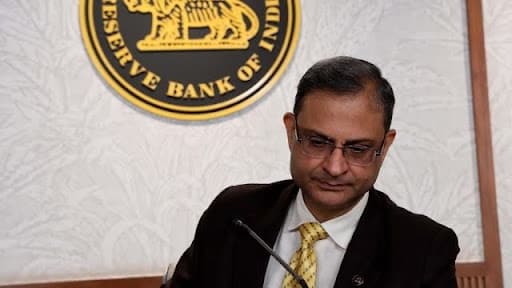
  • At a time when India faces rising trade frictions with the US and heightened global debate on alternatives to the dollar, the Reserve Bank of India (RBI) has announced significant measures.
  • These aims to strengthen financial markets, boost corporate financing options, and take concrete steps towards internationalising the rupee.

Key Announcements by the RBI

  • Monetary policy decisions: The RBI kept the repo rate unchanged at 5.5% and monetary policy stance ‘neutral’.
  • Expanding role of banks in corporate consolidation:
    • Takeover financing: Banks allowed to finance corporate acquisitions, previously restricted due to risk concerns.
    • Impact: Opens a structured, low-cost financing channel for mergers and acquisitions, enhancing competitiveness and capital expenditure.
    • Safeguards: Risk-control measures to ensure funds are used productively.
    • Relevance: Aligns with Insolvency and Bankruptcy Code (IBC) framework and helps corporates consolidate faster.
  • Rupee internationalisation measures:
    • Cross-border lending in rupees: Indian banks and their overseas arms are allowed to lend in rupees to residents or institutions in neighbouring countries (Nepal, Bhutan, Sri Lanka).
    • Objective: Reduce dollar dependence, strengthen regional financial influence, and build confidence in rupee stability.
    • Geopolitical context: Comes amid US threats against BRICS currency initiatives and global debates on dollar dominance.
  • Boosting market depth and liquidity:
    • IPO financing: The RBI proposed increasing the lending limit for IPO financing to Rs 25 lakh from Rs 10 lakh.
    • Loan against shares: It also raised the limit on loan against shares to Rs 1 crore from Rs 20 lakh (last revised in 1998).
    • Loan against listed debt: Ceiling removed to promote bond market activity.
    • SRVA surplus use: Surplus balances in Special Rupee Vostro Accounts (SRVAs) can now be invested in corporate bonds and commercial papers, enhancing liquidity.
  • Expanding forex benchmarking:
    • Expanding the list of currencies: Benchmarked by the Financial Benchmarks India Limited (FBIL), adding more currencies beyond USD, Euro, Pound, Yen.
    • Significance: Reduces inefficiencies of dollar routing, deepens rupee market, strengthens rupee as a trading and settlement currency.
  • Relaxation of large borrower lending framework:
    • 2016 restrictions scrapped: Banks can lend more freely to large corporates with exposures above ₹10,000 crore.
    • Risk management: Individual bank risks addressed under the Large Exposure Framework; system-wide risks to be managed with macro-prudential tools.

Broader Implications of the Latest RBI’s Reforms

  • Corporate sector: Access to structured takeover financing strengthens India Inc.’s competitiveness.
  • Banking sector: Greater role in corporate growth stories, diversification of loan books, and higher returns.
  • Financial markets: Deeper IPO financing, bond market growth, and improved liquidity.
  • Regional economy: Moves to internationalise the rupee enhance India’s financial influence in South Asia.
  • Geopolitics: Strategic push for rupee amid US dollar dominance debates and BRICS alternative currency discourse.

Way Forward

  • Strengthen risk management: Ensure safeguards against reckless corporate borrowing and asset bubbles.
  • Promote regional adoption of rupee: Expand bilateral and multilateral trade settlements in rupee.
  • Boost investor confidence: Deepen corporate bond markets and ensure transparency in forex benchmarks.
  • Gradual integration: Move cautiously to avoid external shocks while pushing rupee internationalisation.

Conclusion

  • The RBI’s latest reforms mark a decisive shift from a conservative, inward-looking financial system to one aspiring for regional dominance and global relevance, signalling confidence in India’s economic resilience
  • These reforms carry risks but reflect a larger ambition: to make the rupee travel beyond borders and empower Indian corporates to expand their global footprint, thereby strengthening India’s financial sovereignty in an evolving multipolar world.

Source: IE

RBI’s Reforms FAQs

Q1: How do the recent RBI measures aim to internationalise the rupee?

Ans: The RBI allowed Indian banks to lend in rupees to neighbouring countries, expanded forex benchmarks, etc.

Q2: What are the implications of permitting banks to finance corporate takeovers?

Ans: It provides cheaper, structured capital for mergers and acquisitions, boosts competitiveness, diversifies loan books, etc.

Q3: What steps has the RBI taken to deepen India’s financial markets and improve liquidity in capital markets?

Ans: Measures include raising IPO financing and loan against shares limits, scrapping caps on loans against debt securities, etc.

Q4: How does RBI’s decision to scrap the 2016 large borrower lending restrictions reflect its evolving regulatory approach?

Ans: It shows a shift from conservative risk aversion to reliance on frameworks like the Large Exposure Framework and macro-prudential tools.

Q5: What are the risks and opportunities of RBI’s twin reforms—corporate takeover financing and rupee internationalisation?

Ans: Opportunities lie in boosting corporate competitiveness, while risks include vulnerability to external financial shocks.

Monument Conservation in India – Policy Shift

Monument Conservation

Monument Conservation Latest News

  • The government has introduced a major heritage policy shift by allowing private players, alongside ASI, to participate in monument conservation through the National Culture Fund.

Introduction

  • India, with its vast cultural and historical legacy, is home to over 3,700 protected monuments. 
  • Until now, the Archaeological Survey of India (ASI), under the Ministry of Culture, had the exclusive mandate to conserve and restore these monuments. 
  • However, the government has recently announced a landmark shift in heritage policy by opening monument conservation to private players under a public-private partnership model. 
  • This decision seeks to enhance conservation capacity, bring in corporate participation, and accelerate preservation efforts across the country.

Monument Conservation in India

  • Monument conservation in India has historically been the responsibility of the ASI, established in 1861 during British rule and restructured post-independence to safeguard India’s civilizational heritage. 
  • The ASI has undertaken conservation of forts, temples, stepwells, palaces, mosques, and other historical structures. Some of the ASI’s notable works include:
    • Restoration of the Sun Temple at Konark (Odisha).
    • Structural conservation of the Humayun’s Tomb complex (Delhi).
    • Preservation of Ajanta and Ellora caves (Maharashtra).
    • Development of heritage museums at Purana Qila and Red Fort (Delhi).
  • While ASI’s contributions are invaluable, the agency has faced challenges of understaffing, resource constraints, and delays in completing projects. 
  • Critics have often pointed out that relying solely on ASI has slowed the pace of conservation at many sites.

The Policy Shift: Entry of Private Players

  • The new heritage conservation model introduces private participation for the first time in core conservation work. 
  • Corporations, PSUs, and private organisations will now be able to directly hire external agencies for conservation work at selected monuments.
  • Key features of the policy shift include:
    • Public-Private Partnership Model: Corporations and donors can directly finance conservation projects through the National Culture Fund (NCF), with 100% tax exemption benefits.
    • Empanelled Conservation Architects: The Ministry of Culture will empanel reputed conservation architects, from whom donors can select for project execution.
    • Checks and Balances: While private players will be involved, ASI will retain supervisory authority. Detailed Project Reports (DPRs) must align with the National Policy for Conservation, 2014.
    • Pilot List of Monuments: Initially, 250 monuments will be opened for private participation.

Role of the National Culture Fund

  • The NCF, set up in 1996, will play a central role in this new framework. Since its inception, the NCF has received Rs. 140 crore in corporate and PSU donations, funding nearly 100 projects. 
  • Of these, 70 have been completed, including conservation of Bhuleshwar Temple (Pune), Hyderabad’s British Residency, and Mandu monuments (Madhya Pradesh).
  • Previously, corporates contributed only financially, while ASI handled the work. Under the revised policy, donors will have greater control, being able to directly hire implementing agencies under ASI’s oversight.

Checks, Safeguards, and Criticism

  • While the policy marks a major opening, the government has been cautious. Safeguards include:
    • ASI’s Supervisory Role: The ASI must approve DPRs and ensure compliance with conservation standards.
    • Eligibility Criteria: Executing agencies must have prior experience in heritage conservation of structures over 100 years old.
    • Credit to Donors: Corporations and donors will be credited at the monument site, incentivising CSR contributions.
  • Critics argue that opening up conservation to private players risks the commercialisation of heritage sites. 
  • Concerns remain about balancing historical integrity with corporate branding. 
  • However, proponents believe it will help overcome ASI’s limited capacity and bring much-needed efficiency.

Broader Implications

  • This policy shift has several implications:
    • Capacity Building: With more players, conservation efforts will speed up, especially for lesser-known sites.
    • Sustainability: Private funding will reduce the financial burden on the government.
    • Public Engagement: Corporate branding and involvement may lead to increased public awareness of heritage conservation.
    • Global Standards: Involving reputed conservation architects can help India align with global practices in heritage management.
  • The move also complements earlier initiatives such as the Adopt a Heritage scheme, which allowed corporates to provide visitor amenities but not conservation work. 
  • Now, with private participation in core conservation, India is expanding the scope of public-private engagement in cultural heritage.

Source: IE

Monument Conservation FAQs

Q1: What is the new policy shift in monument conservation?

Ans: The government has allowed private players to participate in conservation of protected monuments, previously handled solely by ASI.

Q2: What role will the National Culture Fund play in this new model?

Ans: The NCF will channel corporate and PSU donations, allowing donors to directly hire agencies for conservation projects under ASI’s supervision.

Q3: How many monuments will initially be opened for private conservation work?

Ans: Around 250 monuments have been identified for the first phase of private participation.

Q4: Will the ASI continue to play a role in monument conservation?

Ans: Yes, ASI will retain supervisory authority, approving project reports and ensuring adherence to conservation standards.

Q5: Why is the policy shift considered significant?

Ans: It is the first time India is allowing private players into core monument conservation, aiming to enhance capacity, efficiency, and sustainability.

RBI Holds Repo Rate at 5.5% While Driving Growth Through Reforms

RBI Repo Rate

RBI Repo Rate Latest News

  • The RBI’s Monetary Policy Committee (MPC) kept the repo rate unchanged at 5.5% with a ‘neutral’ stance on October 1, 2025, after already cutting rates by 100 bps this year
  • With retail inflation projected to average 2.6% in 2025-26, well below the 4% target, the RBI has space for future cuts but chose to “keep its powder dry.”
  • Instead of relying only on rate changes, the RBI unveiled 22 structural measures to spur growth through regulatory easing and reforms. 
  • Economists noted the central bank’s message: growth support can extend beyond interest rates, with a focus on long-term stability and resilience.

RBI Monetary Policy October 2025: Growth Focus with Stability

  • Repo rate unchanged at 5.5% with a neutral stance.
    • A neutral stance implies that the central bank neither seeks to stimulate the economy nor tighten liquidity, balancing efforts to control inflation without impeding growth.
  • RBI balances growth momentum with financial stability.
  • Inflation projected well below target, creating policy space for future easing.

Stronger Growth Ahead

  • GDP growth forecast revised up to 6.8% for FY 2025-26 (from 6.5%).
  • Drivers: strong consumption, rising investments, government spending, good monsoon, GST 2.0, and better credit flow.
  • Quarterly projections: Q1 – 7.8%, Q2 – 7.0%, Q3 – 6.4%, Q4 – 6.2%.
  • FY 2026-27 growth estimated at 6.6%, assuming stability and normal monsoon.
  • Consumer optimism remains high in both urban and rural households.

Global Agencies Reaffirm Growth

  • Agencies highlight resilience amid global uncertainties:
    • IMF – 6.4% (FY26)
    • Fitch – 6.9% (FY26), 6.3% (FY27)
    • S&P Global – 6.5% (FY26)
    • UN – 6.3% (FY26), 6.4% (FY27)
    • OECD – 6.7% (FY26)
  • Confidence reinforced by structural reforms, strong domestic demand, and vibrant services sector.

Prices Stay Stable

  • CPI inflation forecast cut to 2.6% for FY 2025-26 (earlier 3.1%).
  • Inflation fell to 1.6% in July 2025, an 8-year low.
  • Driven by 9-month food price decline (-10.5%) and milder summer temperatures.
  • GST rationalisation (Sept 2025) reduced consumer prices for 11.4% of the CPI basket.

Global Demand Steady

  • Current account deficit narrowed to 0.2% of GDP in Q1 FY 2025-26 (from 0.9% a year ago).
  • Supported by services exports and record remittances (US$35.3 billion).
  • Merchandise exports up 2.5%, imports up 2.1% (Apr–Aug 2025).
  • Gross FDI inflows at US$ 37.7 billion; net inflows at US$ 10.8 billion.
  • Major contributors: Singapore, US, Mauritius, UAE, Netherlands.

Why RBI Kept Repo Rate Unchanged

  • During recent MPC meet, the RBI adopted a neutral stance — recognising strong domestic momentum, low inflation, and reforms as positives, but staying vigilant about external risks.
  • Stability is prioritised for now, while keeping options open for future rate action if needed.

External Headwinds: Global Uncertainty

  • Trade tensions and tariffs with the US may hurt external demand.
  • Geopolitical risks and volatility in global financial markets remain downside risks.
  • These global shocks could spill over into India’s trade flows and capital markets, warranting caution.

Domestic Tailwinds: Growth Drivers

  • GDP Growth Upgrade: RBI revised FY26 projection to 6.8% from 6.5%, citing reforms and strong demand.
  • Reform Push: GST rationalisation and structural reforms announced in August are expected to cushion external shocks.
  • Agriculture & Rural Boost: Above-normal monsoon, kharif sowing, and reservoir levels support farm output and rural demand.
  • Urban Consumption: Buoyancy in services sector and stable jobs lift consumption.
  • Investments Rising: Capacity utilisation, conducive financial conditions, and improving domestic demand will aid fixed investment.

Inflation: Well Within Comfort Zone

  • CPI Inflation Revised Down: FY26 forecast cut to 2.6% from 3.1%, driven by falling food prices and GST rationalisation.
  • Food Inflation Stable: Good harvest prospects and stable supply keep food prices in check.
  • Impact of GST Reforms: Lower CPI prices for multiple items reduce headline inflation.
  • Inflation trajectory firmly within the 2–6% RBI comfort zone, opening space for growth support later if needed.

Growth vs Risks: The Balancing Act

  • Upside Surprise: Q1 FY26 GDP grew 7.8%, fastest in five quarters.
  • Caution Ahead: Q3 growth expected to slow due to trade frictions and tariffs.
  • MPC highlights that while domestic drivers are resilient, external vulnerabilities remain significant.

Rationale for Holding Rates

  • Wait-and-Watch Approach: Earlier frontloaded monetary easing and fiscal measures are still working through the system.
  • Policy Flexibility: Keeping repo steady ensures the RBI retains room to cut if external shocks worsen.
  • Borrower Impact: Lending rates linked to repo remain unchanged; MCLR loans may adjust with banks’ cost of funds.

Source: PIB | IE | IE

RBI Repo Rate FAQs

Q1: Why did RBI keep the repo rate unchanged at 5.5% in October 2025?

Ans: RBI maintained the rate citing low inflation, strong domestic demand, and external risks, preferring structural reforms to stimulate growth.

Q2: What GDP growth forecast has RBI made for FY 2025-26?

Ans: The RBI revised India’s GDP growth forecast to 6.8%, up from 6.5%, supported by strong consumption, investments, and policy reforms.

Q3: How has inflation influenced RBI’s policy decision?

Ans: CPI inflation was projected at 2.6%, well below the 4% target, giving RBI room to support growth while keeping rates steady.

Q4: What reforms did RBI announce along with the policy?

Ans: RBI unveiled 22 regulatory easing measures, including allowing banks to finance acquisitions and easing risk weights on infrastructure lending.

Q5: What global risks influenced RBI’s decision to hold rates?

Ans: Ongoing trade tensions, tariff uncertainties with the US, and global financial volatility pushed RBI to adopt a cautious stance.

India-US Trade Deal: Terms Finalized, Key Issues & Potential Impact

India-US Trade Deal: Terms Finalized, Key Issues & Potential Impact

What’s in Today’s Article?

  • India-US Trade Deal Latest News
  • US Criticizes India’s Trade Policy
  • India-US Bilateral Trade Overview
  • Proposed India-US Trade Agreement
  • US Tariff Pressure and India's Response
  • Conclusion: Balancing Trade and Geopolitics
  • India-US Trade Deal FAQs

India-US Trade Deal Latest News

  • A day before the US reciprocal tariffs take effect on April 2, India has agreed to the Terms of Reference (ToR) for a Bilateral Trade Agreement (BTA) with the US. The ToR sets the negotiation framework and required high-level approval. 
  • While discussions were still ongoing when US negotiators left after four days of talks, both countries are now set for formal negotiations. 

US Criticizes India’s Trade Policy

  • The United States Trade Representative (USTR) has raised concerns over India's trade policies in its ‘Foreign Trade Barriers’ report.

Key Concerns Raised by USTR

  • Internet Shutdowns
    • The US claims localized shutdowns disrupt commercial activities.
  • Dairy Feed Regulations
    • India mandates that dairy products must come from animals that have not consumed blood meal or internal organs, a rule the US argues lacks scientific justification.
  • Agricultural and GM Food Imports
    • India requires GM-free certification for milk, pork, and fish imports, which the US says is not based on scientific risk assessment.
    • The report raised concerns over India’s agricultural support programmes, claiming they distort markets.
    • It also criticized India’s pulse import restrictions as being opaque and unpredictable.
  • India’s Data Localisation Rules
    • The USTR report raised concerns over India's data localisation requirements for payment service providers and banks. 
    • Since 2018, the Reserve Bank of India (RBI) has mandated that all electronic payment data related to Indian citizens be stored on local servers. 
    • The US argues that this regulation was introduced without stakeholder consultation and hampers foreign firms’ ability to detect fraud and secure global networks.
  • Intellectual Property (IP) Issues
    • India remains on the ‘Priority Watch List’ due to weak trade secret protection and slow patent approvals.
    • It flagged multiple issues in India’s intellectual property (IP) framework, including:
      • Patent Delays: Long waiting periods for patent grants and excessive reporting requirements.
      • Patentability Restrictions: The US continues to monitor India’s Section 3(d) of the Patents Act, which limits patentability to prevent evergreening of pharmaceutical patents.
      • Weak IP Enforcement: Concerns over inadequate protection of undisclosed test data, lack of an early resolution mechanism for pharmaceutical patent disputes, and delays in trademark opposition proceedings.
      • Trade Secret Protection: The absence of specific laws for safeguarding trade secrets.
  • Medical Price Controls
    • The US criticized India’s price caps on coronary stents and knee implants, arguing they discourage American manufacturers due to inflation and production cost concerns.

India-US Bilateral Trade Overview

  • U.S. total goods trade with India were an estimated $129.2 billion in 2024. 
  • U.S. goods exports to India in 2024 were $41.8 billion, up 3.4 percent ($1.4 billion) from 2023. U.S. goods imports from India totaled $87.4 billion in 2024, up 4.5 percent ($3.7 billion) from 2023. 
  • The U.S. goods trade deficit with India was $45.7 billion in 2024, a 5.4 percent increase ($2.4 billion) over 2023.

Proposed India-US Trade Agreement

  • Both nations plan sector-specific negotiations to finalize a bilateral trade agreement.
  • Key objectives:
    • Increase market access for goods.
    • Reduce tariff and non-tariff barriers.
    • Strengthen supply chain integration.
  • The US seeks duty reductions on industrial goods, automobiles, wines, petrochemicals, dairy, and agricultural products.
  • India may push for concessions on labour-intensive sectors like textiles.

US Tariff Pressure and India's Response

  • Former US President Donald Trump criticized India’s high tariffs, calling them "brutal," and proposed reciprocal tariffs.

India’s Possible Trade Strategy

  • Lobbying for Exemptions: India may negotiate trade exemptions to avoid severe economic impacts.
  • ‘Make in India’ Expansion: India could attract companies seeking to exit China and relocate manufacturing.
  • Strengthening Trade with Other Regions: Deepening ties with the EU, Southeast Asia, and Africa to reduce dependence on the US.
  • Diversifying Trade Relations: Expanding into new markets to minimize risks from US trade policies.

Potential Benefits for India

  • Shift in Supply Chains: US tariffs on China could push global manufacturers to expand operations in India.
  • Growth in Key Sectors: Electronics, automobiles, and pharmaceuticals may benefit.
  • Boost for Indian Automakers: If US tariffs make European and Chinese cars expensive, Indian brands like Tata, Mahindra, and Maruti Suzuki could gain traction.

Conclusion: Balancing Trade and Geopolitics

India’s reaction will depend on the severity of US tariffs and their economic impact. The India-US strategic partnership extends beyond trade, making a balanced approach crucial for both nations.

India-US Trade Deal FAQs

Q1. What is the India-US trade deal about?

Ans. It aims to reduce tariffs, improve market access, and strengthen supply chains between India and the US.

Q2. Why is the US critical of India's trade policies?

Ans. The US raises concerns over India’s internet shutdowns, IP protection, agricultural restrictions, and data localization rules.

Q3. How does the trade deal affect India?

Ans. India may secure market access, reduce dependency on China, and benefit from US investments in key sectors.

Q4. What are India’s challenges in trade negotiations?

Ans. India faces pressure on tariff reductions, IP rights, and easing restrictions on dairy, agriculture, and medical price controls.

Q5. How will US tariffs impact India’s economy?

Ans. High US tariffs could hurt Indian exports, but India may diversify trade relations and attract manufacturers shifting from China.

Source: IE | MC

Enquire Now