
Bangladesh in Flux: Jamaat’s Rising Influence and India’s Strategic Choices

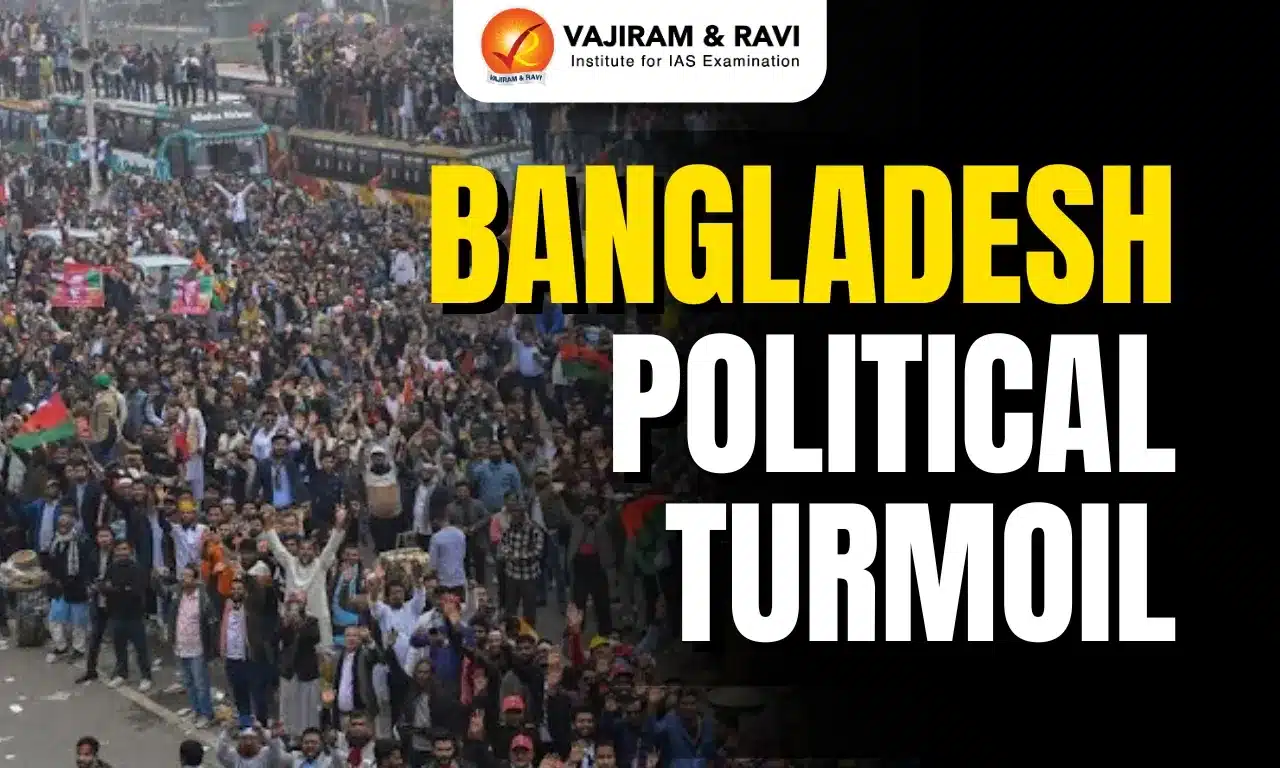
Bangladesh Political Turmoil

Bangladesh Political Turmoil Latest News

  • Amid widespread violence and political unrest in Bangladesh, Bangladesh Nationalist Party (BNP) acting chairman Tarique Rahman returned to the country after 17 years in exile. 
  • The turmoil has also been marked by intensifying anti-India rhetoric, raising regional and diplomatic concerns.

Forces Driving the Current Turmoil in Bangladesh

  • A Planned Regime-Change Operation (July–August 2024)
    • The unrest that began in July–August 2024 has often been described as a spontaneous uprising, but evidence points to a planned operation aimed at regime change. 
    • Bangladesh’s chief adviser Muhammad Yunus publicly acknowledged this in September, identifying a close aide as the strategist behind it. 
    • The Jamaat-e-Islami, long aligned with Pakistan, emerged as a key driving force—and now exerts significant influence over the administration.
  • Dismantling the Post-1971 Political Order
    • A central objective has been to erase the post-1971 legacy. 
    • From August 5, 2024, symbols and institutions linked to the Liberation War and the Awami League have been targeted, signalling an attempt to rewrite national memory and politics.
  • Minority Repression and Visible Islamisation
    • Another major strand is a crackdown on minorities and a push toward more overt Islamisation. 
    • Hindus, Buddhists, Christians, and Ahmadiyyas have faced attacks, including allegations of killings, sexual violence, property destruction, and land grabs. 
    • The lynching of Dipu Chandra Das drew international condemnation, underscoring the severity of abuses.

Mobocracy and Media Control as Tools

  • Jamaat-e-Islami’s consolidation of power has been accompanied by violence and unrest as methods of control.
    • Mobocracy: Crowds surround offices, officials, and judges until demands are met.
    • Institutional Capture: Jamaat-aligned appointees are replacing incumbents across bureaucracy and academia.
    • Media Suppression: Attacks on journalists and outlets have surged; offices of Prothom Alo and The Daily Star were recently attacked, and some journalists detained without trial.

Economic Unravelling and India Ties

  • The turmoil has disrupted long-standing economic cooperation with India, built over decades under Sheikh Hasina. 
  • An economy that grew 6.5–7% annually for 15 years has slowed sharply: growth has halved, factories are closing, unemployment is rising, private investment has stalled, and inflation is high.

Tarique Rahman’s Return: Political Impact After 17 Years

  • Tarique Rahman, acting chairman of the Bangladesh Nationalist Party (BNP), has returned after 17 years in exile and is widely seen as a frontrunner if elections are held soon. 
  • However, with the Awami League barred from contesting, any poll in the current climate would likely fall short of being free or fair.
  • Rahman’s return is expected to trigger a surge of public support, partly driven by sympathy for his ailing mother. 
  • Still, an electoral victory is not assured, given shifting alliances and internal party dynamics.
  • Rahman’s homecoming does not materially alter the fundamentals: a constrained electoral field, a fragmented BNP, and an emboldened Jamaat. 
  • Popular enthusiasm may be high, but structural realities limit Rahman’s room to reshape outcomes in the near term.

Rising Anti-India Rhetoric in Bangladesh

  • Anti-India sentiment in Bangladesh is not new. Even during 1971, around 20% of the population opposed the Liberation War and India’s role. 
  • This strand has endured over decades alongside mainstream politics.
  • Parallel to this undercurrent, India–Bangladesh relations have been anchored by deep economic cooperation and people-to-people links—including tourism, medical travel, education, and trade—creating mutual stakes beyond politics.

India’s First Priority: Reassure the Bangladeshi People

  • India should signal goodwill toward the people of Bangladesh, not regimes alone. 
  • New Delhi has already demonstrated this by continuing aid and trade, keeping communication channels open, and recently agreeing to export 50,000 metric tonnes of rice. 
  • Maintaining strategic restraint while engaging all principal actors remains key.

India’s Second Priority: Push for Inclusive Elections

  • New Delhi should insist on free, fair, and inclusive elections that allow participation by all parties, including the Awami League. 
  • Only an inclusive process can restore legitimacy and stability; exclusion risks prolonging violence and volatility.

Why the India–Bangladesh Relationship Matters Deeply

  • For Bangladesh, cooperation with India was central to its economic success under Sheikh Hasina. 
  • India has consistently been the first responder in times of need and a reliable partner due to geographic proximity, competitive pricing, shared history, and strong people-to-people ties. 
  • While the current regime is engaging Pakistan, China, and Turkey, none can replicate the scale, speed, or depth of support India provides.

Vital for India’s Security Interests

  • For India, Bangladesh is pivotal primarily due to security considerations. 
  • The two share a 4,000+ km porous land border and a maritime boundary, making cooperation essential. 
  • In the past, Pakistan-backed terror networks and Northeast insurgent groups used Bangladeshi territory as a haven—an issue the Hasina government actively helped address.

Growing Strategic Risks Since August 2024

  • Since August 2024, Pakistan’s state and military have reportedly re-established pre-1971 command-and-control linkages with Bangladesh, seeking deeper military embedding, including near the India–Bangladesh border. 
  • This raises concerns about regional security spillovers.

Source: IE

Bangladesh Political Turmoil FAQs

Q1: Why is Bangladesh political turmoil in the news?

Ans: Bangladesh political turmoil intensified after violence, regime instability, Tarique Rahman’s return from exile, rising Jamaat influence, and growing anti-India rhetoric.

Q2: What role is Jamaat-e-Islami playing in Bangladesh’s crisis?

Ans: Jamaat-e-Islami has emerged as a key force, pushing Islamisation, targeting minorities, weakening democratic institutions, and exerting influence over the interim administration.

Q3: How has the crisis affected Bangladesh’s economy?

Ans: Economic growth has halved, factories are closing, unemployment is rising, private investment has stalled, and inflation is high after disruption of India-centric cooperation.

Q4: Why does Bangladesh matter strategically for India?

Ans: Bangladesh is critical for India’s border security due to a 4,000 km porous boundary and past use of its territory by terror groups and insurgents.

Q5: What should India’s response to Bangladesh’s turmoil be?

Ans: India should maintain engagement, reassure the Bangladeshi people, provide humanitarian support, and push for free, fair, and inclusive elections involving all parties.
Urban Malaria Threat: How Anopheles Stephensi Challenges India’s 2030 Malaria Goal

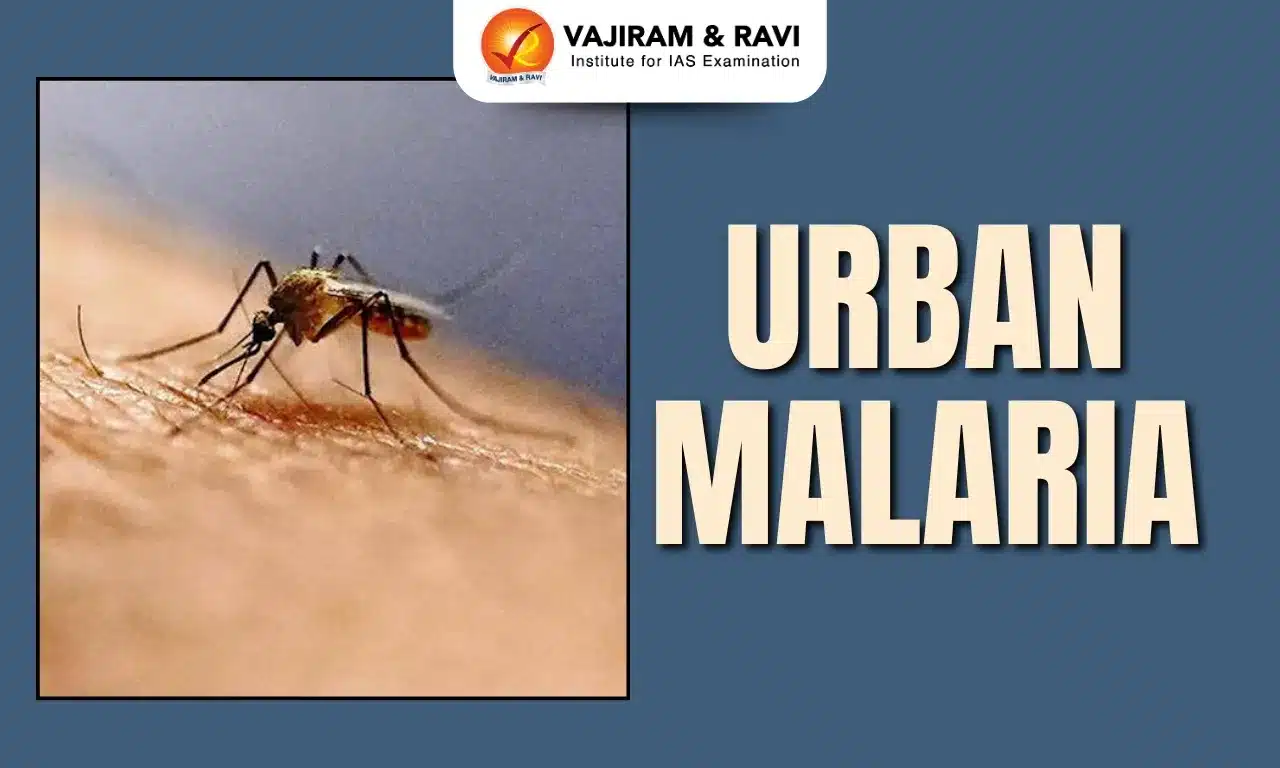
Urban Malaria

Urban Malaria Latest News

  • India’s Malaria Elimination Technical Report, 2025 has flagged urban malaria driven by the invasive mosquito Anopheles stephensi as a growing national concern.
  • It could threaten India’s target of eliminating malaria by 2030, with an interim goal of zero indigenous cases by 2027, aligned with World Health Organisation strategy.

Urban Malaria A New Challenge

  • The spread of Anopheles stephensi in cities such as Delhi marks a shift from traditional rural malaria transmission.
  • The species thrives in urban environments, breeding in artificial containers like overhead tanks, tyres, and construction sites.
  • It efficiently transmits Plasmodium falciparum and P. vivax, complicating malaria control efforts.

Why Anopheles Stephensi Is a Serious Threat

  • Recognised globally as an invasive vector.
  • Adapted to high population density, informal settlements, and fragmented urban healthcare systems.
  • Requires city-specific vector control and surveillance strategies, unlike conventional rural-focused approaches.

Persistent High-Burden Pockets

  • India has entered the pre-elimination phase, but malaria is now concentrated in specific pockets rather than widespread.
  • High-burden districts persist in Odisha, Tripura, and Mizoram.
  • Cross-border transmission from Myanmar and Bangladesh continues to affect northeastern border districts.

Key Drivers of Continued Transmission

  • Asymptomatic infections, making detection difficult.
  • Difficult terrain and remote tribal and forest areas.
  • Population mobility and migration.
  • Occupational exposure and uneven access to health services.

India’s Progress So Far

  • Malaria cases reduced from 11.7 lakh (2015) to ~2.27 lakh (2024).
  • Deaths declined by 78% over the same period.
  • Active surveillance intensified in tribal, forest, border, and migrant-population settings.

Health System Gaps Identified

  • Inconsistent reporting by the private sector.
  • Limited entomological capacity.
  • Drug and insecticide resistance.
  • Operational gaps in remote tribal regions.
  • Occasional shortages of diagnostics and treatment supplies.

Priority Actions and Research Areas

  • Strengthen surveillance systems and vector monitoring.
  • Improve supply-chain reliability for diagnostics and medicines.
  • Focus operational research on:
    • Asymptomatic malaria infections
    • Ecology and control of Anopheles stephensi
    • Drug and insecticide resistance
    • Optimisation of P. vivax treatment regimens

Strategic Frameworks Guiding Elimination

  • India’s success rests on a clear policy roadmap:
    • National Framework for Malaria Elimination (NFME), 2016: Target of zero indigenous cases by 2027.
    • National Strategic Plan for Malaria Elimination (2023–2027): Focus on enhanced surveillance, “test–treat–track” strategy, and real-time monitoring through the Integrated Health Information Platform (IHIP).

Vector Control and Urban Malaria Management

  • Integrated Vector Management (IVM) has been central, including:
    • Indoor Residual Spraying (IRS)
    • Long-Lasting Insecticidal Nets (LLINs)
    • Special attention has been given to controlling the invasive Anopheles stephensi mosquito, strengthening urban malaria control.

Strengthening Diagnostics, Health Systems, and Communities

  • Establishment of National Reference Laboratories under the National Centre of Vector Borne Diseases Control (NCVBDC).
  • District-specific action plans for tribal, forested, and high-endemic areas.
  • Integration of malaria services into Ayushman Bharat, with Community Health Officers and Ayushman Arogya Mandirs delivering care at the grassroots level.

Capacity Building, Research, and Partnerships

  • Over 850 health professionals trained in 2024 through national refresher programmes.
  • Research on insecticide resistance and drug efficacy guiding evidence-based interventions.
  • Intensified Malaria Elimination Project–3 (IMEP-3) covering 159 districts in 12 states, focusing on vulnerable populations, Long-Lasting Insecticidal Nets (LLINs) distribution, entomological studies, and surveillance.

The Road Ahead 2030 Malaria-Free India

  • India remains committed to achieving zero indigenous malaria cases by 2027 and elimination by 2030, with safeguards against re-establishment. 
  • By combining strong policy frameworks, scientific interventions, community participation, and sustained funding, India is emerging as a global benchmark in malaria elimination.

Source: TH | PIB

Urban Malaria FAQs

Q1: Why is urban malaria in India a growing concern?

Ans: Urban malaria in India is rising due to the spread of Anopheles stephensi, which thrives in cities and breeds in artificial containers.

Q2: What makes Anopheles stephensi a dangerous mosquito?

Ans: Anopheles stephensi is an invasive urban-adapted mosquito that efficiently transmits Plasmodium falciparum and P. vivax, complicating malaria elimination efforts.

Q3: Which regions remain malaria hotspots in India?

Ans: High-burden pockets persist in Odisha, Tripura, and Mizoram, with cross-border transmission affecting northeastern districts near Myanmar and Bangladesh.

Q4: How much progress has India made in malaria reduction?

Ans: India reduced malaria cases from 11.7 lakh in 2015 to about 2.27 lakh in 2024, with deaths falling by nearly 78%.

Q5: What strategies is India using to achieve malaria elimination?

Ans: India uses enhanced surveillance, integrated vector management, real-time data tracking, operational research, and targeted interventions under national elimination frameworks.

India’s Gold Import Dependence and the Rising Shift Towards Financial Gold

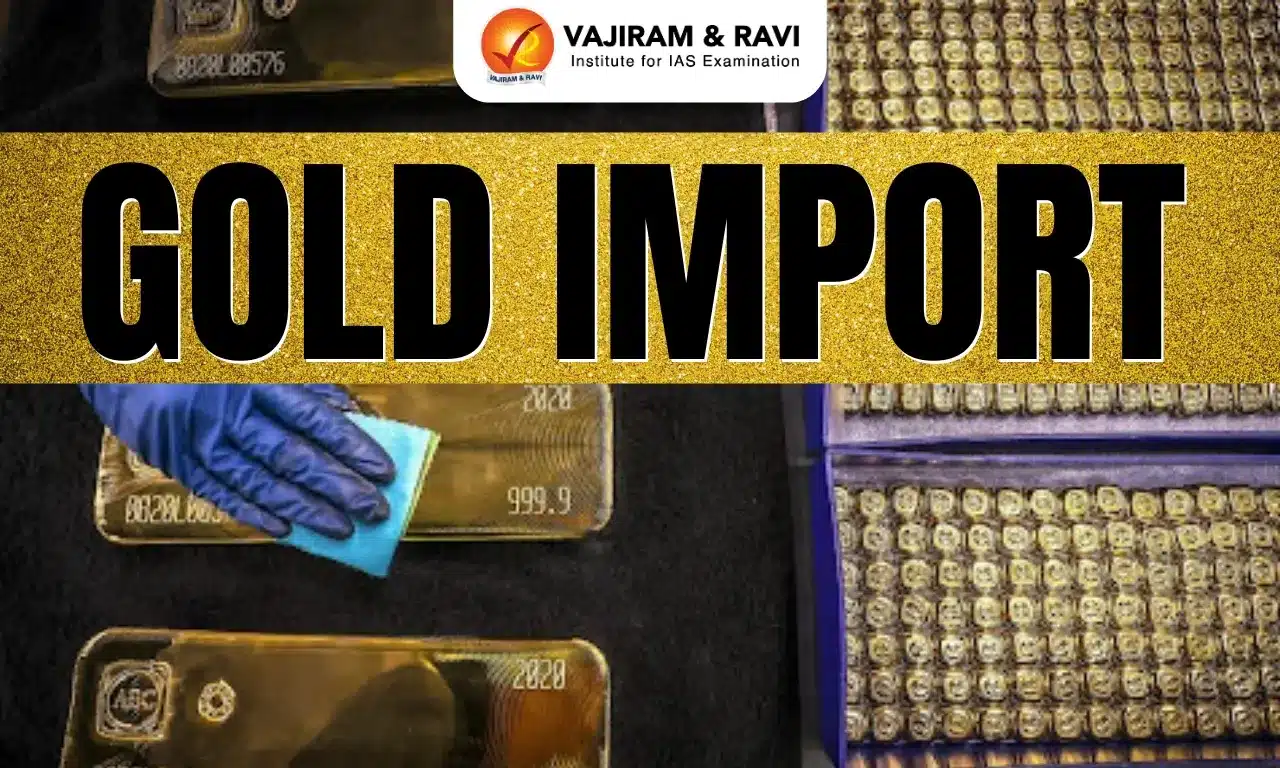
Gold Import

Gold Import Latest News

  • Rising investor preference for gold, especially through gold ETFs, has renewed debate on India’s gold import dependence and its macroeconomic implications.

Why India Imports So Much Gold

  • India is one of the world’s largest consumers and importers of gold, despite producing negligible quantities domestically. 
  • This structural dependence is driven by a combination of cultural, economic, and financial factors.
  • First, cultural and social factors play a major role. 
    • Gold is deeply embedded in Indian traditions, especially weddings, festivals, and religious ceremonies. 
    • It is viewed not merely as a luxury good but as a symbol of prosperity, security, and social status. Household demand remains stable even during economic slowdowns.
  • Second, gold as a store of value explains persistent demand. 
    • In many Indian households, particularly in rural and semi-urban areas, gold is preferred over financial instruments due to limited financial literacy, distrust of formal markets, and ease of liquidity. 
    • Gold is often treated as an inter-generational asset.
  • Third, macroeconomic uncertainty and inflation hedging increase gold demand. 
    • During periods of high inflation, currency volatility, or weak equity market performance, investors shift towards gold as a safe-haven asset. 
    • Historically, whenever equity returns are sub-optimal or global uncertainty rises, gold demand in India increases.
  • Fourth, limited domestic alternatives for long-term savings also contribute. 
    • Pension penetration remains low, and risk-averse households often find gold more reliable than equities or debt instruments. 
    • This structural preference results in sustained imports, adversely impacting India’s current account balance.

Steps Taken by the Union Government to Curb These Imports

  • Given the adverse impact of gold imports on the current account deficit (CAD) and foreign exchange reserves, successive governments have adopted multiple policy measures.
  • One key step has been the imposition of customs duties on gold imports. 
    • Higher import duties aim to discourage excessive physical gold consumption and reduce outflows of foreign exchange. 
    • However, such measures have also led to smuggling in the past, indicating policy limitations.
  • Another important intervention is the promotion of financial gold instruments
  • The government has also introduced Gold Monetisation Schemes, allowing households and institutions to deposit idle gold with banks, thereby mobilising domestic gold stocks and reducing fresh imports.
  • Further, efforts have been made to deepen financial markets and diversify investment avenues, including mutual funds, digital payment systems, and small savings schemes, to gradually shift household savings away from physical assets.
  • Despite these measures, demand moderation has been limited, indicating that gold consumption in India is influenced more by structural and behavioural factors than by short-term policy interventions.

News Summary

  • Indian investors witnessed a difficult year in 2025, with benchmark equity indices delivering negative returns and overall market turnover declining. In contrast, gold ETFs saw a sharp rise in investor interest.
  • Net inflows into gold ETFs surged to Rs. 25,566 crore between January and November 2025, nearly three times higher than the corresponding period in 2024. 
  • Gold ETFs accounted for 3.2% of total net inflows into open-ended mutual fund schemes, the highest share in recent years.
  • Several factors explain this trend. Global uncertainty triggered by trade tensions and geopolitical instability has increased demand for safe-haven assets. 
  • Additionally, central banks across the world have been increasing gold reserves to diversify away from the US dollar, indirectly supporting global gold prices.
  • Gold prices witnessed a historic rally, rising sharply over the last year, while Indian equity markets delivered muted or negative returns. 
  • This relative performance gap encouraged portfolio reallocation towards gold-linked instruments.
  • Experts caution that while long-term fundamentals for gold remain strong, short-term gains could moderate. 
  • Some analysts describe the surge in gold ETF investments as partly driven by “fear of missing out” (FOMO) behaviour among retail investors.
  • Overall, the outlook for gold demand in India will depend on future equity market performance, global monetary conditions, US dollar strength, and central bank policies.

Source: TH

Gold Import FAQs

Q1: Why does India import most of its gold?

Ans: Because domestic production is negligible and household demand remains structurally high.

Q2: How do gold imports affect India’s economy?

Ans: They widen the current account deficit and increase pressure on foreign exchange reserves.

Q3: What are gold ETFs?

Ans: They are mutual fund instruments that track gold prices without physical ownership.

Q4: Why did gold ETFs see high inflows in 2025?

Ans: Due to weak equity returns, global uncertainty, and rising gold prices.

Q5: Can gold demand in India decline in the future?

Ans: Only gradually, as behavioural and cultural factors continue to support long-term demand.

Enquire Now

