

Tehran’s Turmoil: Impact of the 1979 Islamic Revolution Reversal

Tehran’s Turmoil

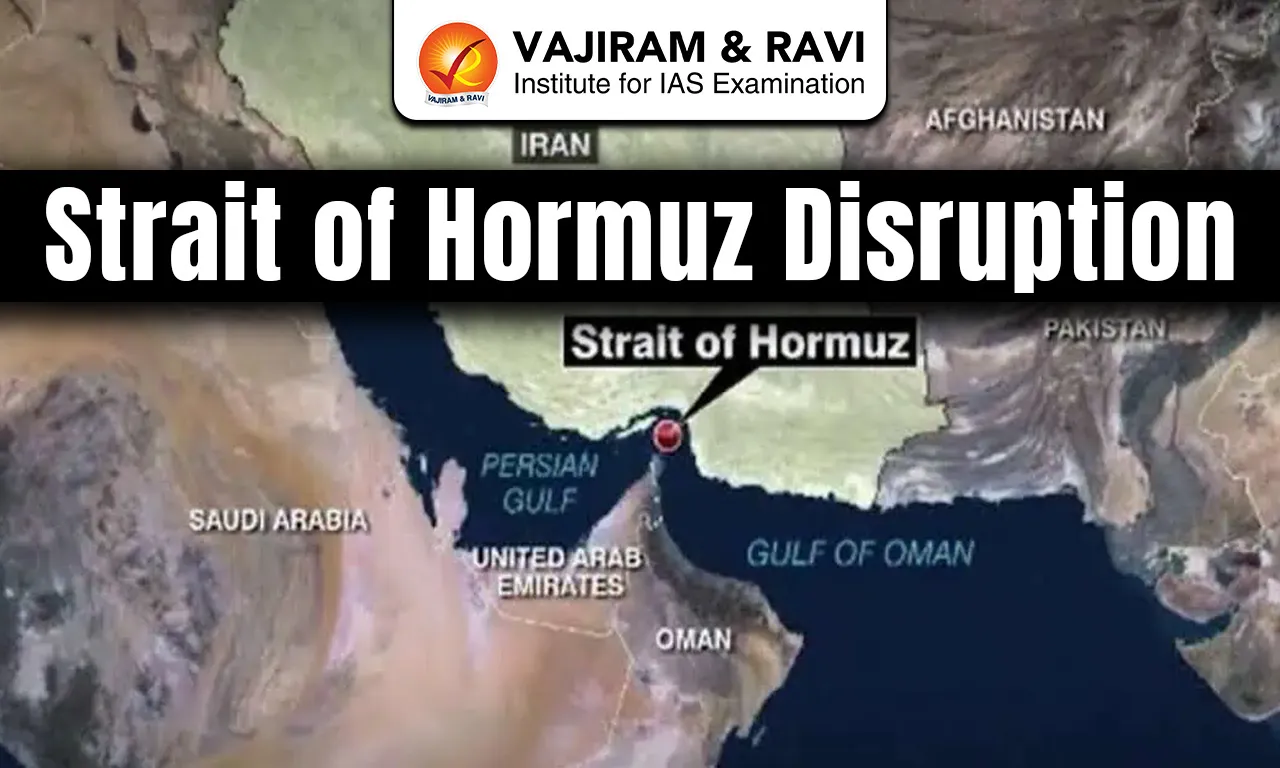
Strait of Hormuz Disruption

Tehran’s Turmoil Latest News

  • The United States and Israel have launched a joint attack on Iran with the stated goal of bringing about regime change in Tehran. The move is seen as an attempt to reverse the 1979 Islamic Revolution.
  • The 1979 Revolution reshaped Iran’s political system by establishing religious rule. It also changed the balance of power in West Asia. 
  • The revolution affected global energy markets and influenced relations among major world powers.

Why the 1979 Revolution Matters

  • The Islamic Revolution created a system in which a Supreme Leader holds ultimate religious and political authority
  • Ayatollah Ali Khamenei consolidated this system and suppressed internal dissent.
  • The revolution also had an external agenda. Iran sought to export its revolutionary ideology across the Middle East
  • It strongly supported the Palestinian cause and positioned itself as a challenger to the US and Israel. This alarmed both Western powers and conservative Arab monarchies.

The Question of Regime Survival

  • The reported killing of Khamenei raises questions about the resilience of the Islamic Republic. The future depends on whether the regime can maintain cohesion after him.
  • Iran has witnessed repeated protest movements since 2000. These protests were crushed by the security apparatus. 
  • However, regime change will not be easy because coercive power remains with the existing state structure.
  • The next phase may see mobilisation by both regime supporters and opponents. The extent of US–Israeli intervention will influence the political outcome in Tehran.

Regional Implications

  • Iran’s revolutionary posture shaped Middle Eastern politics for decades. It deepened sectarian divides and alarmed Gulf Arab states.
  • Today, many Arab governments are not openly supporting Iran. Gulf states that initially stayed neutral have closed ranks after Iranian missiles targeted US bases and civilian infrastructure.
  • The key political battleground is not the “Arab street” but the Iranian public, especially urban groups seeking reform.

Energy and Economic Impact

  • The 1979 revolution contributed to the 1980 oil shock. The present crisis again affects global energy markets. 
  • Iran holds major hydrocarbon reserves. Rising tensions in the Strait of Hormuz are pushing up oil prices.
  • If sanctions are lifted under a new regime, Iranian oil could return to global markets. This would ease global energy prices and benefit major importers like India.

Great Power Competition

  • After 1979, Iran moved closer to Russia and China. It joined platforms like BRICS Plus and the Shanghai Cooperation Organisation.
  • If regime change leads to a pro-US government, Russia and China would face a setback in West Asia. The geopolitical balance would shift significantly.

Implications for India

  • For India, the 1979 revolution and the Soviet intervention in Afghanistan reshaped its regional environment. 
  • India has energy, security, and diaspora interests in West Asia.

Scale of the Indian Presence in the Gulf

  • The Indian diaspora in West Asia is one of the largest overseas Indian communities. 
  • More than nine million Indians live in the Gulf Cooperation Council (GCC) countries. The largest numbers are in the United Arab Emirates and Saudi Arabia.
  • There are over 100,000 Indians in Israel and more than 10,000 in Iran. Thousands of Indian students are also present in the region.
  • In the UAE alone, Indians form about 35 per cent of the population. 
  • Around 43 lakh Indians live there. Many are from Kerala, Tamil Nadu, Andhra Pradesh, Telangana, Uttar Pradesh, Bihar, and Punjab.

Economic Significance: Remittances and Travel

  • The Gulf is vital for India’s economy. According to the RBI’s Remittances Survey 2025, India received $118.7 billion in remittances in 2023–24.
  • The UAE contributed 19.2 per cent of this total, followed by Saudi Arabia at 6.7 per cent. Qatar, Kuwait, and Oman also rank among the top sources.
  • Gulf countries are also major travel destinations for Indians. In 2025, about 86 lakh Indians travelled to the UAE, 34 lakh to Saudi Arabia, and 11 lakh to Qatar.

India’s Ability to Influence the Conflict

  • India has limited ability to influence the conflict. However, it must prepare for possible consequences. 
  • These include energy supply disruptions, shifts in regional alliances, and changes in Iran’s foreign policy.
  • An Iran that is less confrontational could become a stronger economic and strategic partner for India. But instability could also create security and economic risks.

Conclusion

  • The effort to undo the 1979 Islamic Revolution is a major geopolitical development. The outcome will affect regional politics, global energy markets, and great-power competition.
  • For India, the challenge is to adapt to these tectonic shifts. Whatever happens in Tehran will cast a long shadow over West Asia and the wider international system.

Source: IE | IE

Tehran’s Turmoil FAQs

Q1: Why is Tehran’s turmoil globally significant?

Ans: Tehran’s turmoil threatens to reshape West Asian geopolitics, global oil markets, and great power competition involving the US, Russia, and China.

Q2: How did the 1979 Islamic Revolution affect global politics?

Ans: The revolution established clerical rule, altered regional power balance, triggered oil shocks, and reoriented Iran’s relations with the US, Russia, and China.

Q3: What does regime change in Tehran mean for energy markets?

Ans: Tehran’s turmoil could either disrupt oil supplies via Hormuz or, if sanctions ease, bring Iranian oil back to global markets.

Q4: How is India affected by Tehran’s turmoil?

Ans: India has energy dependence, diaspora presence, and strategic interests in West Asia, making Tehran’s turmoil directly relevant to its foreign policy.

Q5: How does Tehran’s turmoil affect Russia and China?

Ans: A pro-US regime in Tehran would weaken Russia and China’s strategic position in West Asia and alter emerging Eurasian alignments.

Strait of Hormuz Disruption: Impact on India’s Energy Security

Strait of Hormuz Disruption

Strait of Hormuz Disruption Latest News

  • The growing conflict involving Iran, the United States, and Israel has disrupted oil and gas movement through the Strait of Hormuz, a key global energy corridor.
  • Following US and Israeli strikes on Iran, Tehran retaliated by targeting Gulf countries hosting American military facilities. Iran’s Islamic Revolutionary Guards Corps reportedly sent messages to vessels claiming the strait had been closed, although no formal announcement was made.
  • Even without an official blockade, many trading houses, insurers, and shipping companies have suspended operations in the area. Reports suggest that hundreds of oil tankers are currently anchored in Gulf waters, reflecting heightened uncertainty and risk in the region.

Strategic Importance of the Strait

  • The Strait of Hormuz is the world’s most critical oil transit chokepoint. 
  • It connects the Persian Gulf with the Gulf of Oman and handles about one-fifth of global petroleum and LNG trade. Around 15 million barrels of crude pass through it daily.
  • Even if alternative Gulf pipelines operate at full capacity, a significant portion of global supply would remain at risk if the strait is closed.

Impact of Strait of Hormuz Disruption on India

  • Any suspension or major curtailment of oil and gas flows through the Strait of Hormuz will affect global energy markets, including India, which relies heavily on this route for imports.
  • Experts believe the disruption may not last long, but the longer it continues, the greater the impact on prices and supply. 
  • India is relatively well positioned to manage a short-term shock in crude oil supplies because it can source oil from alternative markets. However, it will likely face higher energy prices.
  • The challenge is more serious for liquefied petroleum gas (LPG) and liquefied natural gas (LNG), where India’s dependence on the Strait is higher. 
  • In these cases, India may struggle both to secure supplies and to manage rising import costs.

India’s Near-Term Options Amid Strait of Hormuz Disruption

  • About half of India’s crude oil imports — roughly 2.5–2.7 million barrels per day — pass through the strait. India imports over 88% of its crude oil and depends heavily on West Asia for both oil and gas.
  • India is the world’s third-largest oil consumer, making uninterrupted energy flows vital for its economy.

Crude Oil: Short-Term Cushion

  • Indian refiners hold more than 10 days of crude inventory and about a week’s worth of fuel stocks. 
  • India also maintains strategic petroleum reserves that can be tapped in an emergency.
  • India can diversify supplies by increasing imports from Russia, the United States, West Africa, and Latin America. Russian cargoes, including those in floating storage, offer flexibility. 
  • This diversified sourcing strategy reduces the risk of a prolonged crude supply crisis, though prices may rise.

LPG: The Bigger Vulnerability

  • India imports 80–85% of its LPG needs, mostly from Gulf suppliers via the Strait of Hormuz. Unlike crude oil, India does not maintain large strategic LPG reserves.
  • This makes LPG flows more vulnerable in case of prolonged disruption, as structural buffers are limited.

LNG: Limited Safety Net

  • Around 60% of India’s LNG imports pass through the strait. Similar to LPG, there are no strong structural reserves.
  • Spot cargo availability for LNG is limited compared to crude oil. If the strait remains closed for long, securing LNG supplies could become difficult.

Likely Duration and Price Impact of Hormuz Disruption

  • As tensions between the US and Iran escalated, Brent crude prices rose above $72 per barrel, the highest level since late July last year. 
  • With further military escalation, the “war premium” in oil prices could increase when markets reopen.

Price Outlook Depends on Conflict Duration

  • The future direction of oil prices will depend on how long the conflict continues and whether energy flows through the Strait of Hormuz remain disrupted.
  • In a scenario of prolonged regional conflict and sustained supply disruption, oil prices could rise above $100 per barrel.

Why a Full Closure Is Unlikely

  • Although Iran has often threatened to close the Strait of Hormuz, it has never done so. 
  • Gulf energy producers, including Iran itself, rely heavily on uninterrupted exports through the strait for revenue.
  • This mutual dependence reduces the likelihood of a long-term, complete shutdown.

Source: IE

Strait of Hormuz Disruption FAQs

Q1: Why is Strait of Hormuz disruption important for India?

Ans: Strait of Hormuz disruption matters because nearly half of India’s crude imports and major LNG and LPG shipments pass through this strategic chokepoint.

Q2: How much global oil trade passes through the Strait of Hormuz?

Ans: Nearly one-fifth of global petroleum and LNG trade passes through the Strait of Hormuz, making any disruption a major concern for global energy markets.

Q3: Is India prepared for a Strait of Hormuz disruption?

Ans: India holds crude reserves for over 10 days and has strategic petroleum reserves, reducing immediate risks from Strait of Hormuz disruption.

Q4: Why are LPG and LNG more vulnerable during Strait of Hormuz disruption?

Ans: India imports 80–85% of LPG and 60% of LNG via Hormuz, with limited reserves, making them more sensitive to prolonged disruption.

Q5: Could oil prices cross $100 due to Strait of Hormuz disruption?

Ans: If Strait of Hormuz disruption continues for long and regional conflict escalates, oil prices could rise above $100 per barrel.

GDP Revision and New Series – Explained

GDP Revision

GDP Revision Latest News

  • The Ministry of Statistics and Programme Implementation (MoSPI) has introduced a new GDP series with 2022-23 as the base year, leading to a downward revision in nominal GDP and higher fiscal deficit ratios.

Background of the New GDP Series

  • GDP rebasing is a standard statistical practice undertaken periodically to reflect structural changes in the economy, incorporate improved data sources, and refine estimation methodologies. 
  • India has shifted the base year for GDP calculations to 2022-23 from the earlier base year.
  • According to MoSPI, the revised series reflects better databases and updated methods, which generally lead to adjustments in GDP levels. 
  • However, unlike some past revisions that increased GDP size, the latest revision has reduced India’s nominal GDP estimates for recent years.

Key Changes in Growth and Size

  • One of the most notable changes is in the real GDP growth rate for 2023-24. Growth, earlier estimated at 9.2% under the old series, is now revised to 7.2% under the new series. 
  • More importantly, the nominal GDP level has been reduced by around 3-4% for 2025-26 and the previous three years. 
  • For 2025-26, the second advance estimate under the new series places nominal GDP at Rs. 345 lakh crore, about 3.3% lower than earlier estimates. 
  • This downward revision means that the overall size of the Indian economy, in rupee terms, is now assessed to be smaller than previously calculated.

Impact on Fiscal Deficit Ratios

  • A reduction in nominal GDP has direct implications for fiscal metrics because ratios such as fiscal deficit-to-GDP and debt-to-GDP depend on the size of GDP.
  • The Union Budget had targeted a fiscal deficit of 4.4% of GDP for 2025-26. However, using the revised nominal GDP figure under the new series, the fiscal deficit ratio increases to 4.5%. 
  • Similarly, earlier years’ fiscal deficits have also been revised upward:
    • 2022-23: from 6.5% to 6.7%
    • 2023-24: from 5.5% to 5.7%
    • 2024-25: from 4.8% to 4.9% 
  • For 2026-27, the government has set a fiscal deficit target of 4.3% of GDP, amounting to Rs. 16.96 lakh crore. 
  • Achieving this target under the new GDP base will require nominal growth of 13-14%, significantly higher than the 10% nominal growth assumption used in the Budget. 
  • This creates pressure on fiscal consolidation efforts and may require recalibration of borrowing plans.

Debt-to-GDP Ratio and Fiscal Anchor

  • The GDP revision also affects the debt-to-GDP ratio, which has become an important fiscal anchor in recent years.
  • Estimates suggest that the Centre’s debt-to-GDP ratio could rise from 56.2% to 58.1% in 2025-26 under the revised GDP figures. 
  • Even with 10% nominal growth in 2026-27, the debt ratio may remain above the target of 55.6% outlined in the Budget. 
  • Thus, while the fiscal deficit in absolute rupee terms remains unchanged, its ratio to GDP becomes less favourable due to a smaller denominator.

Implications for the $4-Trillion Economy Goal

  • Becoming a $4-trillion economy is seen as a milestone on India’s path to becoming a developed nation by 2047.
  • However, the reduction in nominal GDP under the new series makes this goal more challenging. 
  • At an exchange rate of Rs. 90.98 per US dollar, India’s GDP in 2025-26 is estimated at around $3.8 trillion. 
  • Assuming 10% nominal growth and a stable exchange rate, India could cross the $4-trillion mark in 2026-27. 
  • However, exchange rate dynamics play a crucial role. A depreciation of the rupee reduces GDP in dollar terms even if rupee GDP rises. The example of Nigeria, where rebasing significantly altered GDP size, illustrates how statistical revisions and currency movements can influence global economic rankings. 
  • Thus, both domestic growth and currency stability will determine progress toward the $4-trillion milestone.

Broader Significance of GDP Rebasing

  • GDP rebasing is not unusual and reflects improvements in statistical systems. According to MoSPI, revisions typically become smaller as databases improve over time. 
  • For policymakers, however, such revisions have real consequences. They influence fiscal planning, borrowing strategies, international comparisons, and macroeconomic credibility.

Source: IE

GDP Revision FAQs

Q1: What is the base year of the new GDP series?

Ans: The new GDP series uses 2022-23 as the base year.

Q2: How has nominal GDP changed under the revision?

Ans: Nominal GDP has been reduced by about 3-4% for recent years.

Q3: How does GDP revision affect fiscal deficit ratios?

Ans: A lower GDP increases the fiscal deficit-to-GDP ratio even if the absolute deficit remains unchanged.

Q4: What nominal growth is required to meet the FY27 fiscal deficit target?

Ans: Nominal growth of 13-14% may be required to achieve the 4.3% fiscal deficit target.

Q5: Why is the exchange rate important for the $4-trillion goal?

Ans: GDP measured in US dollars depends on both nominal growth and the rupee’s exchange rate.

Enquire Now
